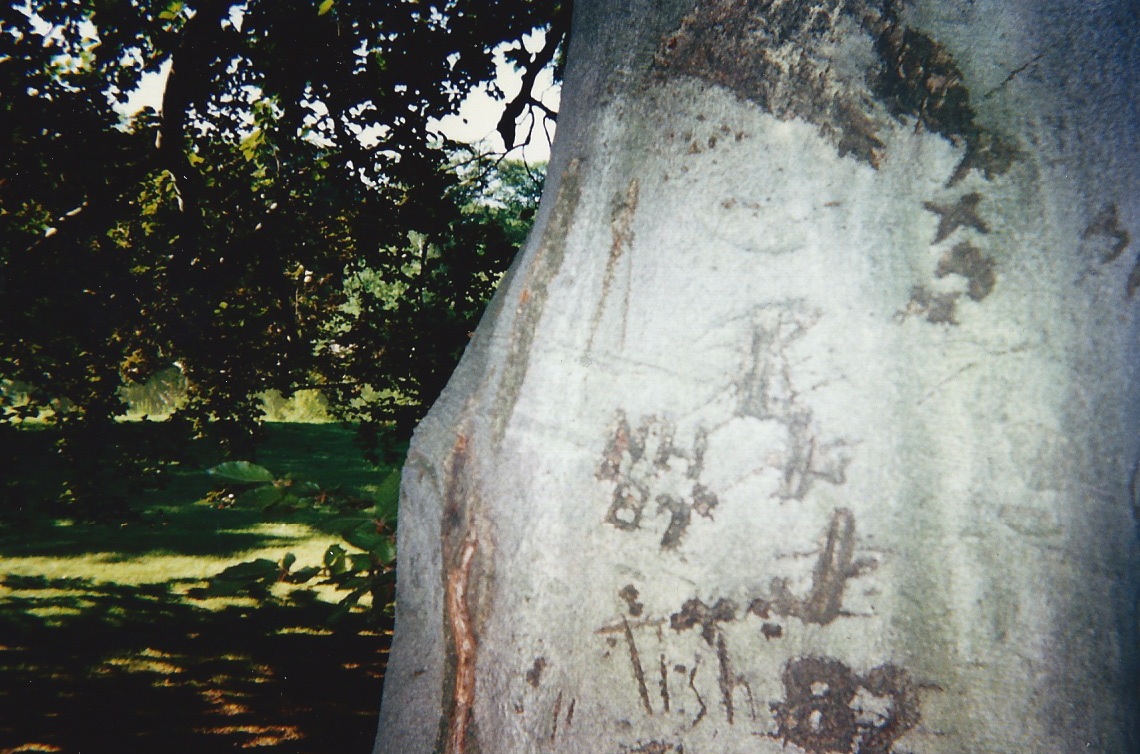
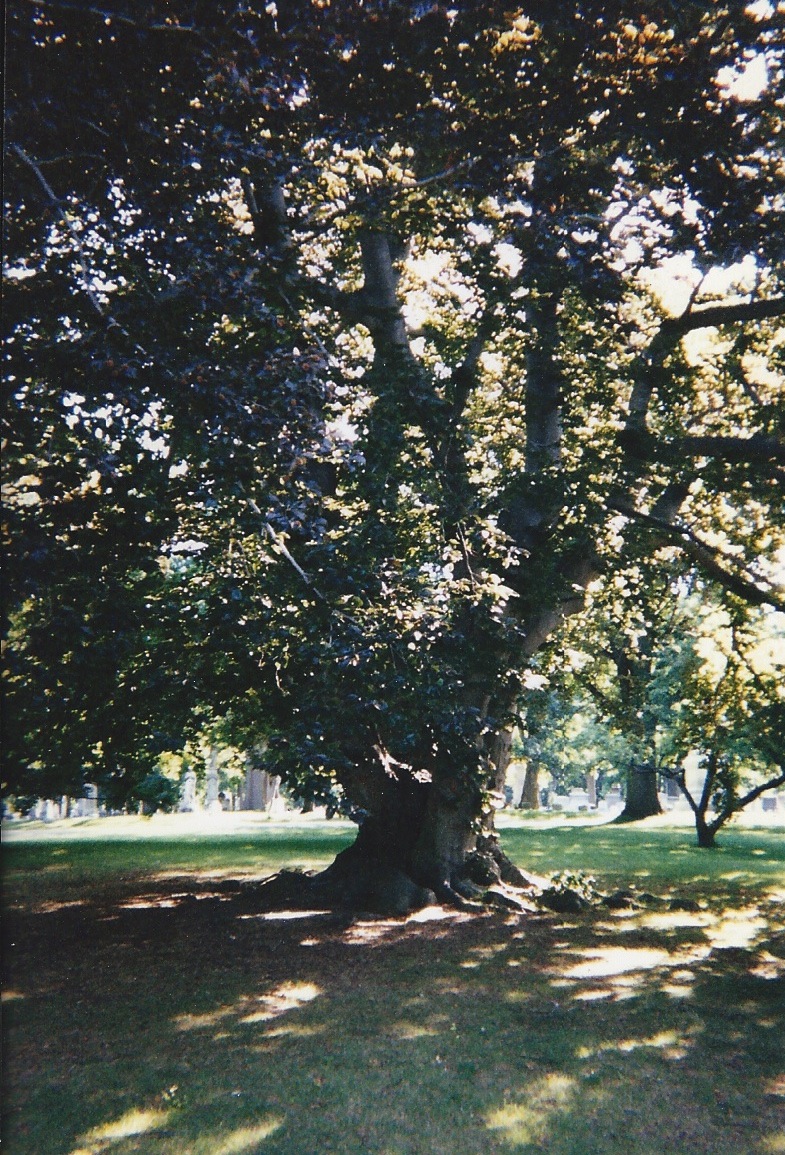
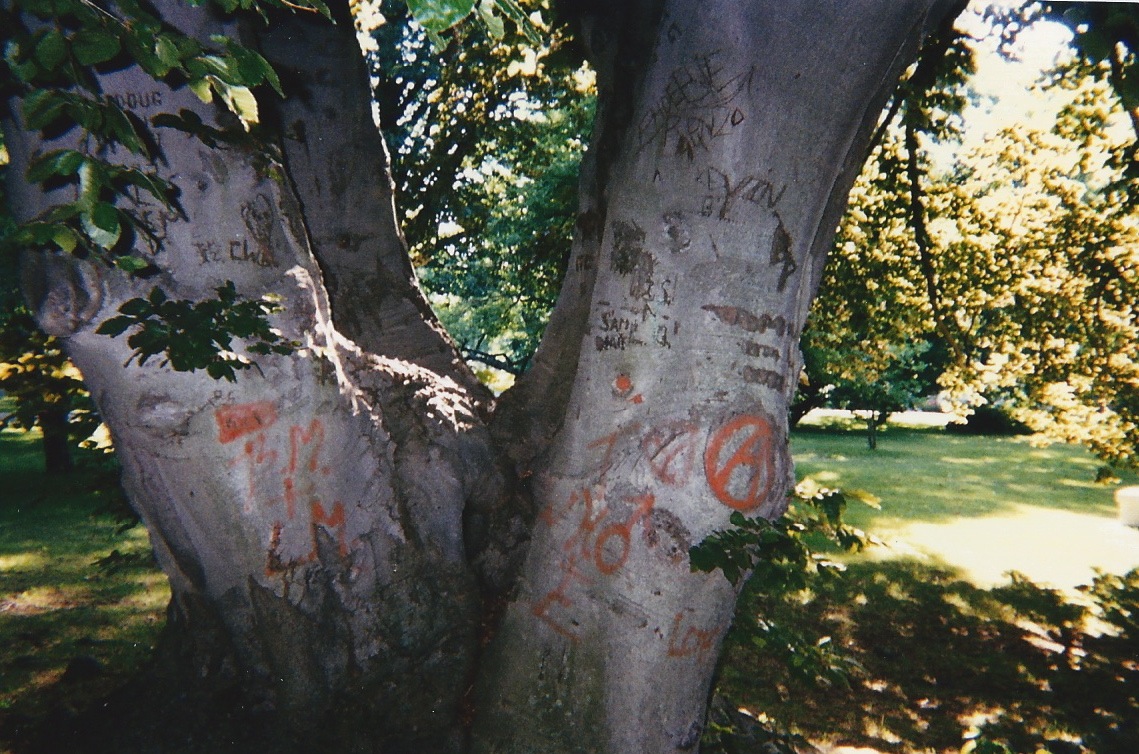
 When I sat in the old copper beech tree, surrounded by the hopeful carvings of many human persons, I was reminded of the runes, the early carved alphabet of the Germanic languages. I had earlier taken up the study of runes, because I was curious about the culture and spirituality of my ancient Germanic ancestors. The traditional way of making runes is to carve them into small staves of wood cut from the branch of a fruit bearing tree. The rune letters themselves are sharp and angular, revealing their origins in the markings that blades can make in wood. Each of the rune letters is a symbol of some sacred power in the German understanding of the universe.
Runes were used for magic, for divination, and for communicating with sacred forces. According to some German and Norse myths, the runes were given to the God Odin, after he hung suspended for nine days and nine nights on the sacred tree of the world, Yggdrasil. Odin then shared the runes with humankind. The runes were a gift from a holy tree.
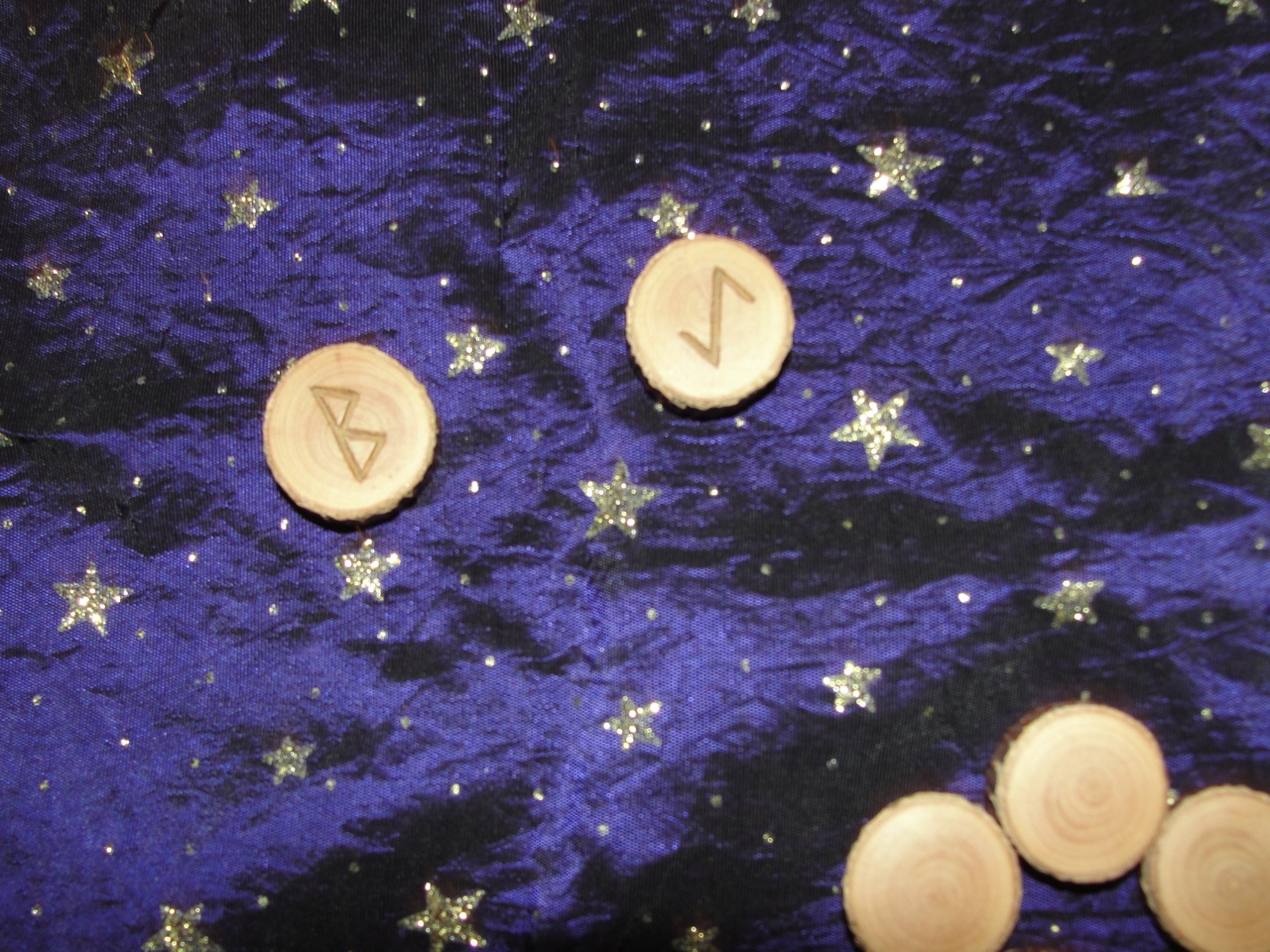 Two of the runes are specifically linked to trees. Eiwaz represents the yew tree and Berkana, the birch tree. The yew tree is a symbol for Yggdrasil and is linked to death and the everlasting realm beyond death. The tree is poisonous and its wood was used to make long bows for hunting and war. It lives to be perhaps the oldest tree we know. There is a yew tree called the Fortingall yew, which is situated in a churchyard in Perthshire, Scotland. It is believed to be the most ancient tree in Europe, between two and five thousand years old.
The birch tree, on the other hand, is linked to birth and beginnings. It is one of the first trees to grow in an area after a fire has destroyed its vegetation. Birch branches were used in cheerful springtime rituals, a symbol of new life and the fruitfulness of spring. When Margy and I were looking for a home in Maine, we were feeling discouraged after May and June had passed without our finding anything. We did a reading of the runes, and pulled out Berkana—the birch tree rune. It could be read as a great indicator of prosperous new beginnings coming into our life. But we also decided to take it more literally.
We began to look for houses that had anything to do with birch trees. We noticed an ad for a house on Birchwood Road, and saw another house described as having birch cabinets, and a few others like that. So we came up the last weekend in July to check them out, and then found another house in the newspaper on the last day. The backyard turned out to be full of birch trees. It was also just what we were looking for.
Some people believe that the runes communicate magic messages. But what strikes me most powerfully about the runes is the magic of written language itself. What an uncanny ability it must have been at first—to communicate across distance or time in a way that talking could never match. The root of the word “rune” implies secret or hidden. A message could be carved out by one who knew the runes, and—sent via a messenger who did not know the message—it could be understood by another person far away. The ability of rune readers to communicate in silence with each other would have appeared magical to anyone who witnessed it. These messages could even endure beyond the death of their creators, to be received by those who came after. We have forgotten to be in awe of that power.
 Finding Our Way Home