Native wild flowers

glowing yellow goldenrod flowers on tall stalks, with dark green background
Goldenrod flowers are in bloom.

We have now lived in our home in Portland for 7 years, and are gradually getting to know the plants around us. We have our share of invasive plants, but today I want to highlight a few of the beautiful native wildflowers that are blooming right now in our yard. They come up on their own, and Margy has encouraged them by pulling invasive species, and leaving certain areas alone as she mows paths around the back yard.

I believe our goldenrod might possibly be the solidago sempervirens, or seaside goldenrod, native to eastern North America. This identification fits with our sandy pine forest soil, and photos online look similar. But it is very difficult to distinguish between species of solidago. Solidago is considered a keystone species, and has been called the single most important plant for North American pollinator biodiversity. They are very loved by many bee and butterfly and moth species. We love them too.
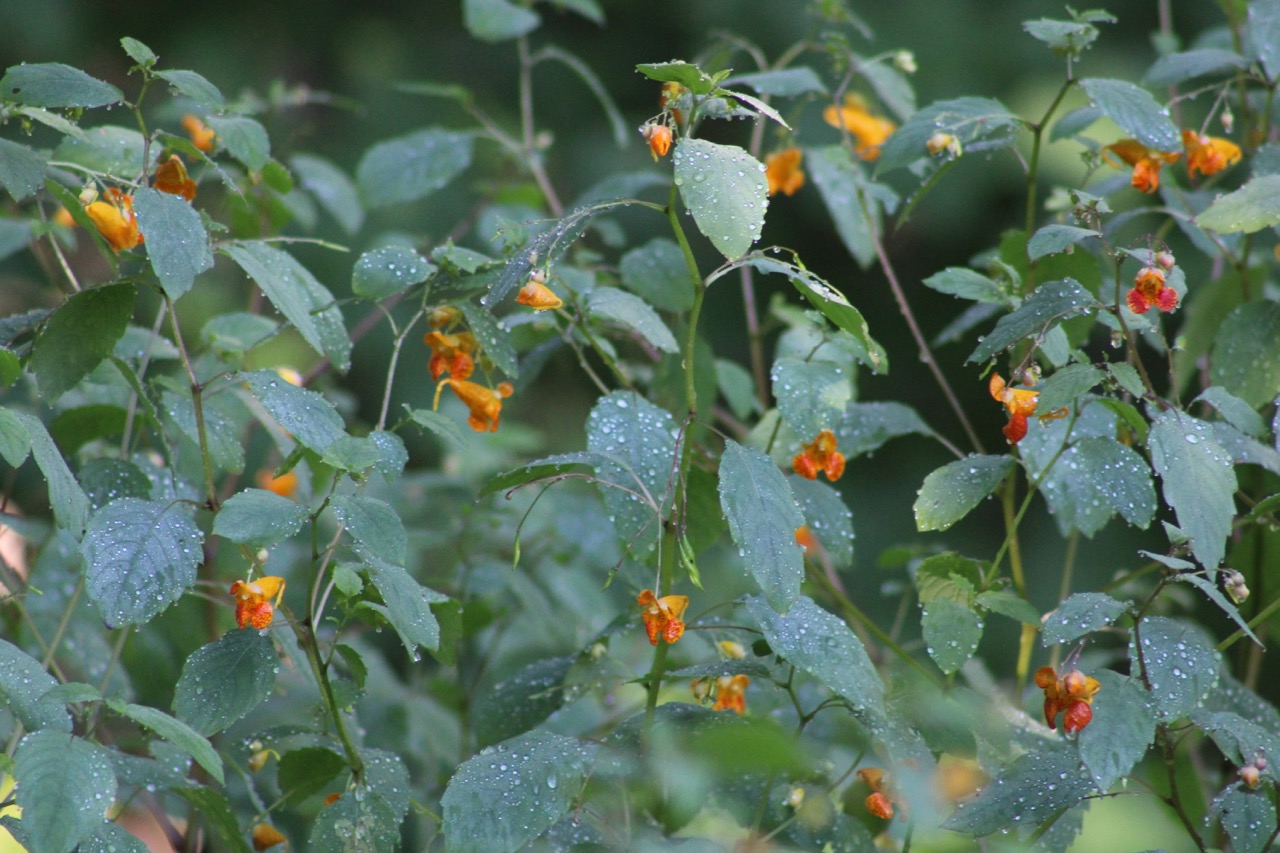
Tiny orange flowers on thin stems with oval serated leaves, droplets of water on the leaves.
Jewelweed after a rain.

Jewelweed grows profusely at the back and sides of our yard. Impatiens capensis is also called touch-me-not, because of the way the ripe seeds pop open when touched. It often grows near poison ivy (which we don’t have) and has traditionally been used as a remedy to prevent the rash caused by exposure to poison ivy. This year it has gone a little crazy all around our old white pine, and in Margy’s mound bed nearby. Hummingbirds and bumble bees are their major pollinators.

tall stems with small yellow flowers at the tips, many plants in 1/2 wine cask planter, on patio near deck railing.
Evening primrose in an old half wine cask container.

I got to know evening primrose last year, when it was the favorite plant for goldfinches after it had gone to seed. This year, it has self-propagated into two containers, as well as all around the patio and orchard. Oenothera biennis is a biennial plant, forming a small rosette the first year, and then in the second year shooting up to great height before blooming. It is native to eastern and central North America. Evening primrose oil is considered medicinal for a variety of conditions, though we haven’t tried harvesting it for such.

evening primrose closer
Evening primrose, closer look at the blooms.

What I love about these three species is that they grew on their own. We didn’t plant them, we just began to notice them and appreciate their presence. True gifts from the earth. There are many others we have begun to notice as well. It takes a while to learn about them and to identify them. It feels like such an important part of finding our way into earth community.

Certified Wildlife Habitat

Small sign saying Certified Wildlife Habitat on metal post, near raised bed, and steps to front door of house.

It’s official. We’ve been designated by the National Wildlife Federation as a Certified Wildlife Habitat. This means that our garden “provides natural sources of food, water, cover, and places to raise young, and is maintained in a sustainable way that incorporates native plants, conserves water and doesn’t rely on pesticides.” We posted our sign in our front yard. We are one of over 227,000 such gardens in the United States, and they are hoping to reach 300,000 this year.

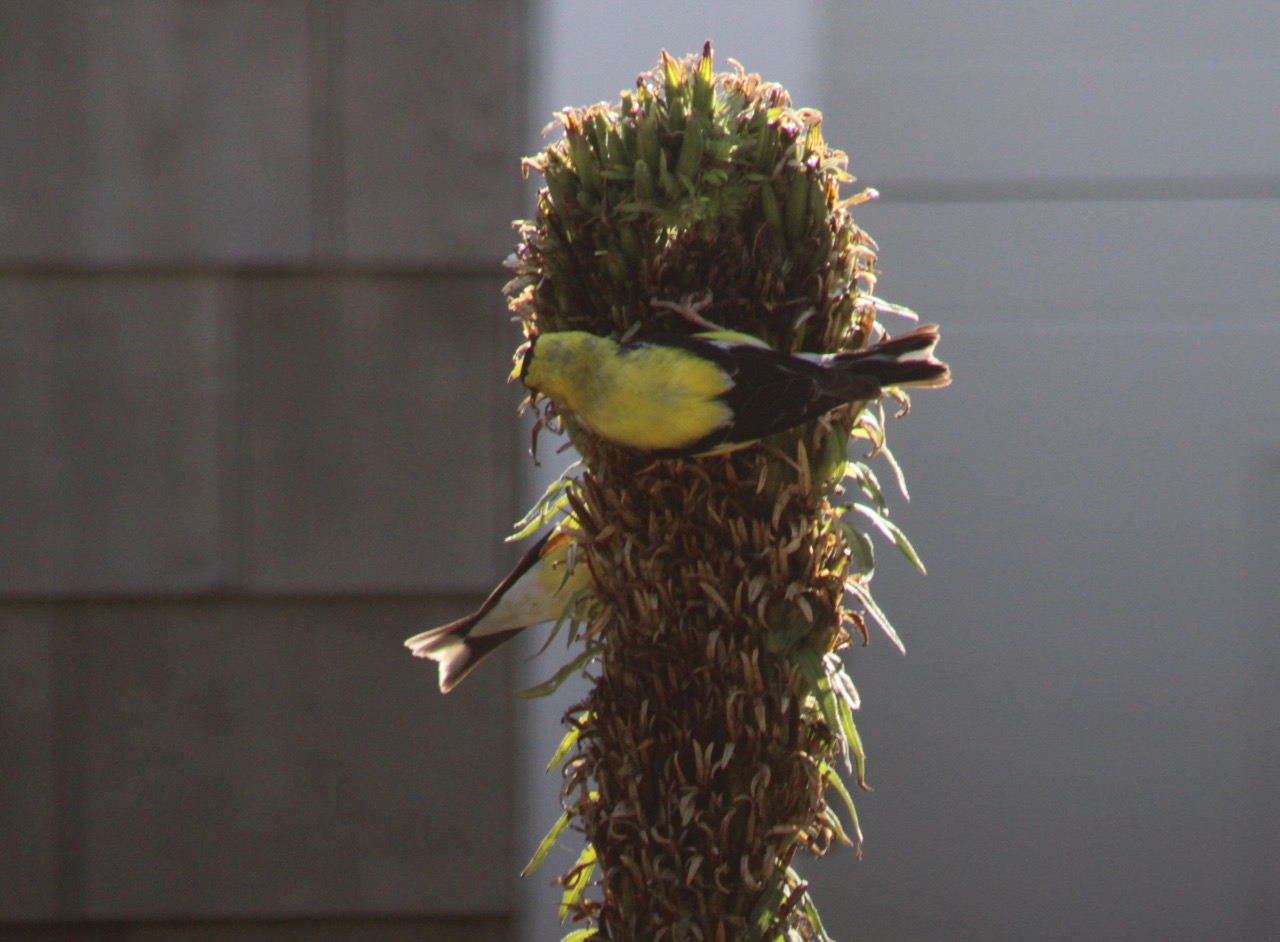
In order to be certified, you fill out a form at https://www.nwf.org/CertifiedWildlifeHabitat and give a donation to the organization. It’s on the honor system–you tell them the sources of habitat in your yard, in several categories. For food in our yard we have native plants, berry bushes, and fruit trees, as well as our bird feeder, and the pond. One of my favorites is evening primrose that grows wild. We keep several, only cutting in places that don’t work to have a tall plant–last year there were goldfinches all over this plant, and hopefully more this year.

Goldfinches eating seed on round plant head.

We provide water especially with the pond. The pond serves so many purposes–food, water, a place to raise young (the tadpoles!), cover for frogs. When I walk in the morning, I see birds bathing, bees taking a drink, frogs sunning and snatching flies. But any kind of water brings wildlife to a yard–small or large. We also have a bird bath near our patio, and see birds and squirrels getting drinks there.

Cover is used to protect from bad weather, hide from predators, or hunt prey. Around the edges of our yard there are trees and bushes, and piles of branches that provide cover for small critters, and places to raise young. Ever since the orchard trees and hazelnut bushes have grown up, birds are always perching there, sometimes on their way to the bird feeder, sometimes eating insects. I’ve posted about the robins raising young in a nest on our back porch. But we’ve also seen young squirrels in trees, and chipmunks coming from underground.

As for sustainable practices, we never use pesticides, and we compost our food waste and leaves. We conserve water with our rain barrels, and if the pond needs topping up, that comes from the rain barrels too. We try to incorporate native plants wherever we can–mostly by not pulling the weeds that emerge on their own: violets, pansies, daisies, wild strawberry, goldenrod among many others. I use an app to identify plants that come up. We do also have invasive plants that we are trying to get rid of.

The official designation and sign were a gift to ourselves, and to make our intentions more visible in the neighborhood. Most of the actual habitat is in the back and side yards. Have any of you participated in this program? Maybe you might like to check it out. There are little things that each of us can do to care for the earth community, and foster habitat for wildlife.