Sacred Fire

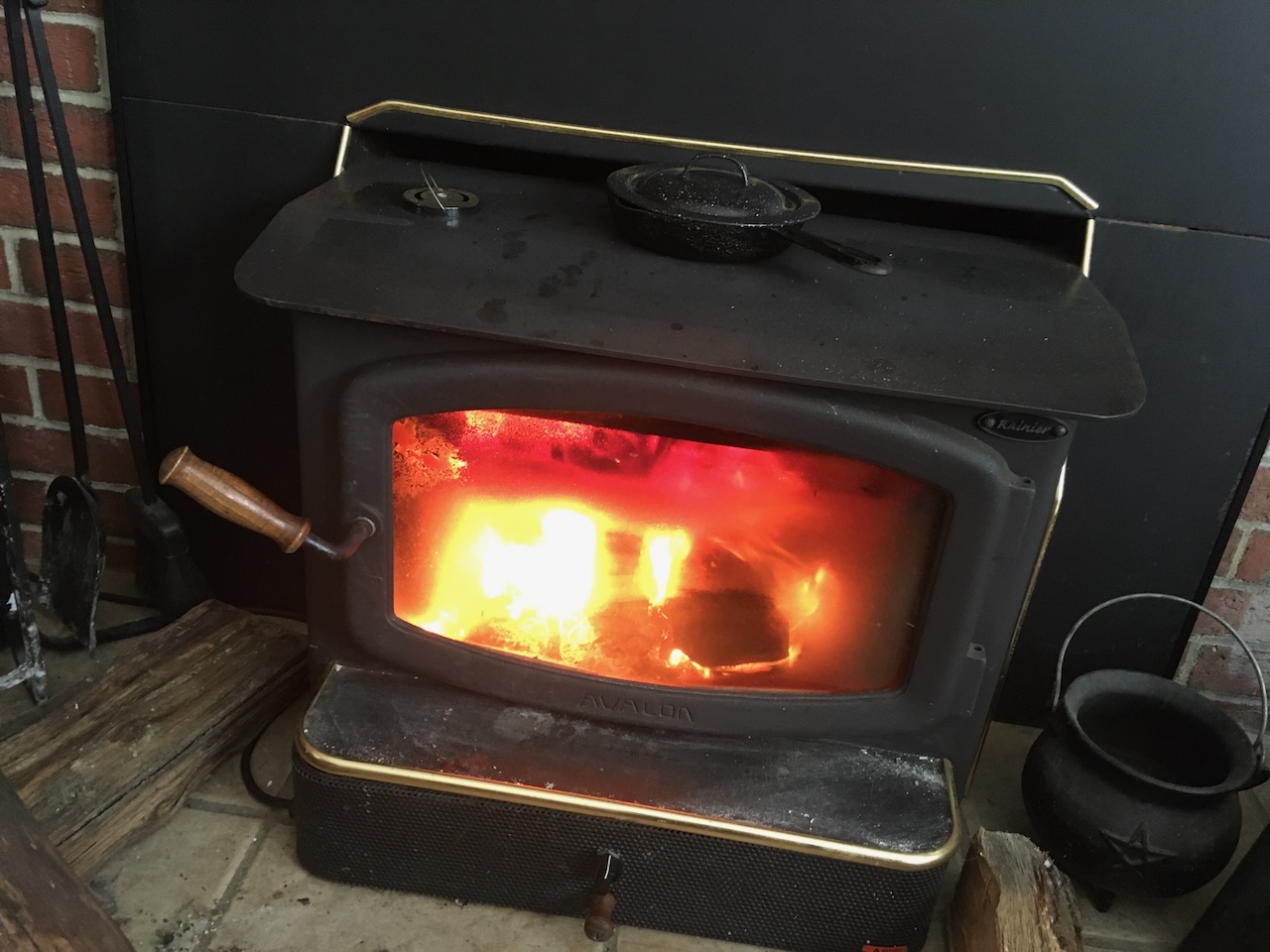
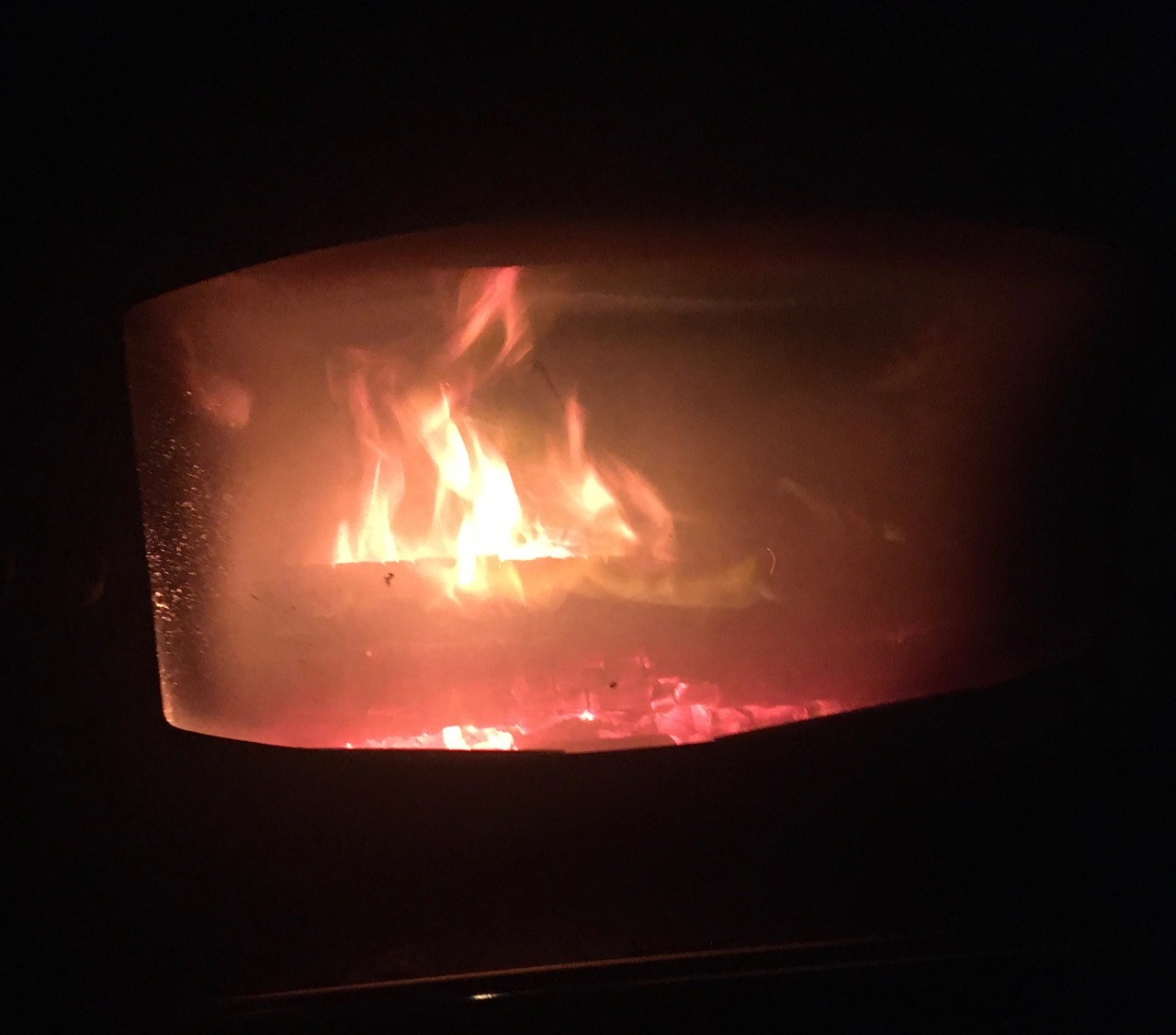
Fire in the wood stove during the April storm.

In the midst of a 55-hour power outage, before I knew how long it would actually be, I was sitting in front of the wood stove which had kept us warm for the last couple days. I was thinking about how fire is one of the sacred elements, and yet, I hadn’t been close to a fire recently except during our prior power outage and this one. (Yes, we have now had two power outages in the last two weeks! The first lasted 40 hours.) These power outages are exhausting for us, with our chronic fatigue anyway. But we are so lucky to have the wood stove which heats our house well, and on which we can even cook food, with our tiny cast iron pan or hot water kettle.

Tending the stove is a constant process, kindling a fire in the morning, adding wood, adjusting the flue, adding another log each hour or so. We were running out of wood, except for some poorly seasoned crabapple wood from when our tree fell during a storm last year. But our neighbor kindly said we could have some of his. I am grateful for our neighbors. That was a gift from this storm. The April nor’easter covered all the trees and branches with heavy wet snow that apparently caused over 300,000 outages across Maine, which is why it took so long for power to be restored. Still, it was beautiful outside.

We were without electricity, television, internet, all the usual ways we connect with the world. My phone has limited data (all used up) so I couldn’t use it to connect except for texts and phone calls. We have an old landline phone that we pull out to use because it doesn’t need electricity like our regular landline phone. I even had a great conversation with an old friend on that landline phone. But I realized how much I rely on the internet for connecting with people, for seeing news, for entertainment. Being without power was tiring, just to keep ourselves warm and fed, but being without the internet was so boring.

As I was sitting in front of the fire, on the third morning, I tried to be present to the day, to stop wishing for the power to come back, to accept the day on its own terms. It was then that I thought about fire, about the fires I had sat around, and even danced around in prior times. I thought about the rituals we had done in our own back yard around our own fire circle. Neglected fire circle now. We didn’t light it all last summer. The weeds have grown up around it. It takes some energy to light and tend a fire. I know I haven’t had much energy during the past years. But now I was, by necessity, tending a fire, and by gratitude and intention, remembering that fire is sacred, is beautiful.

When I consider it, it seems like electricity has taken the place of fire in my everyday life. I imagine that electricity might also be considered sacred, although it is more invisible. It heats our home, cooks our food, keeps our food preserved, washes our clothing, heats our water. It also enables these far away connections for which I have much gratitude. It brings stories and news and laughter. I was relieved and happy when the electricity came back on.

But I am also grateful for the quiet days of the storm that brought me back to appreciating sacred fire.
Humbling

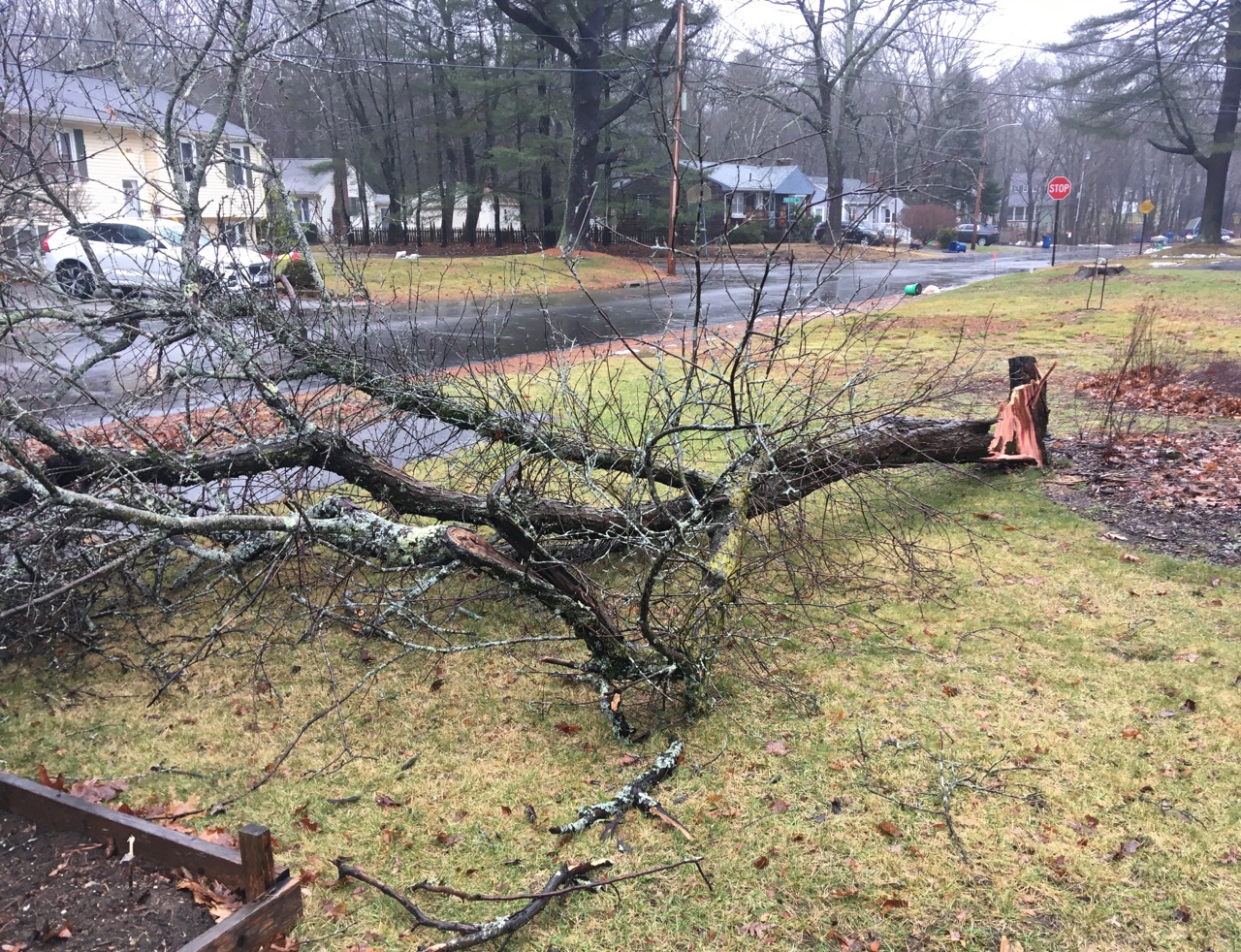
Crabapple tree broken at trunk and lying on the faded green of winter lawn, with street behind, houses visible on other side.
Fallen crabapple tree

On December 23rd, a severe rain and wind storm passed through Maine, after also creating havoc with storms and snow in other states. In the early afternoon, I was sitting in the living room, and suddenly heard some sort of clattering outside. I had previously gone out in the rain to right overturned trash barrels, and so I went out again to look around. At that moment, Margy was driving into the driveway from an appointment, and she asked me–did you see the crabapple tree? Going round the side of the house, this is what came into view: one of the ornamental crabapple trees in our front yard had suddenly cracked through its trunk and fell over. It didn’t land on anything or damage anything, which was a relief, but the tree was dead.

A couple hours later, our electric power went out, along with many other thousands in Maine–though only a segment of the people on our street. The thing with power outages is–you never know if it is going to be a brief interlude, a few hours, or a few days. You enter this limbo time of unknown duration. We waited until dark, and then lit our wood stove–thank goodness our house had this wood stove when we purchased it. It is a very fine wood stove, and it will heat the entire house when needed. We don’t usually use it except for emergencies. But in fact we had used it just a week ago when our heat pumps were being repaired. We have a few flashlights and candles, so we lit those too. And I could connect to the world via my cell phone, and Facebook.

However, I have to acknowledge that it felt very dark, the sun setting at 4 p.m., and not rising until about 7 a.m. Keeping up with wood in the stove was exhausting. It was hard to just relax with the uncertainty of it all. After a Friday of warm and windy rain, the temperature dropped on Saturday to a frigid 12 degrees. I was worried about our refrigerator food, and the freezer in our basement. I covered the freezer with a few blankets. I put the food from the fridge freezer into rubber tubs, and put them out on the back deck. Then, an unexpected grace–our neighbor Brian came by, and offered to run an extension cord from their house to ours–they had not lost power. So by this gift, we were able to plug in our refrigerator.

Before the storm, we’d purchased a round shrimp plate for a holiday treat–so Friday dinner was shrimp and cheese and crackers and cucumber and carrots. A little picnic. Margy had also boiled some eggs before the storm, and we had some sliced ham, so those were other meals that didn’t need cooking. On Saturday early evening, I got a text that the power should come back at 7 p.m., but then it did not. I felt such disappointment then, and crankiness, and boredom. Later, we tried to work on a puzzle, but without a good light source, it was mostly frustrating.

It is humbling to realize how difficult I found this time without electricity. I felt disconnected, restless, and bereft. I tried reading the book I had started a little while ago, but it was a heavy subject, and I couldn’t manage it in the midst of everything else. I missed the entertainment and mental stimulation of television or streaming channels like Britbox and Prime. I missed connecting to Christmas Eve services through Zoom. I felt at a total loss. I had imagined that as I grew older, I would become more resilient with age. But I see that I am perhaps less resilient after all, that I am vulnerable and dependent in many ways. When I went to bed, I felt defeated.

For whatever reason, I woke at 3 a.m. on Christmas, and couldn’t get back to sleep. I added a log to the fire, and wrote in my journal. I think then that I surrendered to the situation I was in–that here we were, in the dark, and we didn’t know for how long–and yet, we were warm, and we had food, and kind neighbors, and offers of support via Facebook. We were not alone. I thought about the people in Ukraine right now, also facing the loss of electricity in winter, and maybe no heat or water, along with the devastation of war and bombs–so much loss and uncertainty. I found myself praying for those folks who were facing so much greater hardships. I acknowledged my vulnerability and exhaustion.

By the time the sun rose, I felt peaceful sitting near the fire, drinking some tea after I’d managed to heat water on the narrow five-inch ridge on the top of the wood stove. I was still exhausted, still humbled by the difficulty of my managing in these circumstances, but somehow at peace with all of that. It would be a lie to say that I was not relieved when our power came back on at 10 a.m. But I am glad I came to some peace within my spirit before the end of our 44 hours without power.

Fire burning in the wood stove.

Still Angry

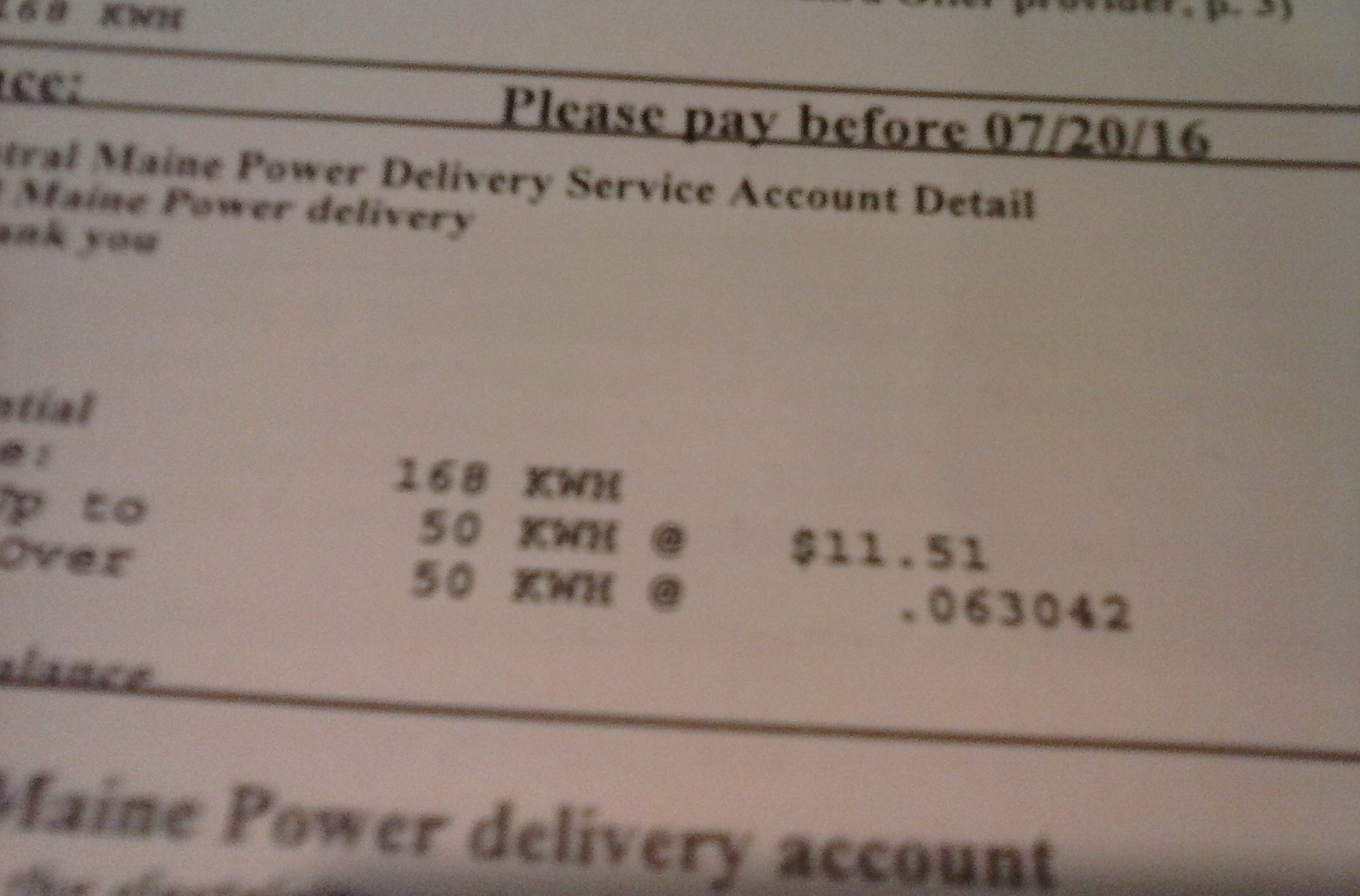
Last week, we got our first electricity bill with a full month of solar energy production on our roof.  I was excitedly looking forward to a bill in which our production exceeded our consumption, and so we had nothing to pay at all.  Zero for electricity!  Well it turns out, that can’t happen in Maine.  Apparently, in the not so distant past they changed the structure of delivery rate payments so that anything less than or up to 50 kWh is billed at a set rate.  So no matter how little we use, I realized, we would always have to pay $11.51 per month.

But then, the very next day I read in the paper that rates were going up July 1st–but I couldn’t find the details anywhere until today–so now the basic delivery rate will be $12.88 for up to 50 kWh. (By the way, that would be .2576 per kWh if you used those 50.) The delivery rate for over 50 is going from .06302 to .066541.  This is in addition to the actual energy charge, which for us with CMP standard offer is an additional .064430 per kWh.

I wouldn’t be so angry if I hadn’t spent a day at the state house at the end of April listening to conservatives arguing that solar customers were getting a free ride and being subsidized by all other customers.  Here’s the thing I was thinking that day, assuming that we did have true net metering–where we only paid for the balance between what we generated and what we used–solar customers benefit the whole grid because we are adding energy to the grid during its highest use demands–summertime in the heat of the day.

And this is our earth we are talking about–we should be creating policies that encourage more and more renewal energy usage, or we won’t have a planet that can support human life anymore. Human life, anyone?  At this point in Maine, only on the hottest summer days do we even reach 1% of the total energy used being solar energy. Shouldn’t we be talking about how to increase that to 50%?  Not castigating those of us who have worked so hard to make a change, by calling us “elite” and acting like we are a drain on the rest of the customers?

Margy and I just spent a lot of money because we really care about the earth. It was almost impossible for us to do–we had to move to a new house and downsize our living situation to be able to afford the investment. But we really really care about the future of the earth. And we also hoped that as we grew older and had less financial resources, this would help us to get by.

But now I know that even if we use no energy at all from the grid, we must still pay 12.88 per month, to be able to be tied into the grid. And I understand that if everyone had solar panels tied to the grid (wouldn’t that be our dream future?) we collectively would have to find a way to maintain and support the infrastructure of the grid. But the attitudes of certain politicians in Maine are downright punitive towards solar customers.  While I was web surfing trying to find the new rates, I discovered that two years ago, they were trying to add a $25 monthly surcharge for solar customers.  It didn’t succeed that time, but everything will be reviewed again this coming year. Oh, and by the way, CMP is owned by the Spanish multinational corporation Iberdrola. So isn’t that the real issue–the privatization of public utilities and profits for the shareholders?

I am dealing with a bit of reality shock about all this–after the initial excitement about going for solar, I am discovering just how much of a battle is involved on so many fronts.  It caught me off guard. I called our solar installer and he apologized for this not being clearer up front–he thought he had explained it before. But I am curious–to those of you with solar in other states:  do you have any zero bills? How does it work where you live?

CMP Bill 0630161004