
I have been having a few days in the garden that humble me to my core. This process of finding our way home to earth community is so difficult. Trying to care for fruit trees involves learning about so many insect pests and disease processes. Observing the trees carefully every day. Yesterday and today I was thinning the tiny peaches leaving only one every 6 inches, so that the branches can support them to grow. Often I am trying to figure out which organic solution goes with which problem. And yesterday morning, I saw one of our squirrel neighbors climbing the peach tree–a whole other issue. Will we get to eat any peaches, or will the squirrels take a bite out of each one? Or will birds peck holes in them? Or some other insect pest eat them from the inside?
I hate how gardening sets me at odds with the other critters on this land–figuring out which are “beneficial” (to us) and which are “enemies” (to us.) I remember that when I first had a little garden, many years ago now, I was surprised that so much of it was about killing–pulling weeds, drowning slugs in beer, and so forth. And now that I am caring for an orchard, a permaculture food forest, it’s the same thing. A constant battle. So how is that teaching me how to live in a mutually beneficial relationship with this land?
I start to wonder if human beings should ever have shifted from hunting/gathering to agriculture. Hunting and gathering certainly included the taking of animal life, but it seems like it was more in balance, it was received with gratitude, it was a kind of partnership. I am thinking about the different role of the groundhog in the lives of different cultures. The bane of many gardeners’ lives, groundhogs are incredibly inventive and persistent garden eaters. It was amazing to me that here on our land, the groundhog whose den was next door seemed to respect the orchard as our place, while the garden bed behind the garage she claimed for her own. But I have a friend who built a fence deep into the ground around her entire garden, and still the groundhog family dug a tunnel and emerged right in the center of the garden to eat her vegetables.
However, the groundhog played a different role in Wabanaki cultures, in tribes that were traditionally hunting and gathering. I only know a few of the stories about the legendary figure for good, Koluskap (Glooscap), the creator of human beings. But I learned that his grandmother was the groundhog, Munimqehs, and she guided him and taught him the wisdom he needed. What a different perspective! She taught him that people and animals relied on each other, that hunting was necessary for the people to be strong, but that taking more than was needed was destructive to both.

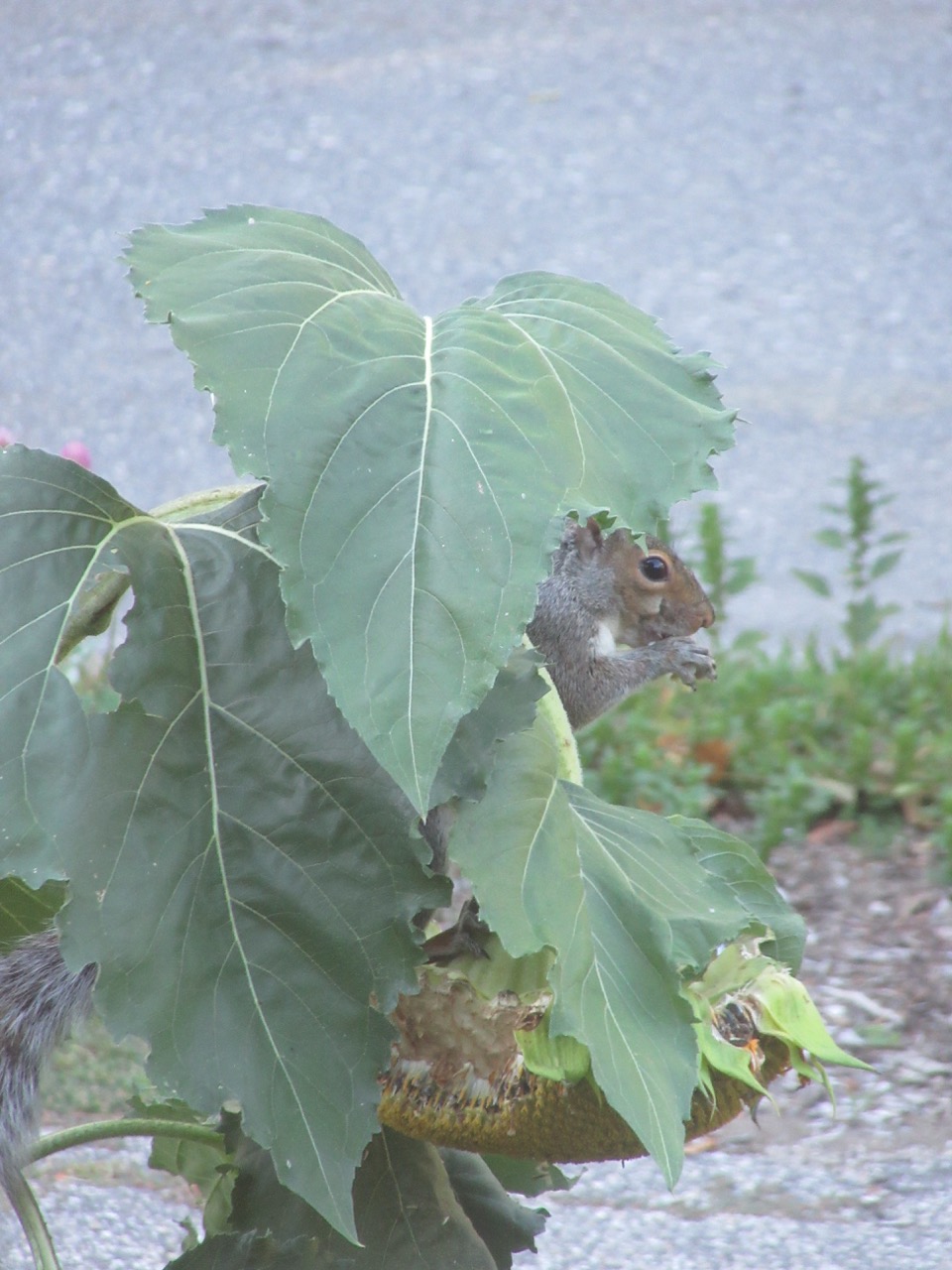
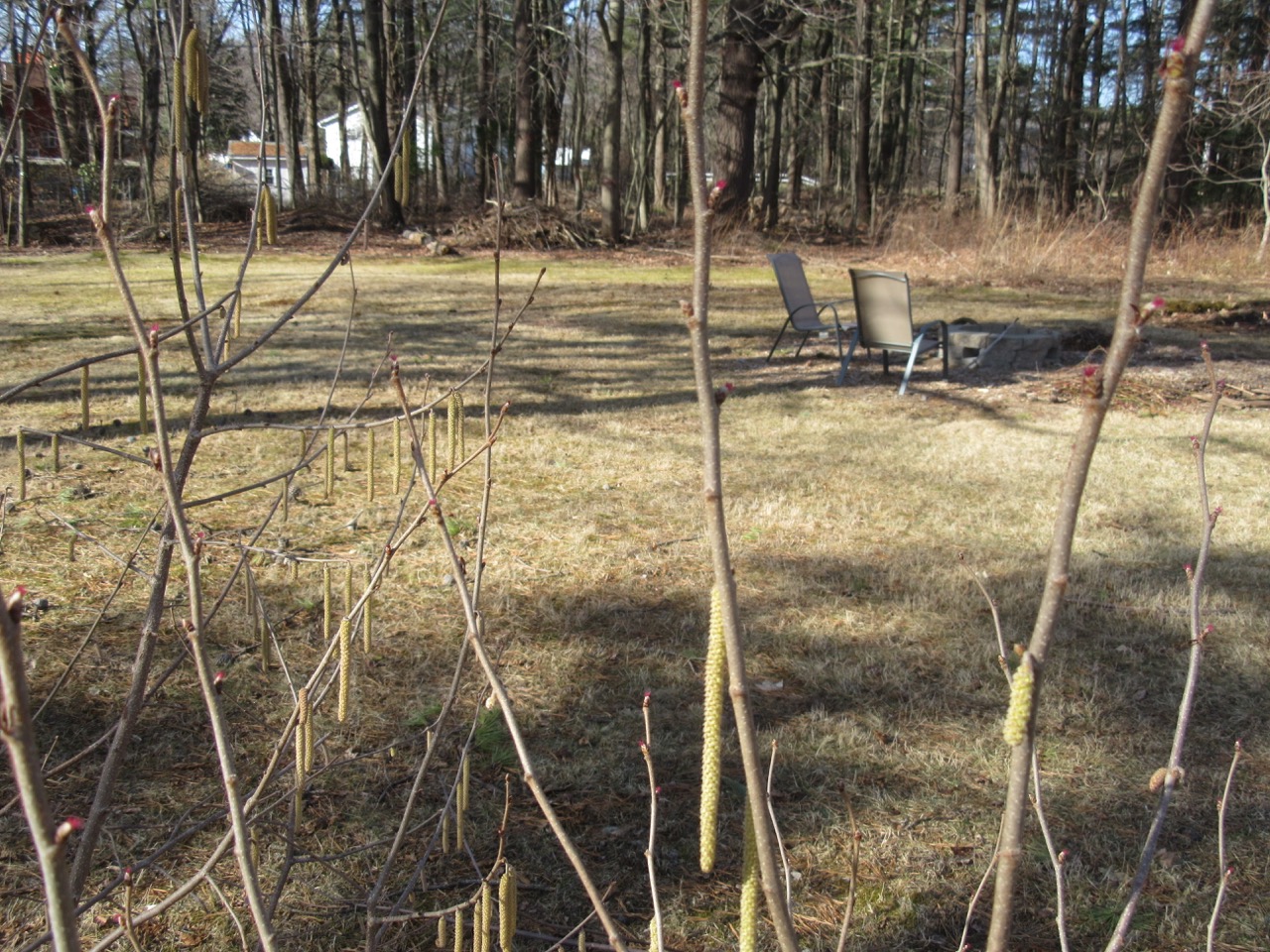
Likewise, deer might be a blessing for hunters, but destructive to trees and gardens. We see about one deer each year passing through the back of our yard. We used to have a gang of turkeys that roamed the streets of our neighborhood. They are gone now. Eventually, the groundhog disappeared too–I think a neighbor had something to do with that. Now, it seems, along with birds, we only have squirrels and a little star-nosed mole that tunnels under our wood chip paths, and an occasional chipmunk. But the squirrels are very adept at causing trouble to our garden. All winter long, for example, they climbed up our hazelnut bushes, eating the catkins that would pollinate the flowers in spring. After, they would act drunk and run around wildly in circles. Eventually I put some nets over the two smaller shrubs, to try to protect them. Maybe it worked? The smallest shrub now for the first time has some “future hazelnuts” forming on the end of its branches. I don’t know why the larger two do not.

Sometimes I am amazed at what grows, what we can harvest. I just cut a whole bunch of soft thyme to dry, and I’ve been finding wine cap mushrooms hiding under clover to add to meals. The sea kale was delicious, and now its flowers smell like honey. There are green berries on the blueberry plants. I got the advice to buy some fake rubber snakes and hang them in the trees to scare off the squirrels–as long as I move them every few days. Last night, Margy and I sat in the back of the yard and watched fireflies signaling to each other in the tall grasses and weeds. In this garden, I am bewildered, sometimes discouraged, often exhausted, and always humbled by how little I know, and how difficult it is. What are you trying to teach me, little squirrels?
 The path forward will not be a straight line. I find hope in that. A river or stream meanders on its way to the sea. [Thank you Starhawk for teaching me about this!] Because of the friction of the river bed, the water on the bottom of the river moves more slowly than the water on the top. So it creates a spiraling current that wears down one bank and deposits sediment on the other, and then vice versa, as it moves around and around in sweeping curves. Just so, our journey into a new relationship with all life on earth will meander—I imagine in this case, there is more movement at the bottom of our culture, while the top is going much slower. But since we are all connected, movement in any segment has a ripple effect on the whole.
 One summer several years ago, I attended a two-week Earth Activist Training, which combined a Permaculture Design Course with practice in magical and political work on behalf of the earth. We began with a water ritual. We brought water from the places we lived or the places we may have traveled to pour into one container. At the end, each person took some of the water, and we brought it home with us. One of the teachers for the training was feminist witch and eco-activist Starhawk, whose writings had been important for me earlier in my spiritual journey. She had begun collecting water in this way many years ago. She brought water back from her travels around the world, and asked her friends to bring back water when they went to far off places. They brought water from the sacred Ganges River in India, and from the great Nile River in Egypt; they even brought melted ice from Antarctica. After a while, they had water from every continent.
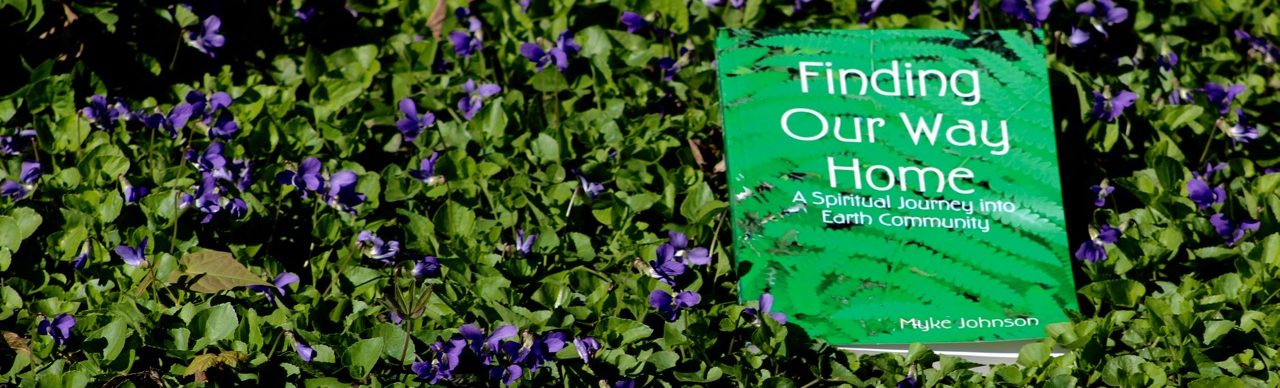
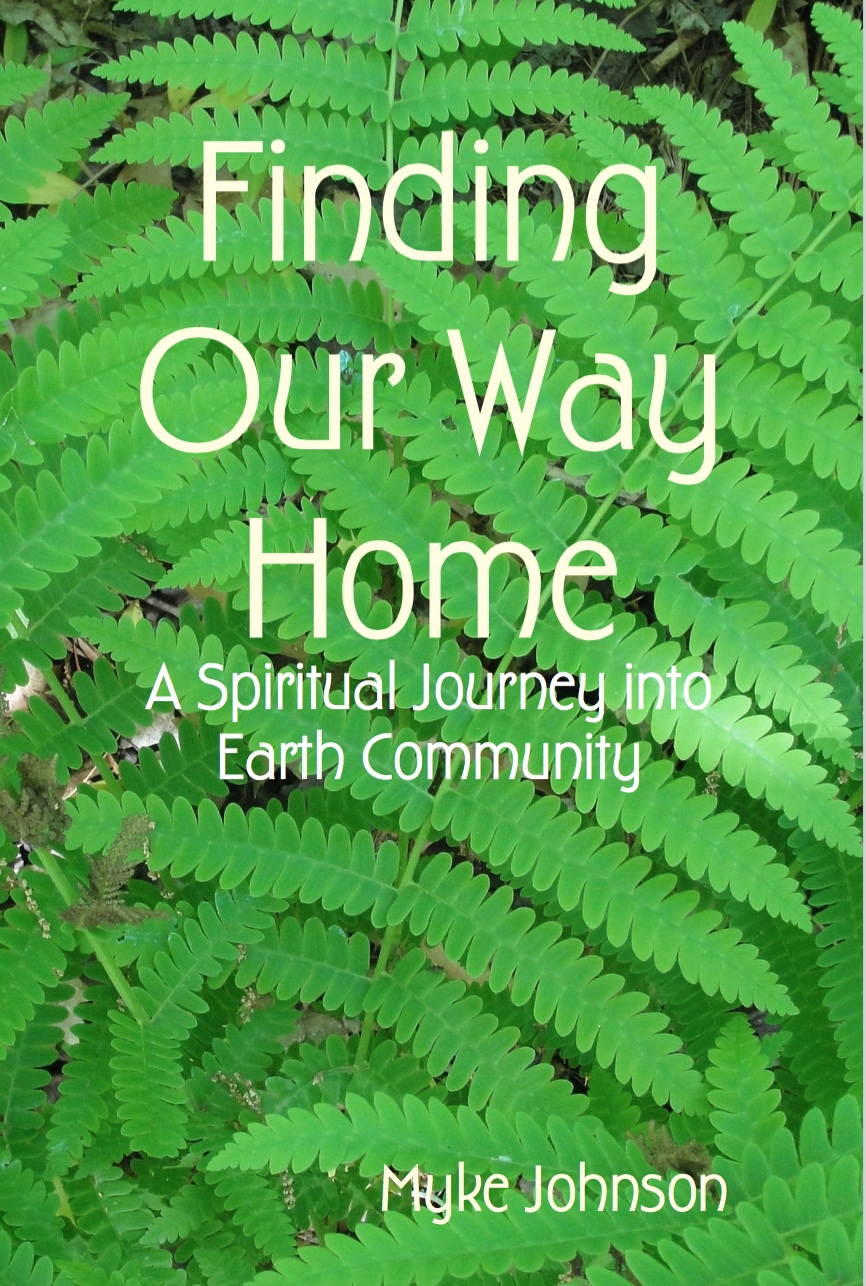
 I am beginning to wonder if the book I have been writing (whether I publish it or not) is creating a kind of unexpected magic to manifest the visions within its pages. Yesterday, for the new moon, I read my journal from the last new moon until this one–a practice I do every new moon day. This particular month has been a time for spiritual restoration. But I noticed something rather curious as I read. Old rituals and practices are finding their way back into my life after a time of absence. And it seems related to the writing of the book, Finding Our Way Home.
 I also write about the spiritual practice of writing–and the book as a ceremony of reconnection to the earth, to each other, to the spirit within all. But the magic I have been noticing this month was completely unexpected, beyond my wildest dreams, and uncanny in its particularity. I wonder if when we write our hopes and visions, when we express our gratitude, when we imagine and tell the stories, there might be an energy that starts to percolate. What has lain dormant wakes up and tries to find a way to express itself. All I can say is wow, and thank you.
 Finding Our Way Home