Stillness

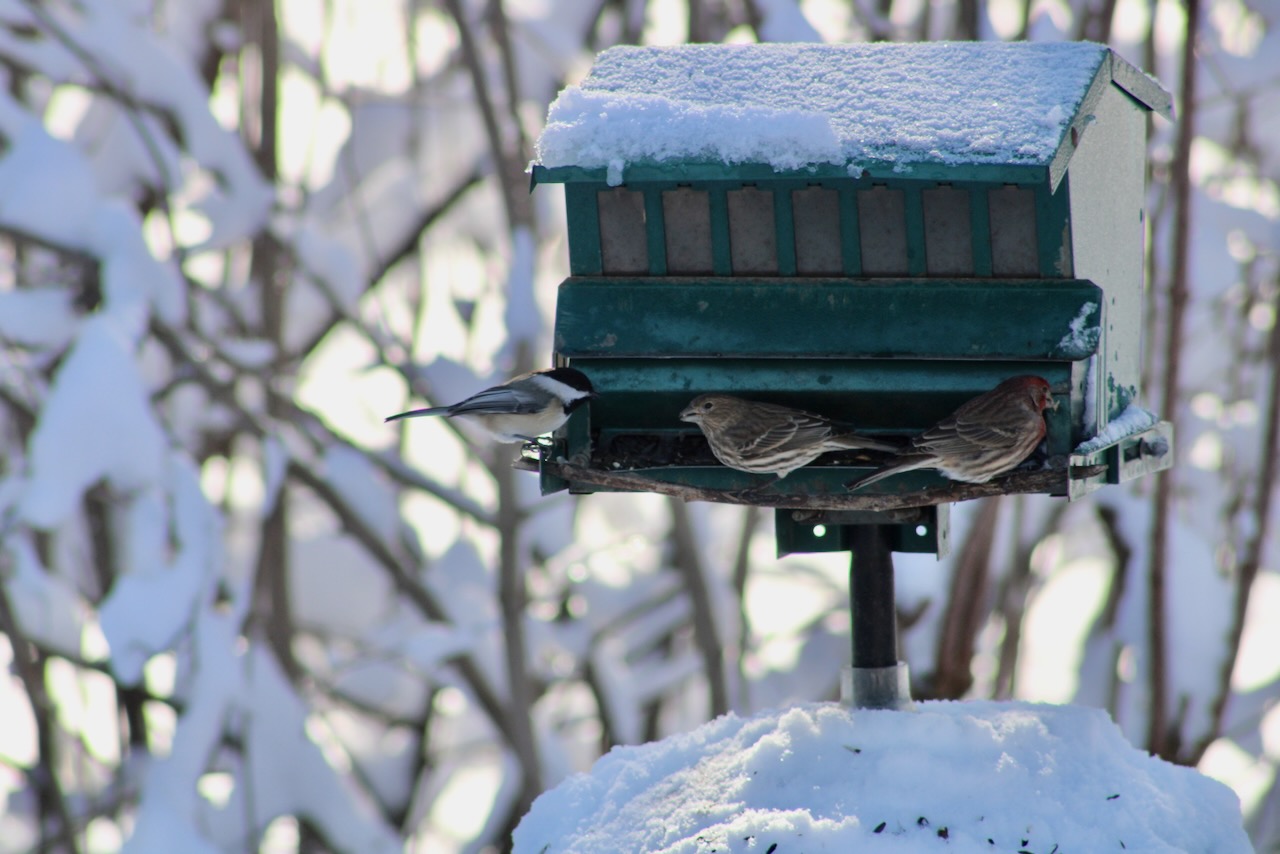
Snowy setting, dark green bird feeder with three birds, a chickadee and two finches.

I have much less energy than I used to. I notice it in my spiritual practices. I don’t seem to do rituals anymore such as lighting candles or building a fire in the yard. I haven’t written a blog post for a month. All that I still do is to write in my journal each morning, and if I can, take a short walk to the nearby Capisic Brook. During each of these, I express gratitude for my life, and sometimes I ask for help. This is my spiritual practice now.

I am grateful for a new day of living. When I reach the brook, I turn to the four directions. To the East, I express my gratitude for the sky, for birds, for their singing. To the South, I am grateful for the sun, for fire, for plants. To the west, I am grateful for water, for the brook, for snow on the ground. To the North, I am grateful for soil, for animals, for the earth.

I am still trying to learn and speak Passamaquoddy/Wolastoqey, so I speak these gratitudes in the Wabanaki language of this place. I can do these sentences, but I’ve reached a point in my learning that is very challenging. I don’t know if it is my tired brain that can’t move forward, or if it is the differences between the shape of the language and the shape of English. My teachers seem pleased with my progress, but I can’t seem to get my mind to think in the language even when I am listening to the language. Still, one of the primary lessons I have learned is the importance of gratitude, so perhaps that will be enough if I can’t do more. I am grateful for the gift of learning the language.

I still have my questions about what this time of my life is all about. The limits of illness keep me from activism in a time of great oppression and cruelty in our country. Genocide continues and my heart hurts with not being able to do anything. I count it a good day when I can bring fresh water to the birds, fill the feeder with new sunflower seeds, and then do our dishes and prepare meals to eat. Still, the birds continue with their small lives, happy to eat the seeds and drink water. So perhaps they are my teachers. Grateful for food and water. Can it be enough?
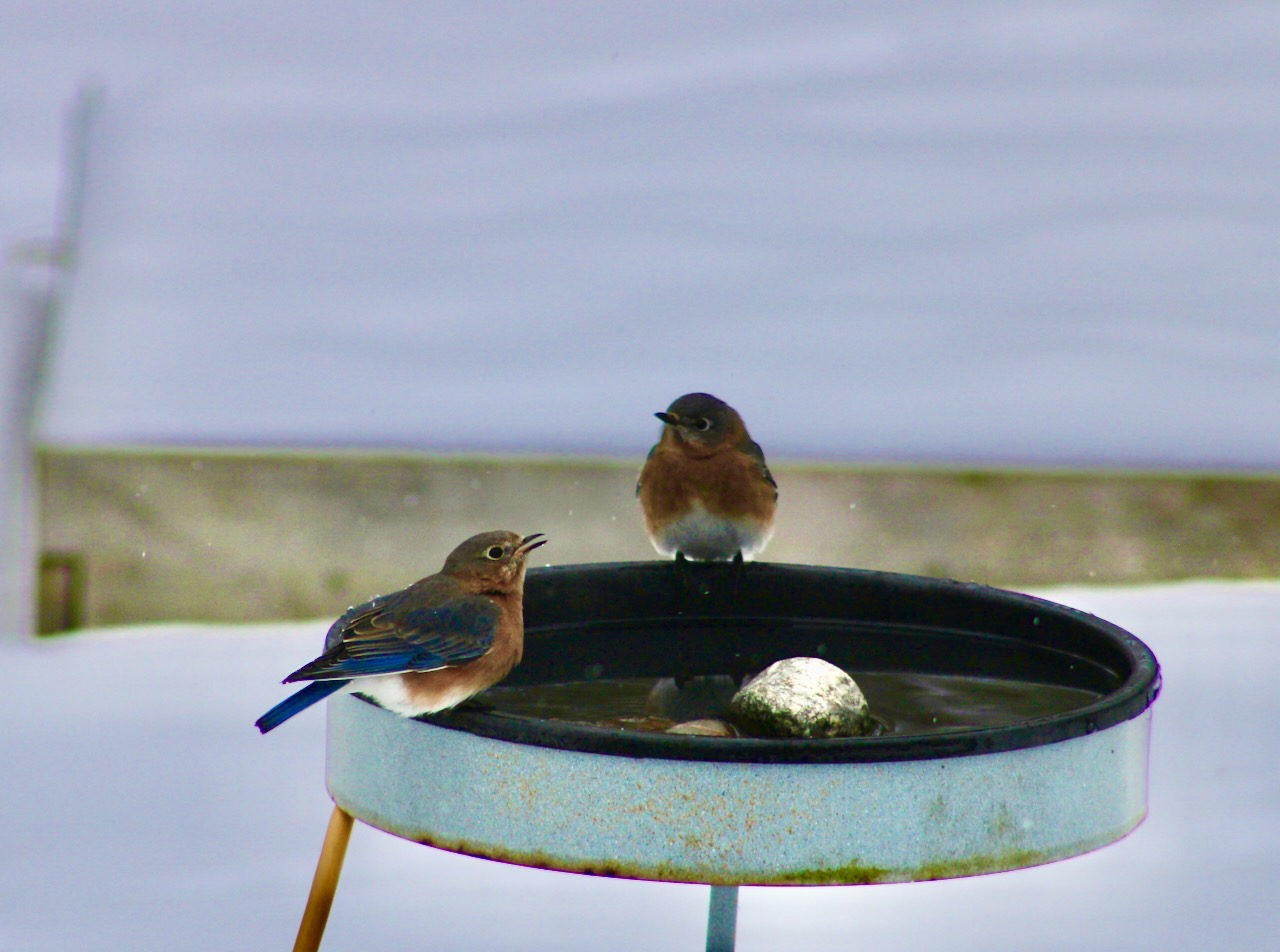
Two bluebirds perches on a circular heated bird bath.

At Home

Picture by Arla Patch, James Francis

With these last few quiet days at home, Margy and I were finally (after almost four years) able to take down from the attic all of our wall pictures, and decide how we wanted to decorate the walls of our living room and kitchen. It was especially wonderful to place over our fireplace hearth this print, Stewardship of the Earth, by James E. Francis and Arla Patch. We had purchased it several years ago in a fundraiser for Maine Wabanaki REACH.  Here is more information about it from an article in the Friends Journal.

This work of art is a collaboration between James E. Francis, Penobscot artist and director of cultural and historic preservation for the Penobscot Nation, and Arla Patch, artist, teacher, and [at that time] member of the communications subcommittee of the Wabanaki Truth and Reconciliation Commission.

It was made for a western Maine community celebration of the native woman Molly Ockett (c. 1740–1816, Abenaki nation, Pequawket band). The theme of 2013’s MollyOckett Days Festival was “Stewardship of the Earth.” James created the central image of the tree that becomes the earth. Arla created the context based on the European American tradition of quilts. James provided the symbols, which represent the four remaining tribes in the Wabanaki Confederacy: the Penobscot, the Passamaquoddy, the Maliseet, and the Micmac.

A theme of the four directions, which comes from both Native American spirituality and ancient Celtic tradition, is depicted as the night sky for the north; the sun rising over “second island” next to the Passamaquoddy land of Sipayik; the midday sky for the south; and the sun setting over the White Mountains for the west. “Agiocochook” (home of the Great Spirit), also known as Mt. Washington, is included in the western sky.

Blueberries are included for the role they have played in sustaining Maine native peoples historically and to this day. Maple leaves are in the upper corners to honor the development of maple syrup by the Wabanaki.

When we put this picture on the wall, along with a few others around the room, I found myself feeling rooted and joyful, at home in a deeper way than before. It was as if some mysterious magic had created a circle around us, and we were aligning into harmony and beauty.

May that beauty bring us hope and strength as we enter a new decade, a decade that will be pivotal in our collective stewardship of the Earth. May we human beings find a way to live in harmony with all of our relatives on this planet that is our home.