What kind of God do you believe in?

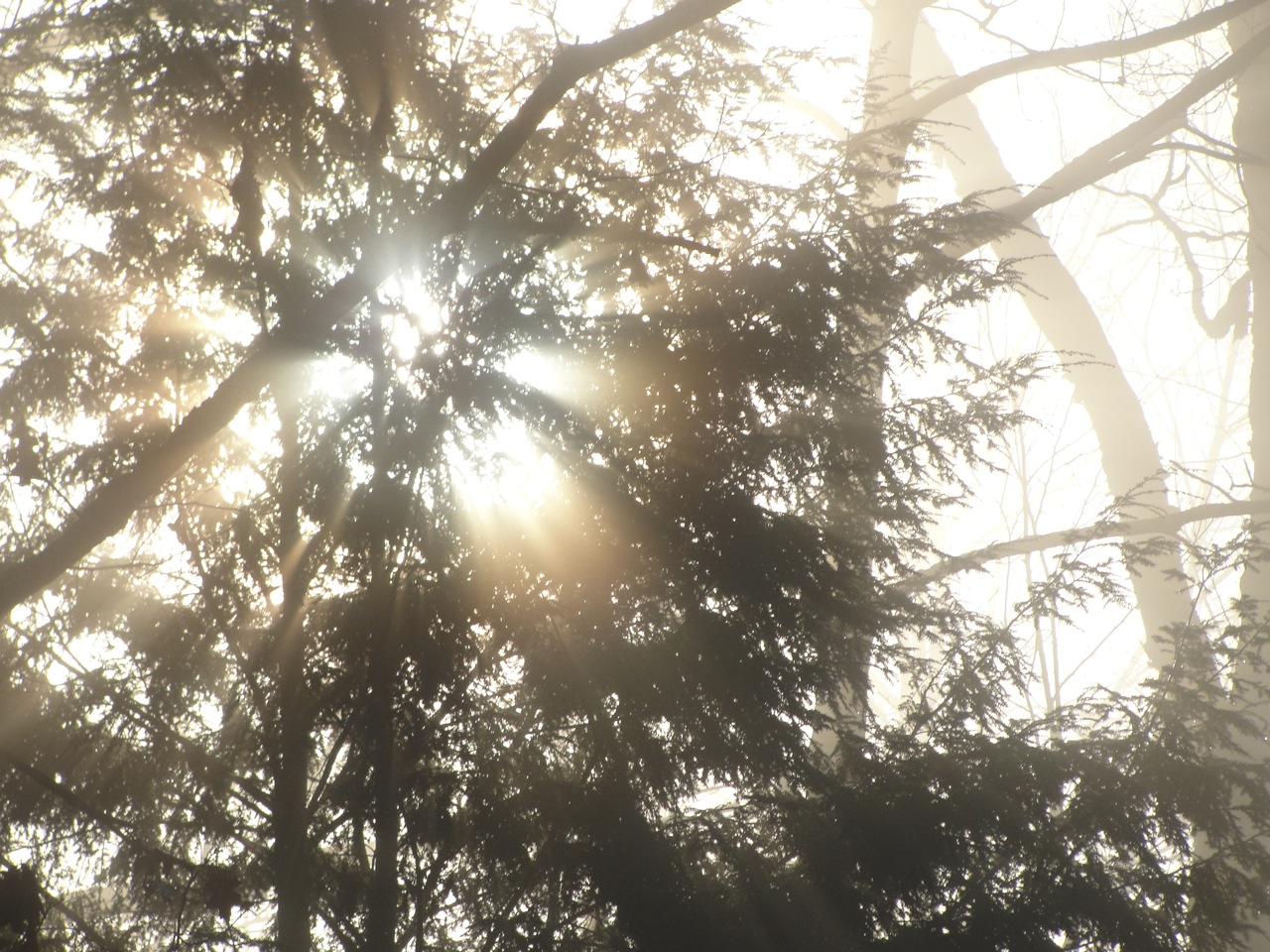
Winter Sun DSC09206

I have never believed in God. Not in your God anyway; the one who looks down onto his chessboard and moves the pieces according to his pleasure, occasionally glancing up at the face of his Adversary with the smile of the one who already knows the outcome. It seems to me that there must be something horribly flawed in a Creator who persists in testing his creatures to destruction, in providing a world well stocked with pleasures only to announce that all pleasure is sin, in creating mankind imperfect, then expecting us to aspire to perfection. …There must be something else, I told myself repeatedly; something beyond sin and solemnity, dust and devotion; something that loved life as indiscriminately as I did.
                                                                Joanne Harris from Holy Fools, p. 32-33.

Throughout history, people have wrestled with the mystery of powers greater than themselves. There are many ways that people have understood these powers—some peoples believed in a pantheon of Gods and Goddesses who ruled various aspects of life; others claimed that there was only one Supreme Being, while still others espoused a belief in natural processes that have unfolded to create the universe as we know it today. We often hear the question now framed simply as: “Do you believe in God?”

Many of us, as children, are presented with one idea of God, framed as if it were the only possible idea of God. If that idea doesn’t work for us, or even hurts our spirits, we may reject the whole notion of God, without further reflection. But there is not just one idea of God, there have been many. People imagine God in one form or another, and it is important to realize that our images of God are not what God really is.

God is a name that some give to the mysterious forces that sustain and uphold the larger reality of which we are a part. These forces are beyond our capacity to actually know or define. We understand them through the use of symbol and analogy. We say God is like this, or God is like that. So, rather than ask, “Do you believe in God,” I think it is much more important to ask “What kind of God do you believe in?” or perhaps even, “What kind of God do you not believe in?” 
Re-imagining God?

If we seek some larger truth, we need to be open to our human experience. This approach sets me apart from people of some faiths, who have an idea of God that is mediated through external religious authority. Some religions believe that certain leaders or scriptures have the truth about God and reality, and the role of other persons is to follow and obey their authority. In these religions, a person may be instructed to discount their own experience as faulty or sinful, in favor of the wisdom of the leader. But that is not what I believe.

Perhaps I have been hurt too deeply by the misused authority of religious leaders. The very idea of God has felt corrupted by the betrayals of religious institutions. Alice Walker explores this question in her novel, The Color Purple. Two black women, Celie and Shug, talk about the God that they find in the white man’s Bible. Shug says, “Ain’t no way to read the bible and not think God white… When I found out I thought God was white, and a man, I lost interest.”

There was a time in my life, too, when the God of the churches didn’t work for me. At first, when I was a child, God was like a perfect father. I learned about this God from my Catholic family. My idea of God helped me as a child: I felt held in the care of a strong and loving presence. Later, when my family and I became a part of a Pentecostal movement among Catholics, this community also believed that God was a loving father. They emphasized that the Spirit would communicate with us directly and would guide us on our path. It opened a beautiful door to a spirituality of direct experience.

But by and by, a problem occurred for me. This Spirit seemed to be guiding people in really different directions. One man heard the Spirit say that men should be stronger leaders, and women should be only in supportive roles. But the Spirit in my heart was saying that men and women were equal. So why were my gifts and energy not valued? I didn’t feel equal enough in that group to express my truth, so I left instead. I felt like my heart was broken.

Later, the work of feminist philosopher Mary Daly helped me better understand how culture influences our most personal images and experiences. A white male-dominated culture will create white male-dominant images of God. We draw a picture of God shaped by our cultural expectations. And those images in turn reinforce the cultural values by which we live. The father God was white and male and reinforced a system of domination by white men. So where did that leave me and other women and those who were oppressed by racism?

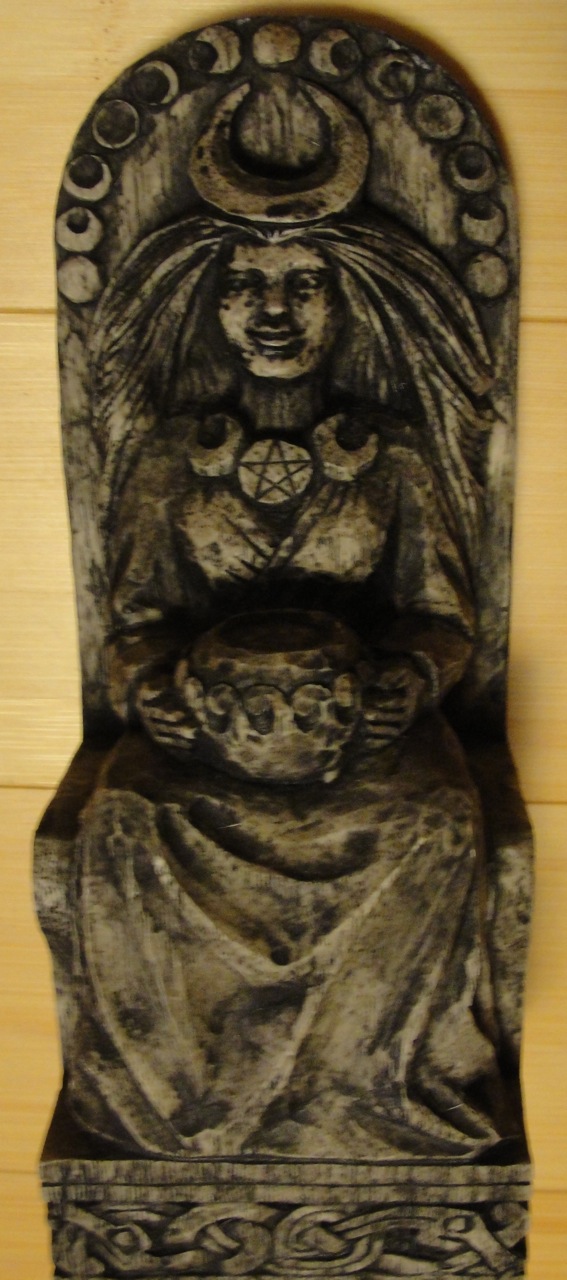
For many years I didn’t know what to do about God. The word had become almost noxious to me, and connected to oppressive forces in my life. Yet I still felt a relationship to some sort of spiritual experience. For a while I didn’t know how to imagine or think about it. Seated GoddessBut I was part of a group of women who were wrestling with all of this together. We began to counter the oppressive forces of religion by creating new images of the divine in a conscious way. We re-imagined God as female, by calling her Goddess. We realized that many cultures have worshipped the divine in female form.

But is it possible to imagine a Goddess and experience her as real? What is real and what is imaginary? Here’s the thing I discovered. The Goddess began to feel real to me when my life started to change. Something is real when it makes a difference to us, when it causes transformation in our lives. Images become real when they open a door. The Goddess became real when the power of women became real—when we were able to embrace our own sacredness, affirm our own intrinsic value and dignity, and live out our own gifts and talents and leadership.

In The Color Purple, Shug also found new ways to imagine God. She said,

My first step from the old white man was trees. Then air. Then birds. Then other people. But one day, when I was sitting quiet and feeling like a motherless child, which I was, it come to me: that feeling of being part of everything, not separate at all. I knew that if I cut a tree, my arm would bleed. And I laughed and I cried and I run all around the house. I knew just what it was.

Sun in Trees DSC05525

Quotes from Alice Walker, The Color Purple, p. 166.
Mary Daly, Beyond God the Father, (Beacon Press, 1973)

Do You Believe in Rocks?

Beach RockThe word spirituality comes from the Latin root spirare, which means to breathe. When we breathe, we are alive. We are in relationship, physically, to the world around us, to all other breathers of air: all the human beings, all the animals and the birds, all the trees and the plants. It is first of all a very material, chemical exchange. Breathing is life shared among many beings. When we stop breathing, we die. Breathing might be called the first prayer. Spirituality is first of all about what breathes us into life, what inspires us.

But this word spirituality also comes with a lot of baggage. It has been associated with dogma and religious doctrine. It has been understood as separate from the earth and the body and our physical reality, and also declared more important than our physical reality. Some people have been repelled by the idea of spirituality because they associate it with the irrational and the supernatural, something that requires accepting beliefs that don’t make sense, that don’t fit the facts.

However, spirituality doesn’t have to carry all that baggage. In fact, it may be critical to our lives that we unpack that baggage and find a definition of spirituality that can breathe again. And here is one place to start: spirituality is not about our beliefs, but about our experience. Spirituality is our experience of the larger reality of which we are a part. Spirituality is our experience of connection—our connection to this living earth and all its creatures, our connection to other people, our connection to all that is mysterious and beautiful at the heart of life.

Spirituality is like breathing. Just as the invisible air enters our lungs and brings oxygen to each cell, so spirituality—as experience—brings the outer reality that is so much bigger than we are into the inner feeling of it. Each person’s inner experience may be different from that of their neighbor. When we emphasize experience rather than require certain beliefs, our religious communities can include spiritualities as different from each other as Pagan and Atheist, Christian and Jew. Each person can follow a path that fits their own experience of reality. We are not asked to believe in a particular spirituality, but to be open to the possibility that people’s spiritual experiences have validity, even if they are different from our own.

Now, some might ask, “How can atheists have spirituality?” If we understand spirituality as our experience of the larger reality, then atheists have spirituality when they experience, in their own meaningful way, that larger reality of which we all are a part. Perhaps that experience is mediated by science or skepticism or meditation. That’s fine. Spirituality does not require a belief in God or Goddess or heaven or hell or any of the ideas that have become associated with spirituality. It is not about belief, but about experience.

Pagan writer, Starhawk, describes this distinction between beliefs and experience in regard to her experience of the Goddess. She says:

People often ask me if I believe in the Goddess. I reply, ‘Do you believe in rocks?’ …The phrase ‘believe in’ itself implies that we cannot know the Goddess, that she is somehow intangible, incomprehensible. But we do not believe in rocks—we may see them, touch them, dig them out of our gardens, or stop small children from throwing them at each other. We know them, we connect with them. In the Craft, we do not believe in the Goddess—we connect with her; through the moon, the stars, the ocean, the earth, through trees, animals, through other human beings, through ourselves. She is here. She is within us all.

Starhawk, The Spiral Dance