Resilience Circles

There are many people who are already hard at work building connections based on partnership and sustainability. In the fall of 2010 I had the opportunity to participate in a facilitator training for “Resilience Circles.” Resilience Circles are groups of ten to twenty people who gather together in regular meetings to support each other through economic and ecological changes.
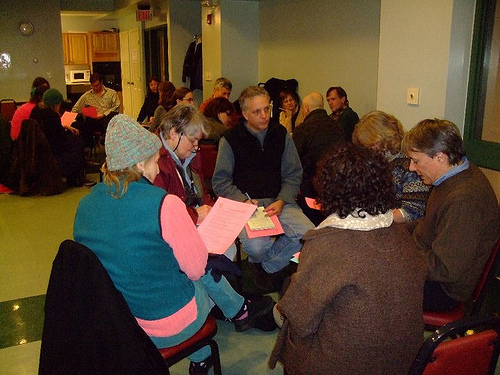
Resilience Circle Training/ Licensed by Creative Commons

Resilience Circle Training/ Licensed by Creative Commons

Our trainer Chuck Collins wrote:

The dominant messages in the U.S. economy are “you are on your own” and “some people are going to be left behind.” Countering this isn’t easy. For many, talking about their economic anxiety and asking for help is difficult and shaming. But to survive the coming period of uncertainty, we must regain use of our mutual-aid muscles, many of which have atrophied from lack of use.

The three main functions of Resilience Circles are to increase our understanding of the larger economic forces on our lives, to open up opportunities for mutual aid and support for local economic challenges, and finally, to engage in social action to create changes that can bring about a more secure and sustainable future.

We explored questions like: Why is the economy in distress? What is our vision for a healthy, sustainable economy? What are the sources of real security in our lives? What can we do together to increase our economic security at the local level? How can we help our neighbors facing foreclosure or economic insecurity? What public policies would make our communities more secure?

Social scientists say that the stronger our social networks, the more resilient we will be in a crisis. When I was working in direct support of homeless people, I noticed how often someone became homeless because of isolation—they did not have a strong social support system, and so a crisis became a catastrophe.

There are many ways that working together can enhance our economic well-being. The Resilience Circles begin with small mutual aid projects. For example, one idea was a weatherization round robin—a team of five people agree to help each other get ready for the winter. Each host buys materials such as caulk and plastic sheeting, and then the group spends a few weekends getting all their homes ready. Another idea was a babysitting coop, where parents take turns watching each other’s children, keeping track with tokens for hours of childcare. Tool sharing, job swapping, meal exchanges, bartering—the resources we have among us are many, and the options are only limited by our collective creativity.

The underlying principle of Resilience Circles is that our greatest source of security and wealth is in our connection to each other, and our shared stewardship of the earth.
Compete or Connect?

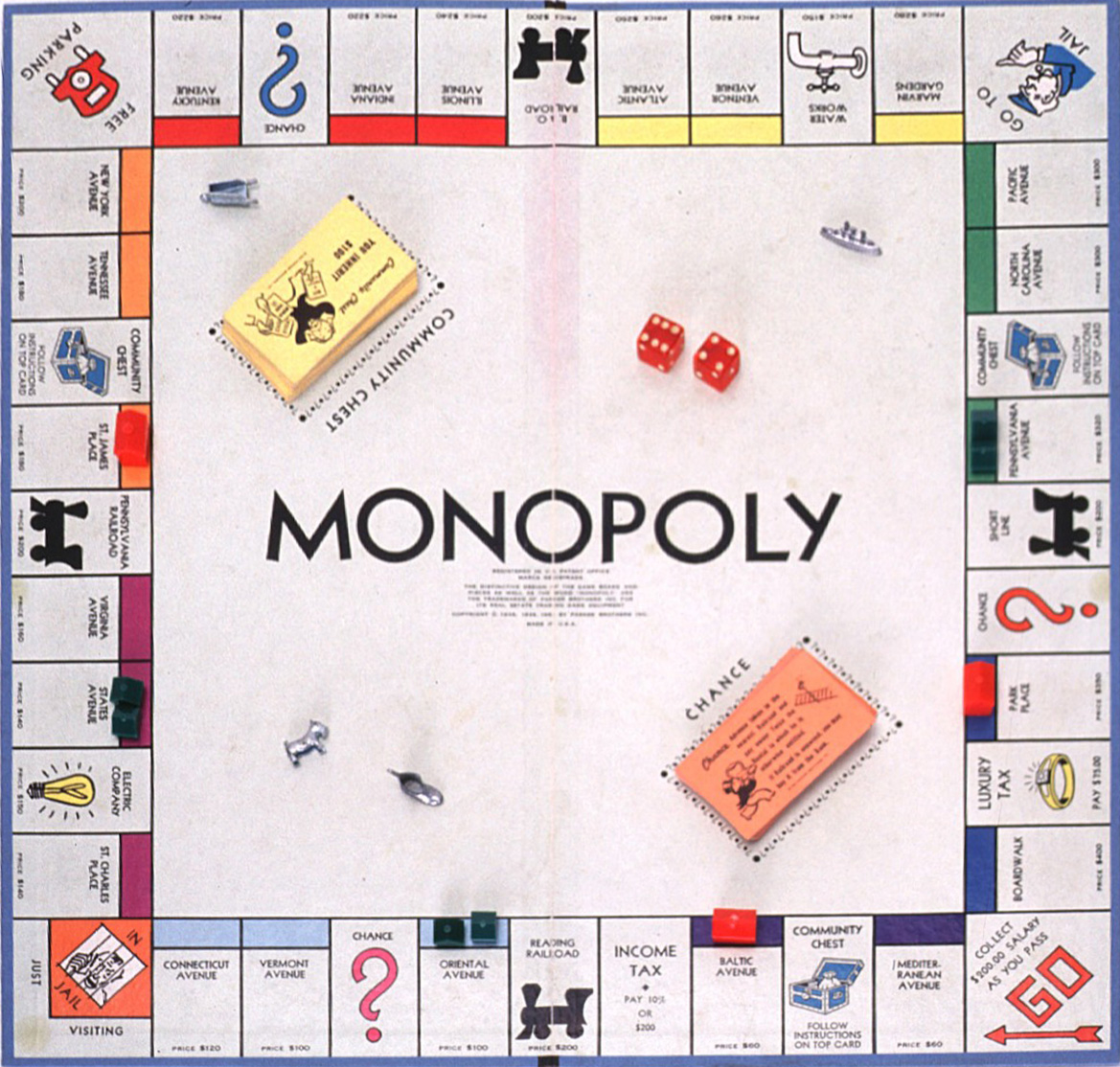
Monopoly BoardWhen I was ten, my younger sisters and I all got chicken-pox at the same time. My mom helped to keep us entertained at home by playing with us the board game Monopoly. My sister Nita and I were great little capitalists, and played the game to win. We would try to get as many properties and houses and hotels as we could, so we could charge huge rents when the other players landed on our spots. The goal was to bankrupt the other players until one of us was the last player in the game.

But my mom and my sister Vonnie had a totally different approach. They were tenderhearted, and didn’t want anyone to have to leave the game. So if someone was about to lose all their money, my mom and Vonnie would loan them some of their own Monopoly money to keep them in the game.

I remember this now and think—what a picture in miniature of the conflict of values in our larger society! One message we learn, even as children, is to try to get as much as we can, and try to win out over all the other people. Compete and consume. But my mother was bringing us another value, one that many parents want to teach their children, the value of connection and cooperation. She wanted to keep all of us at the table, so that everyone had a good time while we played our games.

What changes when we wake up to the reality that we are all connected to one another? 

The Larger Whole

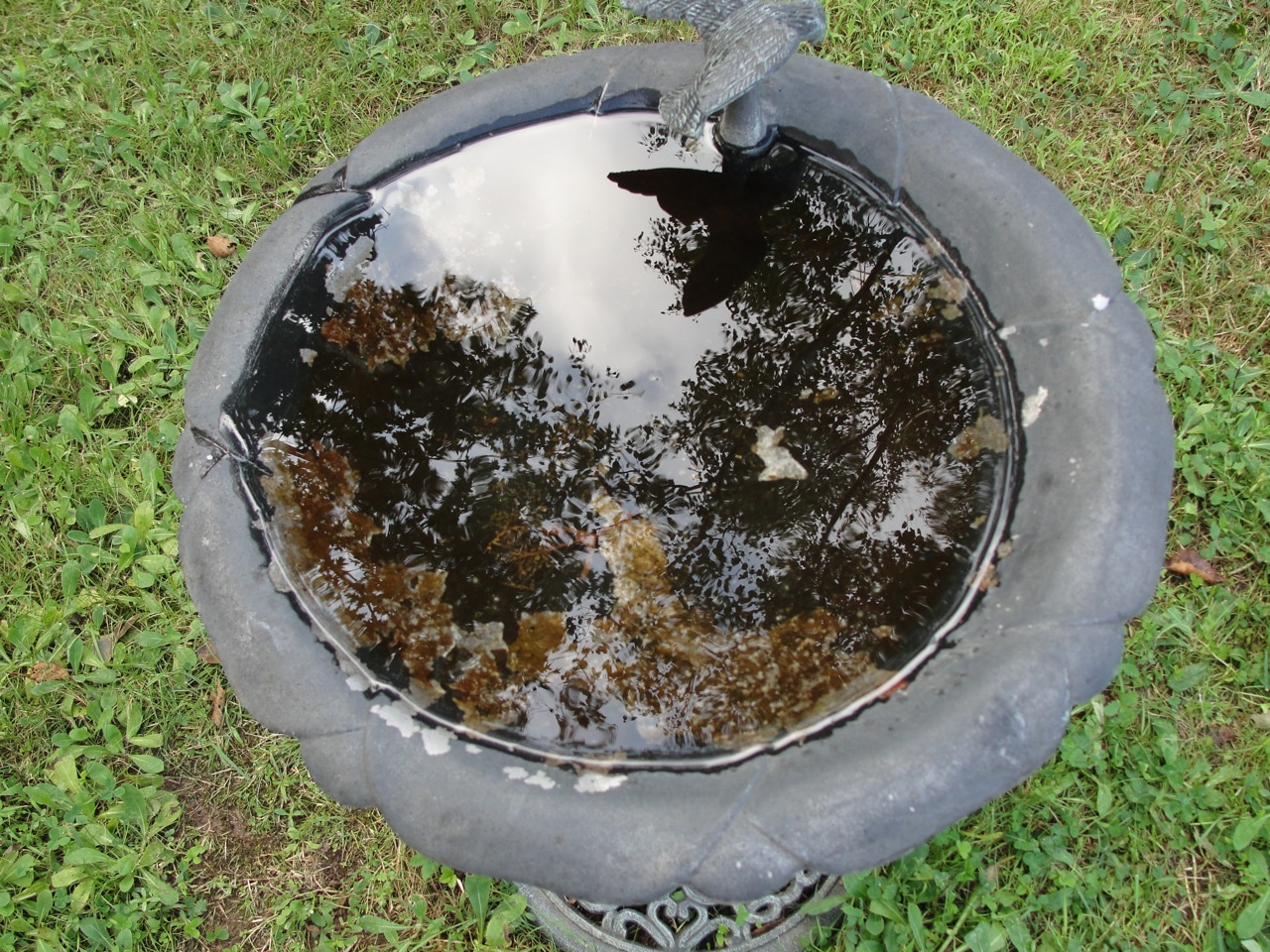
Reflected SkySpirituality is our experience of connection to the larger whole of which we are a part. I believe that each being is sacred, and we are all one family, one circle. My deepest experiences convince me this is true, even though we may forget, even despite the ways we may be estranged. Linda Hogan writes that the purpose of ceremony is to remember that all things are connected. She says:

“The participants in a ceremony say the words ‘All my relations’ before and after we pray; those words create a relationship with other people, with animals, with the land. To have health it is necessary to keep all these relations in mind.”

As we begin to build bridges across the broken places within our hearts, across the broken places between peoples, across the broken places between people and the earth, we are doing the work of mending the world. We are awakening, we are remembering, the reality in which we actually live, the unity of all. The Buddhists call it inter-being. In South Africa it is called ubuntu: we are all born to belonging, and we know ourselves in just and mutual relationship to one another. We move beyond the small self of the ego, into the larger Self some call God, or what I have called Mystery. Thomas Merton writes,

“We are already one. But we imagine that we are not. And what we have to recover is our original unity. What we have to be is what we are.”

The purpose of spirituality is to remember that all things are connected and to heal the brokenness between us.

An old Rabbi once asked his pupils how they could tell when the night had ended and day had begun.
Could it be,” asked one of the students, “when you can see an animal in the distance and tell whether it is a sheep or a dog?”
No,” answered the Rabbi.
Another asked, “Is it when you can look at a tree in the distance and tell whether it’s a fig tree or a peach tree?”
No,” answered the Rabbi.
Then what is it?” the pupils demanded.
It is when you can look on the face of any man or woman and see that it is your sister or brother. Because if you cannot see this, it is still night.”
                                                                             (Hasidic Tale)

Quotes from Linda Hogan, Dwellings: A Spiritual History of the Living World, (New York: Norton, 1995)
Thomas Merton: Essential Writings, edited by Christine Bochen. (Maryknoll NY: Orbis Books, 2000)
Hasidic Tale, Quoted in Spiritual Literacy, edited by Frederic and Mary Ann Brussat, p. 502. 

Broken Histories

Mab Segrest, in her book, Born to Belonging, examined the effect that the institution of slavery has had on the self-understanding of people in America, particularly the white people of her own family. She believes that a kind of spiritual anesthesia developed—a cutting off of compassion and connection—in order for a person to own slaves.

She ponders what it did to a man’s soul to sell his own children. Though it was not openly discussed, it was true that many of the children born into slavery had been fathered by the owner of the plantation. White people had to cut off their emotions, deny their relationships, and numb their spirits, to maintain this horrible institution for four centuries.

Segrest believes that the emphasis on individualism in America is an expression of our spiritual distress. We are all born into families, each with their own histories of disconnection or oppression that can cause a numbing of the soul. It feels less painful to imagine ourselves as separate, than to acknowledge the abusive and traumatic relationships that have closed our hearts. But when we close our hearts, we also lose our capacity for deep joy. We are not fully alive without each other.

Shortly after I first came to Maine, I visited Indian Island, home of the Penobscot Nation, in a trip sponsored by the Four Directions Development Corporation. During a beautiful traditional lunch that was prepared for us, we heard about some of the long history of brokenness between white people and indigenous people in Maine, as researched by Donna Loring, who at that time was the Penobscot representative in our State House of Representatives. Near the end she spoke of her belief that America needs to remember its roots. She wasn’t speaking of its ideals of freedom and democracy. Rather she meant that we cannot find the way to peace until we revisit our brokenness.

It is uncomfortable and painful to embrace our brokenness. But if we hope to find wholeness, we must be willing to hear the stories that we tried to forget. To return to wholeness is not to paint over the past with easy brush strokes, but to make awkward and painful attempts to cross over into the experience of the other. It takes a long time, and a lot of courage. In my experience, it is often easier to feel at one with nature than to feel at one with our fellow human beings. But I have also experienced, after the awkwardness, moments of grace and connection. Moments when we talk and share from our hearts, and feel a sense of wholeness restored.

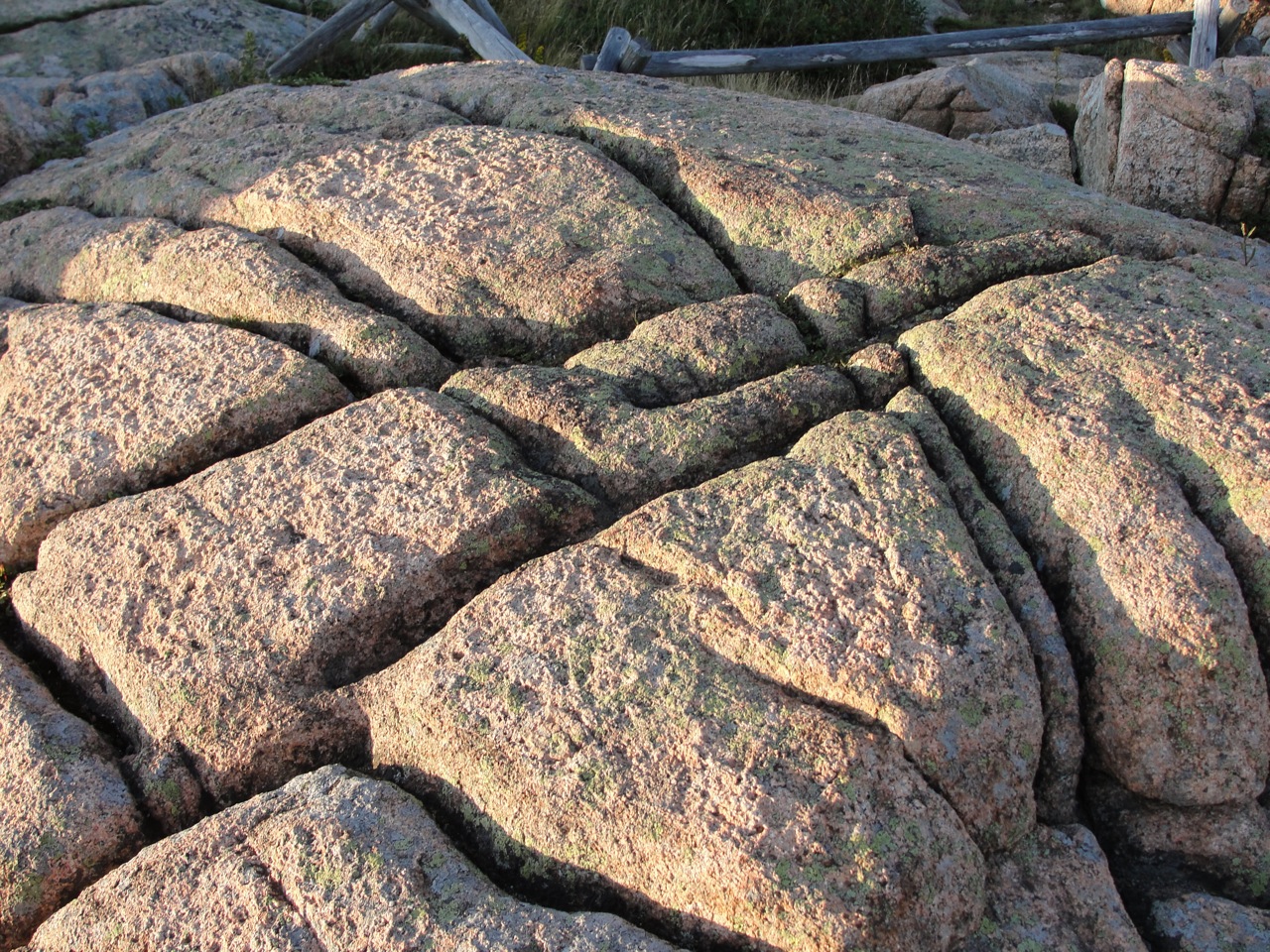
Broken Rock DSC00135

Photo by Margy Dowzer

Webs of Connection

Think about language. Humanity is a social species. Not only our bodies, but our minds are interwoven. Human beings speak to each other. I am able to create sounds with my voice, and a certain meaning awakens in your mind. When I say the color blue, you can hear the word blue, and see it within your imagination. When I say the word love, you can call to mind a whole wealth of feelings and memories.

Web

Photo by Margy Dowzer

We belong to each other. We are part of a larger whole. And yet, we forget. Wars rage on in the Middle East, millions die from disease in Africa for which treatments are already known, poverty sits alongside wealth, industry pollutes the air and water. This is why we need to understand brokenness as well as wholeness. Chickasaw writer Linda Hogan tells a beautiful story of a broken clay woman. She writes:

I remember the first time I saw the clay woman …in a museum gift shop. …Her black hair flowed behind her, and on her clay feet were little black shoes… Her stomach attached to earth, just above North America. Her name was written on a tag, “The Bruja Who Watches Over the Earth.” Bruja is the Spanish word for a woman healer, soothsayer, or sometimes a witch.

I loved the flying soothsayer who protected the lands beneath her. She was connected to them by her very body, the very same clay. …I bought the clay woman and asked the clerk to mail her back to me, then I returned home, anticipating the day The Woman Who Watches Over the World would appear.

When she arrived, she wasn’t whole. Her legs were broken off, the gray interior clay exposed beneath the paint. I glued them back on. Then she began to fall apart in other ways. Her nose broke. Soon one of her hands fell off. The woman who watches over the world was broken. Despite my efforts she remained that way, fragmented and unhealed. At first I was disappointed, but then I thought, Yes, the woman who watches over us is as broken as the land, as hurt as the flesh people. She is a true representation of the world she flies above. Something between us and the world has broken. That is what the soothsayer says.

Linda Hogan’s bruja is an image of a creator who is connected to us in our actual reality, broken as we are broken, not merely a perfection to which we might strive. Broken Web DSC01269The brokenness is within us, the brokenness is between us, and also between people and the earth. But—this is important—we feel broken because we are meant to be connected.

Quote from Linda Hogan,The Woman Who Watches Over the World: A Native Memoir (New York: Norton, 2001) pp. 17-18.

DNA, Breathing & Trees

There are many signs all around us that can help us to awaken from the illusion of our separateness, help us to awaken into an awareness of the larger whole to which we belong. Science has always been a form of revelation for me. For example, I am amazed when I think about DNA. All forms of life are propagated by this microscopic code. The human DNA includes elements in common with the DNA for yeast. Even microbes discovered deep within caves—bacteria that feed on poisonous chemicals and never enter the light of the sun—these strange bacteria also have a DNA code that has been measured by scientists. All life, as we know it, is written in the same language.

Our biological unity is present in the continuous interconnecting of all life on earth. It was bacteria that first began to create oxygen, billions of years ago, originally as a volatile waste product. Now, all of us are breathing oxygen every minute of every day.

Take a moment to notice yourself breathing right now.
As you breathe in, small molecules of oxygen are entering your lungs
and then passing through the membranes of its cells into your bloodstream;
from there those molecules flow to every cell in your body.

Imagine those oxygen molecules flowing down
into your belly, your legs, your toes.
Imagine the oxygen flowing up
into your arms, your face, your brain.

Without oxygen we cannot survive for even ten minutes. When we breathe, we bring into our bodies molecules that have been inhaled and exhaled by other beings. This air is common air. These molecules may have sailed here from the winds of Africa, or through the tempest of hurricanes in Japan. Lions may have roared these molecules; whales may have spewed them forth in a fountain above the sea.Misty Trees

Look at the trees outside your windows.
We breathe each moment with the trees.
As we breathe out, we release carbon dioxide into the air,
which the trees need for life.
As the trees breathe, they take in carbon dioxide
and exhale the oxygen that we need.
Breathing teaches us that we are one.

The Mullein Plant

Mullein Plant

Photo by Forest & Kim Starr, Creative Commons License

As a young adult I became intrigued with herbal healing. I read books that identified particular herbs that could heal different ailments of the body. I learned, for example, that mullein tea was helpful for a sore throat. Then one day, someone showed me a mullein plant growing wild by the side of the road. I suddenly felt the connection: human beings and plants belong together! That mullein plant can actually heal my human sore throat. We are related to each other in some deep essential way.

Spirituality is about experiencing our connection to the earth, to each other, and to all that exists. According to Thich Nhat Hanh, the Vietnamese Buddhist teacher, “We are here to awaken from the illusion of our separateness.” Seeing that mullein plant beside the road brought me a moment of awakening. For that moment, I knew deep in my being, that I was not separate from any of the plants or animals or people on the earth. I realized that, in reality, we all are one.

But time passed, and the illusion of separateness took over again. We are all one, and yet we are also divided from one another. Mother Teresa said, “If we have no peace, it is because we have forgotten that we belong to each other.” Certainly, for most of us, we go through our days forgetting this essential truth. How often do we feel isolated from, or even in competition with, the people around us? In fact, every day we are encouraged to see ourselves as separate and individual, we are encouraged to watch out for “number one.”

A whole series of television commercials come to my mind: a grandmother telling her grandchild to “Get your own bag of chips,” or a man guarding his chicken fingers from his co-workers, or a family getting individual pizzas so everyone can have their own topping… it just goes on and on. There are messages all around us that promote the illusion of separation.

In much more devastating ways, the political idea of a common good is being taken apart in favor of privatization. Programs like Social Security and Medicare are under fire, under the guise of some kind of freedom of choice, with the argument that people can do better on their own, that individuals can maximize their retirement options through private investing.

I am pretty sure that is not true, but what goes unspoken is the shift in the very terms of the debate—we are no longer arguing how to best care for all the members of our society. Rather, we are being asked to buy into a fragmented and individualized world, a place where the important goal is to get the most for myself. Thich Nhat Hanh, Mother Teresa, and other teachers, call us to a different outlook. They call us to remember that we are part of a larger unity. They call us to return to our true wholeness.

Part of the Whole

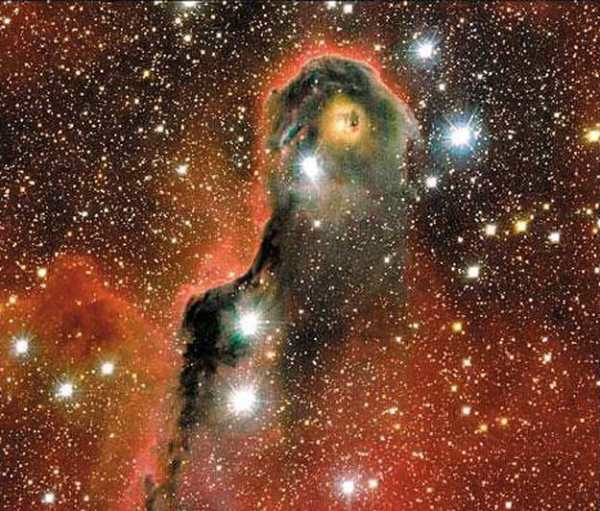
GiverofStarsA Human Being is a part of the whole called by us universe, a part limited in time and space. He experiences himself, his thoughts and feelings as something separated from the rest, a kind of optical delusion of consciousness. This delusion is a kind of prison for us, restricting us to our personal desires and to affection for a few persons nearest us. Our task must be to free ourselves from this prison by widening our circle of compassion to embrace all living creatures and the whole of nature and its beauty.

                                                                                           Albert Einstein

From a 1950 letter, published in Howard Eves Mathematical Circles Adieu, (Boston: Prindle, Weber and Schmidt, 1977).

Active Love

In the great Russian novel The Brothers Karamazov, a wealthy woman comes to seek advice from a holy and renowned priest, Father Zossima. She is anxious about eternal life, and wants to know how she can be sure of it. Father Zossima tells her, there is no proving the existence of God or eternal life. But there is one way she may be convinced of it. “How?” she asks. “By the experience of active love.” he replies. “Strive to love your neighbor actively and indefatigably. In as far as you advance in love, you will grow surer of the reality of God and of the immortality of your soul.”

The woman goes on to tell him that she loves humanity, so much in fact, that she dreams sometimes of leaving her privileged status and becoming a sister of mercy. She would nurse the afflicted and bind up their wounds. She tells the elder, “I close my eyes and think and dream, and at that moment I feel full of strength to overcome all obstacles.” But then she worries that if the patients did not respond with gratitude, if they were rude or abusive, she would be incapable of continuing to love them. And so she is in despair about her quandary.

He replies,

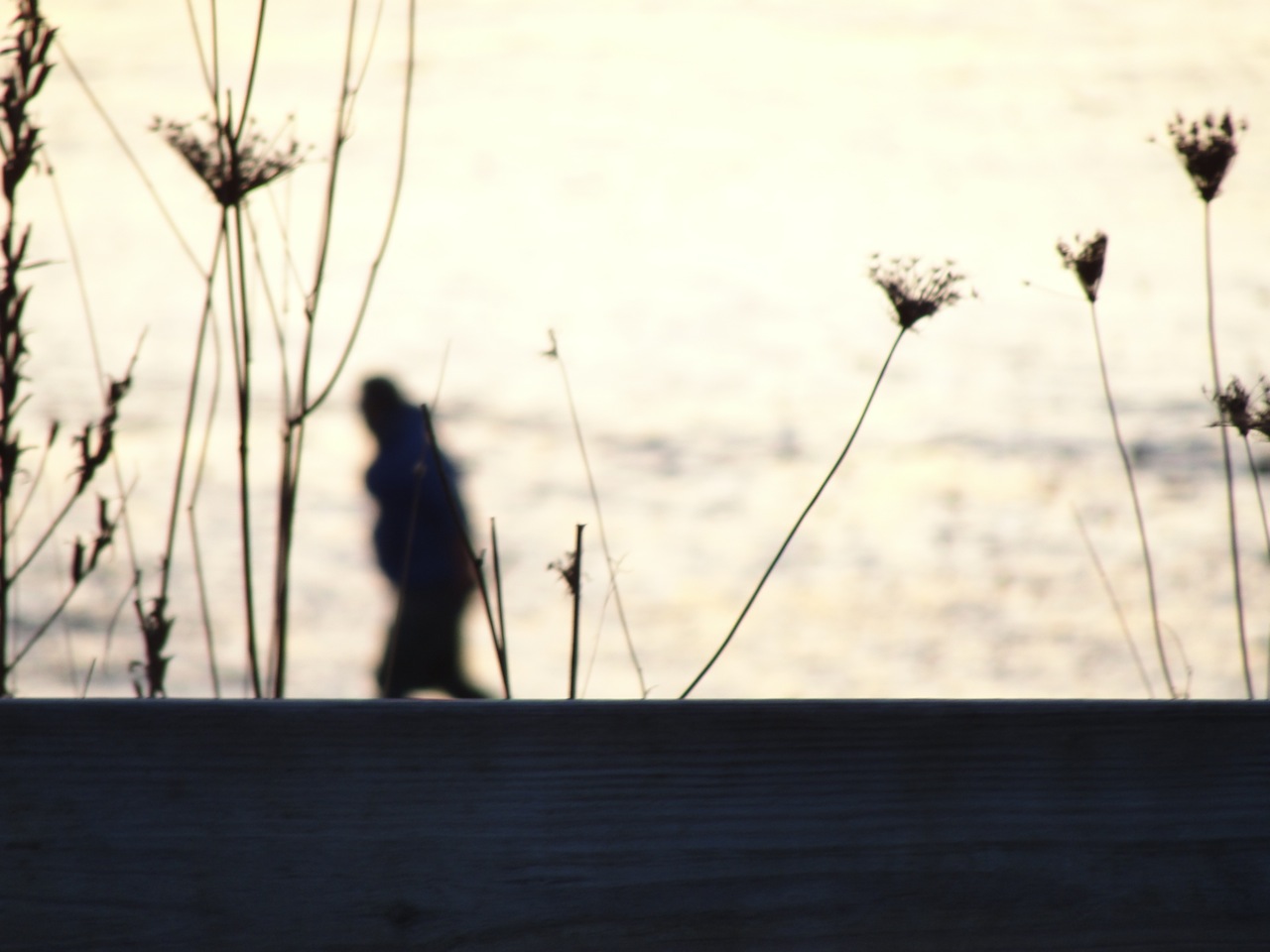
I am sorry I can say nothing more consoling to you, for love in action is a harsh and dreadful thing compared with love in dreams. Love in dreams is greedy for immediate action, rapidly performed and in the sight of all. Men will even give their lives if only the ordeal does not last too long but is soon over, with all looking on and applauding as though on the stage. But active love is labor and fortitude, and for some people too, perhaps a complete science.Person in shadow

Dorothy Day would often repeat the pronouncement of Father Zossima, “Love in action is a harsh and dreadful thing compared to love in dreams.”

We are here to awaken to that kind of active loving, that vision of divinity within each person. I remember an experience that happened one time when I was flying on an airplane, returning home from an event in Washington, DC. I had settled into my window seat, and started to read a book. I can’t remember now what the Washington event was or what the book was, but something had inspired me to be pondering this connectedness of all beings, this divinity within all beings.

Then, two young men climbed into the seats next to me. The man in the middle leaned his head against the back of the seat and closed his eyes. A while into the flight, he started to be sick—his friend gave him a paper bag, and he vomited, mostly into the bag, but also splashing his friend. I was a little horrified, and imagined them with hangovers from some drinking and partying.

But then it struck me that if I truly believed in the connectedness of all beings, I would realize that these men were my brothers. They were part of me, living in another lifetime, another journey. Something shifted within my heart. Instead of judging them, I was able to feel compassion. We didn’t go on to have a long conversation or anything like that—I think I just asked, are you okay? I remember a flight attendant coming by to check, and asking me if I wanted to change seats. But I said no. I was experiencing something deeper, something taught to me by these unlikely teachers.

Quotes from Fyodor Dostoyevsky, The Brothers Karamazov, translated by Constance Garnett, (New York: MacMillan, 1922), pp. 59-61.

Bread

“We are here to awaken from the illusion of our separateness.”  Zen Buddhist teacher, Thich Nhat Hanh invites people to do an exercise, to begin to grasp with our minds the symphony of the larger whole. 

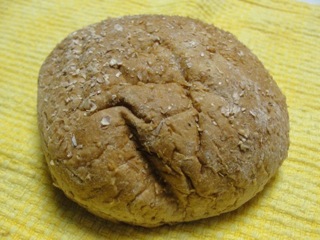
BreadTake an object—any object. He talked about a table, but I would like to reflect on a piece of bread. Find a piece of bread and hold it in your hand. Then, let yourself imagine what has conspired in order for this bread to be here in your hand. First of all, think of the wheat. In order for it to grow, it needed topsoil, with its fungal and bacterial components, its minerals and small worms. It needed the decomposition of the plants of many years, decades, and even centuries to create this fertile soil.

Think about the sun that shines on the earth, and the rain that falls, and the earth itself turning round in its orbit of seasons, and the moon that shapes the tides and the weather, all utterly necessary. Think about the wind, which helps the plants to self-pollinate, and the ancient peoples in the Middle East who began to cultivate the grain during the seventh pre-Christian millennium, and those who developed it and carried it to many continents through the intervening centuries. The wheat that is used in bread co-evolved with human beings, and does not thrive in the wild.

If your bread is made from organic wheat, it doesn’t use petroleum for fertilizer, but it took petroleum in the form of gasoline to harvest it and ship it to the bread makers. Non-organic wheat uses even more petroleum. Petroleum is created from the remains of ancient plants, so this bread is also dependent on them. Think about the metal in the trucks that drove the wheat and in the machines that mixed the bread, and the mines it came from and the factories where the machines were made.

Think about the yeast, and the process by which human peoples discovered and developed the properties of yeast to raise the dough of bread. The honey, and the bees that work tirelessly to make it, and the flowers and their nectar. Think about the water that enabled these ingredients to be blended together. Think about the fuel to heat the ovens.

Think about the farmer, and the miner, and the bread-maker and the factory worker; think about the food they needed to eat, and the clothing they needed to wear in order to do their part of the work that brought this bread to your hand. The trucker, the grocery stocker, the clerk. The houses they live in, their schools and their doctors and their dentists.

Think about their parents, and their grandparents and their great grandparents, and what kept them alive, to bring forth their children, that these people who work might be here today. If you are holding organic whole wheat bread, think about the growing environmental consciousness, that created a market for organic whole wheat bread, after many farmers, bakers and corporations had abandoned the old methods for the soft white appeal of Wonderbread.

I could keep talking all day if I followed all the threads of connection just linked to this one piece of bread. Paraphrasing what Thich Nhat Hahn would say:

If you grasp the bread’s reality then you see that in the bread itself are present all those things which we normally think of as the non-bread world. If you took away any of those non-bread elements and returned them to their sources…[the honey to the bees, the metal to the mines, or the farmers to their parents], the bread would no longer exist. A person who looks at the bread and can see the universe, is a person who can see the way.

 As long as we think of God as “up there” somewhere, like a father or a king or some other kind of person, we imagine that we are separate from God, we imagine that we can think or not think about, believe or not believe in, pray or not pray to that God. But in a spirituality of connection, the gaze shifts to understand that there are no truly separate things, that there is no separate self or separate God—that our “own life and the life of the universe are one.”

Quotes from Thich Nhat Hanh, The Miracle of Mindfulness, Translated by Mobi Ho, (Boston: Beacon Press, 1975) p. 47-48.