

Face to Face

Clouds DSC04297When I was a devoted Catholic child, I learned about the saints who had visions of angels or the Blessed Mother Mary or even Jesus himself. There were the children in Fatima, and Bernadette of Lourdes, and Margaret Mary Alacoque, and Joan of Arc. I wanted to have a vision, too. I prayed for Jesus or Mary to come and show themselves to me and speak to me directly. I imagined spirituality should include a holy person coming down from the sky and standing in front of me. It never quite happened that way. Why not, I wondered? Why tell us these stories if we could not have those experiences?

Ralph Waldo Emerson, the most famous of the 19th century intellectuals who became known as the transcendentalists, wrote something similar in 1849:

The foregoing generation beheld God and nature face to face; we, through their eyes. Why should not we also enjoy an original relation to the universe? Why should not we have a poetry and philosophy of insight and not of tradition, and a religion by revelation to us, and not the history of theirs?”

A spiritual journey is our search for our own “original relation to the universe.” A spiritual journey is our search for our own face to face, personal experience of “God and nature,” whatever those might turn out to be. A spiritual journey brings us to our own experience of the larger reality of which we are a part, our awareness of connection to the earth, to each other, and to the Mystery within and between all life.

When I was growing up, it seemed that only a few special people might have such a personal experience of that Mystery. But now I believe that I was confused about what I was looking for. Let me use an analogy here. I was looking for something like a trip to a great auditorium to see “The Mystery” in concert; but the Mystery really emerges more like the sound of a tune in one’s own imagination.
Quote from the Introduction to Nature; Addresses and Lectures (1849).

The Larger Whole

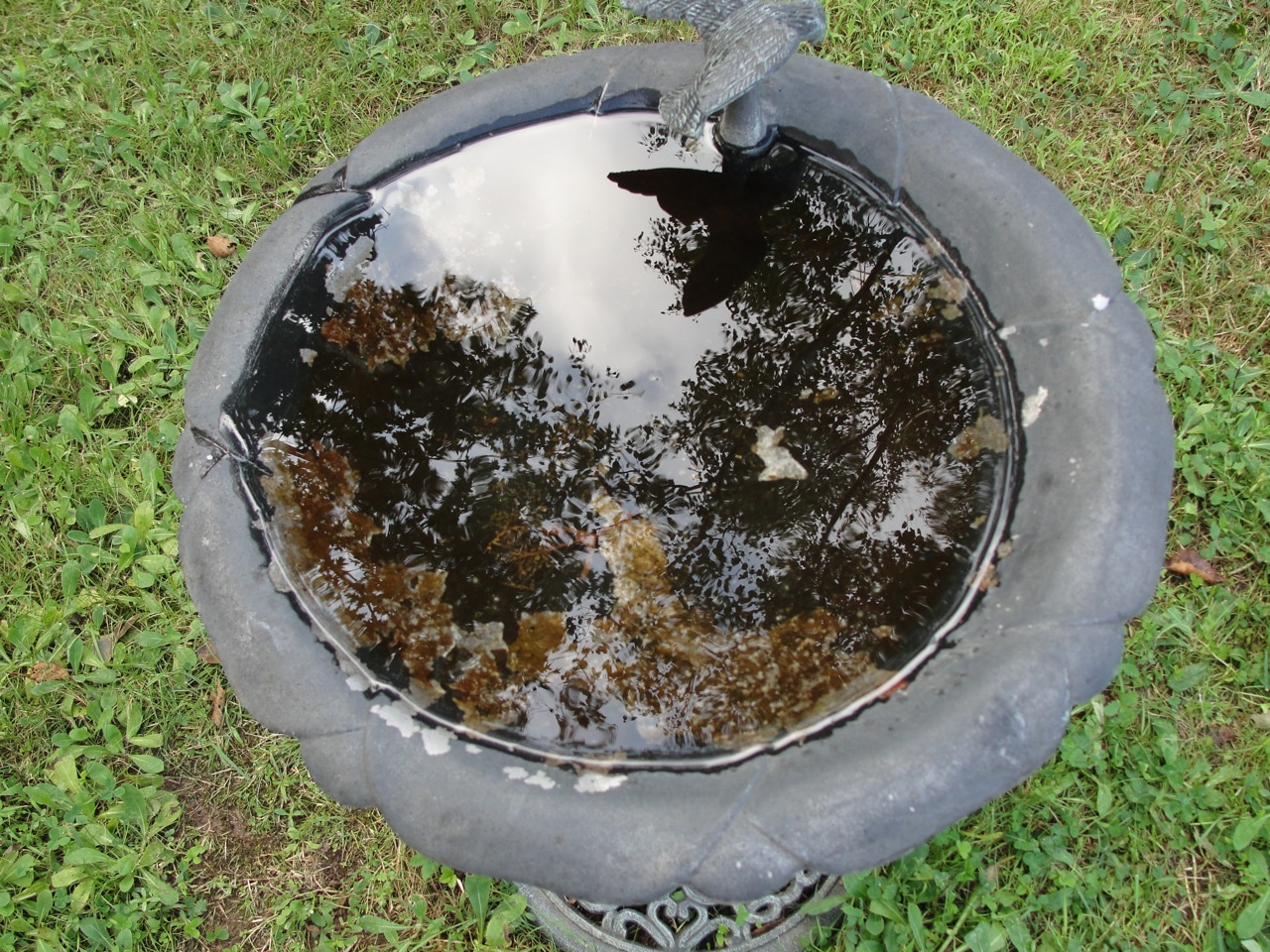
Reflected SkySpirituality is our experience of connection to the larger whole of which we are a part. I believe that each being is sacred, and we are all one family, one circle. My deepest experiences convince me this is true, even though we may forget, even despite the ways we may be estranged. Linda Hogan writes that the purpose of ceremony is to remember that all things are connected. She says:

“The participants in a ceremony say the words ‘All my relations’ before and after we pray; those words create a relationship with other people, with animals, with the land. To have health it is necessary to keep all these relations in mind.”

As we begin to build bridges across the broken places within our hearts, across the broken places between peoples, across the broken places between people and the earth, we are doing the work of mending the world. We are awakening, we are remembering, the reality in which we actually live, the unity of all. The Buddhists call it inter-being. In South Africa it is called ubuntu: we are all born to belonging, and we know ourselves in just and mutual relationship to one another. We move beyond the small self of the ego, into the larger Self some call God, or what I have called Mystery. Thomas Merton writes,

“We are already one. But we imagine that we are not. And what we have to recover is our original unity. What we have to be is what we are.”

The purpose of spirituality is to remember that all things are connected and to heal the brokenness between us.

An old Rabbi once asked his pupils how they could tell when the night had ended and day had begun.
Could it be,” asked one of the students, “when you can see an animal in the distance and tell whether it is a sheep or a dog?”
No,” answered the Rabbi.
Another asked, “Is it when you can look at a tree in the distance and tell whether it’s a fig tree or a peach tree?”
No,” answered the Rabbi.
Then what is it?” the pupils demanded.
It is when you can look on the face of any man or woman and see that it is your sister or brother. Because if you cannot see this, it is still night.”
                                                                             (Hasidic Tale)

Quotes from Linda Hogan, Dwellings: A Spiritual History of the Living World, (New York: Norton, 1995)
Thomas Merton: Essential Writings, edited by Christine Bochen. (Maryknoll NY: Orbis Books, 2000)
Hasidic Tale, Quoted in Spiritual Literacy, edited by Frederic and Mary Ann Brussat, p. 502. 

Call It Forth

Ultimately, it isn’t really about the words at all. Rev. Davidson Loehr tells a story about a worship class in graduate school, when he was a part of a group of Unitarian and Christian students who had the assignment to create a worship service together. They spent quite a bit of time arguing about words, about how to address the focus of their worship. The Unitarians objected when the Christians wanted to pray to Jesus or to God. The Christians backed off when the Unitarians suggested maybe God and Goddess. The conversation went around and around.

Finally, their professor intervened. Loehr writes:

He glared at us: “And the only thing you have been able to agree on is that you would like the Spirit to be a part of your worship service?”
Yes, we all stammered: “But we don’t know what to call it.”
Still the stern father, he shot us a punishing glance and said three words: “Call it forth!” “Call it forth!” No matter what you choose to call it, he explained, call it forth. Because unless you can call forth the quality of spirit that is rightfully called holy, you don’t have a chance of staging a worship service anyway.

 It is not enough to ask, do you believe in God or not? It is not enough to ask, what do you believe about God? Rather we must ask, what God do you want to call forth into the world? What you call it isn’t so important. Use the word Mystery, or energy or power if you wish. What energy do you want to call forth into the world? What power do you want to call forth into the world?

Fireworks

Despite the transformations I experienced as I wrestled with the images of God and Goddess, I realized that there was a thread running through it that stayed the same: an experience of the power of love. At some point in my life, I realized I wanted to call forth the power of that love into the world.

The words and images we use to describe what we believe and experience are less important than living our faith to the fullest, testing it in practice, calling it forth into our community, for the benefit of all. When we live our faith to the fullest, then the real God will stand up in our midst.

And so I will ask you to consider: what kind of power will you call forth into the world? What do you hold in your heart and your hands? 

Quote from “Call it Forth: Religion for Atheists” by Davidson Loehr (in Religious Humanism, Volume XXXIV, #1 & 2, Winter/Spring 2000)
Photo by Margy Dowzer

Humility and Confidence

What do we do with people’s different understandings about God and the religious battles that go along with it? I believe we must begin by affirming that difference is real. People—in the same town and all over the world—think differently about the idea of God and have different experiences of God. That is real, and we can choose to fear it, or we can choose to welcome it, explore it, and even celebrate it.

But what does that do to our ideas about truth and reality? We might ask, for example, “Can God both exist and not exist at the same time?” That isn’t logical. But the truth is: both kinds of human experience exist! There are humans who experience or affirm God and there are humans who do not experience or affirm God. There are humans who experience or affirm certain images and ideas of God, and reject other images and ideas of God. We must take into account that all of our understanding about God comes through our human experience.

When my images and ideas about God began to change, something opened up before me. I embarked on a journey that demanded a deeper humility and a deeper confidence. I needed humility to recognize the incompleteness of my spiritual experience and the validity of truth beyond my understanding. I also needed to have confidence to claim my own experience as valid, whether or not others agreed with me.

I believe that each person’s experience is valid, at least in part, and the fullest truth is that which is weighed in community with the experience of others. This is one reason why I later chose to find a home within a Unitarian Universalist spiritual community that welcomes diverse beliefs. There is a Hebrew proverb: “Hospitality to strangers is greater than reverence for the name of God.” To live within a diverse spiritual community, we must cling more strongly to an open heart, than to specifics images and beliefs about God.

Heart StoneWhat this means for me is that the real God might be everywhere—hidden within each person, in each plant or animal, in each sunrise or stormy day, in the ordinary and the spectacular alike. Or God might be no where at all. It means that revelation is continuous and always unfolding. It means that words and images like God or Spirit or Mystery are metaphors trying to describe what is indescribable. The Sufi poet Rumi said,

“Just remember: it’s like saying of the king, he is not a weaver… words are on that level of God-knowing.”

My colleague the Rev. Forrest Church has said:

“The power which I cannot explain or know or name I call God. God is not God’s name. God is my name for the mystery that looms within and arches beyond the limits of my being. Life force, spirit of life, ground of being, these too are names for the unnamable which I am now content to call my God.”

Quote from The Soul of Rumi: A New Collection of Ecstatic Poems, translated by Coleman Barks, p. 77.

Will the Real God Please Stand Up

If I say the word God, people run away.
They’ve been frightened–sat on ’till the spirit cried ‘uncle.’
Tom Barrett

Steeple DSC01264Spirituality is our experience of the larger reality of which we are a part, the Mystery that connects and upholds all life. Many people call that Mystery God. But the word God is a challenging one. Some people have a hard time with it. A few may stop listening immediately. Others may call to mind particular beliefs and images from their own religious community that are difficult for them. Some may be very clear what it means to them, and very assured that everyone else is wrong about it. Some may be moved with emotion, wounded by the betrayals of those who used that word in hurtful ways. Others may feel a sense of confusion, perhaps tinged with longing. The word is powerful and charged with conflict. I want to wrestle with that word.

When I was growing up, there was a TV game show called, “To Tell the Truth.” Three contestants each claimed to be the same person. The first would say, “My name is Jane Doe.” The second would say, “My name is Jane Doe.” The third would also claim to be Jane Doe. A celebrity panel tried to guess which one was telling the truth. At the end, we all learned the truth when the game show host commanded: “Will the real Jane Doe please stand up!”

Don’t we wish sometimes that there were a game show host to shout—“Will the real God please stand up?” If only it wasn’t so confounding and mysterious! We know that this is not merely a debate about ideas. People fight wars and hurt each other over the issue of whose God is the real God. And, if God is real, others ask, why is there so much trouble in the world? Why aren’t our prayers answered when we are suffering? Why doesn’t the real God just show up, make it all clear?

Wendell Berry asked that question, too, through his character Jayber Crow, who was the town barber in a fictional village called Port William, Kentucky. Jayber was very troubled by the war going on—it was the time of the Second World War—troubled by all the pain it caused. He says: “In the most secret place of my soul I wanted to beg the Lord to reveal Himself in power… to lay His hands on the hurt children. Why didn’t He cow our arrogance? …Why hasn’t he done it at any one of a thousand good times…?” He goes on to say:

I knew the answer. I knew it a long time before I could admit it, for all the suffering of the world is in it. He didn’t, He hasn’t, because from the moment He did, He would be the absolute tyrant of the world and we would be His slaves. …From that moment the possibility that we might be bound to Him and He to us and us to one another by love forever would be ended.

 Berry asks how could we be human beings if God appeared in the sky and took away our ability to search, to struggle, to think for ourselves, to love? As soon as God stood up, the game would be over—the adventure of human life would lose its meaning. There would be nothing left to do.

Starting a Blog

Autumn LeavesThis blog, Finding Our Way Home, is a journey into a more expansive understanding of spirituality—spirituality as waking up our awareness of connection—to the earth, to each other, and to the Mystery within and between all.  Please read the “about” page to learn more about why and how it is being born, and my vision for the site.

I have been pondering and preaching and working on these ideas for a long time.  I have been working with a book in mind.  But in the meantime, here is one way to share them with my wider world. Please comment, follow, discuss!