Listening for Spirit

Dawn colors and clouds, pink and blue over trees and shadow of a house

Our house isn’t best situated for seeing the beauty of sunrise or sunset. Too many trees and buildings. But the other morning, when I opened the blinds in my room, I saw this outside my window. Dawn magic.

Yesterday I was so sleepy and almost napping on the couch when I happened upon a documentary on PBS about Howard Thurman, Backs Against the Wall. I knew of Dr. Thurman but I don’t remember if I knew so much about him as was shared in this film. African American theologian, author, and teacher, he was deeply spiritual, became dedicated to nonviolent activism, and was the mentor to Dr. Martin Luther King, Jr. and other civil rights leaders. The film stirred something in my soul.

First of all, I found myself feeling a bit of envy–my old sin. I always wanted to “be somebody.” You know, one of those people you heard about, a saint, a well-loved thinker and author, an influential leader, recognized by the world. And I wasn’t that, except, to be fair, in the most local context. I was, for a while, a local spiritual leader. I saw something in Dr. Thurman that reminded me of myself, except writ large.

Most importantly, he reminded me of my own mysticism, my own deep connection to spirit. And I asked myself, am I listening to the voice of the spirit within me, am I paying attention to what the spirit is telling me right now, in this time? The truth is, illness dampens the energy of the body, but it also dampens the energy of the soul. It has been harder to hear the voice of spirit since my retirement due to chronic illness. I remember at first, spirit said, Rest and Joy, let that be your guide. And I did rest, and chose activities that linked to joy in me.

But I still wrestle with questions all the time. What is this chapter of my life all about? What can I do in the face of the brokenness of our world, in the face of war and oppression? If I can’t resist by marching in the streets, how can I resist such evils as the genocide in Gaza, the rising hatred toward immigrants in our own country, the demonization of trans and queer people by those coming into power?

At different times in my life, I was guided by an evolving sense of purpose. When I was in college, my friends and I would ask, “How would Jesus live in our times?” A few years later, I found the Catholic Worker movement, and to live and serve in houses of hospitality for people without homes–that felt like the embodiment of that purpose. When I woke up to the oppression of women in the church and in society, when I began to form community with other women waking up, I voiced this desire, this intention: “We mean to incarnate the goddess!” When I came out as a lesbian, I felt a deep sense of purpose in loving and affirming all of our beauty as women, as lesbians, to find the goddess in ourselves and each other.

There was always this pattern for me, listening and following the spirit as I was led into new understandings and new ways of living a purpose in the world. Following the distant voice of my ancestors into solidarity work with Indigenous peoples. Finding a home in Unitarian Universalist ministry, and serving in congregations as I was called, bringing together wider understandings of spirituality, and commitment to the work of justice activism in community. Coming to a deeper understanding of interconnection with all of life, and permaculture gardening, and a spiritual journey into earth community.

I see how lucky I have been, to be able to follow an inner stirring, to live and work from a sense of calling and purpose. Whether known or unknown. But I am still wrestling with questions now. What is my calling now? Can I hear the voice of spirit to guide me now? Here is something Dr. Thurman wrote about all this:

“How good it is to center down!
To sit quietly and see one’s self pass by!
The streets of our minds seethe with endless traffic;
Our spirits resound with clashings, with noisy silences,
While something deep within hungers and thirsts for the still
moment and the resting lull.…
The questions persist: what are we doing with our lives?—
what are the motives that order our days?
What is the end of our doings? Where are we trying to go?…
Over and over the questions beat in upon the waiting moment.
As we listen, floating up through all the jangling echoes
of our turbulence, there is a sound of another kind—
A deeper note which only the stillness of the heart
makes clear.
It moves directly to the core of our being. Our questions are
answered,
Our spirits refreshed, and we move back into the traffic of
our daily round
With the peace of the Eternal in our step.
How good it is to center down!”

I guess that is what I am trying to do, even now, to center down, to hear the deeper note. To let the questions come into that stillness. Even when it feels empty and dark, before the dawn has come.

The Mystery Seed

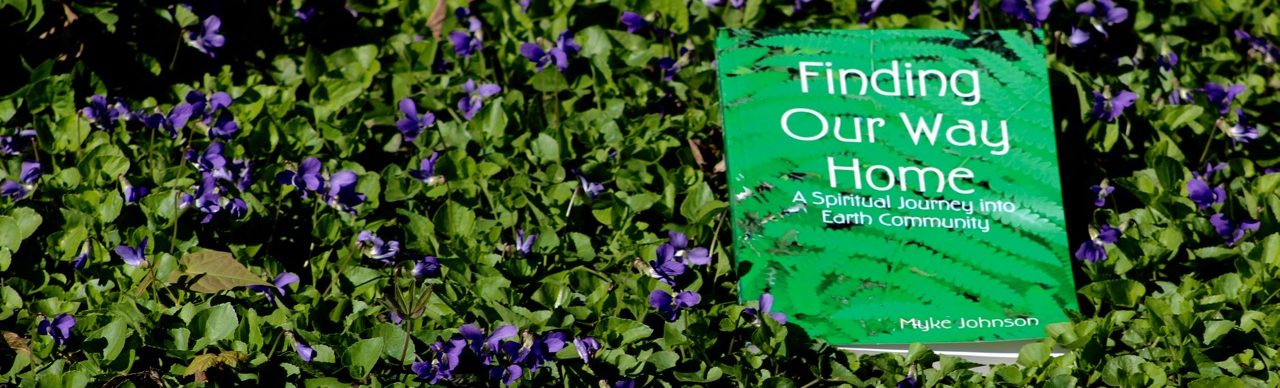
On March 14th, at 1 p.m. Queer Spirit will broadcast an interview with me, done by Revs. Marvin Ellison and Tamara Torres McGovern. Queer Spirit is a regular feature of OUT Cast, a forum for LGBTQ+ issues broadcast on community radio every Monday. WMPG 90.9 FM from 1:00 – 1:30 p.m. (Livestream: WMPG.org) One of the questions they asked: “What do you think has been your generation’s unique struggle with sexuality and spiritualty – and what would you say is your generation’s contribution to these matters?” I thought about what I had written in my book, Finding Our Way Home, in a chapter called “The Mystery Seed.” I want to share an excerpt with you today.

Bean seeds

Do you remember the fairy tale of Jack and the Beanstalk? When he and his mother are in desperate straits, Jack trades their cow for some magical bean seeds. The bean seeds grow overnight into a vine that reaches up to the sky. He climbs the vine and encounters an evil giant, who eats human beings, but Jack is able to escape with a magical hen that lays golden eggs, and a golden harp that plays by itself. He learns from a fairy that the giant’s castle is actually his very own—he is really a prince whose father was killed by the giant. In the end, he kills the giant, and recovers his hidden inheritance.

So what does this have to do with us? The bean seeds enable Jack to connect with who he truly is, and with a larger reality beyond the small cabin he shares with his mother. Within each one of us is something like those magical bean seeds. We are so much more than we can imagine. We might say inside each of us is a Mystery seed, a seed of what we might become. This Mystery seed is our potential to connect with the larger Mystery of which we are a part; it is the Divine within us that connects to the Divine beyond us, it is the fractal pattern of life and love and creativity. This seed is not only in some of us, not only in fairy tales or kings or saints, but in every one of us.

What evidence do I have for this seed of divinity within each human being? How have I personally experienced this might be so? Ironically, it has been illuminated when I faced situations where people were treated as if they had no dignity or value at all. But something within and between people transpired to bring forth a light that could not be extinguished.

When I went to college, one of my best friends slowly revealed to a few of us that he was homosexual. This was a great torment for him and for all of us who loved him, because we were very devoted Catholics. According to Catholic teaching, homosexuality was against the laws of nature. Tom would try hard to live celibately, and then crash, and go out and “get debauched.” He was depressed and often despaired of his life. I felt a painful contradiction in all of this—I knew he was a deeply spiritual person, so why should he suffer in this way? But I didn’t have an answer at that time.

Before I met Tom, in the reality of my youth, it was as if gay people did not exist. When I was growing up, during the 1950s and 60s, I never even heard the word lesbian, and gay only meant happy. I never saw gay people on TV, read about them in a book or newspaper, or learned about them in school. As a girl in a Catholic family there were two possibilities for my life path: I could become a wife and mother, or I could become a nun. I never even imagined the possibility of lesbian.

Tom’s dilemma introduced to me a whole category of people who were considered unworthy of sacredness. Gay people were not supposed to exist. And if they did exist, they were identified as unnatural, disordered, a mistake, a problem. African American lesbian poet Audre Lorde writes, “We were never meant to survive.”[i]

At that time it never even occurred to me I might have something in common with that group of people. I didn’t come out as a lesbian until years later, at the age of thirty-one, after a five-year process of struggle and transformation… Gays and lesbians have often been excluded or disparaged even by those who are closest to us. After I came out, one of my sisters refused to let me stay in her home because she didn’t want her children to know about gay people. I received a letter from another sister. She wrote, “I pray for you night after night… Homosexuality is wrong! And as your sister I don’t want to lose you to the devil.” Her words were those many of us have heard from parents or siblings, or from the institutions of our society.

How much guilt, despair, and shame have gay people carried in our hearts because we were not welcome in the reality defined by our culture and religion? Because we could not see the sacredness within? How many gay people have killed themselves in the pain of that reality? How many gay people have been killed, through the violence and hate of a society that has refused to include us in their definition of reality?

But so much has changed. Now it is hard to imagine I didn’t know about the existence of lesbians or gay men. Now gay people are in prime-time television. There are supportive high school groups for Gay, Lesbian, Bisexual, Transgender, Questioning, and Straight youth. My friend Tom eventually was able to embrace his sexuality, and share his life with a long-time partner. In 2004, Massachusetts became the first state in the U.S. to allow same sex couples to be legally married, and in the years since, marriage has been won throughout the whole country.

Even language became transformed. Words like lesbian, or queer—once painful putdowns—were reclaimed as words of honor. I remember we young activists marching and shouting, “We’re here, we’re queer, get used to it.”

So much has changed. For me, it seems like a miracle—in fact, two miracles. First, I still can be amazed I exist as a lesbian at all. How did I cross over into a whole new reality? It is as fantastical as Jack climbing a bean stalk into a castle in the sky. Second, it is remarkable that we who are queer can celebrate being queer. How did we go from being outcasts, to celebrating and believing in ourselves? How did we go from being outcasts, to demanding that reality make a place for us? To celebrate ourselves as queer we often have had to risk every other valuable thing in our lives. We’ve risked family, friends, jobs, safety. Yet this thing which was considered a problem became the “pearl of great price,”[ii] as the gospel says. This heavy burden became the hen that laid golden eggs. And it has been incredible to see!

What happens within people that they can claim the power to celebrate themselves? …What happens inside people when they refuse the rejection of society, and claim the right to name themselves valuable. When people who have been told all their lives “You are no good,” find within themselves a different voice that says, “You are sacred.” To me, this is powerful evidence of the divinity within us. And this is the premise of the work of those of us who call ourselves Liberation Theologians: the Divine is revealed in the struggle of oppressed people for liberation.[iii] It is the Mystery seed within us growing like a vine into the sky.

…That is what happened for me, too. Within a community of women, I experienced a new reality coming into being. With women who were celebrating lesbian existence, I encountered the Divine in a new way. Sometimes we called it the Goddess. Sometimes we had no name to describe it. But we felt a sacred and holy power when we seized the courage to embrace the body of another woman. Everything shifted. It no longer mattered whether we were welcome at the table of the society that excluded us. We were in a new reality and could no longer be denied.

Me and Rev. Marvin Ellison, back in 2009, as co-leaders of the Religious Coalition for the Freedom to Marry, getting ready for the public hearing.

[i] Audre Lorde, “A Litany for Survival,” The Black Unicorn: Poems (New York:  W. W. Norton, 1978), 31.

[ii] Matthew 13:45-46.

[iii] Liberation Theology was first articulated in 1971 by the Catholic Peruvian priest Gustavo Gutierrez, in his book, A Theology of Liberation: History, Politics, Salvation (1971 in Spanish, English edition Maryknoll, NY: Orbis Books, 1973).