“We are here to awaken from the illusion of our separateness.” Zen Buddhist teacher, Thich Nhat Hanh invites people to do an exercise, to begin to grasp with our minds the symphony of the larger whole.
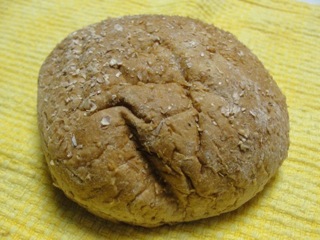 Take an object—any object. He talked about a table, but I would like to reflect on a piece of bread. Find a piece of bread and hold it in your hand. Then, let yourself imagine what has conspired in order for this bread to be here in your hand. First of all, think of the wheat. In order for it to grow, it needed topsoil, with its fungal and bacterial components, its minerals and small worms. It needed the decomposition of the plants of many years, decades, and even centuries to create this fertile soil.
Think about the sun that shines on the earth, and the rain that falls, and the earth itself turning round in its orbit of seasons, and the moon that shapes the tides and the weather, all utterly necessary. Think about the wind, which helps the plants to self-pollinate, and the ancient peoples in the Middle East who began to cultivate the grain during the seventh pre-Christian millennium, and those who developed it and carried it to many continents through the intervening centuries. The wheat that is used in bread co-evolved with human beings, and does not thrive in the wild.
If your bread is made from organic wheat, it doesn’t use petroleum for fertilizer, but it took petroleum in the form of gasoline to harvest it and ship it to the bread makers. Non-organic wheat uses even more petroleum. Petroleum is created from the remains of ancient plants, so this bread is also dependent on them. Think about the metal in the trucks that drove the wheat and in the machines that mixed the bread, and the mines it came from and the factories where the machines were made.
Think about the yeast, and the process by which human peoples discovered and developed the properties of yeast to raise the dough of bread. The honey, and the bees that work tirelessly to make it, and the flowers and their nectar. Think about the water that enabled these ingredients to be blended together. Think about the fuel to heat the ovens.
Think about the farmer, and the miner, and the bread-maker and the factory worker; think about the food they needed to eat, and the clothing they needed to wear in order to do their part of the work that brought this bread to your hand. The trucker, the grocery stocker, the clerk. The houses they live in, their schools and their doctors and their dentists.
Think about their parents, and their grandparents and their great grandparents, and what kept them alive, to bring forth their children, that these people who work might be here today. If you are holding organic whole wheat bread, think about the growing environmental consciousness, that created a market for organic whole wheat bread, after many farmers, bakers and corporations had abandoned the old methods for the soft white appeal of Wonderbread.
I could keep talking all day if I followed all the threads of connection just linked to this one piece of bread. Paraphrasing what Thich Nhat Hahn would say:
If you grasp the bread’s reality then you see that in the bread itself are present all those things which we normally think of as the non-bread world. If you took away any of those non-bread elements and returned them to their sources…[the honey to the bees, the metal to the mines, or the farmers to their parents], the bread would no longer exist. A person who looks at the bread and can see the universe, is a person who can see the way.
As long as we think of God as “up there” somewhere, like a father or a king or some other kind of person, we imagine that we are separate from God, we imagine that we can think or not think about, believe or not believe in, pray or not pray to that God. But in a spirituality of connection, the gaze shifts to understand that there are no truly separate things, that there is no separate self or separate God—that our “own life and the life of the universe are one.”
Quotes from Thich Nhat Hanh, The Miracle of Mindfulness, Translated by Mobi Ho, (Boston: Beacon Press, 1975) p. 47-48.


 Finding Our Way Home