God is Love

FriendsTo me, the statement that “God is Love” can evoke a person who stands close by through thick and thin, the friend who doesn’t run away when you have to go to the hospital, or when you make a big mistake. The one who doesn’t mind that you have faults, that you get cranky sometimes, or feel overwhelmed by the problems of the world. The friend who doesn’t mind when you get into a controlling mood, but just shakes you a little, and says, “relax.”

For many people, the image of a God who loves us unconditionally like a father or a friend is very powerful. We imagine God as a person because we are persons, and it can help us to relate to that God; we model it on our closest human connections. That is one way of understanding the idea that God is love. But for other people, that image of a person doesn’t work. To say that God is love means that God does not have to be imagined as a person who loves us. God can be understood as the very flow and energy of love itself: that energy that moves between people and connects us and empowers us.

Ultimately, it matters less how or if we imagine God, and it matters more how we are living our lives—if we are living in love, then God is inside our very living. And there doesn’t have to be just one image or one story—we might ask instead what does it mean that Love is at the center of the universe?

Of course, love is another one of those overused words that become hard to really understand. Love is based on the essential connections between people, and the sacredness within people. When we love someone we see the beauty in them, the gift of their being, and we know that it matters to us that they are alive. When we are loved by someone, we feel the beauty in ourselves, the gift of our own being, reflected in our connection to another. We feel seen. We feel alive in relationship to others.

Rev. Mark Morrison-Reed says that “the great insight of Universalism is that you cannot coerce people into loving one another.” He says,

No one has ever or will ever draw true love out of another with punishment. God’s love is given to all and is a more positive force for good than fear ever will be. Behind this is a simple truth: in being loved we learn to love. Those who are loved will in turn love others. Those who feel God’s infinite love within themselves will in turn feel so good about themselves, so connected to life and so full of compassion that they will not be able to help but to spread that love for they will overflow with it.

There is a traditional Quaker hymn that says “Love is Lord in heaven and earth.” Love wins. Universalism was called the gospel of success. When the Universalists opened the doors to heaven, that led the way to opening the doors here on earth. Over time they opened up their churches to expanding ideas of religion—they began to see that there must be wisdom and truth and holiness in all religions, and they reached out to learn from others. They were open to the wisdom of science and the blessing of nature. Where ever love was, that was holiness and truth.

Abundant Love

According to Rev. Gordon McKeeman, the Universalists introduced the belief in a God who loved so abundantly that he would drag “the last unrepentant sinner, kicking & screaming, into heaven.”

Wow! A God who loves so much, who wants joy and blessing for all people, even if we have to be dragged into it against our will. It is such a gospel of hope, in contrast with the harsh and judgmental gospel of Calvinism.

One of the questions another of my colleagues, Rev. Mark Morrison-Reed, asks is why didn’t Universalism spread all over this country? Who could resist a religion with no hell?  Why was it so much harder to believe in a God of overwhelming love than in doctrines like the virgin birth or the resurrection? He answers his own question like this:

What we yearn for is unconditional love but it is contradicted by our experience. Instead, the principle message each of us received over and over again was this: behave and be loved, behave and be loved. The implication is: those who are good and compliant are loved, all others not. Universalism calls this “partialism.” In other words, people have taken their own experience of conditional, judgmental, imperfect human love and ascribed it to God.

What does it mean to believe that God is love? The phrase may have become so familiar that we almost don’t hear it anymore. One of the letters in the Bible says it, “God is love, and those who abide in love, abide in God, and God in them.” We can get derailed if we imagine God as an all powerful ruler sitting on a throne granting favors. Then, if something tragic happens to us, we feel that God must not love us. But if God is love, then the image of favor-granting dictator doesn’t work. God is more like the Sun, shining on everything and giving life to everything, no matter what, enabling all things to unfold in the way that they will by being alive.

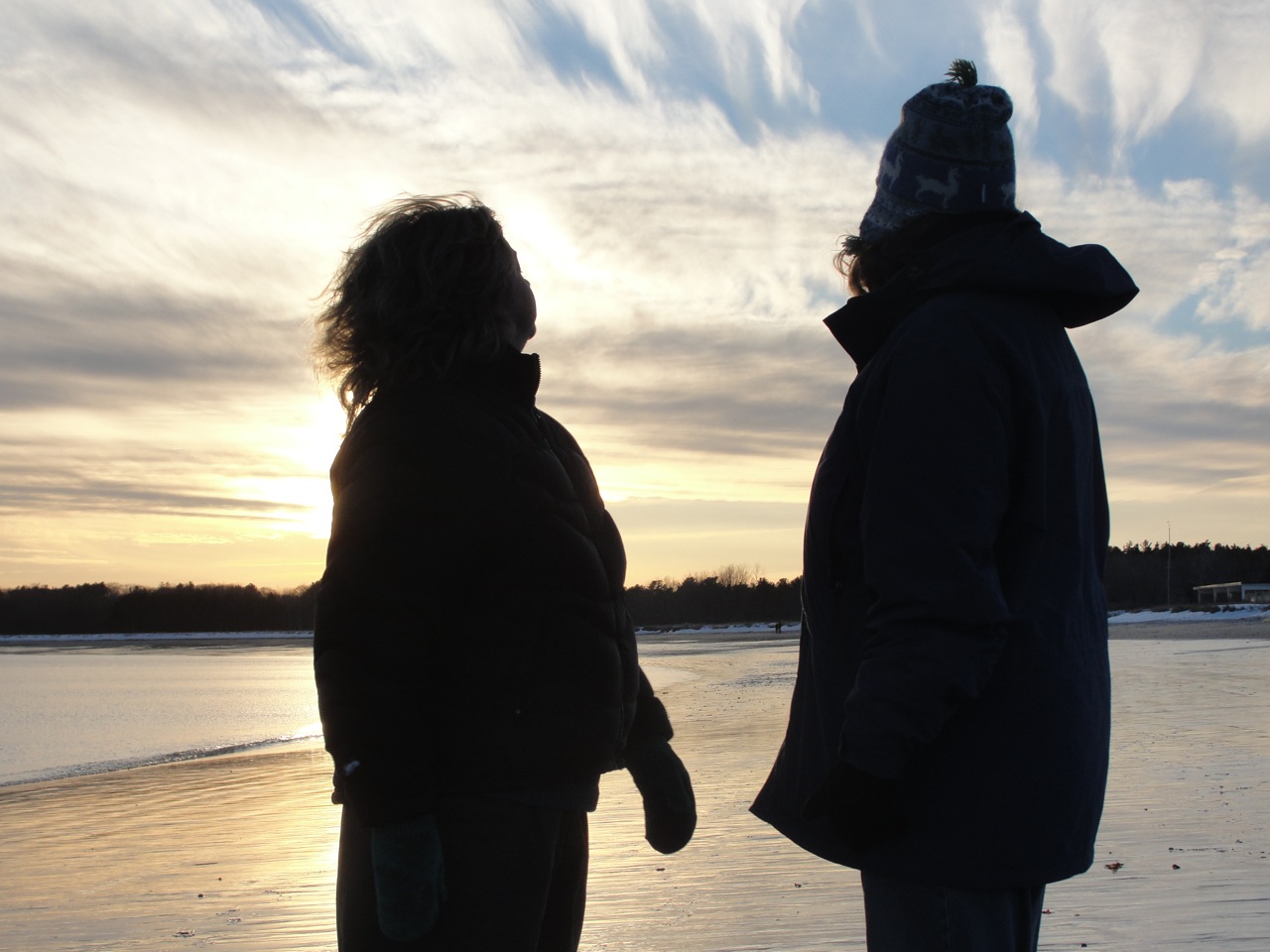
Sun Shining on People

Photo by Margy Dowzer

Quote from Mark Morrison-Reed from “Dragged Kicking and Screaming into Heaven

Guilt or Love?

Steeple MJ DSC01914One of my hopes in this blog has been to expand our understanding of what God might be, what Mystery and Spirit might be, because so many people have been wounded by the false Gods of our culture. I want to take a closer look at one of those false Gods that I believe has hurt many people. If you have rejected the idea of God, perhaps you’ll recognize the one I am talking about. So I invite you to persevere with me as we explore it a little bit.

I think we can identify two approaches that people have taken to our relationship with the powers greater than ourselves. In one, the powers, the Gods, the Spirits were dangerous forces, and religious ritual was enlisted to appease these forces, and make the people safe from them. In the other, the Gods, the Spirits were benevolent forces, and religious ritual was enlisted to call upon the forces for help in dealing with the challenges of living. I am simplifying it of course, but still, there have been particular times in history when this battle between dangerous or fearful forces and kind and loving forces was in full blaze, and sometimes within the same religion.

When I was a child, I learned about one such conflict between a judging fearful God and a loving God. As a Catholic, I used to read about the lives of the saints, and one saint I liked a lot was Margaret Mary Alacoque. She lived during the 17th century in France. Just before her time, there had been a theologian named Cornelius Jansen who emphasized the idea of original sin. He believed that people were unworthy and evil, and only a few would be saved. Jansen discouraged people from participating in the communion ritual that happened every Sunday, saying it was reserved for only the very holy.

Sacred Heart

But Margaret Mary began to have visions—in her visions she saw Jesus, and she saw his heart, as if it were outside of his body, burning with love. He told her that God was full of love for people, and that God wanted to help people. Now, for those of you who have been Catholic, you may remember seeing pictures of the Sacred Heart of Jesus. It became an important devotion in Catholic life.

For me, this story was a gift—first of all, I thought it was cool that she had visions, and could talk to Jesus. But more importantly, this story told me that I was loved by God. All Catholic children learn a lot of guilt, and lessons about original sin, and mortal and venial sins, can weigh heavily upon us. But this story shifted the balance for me—it helped me to know deep in my heart that God was love, and that God loved me.

Now, I am guessing that very few people have ever heard of Cornelius Jansen or Margaret Mary, but perhaps you have your own memories of a church in which you felt guilt and shame, in which you learned that you were a sinner, or unworthy. Those ideas are just as pervasive today as in former centuries. The God of judgement has been a prevalent theme throughout the course of American history because of the teachings of someone much more famous that Jansen. More on that tomorrow.

In the tree I am held by God

Beech Tree Leaves 133650004There was one more communication I experienced with the four directions tree which was not about writing or speaking or even thinking. Sometimes I merely sat, my body balanced between the sturdiness of the main branches, my eyes resting in the translucent green softening the sunlight.

Even then, the tree and I were involved in a sacred exchange. When I breathed, the tree was my intimate partner. The tree breathed out the oxygen that I needed to be alive, and I breathed out the carbon dioxide that it used for nourishment. Our physical bodies are designed to need each other. We give and receive the very substance of our lives. We have been giving and receiving this way for millennia.

We and the trees are neighbors on this planet, but more than that, we are sacred partners, we are kin. We are genetically and spiritually related to each other. If we are open to respecting the trees, if we value the inherent worth and dignity of the trees, it then becomes possible for us to experience in the trees the presence of the divine Mystery.

Breathing and writing, dreaming and remembering, in the sacred arms of the beech tree, I knew I what it felt like to be held by God and to be one with God. The trees teach us that all of us are related; their quiet language sings the song of the marvelous interweaving unity of life on Earth. Remember this, the next time you walk by the trees near where you live. Listen. And then remember to say thanks.

The Partnership of Human and Tree

When I write in my journal, I do it on paper, and what is paper but very thin slices of wood? Each time I write, I enter this old partnership of human and tree. We join together to create a magic of exploration and memory which neither of us could do alone. Think of the vast store of human wisdom and history found in libraries around the world. All of it would have been impossible without trees to hold our words in their keeping.

Beech Tree Close Up 133650001Many years after I sat in the beech tree, I discovered another link. According to Gilbert Waldbauer, the ancient Germanic peoples would carve their runes on thin slabs of beech wood. These were sometimes laced together with thongs to create what they called a Buch, which is the German word for both beech and book.

The tree is our original text, the bearer of all text. When I sat in the beech tree, I was face to face with that perennial yearning of humankind to leave our mark. I too had a yearning to leave my mark on paper, writing my thoughts and feelings, my hopes and memories, creating something new with the magic of words.

Trees have been the foundation of so much human life and culture. The first fuel of many of our ancestors was wood. Our houses are made of wood. The floors, the walls, the ceilings, the window frames and doorways. We are surrounded and held up and sheltered by the gift of trees. Our musical instruments, our tools, our boats, many of our foods and medicines, all are possible because of trees. No wonder we say “Knock on wood” when everything is going well and we wish to protect ourselves from bad luck.

Trees also play a significant role in the crisis we face today for the health of our planet. Deforestation has contributed to global warming, and planting new trees can contribute to reducing the levels of carbon in the atmosphere. I am inspired by the Green Belt Movement in Kenya, founded by Nobel Prize winner, Wangari Maathai. Beginning in 1977, she organized poor rural women in Kenya to plant trees, and learn small scale trades that benefit the environment while providing a living. Over 40 million trees have been planted in Kenya in the last thirty-six years.

Sometime I wish we Americans could go back to the old European pagan approach to trees. They didn’t believe it was wrong to cut down trees or use their products for their needs. But the old pagans taught that before cutting a tree one must ask permission of the tree. To request its consent acknowledges that we have a relationship of mutuality and respect. Some might say that asking wouldn’t alter the act of cutting the tree. But just compare how consent and respect differentiate acts of lovemaking from acts of assault.

To relate to a tree with respect will change the nature of the use we make of it for our survival needs. I believe that a tree is not merely a tool and resource for human needs. The tree is a sacred Other, with its own inherent value and meaning. How do we know that the tree does not have its own sentient life? Recently I learned that trees emit low frequency vibrations that human ears cannot detect. My lack of knowledge about its language, does not determine that the tree is without a language of its own. 

Writing as Dialogue

Along with journaling, another form of writing that has been a part of my spiritual journey is to write to someone I care about—not to be sent to that person, but to express what I need to express to them. This can be especially powerful when we have lost someone we love to death. My first romantic partner, Gary, and I were together for six years. After we had been separated for a few years, he was killed in an auto accident. I still loved him, and my heart felt broken at his passing. There was much that had been left unfinished in our connection. I found that I could write to him in my journal—I could tell him all the things that had not been said between us. It was a way to find healing and bring closure to our relationship.

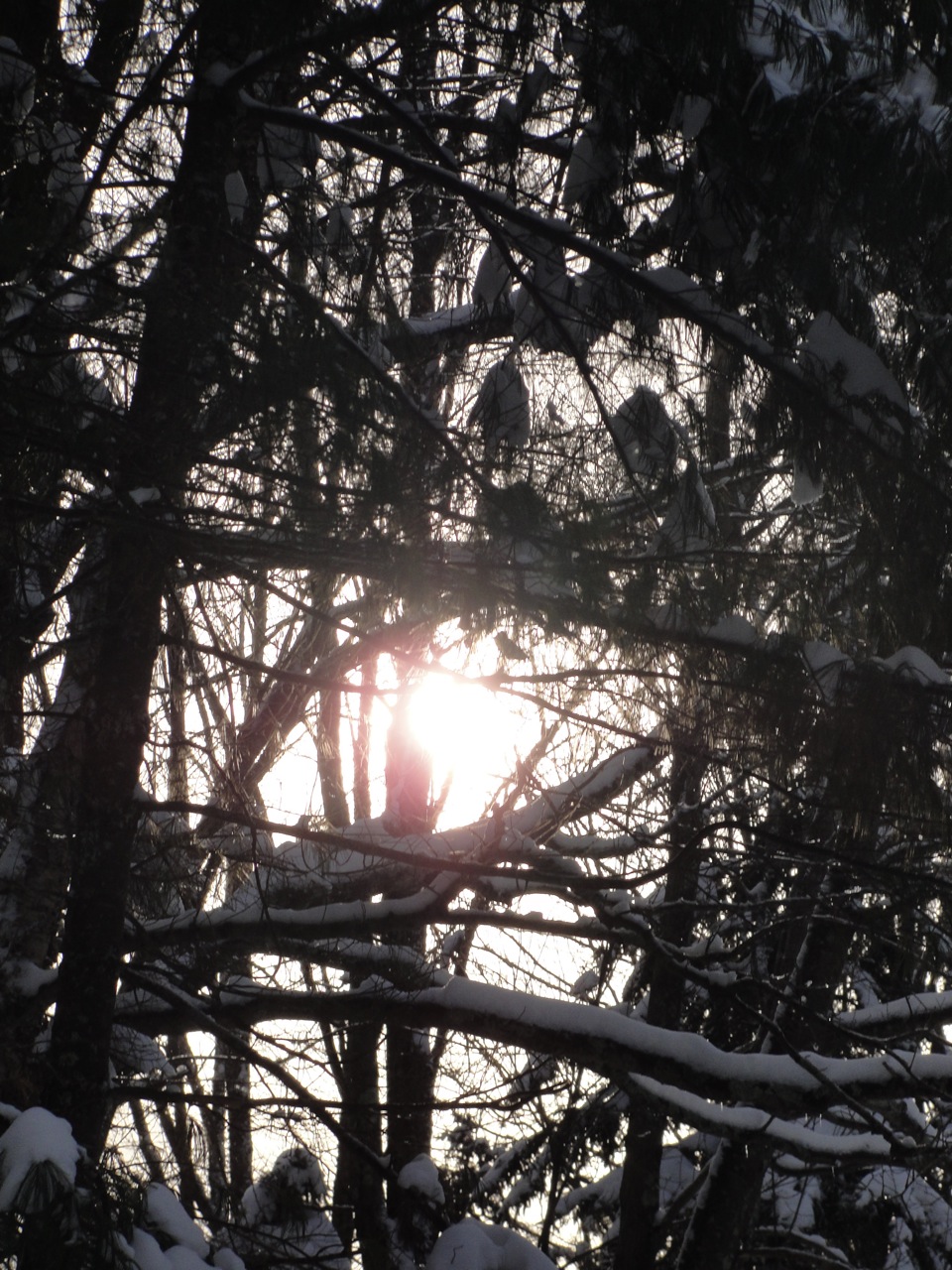
Another side to this writing is to write in the voice of the other person or being. Here is an example of what I mean. I ask a question, whatever question is deep in my heart. One of my perennial questions is “How can I learn to live in harmony with the earth?” I write it down. Snow on Branches DSC05758Then I let the voice of the trees answer the question. I do this literally. I write, “the trees say:” and then keep writing. Here is what came out when I asked this question most recently: “The trees say slow down, stop running everywhere, feel the wind on your face, feel the sun on your skin. Don’t be afraid, you can do this. You belong to the earth.”

It wouldn’t have to be trees. It could be birds, the ocean, the moon. It could be myself at the age of eight. It could be my old love Gary. On a psychological level, in all of these exercises, what I am doing is tapping into parts of myself that hold wisdom. On a spiritual level, we are not separate from trees, birds, the ocean or the moon—so who is to say that if we open our souls we can’t hear the wisdom they might have for us? Writing connects us to the depths of our own hearts, and our hearts connect us to all that is.

Anne LeClaire, a writer I met while living on Cape Cod, said we must take up our pen “like a heat-seeking missile… aiming it for the territory of truth.” We must go to the places we are afraid to go. We so often try to keep our hearts hidden, afraid to expose our secret selves. But LeClaire challenges us: “The heart of the universe is always within our own hearts if only we can be brave enough to expose it.”

Writing is a journey we take to discover who we are and what in us is true. Writing will surprise us. We don’t know ahead of time what will come out on the page, what will emerge within our souls. Like the magic of the ancient runes carved in trees, writing reveals secrets to us.

Quote from Anne D. LeClaire, “Writers and… Risks,” in The Cape Codder, Nov. 3, 2000.

Writing a Journal

Journaling DSC01316I started to write a journal when I was a young adult. It was 1979, and I was a year into my first serious relationship with a partner. His name was Gary, and we were deeply in love. But the first pages of an orange spiral notebook are filled with my confusion and pain about the struggles in our relationship. When things were difficult, he withdrew from me, and so I wrote about the pain I felt when he withdrew. I wrote about who we were together, and parts of myself that seemed to be disappearing. Perhaps I should thank him now—if he were a better listener, maybe I wouldn’t have started writing so much.

But once I started, writing became an important way of learning about myself, a spiritual practice that has continued to this day. I wrote my questions about how to live in the world, what my own calling might be, what brought me joy and what left me empty. I wrote my questions about God. It was in that same year, 1979, that I was wrestling with big questions of spirit and faith. I was introduced to the idea of the Goddess, and women’s spiritual circles. I wrote to God, to Goddess, to Jesus, all my questions and doubts, in a kind of prayer—are you real? Are you there for me? What am I meant to do in this life?

Writing can unburden our hearts and minds. We can take our weary feelings, our anger, our confusion, our loneliness, and we can put it outside of us, setting it down on paper. It can help us to let go, and move on. Writing can also take us more deeply into our own hearts and minds, and open us, layer upon layer, until we reach the place of inner wisdom. Polly Berends said, “Everything that happens to you is your teacher…the secret is to learn to sit at the feet of your own life and be taught by it.” Journaling is a way of sitting at the feet of our own life and being taught by it.

A few years into my journaling, I began to mark the pages according to the cycles of the moon. Each new moon, I began to read back to the last new moon, and sometimes I would give a theme to that moon time, like a chapter to a book: the traveling moon, the moon of discernment, the moon of confusion. To read through our own journal entries is another way of being taught by our lives.

The Four Directions Tree

I frequently tramped eight or ten miles through the deepest snow to keep an appointment with a beech-tree, or a yellow birch, or an old acquaintance among the pines.              Henry David Thoreau (Walden)

Beech Tree 133650000When I lived in Boston, during the time I was preparing for ordained ministry, I used to visit a certain copper beech tree in the Forest Hill cemetery. It was about a ten minute walk from my home in Jamaica Plain, situated next to a small pond. I called it the four directions tree. This was because its giant trunk divided into four huge branches at about the level of my waist, and then reached toward the sky in opposite directions. One of the branches bent off a little lower, so it served as a step, up to a spot where a person could sit, right in the heart of the tree.Beech Tree Perch 133650003

Almost every day I would climb up to that perch, and lean my back against the smooth gray bark. From within, the purple leaves of the tree appeared a translucent green as the sun’s light filtered through. Some of the branches bent downward to almost touch the earth again, creating a shady yet glowing canopy. On the gray bark all around me were carved initials and messages—ragged names and dates, hearts and promises of true love always. I used to be upset that people would carve on trees, but then I began to wonder if there was something about these particular trees with their smooth elephant-like skins, that invited us to leave a permanent record.

When I was feeling tired or overwhelmed, I could sit in the four directions tree and give it my worries. Sometimes I felt that if a moment were important enough, I too would want to carve my tale in letters in its bark. My sisters and I, when we were little, would take turns writing words on each others backs as we lay in bed at night. The one whose back was being written on would try to read what message was being spelled out. I wondered if maybe, in a very important moment, the tree might read my words like that.

I went to the beech tree when I was looking for something to root me, something to rely on: When my days got too hectic and it seemed that I would never finish everything I had to do. When I was anxious about my future and wondered if I would find my calling as a minister. When I grew discouraged about the struggle and pain of the world around me. Whenever I found myself speeding up—as if I were on a frantic chase that left me breathless, as if I were trying to catch up to something just out of reach.

Then, I would go to the four directions tree. The tree didn’t speak in English words. But it seemed to bring me answers in a more subtle language. I would trace its bark with my fingertips, and remember who I was. I would remember that speeding up never brings me more time; only slowing down can do that.

I never did carve my initials there, but it seemed as if my deepest identity could be deciphered in its patterns. Sitting with my back against one of the branches, I could feel myself growing roots again. I would become as common as soil. As precious as water. Worthy of the sun. Perhaps that is the secret of why we write on trees. So that our truest dreams and memories might be found there again and again.

Reclaiming Our Temple

Sadly, people often fill up their hearts with things that aren’t so good to worship. The temple of our hearts can get messed up and overrun with garbage, or taken over by invaders. When we are too attached to something too small, we call it idolatry or addiction. When we are addicted to something, it has captured the temple of our heart, just like the story we hear at Hanukkah about the Syrians who captured the temple in ancient Jerusalem.

I remember a friend who got caught like that. This was back when we were in high school, and she had gone to see the movie, Bonnie and Clyde, about the two famous gangsters. Somehow that movie became the most important thing in her life. She started dressing like a gangster, and smoking marijuana, and drinking beer; she stopped paying attention to school, and started hanging out with kids who were skipping school and going to stores to shoplift. She became a different person, who didn’t care about anything or anyone anymore. I don’t know what happened to her after I left school. I hope she found a way to clean all the junk out of her heart.

But each of us at some point in our lives has been taken over by something unworthy. How could we not be? We are surrounded by advertising, by greed, by competition, by individualism, by dogmatism, by ideology. Just to survive we make compromises; we learn to align ourselves with a group or a product. We divide into red and blue states. We worship a good thing until it becomes an idol for us. There are many ways to be too small.

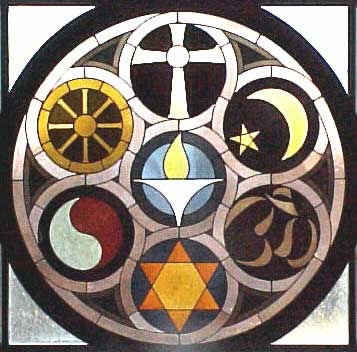
Stained Glass Circle DSC05480When our heart has been taken over by something unworthy, it is a battle to win it back. It can be the hardest thing we’ve ever done in our lives. Like the Maccabees who won back the temple in Jerusalem, we may need to dedicate all of our strength to reclaiming our own temple again. We may need to gather others together to help us. But this is important. This is the temple. This is the heart of our life.

The feast of Hanukkah is known as a celebration of miracles. It reminds us that the dedication of the temple is not a simple thing—that there will always be battles over what is in the temple. That we must always re-dedicate ourselves to the worship of what is worthy of us. When I reflect on the old story, I ask myself, again, what is in my temple today? To what is it dedicated? Does it need to be purified? The miracle of Hanukkah was first of all believing that change was possible. Even when all seems hopeless, if we take the first step, if we light the first candle, the way will open up. We take the second step, and light the second candle.

If you had a temple in the secret spaces of your heart, what would you worship there? We can make a choice to worship that which has true worth for us. Rumi advised:

Let yourself be silently drawn
by the strange pull of what you really love.
It will not lead you astray.

Itsy-bitsy Statues

When we give our lives to a larger purpose, whether we name it God, or kindness, or the earth, or Mystery, we can find meaning and transformation and spiritual growth. To worship something too small can distort and cheapen our lives. Even spiritual or religious things can be too small. Thomas Merton, who was a Trappist monk as well as a writer, said, “there is always a temptation to diddle around in the contemplative life, making itsy-bitsy statues.”

Yard Statues DSC09950

When we get attached to our ideas, or images, or even our ways of praying, we can forget the largeness of what it’s all about. We can forget that spirituality is meant to awaken us to the larger whole of reality, of which we are a part. Rumi, the Sufi poet, put it this way: “Don’t be a cat toying with a mouse. Go after the love lion.”

Writer Annie Dillard, reflecting on Merton, said:

There is always an enormous temptation in all of life to diddle around making itsy-bitsy friends and meals and journeys for itsy-bitsy years on end. It is all so self conscious, so apparently moral, simply to step aside from the gaps where the creeks and winds pour down… I won’t have it. The world is wilder than that in all directions, more dangerous and bitter, more extravagant and bright.

Reality is bigger and more mysterious than the things we do, or the ideas we think, or the stuff we buy. If we get too attached to any small thing—wearing the right clothes, or going to the right parties, or having the latest gadget, or even going to the right church—we are filling up our temple with junk. If we fill up our temple with junk, we will miss the “gaps,” the wild places where the “winds pour down.” We will miss the magic.

Thomas Merton was quoted by Annie Dillard in Pilgrim at Tinker Creek
Rumi quote is from Coleman Barks, The Soul of Rumi