Ephemeral

Trout lilies are blooming near the brook.

There is so much beauty in the spring, but it all seems to be moving so fast. I can’t keep up. Mayday has come and gone. Already this season is half over. After two months of physical therapy for my hip and lower back, I am able to walk fifteen minutes and more again. The other day I walked to Capisic brook and onto the path nearby, and saw the trout lilies that usually grow there, a lovely spring ephemeral. American Heritage Dictionary defines ephemeral:

  1. Lasting for a markedly brief time.
  2. Having a short lifespan or a short annual period of aboveground growth. Used especially of plants.

Spring itself and all its beauty feels markedly brief. Is my love of photos a way of trying to hold on to all that is ephemeral? Is my need to write an attempt to halt the relentless flow of time?

I have been drawn outside more and more each day, excited to see daffodils and violets and green shoots coming up everywhere. And, happily, the peach tree is now covered with pink blossoms, and the cherry trees have many blossoms too. Last year, because of the weather, there were none–so these beauties seem fragile and extra special because of that vulnerability.

Peach blossoms on a foggy day.

There are many projects in the yard to attend to. Many branches fell from trees in the storms of winter and early spring. Margy has been cutting them up and hauling them around. Some of these we’re using to make a brush pile in the back corner for wildlife habitat. The other day, I cleared that space of invasive plants. I also set up our eight rain barrels again. We are going to get an new order of firewood, after using up our last old logs in the storms. So we are working on the space for the firewood, and purchased a rack to keep them off the ground.

Yesterday, I added two more pond lilies to the plants in the little pond, and as I was tidying up old dead shoots from other plants, I found strings of toad eggs attached to the old ferns. (So of course I left those.) We haven’t had toad eggs in the pond before. But there are a few frogs beginning to make an appearance–shy ones who have been diving under when they hear me approach.

The robins did not come back to the nest on our back porch that they had used for two years. Maybe that pair are no longer living. I read that their average life span in the wild may be just two years. I also read that they often don’t reuse nest sites–so we were lucky to have them in that spot for two years. Another ephemeral.

Then we discovered a nest in the yew bush near our front door–able to be partly seen from our living room window. So new robins are raising young nearby again. Maybe one of them fledged from the back porch.

Blue robins egg barely visible behind branches.

Is my love of photos a way of trying to hold on to all that is ephemeral? Is my need to write an attempt to halt the relentless flow of time?

I was cuddling with my cat Billie on the couch and suddenly felt a deep sense of our own impermanence. She is 13, I am 70. Senior cat, senior human. How much more time do we have? Someday, I won’t be able to feel her warm little body, with its soft fur and sweet smell, curling up on the pillow near my face. Someday, she will be gone; someday, I will be gone. We too are ephemeral. I want to hold on, but life seems to be about movement, about letting go into the next moment.

Hibernators Awake!

The chipmunks woke up from their hibernation earlier this week. Peeking out from their warrens beneath the garage. It’s a good thing we don’t have bears. My friend who lives in the woods had a bear arrive in the night to break apart their bird feeders this past week. Our chipmunks merely climb the pole and share in the bounty. The wake-up seems early this year, and probably is. The winter was too warm and too short. But here we are, in a climate changed world, loving the earth as well as we can.

Today is the Spring Equinox! Equal parts night and day. I want to take a moment, in the midst of the vast troubles of the world, to express delight at the turning of the seasons. Small bits of green emerging from the perennial plants. And I am grateful that after five sessions of physical therapy I am beginning to get some relief from my hip pain. My PT person uses Integrative Manual Therapy, and it is a miracle worker. There are still many sessions to go, and I am hopeful that healing will happen. I took a very short walk each of the last three days–my five minute walk to the end of the block–which actually takes ten minutes with my current walking status. It feels good to be outside.

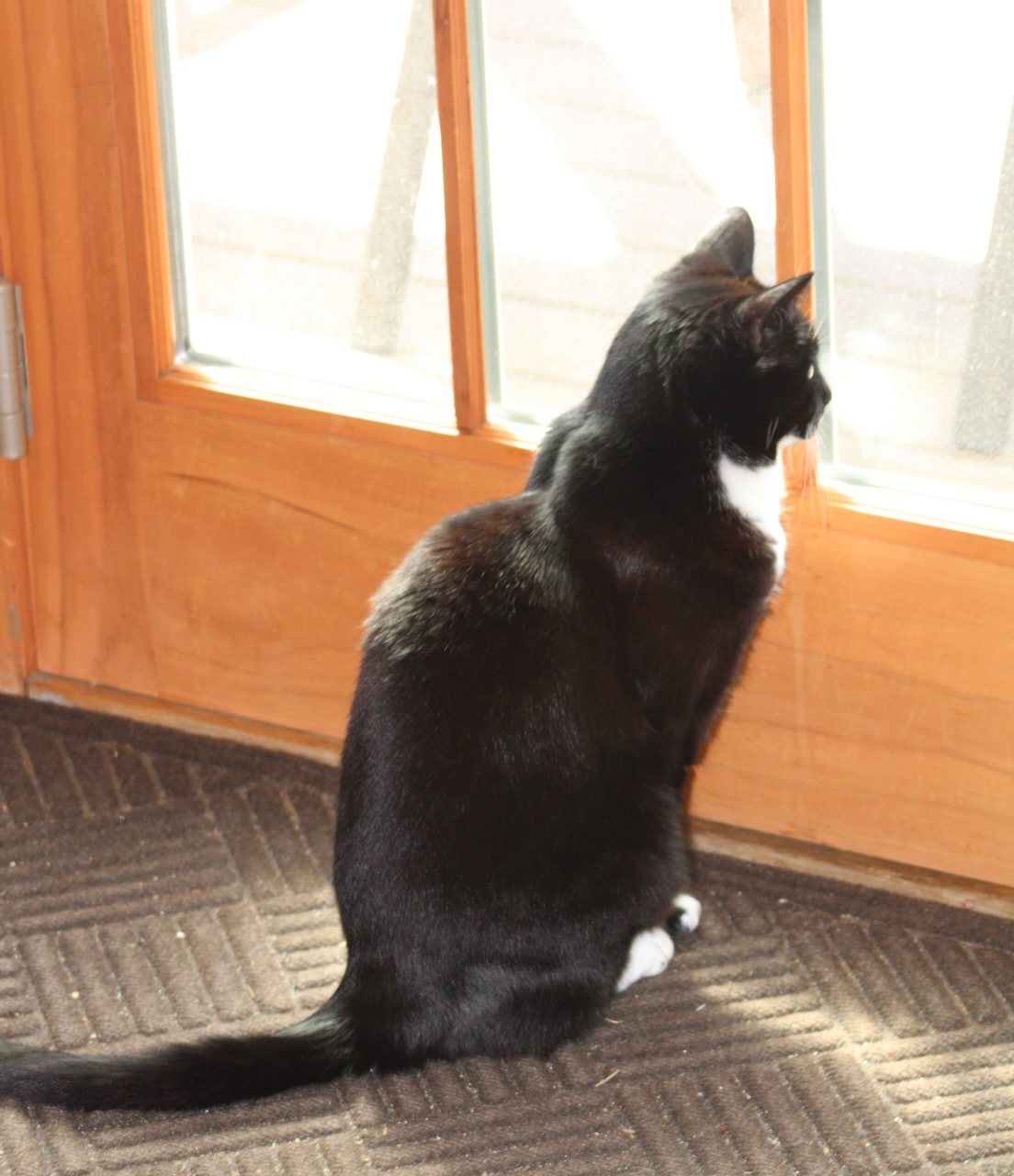
Meanwhile, the cats have new critters to watch through the windows. (They are indoor cats only.) Here is Billie looking out the back door.

I think about vulnerability. What it means for me to be 70 years old. I didn’t hurt my hip by falling or anything like that. I woke up one morning and there it was. It is a reminder to me to cherish the joys of each day. Who knows what tomorrow will bring? I can be prone to anxiety, and feel deeply the troubles of the world. I will keep bearing witness. But I will also find joy in these simple moments, these earth awakenings.

Inside the pain

There may be times when we are powerless to prevent injustice but there must never be a time when we fail to protest. Elie Wiesel

The last few weeks, I have been dealing with severe pain in my hip, such that it makes it difficult for me to walk or sleep. I am grateful that I now have physical therapy which is slowly helping. But as I was lying on the table getting treatment today, I kept thinking about people in Gaza, right now, who also were dealing with hip pain, or chronic illness, or who were giving birth–any of the myriad kinds of human conditions that render us deeply vulnerable, even in the best of situations.

And instead of finding help or treatment, those human beings are being forced out of their homes, bombed, shot, starved. How would I evacuate when I can barely walk? How would I sleep on the ground with no pillows to ease the pain? How would I manage my illness with no medicines? How would I give birth with no clean water? It is not as if those human frailties cease to exist because of war. Underneath the other horrors, the deaths, the woundings, the destruction of homes, schools, libraries, hospitals, there is each human story.

I find in my body a small metaphor for this hurting world. I find in my body a deep scream of pain for this hurting world. They say the hips are the foundation for the balance of the body. And the earth is out of balance in so many ways. We see it in the chaotic weather, we see it in wildfires, we see it in an ocean warming faster than expected, we see it in cruelty toward children who are “different,” we see it in pandemics, we see it in politics of fear and hate. Who knows what the future will bring, with such a painful present.

I found encouragement in these words of Elie Wiesel, who survived the holocaust and wrestled with its meanings and repercussions for the rest of his life:

“There may be times when we are powerless to prevent injustice, but there must never be a time when we fail to protest.”

https://www.nobelprize.org/prizes/peace/1986/wiesel/lecture/

I found this image and quote posted by a friend on Facebook–the image is the Ukraine sunflower, and Ukraine is another country full of people in pain that linger in my own heart. But the flower feels full of beauty and hope. Wiesel goes on to say:

“The Talmud tells us that by saving a single human being, man can save the world. We may be powerless to open all the jails and free all the prisoners, but by declaring our solidarity with one prisoner, we indict all jailers. None of us is in a position to eliminate war, but it is our obligation to denounce it and expose it in all its hideousness. War leaves no victors, only victims.”

1986 Nobel lecture

Have We Known the Anguish of an Unanswered Prayer?

Perhaps we fell in love with the person of our dreams, but despite our yearnings and furtive requests to a higher power, our feelings remained unrequited. Perhaps we were watching the game of our favorite sports team—but they lost despite the collective energy of millions of fans. I know that may seem trivial, but a huge number of people pray for their teams to win. Perhaps we were confronted with the serious illness of a loved one, yet all our begging and bargains with God did not make them well. When I think about prayer it is hard not to remember that anguish.

And yet, for me, there are also other memories. There have been times when, to my surprise, strange and wonderful things happened after prayers. As if, despite my appeals, I never really expected a response.

Several years ago, my youngest brother in Michigan was getting married. I am the oldest of nine siblings, and we are scattered across the country. It is rare for my family to be gathered all together. At that time, our finances were very tight, but I really hoped that Margy and I could attend the wedding, since she hadn’t had a chance to meet most of my family yet. But then we found out that two tickets would cost $850. We knew we couldn’t afford that. So I prayed; and I also called my dad and asked him to pray. (No, he did not send us the tickets.) The very next morning, an email came, announcing special bargain fares from Southwest Airlines. The two of us could go for a total of $325.

Perhaps you may have had similar unexplainable experiences. A friend of mine just recently told me a story. She was having a particularly difficult night, with chronic pain that flared up keeping her from being able to sleep. She had never done this before, but for some reason, she reached out and prayed for help with the pain. And then, suddenly, all the pain went away. She was completely pain free for the first time in weeks. She was able to rest, and fell asleep in a deep peace. This prayer did not take away the pain for good. But it did remove it during several hours that night.

We pray when we face a challenge that feels bigger than we are. Praying is a way to appeal to the larger Mystery of the universe, the force for kindness or benevolence, to aid us in our smallness, our vulnerability.

All of this implies that there is something or someone to whom we are reaching out for help. Do we need to believe in God to pray? The answer is not as simple as yes or no.  I define spirituality as our experience of connection to the larger Mystery of which we are a part. We don’t have to understand God in a literal way. In fact it might be better understood metaphorically.

I am thinking of it like a flow of water. If we dive into and relax in a large body of water, we can float; we can also choose to draw water into our bodies by drinking, we can shape water, use it to cause change, create something with it. Prayer is like that. We connect to the larger reality through some kind of opening up or diving in. And if our connection to the larger reality is real, it is not merely an experience like going to the movies, where we can watch but not participate. Our connection creates transformation for our lives.

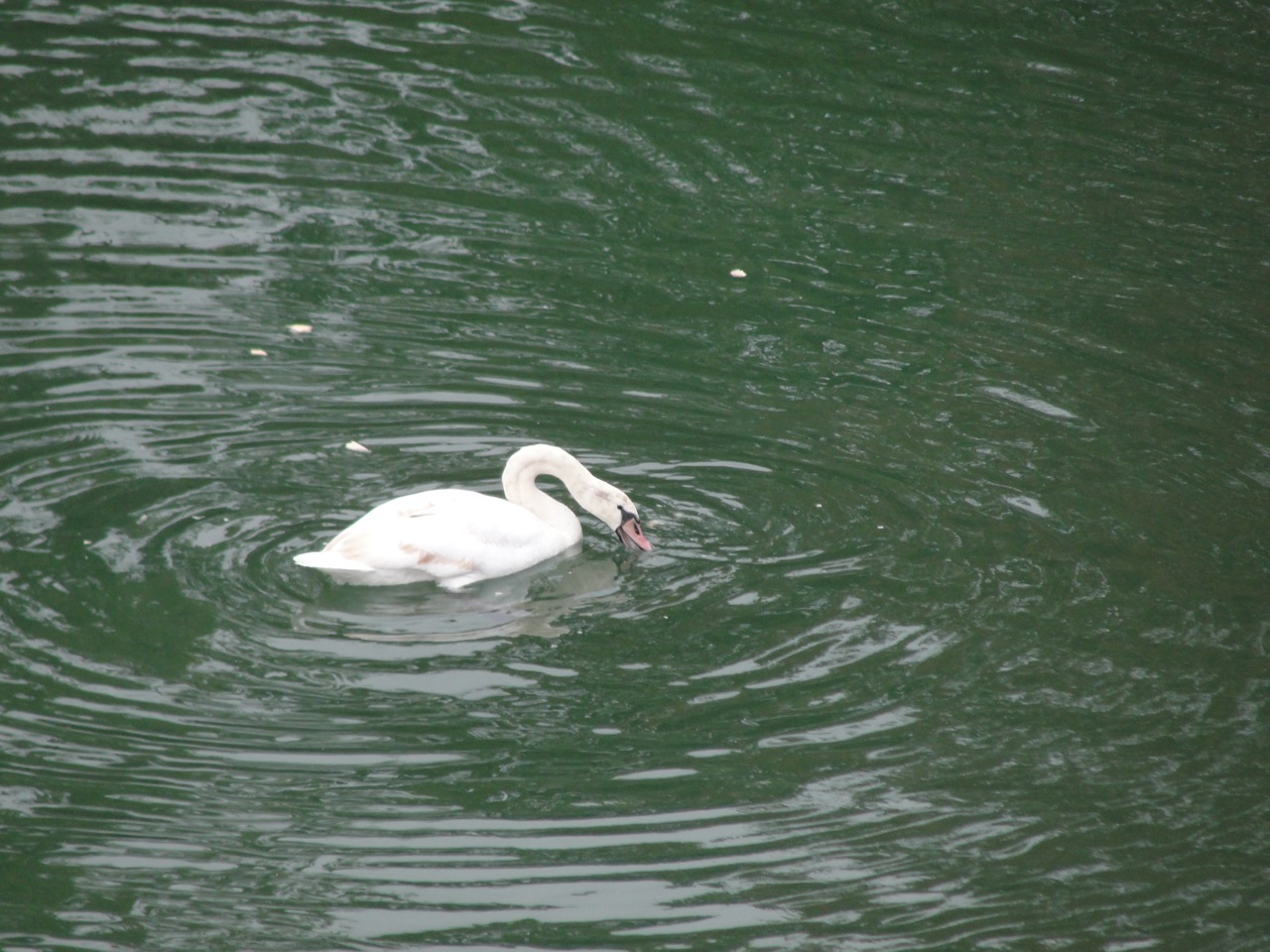
Swan in water MJ DSC09904

Prayer Links our Smallness to the Larger Kindness

You can only pray what’s in your heart
so if your heart is being ripped from your chest
pray the tearing
if your heart is full of bitterness
pray it to the last dreg…
pray your heart into the great quiet hands that can hold it
like the small bird it is.
                                          Elizabeth Cunningham

Photo by Margy Dowzer

Photo by Margy Dowzer

The spiritual journey brings us into experience of our connection to the larger Mystery of which we are a part. But spirituality is not only about something we experience, something we receive with awe and gratitude. Spirituality is also about the power we hold to shape, to create, to cause change in the larger whole. Sometimes this power has been called prayer. I have also heard it called magic. But we don’t usually think of prayer as a power we hold. We usually think of prayer when we feel powerless, when we feel our need.

Why do we pray when we are in need? During our day to day lives, many of us often feel a sense of control over our lives, a sense that we are making choices, and things can be expected to turn out based on our work and our effort. But when things go wrong—when someone we love is ill, or we lose a job, or we face death, or a child is in trouble—we are confronted with our limits as human beings, we are face to face with our utter vulnerability. Think about the saddest or scariest or most difficult moments of our lives. In those difficult moments, we feel our smallness in this world.

Prayer is an appeal to the kindness in the universe, to the mysterious power of goodness and blessing that some call God. Prayer is a reaching out from that place of smallness to the larger reality in which we find ourselves. When we were very small, when we were children, we needed the help of someone larger than us. We relied on our parents or other caregivers for everything—our food, our shelter, our learning, our basic needs. That may have been a blessed experience or a painful one. And growing up in any situation, we feel a pull to become independent, to be able to do things for our selves.

As adults we are working out a balance: between giving and receiving, between helping others and getting help when we need it. But for many of us asking for help is difficult. Probably because we don’t really like to experience our vulnerability, our smallness. Possibly because we’ve had the experience of asking for help and not receiving it. In some settings in our world, to show our weakness might mean to be taken advantage of.

Prayer has this baggage attached to it. It requires that we face our vulnerability, and be willing to ask for help. Prayer is like letting go into a kind of floating—a hope that if we are in over our heads, the ocean will hold us up, rather than swallow us. Prayer opens a link from our smallness to the larger kindness in the universe.  The Sufi poet Rumi said,

Don’t do daily prayers like a bird pecking,
moving its head up and down.
Prayer is an egg.
Hatch out the total helplessness inside.