Forgiving the Broken

Apple Tree Fall DSC01738Life will break you. Nobody can protect you from that, and living alone won’t either, for solitude will also break you with its yearning. You have to love. You have to feel. It is the reason you are here on earth. You are here to risk your heart. You are here to be swallowed up. And when it happens that you are broken, or betrayed, or left, or hurt, or death brushes near, let yourself sit by an apple tree and listen to the apples falling all around you in heaps, wasting their sweetness. Tell yourself that you tasted as many as you could.
                                                                                           Louise Erdrich

One day, caught in the gap between my ideals for living in harmony with the earth and what I am actually able to do, I went outside to share my sorrow with the trees and the green earth. I want human society to be better than it is—I want there to be a path forward that is not so lonely and hard, so expensive and out of reach. I was in a painful, broken place. I sat down on a blanket on the ground, and looked to the four sacred elements of the earth for help; the earth, the air, the fire, the water. They were kinder than I expected.

The Earth said, “Forgive the people of your society. Don’t hate your own kind. They didn’t know the oil would run out. They were creating what seemed to be good with all this abundance. It’s not evil to use oil. It is evil to fight wars and oppress workers and sully the waters in your attempts to keep it and secure it.”

The Air reminded me that the songs of birds can dispel sadness, and awaken joy and beauty.

The Fire surrounded me with the warmth of love, and said these energy issues can only be resolved through your connection to the sun. All of our energy comes from the sun.

The Water said, “Weep when you are sad. Don’t always try to fix it.” And so I eventually came to a place of peace.

One of my ecological dreams is a “net-zero carbon” home that generates more energy than it needs. I’ve heard about these homes and the architects that are designing them. That would be ideal. But in order to be alive in this world, I need to forgive the messiness of what is, as it is now. I need to accept that human beings as a species do not live in harmony with the earth right now. We are broken off.

I am able to accept our brokenness when I feel the Sun shining down on us despite it all. When I feel the water claiming us as her own, the flowers blooming, the food growing, the birds singing. The beauty of this earth teaches me that there is something very good even in the midst of our brokenness. The next day, the newspaper had a story about green homes in New England. If I can expand my perspective, I can be joyful that some people are creating zero-carbon homes, that something is awakening among human beings that will lead to greater wholeness with the earth. I feel hopeful when I learn that the United Kingdom has a goal of all new constructed homes being zero-carbon homes by 2016.Apple DSC01750

Louise Erdrich quote from The Painted Drum, p. 274.

Trying to Find an Ecological Water Heater

When we awaken to a vision of living in harmony with the earth and other beings, we enter an in-between place, a place of increasing awareness of the brokenness of our world today. Our social and economic system was built upon exploitation of the earth for resources, and the options we have as individuals are limited because of that.

During one spring, Margy and I noticed that our hot water wouldn’t get hot anymore. We put up with lukewarm showers while we were trying to sort out what to do. We are always trying to make our home more easy on the environment, so we took time to research a lot of options.

Our hot water came from a coil in our boiler, and we were told that it would be quite expensive to clean out the coil, using lots of nasty chemicals. Did we need a new boiler? At that time, a very state-of-the art efficient new boiler would cost $11,000 to install. A boiler that used wood pellets instead of oil—even better—would cost $22,000, including an automatic pellet feeder. Well, we didn’t have enough money for either of those options, and our current boiler had some years left in it. Solar hot water is also expensive, and we don’t have a south facing roof, and we have a lot of trees. One company recommended heat exchange water heaters—they were about $3000 to install.

Water Heater DSC01555I also researched more traditional hot water heaters—we don’t have natural gas where we live, so that wasn’t an option. I lined up all the brands and all their energy efficiency. But I found that the ones that were the most energy efficient cost a whole more, for the tiniest fraction of greater efficiency. I did a whole lot of work on it, but eventually, we chose a standard electric hot water heater installed for about $1000. The good news is that we can shut off our boiler during the summer months, since it won’t be needed to heat water. And we have hot showers again. The bad news is that our electric bill will go up about $50 a month. So all in all, we might be using more energy than before.

I share this story because I felt so sad after our experience, so disappointed and angry that there weren’t good ecological solutions. Despite our values and idealism about how we want to live on the earth, despite how much time we put into research, it wasn’t possible to find workable and affordable choices. The options we have as families depend on what our society chooses do with its resources.

What Unitarian Universalists Believe

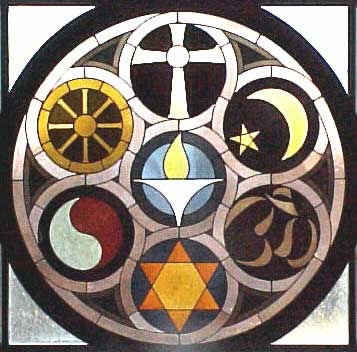
UU Chalice InterfaithI have found spiritual companions in Unitarian Universalism. Its  congregations now include people of many different spiritual beliefs: Christians, Jews, Buddhists, Muslims, atheists, pagans. We include people who believe in a personal kind of God, and those who believe in a divine force of connectedness between everything that exists. We include people who love the Goddess, and people who do not imagine any God at all. Sometimes people say that in Unitarian Universalism you can believe whatever you want—but that is not really true. Though we have many more diverse beliefs today as Unitarian Universalists, you could say we are still arguing with Calvin.

We don’t believe in a God of anger. We don’t believe that people are born evil. We don’t believe that our bodies are shameful. We don’t believe that someone had to die to appease an angry God. We don’t believe that God loves some people and sends other people to hell. We want to get rid of that guilt and shame producing kind of religion, that heavy burden people still carry around because Calvinism is so ingrained in our culture.

We do believe that Love is at the center of the Universe, and those of us who believe in a God, believe in a God of Love. We do believe that each person is important and lovable and that we are all part of one family. We do believe that we are called to live a life of service and compassion, and that human beings, however imperfect we may be, can make a choice to follow our values.

We believe in a democracy of spirit—that each person has a share of wisdom and truth and love. We believe in the importance of community—that we learn and grow most by sharing with each other. We believe that love is contagious, that we cannot find fulfillment and purpose without knowing that we are loved, and loving others. We believe that love can transform lives.

To believe in Love as the foundation of the universe is an act of faith. There is no proof, we don’t know in some objective way that love will win out over the forces of hate and greed. We have to make an experiment of it—perhaps that is why the Quakers could sing “Love is Lord of Heaven and Earth” with such conviction. They practiced nonviolent love in their doings with other people, and learned something of its strength. And perhaps we too have experienced something of its power in our times—those moments when gentleness transformed a heated situation, those historic movements when love crumbled oppression and brought justice into society.

To believe in Love, to make this act of faith, is to strengthen Love’s power in our world, to make it more likely that our relationships will be mutual and kind, that our society will bend toward fairness and compassion. May it be so.

God is Love

FriendsTo me, the statement that “God is Love” can evoke a person who stands close by through thick and thin, the friend who doesn’t run away when you have to go to the hospital, or when you make a big mistake. The one who doesn’t mind that you have faults, that you get cranky sometimes, or feel overwhelmed by the problems of the world. The friend who doesn’t mind when you get into a controlling mood, but just shakes you a little, and says, “relax.”

For many people, the image of a God who loves us unconditionally like a father or a friend is very powerful. We imagine God as a person because we are persons, and it can help us to relate to that God; we model it on our closest human connections. That is one way of understanding the idea that God is love. But for other people, that image of a person doesn’t work. To say that God is love means that God does not have to be imagined as a person who loves us. God can be understood as the very flow and energy of love itself: that energy that moves between people and connects us and empowers us.

Ultimately, it matters less how or if we imagine God, and it matters more how we are living our lives—if we are living in love, then God is inside our very living. And there doesn’t have to be just one image or one story—we might ask instead what does it mean that Love is at the center of the universe?

Of course, love is another one of those overused words that become hard to really understand. Love is based on the essential connections between people, and the sacredness within people. When we love someone we see the beauty in them, the gift of their being, and we know that it matters to us that they are alive. When we are loved by someone, we feel the beauty in ourselves, the gift of our own being, reflected in our connection to another. We feel seen. We feel alive in relationship to others.

Rev. Mark Morrison-Reed says that “the great insight of Universalism is that you cannot coerce people into loving one another.” He says,

No one has ever or will ever draw true love out of another with punishment. God’s love is given to all and is a more positive force for good than fear ever will be. Behind this is a simple truth: in being loved we learn to love. Those who are loved will in turn love others. Those who feel God’s infinite love within themselves will in turn feel so good about themselves, so connected to life and so full of compassion that they will not be able to help but to spread that love for they will overflow with it.

There is a traditional Quaker hymn that says “Love is Lord in heaven and earth.” Love wins. Universalism was called the gospel of success. When the Universalists opened the doors to heaven, that led the way to opening the doors here on earth. Over time they opened up their churches to expanding ideas of religion—they began to see that there must be wisdom and truth and holiness in all religions, and they reached out to learn from others. They were open to the wisdom of science and the blessing of nature. Where ever love was, that was holiness and truth.

Abundant Love

According to Rev. Gordon McKeeman, the Universalists introduced the belief in a God who loved so abundantly that he would drag “the last unrepentant sinner, kicking & screaming, into heaven.”

Wow! A God who loves so much, who wants joy and blessing for all people, even if we have to be dragged into it against our will. It is such a gospel of hope, in contrast with the harsh and judgmental gospel of Calvinism.

One of the questions another of my colleagues, Rev. Mark Morrison-Reed, asks is why didn’t Universalism spread all over this country? Who could resist a religion with no hell?  Why was it so much harder to believe in a God of overwhelming love than in doctrines like the virgin birth or the resurrection? He answers his own question like this:

What we yearn for is unconditional love but it is contradicted by our experience. Instead, the principle message each of us received over and over again was this: behave and be loved, behave and be loved. The implication is: those who are good and compliant are loved, all others not. Universalism calls this “partialism.” In other words, people have taken their own experience of conditional, judgmental, imperfect human love and ascribed it to God.

What does it mean to believe that God is love? The phrase may have become so familiar that we almost don’t hear it anymore. One of the letters in the Bible says it, “God is love, and those who abide in love, abide in God, and God in them.” We can get derailed if we imagine God as an all powerful ruler sitting on a throne granting favors. Then, if something tragic happens to us, we feel that God must not love us. But if God is love, then the image of favor-granting dictator doesn’t work. God is more like the Sun, shining on everything and giving life to everything, no matter what, enabling all things to unfold in the way that they will by being alive.

Sun Shining on People

Photo by Margy Dowzer

Quote from Mark Morrison-Reed from “Dragged Kicking and Screaming into Heaven

God is not an angry judge

The God of judgement has been a prevalent theme throughout the course of American history because of the influence of John Calvin. He lived from 1509-1564, and was an important figure in the Protestant Reformation in Europe; he was heavily influenced himself by the earlier work of St. Augustine. Calvin’s teachings became known as Calvinism. He is important to our American story because the Pilgrims and the Puritans who came to America were Calvinists.

Calvin preached the total depravity of human beings. Because of original sin, he said, all human beings were born evil, and had no capacity to goodness or to connection to God. However, according to Calvin, God chose to unleash his anger on Jesus, who willingly died so that some people could be granted salvation. The people who were saved were called the “elect,” or the chosen. These people were predestined to holiness, and all other people were doomed to bear the anger of God for their sins, and to suffer in hell. It did not matter whether you tried to be good—that wasn’t enough to get you into heaven.

This was the preaching of the earliest New England pastors, and it was revitalized in a religious movement known as the Great Awakening in the early 1700’s. The Great Awakening was marked by an appeal to emotion, rather than intellect, and the goal was to provoke emotional conversion experiences. If you had one of these conversion experiences, it was considered a sign that you might be among the elect. Again, these were “fire and brimstone” sermons—lifting up the torments of sin and hell, and the likelihood of damnation if one didn’t find salvation.Firey Furnace MJ DSC02606_2

But some preachers found a different inspiration. They asked, “If God is our father, then how can a father condemn his children?” People knew how much they loved their own children. If as human beings they only wanted the best for their children, wouldn’t a heavenly father be even more loving than we could be. Wouldn’t a father want to save all of his children from the torments of hell?

A man named John Murray had asked these questions in England, and been branded a heretic. He came to America in 1770 to try to get away from all that. There is a wonderful story about him being shipwrecked off the coast of New Jersey, right where a farmer named Thomas Potter had built a chapel, waiting for someone who would preach about universal salvation. And so John Murray did.

This was the beginning of the religious movement in American called Universalism: a deep devotion to the idea that God is love, and that God’s love reached everyone, and there was no such thing as hell. This was quite a radical notion in 18th century America. The most influential of the early Universalist preachers was the Rev. Hosea Ballou. He and others went around the countryside, spreading their message among the working people and farmers, and many Universalist churches were started. When the preacher Rev. Thomas Barnes came to Maine in 1799, that was the start of Universalism in Portland, and the beginnings of my own congregation.

People used to argue with Hosea Ballou—they would say, “if there is no threat of hell, why would anyone be good, or obey the law.” Ballou used to respond, “what kind of goodness is it, if you are only doing it to avoid hell? I don’t need the threat of hell to practice goodness.”

Guilt or Love?

Steeple MJ DSC01914One of my hopes in this blog has been to expand our understanding of what God might be, what Mystery and Spirit might be, because so many people have been wounded by the false Gods of our culture. I want to take a closer look at one of those false Gods that I believe has hurt many people. If you have rejected the idea of God, perhaps you’ll recognize the one I am talking about. So I invite you to persevere with me as we explore it a little bit.

I think we can identify two approaches that people have taken to our relationship with the powers greater than ourselves. In one, the powers, the Gods, the Spirits were dangerous forces, and religious ritual was enlisted to appease these forces, and make the people safe from them. In the other, the Gods, the Spirits were benevolent forces, and religious ritual was enlisted to call upon the forces for help in dealing with the challenges of living. I am simplifying it of course, but still, there have been particular times in history when this battle between dangerous or fearful forces and kind and loving forces was in full blaze, and sometimes within the same religion.

When I was a child, I learned about one such conflict between a judging fearful God and a loving God. As a Catholic, I used to read about the lives of the saints, and one saint I liked a lot was Margaret Mary Alacoque. She lived during the 17th century in France. Just before her time, there had been a theologian named Cornelius Jansen who emphasized the idea of original sin. He believed that people were unworthy and evil, and only a few would be saved. Jansen discouraged people from participating in the communion ritual that happened every Sunday, saying it was reserved for only the very holy.

Sacred Heart

But Margaret Mary began to have visions—in her visions she saw Jesus, and she saw his heart, as if it were outside of his body, burning with love. He told her that God was full of love for people, and that God wanted to help people. Now, for those of you who have been Catholic, you may remember seeing pictures of the Sacred Heart of Jesus. It became an important devotion in Catholic life.

For me, this story was a gift—first of all, I thought it was cool that she had visions, and could talk to Jesus. But more importantly, this story told me that I was loved by God. All Catholic children learn a lot of guilt, and lessons about original sin, and mortal and venial sins, can weigh heavily upon us. But this story shifted the balance for me—it helped me to know deep in my heart that God was love, and that God loved me.

Now, I am guessing that very few people have ever heard of Cornelius Jansen or Margaret Mary, but perhaps you have your own memories of a church in which you felt guilt and shame, in which you learned that you were a sinner, or unworthy. Those ideas are just as pervasive today as in former centuries. The God of judgement has been a prevalent theme throughout the course of American history because of the teachings of someone much more famous that Jansen. More on that tomorrow.

What kind of God do you believe in?

Winter Sun DSC09206

I have never believed in God. Not in your God anyway; the one who looks down onto his chessboard and moves the pieces according to his pleasure, occasionally glancing up at the face of his Adversary with the smile of the one who already knows the outcome. It seems to me that there must be something horribly flawed in a Creator who persists in testing his creatures to destruction, in providing a world well stocked with pleasures only to announce that all pleasure is sin, in creating mankind imperfect, then expecting us to aspire to perfection. …There must be something else, I told myself repeatedly; something beyond sin and solemnity, dust and devotion; something that loved life as indiscriminately as I did.
                                                                Joanne Harris from Holy Fools, p. 32-33.

Throughout history, people have wrestled with the mystery of powers greater than themselves. There are many ways that people have understood these powers—some peoples believed in a pantheon of Gods and Goddesses who ruled various aspects of life; others claimed that there was only one Supreme Being, while still others espoused a belief in natural processes that have unfolded to create the universe as we know it today. We often hear the question now framed simply as: “Do you believe in God?”

Many of us, as children, are presented with one idea of God, framed as if it were the only possible idea of God. If that idea doesn’t work for us, or even hurts our spirits, we may reject the whole notion of God, without further reflection. But there is not just one idea of God, there have been many. People imagine God in one form or another, and it is important to realize that our images of God are not what God really is.

God is a name that some give to the mysterious forces that sustain and uphold the larger reality of which we are a part. These forces are beyond our capacity to actually know or define. We understand them through the use of symbol and analogy. We say God is like this, or God is like that. So, rather than ask, “Do you believe in God,” I think it is much more important to ask “What kind of God do you believe in?” or perhaps even, “What kind of God do you not believe in?” 

In the tree I am held by God

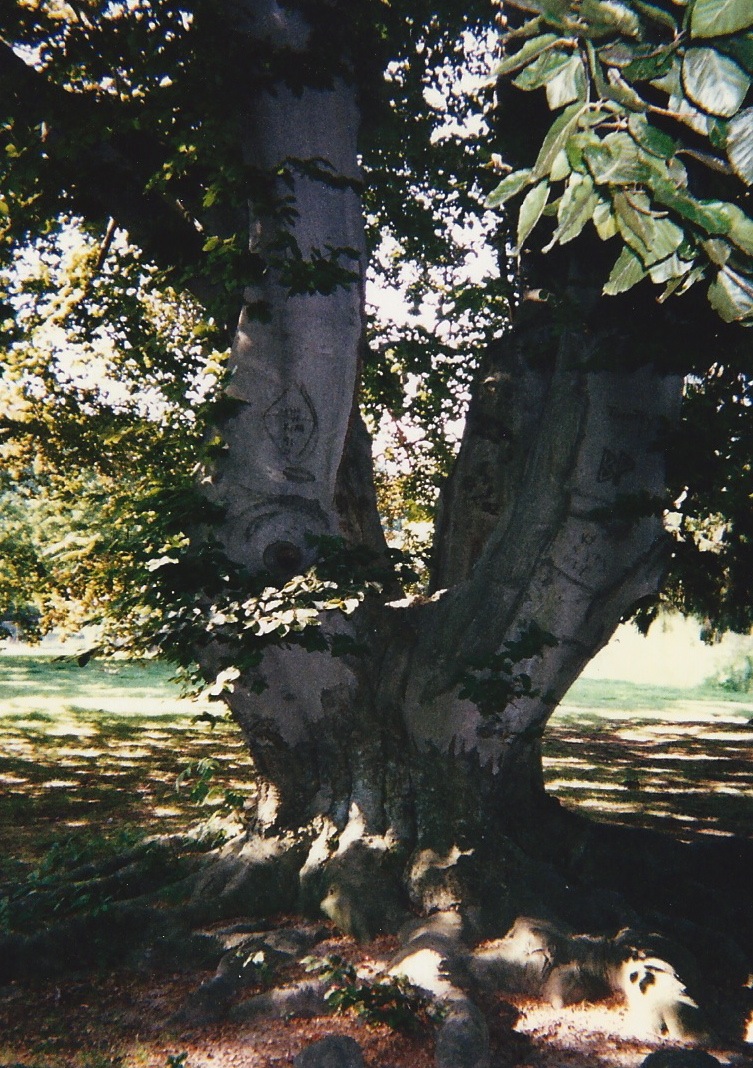
Beech Tree Leaves 133650004There was one more communication I experienced with the four directions tree which was not about writing or speaking or even thinking. Sometimes I merely sat, my body balanced between the sturdiness of the main branches, my eyes resting in the translucent green softening the sunlight.

Even then, the tree and I were involved in a sacred exchange. When I breathed, the tree was my intimate partner. The tree breathed out the oxygen that I needed to be alive, and I breathed out the carbon dioxide that it used for nourishment. Our physical bodies are designed to need each other. We give and receive the very substance of our lives. We have been giving and receiving this way for millennia.

We and the trees are neighbors on this planet, but more than that, we are sacred partners, we are kin. We are genetically and spiritually related to each other. If we are open to respecting the trees, if we value the inherent worth and dignity of the trees, it then becomes possible for us to experience in the trees the presence of the divine Mystery.

Breathing and writing, dreaming and remembering, in the sacred arms of the beech tree, I knew I what it felt like to be held by God and to be one with God. The trees teach us that all of us are related; their quiet language sings the song of the marvelous interweaving unity of life on Earth. Remember this, the next time you walk by the trees near where you live. Listen. And then remember to say thanks.

The Partnership of Human and Tree

When I write in my journal, I do it on paper, and what is paper but very thin slices of wood? Each time I write, I enter this old partnership of human and tree. We join together to create a magic of exploration and memory which neither of us could do alone. Think of the vast store of human wisdom and history found in libraries around the world. All of it would have been impossible without trees to hold our words in their keeping.

Beech Tree Close Up 133650001Many years after I sat in the beech tree, I discovered another link. According to Gilbert Waldbauer, the ancient Germanic peoples would carve their runes on thin slabs of beech wood. These were sometimes laced together with thongs to create what they called a Buch, which is the German word for both beech and book.

The tree is our original text, the bearer of all text. When I sat in the beech tree, I was face to face with that perennial yearning of humankind to leave our mark. I too had a yearning to leave my mark on paper, writing my thoughts and feelings, my hopes and memories, creating something new with the magic of words.

Trees have been the foundation of so much human life and culture. The first fuel of many of our ancestors was wood. Our houses are made of wood. The floors, the walls, the ceilings, the window frames and doorways. We are surrounded and held up and sheltered by the gift of trees. Our musical instruments, our tools, our boats, many of our foods and medicines, all are possible because of trees. No wonder we say “Knock on wood” when everything is going well and we wish to protect ourselves from bad luck.

Trees also play a significant role in the crisis we face today for the health of our planet. Deforestation has contributed to global warming, and planting new trees can contribute to reducing the levels of carbon in the atmosphere. I am inspired by the Green Belt Movement in Kenya, founded by Nobel Prize winner, Wangari Maathai. Beginning in 1977, she organized poor rural women in Kenya to plant trees, and learn small scale trades that benefit the environment while providing a living. Over 40 million trees have been planted in Kenya in the last thirty-six years.

Sometime I wish we Americans could go back to the old European pagan approach to trees. They didn’t believe it was wrong to cut down trees or use their products for their needs. But the old pagans taught that before cutting a tree one must ask permission of the tree. To request its consent acknowledges that we have a relationship of mutuality and respect. Some might say that asking wouldn’t alter the act of cutting the tree. But just compare how consent and respect differentiate acts of lovemaking from acts of assault.

To relate to a tree with respect will change the nature of the use we make of it for our survival needs. I believe that a tree is not merely a tool and resource for human needs. The tree is a sacred Other, with its own inherent value and meaning. How do we know that the tree does not have its own sentient life? Recently I learned that trees emit low frequency vibrations that human ears cannot detect. My lack of knowledge about its language, does not determine that the tree is without a language of its own.