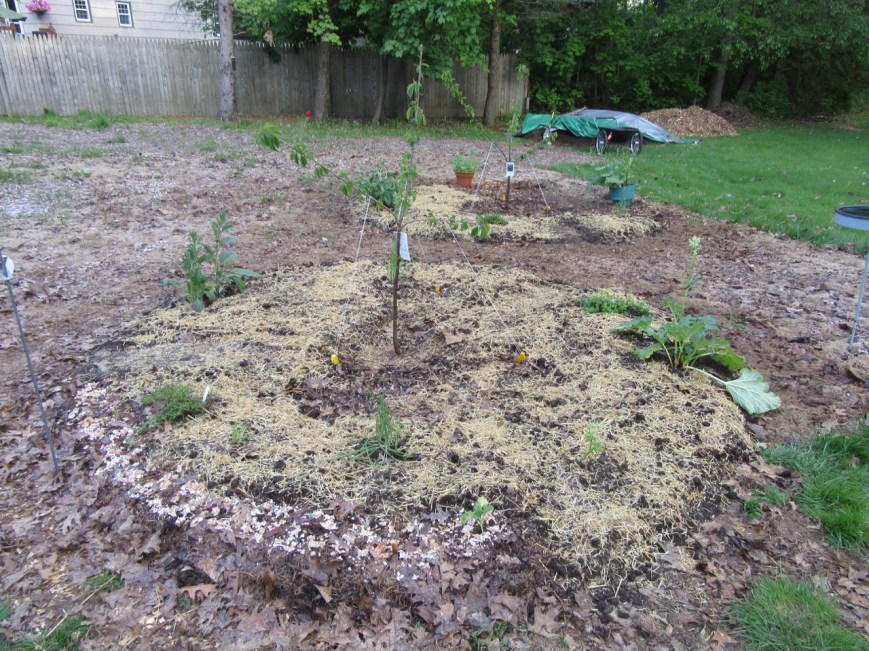
 Today I almost finished soil work and guild plantings around each of the cherry trees–still 1/3 to do around the second tree. First I aerated the soil with our garden fork to a five foot radius around the tree. (The soil was already covered with mulch from last fall-wood chips, cut grass, sea weed, and dead leaves.) Then I put down newspaper or cardboard along the outer half of each circle, and covered it with compost. I planted the companion plants for each cherry tree guild. Guilds are plants that work together so that each does better than if they were planted alone. In this case, the primary focus is the health of the cherry tree.
The plants I used and their functions:
- Comfrey is a nutrient accumulator–its roots go deep and bring up calcium and other vital nutrients, and then the leaves can be cut several times a season, and used as mulch. It also attracts pollinators and other beneficial insects. It can be used in herbal medicine. It was recommended to plant it at least four feet from the trunk.
- Chives accumulate nutrients, deter pests, are anti-fungal and attract pollinators… They bloom at the same time as the cherry will, and are also a culinary herb. I had enough to do two per tree.
- Oregano is an aromatic pest confuser, is anti-fungal, can take some foot traffic, and of course is a culinary herb.
- Thyme is another insect pest repellant and culinary herb (my favorite.)
- Chamomile accumulates nutrients, is anti-fungal, and attracts beneficial insects..
- Rhubarb is another perennial food, and can be cut in place for mulch.
- At the outer edge of the circle around the Lapins Cherry, I also planted a row of annual kale. The cherry tree won’t reach that far for a couple years, so it works okay. I mulched them with egg shells, which I understand will deter kale eating pests.
- That guild also got one Sweet Cicely plant, which attracts beneficial insect predators to kill insect pests. Plus I hear it tastes like licorice/anise.
- The other tree guild also got Lemon Balm, and maybe a Bee Balm plant–I haven’t planted it yet and I’m deciding if it will get too big–if so, maybe it will go nearby. The Lemon Balm was from the plant swap, and attracts pollinators and repels ants and flies. I just read that it will spread. Bee Balm attracts pollinators.
- Between all the other plants, I planted Red Clover seeds–they are a nitrogen fixer, and this variety is best for a fungally dominant soil. It is a good ground cover to keep weeds away, easy to walk on too. I put some straw mulch on the seeds to get them started, but I think I will add wood chips over it all.
Later in the fall, I plan to add daffodils in a ring about 2 feet from the trunk, to deter munching pests. I also ended up designating two paths into the tree for each circle–so I can get to the center easily. Once again, I end the day with sore muscles, but so happy.
 Today was a day for food forests! My friend Mihku and I went to a tour of
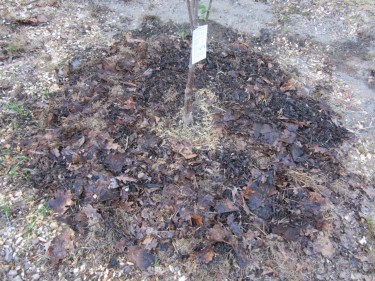 So the very next day, I went out and moved that evergreen mulch away, and dug up some of the starting-to-decompose deciduous wood & leaves mulch, piling it up in a six-foot diameter circle around each tree, careful to leave open space around the trunks themselves. Next time, Margy can ask our wood chip supplier to save us some of the ramial chips.
 The Portland Water District offers inexpensive rain barrels each year, so Margy and I ordered four barrels to supplement the few we already have. We picked them up amid dozens of barrels at the East End Water Treatment Facility. These are repurposed olive oil barrels so we’re glad to recycle rather than buy something created with new plastic.
 On my walk yesterday, I followed the brook trail by the Hall School. Then, as I was going along the road that crosses over the brook, I happened to look through the chain link fence to my left, and saw these huge birds resting in the underbrush near the brook. They had not been visible from the trail–in fact I went back to see if I could get a closer look, and they were completely hidden. Turkey vultures. I had never seen them in the neighborhood before, but while watching for several minutes, another bird emerged–looking scruffy like a juvenile. So maybe this was mama and papa’s protected home for raising their baby.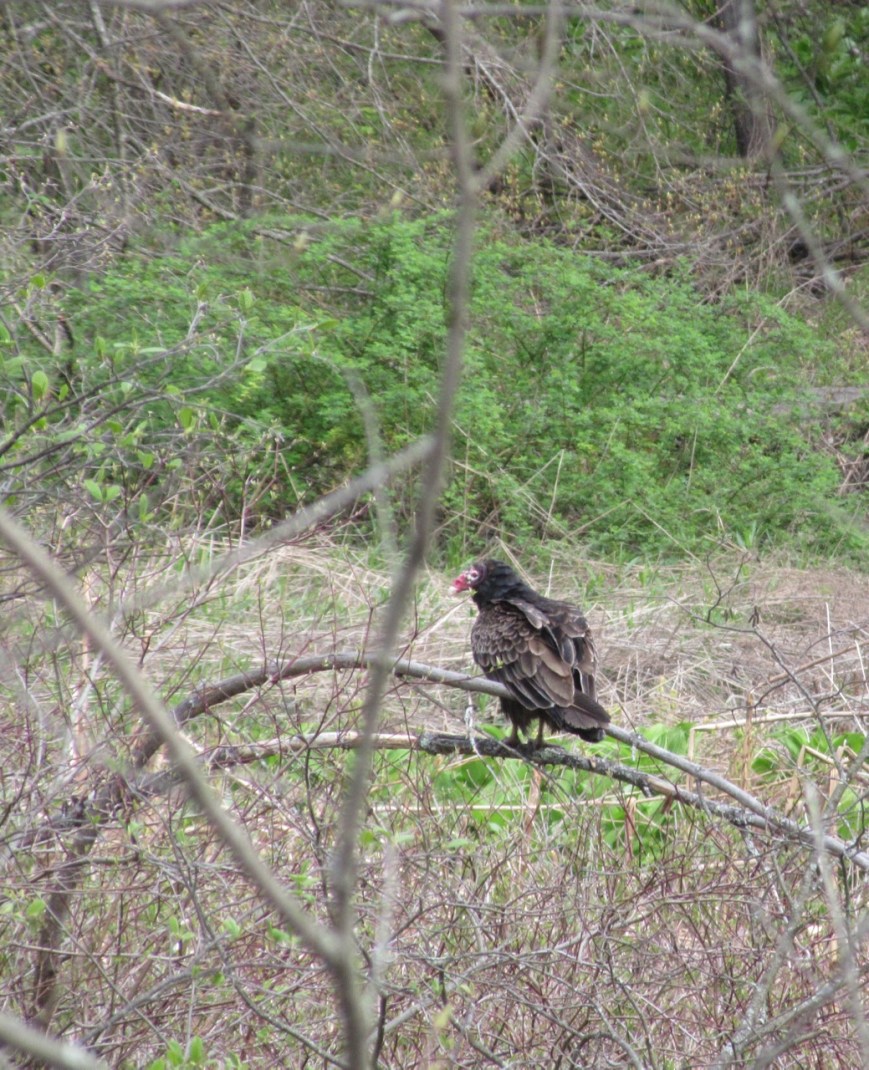


 The big loud machines are still there, but today I was startled to see that they have also cut trees between the school and the brook, a whole section that I thought should be safe. The wide swath of trees that made for a little wilderness in the city, is being narrowed so that the sanctuary is no longer as much a sanctuary.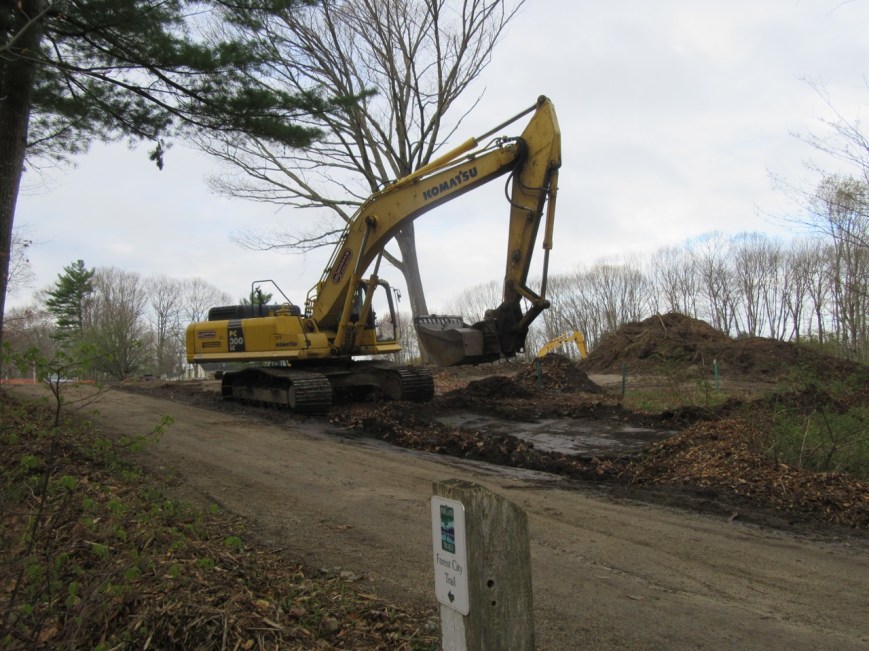
 This is a section of our evolving Permaculture Design for our yard. (It didn’t really work to try to put the whole design into one photo, so this is of the half of the yard nearest the house.) I had started this design by measuring everything in our yard and putting them on grid paper–the grids equate to 3 feet square. Then we had lots more input with our
  Finding Our Way Home