Questions to Ask Ourselves

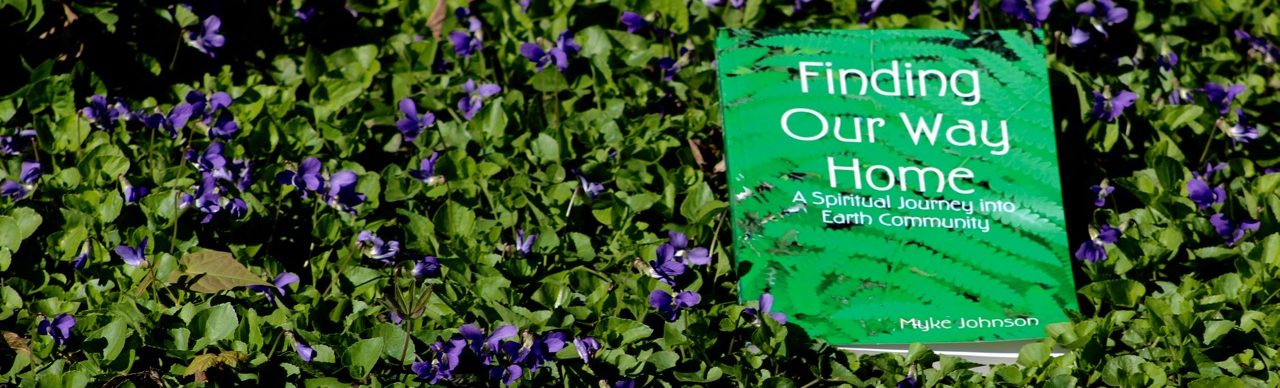
img_0448I have been asking myself and others, what does the change in our country mean for our personal activities and commitments?  Every day I receive dozens of emails asking me to sign this petition or donate to that organization working on behalf of immigrants, or women’s reproductive health care, or the environment, and on and on. Invitations to March on Washington, or Boston, or Augusta. Invitations to lobby my senator or call my congressperson. I can feel overwhelmed by trying to make decisions on what to choose, what to ignore, what to do with the same amount of time in each day, in each week as I have always had.

How are we meant to respond to the current challenges in our world, to the pain and suffering we see? On the one hand, we can say simply—follow our values, care for the vulnerable, fight for justice. But Quaker educator Parker Palmer, in his book, Let Your Life Speak, asks us to take a step back, to look more deeply at what we are being called to do. Palmer says, “Our deepest calling is to grow into our own authentic selfhood, whether or not it conforms to some image of who we ought to be… True vocation joins self and service, as Frederick Beuchner asserts when he defines vocation as ‘the place where your deep gladness meets the world’s deep need.’”

So one question we might be asking ourselves is, What is our own deep gladness? What sparks in us a sense of joy, because it taps into the very essence of our gift, our personality, our being? Another way to think of this might be, What are we good at doing? The influential African-American theologian, Howard Thurman, puts it, “Don’t ask what the world needs. Ask what makes you come alive, and go do it. Because what the world needs is people who have come alive.”

But is it really okay to pay attention to our own hearts, to our own deep gladness, to what makes us come alive? Shouldn’t we be mobilizing, organizing and lobbying every day to support our values in a society where they are under attack? I think what Palmer and Beuchner and Thurman are reminding us is that we can’t give what we don’t have. Not that we can’t learn new skills and rise to challenging occasions—but we can’t sustain a commitment if it goes counter to our nature.

For example, some people might be very at home with organizing a protest rally—making phone calls, posting on social media, renting sound equipment, contacting the right speakers, giving a stirring speech, and so forth. Some one else might be very good at going door to door, talking to neighbors and strangers of all political persuasions, making a connection and bridging the divide. Someone else might be good at strategizing behind the scenes, mapping out goals and objectives, and a course of action to take to get there. Someone else might be very good at bringing coffee and cookies to the meeting, and making sure that each new person is welcomed and brought into the conversation, and leaves feeling a sense of connection and involvement. Even in organizing and mobilizing, we each bring our particular gifts to the table.

And by that same token, we each have limits. Parker Palmer points out that he learned as much about understanding his calling from his limits as from his talents and gifts. He said, “Lacking insight into my own limits and potentials, I had allowed ego and ethics to lead me into a situation that my soul could not abide.”

He isn’t referring to the external limits that society places on people because of our gender, or the color of our skin, or the country of our origin. Rather, he means the limits that arise from our personalities, from our natural way of being in the world, from who we are at our core. We are encouraged to be tender with our natural way of being in the world, and not ask our souls to bear what they cannot abide.

For example, if someone is a complete introvert, they would not best serve their soul by forcing themselves to go to a march or a meeting. Rather, they might be happier to write letters to the editor or to their congressperson. Another person might not be able to go door to door, talking to neighbors, but they are really good at tutoring asylum seekers one-on-one to help them learn to speak English more quickly and feel at home in this country. Our limits and our strengths are mirrors to each other. We need to ask ourselves about our gifts and our limits.

I want to mention something about external limits. Parker Palmer admits that he holds a lot of privilege as an educated white male. Even to ask ourselves about “our soul’s calling” assumes that we have the privilege to ponder the question. Many people work overtime in jobs that do nothing to provide gladness, and barely enough to support a home and food. Another important question to ask ourselves is about our areas of privilege or areas of marginalization. What we can offer the community is dependent upon our social location—and that goes both ways. As a woman, I would not be welcome to share a gift for leading worship in the Catholic community. This is an area of marginalization for me. On the other hand, as someone currently with a steady income, it would be inappropriate for me to try to teach people in poverty how to save their money. It would be intrusive and disrespectful.

We must understand our position in a social fabric, the powers we hold and the challenges we face just by who our people are, where we live, the color of our skin. I am reminded of the advice given to budding writers—write what you know.

So we must ask, What are our gifts, what gives us joy, what are our limits, what is our location? Palmer says, “Is the life I am living, the same as the life that wants to live in me?” It is from this place of understanding our own essence that we can best respond to the great needs of our world.
Business Is Funny

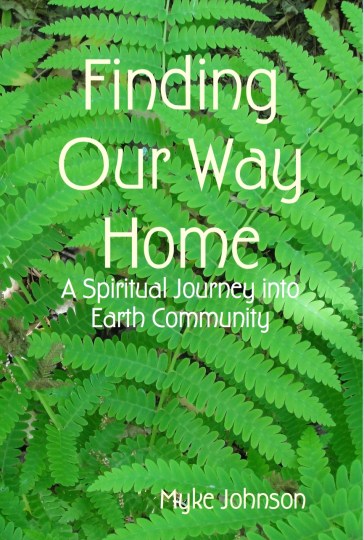
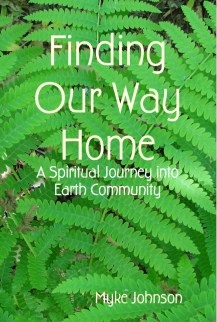
title-pageMy book, Finding Our Way Home: A Spiritual Journey into Earth Community is now available for $17.99 through Amazon.com, BarnesandNoble.com, and via special order at your local bookstore through Ingram, as well as directly from lulu.com.  You can follow the links, or search using my name.  It may ask you, Did you mean “Mike Johnson”?  Say, no, “Myke Johnson.”

A funny thing.  If I go to its listing  at Amazon.com, it also says there are “2 used and 11 new copies” available from other sellers. But obviously, there are no used copies in existence yet–this is a print-on-demand book that was just released.  But there are all kinds of discount booksellers who list it at prices varying from $14.52 to $24.44 plus shipping.

From the business side of things, it is still better for me (financially) when folks order it directly from lulu.com or get a copy from me in person.  This is because other sellers take over half the list price, so I receive about a third of what I would receive if someone ordered it directly from lulu.com.  On the other hand, if someone orders it from their local bookstore, it helps to support local booksellers, which is fabulous. And I myself use Amazon.com for its convenience and speed, and its free shipping when I accumulate a few titles. Plus, you can look “inside” the book on their website.  So all in all, it feels good to have it listed out there in multiple venues, so folks can get a copy in the easiest way.

It has been illuminating to learn more about the business side of book publishing.  I don’t expect to make a lot of money from this adventure in publishing, but I do want to get the message out to wherever it might be welcome.  It is up to me to do the promotion and marketing for the book.  But it won’t really work without some help from my friends. Thanks very much to those who have already purchased a copy!

And thanks very much to some wonderful members of my congregation who are hosting a book launch party this weekend.  If you are near Portland, Maine it is from 12-2 at the Allen Avenue UU Church on Saturday, January 14th.  There will be copies of the book to buy, a reading of selections from the book, music, refreshments and I will sign your copy. Everyone is invited.

Other ways you can help:  If you read the book and appreciate its message, tell your friends about it or give it as a gift.  Share it on Facebook.  You can also help promote it by writing a review under its listing at lulu.comAmazon.com, or BarnesandNoble.com and then sharing it via Facebook or Twitter.  Thank you in advance!

The Chamomile & Me

From the Introduction to my new book, Finding Our Way Home:  A Spiritual Journey into Earth Community:

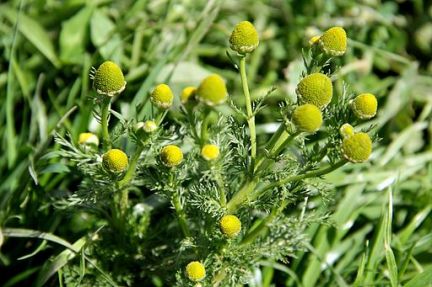
When I was a young adult I became intrigued with the use of natural herbs for healing. I read how particular flowers and leaves and roots were able to address different ailments of the body. I purchased herbal products in the local food coop, and steeped them in teas when I didn’t feel well. I learned, for example, that chamomile tea was calming during a time of stress. Then one day, with a group of peace activists protesting outside a nuclear weapons facility, someone pointed out to me a chamomile plant growing wild by the side of the road.

wild-chamomile

[Photo by Lazaregagnidze via Wikimedia Commons]

It was tiny, easy to overlook, with tight yellow-green berry-like flowers. Its feathery leaves branched out over a stony patch of ground.

I suddenly felt the connection. Chamomile wasn’t merely something I bought at the store. It was a plant that grew by the side of a road. Something in those chamomile flowers could ease my stress. We were related to each other in a deep, essential way—physically, chemically. And not only chamomile. I understood in that moment I was not separate from any of the plants or animals or people on the earth. We were all one, all interconnected. Something in me woke up.

But if we were one, why did we lose our awareness of our connection? What broke us apart? And more importantly, what could bring us back together? Standing outside that nuclear weapons facility, the contrast could not feel more devastating. If we truly felt our interconnection, how could we even imagine such destruction? Somehow, we had become lost, we had become divided—from the plants, from the earth, from other human beings, from the Mystery binding all of us together. How could we find our way back to each other?

…Without experiencing our connection, we cannot begin to address the dangers facing us in our time.

I invite you to join me on this journey into earth community. I offer stories from my own path, and stories from others who have helped me to find the way. Along this winding road, I had many teachers. Human teachers, to be sure, but also a red bird, a copper beech tree, a piece of bread, a common mushroom, my cats. I have not reached the destination, but I have come to understand a sense of the direction we must travel. We must cultivate deeper relationships with our fellow inhabitants of this planet, both human and non-human. We must understand that the Divine Spirit is here with us as well, not separate, but present in each being, and present in the larger reality of which we are a part.


The Book

Now available!  The book, Finding Our Way Home: A Spiritual Journey into Earth Communityis being published by my own imprint, Small Bird Press, and available through lulu.com via this link.title-page 

What others are saying:

“Myke Johnson’s beautiful stories from her own journey illuminate the way to reconnecting with ourselves, each other and the entire Earth community. The practices that punctuate the end of each chapter help embody and guide the path of reconnection. A book to savor, it is also a compelling reminder of the legacy of stolen land and genocide, and of the urgency to face the past as a necessary step toward healing and finding our way home.”  Anne Symens-Bucher, Executive Assistant to Joanna Macy and facilitator of the Work That Reconnects

“Myke Johnson’s writings are inspiring, transformative and grounded in the mystic contemplative way of life.  Reading her reflections and meditations gives you a deep sense of connection not only to Mother Earth but to her own personal journey. This is a companion book for all that are seeking a simple but conscious choice of living in peace and harmony on our planet with all of creation.”  Rev. Virginia Marie Rincon, Episcopal priest and Curandera

From the back cover:

In this time of ecological crisis, all that is holy calls us into a more intimate partnership with the diverse and beautiful beings of this earth. In Finding Our Way Home, Myke Johnson reflects on her personal journey into such a partnership and offers a guide for others to begin this path. 

Learning from the Indigenous philosophy that everything is related, she found in her plant and animal neighbors generous teachers for a way back to connection: a chamomile flower, a small bird, a copper beech tree, a garden slug, a forest fern. Their lessons are interwoven with insights from environmental science, fractal geometry, childhood Catholic mysticism, the prophet Elijah, fairy tales, and permaculture design. Each chapter includes practices for further reflection and experience.

This eco-spiritual journey also wrestles with the long history of our society’s destruction of the natural world. Johnson investigates its roots in the original theft of the land from Indigenous peoples and in other violent oppressions between human beings. Exploring the spiritual dimensions of our brokenness, she offers tools to create healing. Here is a map into a new relationship with earth, with each other, and with the Spirit within and between all. Lyrically expressed, Finding Our Way Home is a ceremony to remember our essential unity with all of life. 

You can now order the book for $17.99 (plus shipping) via environmentally-friendly Print-on-Demand at this link:  Finding Our Way Home 

Version 2

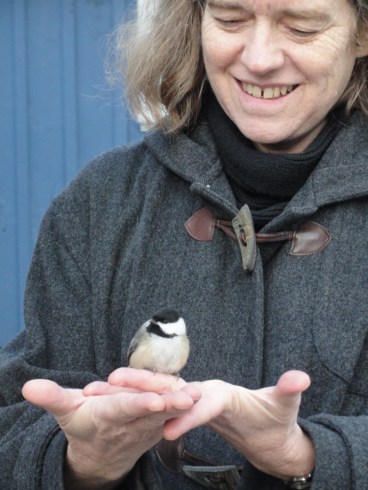
Photo by Margy Dowzer

Myke Johnson is a Unitarian Universalist minister and earth activist, serving a congregation in Portland, Maine, while practicing and teaching ecological spirituality. She holds a Master of Divinity from Chicago Theological Seminary and a Doctor of Ministry from Episcopal Divinity School.

More recommendations:

“I work with Unitarian Universalist congregational, environmental leaders across the United States. I am keenly aware not only of my need, but what so many seem to experience as a lack, a daily rift between functioning well on Earth, and Living with All Earth in ways that sustain our core. The messages and ceremonies of Finding Our Way Home are as essential, I think, as sleeping. But like sleeping, we try to do without as much as our hearts, bodies and souls need to meet demands in these times. This book is welcome medicine for the beautiful, difficult work and love of our lives.”  Rev. Karen Brammer, UUA Green Sanctuary Program

“As a student of Naiyantaqt, I have, over the long journey of my life, come to appreciate the rhythm of the Great Mystery; the wondrous Consciousness, the empowered understanding and meaning of Manitou, that exists everywhere and in all living and immobile matter. Such connections are profound, relevant, and mark the passage to the future awaiting the enlightened. I am aligned to such kinships and Myke Johnson is a long-time kinship, a seeker of the Divine, a companion in the awe of the Great Mysterious. She boldly embraces the Divine and her quest to connect with the All-Encompassing Mystery. Her book is the re-telling, the sharing of her wondrous spirit, life, and the path to her awareness. Her book will empower true seekers on this Path of Life, a path she confirms by our friendship and mutual journey together.”  gkisedtanamoogk, Maine Wabanaki-State Child Welfare Truth & Reconciliation Commissioner and author of Anoqcou: Ceremony Is Life Itself

“During times of chaos, whether private or public, the human psyche/spirit seeks inner and outer grounding as its home base. Using her own life as a prism of refracted insights, Myke Johnson has created a tool-kit for the rest of us to use in our personal and/or political struggle to survive, and perhaps even thrive. As she shows as well as tells us how to concentrate and tap into our deepest energy and then send it out into the universe in order to affect change, she does exactly that with this book, her own special gift to the world.”  Gail Collins-Ranadive, author of Nature’s Calling, The Grace of Place

“In Finding Our Way Home, Myke Johnson names the many disconnections that modern people constantly experience as the core spiritual issue of our time.  And then through wisely chosen stories from her own experience, she shows us how we might reconnect the inner pieces of ourselves, our relationships in genuine community, and our relationships with the earth into a more integrated whole. She helps us remember our deep belonging with all that is. And that as we engage this process, we are finding our way home.”  Rev. Deborah Cayer, lead minister, Eno River Unitarian Universalist Fellowship, Durham, North Carolina

Portland Stands with Standing Rock

Standing with Standing Rock in Portland ME

Portland Stands with Standing Rock, Photo by Katrina Van Brugh

Sometimes our spirits know that we must go to another place to support the struggle to protect Indigenous rights and water. But sometimes our spirits tell us to stay put, and lend support from where we are, in whatever we can.  That is my particular calling in this moment, even though a part of my heart is out in Standing Rock every day.  But I was happy to stand in the rain on Saturday in Portland, Maine, with a few dozen people, including these young people from my congregation. Somehow being in the rain also felt right, because #waterislife.

This week many of my clergy colleagues have gone to the site of the camps, to bring a message of support, and I am glad for them to be there.  I am happy that our religious voices can be aligned with sovereignty and justice, after so much damage has been done in the name of the churches throughout the history of this land.

I am also glad personally to be following the spirit’s lead on this, because something is happening right now in our world which is deeper than politics, deeper than the divide between right and left, deeper than what any of the media are willing or able to talk about. It cannot be figured out by thinking or talking.  It is deeper than that.  It comes from the depth of the mysterious forces that give life, that sustain life, on our beautiful planet.

In a time of despair, that which can give us hope is often hidden from public view, bubbling up in unexpected places.  The energy and magic that is Standing Rock is not limited to that one place, but emerges wherever the people find our connection to the land, our connection to the water. Still, what is emerging at Standing Rock goes much deeper than I am able to fully understand, even when I open my heart to the mystery and the flow of it.  But every morning, I do open my heart to that mystery, and offer what energy and gifts I may offer to it.

Decolonizing Faith, Part One

Dawn at the Pond

I am at a small gathering of Native and non-Native people exploring the topic of Decolonizing Faith.  We have been looking at the history of colonization on this continent, and the role of churches in that process, and the effects on Indigenous people’s lives.  We’ve listened to stories shared by Wabanaki folks of disrupted families, foster care, adoption, love and care of relatives, abuse by church leaders, the long path to healing…  We’ve been here since Friday evening, and will stay until Monday.

We are in a lovely house by Chemo Pond (pronounced Sheemo Pond) in Clifton Maine. The natural beauty of the pond is, in itself, healing.  The calls of the loons.  The breezes in the trees. The reflection of red leaves on the water. I took a swim in the pond on Friday, and Saturday morning I sat outside in the dawn watching the sky grow light in the east.  Today it is raining. Today we start to ask, what can be done to turn around the process of colonization (which has never stopped.)  And what might be the role of spirituality and the role of faith communities in that work? It is good to be here.

There will be much more to think about, to write.

#NoDAPL

One of the most important actions of our time is taking place right now.  The Standing Rock Sioux Tribe, and thousands of Native and non-Native allies are peacefully camping near the junction of the Cannonball and Missouri Rivers, to protect the water from contamination.  These are the waters that the Tribe relies on for its water supply.  Water is life, water is sacred. This is a non-violent gathering to pray and to stand up for life, named the Camp of the Sacred Stones.

But construction has already begun on the Dakota Access Pipeline, meant to carry fracked crude oil from the Bakken plains through North and South Dakota and Iowa to Illinois where it will be refined. The plan is for the pipeline to go underneath the river, despite the risk that creates for the tribe and for millions of others who rely on the Missouri for water.

As the tribal spokespeople remind us, oil pipelines break, spill and leak—it’s not a question of if, it’s a question of where and when. In fact, a route close to Bismarck was deemed not viable due to its proximity to Bismarck, and the fact that the route crossed through or in close proximity to several wellhead source water protection areas, including areas that contribute water to municipal water supply wells. Yet despite these real consequences, the Army Corps of Engineers never took a hard look at the impacts of an oil spill on the Tribe, as the law requires. No explanation has been provided as to why the health of, and protection of water resources on which, Standing Rock Sioux Tribal members depend are any less significant or vital as those of the City of Bismarck.

Instead, now the pipeline is set to run through land that is sacred to the Tribe. Federal law requires that sacred places be protected in consultation with the Tribe, but the Corps has not complied with that requirement, either.

That is the bad news.  But the good news is that thousands of people have rallied to stand in solidarity with the Tribe and for the water.  In August, 10,000 people joined in prayers with the elders from the Seven Council Fires of the Great Sioux Nation.  Representatives from over 180 indigenous nations have offered support, along with faith leaders, the United Nations, and Amnesty International.

I am happy to say that my Unitarian Universalist colleagues and I are among those supporters.  I sent a letter that was signed by 100 UU faith leaders.  Here is what it said:

Mr. David Archambault II, Chairman, Standing Rock Sioux Tribe, Building 1, N. Standing Rock Avenue, P.O. Box D, Fort Yates, ND 58538

August 29, 2016

Dear Chairman Archambault,

We write as Unitarian Universalist faith leaders to let you know that our prayers and support are with you in your courageous actions against the Dakota Access Pipeline.  We understand that the pipeline will cross treaty lands, burial grounds, and the Missouri River, the water source for the tribe as well as for millions of others.  We are appalled that this project was approved and construction begun without any meaningful consultation with the tribe, counter to federal law and treaty obligations. We support you in your effort to protect your sacred land and water, as well as to create a future for all of our grandchildren.

We speak as people of faith whose principles call us to respect the interdependent web of all existence of which we are a part.  In these times, when the well-being of our entire ecosystem is threatened, we honor the leadership of Indigenous peoples who are showing us a path toward creating a more beneficial relationship to the earth and all beings of the earth.

We are writing to you to offer our support, and to let you know that we are also contacting our government officials to call on them to follow treaty and federal law obligations, and to protect the water which is so utterly necessary for all life on earth.

Sincerely… (signed by me and 99 other Unitarian Universalist leaders)

Will human beings continue to destroy the water and earth, or will we open our hearts to live with respect and gratitude? The next moment of decision is when a federal court will issue a ruling on September 9th.  If you want to offer support for the earth, the water, and treaty obligations, you can find out more at the Standing Rock Tribal website.

River Magic

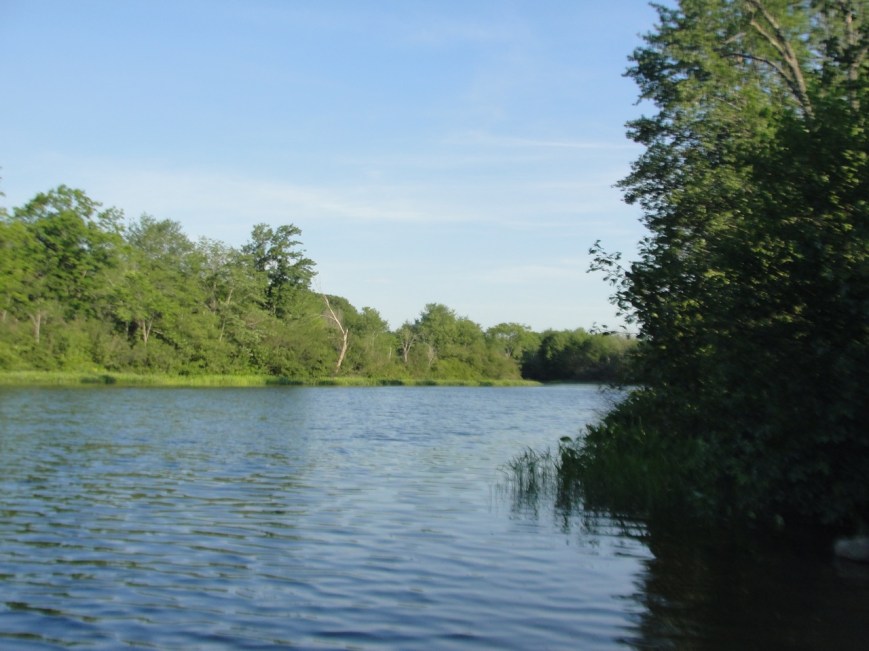
The Presumpscot River where we expressed our gratitude to our local river water, and prayed for the Sacred Stone camp and the waters of the Standing Rock Sioux Tribe.


Unexpected Magic

River MagicI am beginning to wonder if the book I have been writing (whether I publish it or not) is creating a kind of unexpected magic to manifest the visions within its pages. Yesterday, for the new moon, I read my journal from the last new moon until this one–a practice I do every new moon day.  This particular month has been a time for spiritual restoration.  But I noticed something rather curious as I read.  Old rituals and practices are finding their way back into my life after a time of absence.  And it seems related to the writing of the book, Finding Our Way Home.

In one chapter, I write about the practice of diving into water every day, which came into my life when I lived on Cape Cod.  But for 11 years, there was no body of water close enough to where we lived for me to do that anymore.  And I didn’t imagine there would be in our new house, but then we learned about access to the Presumpscot River just ten minutes away.  So now it is a possibility again.

In another chapter, I write about dance as a form of prayer–physical, emotional, a way to experience the energy of the divine in my body, and find joy in the midst of struggle.  When I lived in Boston, I was part of a women’s spirituality circle that danced as a part of our rituals.  But I haven’t had an easy or collective way to do that for a while.  Then, this month I found a community group that meets for free-form expressive dance every Sunday morning–not always so great during the church year when I am occupied most Sunday mornings–but for the summer it is accessible to me, and once a month on my Sunday’s off during the year. So now that is a possibility again.

And then I started thinking about how I had written about wanting to use less oil, to have a house that was zero-carbon–I wrote about it before I could imagine any way that we might really find a way to live in greener housing.   But this past year we started an intentional search for greener housing.  Our new home is not all the way to zero-carbon, but with our solar panels and in-town location we are using so much less oil than before.

Journaling DSC01316I also write about the spiritual practice of writing–and the book as a ceremony of reconnection to the earth, to each other, to the spirit within all.  But the magic I have been noticing this month was completely unexpected, beyond my wildest dreams, and uncanny in its particularity.  I wonder if when we write our hopes and visions, when we express our gratitude, when we imagine and tell the stories, there might be an energy that starts to percolate. What has lain dormant wakes up and tries to find a way to express itself.  All I can say is wow, and thank you.
River Swim

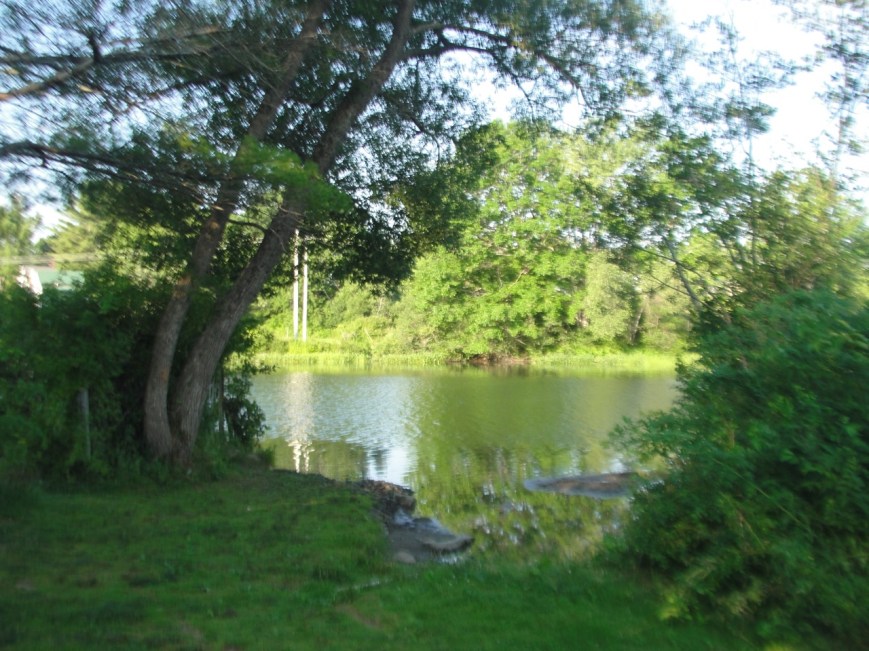
River SwimI went into the river this morning!  This little access gem is only ten minutes from my house.
When I lived on Cape Cod, I discovered the possibility of taking a quick dip in the water every morning.  Cliff Pond was a ten minute drive from our house, so I’d drive over, jump in, honor the beautiful water, and I created a ritual to let go of all sorts of worries and troubles and joys and gratitude into its refreshing hold. One year I did this starting in April and continuing through the beginning of November. It was a central spiritual practice for me during that time.

When we moved to Maine 11 years ago, that was no longer possible where we lived in North Yarmouth.  The nearest water was a tidal bay about 20 minutes away. We could only swim there 2 hours before and after high tide.  It was great in its own way, and we loved paying attention to the tides.  But I had to find new morning rituals and new spiritual practices. Sitting in the screen tent.  Walking.

Imagine my surprise, after our move to Portland, when our friend recently told us about this access point for river swimming.  Margy and I went there to swim with her a couple days ago.  Thank you! And today, I got up my courage to go on my own.  Courage because, as a woman, I always carry a little fear about going to solitary natural places on my own.  But then I remembered–this is the River!  I need to take that risk and go into the water.

I have been astonished at the blessings that have been unfolding in our new place, unexpected treasures like the creatures passing through, and now the return of old lost rituals. My heart is full of gratitude and wonder this morning.

Magic in the Yard

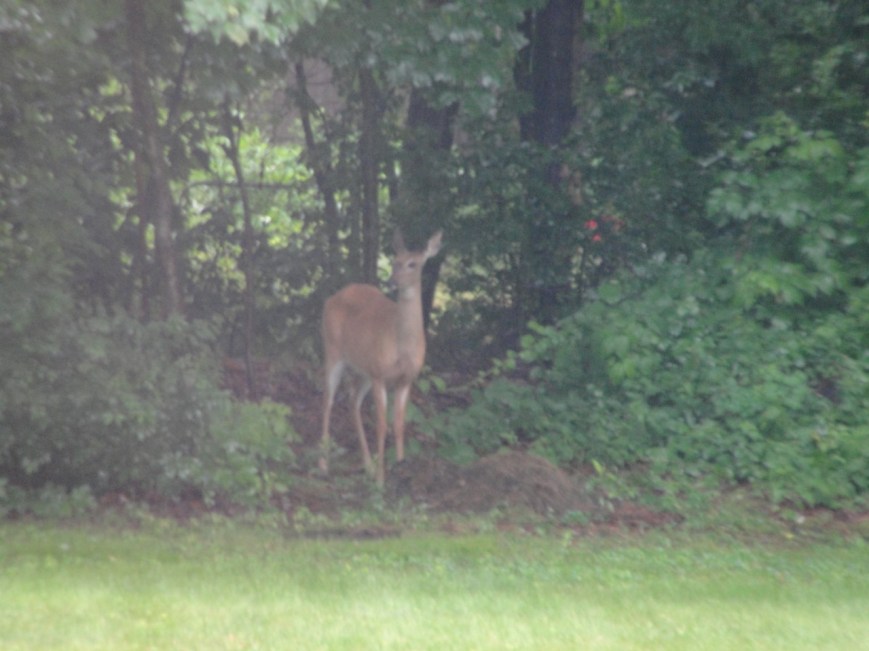
Today I woke early, it was raining, and I was drawn out to the screen tent in the yard to journal and pray and connect with our land. I was writing about a dream when suddenly I was startled by a loud huffing sound, and looked up to see a deer jumping into the brush and trees at the back of our yard. I didn’t see where she had come from, but wondered if she had ventured into the yard, and then suddenly was startled by noticing me in the screen tent.

I kept peering into the bushes all around the back of our yard looking for her, but all was quiet.  And then I saw her head peering over the bushes at the west corner of our space, perfectly still, almost invisible.  I would never have seen her if I hadn’t been looking so intently.  She was peering back at me. I silently sent her a message–I honor you, I won’t hurt you, I am sorry I scared you. Thank you for being here.  And then she moved away into the little woods of undeveloped land behind the houses on our street.

I sat for quite a while longer, astonished and moved, and pondering how the wild creatures might be passing through at any time, or watching us when we least expect it. Even right here in Portland.  I thought about the future of this space, how this year we are observing everything we can about the land, and also asking the land, what do you want for our partnership? Margy and I had been talking about maybe a little orchard in the sunny space just behind the house, and maybe vegetable beds in the side yard which was also sunny.  Maybe further back a pond for frogs and other creatures to drink from, and maybe a fire circle.

This morning I felt how sacred this space really is, already.  How lucky I feel that we were able to find this place and move here.  And how wonderful to be imagining the ways we can bless this land and be blessed by it.  I had a new thought, too–perhaps we can invite folks into this shady space at the back for learning together about how we journey into earth community.

Then I came into the house, intent to blog about all this.  I was looking on my laptop for possible photos to use with this posting. Suddenly our cat Billie jumped up to the window behind me and was looking into the back yard, and so I looked too.  And there was the deer, standing in plain view at the back of the yard, looking toward the house. I went around to our back door, and even opened the door and looked back at the deer.  She watched for the longest time.  And let me take this photo.

Oh earth, you never cease to amaze me!Deer in our yard