The Search for Greener Housing, Part One

For a long time, I have been saying to whomever might listen that my fantasy is to live in a zero-carbon home, a home that is so energy efficient that it doesn’t put carbon into the atmosphere through burning fossil fuels, or use energy that is based on fossil fuels.  There is more to it than that, but ultimately, I am hoping for a way to live more in harmony with the whole of the living earth, to live as if our human future holds life-sustaining possibilities.

So, my partner and I have started on a new adventure toward this greener living.  We have decided to downsize from our current home, and look for a smaller home that could be retrofitted to approach zero-carbon efficiency.  It is an adventure full of anxieties and tensions, so I decided to create a blog journal as we go.  I want to remind myself of the core values involved in this transition, and the grace and magic available to us when we take steps toward our deepest earth connection. It is also a way to honor the challenges we face as we seek to create change.

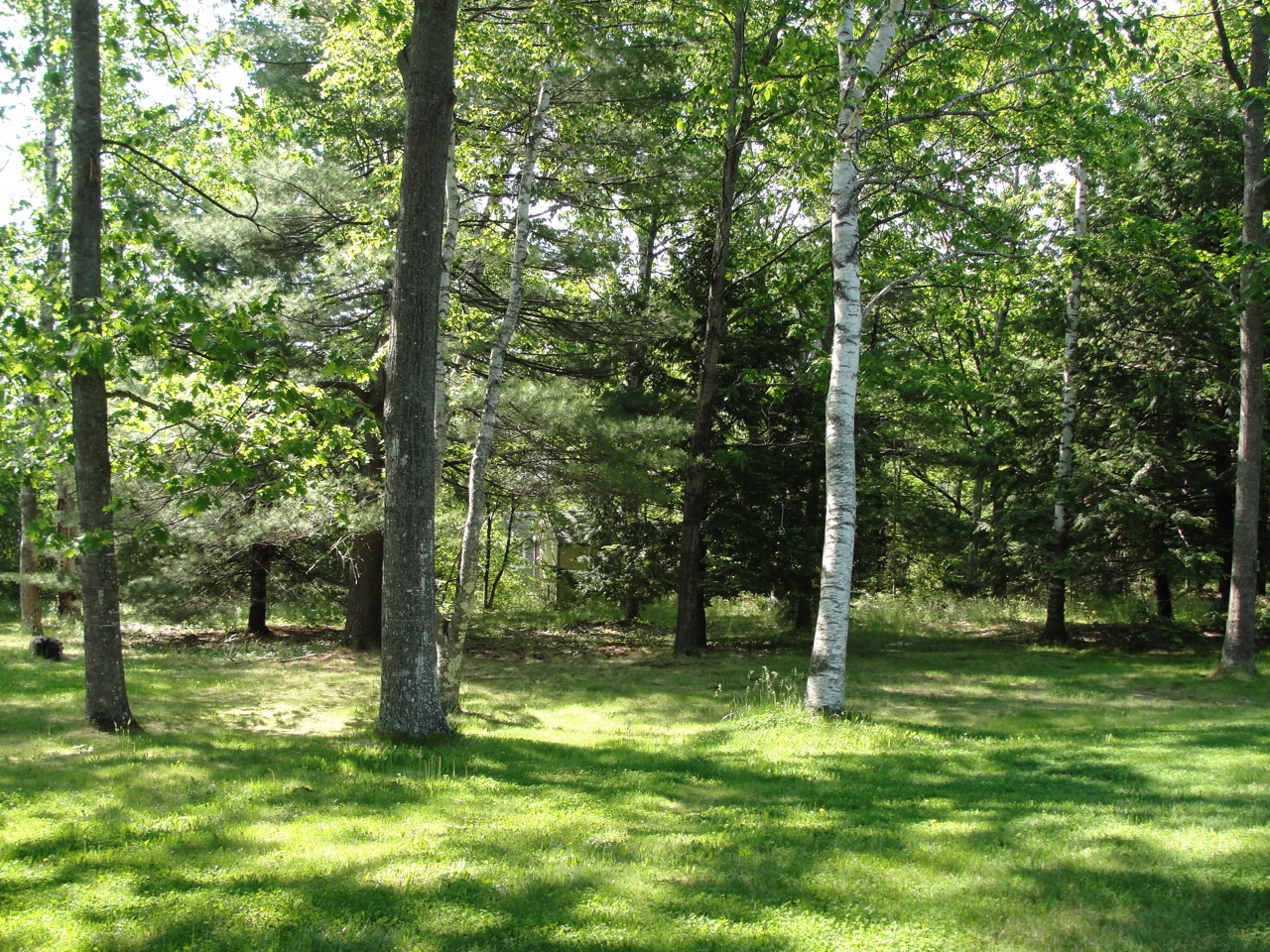
Our house with trees

Our house with trees

There are so many things we love about our current home–it is a well-built ranch-style house on one acre of land full of grand mature trees–large maples in the front yard, and tall oaks, pines, hemlocks, spruce, and birches in the back yard. We have such privacy and beauty around us when we go outside, and this place has been a teacher for my journey into deeper connection with the earth. There are birds and chipmunks and other critters who wander through. The house is full of light.

So why leave? For one reason, there are limits to what can be done with this house toward greater sustainability.  It doesn’t have the right alignment for solar power, for example. Secondly, it is out in the country/suburbs, and totally dependent on automobile transportation for every human need. So even if the house could be made more efficient, the location is oil-dependent. Thirdly, and perhaps most basically, it is more house and land than we really need, and expensive for us to maintain and take care of.  We couldn’t afford to do much more than we have already done toward greener living in this house. And as we look toward the possibility of future retirement, we realize we couldn’t afford to stay here at all on a retirement income.

One essential part of this process of change is the grief that emerges when we contemplate letting go of a home we have loved, and these trees that are older than we are. When we open our hearts to the land, we open our hearts to the particularity of a place.  This unique place.  I have taken hundreds of walks down this road, taken photos of these trees in all seasons, walked to the conservation land and the water district land just half a mile away.  I’ve cross-country skied back behind the yards and houses through little paths in woods out to hidden fields.  I know where the lady slippers bloom in the spring. We’ve planted flowers and bushes and young trees here, along with blueberries and raspberries.

Can a part of the magic of this change create protection for this land we have nurtured? Only if some new resident falls in love as we fell in love when we arrived here. Maybe someone with more resources could even take this place further on its own path to sustainability.  In the meantime, we keep our hands in the soil and our hearts open. We gather this season’s raspberries and keep going outside. Perhaps our love for this land is a part of the magic of this journey.

Next time, I will share our particular dreams for the new home we are seeking…
New Story – New Questions

I have been reading a fascinating book, Charles Eisenstein’s The More Beautiful World Our Hearts Know Is Possible. I am only part way through, so I don’t yet know what my final experience of the book will be, but I am loving the questions he is exploring. He asks about all the underlying assumptions and unexamined perspectives we hold in a world defined by separation. We believe we are separate selves, with humans separate from nature, earth from heaven, people from each other. What might it look like to redefine our world and our beliefs according to a profound interconnection? I have been exploring that same transition in my life and in my writing, and welcome the way his questions take me deeper into a new way of being.

For example, how much are we motivated by the feeling that unless we make something happen, nothing will happen? How is this undergirded by a belief that we are tiny separate beings in a dead, uncaring universe? What if the universe is utterly alive and we are one aspect of its aliveness? Might there be an unfolding process in this living universe that we can rely on, and attune to, and participate in? Then we can pause, we can wait until we are moved in our deepest (inter) being to act. We can lose the idea of “urgency” and “force” and “guilt.”  Eisenstein suggests we might  transform our whole approach to activism.

I keep reading.

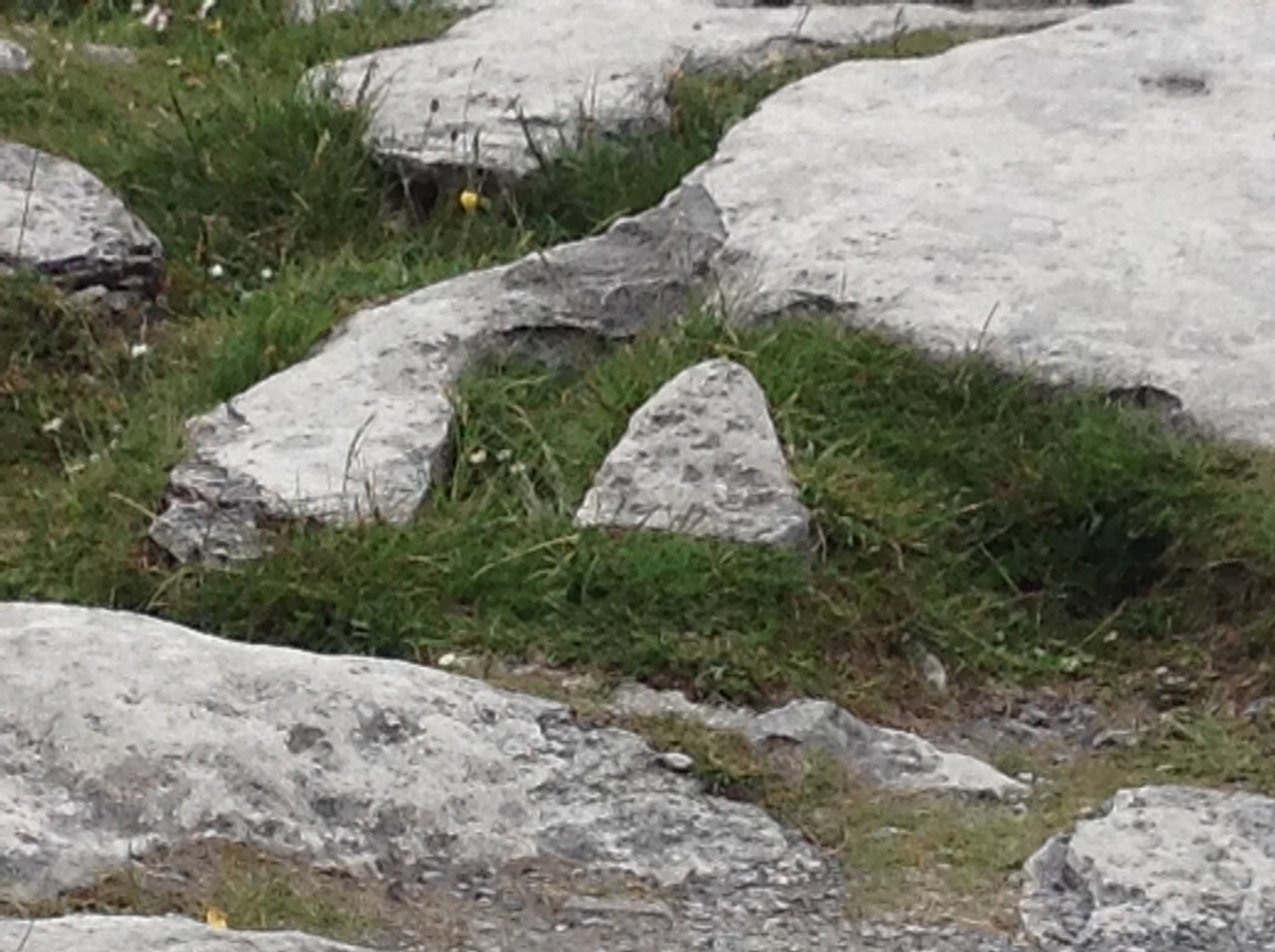
The stones of the Burren.

The stones of the Burren.

The Ancients

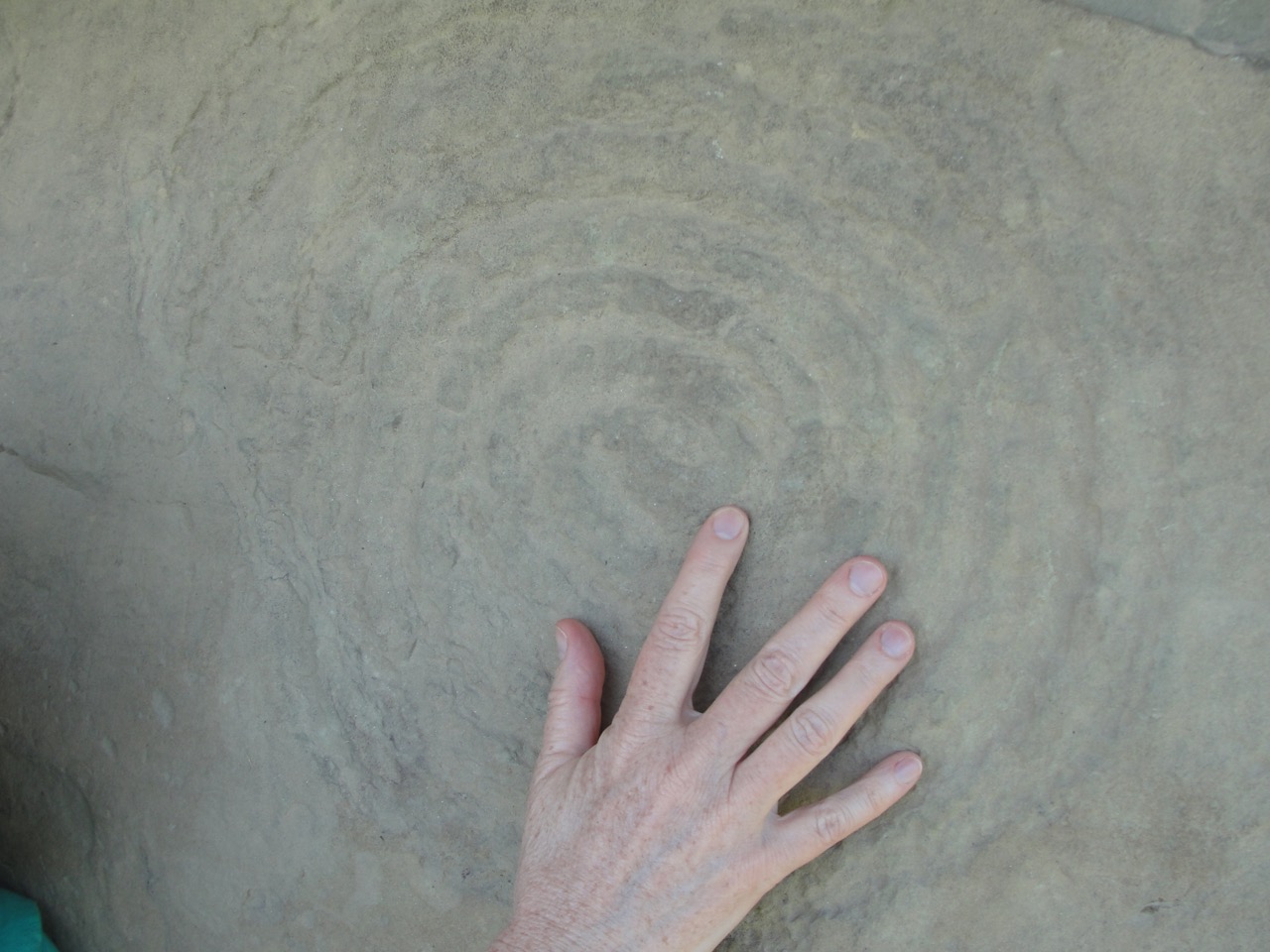
Knowth spiral MD DSC09032

Photo by Margy Dowzer

Thursday, Margy and I went to the ancient sites of Knowth and Newgrange.  Built by neolithic stone age peoples about 5200 years ago, they were burial mounds and ritual centers, aligned with the sun at certain points of the year.  We had heard about Newgrange, where the light from the sun at dawn enters the burial chamber on the Winter Solstice.  But we were even more impressed by Knowth, where tourists are not able to go into the burial chambers–too dangerous–but can walk up to the top of the mound.  There are huge boulders that surround and support the mound, called curb stones, and most of them are covered in geometric images–spirals, triangles, undulating serpent like forms.  We could photograph and touch this art created before the pyramids were built in Egypt.  It is a UNESCO world heritage site because of this high concentration of neolithic art. What an astonishing feeling to trace a spiral that was carved so many generations ago by the ancients!  Our guide said that similar stone carved art with the same kinds of geometric patterns can be found all around the world–America and Australia, for example.  Until fifty years ago or so, all these stones at Knowth were buried under soil–the mounds looked like an extension of the hills.  Then, archaeologists began to excavate and discovered the careful construction and design of the burial passages and chambers, were able to carbon date the remains, and restored the mounds to their neolithic era appearance.  All of the stones are original, and the guides reminded us of the sacred and beloved nature of the site. After this visit I got to thinking about ancient mounds in the United States.  I barely knew anything about them, except that they were built by early indigenous peoples of this land, and that many have been destroyed or are even now being threatened with destruction.  Most recently, I heard about a new football stadium being planned in St. Louis that would destroy the remains, now underground, of a burial site and city.  Since no federal money is involved, there are no laws demanding that they even do archeological investigation. I wonder why our country doesn’t take care of these precious artifacts from the ancients on this land?  In a time when there is international outcry over destruction of ancient sites in Syria, where is the outcry over destruction of ancient sites in America?  I suppose it is directly related to our society’s general insistence on forgetting that these lands once belonged to another people.  As to the mounds that do still exist, I have read that there was much early resistance to thinking that Native peoples would have the expertise to build such structures.  Racism then, must surely underly this disregard, and perhaps the overarching allegiance to the gods of money and profit.  And the brokenness of our times, the forgetting that the land is full of sacredness in her essence and in her history.

Fairy Trees

Hawthorn flowering MJ DSC07671Since we have been in Ireland, I have learned more about fairy trees than I knew before.  On the first day we were here, I was taking photos on the grounds of the B & B, Ashley Park House, and took this one of some beautiful blooms I couldn’t identify.  So many of the plants and birds I was seeing were unfamiliar to me.  I wondered if it might be a hawthorn, because of the small thorns on the branches.  But it had been a long time since I had been around a hawthorn.  Years ago, when I was at the Seneca Women’s Peace Camp, my friend Estelle and I pitched our tents in a little opening of the hedgerow, under a hawthorn tree.  And that was a magical place and time, though I didn’t know about fairy trees then.

When we came over to Ashford in County Wicklow the owner of our B & B had some of these blossoms on our dining table.  I asked her what they were, and she said they were hawthorn.  She herself is not Irish, though she has lived in Ireland for many years.  The next day she told us that her Irish friend had sternly scolded her that it was bad luck to bring these flowers into the house.  We later met that very friend, and she repeated her consternation.  She told us that the hawthorn trees are where the “wee folk” live, and they are not to be disturbed. According to Irish lore, “If you cut one down, you will die.”  You will often see a whole cleared farm field, with a solitary tree remaining–a hawthorn.

I do apologize to the wee folk on behalf of our host–I was glad that her misstep offered me an opportunity to confirm my hunch about the blossoms and gain more understanding about these beautiful trees. Because of so-called “superstitions” like this about the realm of fairy, many ancient sites have been preserved without disturbance for generations.  Fairy mounds and fairy forts and burial sites.  We visited a fairy fort at Ashley Park, a neolithic ring fort made of stones and earth, and covered now with beech trees, and yes, some hawthorn too.  I left a gift of a coin before taking anything from that place.  A strange thing happened.  I was deciding where to leave the coin, and was finally drawn to the largest beech tree, somewhat near the entrance to the fort.  I tossed the little coin into a deep crevice near the root of the tree.

Toad or Frog MJ DSC08139Then, looking in more closely, I realized there was a tiny toad or frog at the very back of the crevice.  I never saw any other toads in that area.  How did it happen that one lived right where I was pulled to leave the offering?  When Margy and I came back the next day together, it was still there, and I took this picture, somewhat blurry as it happened.

In each of these ancient holy places, I have honored the elements and the directions and the ancestors in the best way I can, and these small magics reassure me that we are welcome here.

Water from Brigid’s Well

On our way from the west to the east of Ireland, we stopped in Kildare, the town which was home to St. Brigid, one of the patron saints of Ireland and, according to the stories, an abbess who founded a monastery in 5th and 6th century.  Many stories link her to the older goddess Brigid, goddess of smithcraft, poetry, and healing.  We had read that there were two Brigid’s wells in Kildare–one now designated for the saint, and a pagan well still associated with the goddess.  Apparently, the pagan well wasn’t advertised, but we had read that it could be found near the parking lot of the Japanese Gardens/Irish National Stud.  So we set out to find it.

St. Brigid's Well, Kildare

St. Brigid’s Well, Kildare

On the way, close by, we saw a sign for St. Brigid’s well and found that one.  People come to the Brigid’s wells for the healing properties of their waters, and so we touched the water and asked its blessing.  The well is shallow, about a foot deep, and is spring fed. We left a coin in the water along with our wishes. It is said that this well, too, may have ancient connections to the goddess Brigid, incorporated into Celtic Christianity as St. Brigid.  There are other Brigid’s Wells all over Ireland.

Then we went on to the Japanese Garden, and searched around the parking lot, but didn’t see anything.  We went inside, and had a lovely lunch at the restaurant there.  Afterward, we asked a man at the ticket counter about the second Brigid’s well, and he told us to go around to the other side of the parking lot, behind a little wooden gate.  So off we went, and we found it.  Totally unmarked on the outside, but set into a lovely little paved area, with a half circle of stone wall opposite that could be used as seats.  Nearby, people had left ribbons on the branches (we saw those at the other well too).  It was intriguing to Margy and I that these ancient sacred sites are so hidden in plain sight.

Brigid's Well, Kildare

Brigid’s Well, Kildare

I felt so delighted and awed to be in this place where healing waters have been flowing since ancient times.  Margy and I drank a little water, and took pictures, and absorbed the magic all around us.  Then, an unexpected encounter–I was down on the stones next to the well, with the camera, and Margy was on the stone pavement above, holding my backpack, and she leaned over a little, and suddenly my metal water bottle that was in the open pocket of the backpack fell right into the waters of the well.

Into the Well!  Photo by Margy Dowzer

Into the Well!
Photo by Margy Dowzer

Those of you who know me know that this water bottle I carry has its own sacred role in always reminding me of the holiness of all water.  When I saw it there on the bottom of the well, I remembered that I wanted to take some of Brigid’s healing waters to bring home with me.  Was Brigid herself reminding me, and making a personal connection to us in this way?  I have celebrated her holiday in February for many many years.  So, I leaned in to scoop it out of the well, and then emptied its water into the nearby plants, and filled it with water from the well.

After that, Margy and I sang some more songs, sent healing wishes to all our friends back at home, and left our own ribbon on the branches hanging over the well.  If I may, I also send healing energy to you who are reading this.

Red Haired Girls and Ring Forts

When she learned we were traveling to Ireland, a colleague recommended Patricia Monaghan’s book The Red Haired Girl from the Bog.  I read it over the last few months, and it was indeed a wonderful introduction to the myths and magical places of Ireland.  Monaghan feels like a true kindred spirit, finding the sacred in the land, and in the stories connected to the land in each place. She speaks about how rooted Irish people are to the places in which they live–they are indigenous to their own places.  Each place has stories that connect it to the near and distant past.  Even in the place names themselves are clues to the lives and lore back to times before history.

I have been exploring in my own life how to connect to the land, how to connect to a place, and her stories provide many inspirations for the process, though also reminding me of how shallow the roots of Euro-descent culture in North America.  Many of our North American place names also harken back to the peoples Indigenous to this place, and hold clues to the old stories of this land.

Yesterday morning, here in Ireland, I took a walk to a neolithic Ring Fort that is on this land at Ashley Park House, where we are staying.  They also call it a Fairy Fort, and the young woman who serves our breakfast talked about people’s superstitions about the Fairy Forts.  She said it was believed people used to bury unbaptized babies in those places, since they could not be buried in the Catholic cemeteries, and some people wouldn’t touch a Ring Fort unless it had been blessed by a priest.  I didn’t worry about that, but was very mindful and respectful of whomever the Spirit beings might be in such an ancient place.

This fort is covered in vegetation and beech trees were growing within and around it.  I took some photos but it was hard to capture the feel of it in a photo.  Imagine a stone embankment about 5 or 6 feet tall (but covered with soil and bushes and trees) in a circle maybe 80 meters in diameter.  I followed a path over the top of the embankment and down in to the middle.  This photo was taken inside the ring, looking over to the embankment.

I am here in this place, where none of my own ancestors have lived, with many unfamiliar plants and animals, but I do know how to give thanks for the sun, and touch the beech trees, and call out to the spirits as I walk around the circle.

Ring Fort Ashley Park

Ring Fort Ashley Park

We Are Already Connected

We have much farther to travel on this journey to renew our connection with the earth, with each other, and with the Mystery at the heart of life. There will be troubles to endure and beauty to behold. What we are becoming together is still to be revealed. This is a journey of our time, of our planet, of all the people and beings who live here together. Most importantly, we must remember that we are not facing these challenges alone. That is what I learn from the mushrooms. We are not alone. We are already connected to the earth, to Mystery, to each other. 

Because we are all connected, any small action that we take has the capacity to affect the wider network. When we begin to honor and celebrate our connection with even one other being on this planet, something reverberates through the whole web. When we express our gratitude for the water we drink, and do our part to preserve its cleanliness, we are nurturing the web of life. When we share our resources with those who have less, we are nurturing the web of life. When we listen, really listen to each other’s differences, we are nurturing the web of life. When we listen, really listen to the water, the wood, and the stone, we are nurturing the web of life.

We are trying to wake up to what already exists. We are learning to know the deep truth that we are already at home.

So I returned to the river, I returned to
the mountains. I asked for their hand in marriage again,
I begged—I begged to wed every object
and creature,
and when they accepted,
God was ever present in my arms.
                                           Meister Eckhart

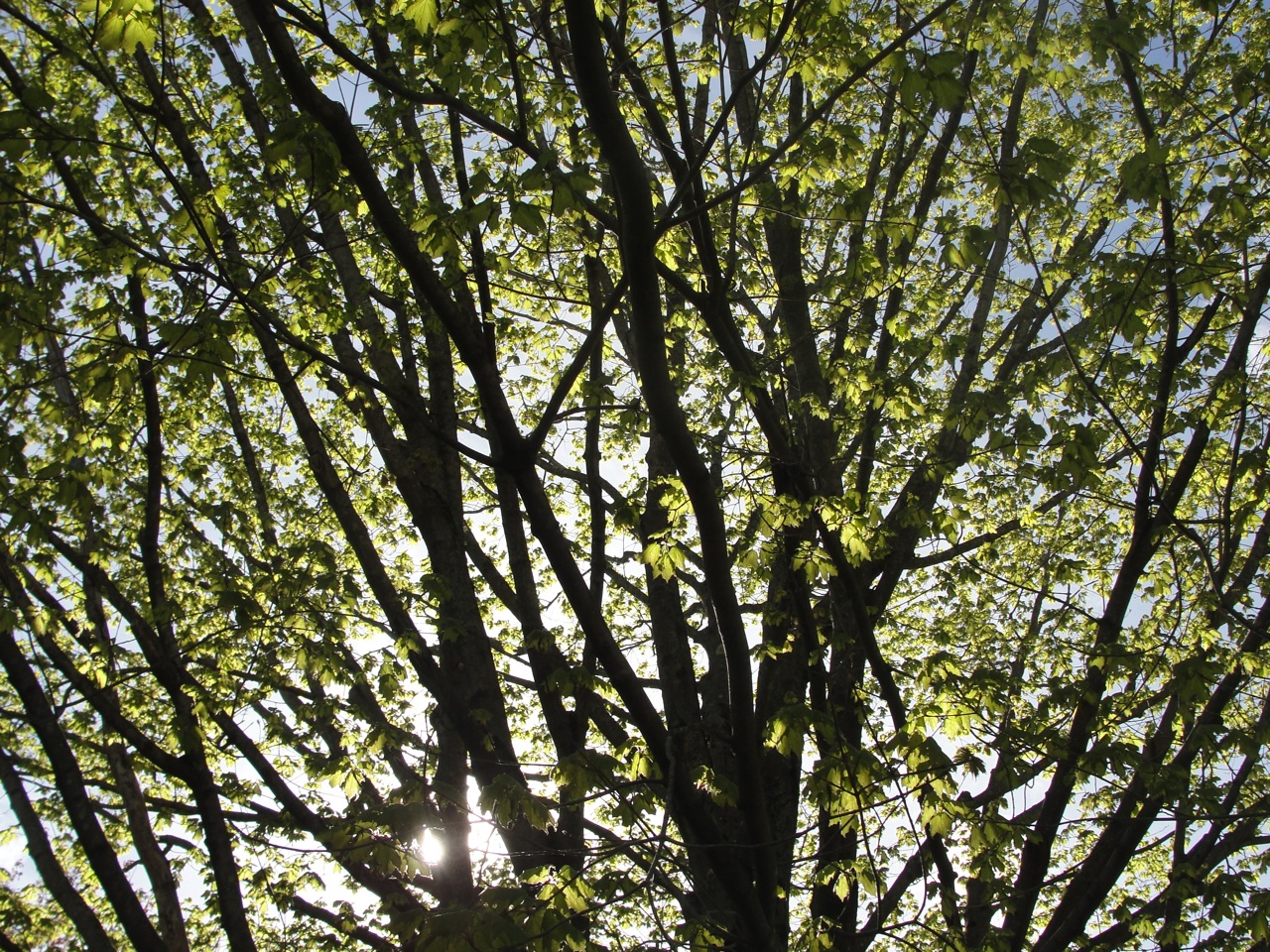
Branches MJ DSC03740

Meister Eckhart quote is from “When I Was the Forest,” Love Poems From God: Twelve Sacred Voices from the East and West.

Helpers for Finding Our Way Home

Cardinal

Margy Dowzer Photo

There are beings all around us who want to be called upon, who want to help us in this work of returning to wholeness, this work of finding our way home. I have shared stories of a few of the beings who have helped me. The bright red cardinal singing its beautiful song. The four directions beech tree. The waters of lakes and streams. The ground, the very ground we walk upon, that holds me when all around me everything is falling apart.

Now that I know about the mycelial network, the ground feels more alive to me. But it was always true that something happened when I sat down upon the ground. If I sleep on the ground for a longer period of days, there is a glow that surrounds my body. I remember this from my time at the Women’s Peace Camp, where I was living in a tent for four months. I felt alive in some new way that I began to miss when I went back inside an apartment in Chicago. I forget it easily, but I feel more alive when I am outside.

Jesus has been such a helping presence too. First in my childhood and youth, when he was the one who loved me and who called me to the path of love. But even later, when I was leaving Christianity to follow the path of the Goddess, Jesus was a guide and a friend. If we can experience the divine within every being around us, the theological questions about Jesus seem less of a quandary. People have been asking, over the centuries, Was Jesus a man or a God? I would answer, Aren’t all of us both human and divine?

When Winifred Gallagher wrote about her quest for a spiritual home, she described the essential spiritual practice of the Christian tradition as the practice of love for everyone. She commented that it seemed a lot easier to meditate for an hour every day, than to have to practice love for everyone—it was not an easy alternative. It has been a deep tragedy that Christianity has been used to foster hate and oppression. Jesus stays in my life as the teacher of love, the human example of what divine love looks like.

I want you to know that we are not alone. In this time of great challenges and transitions, there are a host of beings who love life and want to help us find another way to live. As we reach out to them, they are reaching out to us. I understand that every person will have their own ways of connecting to earth, to each other, to Mystery. The mycelial network might not be the thing that helps you to experience the connection between all beings. You might not resonate with Jesus or with trees. But I encourage you to find out what it is that does help you. In these times we need critical thinking and activism and also mysticism.

Just as we can now sit in front of a plastic and metal panel and communicate with people across the world, so there are technologies to communicate across species and across dimensions. The threads of life weave us together in ways we have barely begun to imagine. But I know this: we belong here together and we need each other now more than ever. Poet Barbara Deming wrote:

Our own pulse beats in every stranger’s throat,
and also there within the flowered ground beneath our feet.
Teach us to listen:
We can hear it in water, in wood, and even in stone.
We are earth of this earth, and we are bone of its bone.
This is the prayer I sing.

Green Back Yard DSC05265

A Bowl Full of the Universe

There are helpers and elders all around us; there is wisdom, if we open to it. There are animals and plants and fungal networks, and rivers and mountains and the wild winds. We can enter into relationship with all beings, and find help from them for the great struggles of our time. We have not been looking to our relatives and our ancestors for connection, and so we often are unaware of the powers that exist all around us. When Paula Gunn Allen speaks of consciousness as an attribute of being, it helps me to move beyond the narrow vision of my own culture, and claim my own experience of relationship with other beings.

Once, after the difficult ending to a relationship, I was rocking in a hammock on the back porch of the home I would soon have to leave. In that place of loneliness and unknown futures, I saw something like an image, felt a presence. Later I described it in a poem:

How can I trust my senses
in a moment full of loneliness
when the old dark woman appears
gray hair gathered in a bun in the back
squatting near a fire holding
a bowl full of the universe?

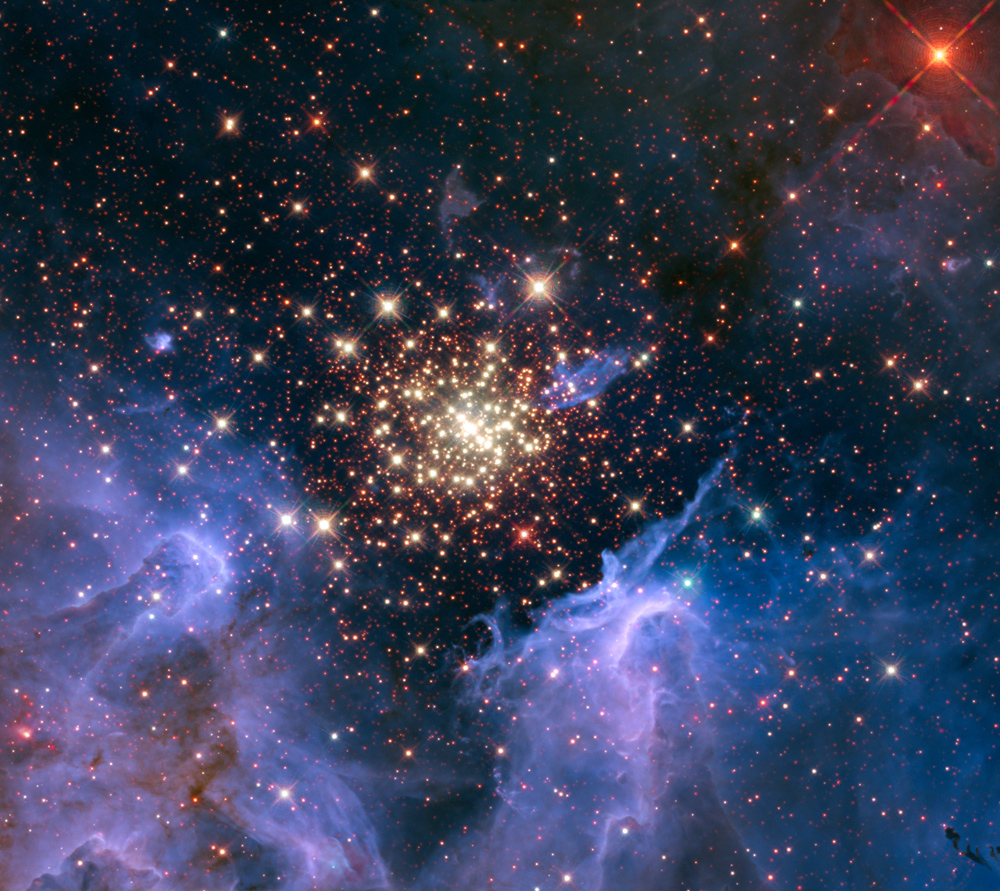
It was an ancient Innu grandmother, my ancient Innu grandmother from many generations ago, and in her hands she was holding a bowl. I could see the darkness and the stars swirling inside.

Image from the Hubble Telescope

Image from the Hubble Telescope

What is a bowl full of the universe? What did it mean? I am continuing to learn about that.

I know that a bowl is a container, a shape that can hold something. When we are facing the great mysteries of the universe, we need some sort of container. That might be the definition of a spiritual practice. We create a container to be able to connect with the earth, with each other, with Mystery. And even though the container is small, humble, it opens up to so much more―the whole universe is there, the oneness of everything, the larger whole of which we are a part, infinity.

The Innu grandmother says to me, “The universe is in your heart, and you are in the heart of the universe.”


How Mushrooms Can Help Us Save the World, Part Two

Photo by Margy Dowzer

Photo by Margy Dowzer

Paul Stamets, in Mycelium Running, How Mushrooms Can Help Us Save the World, talks about the Gaia hypothesis, which suggests “that the planet’s biosphere intelligently piloted its course to sustain and breed new life.” He goes on to say:

I see mycelium as the living network that manifests the natural intelligence imagined by Gaia theorists. The mycelium is an exposed sentient membrane, aware and responsive to changes in its environment. As hikers, deer or insects walk across these sensitive filamentous nets, they leave impressions, and mycelia sense and respond to these movements. A complex and resourceful structure for sharing information, mycelium can adapt and evolve through the ever-changing forces of nature.

In other words, he proposes that there is a vast intelligent aware network in the ground beneath our feet.

It makes me wonder, what is intelligence? Human beings consider ourselves to be the most intelligent species on earth. Our intelligence has given us the power to build nuclear weapons that can destroy life on earth. But we haven’t yet been able to figure out how to avoid war and oppression.

Stamets believes that the mycelium operates at a level of complexity that exceeds the computational powers of our most advanced supercomputers. He sees the mycelium as the earth’s natural Internet.

Traditional Mexican shamans and curanderas use certain mushrooms that create visions and healing. Stamets says that psychoactive mushrooms can cause such affects on the human mind because of the chemicals that we share in common.

On a very practical level, it has been discovered that mycelial mats have the capacity to break down petroleum products into harmless components; they can also clean up nerve gas agents, dioxin, plastics, and radioactive cesium. Paul Stamets believes that mycelia not only have “the ability to protect the environment but the intelligence to do it on purpose.” 

In my faith community we speak about respect for the interdependent web of all existence of which we are a part. Mycelial networks are a visceral manifestation of that web, and we can see and measure their beneficial support for plant life, and for our lives. Scientists like Stamets imagine that if we partner with mycelia, we would be able to greatly accelerate our work to repair the damage we have done to our environment. And that gives me hope for our future.

With these mysterious mycelial allies just beneath my feet, I had the courage to write that sermon about nuclear weapons, and their haunting mushroom clouds of death. And each time I remember this old and vast elemental wisdom, I feel less fear. I feel more clearly that I am part of a larger network of beings who are contributing to the health and wholeness of the planet. As we reach out to the beautiful web of all beings, those beings are also reaching out to us.