Gaze of the Wild

Seal PupMargy and I went to Crescent Beach late yesterday afternoon.  As we were leaving, a harbor seal pup came onto the shore.  What is it about our species that we so love these encounters with other species, with wild species?  Is it the kinship we feel when we look into their eyes gazing back at us?  Or the otherness we feel, the differences magical and intriguing?

It was our first time this season going into the open water.  So cold!  But after some time in the water, it was delicious.  The ocean itself would have been enough yesterday–the way it transformed my body chemistry into a greater sense of ease and well-being.  And then, sitting in the sun warming up on the sand.  Since I have had thyroid disease, it has been harder for me to warm up after swimming, but this time I wore a light hoody, and the air was still warm at 6 p.m. so I was fine.  Later, I changed back into dry clothes and sat and read, while Margy went in for another swim.

I had carried some of our stuff to the car about 7:30 p.m. when the seal pup first arrived. As I met Margy heading into the changing room, she told me about it, so I went back to down to the beach.  The little group of twenty or so people who were still on the beach were gathered near the pup at a respectful distance.  Someone had called the proper wildlife people to let them know.  The pup just lay there looking at everyone, calmly, perhaps resting, perhaps wondering what to do.

Seal Pup turns to go back in the waterAfter several minutes, they turned around and started heading back toward the water, moving slowly and steadily over the sand.  As the pup reached the waves, they turned as if to say goodbye, (or maybe, “I don’t think this was where I meant to land”) and then slid right in and swam away down the beach.

Who can resist those eyes? Seal Pup-one last look


Layers of Community-Rain Barrels

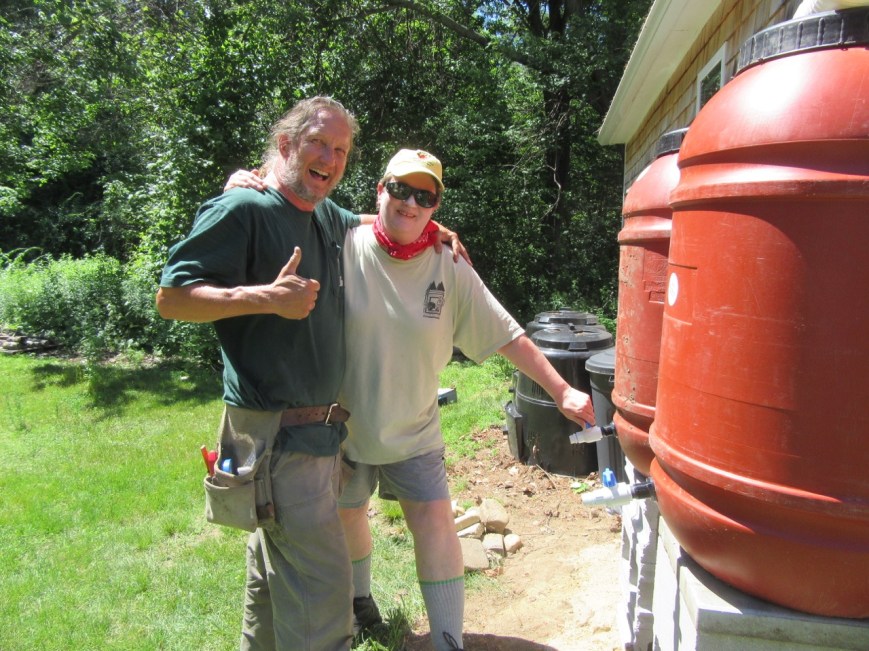
Barrel Spigot Trial Dave & Margy

[Margy and Dave testing the spigot height]

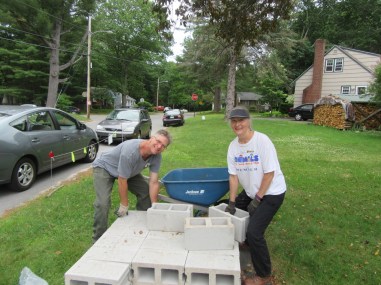
Part of the work of our Permablitz on Saturday was installing rain barrels.  How is this a layer of community?  Because water creates a link between all living beings.  When it rains, water washes over the land, and also pours from our roofs into gutters and downspouts.  By installing rain barrels, we have the capacity to slow down the flow of water–to bring more of it into use for the community of plants we are cultivating.  So when it rains, it waters our garden twice–once during the rain, and then once more when we use the water in the barrels to water plants on the dry days.Mike & Sharon hauling cinder blocks


AND: we had a community of people helping to install the rain barrels.  First they had to haul cement blocks to the five sites for the barrels.

Rain barrel team-Dave, Chris, Carla, Harold, Mike, Sharon (hidden)

Then David taught everyone on the team the process of the installation.  I wasn’t able to be a part of that team, but some things I observed.

Rain barrels Carla & Chris

The land at the site was cleared of mulch and grass, and leveled off.  Then sand was added, and tamped down and leveled.  The cement blocks were positioned on the sand base.


Rain Barrel Spigots Dave & Carla


Meanwhile, another part of the team was drilling correct size holes in the barrels for spigots.  These spigots are able to be removed in the winter, so the rain barrels can stay in place. So the spigots were installed.  Holes were also drilled for connecting tubes for overflow and to connect more than one barrel per downspout.

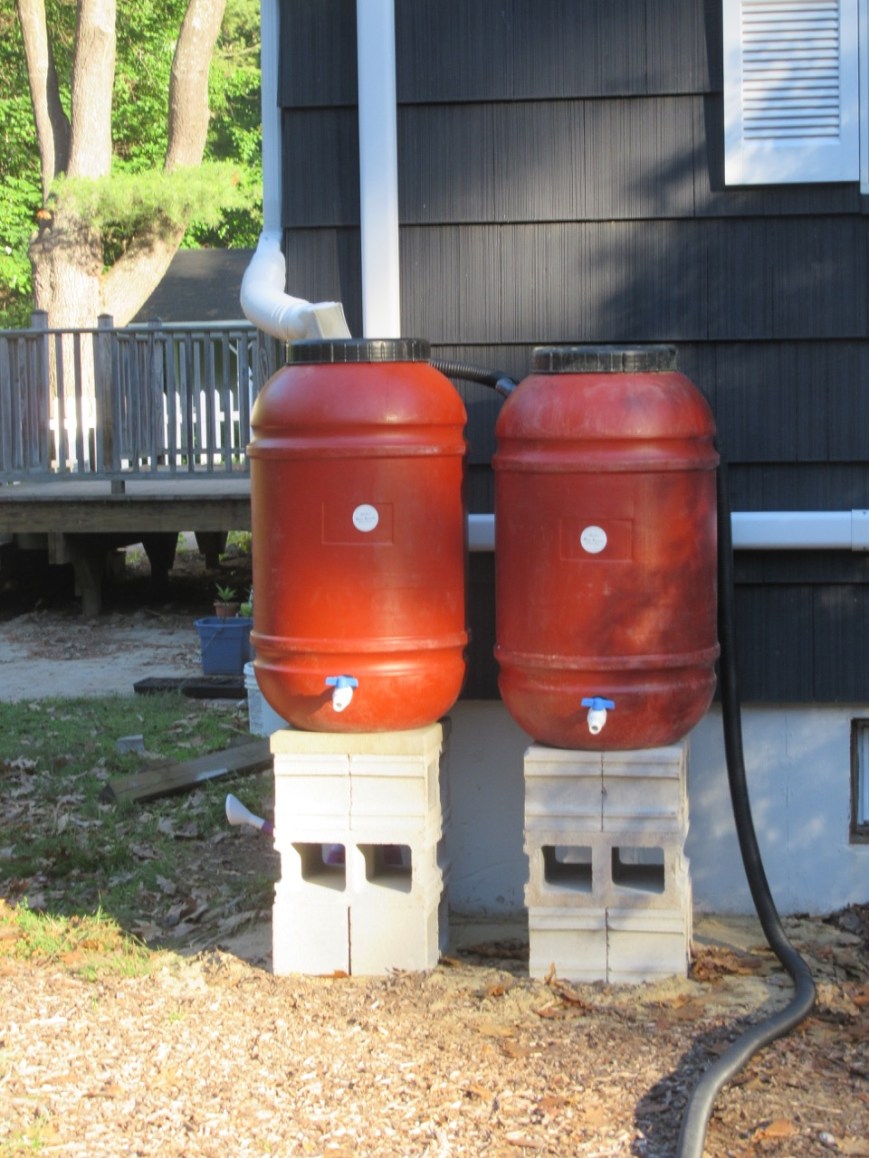
Rain Barrels Dave & SharonWith all that done, the barrels could be positioned on the concrete blocks.  Then, the downspouts were cut short, and a curvy connector was attached to bring the water to the barrel.


Finally it was possible for it all to be hooked up.  The team was able to complete the hook up for four rain barrels, and do everything except the hook up for two more.  We have two more rain barrels that we hope to install later.

After- Rain Barrel close-up


Mushrooms in the Cherry Tree Beds

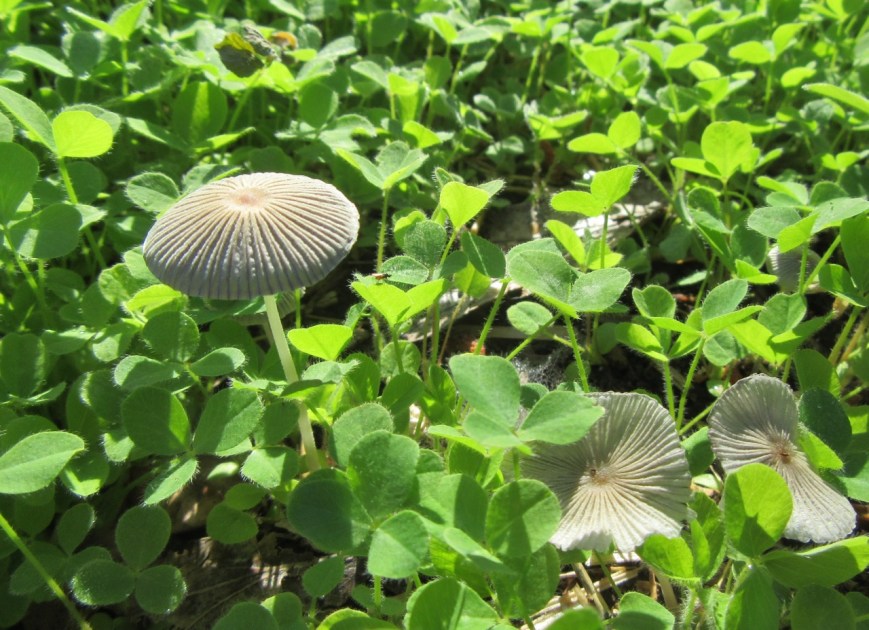
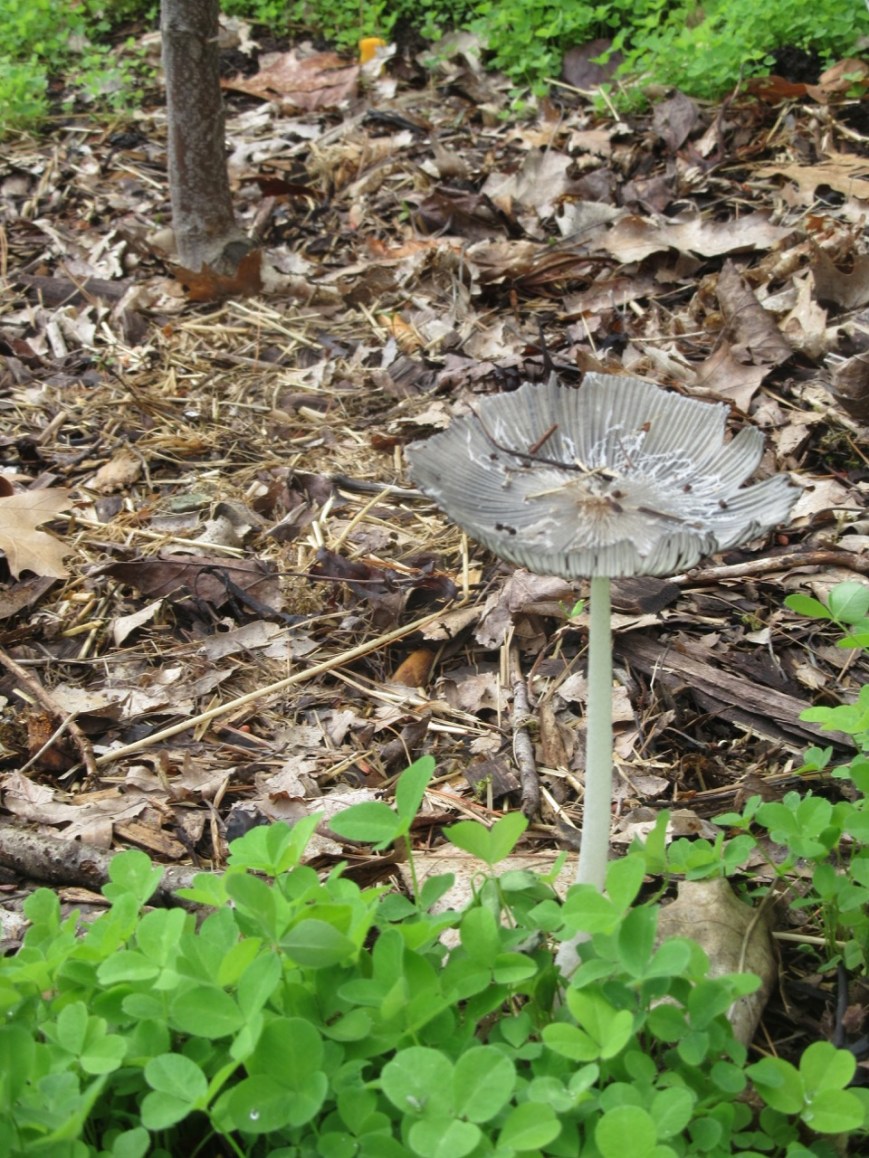
Mushrooms in the cherry bedOur efforts to enhance the fungal community in our yard are suddenly materializing in mushrooms popping up in the cherry tree circle beds.  (Or at least it seems that these efforts are linked.) These came up on my birthday, and then had disappeared by the next day, to be followed by another variety altogether.Mushrooms in the cherry bed, day two

Then, all of those disappeared, but today, I found these in the other cherry tree bed.Mushrooms in the other cherry bedI don’t know mushrooms well enough to identify–is anyone more familiar with these than I am who might give them names?

The Layers of Community

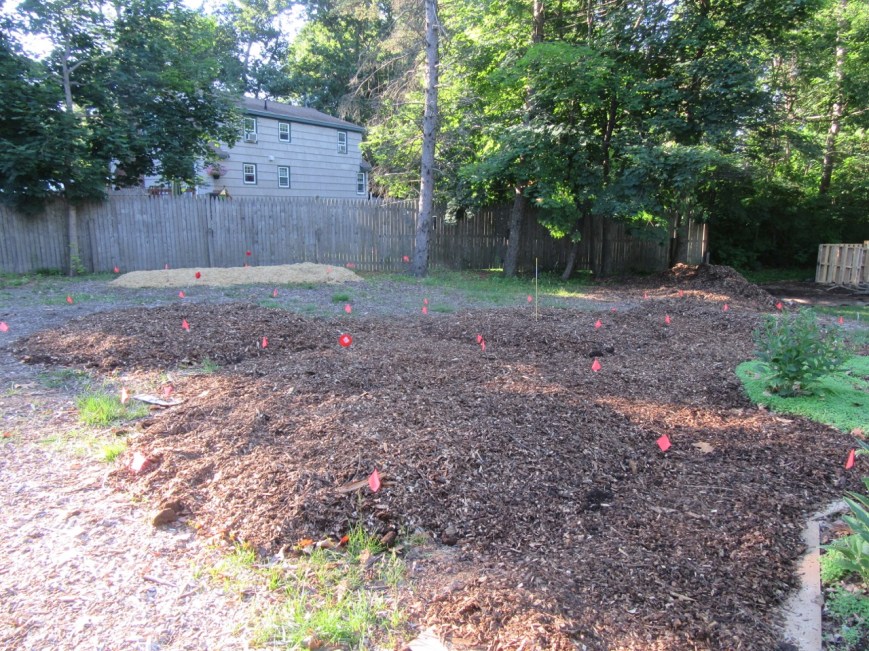
Before-marked for fruit tree beds

[Before–Growing beds marked with flour and flags]

On Saturday, we hosted our Permablitz! (See “more before” photos here.)  Over 20 people came to our yard and worked together on projects such as installing rain barrels, building a composting system from pallets, building a fire circle, and creating five more  growing beds for future fruit trees, raspberry bushes, & hazelnut bushes, and one bed for flowers & herbs.  We also got the first shovelfulls dug for a pond.

Opening Circle-Sylvia, Cathleen, Ali

[Opening Circle]

At the end of the day, I got teary-eyed with the sense of Gift.  The generosity of so many individuals coming together and creating something so beautiful and full, helping us to realize our dreams for this piece of land was deeply moving.  There is something about this giving and receiving of human attention and wisdom and care, that feeds our hearts. Much of our lives are shaped by transactions—we pay a certain amount of money, and receive a product. Or, we put in so many hours and receive a paycheck.  But giving and receiving freely and generously touches something much deeper. Giving and receiving must trigger deep neurotransmitters in our internal chemistry, sparking a profound sense of well-being and belonging.

I also realized how many layers of community are involved in such a project.  One layer is this community of people who care about the earth, and who come together to give and receive, to learn, to share, to grow, to get to know each other.  People connections are made.

Another layer is the community of the soil.  During the blitz I was mostly working with several others on the project for creating new growing beds.  We were adding nutrients through sheet mulching so that the soil could create a thriving fertile community.  I have learned so much about the variations in soil communities from the book The Holistic Orchard by Michael Phillips.

What a food forest needs, what fruit trees need, is soil whose fungal community is stronger than its bacterial community.  In contrast, annual vegetables and flowers and grasses prefer soil with a stronger bacterial community.  A bacterial community is enhanced by tilling the soil and incorporating organic matter by turning it into the soil.  A fungal community is enhanced by no tilling, but rather adding organic matter on the top of the soil to decompose, as it happens in the forest. (Similarly, compost that is left unturned will generate a stronger fungal community.)
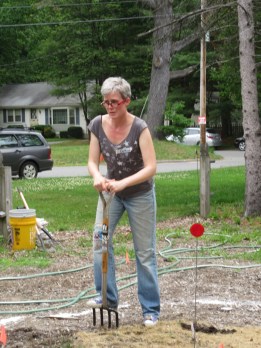
Forking the beds Cathleen

[Cathleen forking the soil]

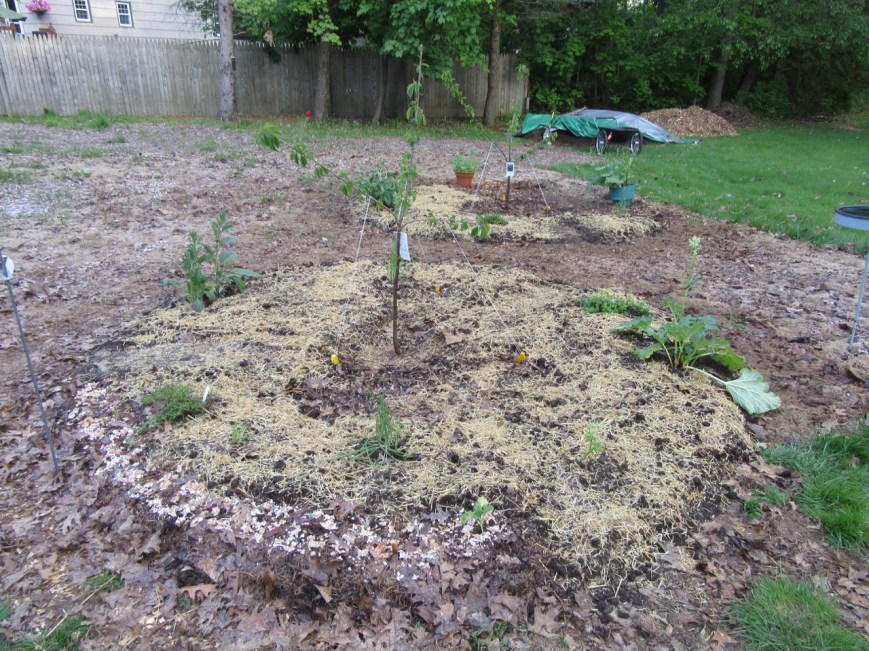
We prepared the soil by aerating it with garden forks–since it had been rather compacted.  We added some granite dust for mineral enhancement, then put down a layer of cardboard to kill grasses and weeds.
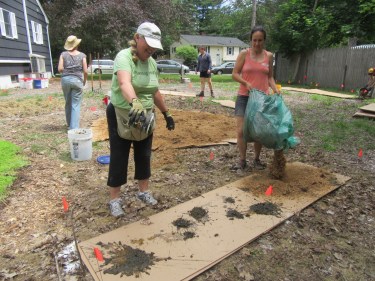
Raspberry Bed-manure & chaff Mihku & Heather

[Mihku & Heather adding manure and chaff]

Then, we added chicken manure, coffee chaff, seaweed, leaves, grass clippings, composted manure, and a really thick layer of deciduous wood chips.  We were able to get a delivery of 8 yards of wonderful ramial deciduous wood chips–these are chips which include lots of thin branches, which have more lignin content that is not yet woody.  The wood chips are the most important part of enhancing the fungal community.

We also made several pathways with cardboard and wood chips, and I will complete those bit by bit in the next days.  Now, the process works on its own–I add some water or it gets rained on–and the microbes will work together over the next several months (and years) to create a thriving soil community.  We will plant trees and bushes next spring.  My friend Roger Paul said that the Wabanaki word for “soil” means giver of life.After-Fruit Tree & Flower/Herb Beds
Summer Solstice Magic

Margy and I collected ten buckets of seaweed, took our first swim of the season in the bay at Winslow Park, and floated on the water, and even saw horseshoe crabs mating in the shallows.  What a lovely way to celebrate Summer Solstice evening!  May your summer solstice be full of magic, too.Buckets of seaweed

Permablitz, almost here!

We’ve been getting ready for our Permablitz this coming Saturday–a big permaculture work party where 20 or more people gather to do projects in our yard.  We’ve gathered cardboard for sheet mulching, had a great big pile of deciduous mulch delivered, got a bucket of granite dust, ordered concrete blocks for rain barrel stands, got clearer on a few design elements, met the wise and wonderful folks who will be team leaders for our various projects, and many other details.  And we’ve talked to our blitz coordinator and friend Heather many many times.  Thank you Heather!  We still have to gather seaweed, and get pallets, and make food, and….  You can find more details about the blitz here:   https://www.meetup.com/maine-permaculture/events/240585144/

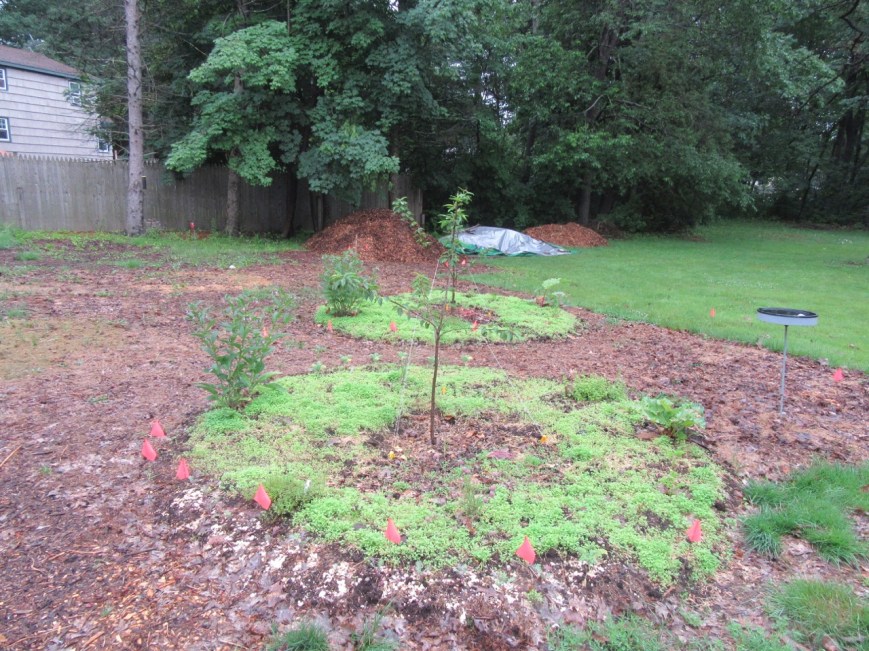
In the meantime, our cherry tree polycultures are now green with clover. Cherry Tree clover rings

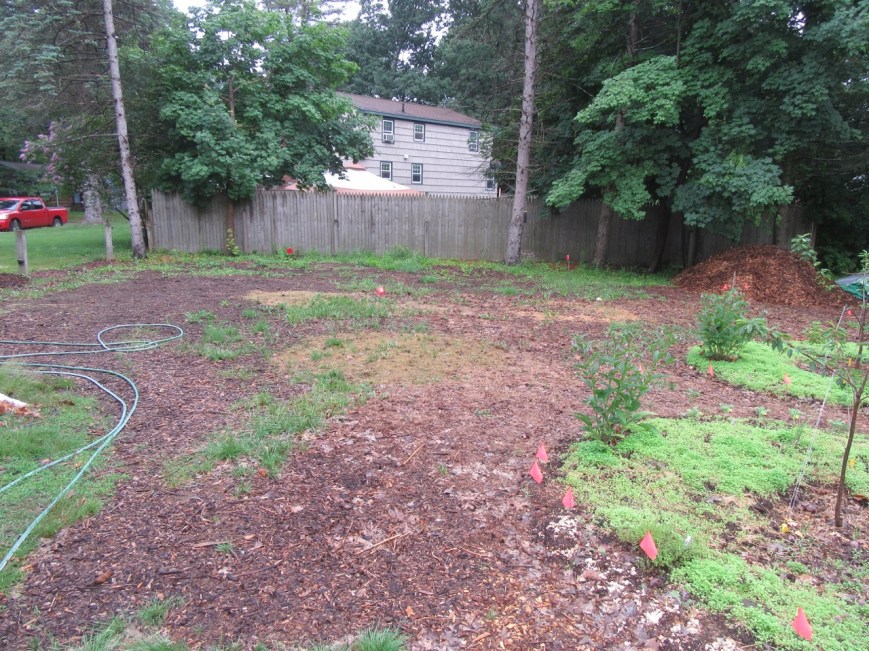
Here are some “before pictures for the yard, first, where fruit tree, raspberry and herb and flower beds are going to be created.

Permablitz before photo

And here the yellow markers mark a future bed for hazelnut bushes to form a little hedge.Permablitz before photo 2

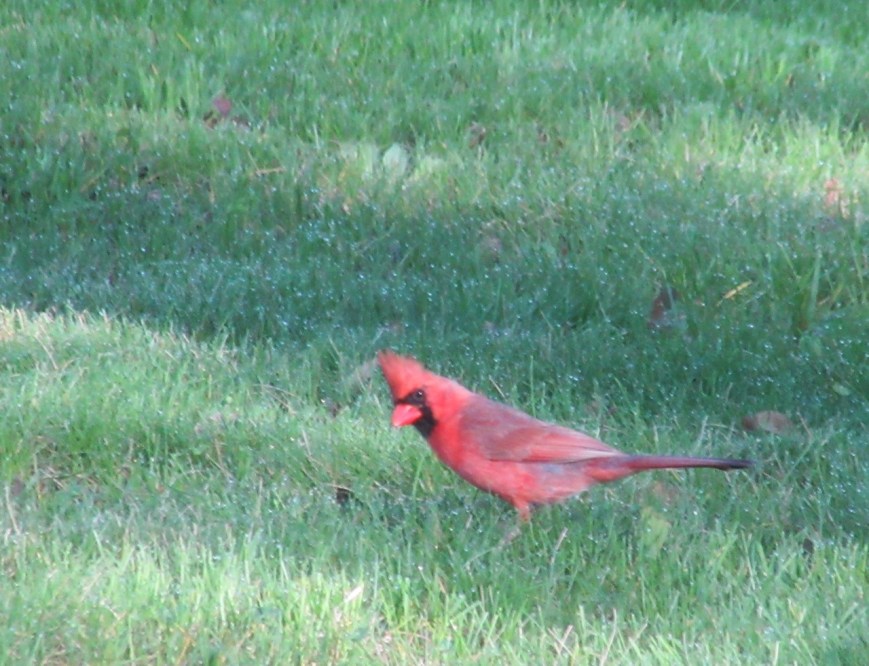
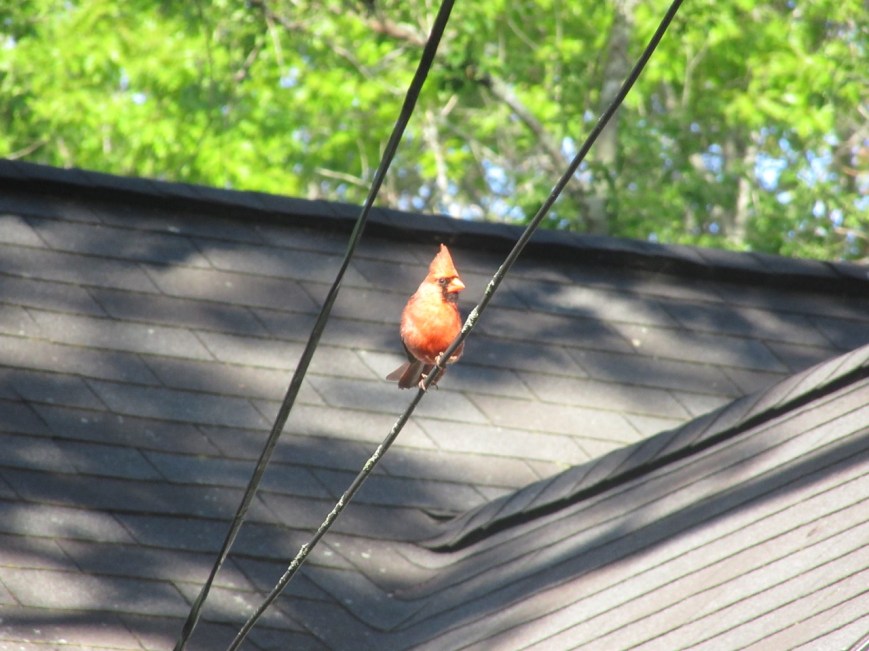
Young Cardinal-4 Photos

At first I wondered what a cardinal was doing, hover-flying near a flowering bush, almost like a hummingbird.  The next time I took a walk, I saw him sitting on the grass.  He let me take a photo, and then flew up in short stretches to a wire, another wire, a tree branch, another tree branch, and finally, all the way across the street.  That is when I figured out that he was learning to use his wings. The next day, in a misty rain, there he was again, perched on a white picket fence, before he flew up to a wire.  You go, cardinal! I hope you make it all the way.Young Cardinal 1 – Version 2

Young Cardinal 2Young Cardinal 3Young Cardinal 4

Hidden Mysteries

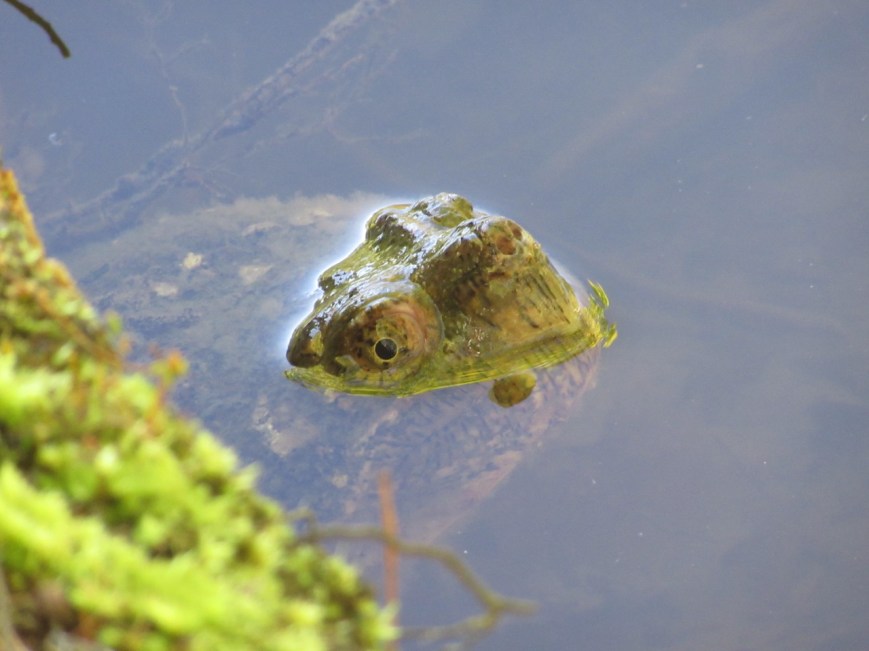
Hidden Mysteries One

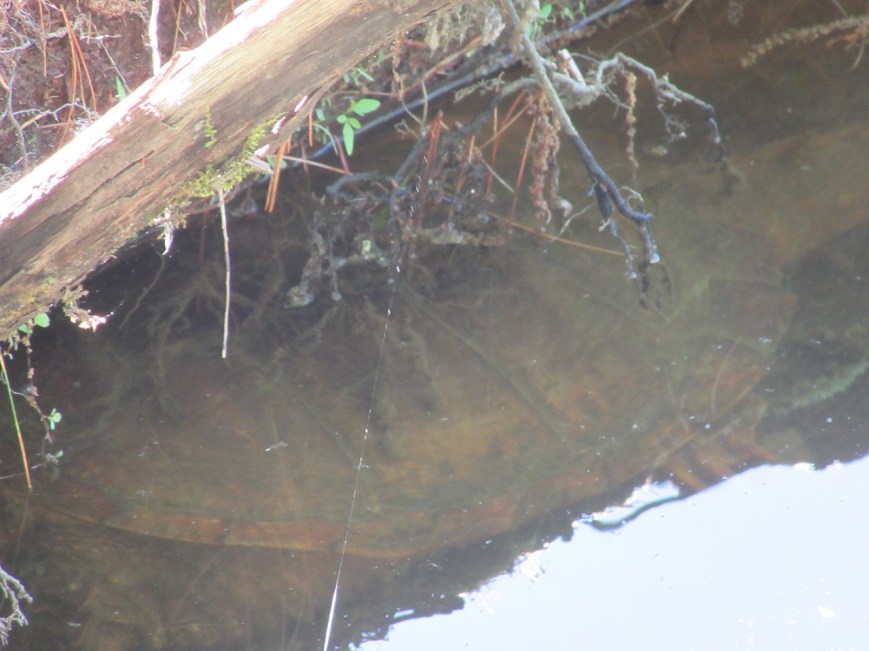
I walked to the cemetery ponds yesterday, and was sitting on a log. I suddenly noticed this strange creature in the water. Very quickly, they disappeared. How often do we walk by unaware of the mysteries hiding almost within our sight? Because I knew the snapping turtle was there, I could see enough to take this next photo, where they are barely visible beneath the water, in the shadow of the log. Can you see it?

Hidden Mysteries Two

How many other mysteries do we miss, how many beauties, how many blessings, lurking just beneath the shadows as we quickly pass by? May we slow down, may we pay attention, may we see what is all around us today.

Cherry Tree Guilds

Cherry Tree GuildsToday I almost finished soil work and guild plantings around each of the cherry trees–still 1/3 to do around the second tree.  First I aerated the soil with our garden fork to a five foot radius around the tree. (The soil was already covered with mulch from last fall-wood chips, cut grass, sea weed, and dead leaves.)  Then I put down newspaper or cardboard along the outer half of each circle, and covered it with compost.  I planted the companion plants for each cherry tree guild.  Guilds are plants that work together so that each does better than if they were planted alone.  In this case, the primary focus is the health of the cherry tree.

The plants I used and their functions:

  • Comfrey is a nutrient accumulator–its roots go deep and bring up calcium and other vital nutrients, and then the leaves can be cut several times a season, and used as mulch. It also attracts pollinators and other beneficial insects.  It can be used in herbal medicine. It was recommended to plant it at least four feet from the trunk.
  • Chives accumulate nutrients, deter pests, are anti-fungal and attract pollinators… They bloom at the same time as the cherry will, and are also a culinary herb.  I had enough to do two per tree.
  • Oregano is an aromatic pest confuser, is anti-fungal, can take some foot traffic, and of course is a culinary herb.
  • Thyme is another insect pest repellant and culinary herb (my favorite.)
  • Chamomile accumulates nutrients, is anti-fungal, and attracts beneficial insects..
  • Rhubarb is another perennial food, and can be cut in place for mulch.
  • At the outer edge of the circle around the Lapins Cherry, I also planted a row of annual kale.  The cherry tree won’t reach that far for a couple years, so it works okay.  I mulched them with egg shells, which I understand will deter kale eating pests.
  • That guild also got one Sweet Cicely plant, which attracts beneficial insect predators to kill insect pests. Plus I hear it tastes like licorice/anise.
  • The other tree guild also got Lemon Balm, and maybe a Bee Balm plant–I haven’t planted it yet and I’m deciding if it will get too big–if so, maybe it will go nearby.  The Lemon Balm was from the plant swap, and attracts pollinators and repels ants and flies.  I just read that it will spread.  Bee Balm attracts pollinators.
  • Between all the other plants, I planted Red Clover seeds–they are a nitrogen fixer, and this variety is best for a fungally dominant soil.  It is a good ground cover to keep weeds away, easy to walk on too. I put some straw mulch on the seeds to get them started, but I think I will add wood chips over it all.

Later in the fall, I plan to add daffodils in a ring about 2 feet from the trunk, to deter munching pests.  I also ended up designating two paths into the tree for each circle–so I can get to the center easily.  Once again, I end the day with sore muscles, but so happy.

Training the Cherry Tree

Training the Cherry TreeToday was a day for food forests! My friend Mihku and I went to a tour of Edgewood Nursery in the morning, and then later she showed me how to train the branches of the cherry tree so that it will grow into a good shape for growing and picking cherries.

Aaron Parker of Edgewood is so knowledgeable about perennial fruits and vegetables, and also has so many great permaculture plants to taste and buy.  I fell in love with Turkish Rocket, a perennial vegetable that tastes somewhat like broccoli.  More on that in a later post.  But I also got to see a grown up cherry tree, and get a sense of what they might look like and how they are shaped at maturity.  Back at home, Mihku and I used kite string and tent stakes to bend three branches on each tree closer to the ground, so they grow into a stronger shape–which means developing a wider “crotch angle.”  One branch was left in the center as the leader.  I am so grateful that Mihku and others are willing to show me how–it is so much easier to see it done, than to try to figure it out from books.

After that, because our new garden fork had arrived in the mail, I started aerating the soil around the trees–or I should say, I got 1/3 of the way around one tree–it was a lot of hard work.  Our soil is very compacted, so this is important for soil health, but my whole body is aching now.  In order to feel a bit more accomplished, I focused on that one section, laid down some thick newspaper sections over the soil, added compost on top, and then planted 14 (annual) kale plants, a patch of thyme, some chamomile, and a sweet cicely plant.  These were all plants we got at the plant swap, and the kale were getting pretty leggy.  I added a bit of mulch.  Still much more to do tomorrow.

Finally, I put together a holistic spray that I learned about from The Holistic Orchard book, but was presented in a simple recipe at Fedco Seeds.  Fedco actually sells all the ingredients, but before I knew that, I had searched around and got Neem Oil at Lowes, and ordered two more ingredients on Amazon.  I didn’t have exactly what they recommended, and I didn’t “activate” the EM-1, but as I understand it, this spray will help to colonize the trees with helpful microbes so that they can resist pests and disease, just like probiotics for humans.  Margy had already purchased a sprayer for other yard uses, so all I had to do was mix it up, and spray all over our new trees; and then I also sprayed what I could reach of our ornamental cherries which have been very neglected for years. Here are the important ingredients of this tonic:

Fish Hydrolysate: Feeds soil and arboreal food web.
Neem Oil: Contains Azadirachtin compounds that deter pests and disrupt their life cycles. Neem also is said to stimulate the tree’s immune system, give nutrients to foliage and feed the arboreal food web. …
Liquid Kelp: Promotes growth and helps trees adapt to stress.
EM-1: A probiotic inoculant that colonizes the branches and fruit with beneficial microbes to promote fruit growth and disease resistance. Click here for info on fermenting, or “activating,” EM-1.

Cherry with new underplantings

[Cherry with branches trained, and thyme and chamomile below, plus if you look closely, you can see kale at the very bottom.]