Summer Lessons to Remember

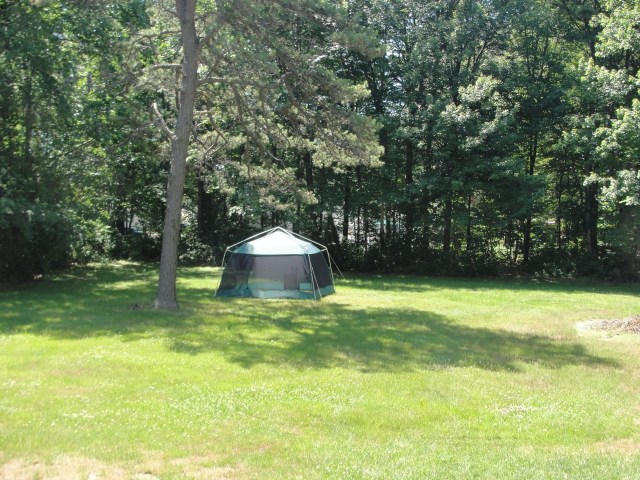
Screen TentMaybe this land on which we newly live can become a sacred center of learning earth spirituality, with a fire circle, a water pond, bird songs in the air.

Your journey on this small piece of land is valuable, not for some other purpose, but for this purpose–to restore your broken off heart to the land.

You have all the time you need.

This spiritual work is your work–writing about it, yes, teaching it, yes, but doing it, most important of all. Even if you do nothing else in your life, do this work.

Each step of the journey is holy. Remember the deer who appeared in the yard. Come outside. Dawn is the best time. “Vacation” really means “spiritual restoration” time.

Your calling now is to do the spiritual journey into Earth Community. That partially corresponds to your ministry at your congregation, and partially lies outside of that. (All congregations must go through transitions in this time.)  

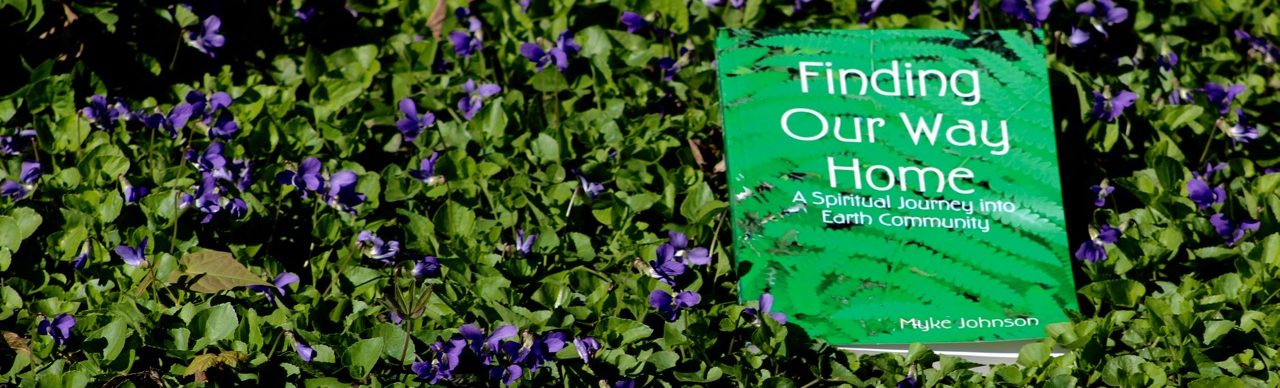
Teach a class this year on the Spiritual Journey Into Earth Community, based on the latest version of the book (Finding Our Way Home: A Spiritual Journey Into Earth Community).

Begin to explore self-publishing the book.

For health–rest, dance, walk, water, herbs, be outside.

Come outside, come outside, come outside.

There is no rush at all, just love, follow your deep passions.

The spirits are with you. Brokenness hurts–turn to the cardinals, the sun, weeping, diving into water.

Enjoy the beauty of each day. It is not all about goals and purpose and accomplishments–even green ones. See the beauty now. Feel the connections now. Be still.

Listen to your body.

You can find your joy and beauty when you sit outside in the morning and write–you know how to move into Presence. Write this down.

There is still more transformation that is possible. Your heart is in the universe and the universe is in your heart. I put my hand on your heart.

Think of how you get up each day in a world that is broken and anguished and live in a society that is divided and hurting. Think of how you feel the new sun and the songs of the birds.  You are learning to feel the land slowly, so the grief doesn’t overwhelm you, so you can find the source of strength, the many ancestors.

Keep dancing.

Today is a day, not a preparation for something else–a beautiful, painful, blessing-laden day. Let your heart’s pain be awash in this day.  

You are not an orphan. You are in the land where ancestor relatives were buried, the dawn places. Don’t panic. Don’t try to take the pain to someone else. Everyone is broken. Remember gratitude. Remember to honor the pain. Remember to see with new eyes.

Remember the magic. Breathe. Remember that a day may bring a beautiful surprise. Follow the Spirits’ lead. Flow with the River of Life.
Ten Ways to Help

10 ways you can help the Standing Rock Sioux fight the Dakota Access Pipeline:

1. Call North Dakota governor Jack Dalrymple at 701-328-2200. You can leave a message stating your thoughts about this.

2. Sign the petition to the White House to Stop DAPL: https://petitions.whitehouse.gov/…/stop-construction-dakota…

3. Donate to support the Standing Rock Sioux at http://standingrock.org/…/standing-rock-sioux-tribe–dakot…/

4. Donate items from the Sacred Stone Camp Supply List:
http://sacredstonecamp.org/supply-list/

5. Call the White House at (202) 456-1111 or (202) 456-1414. Tell President Obama to rescind the Army Corps of Engineers’ Permit for the Dakota Access Pipeline.

6. Contribute to the Sacred Stone Camp Legal Defense Fund: https://fundrazr.com/d19fAf

7. Contribute to the Sacred Stone Camp gofundme account: https://www.gofundme.com/sacredstonecamp

8. Call the Army Corps of Engineers and demand that they reverse the permit: (202) 761-5903

9. Sign other petitions asking President Obama to stop the Dakota Access Pipeline. Here’s the latest to cross my desk – https://act.credoaction.com/sign/NoDAPL

10. Call the executives of the companies that are building the pipeline:

a. Lee Hanse
Executive Vice President
Energy Transfer Partners, L.P.
800 E Sonterra Blvd #400
San Antonio, Texas 78258
Telephone: (210) 403-6455
Lee.Hanse@energytransfer.com

b. Glenn Emery
Vice President
Energy Transfer Partners, L.P.
800 E Sonterra Blvd #400
San Antonio, Texas 78258
Telephone: (210) 403-6762
Glenn.Emery@energytransfer.com

c. Michael (Cliff) Waters
Lead Analyst
Energy Transfer Partners, L.P.
1300 Main St.
Houston, Texas 77002
Telephone: (713) 989-2404
Michael.Waters@energytransfer.com

(Reposted from World Indigenous News)

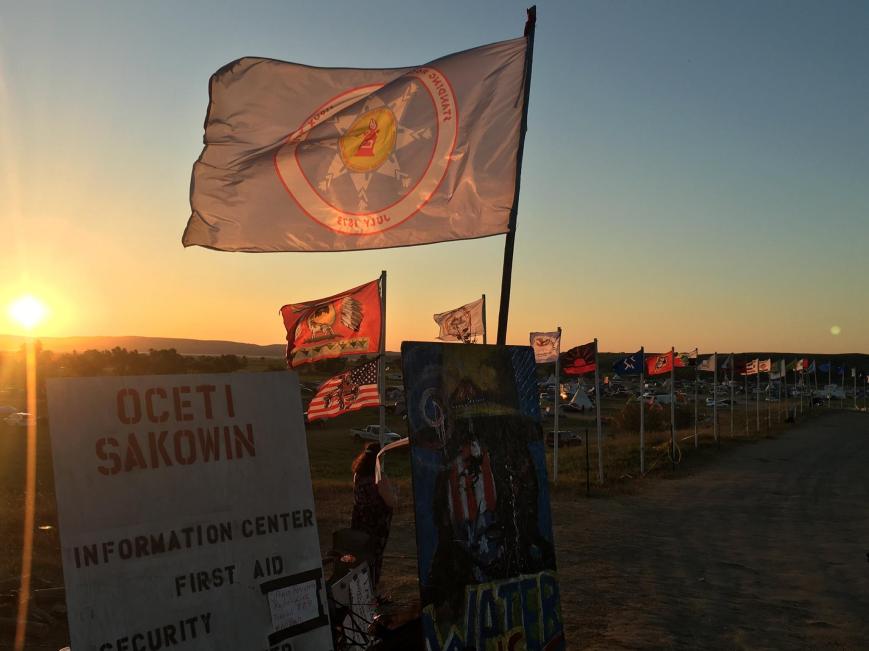
Dawn Standing Rock

Dawn at Standing Rock, Photo by Benalex Dupris, Sept 3 2016 (Shared from FB)

#NoDAPL

One of the most important actions of our time is taking place right now.  The Standing Rock Sioux Tribe, and thousands of Native and non-Native allies are peacefully camping near the junction of the Cannonball and Missouri Rivers, to protect the water from contamination.  These are the waters that the Tribe relies on for its water supply.  Water is life, water is sacred. This is a non-violent gathering to pray and to stand up for life, named the Camp of the Sacred Stones.

But construction has already begun on the Dakota Access Pipeline, meant to carry fracked crude oil from the Bakken plains through North and South Dakota and Iowa to Illinois where it will be refined. The plan is for the pipeline to go underneath the river, despite the risk that creates for the tribe and for millions of others who rely on the Missouri for water.

As the tribal spokespeople remind us, oil pipelines break, spill and leak—it’s not a question of if, it’s a question of where and when. In fact, a route close to Bismarck was deemed not viable due to its proximity to Bismarck, and the fact that the route crossed through or in close proximity to several wellhead source water protection areas, including areas that contribute water to municipal water supply wells. Yet despite these real consequences, the Army Corps of Engineers never took a hard look at the impacts of an oil spill on the Tribe, as the law requires. No explanation has been provided as to why the health of, and protection of water resources on which, Standing Rock Sioux Tribal members depend are any less significant or vital as those of the City of Bismarck.

Instead, now the pipeline is set to run through land that is sacred to the Tribe. Federal law requires that sacred places be protected in consultation with the Tribe, but the Corps has not complied with that requirement, either.

That is the bad news.  But the good news is that thousands of people have rallied to stand in solidarity with the Tribe and for the water.  In August, 10,000 people joined in prayers with the elders from the Seven Council Fires of the Great Sioux Nation.  Representatives from over 180 indigenous nations have offered support, along with faith leaders, the United Nations, and Amnesty International.

I am happy to say that my Unitarian Universalist colleagues and I are among those supporters.  I sent a letter that was signed by 100 UU faith leaders.  Here is what it said:

Mr. David Archambault II, Chairman, Standing Rock Sioux Tribe, Building 1, N. Standing Rock Avenue, P.O. Box D, Fort Yates, ND 58538

August 29, 2016

Dear Chairman Archambault,

We write as Unitarian Universalist faith leaders to let you know that our prayers and support are with you in your courageous actions against the Dakota Access Pipeline.  We understand that the pipeline will cross treaty lands, burial grounds, and the Missouri River, the water source for the tribe as well as for millions of others.  We are appalled that this project was approved and construction begun without any meaningful consultation with the tribe, counter to federal law and treaty obligations. We support you in your effort to protect your sacred land and water, as well as to create a future for all of our grandchildren.

We speak as people of faith whose principles call us to respect the interdependent web of all existence of which we are a part.  In these times, when the well-being of our entire ecosystem is threatened, we honor the leadership of Indigenous peoples who are showing us a path toward creating a more beneficial relationship to the earth and all beings of the earth.

We are writing to you to offer our support, and to let you know that we are also contacting our government officials to call on them to follow treaty and federal law obligations, and to protect the water which is so utterly necessary for all life on earth.

Sincerely… (signed by me and 99 other Unitarian Universalist leaders)

Will human beings continue to destroy the water and earth, or will we open our hearts to live with respect and gratitude? The next moment of decision is when a federal court will issue a ruling on September 9th.  If you want to offer support for the earth, the water, and treaty obligations, you can find out more at the Standing Rock Tribal website.

River Magic

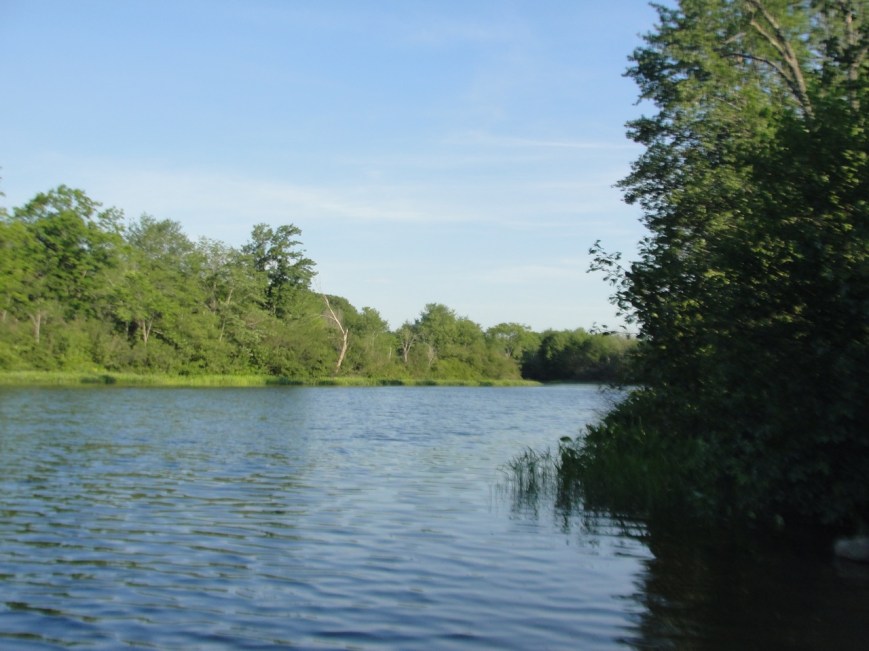
The Presumpscot River where we expressed our gratitude to our local river water, and prayed for the Sacred Stone camp and the waters of the Standing Rock Sioux Tribe.


Bittersweet Basket Weaving

Bittersweet Ugly Basket

My first “ugly” bittersweet basket.

What does it mean to make a relationship with parts of the natural world that we ordinarily think of as trouble?  I am wrestling with this question as we wrestle with the bittersweet vines that surround our yard.  Asian Bittersweet is classified as an invasive species, because it takes over an area and can wipe out other species.  It is very hard to get rid of it.  This has provoked some places, including Falmouth, Maine, to plan to use horrible pesticides in its eradication–which seems to me an even worse problem–and a never ending one, because they admit that they won’t be able to ever completely eradicate it.

Some folks are taking a different approach however.  Yesterday, Margy and I attended a workshop led by Zack De La Rouda about weaving baskets with bittersweet vines.  I loved  Zack’s attitude–since we brought this plant here, then we need to find ways to deal with the consequences.  And with climate change and other pests threatening species like ash and willow, which have traditionally been used for baskets, we need to keep looking for options.  So he brought us into his experiments with making useful items with bittersweet. Which, as he said, is everywhere. The vines had been cut, dried, and then soaked in water for a couple days. I have to say it was not an easy material to work with–hard to bend and shape, at least for a beginner.  But Zack assured us that everyone has an ugly basket–when our first attempts to learn the skills result in less than usable outcomes.  So I took a pic of my ugly basket.

Another presentation in April got me started on this question.  Tao Orion, author of Beyond the War on Invasive Species: A Permaculture Approach to Ecosystem Restoration spoke at the Resilience Hub.  We might think of getting rid of invasives as important to promoting a balanced eco-system.  But what she discovered is that in the professional world of land management, what usually happens first is a complete destruction of the “invaded” area with powerful pesticides.  She helped us to look beyond “the war” and explore other options for dealing with invasives.  For example, we can look at the function invasive plants are playing in the ecosystem where they have taken root, and address imbalances in the soil and other factors that may need attention.

Bittersweet shoots

Bittersweet vine shoots.

Orion was from the west coast, and didn’t specifically address bittersweet.  Margy started cutting off huge vine stems that are surrounding other tree trunks, to try to save those trees from choking.  But the vines are so resilient.  Tiny shoots start coming up in the lawn, from root networks spread beneath the soil. Non-pesticide ways to deal with them include pulling out what you can, cutting off what you can, and ongoing cutting, to keep the roots from getting the nourishment they need.  (Even people who use pesticides have to do all that, by the way.) In the final analysis, there is no way to completely eradicate them, so you have to learn to manage them.

On the plus side, bittersweet is a remarkable example of resilience.  They propagate by seeds, by roots spreading through the soil, and can re-grow from small root segments. You’ve got to admire that multi-functionality. And birds love the seeds in winter.  There are dozens of birds who live in the uncultivated area just west of our yard–which is overrun with bittersweet, as well as raspberries and blackberries and grape vines growing wild.

But on the other hand, I can’t help but compare it in my mind with the European peoples who invaded this continent, including my own ancestors from France and Scotland in Quebec, and my Germanic ancestors who came later–as immigrants being used to settle the west. Just like an invasive plant, the European invaders took over the landscape, wiped out other communities of people, and destroyed the balance of the eco-system.  On an even wider scale, modern human beings as a whole species have overrun our planet and are destroying our ecosystem.

So perhaps the most important lesson bittersweet might teach us is to look in the mirror, at our own invasions, and together we might learn about how to live within respectful boundaries with all of our siblings on this planet.

Permablitz

Permablitz

Photo by Julie, one of our organizers for the day

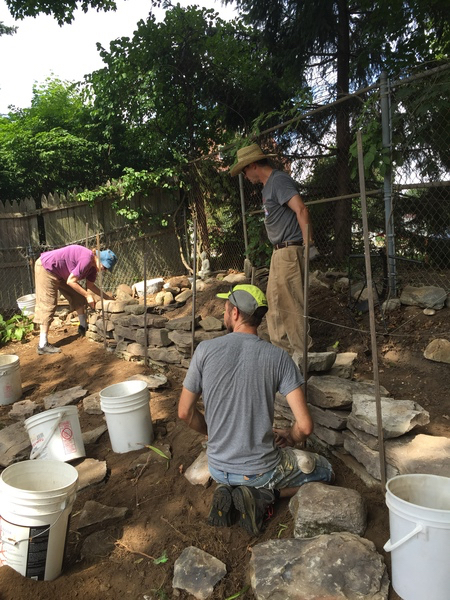
Yesterday, I helped build a rock wall at a Permablitz in Portland.  Permablitzes are groups of 15-30 people who show up to help one of our neighbors implement a permaculture design for their yard.  Organized by the Resilience Hub & Portland Maine Permaculture, they also provide an opportunity for learning more about permaculture options, connecting with others who share a love for the earth, and having a lot of fun doing a lot of hard work. By helping others, we also can put our names in the ring for future help with our own permaculture designs.

Yesterday was also Maine Permaculture Day, with statewide open houses and events.  I visited one yard nearby because they had fruit trees and hazelnuts, and I wanted to get a sense of what that might be like, since we’d like to do something like that for our yard.  They had peach, apple, pear and cherry trees.  They also had planted a row of hazelnut shrubs, hoping the row would eventually create a privacy wall as well as produce hazelnuts. You can learn so much more by seeing plants as they are being grown, than by reading about them. I look forward to the time when we start on our own gardens.

In the meantime, on Friday, we had gutters installed on our house.  We plan to add rain barrels but decided to wait until next year for that, since it will be a lot of work to build bases for them, and we won’t need them until we do more with a garden anyway.

Guests & Storage

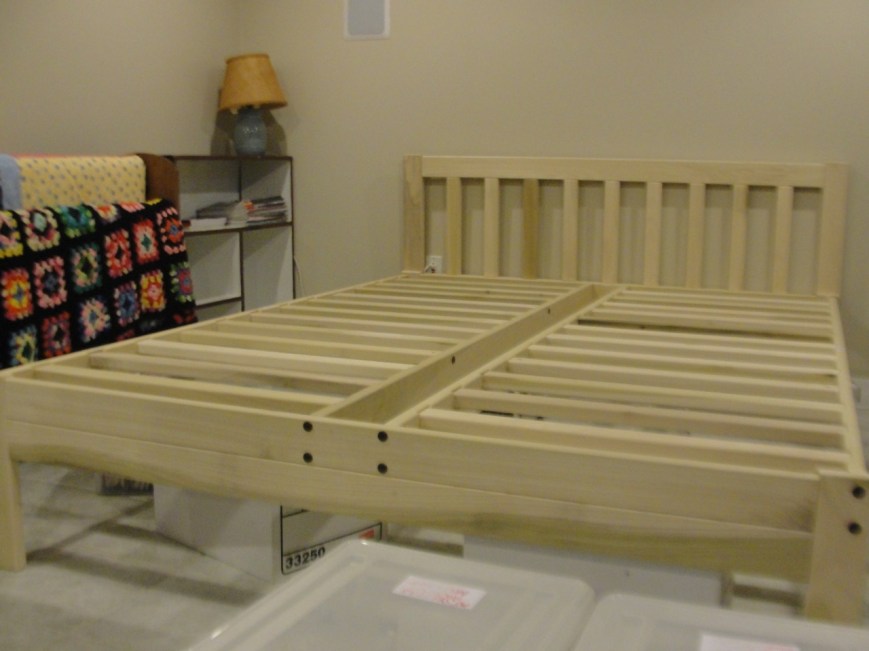
Bed for guests & storage

One of the principles of permaculture design is stacking functions–whereby one item serves more than one function at the same time and in the same space.  I just finished putting together this bed which occupies a corner of our finished basement, and it provides room for guests, as well as room for storage underneath.  (Now we just need a mattress.)

Since we downsized, we’ve needed to be creative about how to manage multiple functions in a smaller space.  We really want to be able to offer comfortable hospitality to guests, but we also have been struggling with storage options.  So the two major requirements for this bed were that it be comfortable, and also that there be room for boxes underneath.  I have a lot of boxes–the archives of my life you might say.  Some early writing, some political work, some letters and photos… When I considered the possibility of getting rid of them, I realized that I wanted to keep this history–if only to go through it again in my old age.

Now, I am happy to see it before my eyes.  My plan is to organize the boxes, and make a diagram of where they are, so that if I need to get access to them, I know right where to look. Otherwise, they will be hidden under a bed skirt, and the room will be neat and welcoming and uncluttered.


Unexpected Magic

River MagicI am beginning to wonder if the book I have been writing (whether I publish it or not) is creating a kind of unexpected magic to manifest the visions within its pages. Yesterday, for the new moon, I read my journal from the last new moon until this one–a practice I do every new moon day.  This particular month has been a time for spiritual restoration.  But I noticed something rather curious as I read.  Old rituals and practices are finding their way back into my life after a time of absence.  And it seems related to the writing of the book, Finding Our Way Home.

In one chapter, I write about the practice of diving into water every day, which came into my life when I lived on Cape Cod.  But for 11 years, there was no body of water close enough to where we lived for me to do that anymore.  And I didn’t imagine there would be in our new house, but then we learned about access to the Presumpscot River just ten minutes away.  So now it is a possibility again.

In another chapter, I write about dance as a form of prayer–physical, emotional, a way to experience the energy of the divine in my body, and find joy in the midst of struggle.  When I lived in Boston, I was part of a women’s spirituality circle that danced as a part of our rituals.  But I haven’t had an easy or collective way to do that for a while.  Then, this month I found a community group that meets for free-form expressive dance every Sunday morning–not always so great during the church year when I am occupied most Sunday mornings–but for the summer it is accessible to me, and once a month on my Sunday’s off during the year. So now that is a possibility again.

And then I started thinking about how I had written about wanting to use less oil, to have a house that was zero-carbon–I wrote about it before I could imagine any way that we might really find a way to live in greener housing.   But this past year we started an intentional search for greener housing.  Our new home is not all the way to zero-carbon, but with our solar panels and in-town location we are using so much less oil than before.

Journaling DSC01316I also write about the spiritual practice of writing–and the book as a ceremony of reconnection to the earth, to each other, to the spirit within all.  But the magic I have been noticing this month was completely unexpected, beyond my wildest dreams, and uncanny in its particularity.  I wonder if when we write our hopes and visions, when we express our gratitude, when we imagine and tell the stories, there might be an energy that starts to percolate. What has lain dormant wakes up and tries to find a way to express itself.  All I can say is wow, and thank you.

The Devil in the (Solar Credit) Details

Solar DetailI was finally able to take stock of my estimated taxes for next year, and compute how the solar energy credit would work for me. Sad to say, the devil is in the details: while I was hoping to be able to take a tax credit to recoup 30% of the cost of our solar panels, it won’t quite work out that way. For this coming year, I will be able to take less than one third of that.  The rest I will have to carry forward to future years.

I am disappointed about that, and a bit surprised.  But before we installed the panels, I wouldn’t have even known how to ask the questions to discover all this.  In the literature on solar, it was always expressed as “may be able to get 30% of cost as a tax credit, but consult a tax professional.”  I had just assumed that it would work to take the credit this coming year, because I knew my tax bill is generally higher than 30% of the solar cost.  But I think I got caught in the peculiar way that minister’s taxes are computed.

Ministers are counted as “self-employed” for social security, so we pay 15.3% of our total compensation toward social security self-employment taxes.  Most employees have 7.65% withheld and the other 7.65% is paid by the employer. (On the other hand, ministers get a break on our housing allowance, so that tends to even it out.)  What ends up happening for me, though, is that the largest part of my actual tax bill is the social security self-employment tax. And I did not realize that the solar tax credit could not be used against that tax, but only the regular federal taxes.

I share all this because I am guessing that some of my ministry colleagues might have an interest in installing solar panels, since you share the same values I hold about caring for the earth and using renewal energy.  I wanted to warn you that you might not be able to count on getting that money back in the first year. Plus, I can see how this makes it even harder for solar panels to be affordable for lower income folks.  The lower your income, the lower your taxes, and the more years it may take for a rebate to actually come back to you.

Personally, I’ll be okay financially.  And I don’t regret having installed the solar panels, even with this and other political setbacks. But I sure was looking forward to having that rebate for other house projects that are waiting in line. So it goes.

Water for Future Gardens

Garden SpigotToday a plumber installed a new outdoor spigot at our house. The old one was buried behind the steps to the deck, close to the driveway, and not at all handy for future garden watering. This one is on the other side of the deck, close to where we are imaging planting fruit trees and other food crops. It makes me happy to see it there, all ready to use.

Before we installed it the spigot, we had to research what material to use for the piping–copper, PVC or PEX.  We chose copper because the PVC varieties and PEX piping seem more hazardous with leaching that puts chemicals into the water. This article was very helpful.  Since this spigot will be watering our food, we want it to be as non-toxic as possible.

Submeter

Submeter

It is also attached to a submeter we purchased from the Portland Water District. Our sewer bills are computed based on the volume of our water usage, and with a submeter, the water that is going into the ground (rather than the sewer) won’t be used to compute the sewer bill.  So spending the money for the submeter now should eventually save us money in the long run.  Now all we have to do is contact the city for an inspection, and we’ll be good to go.

(Except we won’t be planting gardens until next year.)