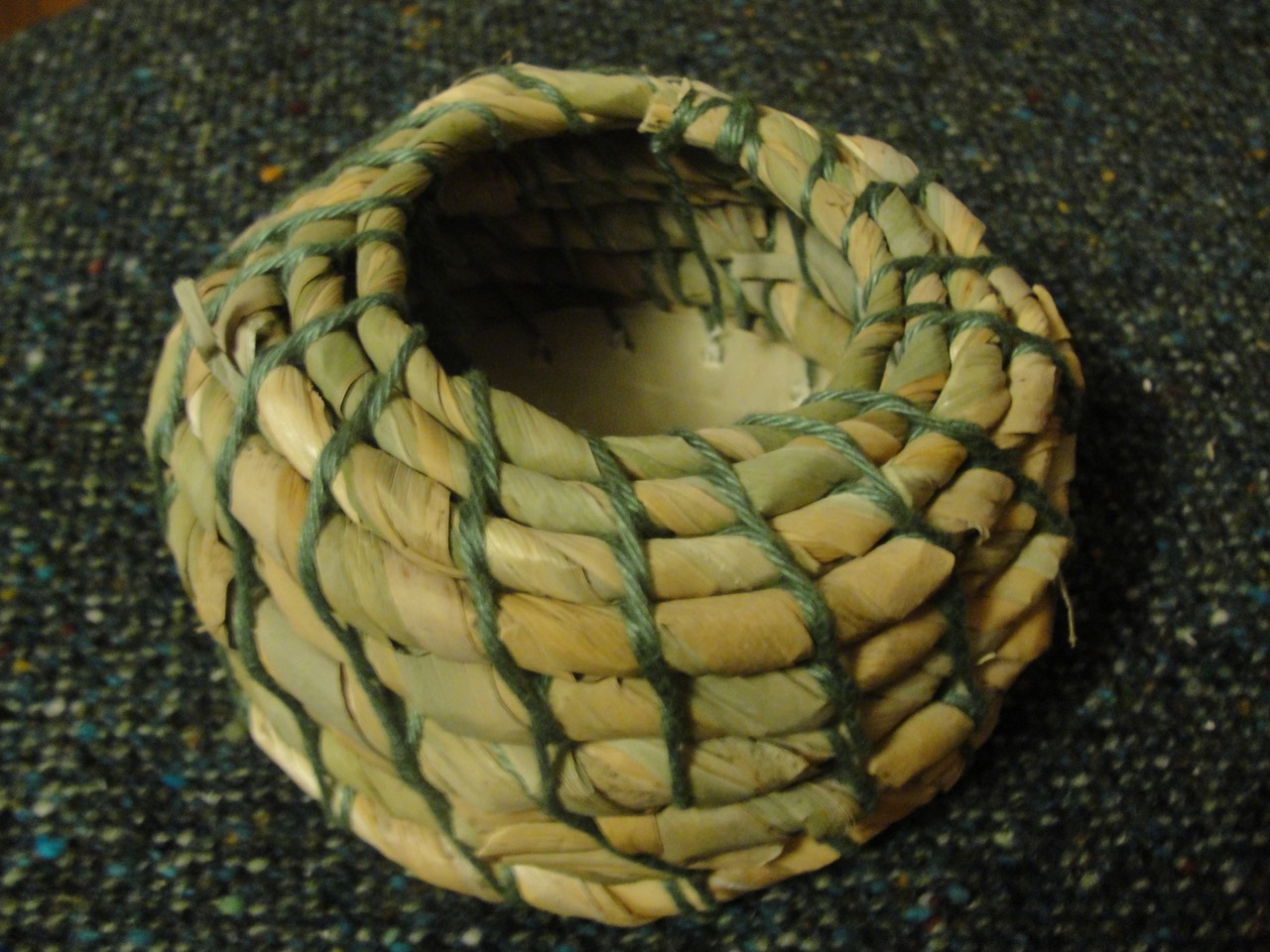
 I made this basket tonight from cattail leaves! I went to a workshop at the Resilience Hub, led by Ashirah from the Koviashuvik Local Living School. She brought the leaves, which had been picked when they were green, dried for a few days and stored, then re-dampened shortly before our workshop. We used darning needles and sturdy green thread, and Ashirah taught us how to coil the leaves and thread them together. My first basket is uneven, and had a will of its own but it smells great and it came from plants the grow wild and abundantly here in Maine. Hurray!
The Hope that Springs from Uncertainty
This week there have been no new houses to look at, but that is just as well because we are waiting to see what loan amount the bank will approve for us. I have also shifted from sabbatical time to a week of study and preparation for fall worship and return to full-time ministry. Today I’ve been reading books on Life Coaching, to learn strategies that coaches use to help people achieve their goals. I’ve thought that perhaps the tools of coaching might be useful for leadership in my congregation, and also useful personally to achieve our goal of finding greener housing, and living in ways that unite us with the living Earth.
I completed one book, whose author describes the most important tools for achieving coaching results as: motivation, positive frames of thinking, and confidence. I am going to be snarky for a moment and say it sounds a little like the worst of new age thinking–“just believe it and you can make it happen.” I do believe that we can access resourcefulness in ways that help us to achieve our goals. I like the tools that enable us to do that. But I don’t buy how everything seems to hinge on positivity and rejection of the possibility of failure. (I have two more books to explore, so perhaps I will discover that this one isn’t the best representation of the coaching philosophy.)
I am remembering Joanna Macy‘s advice to honor our pain for the world, to honor all the so-called “negative” emotions as well as the positive. Our pain is not just a hindrance to achieving our goals, but also a resource for compassion: our pain for the world comes from our deep interconnection with all of life.
Joanna speaks about the three stories of our time–the ways we understand what is happening in our world. The first is “business as usual” in the industrial growth society, believing we can just go on as we have been doing, and everything will sort itself out. But the industrial growth society is actually on a suicidal path because it is built upon destroying the natural world. The second story is called the “Great Unraveling,” a story of the destruction of our society, the mass extinction of species, climate disasters, and nightmarish post-apocalyptic scenarios in which people fend for themselves and turn on each other. The third story is called the “Great Turning,” in which human beings make a profound shift toward a life-affirming society, through major changes in our energy consumption, our social and economic structures, and especially in growing to understand that all beings are a part of one living Earth.
My desire for greener housing springs from my hope to be a part of a Great Turning. But Joanna points out that we have no assurance of success in our work to transform the world toward a life-affirming society. We could just as easily fail in our efforts, and witness the downfall of humanity and the extinction of our species along with so many others. Yet that very uncertainty can be the source of our hope and of our motivation.

Bald Eagle, photographer unknown
I went for a swim at Winslow beach today, and as I floated on the ocean waters, I saw a beautiful bald eagle flying overhead. A small bird was chasing it at first, but then it soared on a long straight path towards the western sky.
As I ponder the concepts of motivation and hope, I realize that I don’t find my own motivation through messages of assured success and positivity. I feel more resonance with the hope that springs from uncertainty.
There is no guarantee that Margy and I will find greener housing, and no guarantee that human beings can turn our society around toward a way of living in harmony with the earth. But for that very reason, we must give it our passion and our dedication and our best efforts. We must put our whole energy into the story that offers Life.
Shredding and Thoughts on an Anxious System
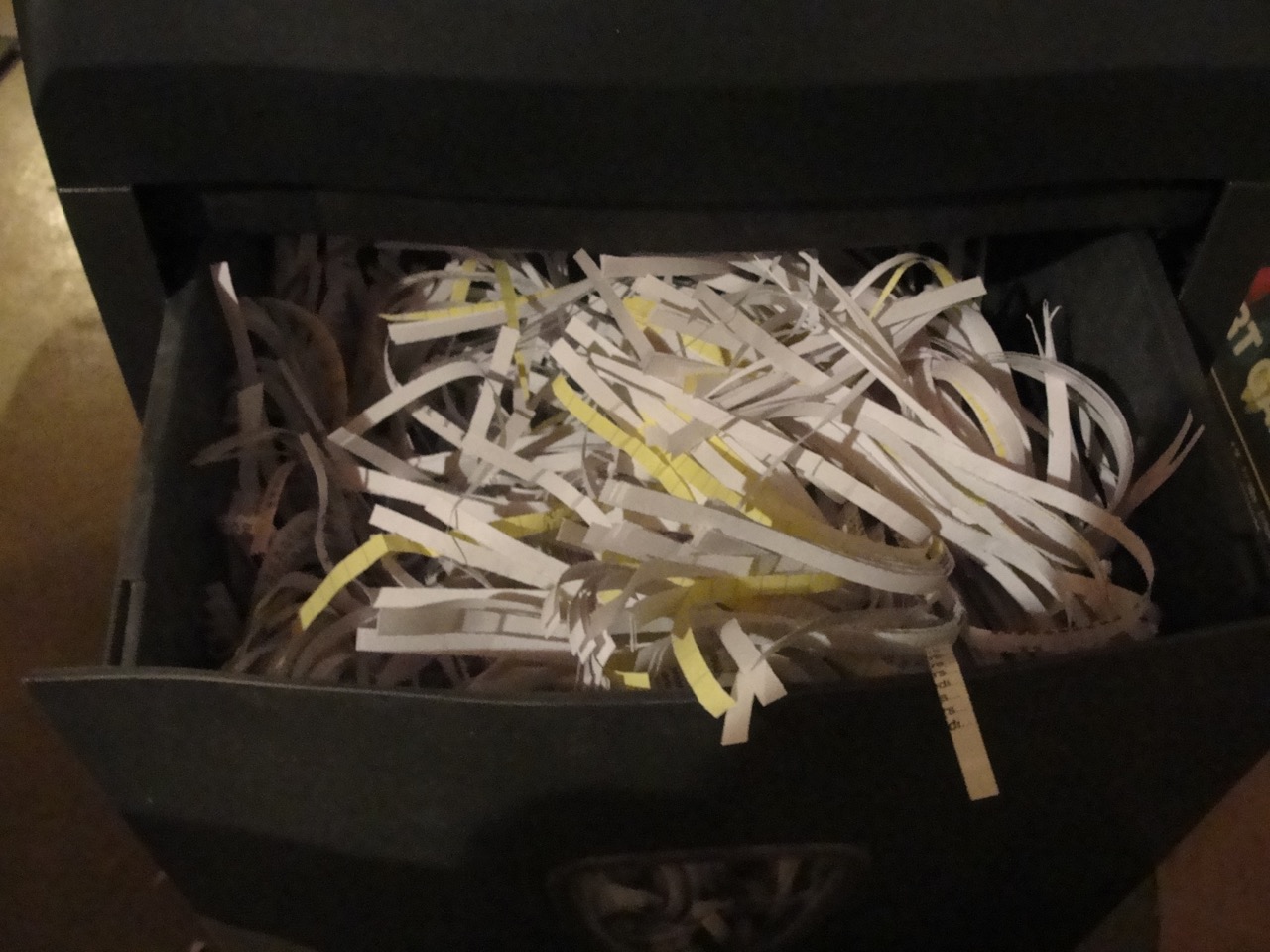 As part of our downsizing, simplifying, and search for a greener home, I have been cleaning up old financial records that I had basically just boxed up and kept forever. I checked online sources to figure out which records I actually needed to keep and which ones I could throw away and recycle.
I found out that the IRS has three years from your income tax filing to audit your tax return for miscellaneous errors, and six years if they suspect you of underreporting income, so they suggest you keep all your returns and documentation for seven years. As a minister, this means I must also keep the documentation for all housing expenses, since our housing allowance is treated differently for taxes than regular salary. I have also read that I should keep anything related to purchase or sale of a house, and permanent improvements to the house. (If you think you might want to do some shredding, please do your own research on this, because I am not an accountant or tax expert.)
I have been doing this process for an hour or two at a time, because the shredder gets tired after a bit of time, and I do too. I’ve fed it thousands of old receipts, old bills, old bank statements, old tax returns. I have filled up four huge trash containers with paper for recycling. I am just getting up to the seven-year mark in my papers–starting from many years ago I’m finished up to 2007. What am I learning? It takes almost as much work to eliminate old papers as it did to acquire them. Finances have gotten so complicated that they take more time and energy than I want to give to them. In the financial world “green” does not refer to environmentally sustainable.
It makes me realize that the structure of our society’s economic system is based on fear and anxiety. The IRS is the adversary who might bang at our door and discover we threw away the letter acknowledging a donation. I am not against the idea of taxes or contributions to social security. (I don’t appreciate that so much of the money goes to weapons and war.) Ideally, taxes are the way we support the Common Good, the way we recognize and contribute to shared resources like roads and firefighters and schools and libraries and care for our elders. I wish healthcare for everyone was also included among those shared resources. I deeply value giving energy to the Common Good.
And I wish there were a way to approach it all beyond anxiety and the complicated accumulation of records. I am curious if others have found a way to truly simplify the financial processes in our lives?
Respite for Mother Earth
Today I am participating in a non-action, non-event. It is being sponsored by Dawnland Environmental Defense, an alliance of Native and non-Native peoples united in the protection of the Dawnland with particular focus on the sacredness of Water. The “Dawnland” is the land of the indigenous Wabanaki, this place where dawn first comes to our country. Everyone is invited to participate in a RESPITE for Mother Earth ~ “stay home, do little, pollute little, buy nothing (especially gas!), explore ways to lower your carbon footprint, regroup, relax, and give your Mother a break!” (It actually covers Aug 13-15 but today is the day I am able to participate.)
In our search for greener housing, there are times when it seems important to stop looking, stop driving around, stop even thinking about projects and buildings, and remember the ground underneath our feet, the root of life, the Earth who is Mother of all. I was able to go outside this morning and listen to the crows and chipmunks sounding an alarm–I think I may have seen a small hawk in the neighborhood. I washed out our bird feeder, and filled it with fresh seed. I read somewhere that bird calls wake up the plants each day, and can wake up our hearts as well.
There is one task I am doing–writing and emailing a letter about a mega-dump that is threatening the Penobscot River. If anyone is willing to help, especially Maine residents, you might use this information to create your own letter, or look at the Dawnland Environmental Defense page for further information.
Michael T. Parker, Maine Department of Environmental Protection, Solid Waste Program, 17 State House Station, Augusta, ME 0333-0017
Application #: DEP # S-20700-WD-B1-N
I am writing to request a public hearing on the expansion of Juniper Ridge Landfill, which is located just upstream from Indian Island. It is already a threat for the future viability of the river, and doubling the size (as is now being proposed) will allows a larger mountain of toxic trash to be placed on sensitive wetlands. This will have a detrimental affect on Penobscot people as well as all people who love the Penobscot River.
It is important that affected citizens have a voice in this proposal that threatens their water, the wetland ecology, and the air. It is important that hearings be held in a location convenient for those who will be most affected, such as in Old Town, Orono, Alton, or the Penobscot Nation area. Please inform me of further details on such a hearing.
Sincerely,
The Rev. Dr. Myke Johnson
Ma’skwasi Sipo (Birch Stream), traditional Penobscot hunting, fishing, and gathering territory, is located in close proximity to the mega-dump, Juniper Ridge Landfill. Photo from Dawnland Environmental Defense Facebook page.

Another Reason I Love Maine
Our appraiser rescues injured birds!
As part of our search for greener housing, we are applying for financing with our local bank, based on our equity in our current house. That way, we don’t have to exactly synchronize the buying of a new house with the selling of our current house. Yesterday, an appraiser came to our house, as part of that process. We had de-cluttered the house and tidied and cleaned before she arrived.
 But what I love about Maine is that people don’t stay on topic or on task. She noticed the striping we had put on some windows to help prevent birds from crashing into them, and we got talking about birds. It turns out she cares for injured and orphaned birds. She has been doing this for many many years, in conjunction with a local vets office. She spoke about her robin that can’t fly, but hops around on the enclosed porch, and sometimes releases the earthworms instead of eating them. She has cared for bluejays who could speak words, and a crow who liked to wait for the fax machine in her office to get an incoming fax so he could tear it apart. When possible, the birds were released after they had grown up or healed, but a few she kept on.
She described each bird by name and I love how much she appreciates their intelligence and their unique personalities. I love that she searches for the perfect beach to release young seagulls who are now able to make it on their own. I love her story of the crow barking like a dog because he had been raised around her dogs.
You never know what little delights a day will bring, and I love that in Maine, folks don’t stay on task, and you can discover kindred spirits when you least expect it.
Stuff
 Today was one of those days when the idea of actually sorting through and giving away or packing our stuff seemed pretty overwhelming. Part of our search for greener housing includes this process of dealing with our stuff. How did I get so much stuff? I remember being able to put almost everything I owned into a backpack, along with a tent, and carrying it on a bus when I went to join the Women’s Encampment for a Future of Peace and Justice in 1985. I must have had a few boxes of stuff stored with a friend back in Chicago, but not much. Now, our stuff fills a house.
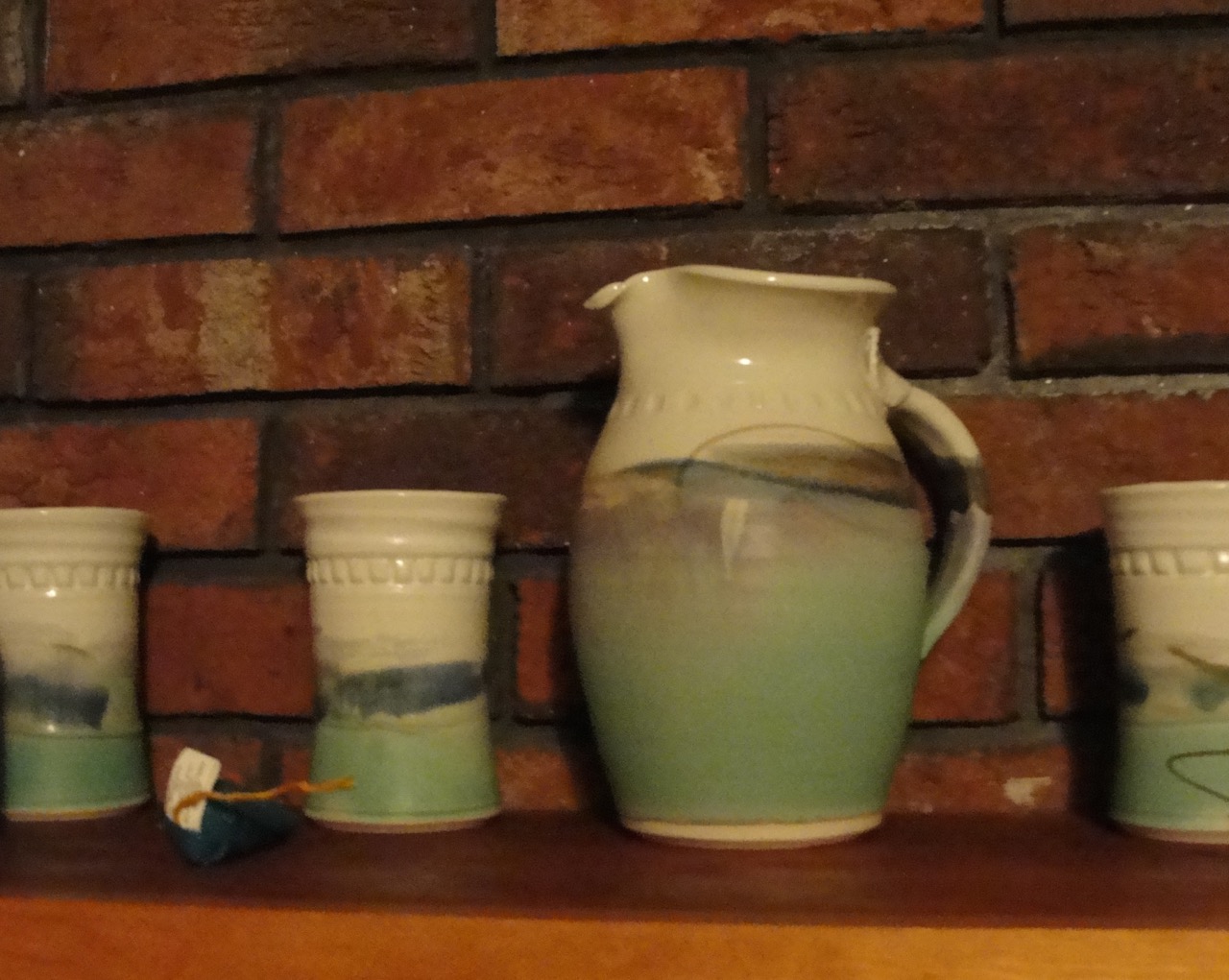
Maybe some people feel happy having lots of stuff, but I often feel uneasy about it. I grew up with St. Francis of Assisi as a role model, the patron saint of voluntary simplicity. I had to learn to appreciate the value of creating a beautiful and welcoming household. I was reminding of that value when a friend visited this weekend and remarked about how wonderful it was to be in such beauty. And I do love our home, and the stuff that helps to bring it alive. Some of it is practical–a kitchen table, chairs, beds, desks, bookcases, dishes. Some of it is sentimental–gifts from friends or a few cherished pieces from family. Some of it is just for beauty–the pitcher and cups on our mantel, a wall hanging of the tree of life.
But when I think about having to move it all from one place to another, it feels daunting. Today we were cleaning up some of our clutter in preparation for a visit from an appraiser. Not quite as daunting as preparing the house for showing to prospective buyers, but that will be coming up too. It is funny that as Americans have become more mobile, we have also accumulated more and more stuff. Is our attachment to our stuff trying to make up for our loss of attachment to land and community?
There are a lot of guides out there for helping to get rid of excess stuff. Common questions to help in the process include these: Have you used it within the last year? Does it give you joy? I have added another: Is this worth saving for my permanent personal archives? That one covers the fact that as a writer I am attached to keeping all of my personal journals. The last time we moved I even purchased archival quality boxes to store them in. I understand the process we need to go through. I just can’t imagine how we’re going to find the time to get it all done.
I am reminded of a quote by Wendell Berry. It isn’t really about stuff, but about anything that feels daunting or too big. I have it posted on the bulletin board next to my desk:
“It may be that when we no longer know what to do, we have come to our real work, and that when we no longer know which way to go, we have begun our real journey. The mind that is not baffled is not employed. The impeded stream is the one that sings.”
Or perhaps it would be helpful to take the advice of Dory in Finding Nemo: “Just keep swimming.”
The Sacredness of In-Between
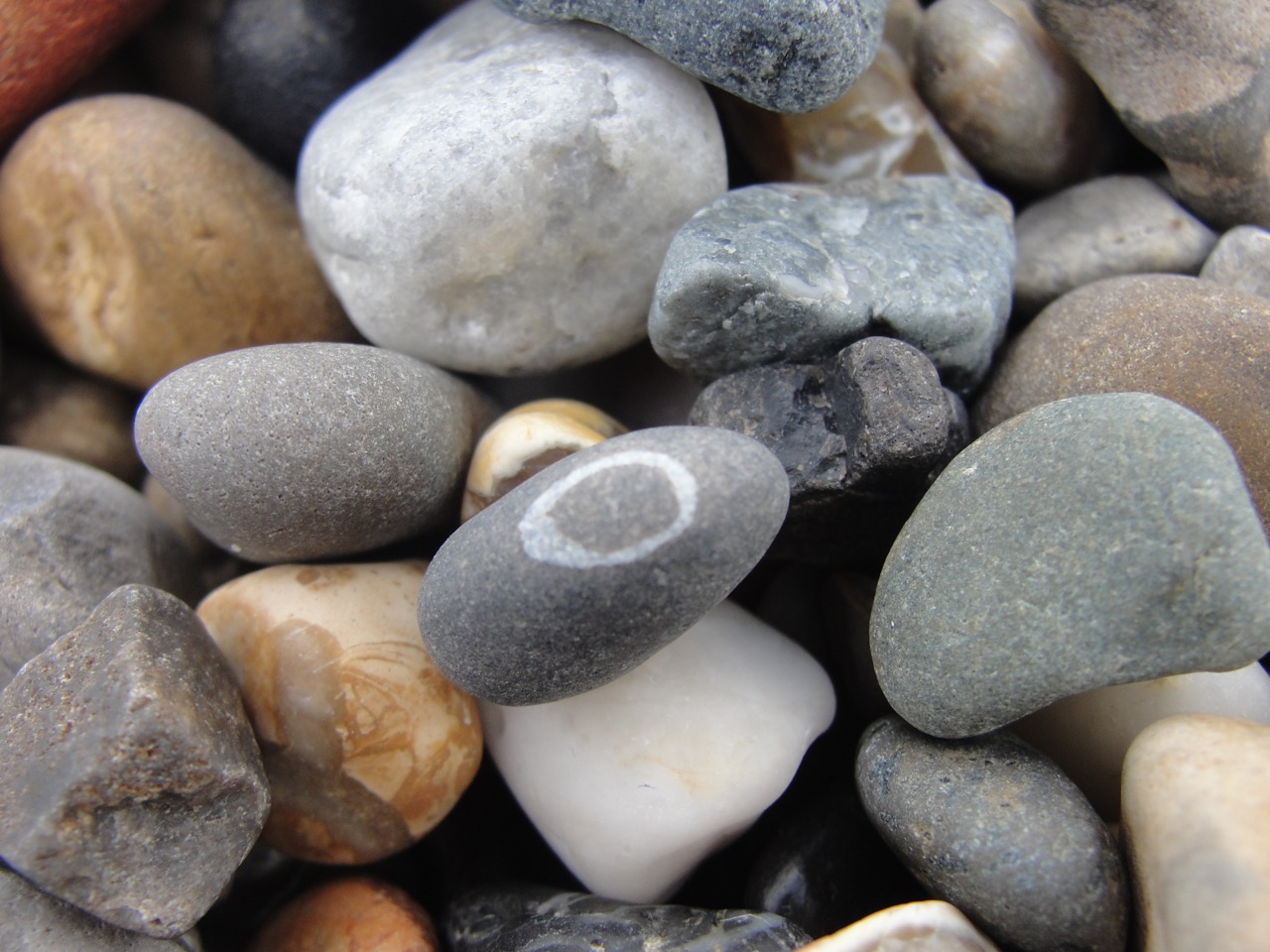 I love that there is a word for the sacredness of being in between one time and another, one place and another. It is called Liminal Time, or Liminal Space. It is the moment when magic can happen, when anything can happen.
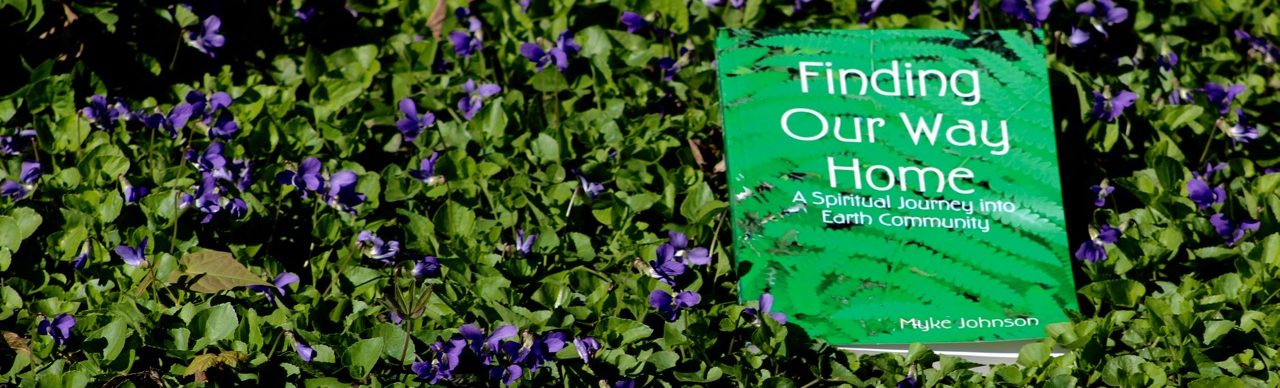
I am now in the last week of my four-month sabbatical, and I am noticing that I haven’t finished any of the big goals I set for myself at its beginning. But that is okay–I am in a liminal space with each of those goals. One goal is to publish my book, Finding Our Way Home. I have completed another full edit, and sent out queries to some publishers and sent out the manuscript. Now I am in the time of waiting to hear back.
Another goal is to find greener housing. Again, Margy and I have started on that process–we talked about what we want in a new home, we engaged a green realtor, we looked at some houses that didn’t fit, we sorted out some financing options. I’ve begun the process of simplifying and letting go of things I no longer need. That process will take a lot more time, and we are waiting for the right house to show up on the market.
A goal that emerged during these months is to do more with the Work that Reconnects. I want to devote myself to making changes that will move human beings into a more beneficial relationship with all life on earth. That in itself is not a new goal, but rediscovering the tools that Joanna Macy has created for this work has been a true gift of these months. I am imagining how I can bring those tools to my ministry in the congregation, and beyond. I’ve had a chat with a local colleague who is also interested, and I look forward to plotting together.
I feel like I have been planting seeds and tending the soil, but the harvest time is still up ahead somewhere, unknown and unknowable. And for now, it is important to let it be unknowable. If I want to experience the sacredness of this time, I must open to its mystery and uncertainty, I must celebrate its possibility, I must wait for its unfolding. The Holy is right here.
Letting Go and Giving Away
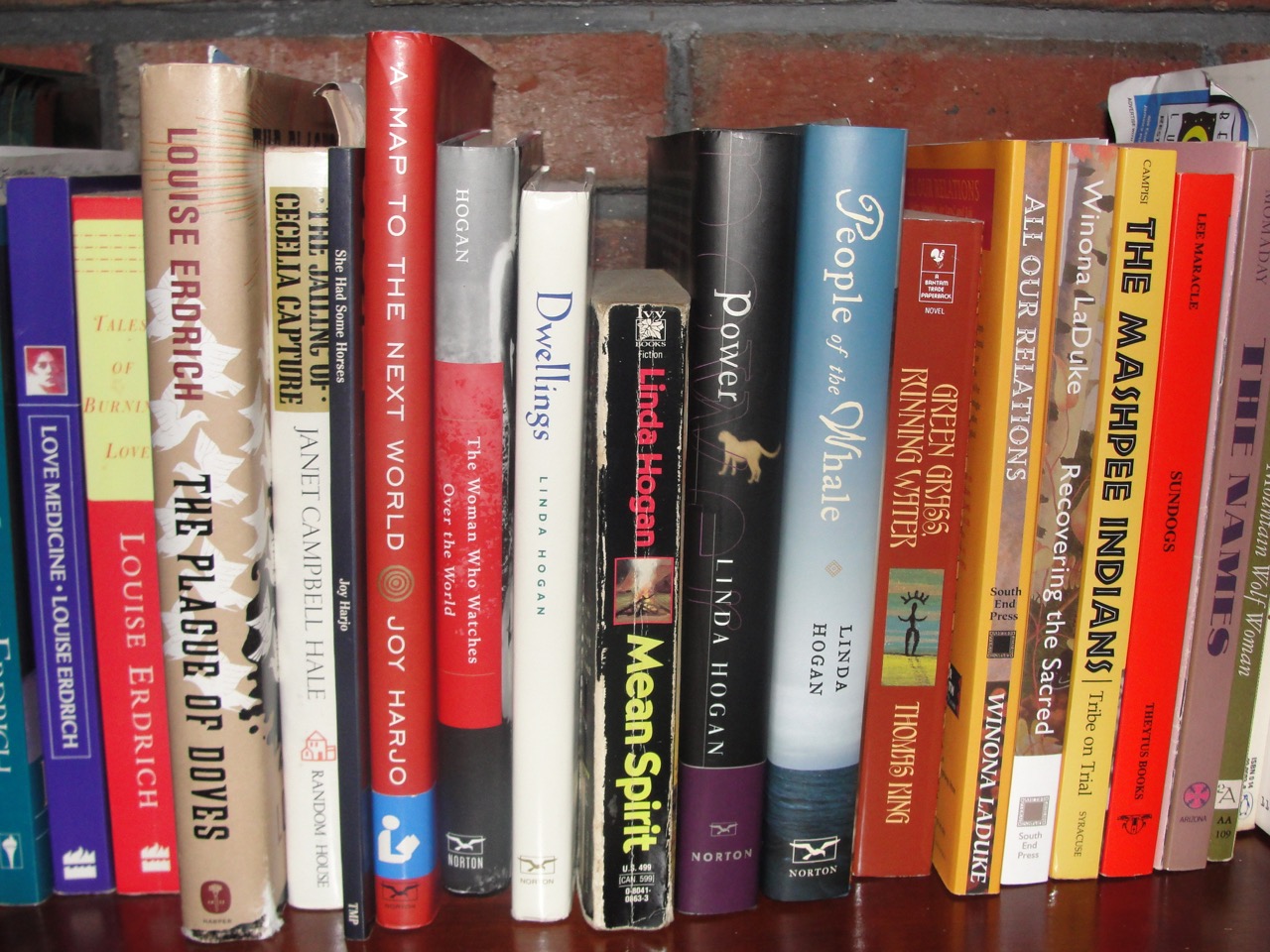 Even when there are no new houses to look at, there is plenty to keep me busy. Another side of searching for greener housing is getting ready for the move into a smaller place. This means paring down what we have collected over the years in a space that has abundant room for keeping things.
First stop: Books. I have shelves full of books that I have read and loved for many years. But I also have developed an allergy to any book that is more than a few years old. If I want to read one of my older books, I have to put on a mask and gloves, and even then I might get a headache from it. So perhaps now is a good time to let go of most of these old friends, and to pass them along to others who can enjoy them.
I had to take a deep breath when I thought about actually giving away my books. I decided to take pictures of the books on the shelf, because it makes me happy to see the titles there. And I still have to keep a few of my long-time, life-changing favorites. Even with a mask, I might need to read them again. I will also keep the books I am currently using in my work. In other words–I will still have a lot of books, just not as many as before.
I learned that our local independent bookstore, Longfellow Books, will take used books in trade for store credit. You can only bring in one bag or box at a time. My first grocery-size brown bag netted about $14 in store credit. It’s not a way to get rich, or even get very many new books. But it is a way to re-use and re-cycle and get a few new books, and support a great local institution.
I also did some research to see if prisons would accept book donations for their libraries–but I learned that certain ingenious addicts had figured out a way to import drugs into the prisons through book donations from their friends–so no more donations are accepted from individuals. But then, I heard about a Native group collecting books by Native authors to donate to the prison for the benefit of American Indian prisoners in Maine. I can’t imagine a better home for these particular treasures. I gathered two boxes that I will drop off.
I now know that the Portland Public Library will take book donations, and that Preble Street accepts donations of books and magazines for its center for homeless youth and adults.
There is a kind of joy in simplifying one’s life, in having fewer possessions to haul around. But it is an even deeper joy to think that someone else might be inspired through these books, by insights and stories that were so important to me on my journey.
Why find greener housing, anyway?
 We have to wean ourselves away from our dependence on fossil fuels. Think about petroleum. The industrial economy treats oil as a resource free for the taking, with a price based only on the cost of extraction and delivery. It shaped a world which became completely dependent on cheap oil. But we have passed the time when oil can be easily extracted, and now riskier and dirtier methods are required. Deep sea drilling like that which caused the spill in the Gulf of Mexico. Tar sands mining in Alberta Canada that destroys the forest, and devastates the health of the people and animals of the region. Arctic Sea drilling. Burning oil for fuel will increase greenhouse gasses and bring our climate closer to disastrous changes.
I know we have to stop burning oil. But when I look at my own life I see how big a challenge that will be. Our home is heated by oil. I drive a car than runs on gasoline made from oil, to buy food and other needed items, and also to go back and forth to the congregation I serve. It would take several hours to walk to these destinations from my house, and there is no public transportation nearby. The whole structure of suburban life is dependent upon oil. My congregation is a suburban congregation, and almost every person who comes to worship drives there in an automobile. Without oil, it is likely the church, and my house, would not have been built in these locations. The whole geographic structure of our society has been shaped by oil.
And not only that—many material goods in our lives are also fabricated from oil. Plastics are made from petroleum, and there is plastic in every room in our houses. I write on a computer with plastic components. Alarm clocks, toothbrushes, synthetic fabrics, telephones, televisions—all from oil. Modern agriculture is dependent on fertilizer made from oil, and machines that use oil, and a transportation system that uses oil. The asphalt on our roads is made from oil. If oil disappeared tomorrow, the whole system would collapse. And eventually, oil will run out. That is one of the realities we are learning in our time.
None of us have the ability to undo our dependence on oil individually. It is too entrenched, too societally enmeshed. But we can begin to imagine some partial solutions—in fact, the technology to live without oil already exists. I was inspired when I learned about “zero-carbon” houses that actually generate more energy than they use. We may not be able to fully achieve such a goal, but why not try to get closer to that ideal?
I know that even if we succeed beyond our wildest dream—even if we create a zero-carbon home from which we could walk to most functions of our lives, even if we could afford an electric vehicle that we charge from solar panels for other transportation—oil companies will still be breaking open the earth in Alberta, and spilling oil into the Gulf of Mexico. The children living near refineries will still be getting asthma. The ice of the arctic will still be melting, and thousands of species will go extinct each year. We need not only individual change, but a social will to transform our relationship to the earth. But I believe that each change we pursue as individuals also works its magic on that larger transformative process in ways that we can’t fully understand. And so we take the one step we are able to take.
In the Talmud it says, “Do not be daunted by the enormity of the world’s grief. Do justly, now. Love mercy, now. Walk humbly, now. You are not obligated to complete the work, but neither are you free to abandon it.”
Prayers at Dawn for our Housing Search
I wake today about 5 a.m. and feel called to come outside to pray in the dawn light. It rained during the night and the morning is misty and golden. I am visited by a cardinal, whose silhouette on a branch is dark against the eastern sky. I hear it chirping as another cardinal a bit further away trills their evocative songs. I am visited by a tiny toad or frog (I am not sure which), who moves quietly along the edge of the screen tent where I am sitting. I am visited by a golden slug my old teacher of slowness. A pileated woodpecker pounds away on some dead branches looking for breakfast. I hear the familiar songs of many tiny birds as they wake the sun, which is starting to appear through the branches of the spruce. Later, in the light, the chipmunks and squirrels dash about.
I feel so grateful for this place of trees and birds and critters. In our search for greener housing, I pray that we can find a home where I am called outside in the morning by the songs of cardinals, where Margy can find frogs and toads where they hide in the damp. I pray for this journey we are walking, hoping to move closer into harmony with all beings. I call on the magic of the dawn and the magic of all these beings to help us find our way. And, I open my heart to change, to what is hidden and cannot yet be seen.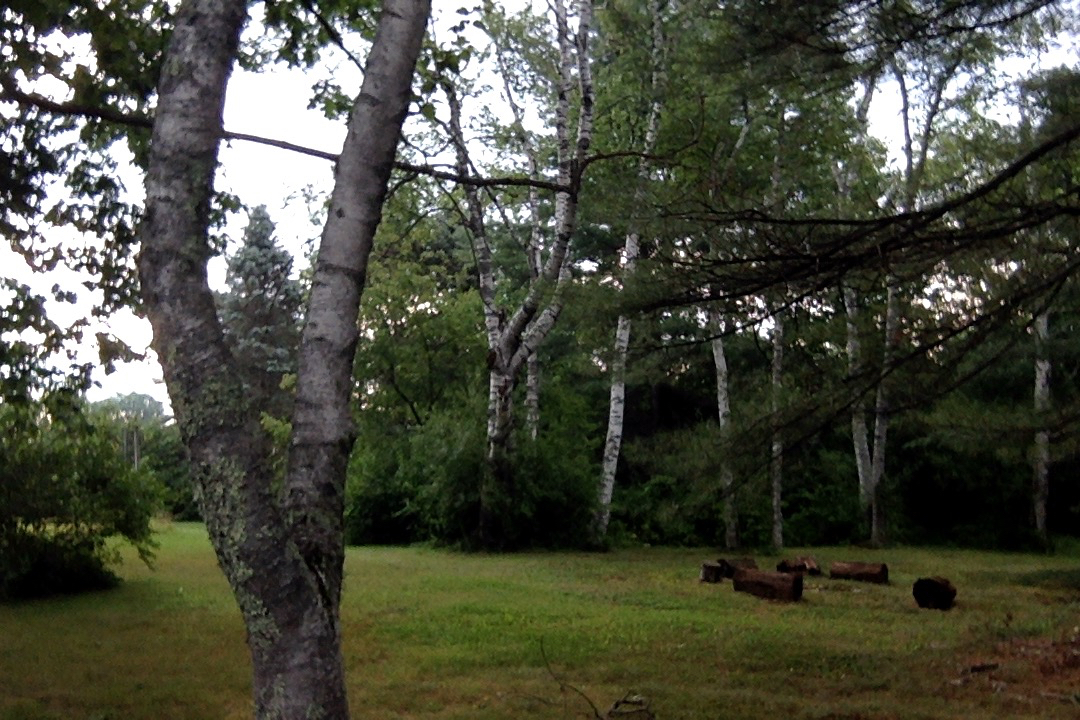
 Finding Our Way Home