 On March 11 and 25th, Margy and I hosted two sessions of an “Intro to Permaculture Design” course, through the Resilience Hub in Portland. Two trainers, Julie and Heather, along with about 7 others came to our house for two Saturdays, for presentation and conversation about Permaculture Design Principles. Our being the hosts meant that we used our land as the practice site for exploring the principles and how one might put them into practice. Despite the bitter cold one day, and deep snow the next time, we went outside for part of the time and wandered around the yard checking out things like the patterns found in nature, the movement of water and wind and wildlife, the path of the sun.
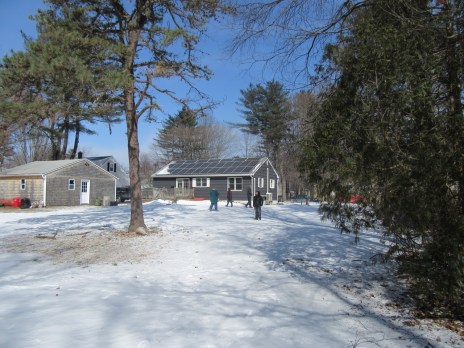 One of the first aspects of Permaculture Design is observation, and so Margy and I have spent the first year of our residence here mostly in observation–trying to learn everything we can about the land, before we begin gardening. Having another group of eyes was marvelous!
I had participated in a full Permaculture Design Course six years ago, so the ideas were not new to me, but I have noticed that each time I hear them again, they sink a little deeper, and I gain more understanding. Permaculture is a design process, looking at the hopes and visions of the human inhabitants in conversation with the needs and conditions of the land itself. What I am finally beginning to better understand, however, are how the fundamental teachings of Nature might influence our own hopes and visions.
The week after the course, I finally read cover-to-cover Gaia’s Garden, by Toby Hemenway. Permaculture, at its heart, is about working with Nature, using the principles found in Nature, to create beautiful abundant gardens that can provide food as well as building up the soil, offering habitat to beneficial insects and birds, and creating backyard ecosystems by “assembling communities of plants that can work cooperatively.”
The part that is most exciting to me right now is moving away from the common practice of having separate garden beds for vegetables in one place, fruit trees in another place, etc., and moving into the vision that these functions can be interwoven–that a fruit tree can be the central element in a group of plants working together, with a few veggies tucked in, and herbs, and flowers, all in one mini-ecosystem. And that this kind of garden might be built one mini-ecosytem at a time. Cherries, anyone?


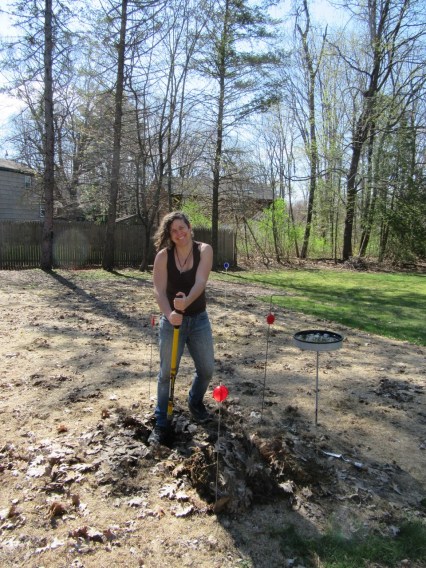
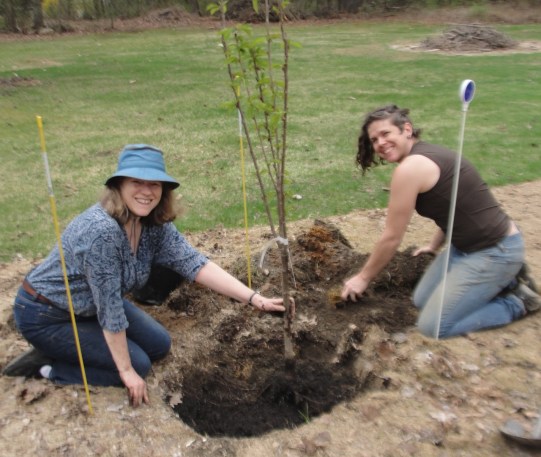
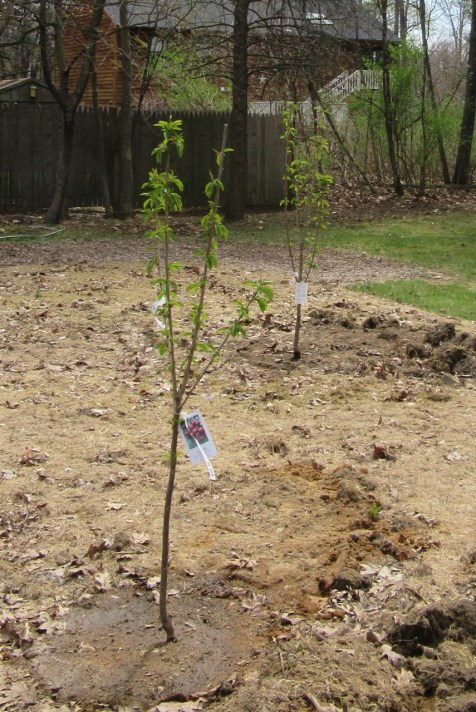

 Some of the plants and their functions:
 On Friday the 21st, Margy, our friend Mihku, and I went to Broadway Gardens and picked out two sweet cherry trees. Mihku is a master gardener and her help was invaluable–in fact, the sales person suggested she should have a job sitting with their trees and telling people about them.
 Today a plumber installed a new outdoor spigot at our house. The old one was buried behind the steps to the deck, close to the driveway, and not at all handy for future garden watering. This one is on the other side of the deck, close to where we are imaging planting fruit trees and other food crops. It makes me happy to see it there, all ready to use.
 Finding Our Way Home