Fighting with Squirrels (and Chipmunks)

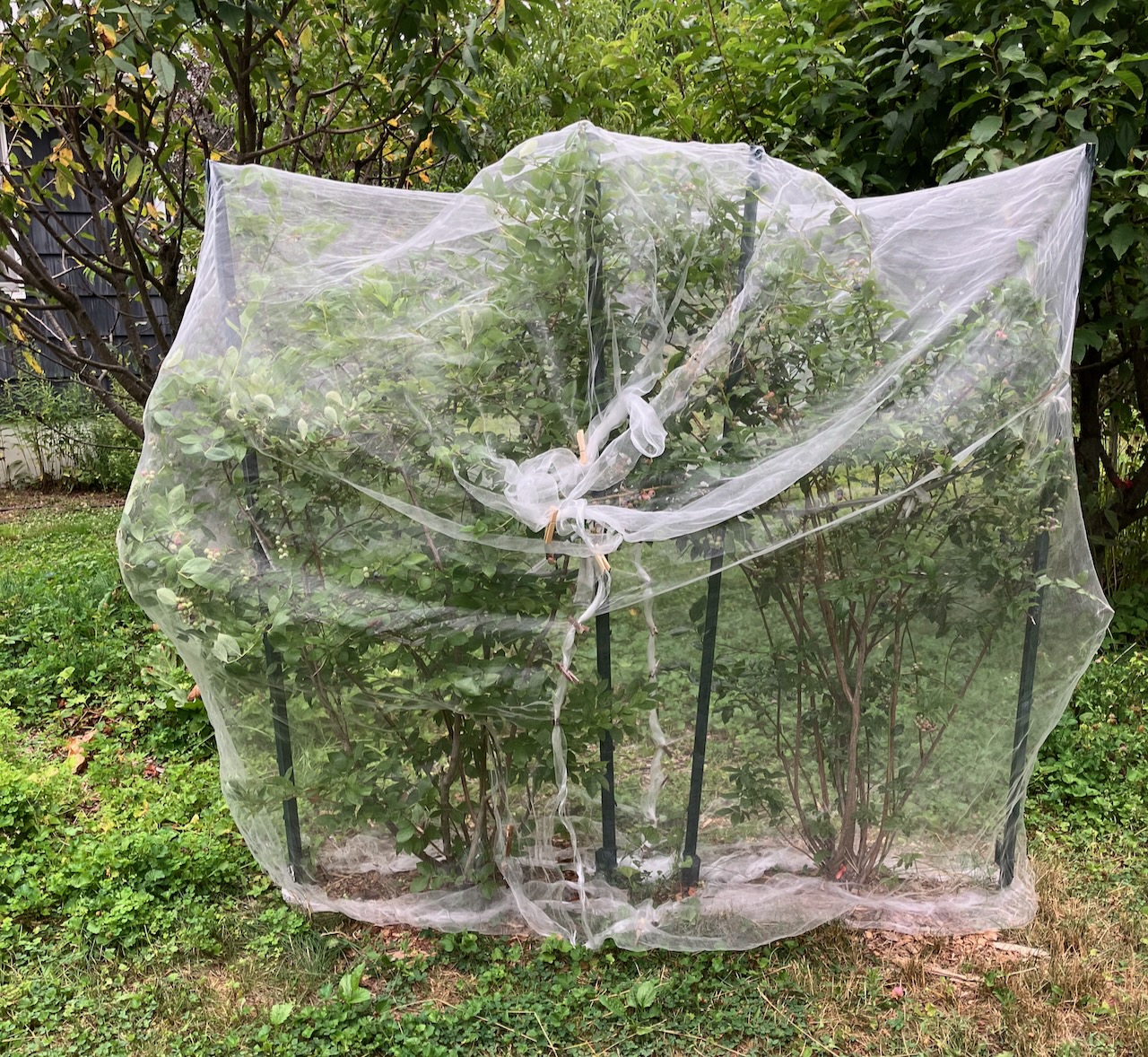
White netting draped over two blueberry bushes, using fence stakes

The intent of our permaculture gardening is to create a mutually beneficial relationship with the earth and all her creatures. But lately, it feels like a little backyard battle. The squirrels have literally eaten all of the green peaches off our peach tree. (Last year there seemed to be enough for all of us.) They have been also eating raspberries, hazelnuts (still green) and mulberries, but I sort of gave up on all of those. I have tried to protect these two blueberry bushes by covering them with netting, garden-stapled down, and using clothes pins to close the side opening. I have actually harvested some blueberries. But the last couple days, they’ve pushed their way through holes they make in the netting. When I see them, I run out yelling and clapping, and they dart around the edges to find their way out and run away.

To be fair, there is another variable this summer. I stopped filling the bird feeder some weeks back because the chipmunks would immediately climb up, fill their cheeks, climb down, and transport the seed to their underground lairs; and then repeat until all the seed was gone. The squirrels also took a fair amount. I wonder if the sunflower seeds were the tribute I had been paying to our little neighbors that ensured that they’d save us a few peaches? But yesterday, perhaps I upped the ante, because I installed a baffle on the feeder, and coated the pole with coconut oil. I really do want to feed the birds, not all the greedy chipmunks and squirrels. So here is the new set-up, (the bush is at least five feet away–I pruned it to make sure):

Green metal bird feeder with clear plastic baffle a few inches down, in front of a green bush background.

Margy and I have a little side bet going as to when they might be able to breach these new security measures. It has been up for twenty-four hours so far. No squirrels, chipmunks so far. But the birds haven’t come back yet either. The next few days will tell. And in case it isn’t easy to see, the original bird-feeder is also “squirrel-proof,” with a weight dependent bar that drops down to close the seed opening. But they figured that out long ago. They are so smart, and acrobatic. In many ways I love them. But I don’t love that they take all the fruit in our garden.

Anyway, I just needed to write about this other side of gardening. I am so impressed by the work farmers do! If we relied only on our own gardening skills, we would go hungry. But perhaps this is one of the lessons I am learning about how to be in a mutually beneficial relationship with the earth, and during climate warming too. We are all under a lot of stress, trying to survive. We don’t have complete systems in place, we don’t have our own ancestral knowledge, we are trying to recover from great imbalance. So we keep showing up, keep going outside, keep being grateful for the gifts of the earth.

And these days, I can’t write about anything food-related without also expressing rage at the intentional starvation of the Palestinians in Gaza by the state of Israel. They destroyed their farms and gardens, and destroyed access to water, and access to help from outside. How many more people will die before the world powers stop this genocide?

First Harvest & Human Rights

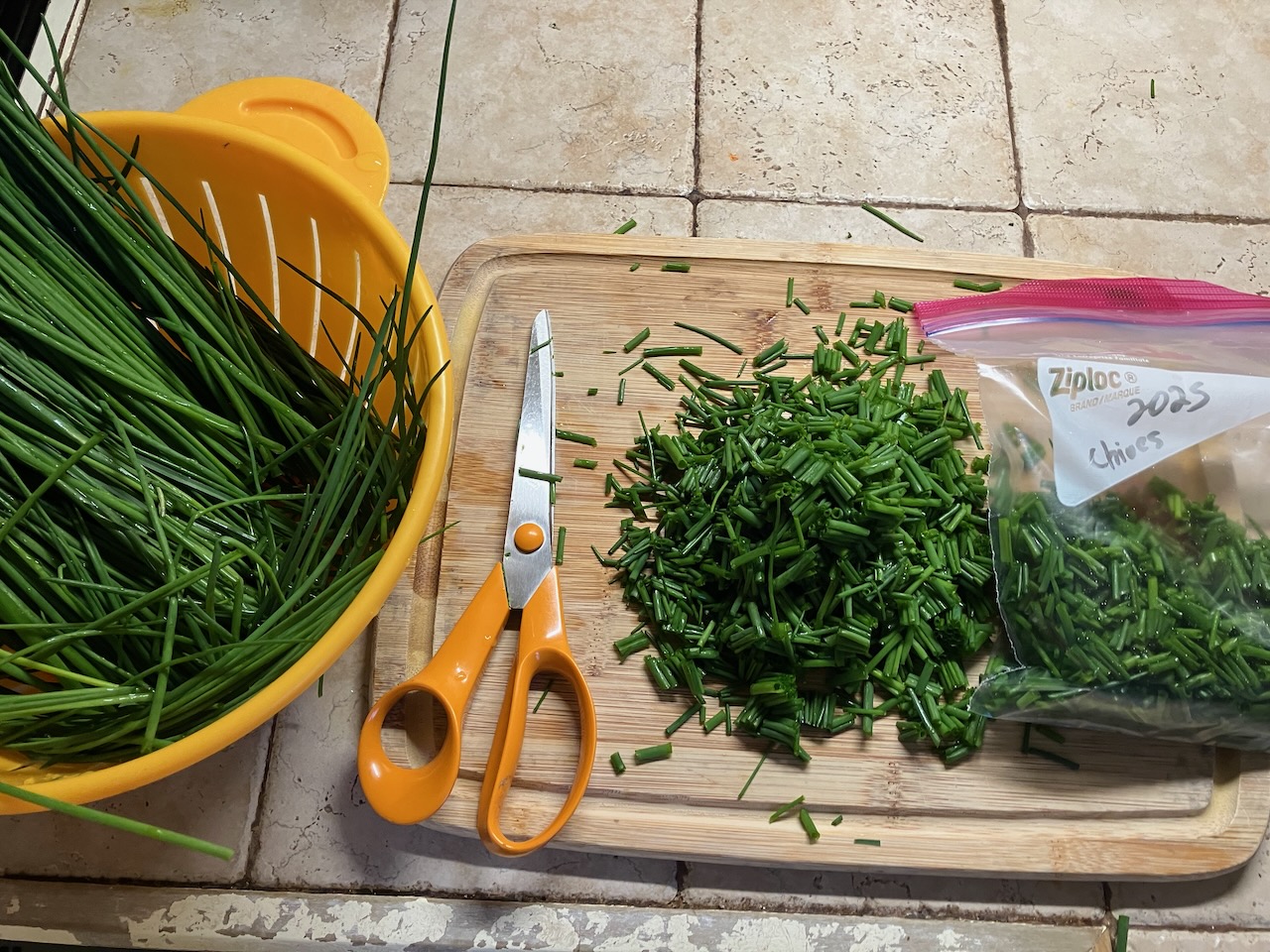
chives, in orange colander, scissors on cutting board, cut up chives and plastic labeled bag for cut chives

Today I harvested chives! The first harvest of the 2025 season. I cut them up in small pieces with a scissors and then freezed to use anytime. Today I also want to speak up for human rights! Continuing from the first seven articles of the Universal Declaration of Human Rights in my last post, I want to write out the next articles here. Over 75 years in existence, I weep that so many of these rights are not upheld in our world today.

Article 8: Everyone has the right to an effective remedy by the competent national tribunals for acts violating the fundamental rights granted him by the constitution or by law. [Note: I am using the original language, the pronouns of which, at that time, while “masculine”, were understood to refer to every person.]

Article 9: No one shall be subjected to arbitrary arrest, detention, or exile.

Article 10: Everyone is entitled in full equality to a fair and public hearing by an independent and impartial tribunal, in the determination of his rights and obligations and of any criminal charge against him.

Article 11: (1) Everyone charged with a penal offense has the right to be presumed innocent until proven guilty according to the law in a public trial at which he has had all the guarantees necessary for his defense. (2) No one shall be held guilty of any penal offense on account of any act or omission which did not constitute a penal offense, under national or international law, at the time when it was committed. Nor shall a heavier penalty be imposed than the one that was applicable at the time the penal offense was committed.

I can’t help but think of the 238 Venezuelan men detained and transported to the prison in El Salvador, with no trials, no hearings, and definitely not presumed innocent until proven guilty. I don’t usually do lengthy blog posts, but today I want to say their names. They are human beings with human rights.

The names of Venezuelans deported to El Salvador per CBS News. [Plus there is Kilmar Abrego Garcia, a Salvadoran living in the U.S. for 14 years, who was sent “by error.”]

Agelviz Sanguino, Widmer Josneyder

Aguilar Rodriguez, Nolberto Rafael

Aguilera Aguero, Gustavo Adolfo

Albornoz-Quintero, Henrry

Alvarado Borges, Neri

Angulo-Aparicio, Jinder

Aray-Cardona, Jose

Arregoces Rincon, Jose

Azuaje Perez, Nixon Jose

Barreto Villegas, Rolando

Bastidas Venegas, Jose

Basulto-Salinas, Marcos

Batista-Arias, Elvis

Belloso Fuenmayor, Alirio

Benavides Rivas, Yornel Santiago

Blanco-Bonilla, Andry

Blanco-Marin, Angel

Bolivar Cruz, Angel

Bracho Gomez, Victor

Brazon-Lezama, Javiar

Briceno-Gonzalez, Jose

Briceno-Gonzalez, Jean

Bustamante-Dominguez, Robert

Cabrera-Rico, David

Canizalez Arteaga, Carlos

Caraballo Tiapa, Franco

Cardenas-Silva, Johan

Carmona Bastista, Yorbi

Carmona Hernandez, Jose

Cedeno Contreras, Bruce Embelgert

Cedeno-Gil, Andrys

Chacin Gomez, Jhon

Chirinos Romero, Wild

Chivico Medina, Carlos

Colina Arguelles, Rosme

Colina Caseres, Miguel

Colina-Suarez, Alejandro

Colmenares Solorzano, Leonardo Jose

Colmenarez Abreu, Aldo

Contreras-Gonzalez, Yordano

Cornejo Pulgar, Frizgeralth De Jesus

Corrales-Moreno, Emilio

Davila Fernanadez, Luis

Delgado Pina, Aldrin

Depablos Requena, Jheison

Diaz-Lugo, Kleiver

Duarte Rodriguez, Richard

Duran Perez, Joseph Gregory

Echavez-Paz, Leonel

Elista-Jimenez, Robert

Escalona Carrizo, Yender

Escalona Sevilla, Angelo

Escobar Blanco, Pedro

Escobar Falcon, Yolfran

Fernandez Sanchez, Julio Rafael

Fernandez, Yohan

Fernandez-Subero, Mikael

Flores Jimenez, Wilken Rafael

Flores Rodriguez, Jose

Flores-Lopez, Jose

Fonseca Daboin, Cristhofer

Fuenmayor-Crespo, Roneil

Garcia Casique, Francisco

Garcia Prado, Leonardo

Giron Maurera, Richard

Gonzalez Troconis, Julio

Gonzalez Frailan, Jose Leon

Gonzalez Fuenmayor, Angel Jesus

Gonzalez Pineda, Oscar

Gonzalez-Rodriguez, Charlie

Graterol-Farias, Winder

Gualdron Gualdron, Luis

Gualtero Quiroz, Deibin

Guerrero Padron, Keivy

Guevara Munoz, Wilvenson

Guiterrez-Sierra, Wilker

Gutierrez Flores, Merwil

Hernandez Carache, Yeison

Hernandez Carache, Darwin Gerardo

Hernandez Herrera, Edwuar Jose

Hernandez-Hernandez, Jhonnael

Hernandez Gonzalez, Manuel

Hernandez Hernandez, Angel

Hernandez Juarez, Yorby

Hernandez Romero, Andry

Hueck Escobar, Jesus

Hung Mendoza, Jordan

Hurtado Quevedo, Eddie Adolfo

Indriago-Alvarez, Donovan

Izaguirre-Granado, Randy

Jaimes-Rincon, Yeison

Jerez-Hernandez, Yohendry

Justo Garcia, Jose

Laya-Freites, Jefferson

Leal-Bautista, Keiber

Leal-Estrada, Kervin

Lemus Cagua, Diego

Lizcano-Basto, Josue

Lopez Bolivar, Jose

Lopez Lizano, Maikol

Lopez-Rodriguez, Geomar

Lozada Sanchez, Wuilliam

Lozano-Camargo, Daniel

Lugo Zavala, Johendry

Lugo-Acosta, Yermain

Machado Martinez, Onaiker

Machado-Rodriguez, Jose

Manrique, Edson

Manzo Lovera, Lainerke

Marcano Silva, Luis

Marea-Medina, Ronald

Marin Zambrano, Jhonervi Josue

Marquez Pena, Jose

Marrufo Hernandez, Uriel David

Martinez Vargas, Kerbin

Martinez Vegas, Rafael

Martinez-Borrego, Tito

Martinez-Gonzalez, Yohangel

Mata Fornerino, Wilfredo Jose

Mata-Ribeiro, Yoswaldo

Mathie Zavala, Hotsman Ricardo

Medina-Martinez, Alexis

Melendez Rojas, Edwin

Mendez Boyer, Alex

Mendez Mejias, Angel

Mendez-Gomez, Luis

Mendoz Nunez, Carlos

Mendoza Ortiz, Maikol Solier

Mendoza Pina, Jean Claude

Mendoza Ramirez, Jonathan

Mogollon Herrera, Henry

Molina-Acevedo, Roger

Montero Espinoza, Ervinson

Montilla-Rivas, Jose

Mora-Balzan, Jose

Morales-Rolon, Andres

Moreno-Camacho, Cristopher

Moreno-Ramirez, Maikel

Morillo-Pina, Luis

Moron Cabrera, Yuber

Munoz Pinto, Luis

Navas Vizcaya, Ali

Navas-Diaz, Obed

Nieto Contreras, Kevin

Nunez-Falcon, Luis

Olivera Rojas, Maikel

Orta-Campos, Junior

Ortega Garcia, Felix

Otero Valestrines, Luis

Palacios-Rebolledo, Leoner

Palencia-Benavides, Brayan

Parra Urbina, Eduard

Paz-Gonzalez, Daniel

Pena Mendez, Jose Antonio

Penaloza Chirinos, Ysqueibel Yonaiquer

Perez Perez, Cristian

Perez-Llovera, Juan

Perfecto La Rosa, Moises

Perozo-Colina, Carlos

Perozo-Palencia, Andy

Petit Findlay, Andersson Steven

Petterson Torres, Christean

Pineda Lezama, Jesus

Pinto Velasquez, Cristhian

Plaza-Carmona, Jonathan

Primoschitz Gonzalez, Albert

Querales Martinez, Anderson Jose

Quintero Chacon, Edicson

Ramirez Ramirez, Jonathan Miguel

Ramos Bastidas, Jose

Ramos Ramos, Juan Jose

Reyes Barrios, Jerce Egbunik

Reyes Mota, Frengel

Reyes Ollarvides, Ronald

Reyes-Villegas, Arlinzon

Rincon Bohorquez, Omar

Rincon-Rincon, Ringo

Rios Andrade, Jesus

Rivera Gonzalez, Luis

Rivero-Coroy, Jean

Rodriguez, Edwin

Rodriguez Goyo, Alejandro

Rodriguez Lugo, Luis Gustavo

Rodriguez Parra, Alber

Rodriguez Rojas, Kenlyn

Rodriguez-Da Silva, Fernando

Rojas, Deibys

Rojas-Mendoza, Miguel

Romero Chirinos, Ildemar Jesus

Romero Rivas, Erick

Roos Ortega, Jesus

Rosal-Gelvez, Hector

Rubio-Petrola, Jose

Saavedra-Caruci, Robinson

Salazar-Cuervo, Pedro Luis

Sanchez Bigott, Yorbis

Sanchez Paredes, Idenis

Sanchez-Arteaga, Fernando

Sanchez-Bermudez, Marco

Santiago Ascanio, Ronald

Sarabia Gonzalez, Anyelo

Semeco Revilla, Darwin Xavier

Sierra Cano, Anyelo

Silva Casares, Jason Alfredo

Silva Freites, Carlos Julio

Silva-Ramirez, Aaron

Soto Manzana, Omar

Suarez-Fuentes, Joen

Suarez-Nunez, Luis

Suarez-Salas, Nery

Suarez-Trejo, Arturo

Tapia Colina, Jesus

Teran Aguilar, Carlos

Testa Leon, Orlando Jesus

Toro Noguera, Yonel

Torrealba Torrealba, Yonathan

Torres Archila, Amber

Torres Herrera, Euder Jose

Torres-Polanco, Carlos

Tortosa Guedez, Jorge

Tovar-Marcano, Cesar

Travieso Gonzalez, Kleiver

Troconis Gonzalez, Yhon Deivis

Uzcategui Vielma, Carlos

Vaamondes Barrios, Miguel

Vargas Lugo, Henry

Vazquez Morillo, Nicola

Vega Sandia, Wilmer

Vera Villamizar, Wladimir

Villa-Montano, Enson

Villafranca Rincones, Carlos Eduardo

Villegas-Frites, Ilels

Yamarte-Fernandez, Mervin

Yanez-Arangure, Luis

Zabaleta-Morillo, Keiber

Zambrano Perez, Julio

Zambrano Torrealba, Gabriel

Zarraga Rosales, Jorge
Halloween Frost

Frost on flower

Today is Halloween, that wild holiday of ghosts and ancestors and gifts of sweets. Some say the veil between the worlds is thin during these days. Celtic Samhain, Mexican Dia de Muertos. The day midway between autumn equinox and winter solstice. This morning I woke to our first frost of the season. It is later than usual for Maine, but also earlier this week than I had expected. Still, it drew me out to walk in the dawn’s first light.

I harvested the last of the (now frozen) raspberries. We often don’t get any in the fall because they don’t get enough sun to ripen before the frosts. So we’ve been grateful for several little bonus treats over the last few weeks. I also cut some (frozen) chives, and quickly chopped them up small and put back into a frozen state for use during the winter.

On October 16th, I had dug up the licorice plant, to harvest the roots–they make my favorite herbal remedy–such an energy boost iced as tea with lemon in the summer garden work. I cut off several large roots near the main plant, and all the long extension roots to new plants. After that, I replanted the original plant, and mulched with wood chips all around. Then, and I haven’t yet finished, I wash them with a scrub brush, and cut into small pieces to dry in the herb dryer. It takes quite a bit of my energy, so I can only do small batches at a time. Here is the latest:

licorice root as dug
licorice root washed and cut

So the end of the harvesting is in sight. No more zucchini. Still more kale–that keeps going after the frost. Still some carrots in the front yard beds. Leaves are still falling. Margy did some final mowing and some not-final raking. Much of our back lawn is moss mixed with wild strawberry, clover, grass, and weeds. We love the moss. On more mechanical themes, our garage door was fixed today! (It has been broken since the end of September.) We’ve also had a broken clothes dryer. Appointment scheduled for Friday. I guess these are part of our preparations for winter.

But today, mostly I think about the ancestors, those I loved who have died, and those I never knew who are the roots in my family tree. I had a new thought about my mom’s father, whom we called “Papa.” He was born “Johann” in Austria in 1884, but was “John” in the United States. He left his country with a few friends, who all worked as waiters to pay their way traveling across France, England, Canada, and finally Detroit, Michigan. None of his family of origin were on this side of the Atlantic. He remained friends with those men to the end of his life. He died when I was a young teen, so I don’t have too many memories except of a very quiet, very short man. Even though he lived with our family for a while. But when I look at my own life, I too left the place of my family, and bonded with friends who have been like another family in my life. So maybe we have that in common.

Really, there is so much we don’t know about the lives of our ancestors. All we can do is wonder. During this past year, since last Halloween, my friend Estelle joined the company of the ancestors. She was a true spirit sister. So I honor her today along with those others in my life whom I loved, and who loved me. In that, I have much for which to be thankful.

First harvests

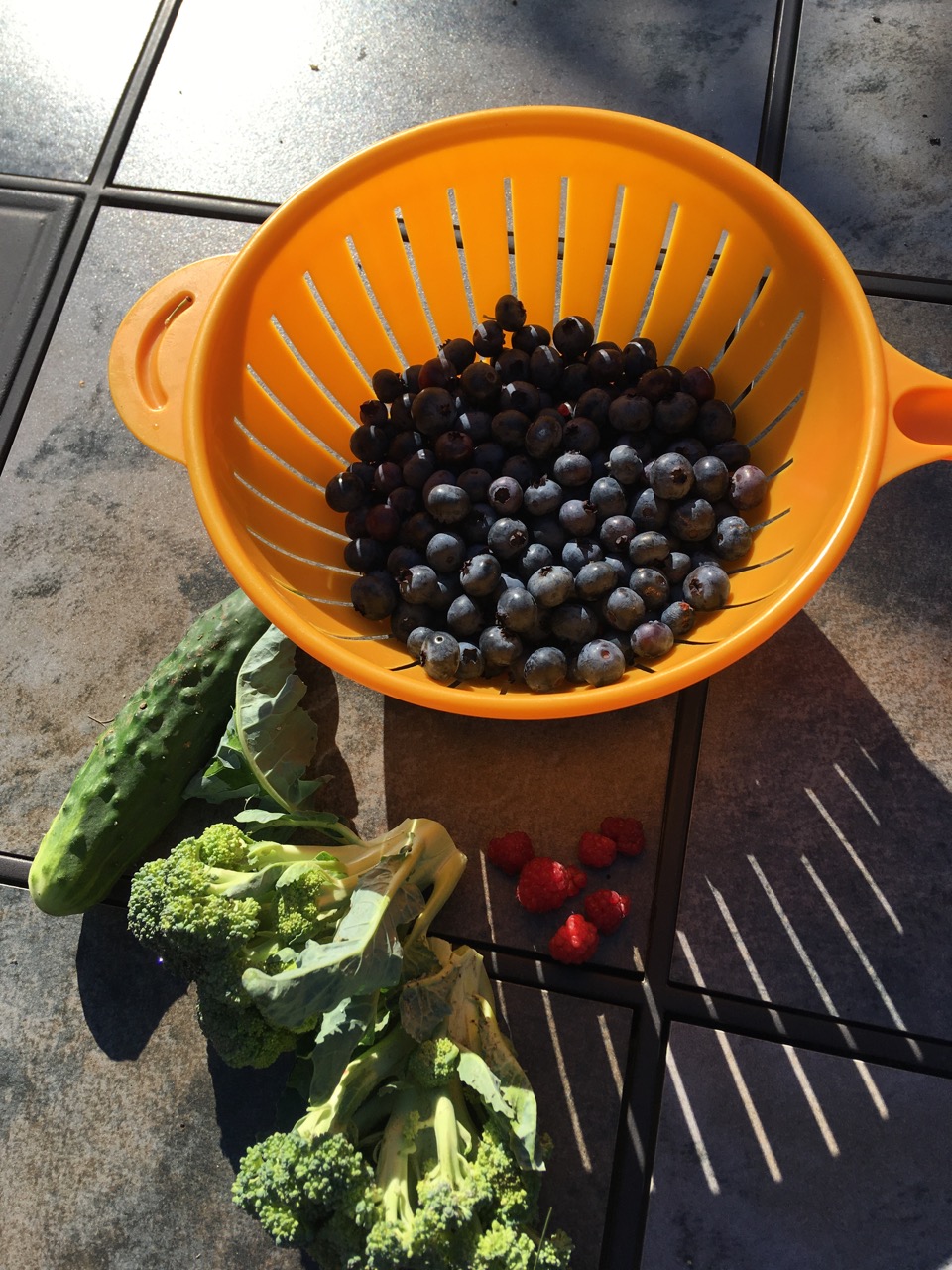
Orange slotted container with blueberries half full, and small cucumber, cut broccoli and a few raspberries.
Blueberries, cucumber & broccoli

In the excitement of the fledgling robins, I didn’t post about our Lammas harvest. The photo is of our fruit and veggie harvest of August 1st. It has been a great year for blueberries! We have also harvested some kale–there is more that wants to be cut today– some zucchini, some raspberries, and more cucumbers. Lammas is the first harvest festival of the season, and I am grateful and amazed that despite all our limitations, we actually receive food from this land.

We can’t control anything about this land. We can’t control what plants will thrive each season–no cherries or peaches this year, for example. But in partnership with the land, in our belonging to the land, these moments of yield emerge. So grateful!

Pond Flowers and more

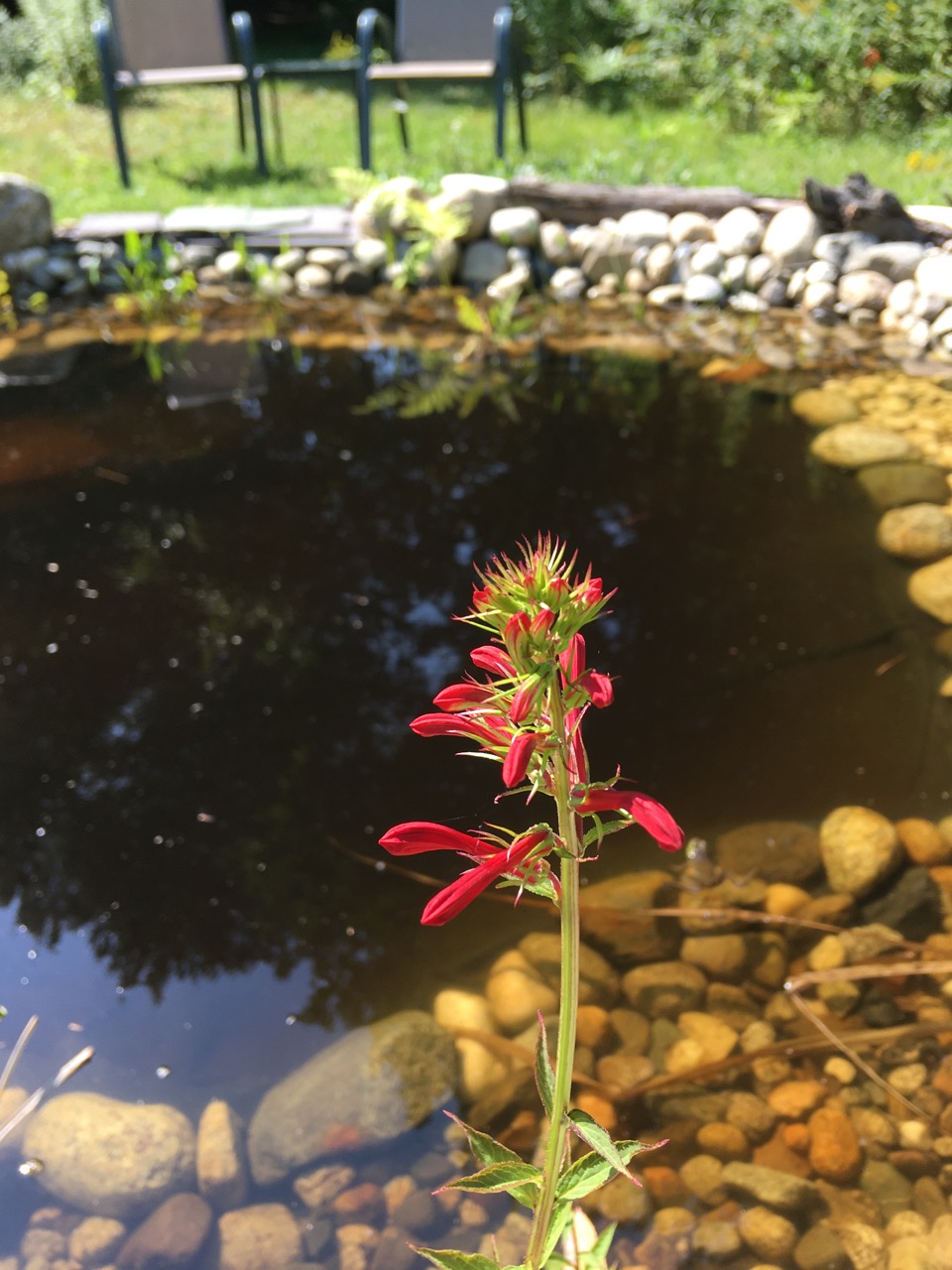
The cardinal flower is starting to bloom, bright red against the dark of the water.

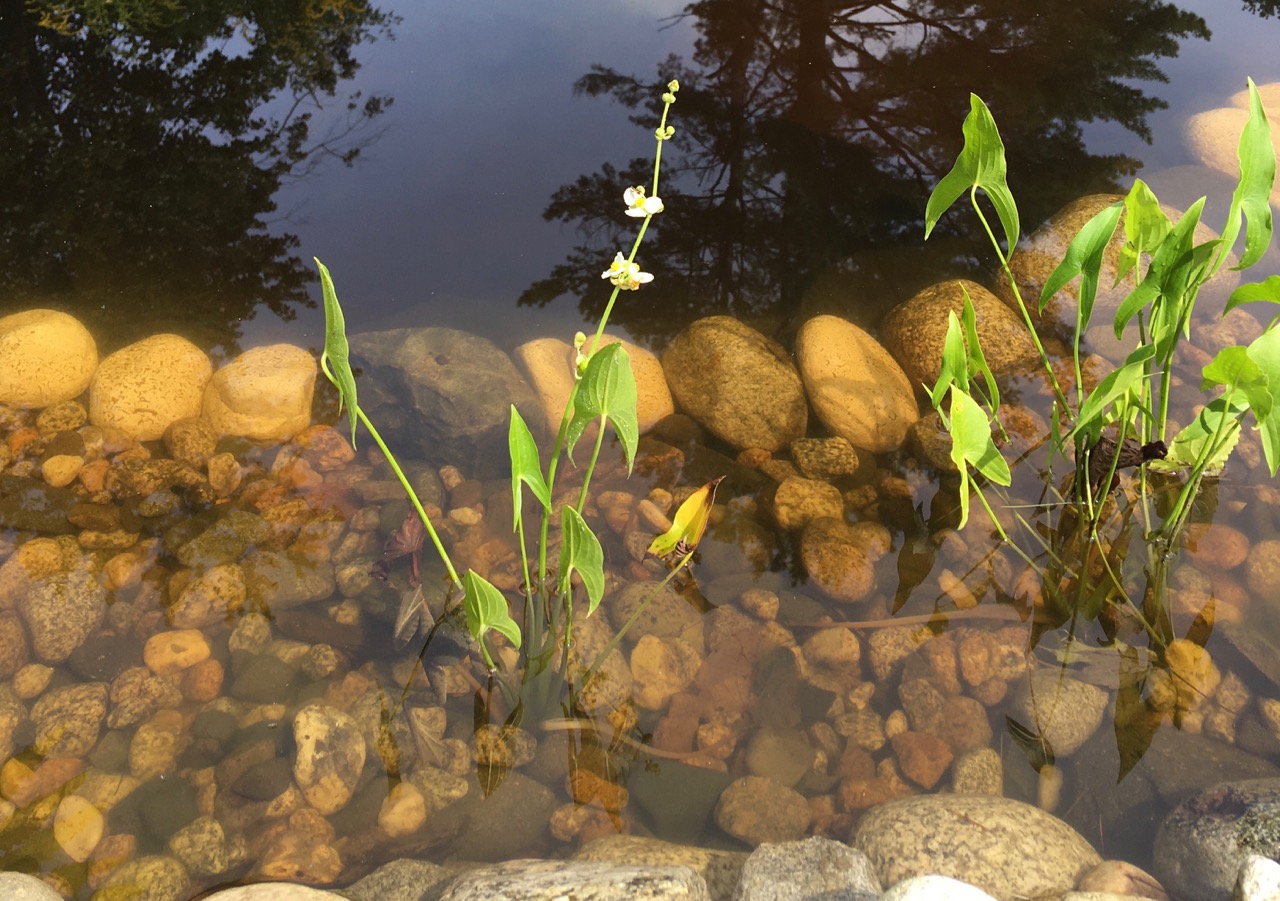
Two of the pond plants are starting to flower: the cardinal flower, and the arrowhead plant. The cardinal flower is supposed to be a favorite for hummingbirds. I hope they find it. The frogs continue to bring delight by their patient sitting poses, or quick jumping into the depths when startled. One day I counted a total of 13 frogs–usually I can find 3 big ones, and from 5 to 10 small ones, depending on the day and time of day. My little Zoom camera stopped working, so I am using the iPhone camera, which doesn’t work well for close-ups. But check out the flowers on the arrowhead plant. And, can you find the hidden frog in this photo?

Arrowhead plant with tiny white and yellow flowers.

If you are still looking for the frog, here is a clue: her eyes and head are hidden by green plant leaves, and only her legs and body are barely visible against the stones. At first I thought her legs were dead plant leaves. With all of the pain and sorrow in the world, these simple beauties bring nurture to my spirit.

Margy and I were delighted to be part of the Resilience Hub‘s Permaculture Open House last Saturday, and welcomed about a dozen people to our yard to share the highs and lows of permaculture gardening. Including, of course, sitting by the pond and talking about pond building. Everyone was careful about our COVID protocols, and we met some really great people.

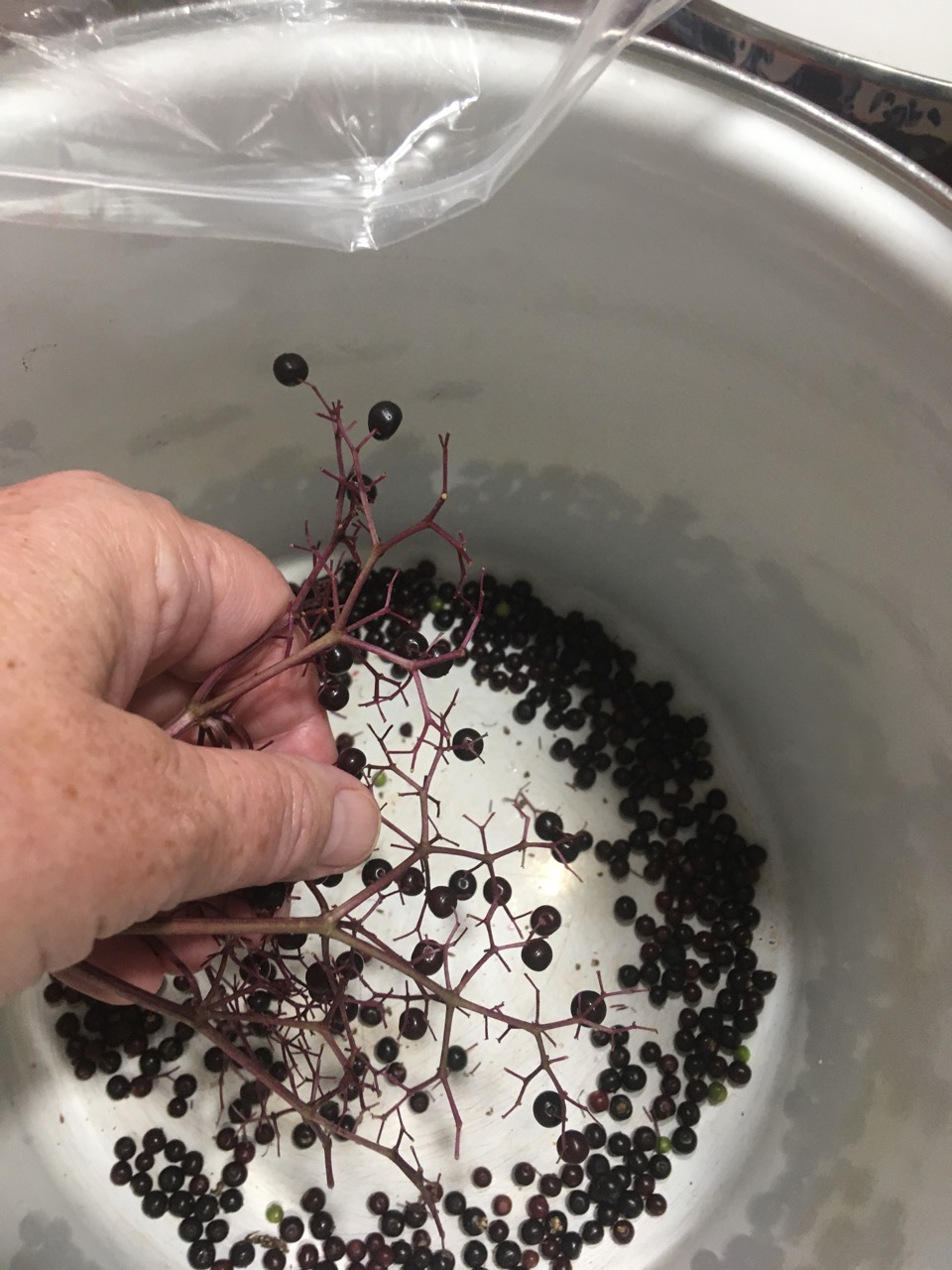
Since then we have harvested our elderberries–Margy cut the berry clusters one evening, and then the next morning I read online that they should be processed or frozen within twelve hours. So my morning was spent gently separating the berries from of their clusters, rinsing them in a big pot, and then freezing them until I had time to make elderberry syrup. This was our first harvest from the bush, which grew huge this season.

Elderberry clusters in a brown bag
Separating the berries from the cluster branches.

My other big harvesting job this week has been processing more kale. Because of the netting I put over the raised bed, I am cutting the lower leaves of all the plants at once, rather than bit by bit as I have done in prior years. I put them into this blue plastic bushel basket. Then, one by one, I cut them up, rinse a batch in a salad spinner, and then sauté them batch by batch before freezing in quart freezer bags. I’ve only finished about half this bunch–and there will of course be more to harvest later.

A huge plastic bushel basket filled with kale, on the floor next to the stove.

Finally, I will say that our zucchini harvests have been just the right amount so far for us to be eating as we go, but our cucumbers are going wild! We don’t pickle them, but just eat them raw–if you live nearby, please come and get some from us! They are really delicious, but we’ll never keep up. The photo below is only some of them!

Cucumbers and zucchini in a wooden bowl.

Still, Abundance

Zucchini plants tied to stakes and pruned

After grieving for the lost peaches, I wanted to remember that many other harvests are doing abundantly well. I am trying a new method with my zucchini plants: tie the stems to stakes, and prune the leaves below the active flowers and fruits. So yesterday, I pruned out many lower leaves, and finally tried the staking idea–the zucchinis seem to grow with a mind of their own, rather than with anything like straight stems, but I was able to do a bit of it. The method is supposed to reduce powdery mildew and maybe other issues. As I write, I am trying out a recipe for zucchini/cheddar/chive bread. Our zucchinis have been abundant.

Raised bed with kale and carrots, under a staked and supported netting.

After putting a netting over the raised bed when the ground hog came by, we haven’t seen her again. The kale is doing fine–since it takes a bit of work to undo the netting, I have only harvested in big batches. I’ve sauteed some batches to freeze. There is more in the fridge waiting for me to do another batch.

Cucumber plant on the hugelkultur mound, with wood chip paths on every side.

We’ve already harvested several cucumbers from this lovely set of vines growing on the south end of the hugelkultur mound. We have just been eating them raw–so much sweeter than the ones we can buy at the store. And a few weeks ago, I put down cardboard and old grocery bags to lay out paths all around the mound, and from the garage door to the patio and the paths, then covered them with a thick layer of wood chips. These wood chips were from the invasive Norway maples we took down earlier.

The raspberries are finished bearing fruit. Finally, I just want to mention the chives, parsley, thyme and oregano, which continue to yield throughout the summer. I truly am grateful for these gifts from the plant world, that bring us such tasty and healthy food.

Early Harvesting

Photo: two cherries and a bowl of raspberries

Well, after all my efforts with the sweet cherry trees, I harvested a total of three cherries. Very sad. That is all for the season. I had given them foliar sprays, compost and seaweed on the ground, and companion plants. I sprayed them with kaolin clay to guard against pests, put out yellow sticky paper for black cherry aphids, and hung about 50 red wooden fake cherries to deter birds coming round. I watered them when we were having this drought. We didn’t start out with a lot of blossoms, and I think there were only 10-20 cherries that started forming this season–not very many. But by the time they ripened, I could only find three. I ate one, and the other two are in the photo next to the raspberries.

The raspberries, on the other hand, I do hardly anything for–I pruned out the old canes in the fall, and they got a couple foliar sprays when there was some left from the trees. I watered them a couple times during the drought. But now they are producing abundant berries, and this harvest was just the one day’s worth. So frustrating. Especially since I like cherries more than raspberries. I’ve grown raspberries before, but cherries are still new. I do not seem to know the secret. If anyone can tell me, please comment!

I also harvested a big bunch of kale today. After the groundhog sighting, I covered that raised bed with netting and stakes. And a good thing I did! The next day, I caught sight of the groundhog standing up against the framing looking through the netting at the kale. I chased him off, and I haven’t seen him the last few days. I’ve also put urine liquid around the area. So far it seems to be working.

Today, I took off the netting, harvested a bunch of the lower leaves of the kale, did a bit of weeding, and finished thinning the carrots that are also growing there. With kale, I will sauté a bunch of it, and then immediately freeze, for use in winter. I eat kale almost every day! I’m so happy it is doing well. But if you know the secret for sweet cherries, please tell me!

Photo: kale harvest from today

Garden Lessons

Today is the Celtic celebration of Lammas, the early grain harvest festival. I’ve always connected it to the early corn harvest–the time to start eating local corn on the cob in the places I have lived. Our little group that celebrates earth rituals together hasn’t met since COVID, and I feel sad not to see them today. But this morning I was able to bring some zucchini and kale to the Resilience Hub, where a volunteer was collecting produce from gardeners to share with immigrant families in the Portland area. That truly felt like the best way to celebrate this holiday–sharing the surplus of our own harvest for those who need it, in the spirit of reciprocity.

Myke behind the zucchini

Myke standing behind the hugelkultur zucchini! Photo by Margy Dowzer

Lately, I’ve been feeling rather overwhelmed by the gardening endeavor. Take note of my photo behind the hugelkultur zucchini–you almost can’t see me at all. There is watering to do each morning, and I’m harvesting raspberries, the last of the snap peas, chives, zucchini, and kale. Oh–and one cucumber so far.  I learned how to freeze zoodles (zucchini noodles) so that we can save some for the future. I am also freezing most of the raspberries and chives. So all that is wonderful, but still a lot of work.

Added to that, however, has been discovering that each new plant I add to the garden seems to come with its own ecosystem of insect pests and diseases. I was used to Japanese beetles, and shaking them from the leaves of trees into soapy water. I was used to picking off cabbage worms from the kale and squishing them. But then I learned about the squash bug and the squash vine borer. I don’t see any significant damage yet on the zucchini plants, but I’ve seen the bright red and black flying parent of the grubs that can burrow into the stems. This morning, there were some zucchini leaves with powdery mildew. Another yuck.

Now we also seem to have grasshoppers eating the carrot tops and the kale–except for a new variety of kale that I got from a friend, which is too prickly for my taste. (That is ironically maddening! Why don’t you eat that one, grasshoppers?) I did some research and if I wanted I could try garlic spray, or flour on the leaves. But right now I’m just hoping they don’t eat enough to wipe out all the plants. Also, I put more bird seed in the feeder in hopes that some of those birds might also eat grasshoppers.  But there is so much to know, and so many possible pitfalls, even in the context of our organic permaculture polyculture systems.

So like I said, I’ve been feeling overwhelmed by all of it lately. I was thinking back to my original intention with this land–I wanted to restore our mutually beneficial connection to the earth, via this small piece of the earth we are lucky to live upon. And what I am learning is that it is not so easy–I’ve lost so much of the knowledge of plants and ecosystems that my ancestors might have had in the places they called home. I am sure there are long-time gardeners who find a way to learn what they need from the practice of gardening–but I am coming to it late in life, and I can feel that it could take a whole lifetime to become adept at working with ecosystems to nurture wholeness and balance.

It’s not all flowers and romance, this relationship with earth. It’s crabgrass and ticks and mosquitos and so many unknown insects, (beneficial or destructive?), not to mention diseases, viruses, bacteria.  Some aspects of earth are not so easy to love. It’s invasive species and drought and climate change. It’s beyond what I can learn and I’m discovering the limits of my capacity.  So I come to the garden like a prayer: sometimes with awe, sometimes with gratitude, but often with a cry for help, often with a deep painful longing for all that has been lost, often with loneliness. If I can pay close enough attention, finally, I come to the garden with surrender, surrender to this larger dance of life of which I am only a very small movement.

Garden Updates

Elderberries ripeThis week there were a few exciting new developments in the garden. We harvested our very first elderberries—maybe a whole half cup of them! Earlier in the summer, I was worried about whether something was wrong with the elder flowers, and perhaps there was, but eventually they created a spotty bunch of green berries. I must admit, I hadn’t gone by the bush for several days, but when I went out the other day, they were purple. I ate one that was quite sweet, but Margy tasted a sour one, not as ripe. Elderberry harvest 2019Not enough to make elderberry syrup, or really much of anything, but enough to be enthused about future possibilities. Margy and I will have to celebrate with a berry eating ritual.

Another new development: I saw a few catkins on our hazelnut bushes! I hadn’t known to expect them, but when I  looked it up, I learned that these are the male part of the plant’s reproductive system. They will stay on the plant through the fall and winter, and then in very early spring they start lengthening and unfurling.  When the female flowers open at the tips of branches, they pollenate. Hazelnut catkinsThere are only a few catkins right now, but they are a harbinger of future crops of hazelnuts. In my last batch of pesto, I used hazelnuts from the Food Coop to add to basil, parsley, chives and garlic from the garden, plus olive oil and lemon of course. So we can’t quite do it only from our garden, but maybe more and more.

I also processed oregano and thyme that had been drying in the basement herb dryer for longer than they needed to be, and did another batch of frozen chives, and frozen kale for the winter. Our harvest is limited more by my own energy than by the earth energy.

If anyone local would like oregano or thyme or chives, please let me know—they are flourishing in the garden still, and I’d be happy to share—also lemon balm, comfrey, and dill. They have all been very enthusiastic.

Update on Kale

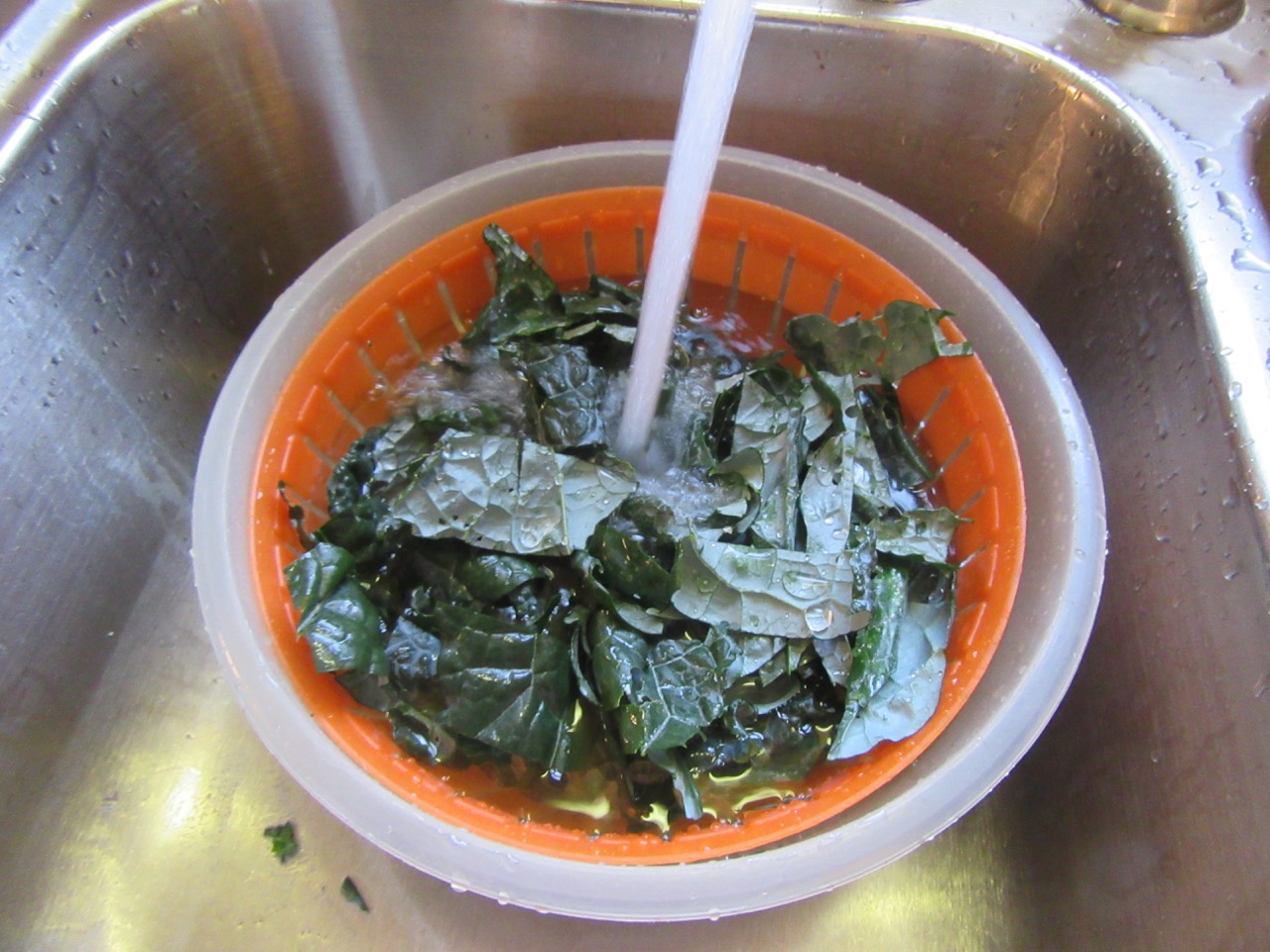
Kale choppingSo right after my last post, I went outside, and cut about 40 big leaves off my kale plants–always from the lower part of the stems.  In between making and eating breakfast and washing dishes, I washed the leaves in groups of ten (by variety), and chopped them up, then washed them again in a salad spinner, which they filled up.

Kale washAfter doing the first batch, which used a lot of water, I figured out that I should save the wash water and bring it out to the garden, where I put it on the kale plants! Then I spinned the kale pieces to dry them, and sautéed them in our big cast iron pan.  I had to start with about half of the batch, then add the second half after the first had cooked down a bit.  I had green curly kale, red or purple curly kale and a double batch of lacinato kale. After sautéing, I cooled them in a bowl in the refrigerator before putting in bags. On the recommendation of other online gardeners, I used a straw to pull out all the air in the bags.
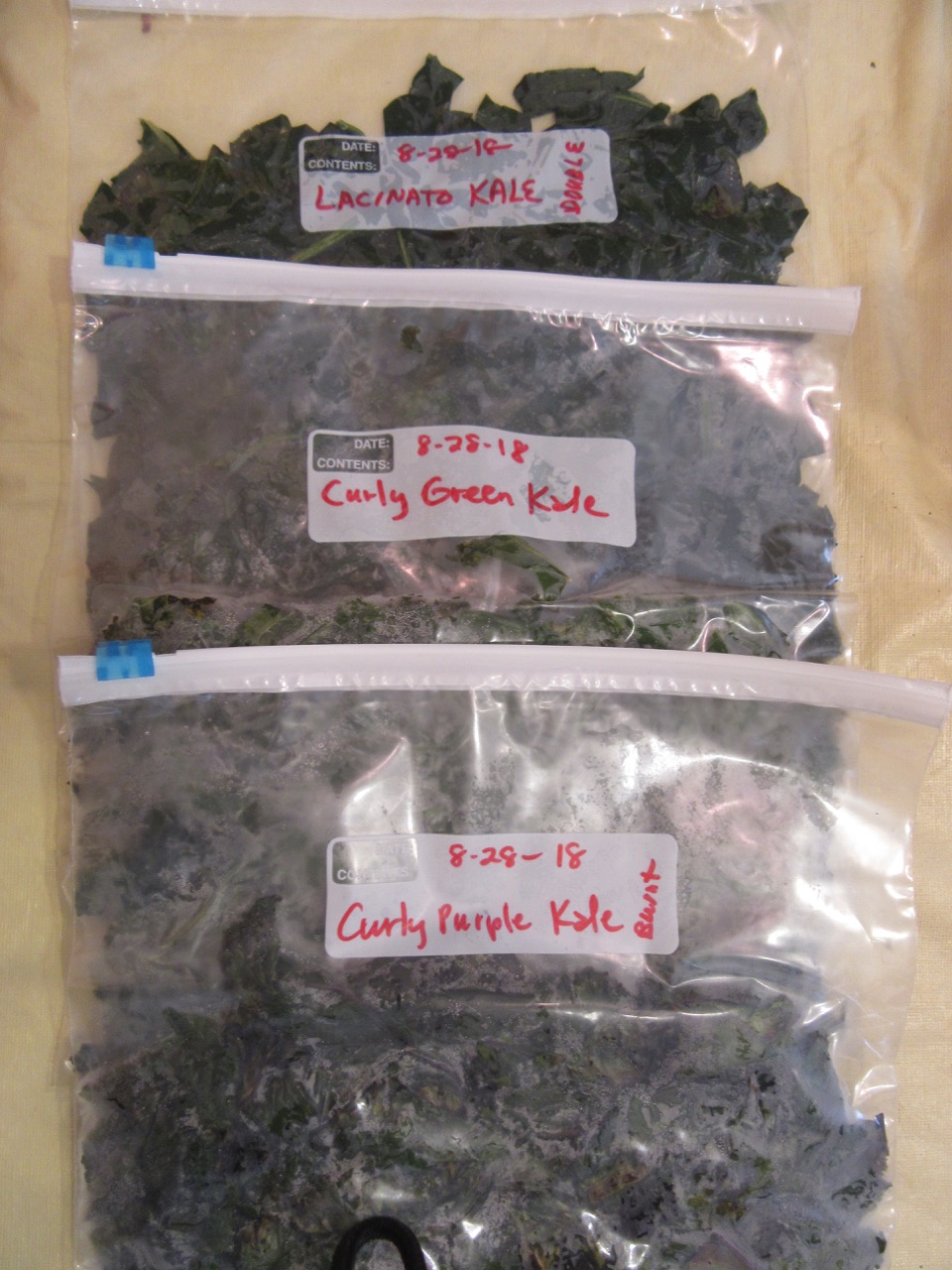
I still have plenty outside on the plants, but now I have these in the freezer.  Ten leaves only filled half a bag, at about 1/2 an inch thick.  That would be about three or four servings in our house, so this is a total of 12-16 servings.    This winter, I will see how they taste.Kale to freeze