The Story We Are Called To Be

You don’t have anything if you don’t have the stories.   Leslie Marmon Silko

The word “story” can be used to describe the way we understand the reality in which we live. A story is what we tell ourselves about our lives, the meanings we attach to reality. This past week we saw that people in America are holding vastly divergent stories about what it means to be American, that we hold vastly divergent understandings of the reality of our times.

One thing about stories is that even vastly divergent stories can exist in the same space, and in a sense they can all be true—because people live out their lives based on their particular understandings of reality. Stories are a way to understand reality, but stories also shape reality. In this way, stories have incredible power: to harm or to heal, to destroy or to protect, to create the future and even the past.

One story I heard a lot during the last several weeks was the story of a woman who would finally break the ultimate glass ceiling and hold the highest office in the country. This story identified its beginnings in the sacrifices of the suffragists to win the vote for women. But it also included a vision of a multicultural nation that honored all of its people, and welcomed the immigrants who came into our midst. There were many people who believed in this story, who were deeply inspired by this story. In fact, the popular vote of our country would have elevated Hilary Clinton to the presidency. When the electoral votes were all in, and Clinton had lost, the people who were holding this story in their hearts were crushed and heartbroken.

There was another story that took more effort for me to discover, a story of those who supported the other major candidate, now president-elect Donald Trump. I was able to get some insights into this story by looking at Facebook posts from more conservative members of my own extended family. In the best versions of this story there was a hope that a very imperfect outsider would bring the jobs back; that he would shake things up and pay attention to people in the middle of the country, the working Joes whose lives had been upended by free trade deals. There was a lot of pain in the heartlands that no one was paying attention to. These folks were not oblivious to the problems he represented, but they saw the other candidate as much worse. I respect those folks who wrestled with their values searching for the best way forward.

But there has been a much more troubling story in the support shown for Mr. Trump. It is a very old story, an ideology of white supremacy in this nation that originated in the destruction of Indigenous nations who lived in this land, and in the capture and enslavement of African people. White supremacy has morphed and changed through the centuries, but it has never gone away. Some hoped that the election of Barack Obama signaled a transformation had been achieved. But that was never the case, and during this election season, we saw the flames of hatred stirred up and given more oxygen. Mr. Trump played on the real pain of people in our country, and through scapegoating, channeled that pain into hatred. Hatred against people of color, immigrants, Muslims, women, queer people, people with disabilities.

Since election day, I have been hearing stories about people already experiencing violence from blatant white supremacists emboldened by the Trump election. Muslim women whose hijab scarves have been ripped from their heads, Latino children beaten up in school, Swastikas painted on the door to a Jewish community center, rainbow flags being burned, and heartbreaking fears about what will happen next.

A story is what we tell ourselves about our lives, the meanings we attach to reality. Some of the stories we tell about our lives are so ingrained that they are almost invisible to us. We think of them as just “the way things are.” But we do not have a shared reality as a nation, a shared sense of “the way things are.” That may not be a bad thing, if it helps us to wake up, to ask questions about what story we are telling ourselves.

There are some people saying that now is the time for our country to come back together, now is the time for us to unite as Americans and let go of the hostilities of the election season. I would agree that letting go of hostility is a good thing. Letting go of blame and hate. Henry Wadsworth Longfellow once said: “If we could read the secret history of our enemies we should find in each man’s life sorrow and suffering enough to disarm all hostility.” It is important to understand the suffering in each other’s lives, to understand how we come to the choices we make. It doesn’t help us to hate each other.

But the call to unity covers up something very important—the call to unity relies on our going back to a story that Joanna Macy calls “Business as Usual.” This is the foundational story of our Industrial Growth Society. In this story, our economic and political systems depend on ever increasing extraction and consumption of resources. They require the generation of ever more rapidly increasing profits. In this story, human lives are valued only insofar as they can be used in the generation of profits and the consumption of products. In this story, the Earth is seen as a resource bank for the generation of profits, and also the septic tank for human waste. The underlying power in this story belongs to the multi-national corporations and elite business-owning families. This is the story that sometimes we think of as “the way things are.” We don’t really think of it as a story at all.

So I cannot answer a call to unity like that. I keep hearing in my heart a different call, a call to a whole new story, or a story that is so old it seems new. That call is sometimes just a whisper, but more and more it echoes like a great shout—a call that demands that we look beyond the superficial unity of the realm of the status-quo, and look deeper into a more essential unity that we are beginning to awaken to.

For the Business as Usual story is actually a story built on separation. Business as Usual is a story that says that human beings are separate from each other, that one can build a wall between different races and religions. It is a story that says that human beings are separate from the earth, as if the environment were a special interest and has nothing to do with our food and water and life itself.

Joanna Macy talks about three foundational stories. The first is Business as Usual. But Macy suggests that if we keep trying to follow Business as Usual, we will end up in another story, “The Great Unraveling.” This story is about the disasters the Industrial Growth Society is causing. This story is the stuff of our nightmares of the past week. Race hatred, violence in the streets, the people torn apart fighting over scraps to survive. This story is about the environmental disasters of global warming and rising sea levels and mass extinctions. It foretells a future of destruction, hunger, disease, and war, and the likely extinction of human society as we have known it.

But there is a third story. Macy calls it “The Great Turning.” In this story, people choose to create a transition away from the Industrial Growth Society toward a Life-Sustaining Civilization. In this story, people come to understand their profound interconnection with each other, and with all of the natural world. People join together to make the changes that can heal and defend life on earth.

Human beings have the capacity to meet our needs without destroying our life-support system. We could generate the energy we need through renewable forms such as solar, wind, tides and algae. We could grow food through organic permaculture methods in thousands of small farms and gardens in every yard. We have birth control methods that could bring human population under control. We have developed social structures to mediate conflict, and give people a voice in democracy. When we realize how profoundly interconnected we are to all beings, we know that we need each other, that no one is outside of the circle of worth and dignity. The name of this third story, “The Great Turning,” grew from imagining how future beings might look back on our own time, if humanity survives because we’ve made a transition to a Life-Sustaining Civilization.

Business as Usual. The Great Unraveling. The Great Turning. If we understand the stories, we realize that each of us can make a choice about what story we want to tell about our lives, what version of reality to which we want to give our energy. And there is power in that. We don’t have to sit back and observe with horror the increasing violence and destruction that have been unleashed. Instead, we must remember the story we are called to be. We must recommit ourselves to live out our deepest values. Now, more than ever.

In the contest between Business as Usual and the possibility of a great turning toward Life Sustaining Civilization, the front lines are perhaps most starkly drawn right now on the plains of North Dakota. The Indigenous people of Standing Rock have made a stand to protect the water from the destruction of the Dakota Access Pipeline. They have been joined by thousands of Native people from across the Americas and the world, and thousands of non-Native allies. Robin Wall Kimmerer and Kathleen Dean Moore talk about it in a story called “The White Horse and the Humvees.” I want to share a few of their words:

On one side is the unquestioned assumption that land is merely a warehouse of lifeless materials that have been given to (some of) us by God or conquest, to use without constraint. On this view, human happiness is best served by whatever economy most efficiently transforms water, soils, minerals, wild lives, and human yearning into corporate wealth. And so it is possible to love the bottom line on a quarterly report so fiercely that you will call out the National Guard to protect it.

On the other side of the concrete barriers is a story that is so ancient it seems revolutionary.  On this view, the land is a great and nourishing gift to all beings. The fertile soil, the fresh water, the clear air, the creatures, swift or rooted: they require gratitude and veneration. These gifts are not commodities, like scrap iron and sneakers. The land is sacred, a living breathing entity, for whom we must care, as she cares for us. And so it is possible to love land and water so fiercely you will live in a tent in a North Dakota winter to protect them.

..The people at Standing Rock and their busloads of allies… are making clear that we live in an era of profound error that we mistakenly believe is the only way we can live, an era of insanity that we believe is the only way we can think. But once people accept with heart and mind that land is our teacher, our mother, our garden, our pharmacy, our church, our cradle and our grave, it becomes unthinkable to destroy it. This vision threatens the industrial worldview more than anything else.

Leslie Marmon Silko says, “You don’t have anything if you don’t have the stories.” I know so many are feeling discouraged right now about the change to our elected government. We can see that it bodes suffering and hard times. But here is the thing. A change in stories, a change in world view, has never happened because of the people in power, the people at the top. This kind of fundamental change always happens from people on the margins, people on the bottom, people in unexpected places.

We don’t have to follow the call to return to Business as Usual. We can follow the call of old stories and new dreams, of deep values and courageous ideals. We never know if our own acts of love and kindness might tip the balance. We never know if our willingness to welcome an immigrant to our community or visit a neighbor’s house of worship might tip the balance. We never know if our planting a garden, or living more simply, might tip the balance. We never know if reminding each other of the interconnections between all beings, might tip the balance.

This is not going to be an easy time ahead of us. But it was never going to be easy. If you were hoping it would be easy, it may be that you need to grieve that old story. Let yourself take time to weep and mourn. We are all being called upon to make a choice. We have our work cut out for us. Our job is to keep track of the story we are called to be: to remember our connections with all people and all beings of the earth, and to live in such a way to further those values. May we find strength and courage.Birch light and dark DSC07802

Portland Stands with Standing Rock

Standing with Standing Rock in Portland ME

Portland Stands with Standing Rock, Photo by Katrina Van Brugh

Sometimes our spirits know that we must go to another place to support the struggle to protect Indigenous rights and water. But sometimes our spirits tell us to stay put, and lend support from where we are, in whatever we can.  That is my particular calling in this moment, even though a part of my heart is out in Standing Rock every day.  But I was happy to stand in the rain on Saturday in Portland, Maine, with a few dozen people, including these young people from my congregation. Somehow being in the rain also felt right, because #waterislife.

This week many of my clergy colleagues have gone to the site of the camps, to bring a message of support, and I am glad for them to be there.  I am happy that our religious voices can be aligned with sovereignty and justice, after so much damage has been done in the name of the churches throughout the history of this land.

I am also glad personally to be following the spirit’s lead on this, because something is happening right now in our world which is deeper than politics, deeper than the divide between right and left, deeper than what any of the media are willing or able to talk about. It cannot be figured out by thinking or talking.  It is deeper than that.  It comes from the depth of the mysterious forces that give life, that sustain life, on our beautiful planet.

In a time of despair, that which can give us hope is often hidden from public view, bubbling up in unexpected places.  The energy and magic that is Standing Rock is not limited to that one place, but emerges wherever the people find our connection to the land, our connection to the water. Still, what is emerging at Standing Rock goes much deeper than I am able to fully understand, even when I open my heart to the mystery and the flow of it.  But every morning, I do open my heart to that mystery, and offer what energy and gifts I may offer to it.

Colonization Stories

Broken Tree DSC01792The theme at my congregation for November is “What does it mean to be a community of story?” Of course, stories can be truth-telling, or truth-hiding. For example, I have mixed feelings about the Thanksgiving holiday. I am very much in favor of gratitude. But the stories American culture tells about the holiday have been used to hide the truth about a deep crack in the foundation of our nation, and have distorted and corrupted the high ideals many cherish as the basis of our American democracy.

I am speaking about the colonization of this continent, a destructive process unparalleled in history. Millions of Indigenous people were killed, or died from disease unknown to them. Land was stolen. Treaties were signed and then broken, and then never talked about again. Most of our senators and representatives in Washington know nothing about the legal responsibilities of our federal government to the Indigenous nations within our borders.

Why should we care?  Those of us whose ancestors were among the settlers of the continent?  We have benefited from this colonization, but we have also been harmed by it. Colonization is at the root of the many of the problems that all of us are facing now: the destruction of the natural world, climate change, oppression of one group by another, the overarching greed that has bankrupted our economy. (There is a longer list I could make.) I don’t believe we can fix any of those problems without revisiting our history.

Sadly, churches were/are a large contributor to colonization. I am part of a new project here in Maine, called “Decolonizing Faith.” A few clergy colleagues and I, under the auspices of the Wabanaki REACH program, are exploring the history of colonization, and the role of the churches in it. We recently spent a long weekend with a few partners from the Wabanaki people, having deeper conversations about the impacts of colonization on Wabanaki people, and building trust for future work together. We hope that we might begin to envision how people of faith could help in the process of de-colonization, non-Indigenous people joining together with Indigenous people for the benefit of all people.

Our next plan is to create and hold day-long workshops for people in faith communities to explore these questions together. But we realized this topic is so huge, that perhaps we should start by encouraging people to attend the Ally workshops that are already being offered here in Maine by Wabanaki REACH. These workshops look at the history of U.S. Government relationships with Native people, explore the dynamics of systemic racism, and ask what non-native people can do as allies. Once people have this basic foundation, they will be better prepared for looking at how churches were involved in the problems, and how we can be part of the solutions.

I would encourage folks in Maine to sign up for the ally trainings–you can find out more at the Wabanaki REACH events page.   These trainings will be a prerequisite for the first Decolonizing Faith workshops we hope to offer this winter or spring.

Why I don’t celebrate Columbus Day

Every October and November in the United States, we find ourselves once again in a season of false and misleading stories about European settlers and Native Americans.  First there is the story that Columbus discovered America in 1492.  (Later there is the story about the Pilgrims and the Indians at the first Thanksgiving.)  It is astonishing to me, after all the work done by Native activists and their allies in the last forty years, that these stories keep returning unchanged year after year.  In 1991, the organization Rethinking Schools published Rethinking Columbus, an excellent resource that pointed out for educators the fallacies of the stories we are told and offered practical alternatives.  Certainly in some places a lot has changed.  But there has also been a backlash.  Rethinking Columbus was one of the books banned from Arizona school systems in 2012.

Perhaps many people are willing to acknowledge, if pressed, that when Columbus supposedly “discovered” America, it was already full of people.  But the use of the word “discover” has a more sinister history that is not so often talked about.  Prior to 1492, European church leaders and monarchs had collaborated in a stunning series of proclamations, which became known as the Doctrine of Discovery.

In 1452, Pope Nicholas V issued a papal bull declaring that the Catholic king of Portugal had the right to conquer any Muslim and pagan peoples and enslave them.  A few years later he wrote a second letter, declaring all the Christian kings of Europe had the right to take the lands and possessions of any non-Christian people, and keep them in perpetuity.  If the pagan inhabitants could be converted to the Christian faith they might be spared, but otherwise they could be enslaved or killed.  The Doctrine of Discovery was also later claimed by the king of England in 1496, authorizing English explorers to seize any lands not already discovered by other Christian nations.

The Doctrine of Discovery became the legal basis for the “discoveries” of Columbus and others, and for the resulting attempts to conquer and colonize the western hemisphere, and unleash a genocide on its peoples.  It was also the legal basis for the slave trade.  And its influence did not remain in that distant past.  It is still a source of oppression to this day.  It became the basis of U.S. Indian Law, beginning in 1823, when Chief Justice John Marshall ruled that “Christian people” who had “discovered” the lands of “heathens” had assumed the right of “dominion,” and thus had “diminished” the Indians’ rights to complete sovereignty as independent nations.  He claimed Indians had merely a right of occupancy in their lands. This decision has never been overturned, and is still cited on a regular basis, as recently as 2010 in the Federal courts.

Responding to the requests of Indigenous peoples, several religious denominations have passed resolutions to repudiate the Doctrine of Discovery. Those of which I am aware are Episcopalians in 2009, Unitarian Universalists and the Society of Friends in 2012, and the United Church of Christ in 2013.  These resolutions are a first step toward reckoning with this history of stolen lands and stolen children.

But let’s go back to Columbus.  The stories of his “discovery” lead to another distortion of our European history in these lands.  This is the idea that the Europeans conquered the Native nations by their superior weaponry and military might.  This holds a partial truth.  The Europeans did try to conquer every Indigenous nation they encountered.  But it would not have been possible without another factor.  Between 1492 and 1650, possibly ninety percent of the Indigenous people of the Americas were killed by plague and other European diseases to which they had no immunity.  The Europeans, sometimes unwittingly but often purposefully, brought an unprecedented apocalypse to this land.

Estimates of the pre-contact population are hard to determine.  One scholar, William Denevan, tried to reconcile all the data and came up with fifty-four million in the Western Hemisphere.  But by 1650, the number had shrunk to six million.  Millions upon millions of people died.  In 1617, a few years before English settlers landed, an epidemic began to spread through the area that became southern New England.  It likely came from British fishermen, who had been fishing the waters off the coast for decades.  By 1620, ninety to ninety-six percent of the population had died.  Villages were left with so many bodies, the survivors fled to the next town, and the disease continued to spread.  It was a catastrophe never before seen anywhere in the world. Books on Shelf DSC00283


Decolonizing Faith, Part One

Dawn at the Pond

I am at a small gathering of Native and non-Native people exploring the topic of Decolonizing Faith.  We have been looking at the history of colonization on this continent, and the role of churches in that process, and the effects on Indigenous people’s lives.  We’ve listened to stories shared by Wabanaki folks of disrupted families, foster care, adoption, love and care of relatives, abuse by church leaders, the long path to healing…  We’ve been here since Friday evening, and will stay until Monday.

We are in a lovely house by Chemo Pond (pronounced Sheemo Pond) in Clifton Maine. The natural beauty of the pond is, in itself, healing.  The calls of the loons.  The breezes in the trees. The reflection of red leaves on the water. I took a swim in the pond on Friday, and Saturday morning I sat outside in the dawn watching the sky grow light in the east.  Today it is raining. Today we start to ask, what can be done to turn around the process of colonization (which has never stopped.)  And what might be the role of spirituality and the role of faith communities in that work? It is good to be here.

There will be much more to think about, to write.

Projections from the Shadow Side of History

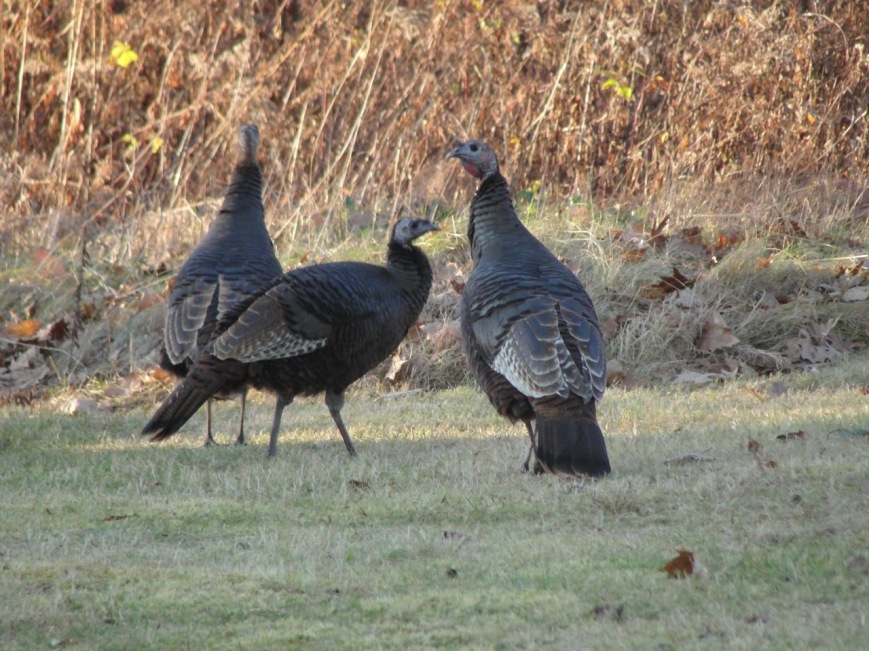
Turkeys DSC02379Thanksgiving is a holiday that always fills me with mixed feelings. Gratitude is wonderful, and getting together with family and friends can be a blessing. But I know that the stories we celebrate are white-washed versions of a history that has brought devastation to so many. I always remember that many Indigenous people call this the Day of Mourning.
The only time that foreign immigrants actually brought disease and destruction to this continent was when the English, Spanish, and French came to settle on its shores. Millions of Indigenous peoples died from diseases to which they had no resistance, or were killed in ongoing campaigns by the newcomers to destroy them and their way of life.

So while I give many thanks for my life, it feels sacrilegious to give thanks for prosperity that was built on the suffering and death of so many others. But it does illuminate for me, in a social psychological way, the possible roots of our American fear and hatred of foreign immigrants. I wonder if perhaps these feelings are a form of projection from this unacknowledged shadow side of American history. People imagine that new immigrants will bring destruction because the first settlers were the immigrants who did bring destruction.

This fear of the foreigner never proved realistic with later immigrants—with the Irish, the Italian, the Chinese, the German, the Jewish, the Puerto Rican, and so many others. Despite being hated and derided, they eventually became a part of the fabric of American life. Perhaps there is a link between facing more honestly our own shadowed and genocidal history, and letting go of our fear of the other.

Hard thoughts for a quiet holiday at home. But so many are cold and hungry and desperately seeking a safe harbor. And the tide of xenophobia and racism in our country seems to be rising out of control. Let’s help our friends and neighbors to keep their heads about them. I believe that when we are lucky enough to have shelter and food and clothing and safety, we are responsible for sharing what we can with those who are in need. To me, that is what thanksgiving should be all about.

Changing Lanes Without Signaling

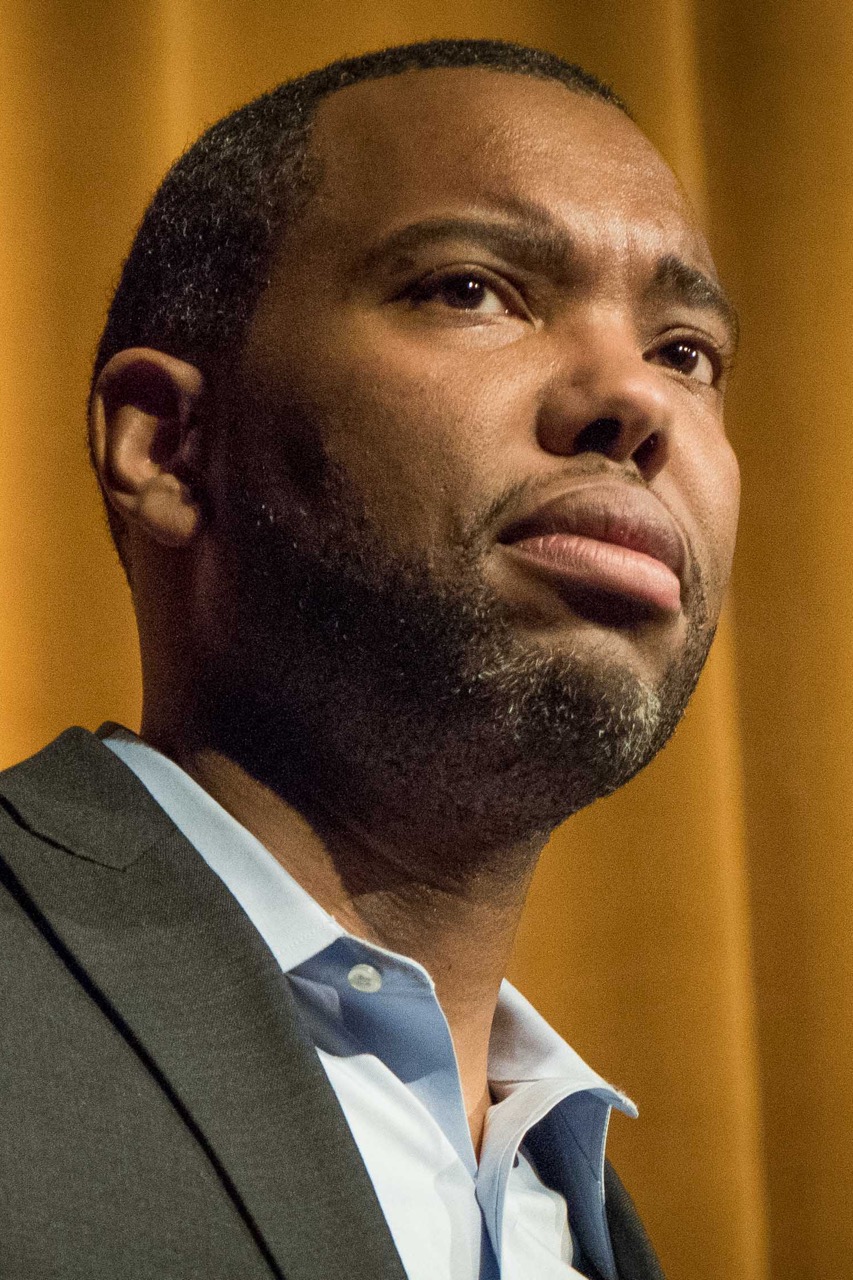
"Ta-Nehisi Coates" by Eduardo Montes-Bradley. Licensed under CC BY-SA 4.0 via Wikimedia Commons

“Ta-Nehisi Coates” by Eduardo Montes-Bradley. Licensed under CC BY-SA 4.0 via Wikimedia Commons

Ta-Nehisi Coates’ new book, Between the World and Me, is a powerfully devastating window into the experience of living in a black body in America, a body that is constantly vulnerable to assault, to capture, to torture, to destruction, to death.

I am a white woman who has long been involved in the white anti-racist struggle–I say this, not with any attempt at boasting, but merely to point out the map that my reality has followed over the last more than thirty years of my life. But even so, Coates’ words painted a picture of soul-shattering fear that struck me to the core.

I grew up with a general feeling of safety. I belonged to a working class family in Michigan, living in suburban Detroit for the most part, raised to believe that “all people are the children of God,” but also living in all-white communities where racial violence was something that appeared only on our television screen. A liberal white world aspiring to be “colorblind,” in the “Dream” that Coates describes as the place where white America lives as if asleep, unaware that it is built on the violence against black bodies.

I was asleep like that, but in my young adulthood I began to wake up to the horrific realities that America was built upon–the theft of the land and destruction of Indigenous people, the slavery and destruction of Black people. The first window into those realities came through my own awakening to the violence that was perpetrated on female bodies. That violence was hidden under the mantle of (white) safety. I did not actually experience sexual violence in my own body, only the constant threat and fear of it. Don’t go out at night, don’t talk to strangers, don’t dress to draw attention to your body, and so on. But here was the irony–a woman could “feel” safe if she stayed “asleep.” It was only upon waking that the fear undergirding my life became visible.

Once I woke up to that illusion, other illusions began to break through as well, and racism became visible and anti-racism became important to me. But so much remained hidden. Layer upon layer, I kept being surprised again and again at the horror of it, the extent of it, the insidious forms it takes, the interlocking systems that perpetuate it. I got it that we are all implicated, that no one can escape the systems in which whiteness benefits those who are understood to be white, and devastates those understood to be not white.

Ta-Nehisi Coates broke open for me a new and deeper layer of the reality of racism–his words, along with the revelations of the #blacklivesmatter movement, which have kept before the public eye the many recent killings of black people by police. Last week, I watched videos of the police officer’s traffic stop of Sandra Bland. Pulled over for failing to signal a lane change, three days later, she was dead in her jail cell. Something about her story–her innocent journey to start a new job, her bright spirit–brought it all home. No black person is safe anywhere.

This week, as I passed the flashing lights of a police vehicle behind a pulled-over car, I felt an unfamiliar shudder in my gut. A tiny glimpse into the terror. When I read Coates describing the terror he felt when he was stopped in his car by police, these images and videos came to mind, and I understood his fear for his life, his shaky relief when he was let go. A few months later, his friend was killed by the same police force.

The thing is, Coates continues to live with this original and constant fear in his body, just as my body still holds that original feeling of safety, even though I realize its illusory nature. I have to choose to stay awake, to remember. I can take a break, not think about it for a while.

It is not easy to stay awake. Mab Segrest talks of choosing white anti-racism as becoming a “Race Traitor.” There is a loneliness in it, a separation from the mainstream American dream, a separation from family and friends. Most often, I feel more resonance with my friends who are people of color, but I will never really belong to that world either. So staying awake is often lonely and sad. I usually don’t have a clue how to create change, or make things any better. But I believe that if we stay asleep we will never find transformation. We have to wake up to reality, bear its pain, before any change can happen. So thank you Ta-Nehisi Coates for being willing to be so open about the reality in which you live, in which we all live.

The Ancients

Knowth spiral MD DSC09032

Photo by Margy Dowzer

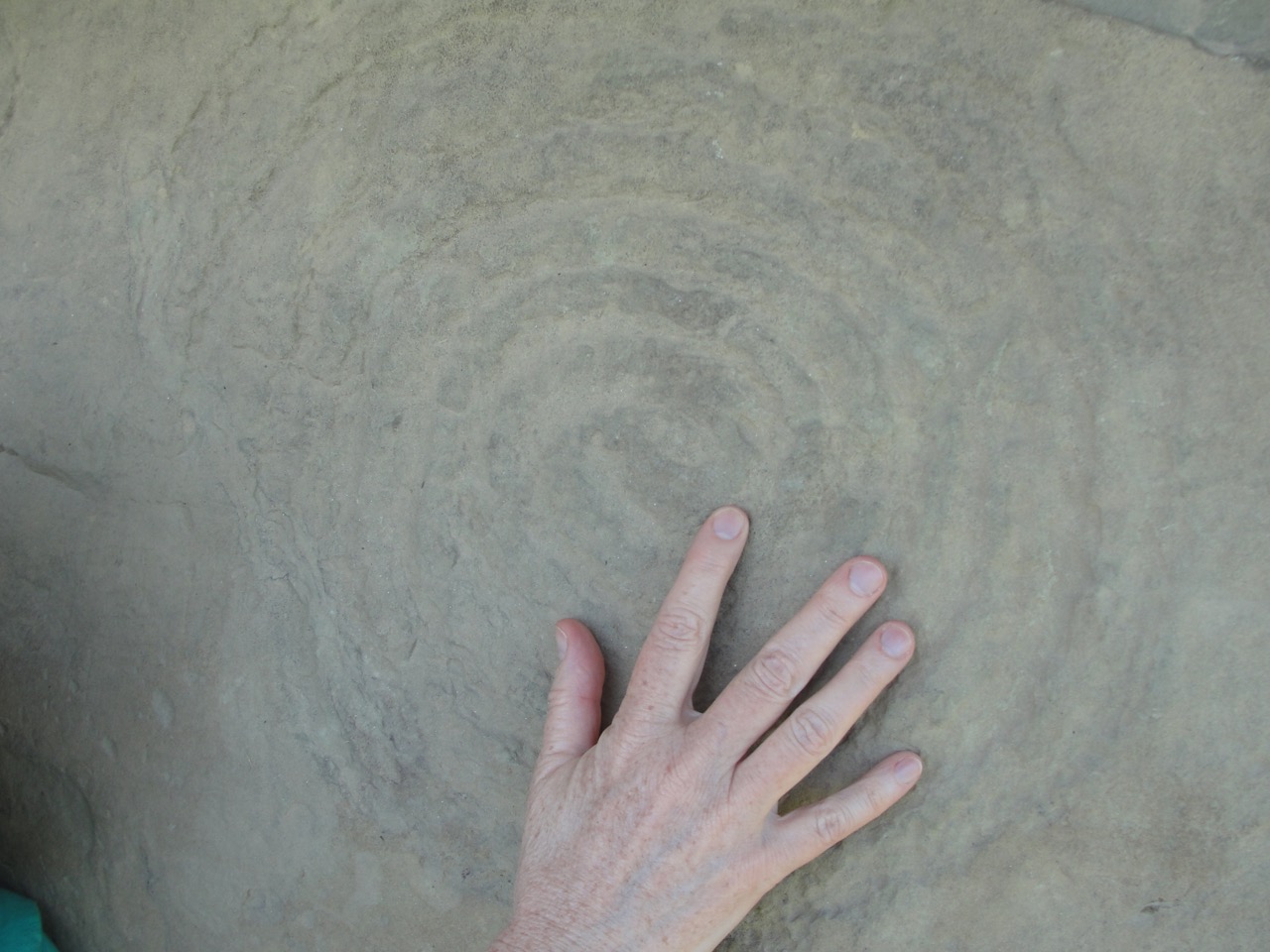
Thursday, Margy and I went to the ancient sites of Knowth and Newgrange.  Built by neolithic stone age peoples about 5200 years ago, they were burial mounds and ritual centers, aligned with the sun at certain points of the year.  We had heard about Newgrange, where the light from the sun at dawn enters the burial chamber on the Winter Solstice.  But we were even more impressed by Knowth, where tourists are not able to go into the burial chambers–too dangerous–but can walk up to the top of the mound.  There are huge boulders that surround and support the mound, called curb stones, and most of them are covered in geometric images–spirals, triangles, undulating serpent like forms.  We could photograph and touch this art created before the pyramids were built in Egypt.  It is a UNESCO world heritage site because of this high concentration of neolithic art. What an astonishing feeling to trace a spiral that was carved so many generations ago by the ancients!  Our guide said that similar stone carved art with the same kinds of geometric patterns can be found all around the world–America and Australia, for example.  Until fifty years ago or so, all these stones at Knowth were buried under soil–the mounds looked like an extension of the hills.  Then, archaeologists began to excavate and discovered the careful construction and design of the burial passages and chambers, were able to carbon date the remains, and restored the mounds to their neolithic era appearance.  All of the stones are original, and the guides reminded us of the sacred and beloved nature of the site. After this visit I got to thinking about ancient mounds in the United States.  I barely knew anything about them, except that they were built by early indigenous peoples of this land, and that many have been destroyed or are even now being threatened with destruction.  Most recently, I heard about a new football stadium being planned in St. Louis that would destroy the remains, now underground, of a burial site and city.  Since no federal money is involved, there are no laws demanding that they even do archeological investigation. I wonder why our country doesn’t take care of these precious artifacts from the ancients on this land?  In a time when there is international outcry over destruction of ancient sites in Syria, where is the outcry over destruction of ancient sites in America?  I suppose it is directly related to our society’s general insistence on forgetting that these lands once belonged to another people.  As to the mounds that do still exist, I have read that there was much early resistance to thinking that Native peoples would have the expertise to build such structures.  Racism then, must surely underly this disregard, and perhaps the overarching allegiance to the gods of money and profit.  And the brokenness of our times, the forgetting that the land is full of sacredness in her essence and in her history.

Red Haired Girls and Ring Forts

When she learned we were traveling to Ireland, a colleague recommended Patricia Monaghan’s book The Red Haired Girl from the Bog.  I read it over the last few months, and it was indeed a wonderful introduction to the myths and magical places of Ireland.  Monaghan feels like a true kindred spirit, finding the sacred in the land, and in the stories connected to the land in each place. She speaks about how rooted Irish people are to the places in which they live–they are indigenous to their own places.  Each place has stories that connect it to the near and distant past.  Even in the place names themselves are clues to the lives and lore back to times before history.

I have been exploring in my own life how to connect to the land, how to connect to a place, and her stories provide many inspirations for the process, though also reminding me of how shallow the roots of Euro-descent culture in North America.  Many of our North American place names also harken back to the peoples Indigenous to this place, and hold clues to the old stories of this land.

Yesterday morning, here in Ireland, I took a walk to a neolithic Ring Fort that is on this land at Ashley Park House, where we are staying.  They also call it a Fairy Fort, and the young woman who serves our breakfast talked about people’s superstitions about the Fairy Forts.  She said it was believed people used to bury unbaptized babies in those places, since they could not be buried in the Catholic cemeteries, and some people wouldn’t touch a Ring Fort unless it had been blessed by a priest.  I didn’t worry about that, but was very mindful and respectful of whomever the Spirit beings might be in such an ancient place.

This fort is covered in vegetation and beech trees were growing within and around it.  I took some photos but it was hard to capture the feel of it in a photo.  Imagine a stone embankment about 5 or 6 feet tall (but covered with soil and bushes and trees) in a circle maybe 80 meters in diameter.  I followed a path over the top of the embankment and down in to the middle.  This photo was taken inside the ring, looking over to the embankment.

I am here in this place, where none of my own ancestors have lived, with many unfamiliar plants and animals, but I do know how to give thanks for the sun, and touch the beech trees, and call out to the spirits as I walk around the circle.

Ring Fort Ashley Park

Ring Fort Ashley Park

Linda Hogan’s Solar Storms

My favorite novel of all time is Chickasaw writer Linda Hogan’s Solar Storms.  Published in 1997, it is the story of Angel, a girl who was taken from her Native relatives as a tiny child and raised in foster care, after being abused by her mentally ill mother.  At 17, she comes back to find her grandmothers and learn about who she is.  During this time, people in her small village discover that hydroelectric dams are planned for their ancestral homeland in the north, so four women travel by canoe to help in the struggle against it.  I first read this book when I was working (with Massachusetts “Save James Bay”) against the hydroelectric dams that were being built in Quebec, and I learned later that Hogan had drawn from that situation in creating her fictional account.

But this brief description of the plot can’t do justice to the many layers of poetry and meaning that are woven into her narrative.  I learned about what it might mean to be deeply connected to a place–to be indigenous to a place.  I learned that loving the earth isn’t just about loving the planet, but rather about loving a particular island or river or peninsula or forest.  I learned that we can love the earth even if we are not indigenous, even if the earth keeps some secrets from us.  It helped me along my journey to find my own connection to the earth.  The elder Tulik tells Angel, “Here a person is only strong when they feel the land.  Until then a person is not a human being.”⁠ [p.235]

Linda Hogan tackles issues that face Native people–including the taking of children and the taking of land–and brings alive for all of us the heartbreak and courage that are born in this brokenness, and the beauty that may be created as people move toward healing.  As we face more and more destruction on our planet, we all so much need to learn to “feel the land.”

Broken Rock DSC00135