Meandering Toward Wholeness

If I can remember to be thankful about water, then I have the capacity to take action on its behalf as well. There are many people mobilizing on behalf of clean water. Thankfulness can be the beginning of restoring our relationship with water. And then the water itself will guide us into the next steps on the journey.
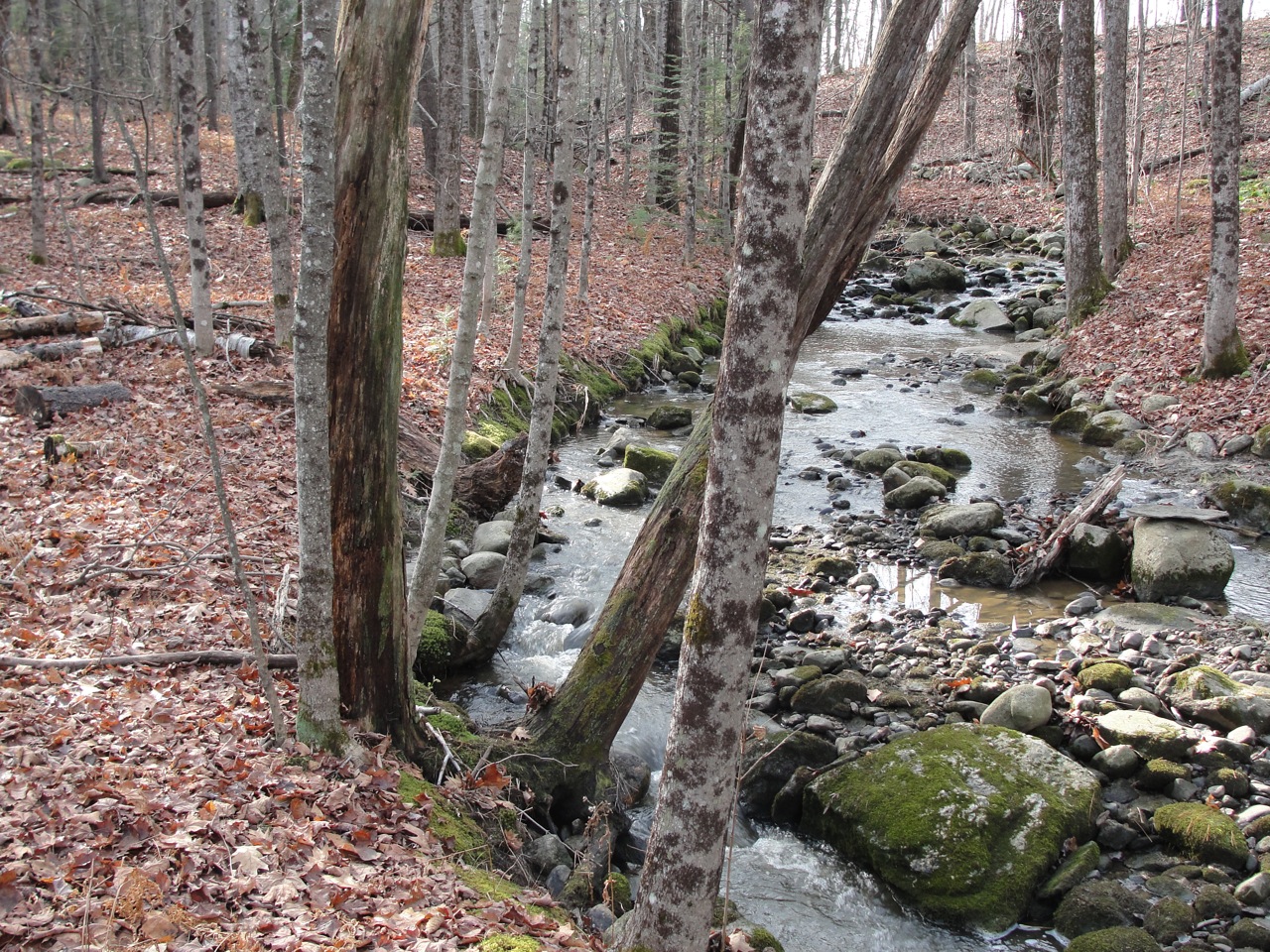
Stream DSC02225The path forward is never a straight line. I find hope in that. A river or stream meanders on its way to the sea. Starhawk explains that because of the friction of the river bed, the water on the bottom of the river moves more slowly than the water on the top. So it creates a spiraling current that wears down one bank and deposits sediment on the other, and then vice versa, as it move around and around in sweeping curves.1 Just so, our journey into a new relationship with all life on earth will meander—I imagine in this case, there is more movement at the bottom of our culture, while the top is going much slower. But since we are all connected, movement in any segment has a ripple effect on the whole.

For me, hope also comes with the choice to keeping taking steps, even small steps, in the direction of living in balance with the rest of our interdependent web. To keep meandering in the direction of wholeness. To keep learning from our elder siblings on this planet—learning from the plants, and animals, the soil and the seasons.

 

Photo by Margy Dowzer

Photo by Margy Dowzer

One summer, Margy and I purchased two rain barrels, as one step toward more conscious participation in the great cycle of water. We are collecting the rain-water that runs off our garage roof, for use in watering the blueberry bushes I planted in our front yard. We are learning about how high off the ground the barrels need to be, in order for gravity to pull the water all the way to the plants. We are learning that water in a rain barrel heats up rather quickly in the hot summer sun. We are learning how quickly a rainstorm can fill two fifty gallon barrels.

It is a very small step, especially here in our comparatively water abundant climate in Maine. No matter. Some people are taking bigger steps, and that gives me hope too. For example, some people are designing gray water systems that take the water from washing and showering and use it for the garden. Others are restoring rivers and lakes that once were declared dead.

All the earth is one earth. All the water is one water. We all belong to this great cycle of life. Each creative step forward will ripple out into a spiral momentum toward greater balance. I feel hopeful that so many human beings are embracing these deep truths and changing the way we imagine our futures.

Human Beings Are Part of Nature

Many of the ecological problems we face are rooted in a foundational assumption of western culture that human beings are separate from nature. We see ourselves as distinct and superior to nature, and imagine that the earth is like a resource bank to exploit for our own use.

Starhawk, in The Earth Path, notes that some environmentalists go the opposite extreme. Because of the devastation that human actions have caused, they see human beings as a “blight on the planet,” and suppose that the earth would be better off without us. But, as she points out, “it’s hard to get people enthused about a movement that …envisions their extinction as a good.”

What we need to understand—emotionally, intellectually, physically, spiritually—is that we are not separate from nature at all. We are part of nature. She passes on a story from Allan Savory, about land management in Zambia and Zimbabwe in the 1950’s.

People had lived in those areas since time immemorial in clusters of huts away from the main rivers because of the mosquitoes and wet season flooding. Near their huts they kept gardens that they protected from elephants and other raiders by beating drums throughout much of the night… [T]he people hunted and trapped animals throughout the year as well.

The herds remained strong and the river banks lush …until the government removed the people in order to make national parks.” The parks set up rules to protect all the animals and vegetation from any sort of disturbance. Within a few decades, the vegetation had disappeared from miles of riverbanks. What they discovered was that the fear of human beings kept certain grazing animals on the move, and that prevented over-feeding that damaged soils and vegetation. With the removal of one species—the human farmers and hunters—the ecosystem had lost its balance.

Photo by Margy Dowzer

Photo by Margy Dowzer

This story illustrates the truth that human beings belong to this earth—we are a part of the ecosystem, for good or ill. We can be a part of the balance as well as a cause of the imbalance.

Some Indigenous stories of North America say that we are like a younger sibling on this earth. The other beings and species are more acclimated to their purpose and their relationship to the whole. And so, when we are feeling overwhelmed by these messes we have created, we might turn to our older relatives on the earth to find wisdom for our journey.

All the Water Is One Water

Earth_high_def_1024Earth is a water planet. …Between earth and earth’s atmosphere, the amount of water remains constant; there is never a drop more, never a drop less. This is a story of circular infinity, of a planet birthing itself.
                                                                                                   Linda Hogan

It is a tradition in my congregation that every September we gather ourselves together with a water ritual. We bring water from the places we love, the places we may have traveled, to pour into one container. At the end, each person takes some of the water, and we bring it home with us.

One summer, I attended a similar ritual with Starhawk, at the beginning of an Earth Activist Training. Starhawk began collecting water many years ago. She brought water back from her travels around the world, and asked her friends to bring back water when they went to far off places. They poured all these waters into one big container. Over time, people brought water from the sacred Ganges River in India, and from the great Nile River in Egypt; even melted ice from Antarctica. After a while, they had waters from every continent.

When you pour it in one container, all of the water mixes together, and every drop has some of the molecules of water from every place. So if you take a small bottle of water out, you have the waters from many places in one bottle. Each time you have a water ritual, you add some water from the bottle you saved from the previous ritual. In that way, each ritual, each small bottle, contain the waters from all over the world.

Why would we want to have a small bottle of waters from everywhere in the world? For me, it is a reminder that water is sacred–without water there would be no life at all. It is also a reminder that we need to take care of the waters of the world. All water is connected, and the same water recycles itself through the whole earth. All the waters on earth are really one water. So even if we get water from our kitchen tap, that water has been around the world on its journey

Linda Hogan reminds us,

It has lived beneath the lights of fireflies in bayous at night when mist laid itself around cypress trunks. It has held sea turtles in its rocking arms. …It reminds us that we are water people. Our salt bodies, like the great round of ocean, are pulled and held by the moon. We are creatures that belong here. This world is in our blood and bones, and our blood and bones are the earth.

Linda Hogan quotes are from Dwellings: A Spiritual History of the Living Worldpp. 99, 106, 108.

To Be Whole We Must Experience the Broken

Sun in branches DSC01449If I believe that all people, and all beings are connected, then in order to be whole, I must open my heart to that larger whole, to the connections between all people and all beings. However, when I open to the whole, I experience more profoundly its brokenness, the ways we hurt each other and our earth, the ways we are not in harmony. It is tempting to retreat, to draw a circle around myself to try to achieve some sort of individual harmony and balance—but that would cut me off, into the brokenness of separation.

I realize in this tension that there can be no individual salvation. If we want to heal ourselves, we must be healers of our world. If we want to heal our world, we must be connected to all the broken people. We must embrace the broken to heal the broken. Relationship is at the heart of everything. So, to be whole is to experience the broken. To be whole is to be broken.

It might be too much to bear. How do we find joy in the midst of it? Always, I remember the sun. The sun shining on each being, the sun the source of all life on earth. When I feel the sun warming my face, I realize that I am connected to the sun. Each moment of connection can be a source of joy. Each moment of connection rings true to our deepest purpose. To be connected to Mystery, to each other, to the earth, awakens joy.

And the truth is, even our brokenness, our limitations, can become doorways into connection. We are all incomplete without each other. We each have just one small piece of the puzzle. Alone, all we see are jagged edges and random colors… and maybe all together we see just a jumbled pile of jagged pieces—but sometimes we catch a glimpse of the puzzle box cover—what we might become all together. That glimpse can fill us with joy. And sometimes, we find another piece that fits together with our own jagged edge. We have to find our joy in each moment of connection.

Our jagged edges teach us that we need each other. When I reach the limits of my knowledge or ability, it is a gift to reach out to another person, whose knowledge and ability might balance my own. All returning soldiers from the battlefield need the tenderness of others to find self-forgiveness. One day, when I was weary and sad about my recurring impulse to tell my partner what to do, my partner said, “I know you can be controlling sometime, but I love you just the way you are.”

We must embrace the jagged edges, embrace the broken pieces. Forgive and be forgiven. Ask for help. This is the path to wholeness. The sun shines down on all of us, each day, whether cloudy or clear, making no distinction between the good and the bad. May we return to the great circle of life, may we hold each other and all beings tenderly, for we are one.

The Sun Shines on All

Reconciliation and forgiveness require us to seek out those whom we have hurt, or who have hurt us, to make things whole again. We must mend the threads of connection between ourselves and other people, between ourselves and the earth, between ourselves and the Mystery of life.

This is not easy work. It is not just big societal evils that we face. We also face the everyday betrayals and regrets. Self-forgiveness may be the hardest of all. We face the perennial faults that are unique to us, yet common to so many. We mean to be kind, but find ourselves cranky and rude instead. We mean to be supportive to a friend or family member, but feel judgmental instead. We mean to be honest, but tell little lies to avoid upsetting someone. We mean to be generous, but feel greedy about our pleasures.

Can I forgive myself the belief that I am right when I argue with my neighbor? Can you forgive yourself the angry words shouted at your child as you are trying to get out of the house to make it to school or work on time? Can we forgive ourselves the end of a relationship with a partner or spouse? Can I forgive myself for needing help when I don’t know how to face a situation on my own?

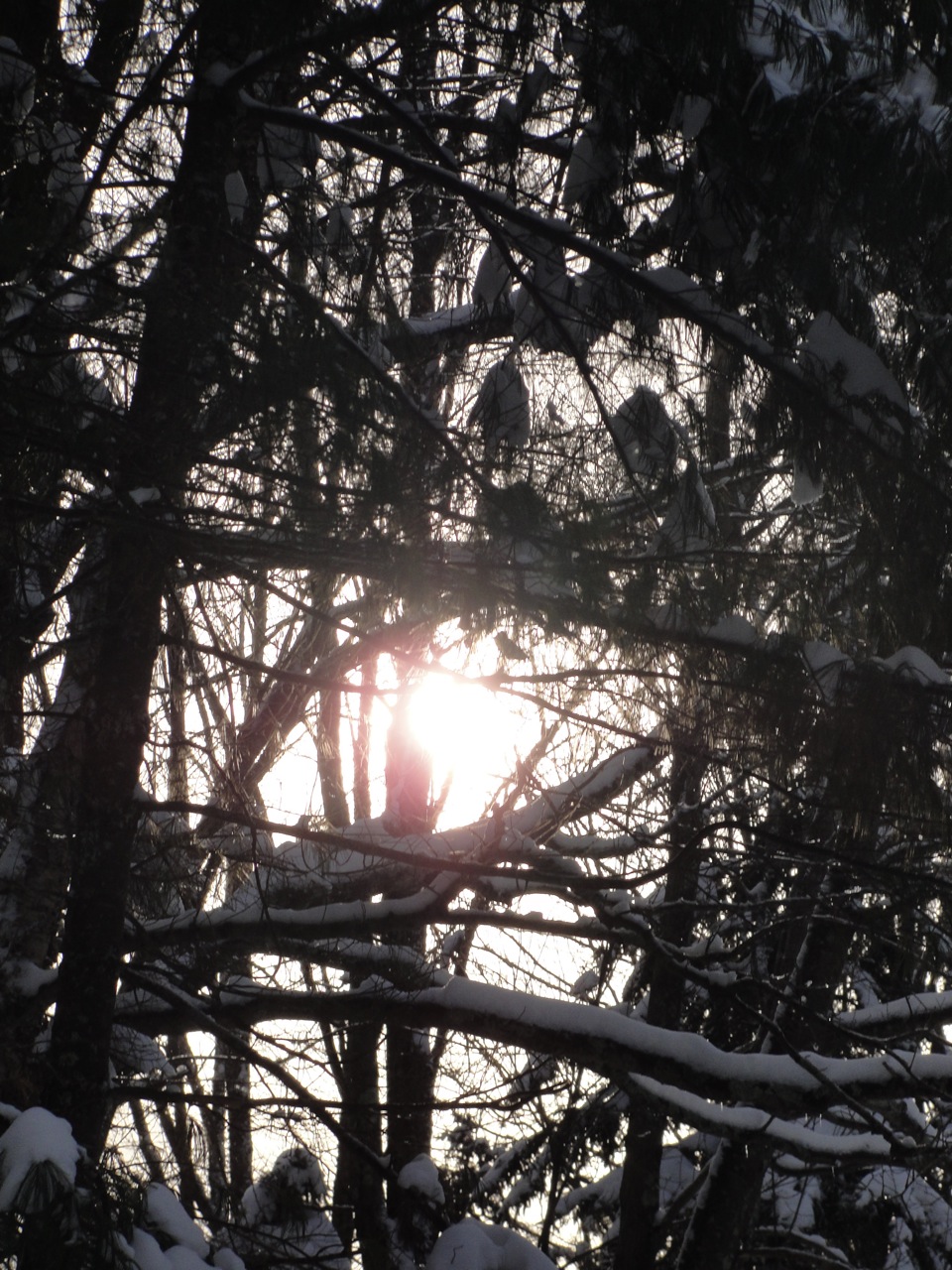
Sun and Snow DSC06016What helps me to forgive is to remember the sun. The sun shines down on all of us, each day, making no distinction between the good and the bad, making no distinction between when I am in tune with all my values, or when I fail. Its light is constant, never changing because of virtue or vice, but merely following the rhythm of the seasons and lighting up the blue sky or the gray clouds. Its light keeps shining, giving life to all creatures. When I remember that I am accepted as part of the circle of life, it seems easier to open my heart to forgive myself.

And if I am a part of the circle of life, so is everyone else. If I believe that all people, and all beings are connected, then in order to be whole, I must open my heart to that larger whole, to the connections between all people and all beings. This is the heart of spiritual practice—to open our hearts to the larger whole of which we are a part.

Trying to Find an Ecological Water Heater

When we awaken to a vision of living in harmony with the earth and other beings, we enter an in-between place, a place of increasing awareness of the brokenness of our world today. Our social and economic system was built upon exploitation of the earth for resources, and the options we have as individuals are limited because of that.

During one spring, Margy and I noticed that our hot water wouldn’t get hot anymore. We put up with lukewarm showers while we were trying to sort out what to do. We are always trying to make our home more easy on the environment, so we took time to research a lot of options.

Our hot water came from a coil in our boiler, and we were told that it would be quite expensive to clean out the coil, using lots of nasty chemicals. Did we need a new boiler? At that time, a very state-of-the art efficient new boiler would cost $11,000 to install. A boiler that used wood pellets instead of oil—even better—would cost $22,000, including an automatic pellet feeder. Well, we didn’t have enough money for either of those options, and our current boiler had some years left in it. Solar hot water is also expensive, and we don’t have a south facing roof, and we have a lot of trees. One company recommended heat exchange water heaters—they were about $3000 to install.

Water Heater DSC01555I also researched more traditional hot water heaters—we don’t have natural gas where we live, so that wasn’t an option. I lined up all the brands and all their energy efficiency. But I found that the ones that were the most energy efficient cost a whole more, for the tiniest fraction of greater efficiency. I did a whole lot of work on it, but eventually, we chose a standard electric hot water heater installed for about $1000. The good news is that we can shut off our boiler during the summer months, since it won’t be needed to heat water. And we have hot showers again. The bad news is that our electric bill will go up about $50 a month. So all in all, we might be using more energy than before.

I share this story because I felt so sad after our experience, so disappointed and angry that there weren’t good ecological solutions. Despite our values and idealism about how we want to live on the earth, despite how much time we put into research, it wasn’t possible to find workable and affordable choices. The options we have as families depend on what our society chooses do with its resources.

In the tree I am held by God

Beech Tree Leaves 133650004There was one more communication I experienced with the four directions tree which was not about writing or speaking or even thinking. Sometimes I merely sat, my body balanced between the sturdiness of the main branches, my eyes resting in the translucent green softening the sunlight.

Even then, the tree and I were involved in a sacred exchange. When I breathed, the tree was my intimate partner. The tree breathed out the oxygen that I needed to be alive, and I breathed out the carbon dioxide that it used for nourishment. Our physical bodies are designed to need each other. We give and receive the very substance of our lives. We have been giving and receiving this way for millennia.

We and the trees are neighbors on this planet, but more than that, we are sacred partners, we are kin. We are genetically and spiritually related to each other. If we are open to respecting the trees, if we value the inherent worth and dignity of the trees, it then becomes possible for us to experience in the trees the presence of the divine Mystery.

Breathing and writing, dreaming and remembering, in the sacred arms of the beech tree, I knew I what it felt like to be held by God and to be one with God. The trees teach us that all of us are related; their quiet language sings the song of the marvelous interweaving unity of life on Earth. Remember this, the next time you walk by the trees near where you live. Listen. And then remember to say thanks.

Latent Divinity

During our ministry retreat, Rev. Ray Tetrault invited us to move beneath the turmoil of politics, beneath the struggle of winning or losing elections, to the place where all that we value finds its roots. He called it “latent divinity.” I knew that he meant what I have been calling the Mystery Seed. Sometimes we get caught up in words, but at our retreat we were not worrying about that. We were letting ourselves go to the deeper place that Ray was invoking. Latent divinity is like a spark of the sacred, hidden inside each of us, burning like a glimmer of light and beauty and possibility.

I had written in my email to my family, “I believe that the presence of God is in every being on earth, every shoreline, every tree, every rainfall, every turtle, every person.  Even the word God is incomplete. The doors of my heart have expanded open like that. We are all bright sparks of light.” 

Photo by Margy Dowzer

Photo by Margy Dowzer

In the silence of the retreat, I could feel that spark in my heart, that Mystery Seed of life and love. I could imagine that seed of divinity in every person alive, pulsing to grow, laboring to be born, and I realized just a glimpse of how beautiful we are. In that place of Mystery, we are all connected, and anything is possible. In that place of Mystery, there is hope for the problems facing our world.

I could also feel how the seed of divinity in me was surrounded by an old husk of separation and division. I was attached to that old husk, that part of me that needs to feel separate from others. That old husk didn’t want to be connected with those who disagreed with me, or to see divinity in people who believed differently from me. I just wanted my side to win. But in order for divinity to grow in me, I would have to let go of the husk of separation.

Experience the Present Moment

Snowy Abstract Sun DSC08841In order to enter this experience of the present moment, which is also the experience of eternity, we must move from our left brain awareness to our right brain awareness. Taylor says the way to do that is to quiet the chatter of the left brain, which speaks to us constantly in the story of our life. So that is what meditation teachers have been trying to tell us!

I am usually a very left brain sort of person. I like the way the left brain organizes everything and notices patterns. I like how it tells a story from the memories of my life, and tries to make meaning and find the purpose of things. I like how it can see the patterns of the planets and stars and moon, and create calendars. I like to listen and read and write and talk. One of my spiritual practices has been to journal, and I can see that this is a very left brain spiritual practice, a way to tell a story and make meaning about my life.

But with the insights of Taylor’s perspective, I also feel more comfortable with that other process, that process of stopping the left brain, to experience being. The process of letting go of the past and future to notice the abundance of the present moment. She says,

“The feeling of peace is something that happens in the present moment. It’s not something that we bring with us from the past or project into the future.”

The right brain has the capacity to appreciate the miracle of life right now: that we are here, that our cells work together to see and hear and taste and touch. The right brain has the capacity to experience the connection between ourselves and the larger whole of which we are a part. The right brain is inherently grateful and nonjudgmental, compassionate and curious, awake to beauty and joy. The right brain is aware of the dance of life, not attached to a separated small being, but joined to a flow of energy that is not divisible by time or space. William Blake has put it this way:

To see a world in a grain of sand
and a heaven in a wild flower,
Hold infinity in the palm of your hand,
and eternity in an hour.

Quote from Jill Bolte Taylor, My Stroke of Insight, p. 159.
First lines of the poem by William Blake, “Auguries of Innocence.”

Imaginal Buds

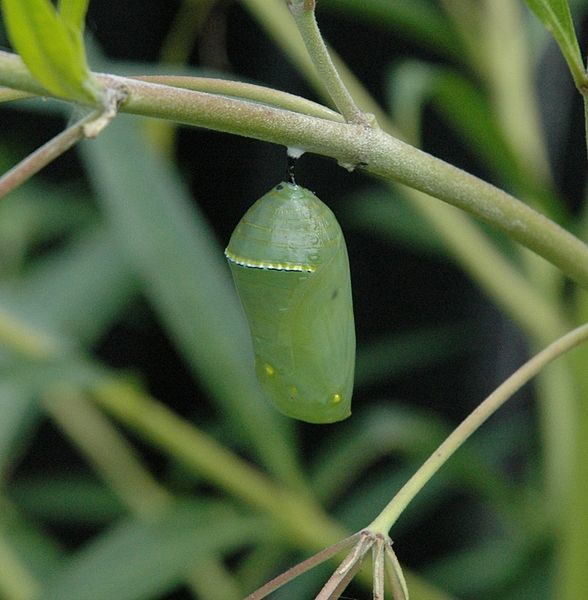
Change is already happening. There are millions of people and groups who are in some way involved in a new vision of community, and we can be a part of it. David Korten calls our attention to the familiar story of the caterpillar and butterfly. We all know the story. The caterpillar spends its days gorging itself on nature’s bounty. But then it attaches to a twig and forms a chrysalis around itself in order to become a butterfly. What we might not know is what’s happening inside the chrysalis to shape the butterfly.

Monarch Butterfly Chrysalis Photo by Armon, Licensed via Wikimedia Commons

Monarch Butterfly Chrysalis
Photo by Armon, Licensed via Wikimedia Commons

Korten, drawing on the work of evolution biologists writes:

The structures of its cellular tissue begin to dissolve into an organic soup. Yet, guided by some deep inner wisdom, a number of organizer cells begin to rush around gathering others cells to form imaginal buds, initially independent multicellular structures that begin to give form to the organs of a new creature. Correctly perceiving a threat to the old order, but misdiagnosing the source, the caterpillar’s still intact immune system attributes the threat to the imaginal buds and attacks them as alien intruders.

The imaginal buds prevail by linking up with one another in a cooperative effort that brings forth a new being of great beauty, wondrous possibilities, and little identifiable resemblance to its progenitor.

Korten sees our cultural transformation in a similar vein. Individuals wake up from the prevailing social systems, and begin to align their lives with the values of partnership and earth community. At first they experience a sense of isolation, but eventually they find others who share those values, and form what Parker Palmer calls “communities of congruence.” Those small beginnings attract others—they are like the imaginal buds of the new culture.

The old culture perceives them as a threat and often attacks their work. But as they network with others who share in the new cultural values, change begins to happen. Korten says that the cultural transformation we need is already in process—we can see the evidence of its beginnings in the great social change movements of the last half of the twentieth century—for civil rights, women’s equality, peace, environmental balance, and economic justice.

I saw a cartoon the other day. Four people were sitting in a boat that had tilted precariously and was filling with water at one end. The two people at that end were bailing furiously. The two people at the other end were sitting high and dry—and one said to the other, “It’s good that our end of the boat isn’t leaking.”

We are all in the same boat—this planet earth. The only real security we can create is a common security. When we finally realize that we are one family, one interconnected whole, essentially united with each other and with the earth, we will be able to find a way forward together. I believe we are already on the path. May we find the courage to take the next steps before us.

David Korten quotes from The Great Turning, p. 74-75, & 84-85.