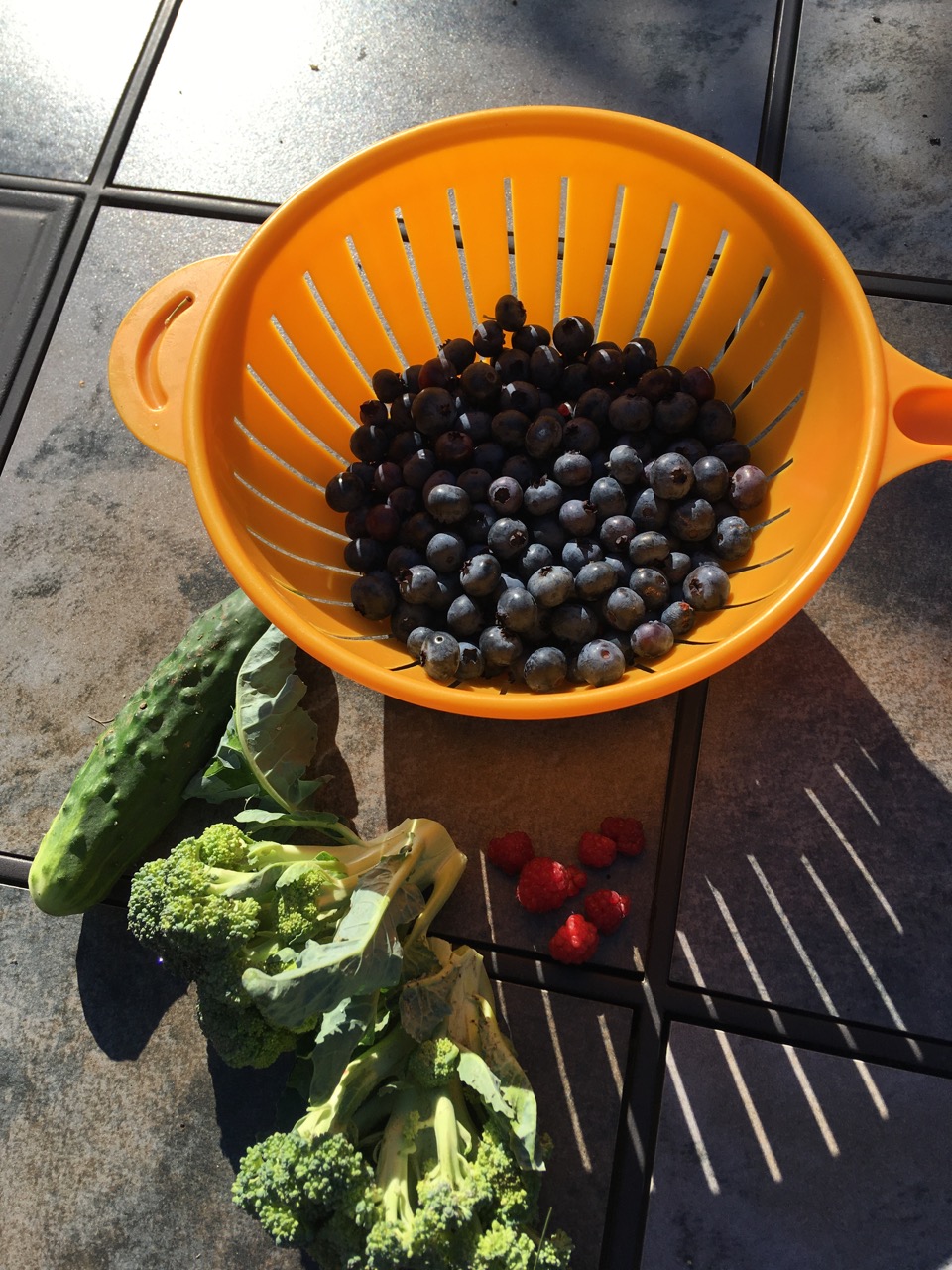
In the excitement of the fledgling robins, I didn’t post about our Lammas harvest. The photo is of our fruit and veggie harvest of August 1st. It has been a great year for blueberries! We have also harvested some kale–there is more that wants to be cut today– some zucchini, some raspberries, and more cucumbers. Lammas is the first harvest festival of the season, and I am grateful and amazed that despite all our limitations, we actually receive food from this land.
We can’t control anything about this land. We can’t control what plants will thrive each season–no cherries or peaches this year, for example. But in partnership with the land, in our belonging to the land, these moments of yield emerge. So grateful!
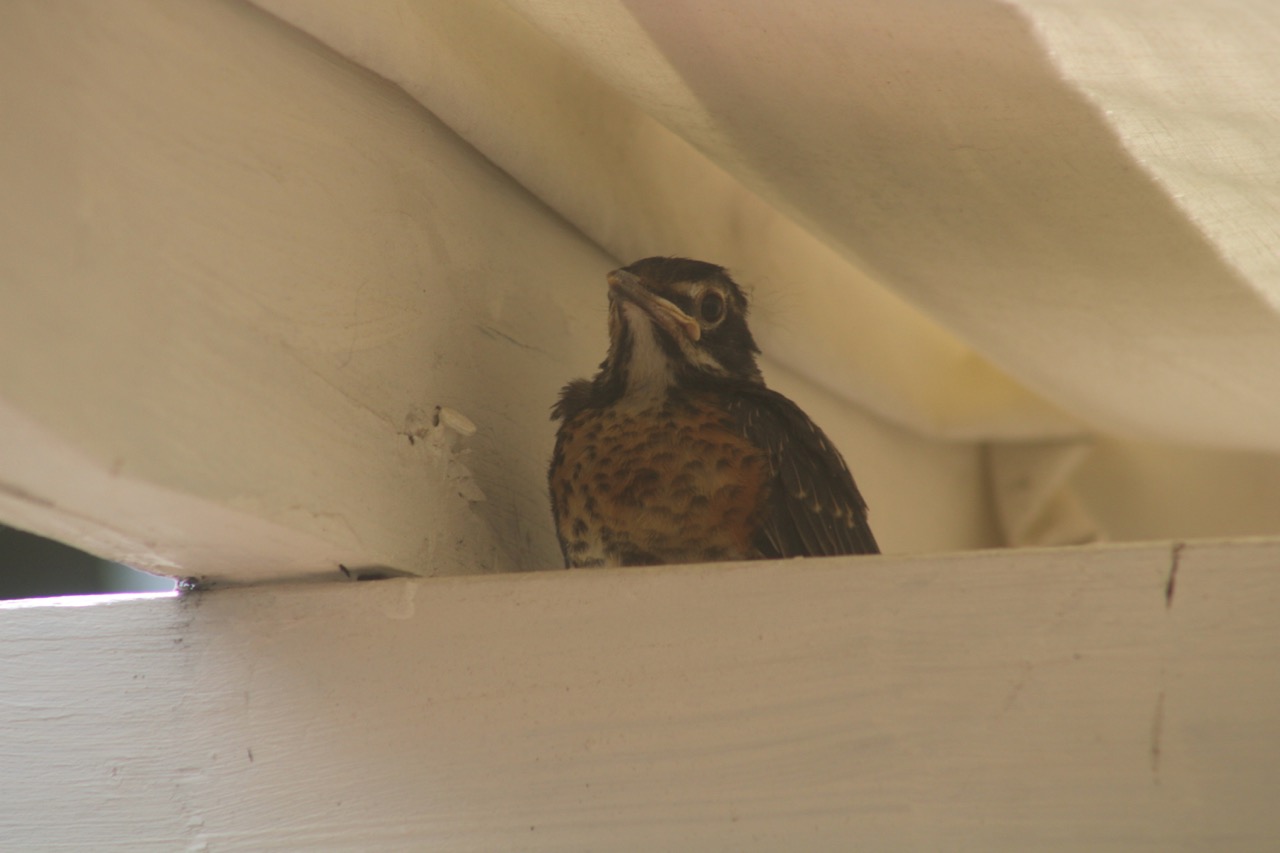
Our Lammas harvest festival blessing was being able to watch the fledging of the robins’ third brood of three chicks. (That makes nine chicks all together!) They had been getting active the last couple days so we were expecting it. But what a nice surprise to look out the window and see the first fledgling perched all alone on the deck railing, looking around at the big wide world for the first time.
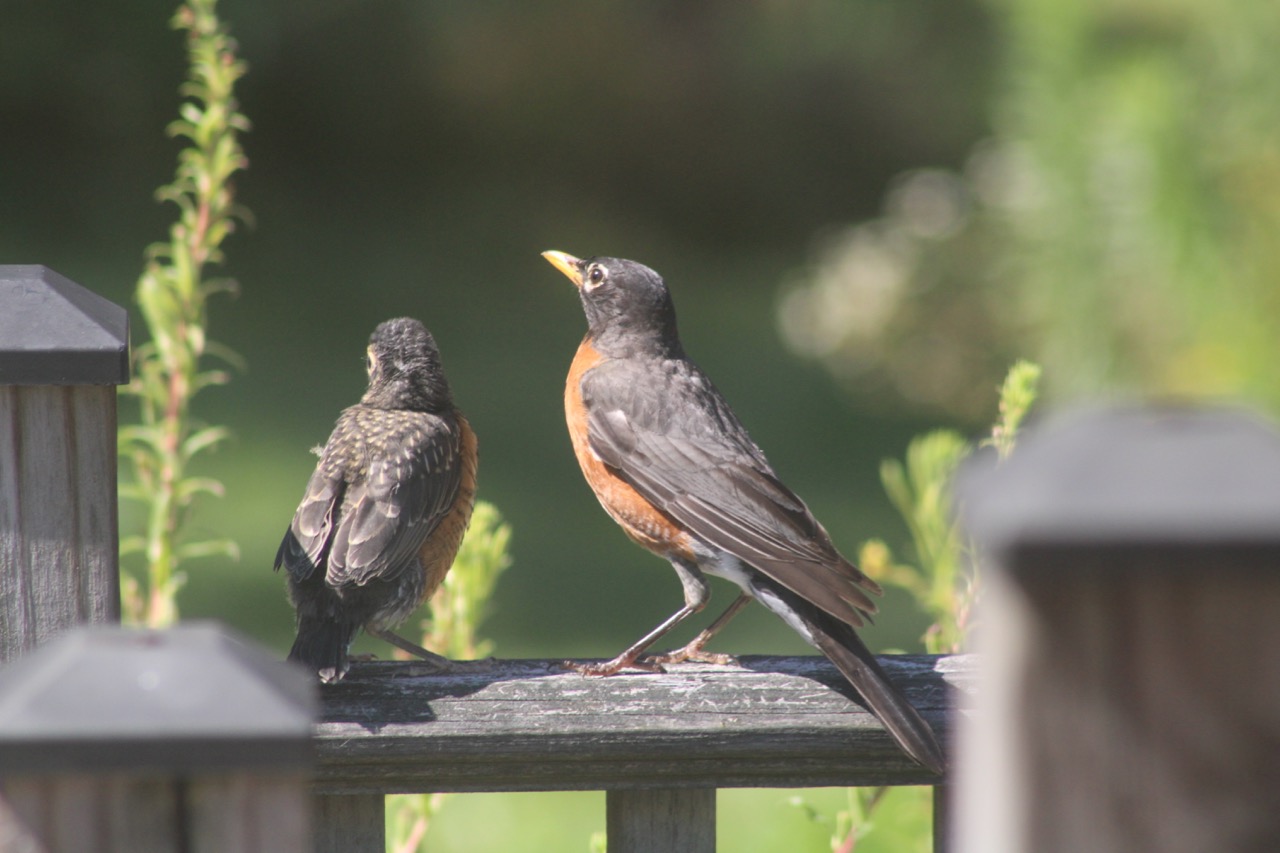
They probably saw their mother hopping on the ground further in the back yard. (We did too.) Then the mother flew up next to it on the railing for encouragement. (That was photo number one). After looking at each other, they each looked out beyond, and then the mother flew off, and the baby soon followed, alighting high in the hazelnut bushes.
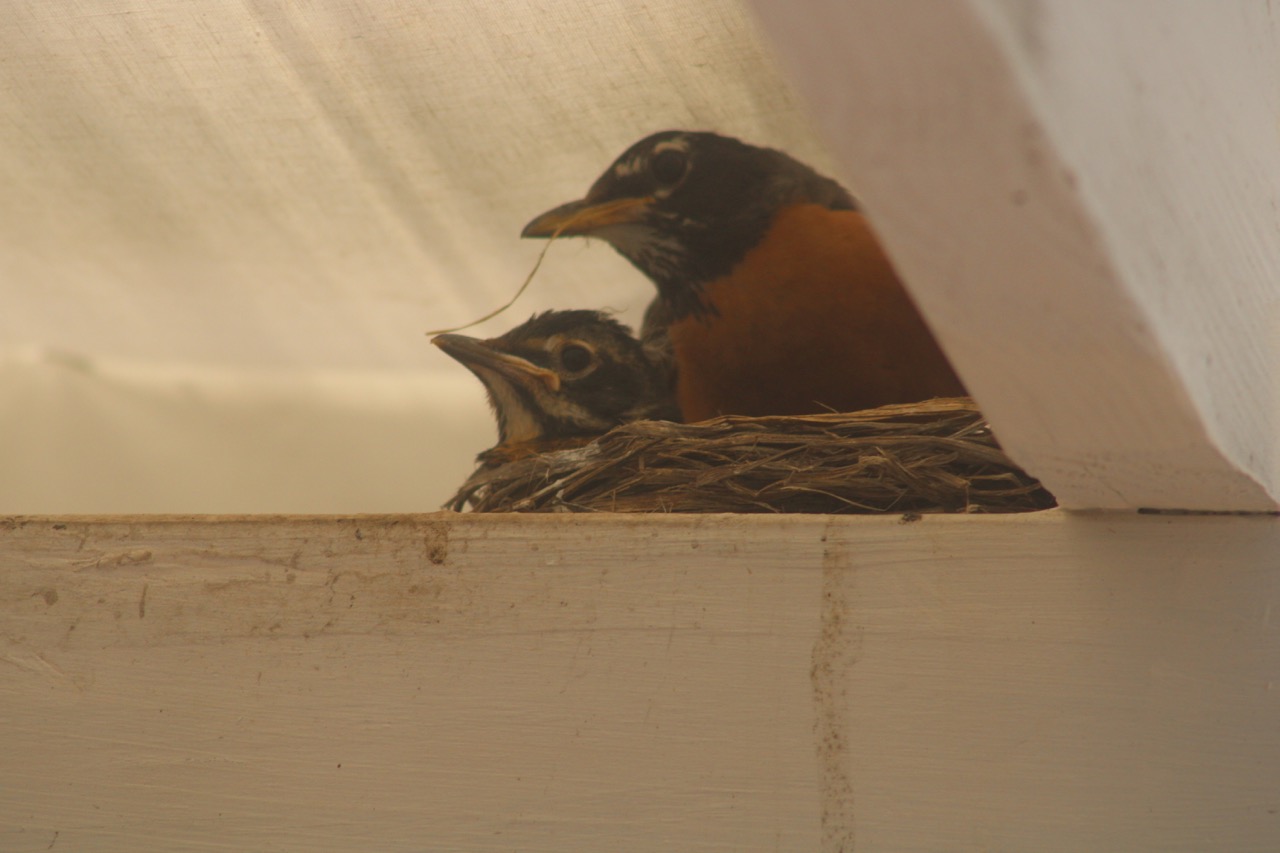
The other two remained in the nest for a little while, but soon the second one flew out toward the orchard. Finally there was just one left. I wandered around outside, but the parents were chirping at me, their warning calls. I saw the parent robins also diving and shrieking at squirrels in the pitch pine tree branches, and angrily calling at a cardinal who came into the cherry tree–too close as far as the robins were concerned. Back inside for a while, I saw the dad robin come to the nest–with a piece of grass in his beak, but I didn’t see food. He sat with the third baby for a while, so tender. After he left, the baby shrunk down into the nest, only its beak visible. Hiding mode.
I had to go out in the orchard to do some mulching, and then I sat at the patio table. I could hear number three chirping every so often from the nest, their head visible again, and then I’d hear another chirp from the direction of the hazelnut bushes. When I came back inside, I kept an eye on them through the windows. They got out of the nest finally, and hopped along the beam to the other side. While the first fledgling had seem so confident and proud of itself, this one seemed quite scared about jumping from its safe little home. But everybody had left. It huddled up next to the opposite side beam.
Finally, the little one started to stretch their legs, and move their wings a tiny bit. They moved up to the very edge of the beam. They hovered there for quite a while. One of the parents came back to the deck railing down below and behind the nest. I also saw a female gold finch perched on the railing in front of the nest. Not sure what that was about. A chipmunk was scurrying below on the patio. I stood still next to the back windows and just watched–I didn’t take any more photos. The gold finch left, the parent left, the chipmunk left. The little one perched on the edge. Then they bravely jumped off.
I heard a flutter of wings against the screen window of our music room, just to the left of the deck out of my sight. I went out the door to observe, and saw that the baby was hanging by one claw stuck in the screen, and flapping their wings against it. I walked to the edge of the deck, reached over and cupped my hands gently around the baby, careful to contain their wings, lifted them to release the claw. I let go and they flew down to the lemon balm patch. Be still my heart. They slowly hopped out onto the patio, hopped over some garden hoses, making their way over to the mulched area under the cherry tree. They hopped into the grass behind, and finally they flew up over the grass into the trees.
And then the nest was empty. They say that robins raise two or three broods a season, and if that is true, they may be done with the nest for now. They’ll feed the babies for a few more weeks out in the bushes and trees. I wonder how all nine of their children are doing? Did they all survive? I hope they are thriving. We don’t see them once they leave the nest, so we never know.
I feel a sense of joy, and a sense of loss, all at the same time. I feel grateful for the privilege to observe the robin family, and for the moments I was able to capture in photos. I feel sad to look out the window and see them gone. I am also grateful that I was able to give them a little shade fromthe sun, and maybe that helped.
Today is the Celtic celebration of Lammas, the early grain harvest festival. I’ve always connected it to the early corn harvest–the time to start eating local corn on the cob in the places I have lived. Our little group that celebrates earth rituals together hasn’t met since COVID, and I feel sad not to see them today. But this morning I was able to bring some zucchini and kale to the Resilience Hub, where a volunteer was collecting produce from gardeners to share with immigrant families in the Portland area. That truly felt like the best way to celebrate this holiday–sharing the surplus of our own harvest for those who need it, in the spirit of reciprocity.
Myke standing behind the hugelkultur zucchini! Photo by Margy Dowzer
Lately, I’ve been feeling rather overwhelmed by the gardening endeavor. Take note of my photo behind the hugelkultur zucchini–you almost can’t see me at all. There is watering to do each morning, and I’m harvesting raspberries, the last of the snap peas, chives, zucchini, and kale. Oh–and one cucumber so far. I learned how to freeze zoodles (zucchini noodles) so that we can save some for the future. I am also freezing most of the raspberries and chives. So all that is wonderful, but still a lot of work.
Added to that, however, has been discovering that each new plant I add to the garden seems to come with its own ecosystem of insect pests and diseases. I was used to Japanese beetles, and shaking them from the leaves of trees into soapy water. I was used to picking off cabbage worms from the kale and squishing them. But then I learned about the squash bug and the squash vine borer. I don’t see any significant damage yet on the zucchini plants, but I’ve seen the bright red and black flying parent of the grubs that can burrow into the stems. This morning, there were some zucchini leaves with powdery mildew. Another yuck.
Now we also seem to have grasshoppers eating the carrot tops and the kale–except for a new variety of kale that I got from a friend, which is too prickly for my taste. (That is ironically maddening! Why don’t you eat that one, grasshoppers?) I did some research and if I wanted I could try garlic spray, or flour on the leaves. But right now I’m just hoping they don’t eat enough to wipe out all the plants. Also, I put more bird seed in the feeder in hopes that some of those birds might also eat grasshoppers. But there is so much to know, and so many possible pitfalls, even in the context of our organic permaculture polyculture systems.
So like I said, I’ve been feeling overwhelmed by all of it lately. I was thinking back to my original intention with this land–I wanted to restore our mutually beneficial connection to the earth, via this small piece of the earth we are lucky to live upon. And what I am learning is that it is not so easy–I’ve lost so much of the knowledge of plants and ecosystems that my ancestors might have had in the places they called home. I am sure there are long-time gardeners who find a way to learn what they need from the practice of gardening–but I am coming to it late in life, and I can feel that it could take a whole lifetime to become adept at working with ecosystems to nurture wholeness and balance.
It’s not all flowers and romance, this relationship with earth. It’s crabgrass and ticks and mosquitos and so many unknown insects, (beneficial or destructive?), not to mention diseases, viruses, bacteria. Some aspects of earth are not so easy to love. It’s invasive species and drought and climate change. It’s beyond what I can learn and I’m discovering the limits of my capacity. So I come to the garden like a prayer: sometimes with awe, sometimes with gratitude, but often with a cry for help, often with a deep painful longing for all that has been lost, often with loneliness. If I can pay close enough attention, finally, I come to the garden with surrender, surrender to this larger dance of life of which I am only a very small movement.
Transitions create a liminal time, a time on the threshold between old and new, between past and future, a sacred time, perhaps a dangerous time. Yesterday, I turned in my keys to the congregation where I had ministered for 13 years. My retirement is official. But who am I now?
It is not that I didn’t have any ideas about what I might like to be doing after I finished that work. I imagine I will still be on A Spiritual Journey into Earth Community, what this blog is all about. But what I notice, and have been noticing the last few weeks, is a sense of floating or flying, a sense of directionless. I haven’t been able to put it into words. But artist Cathryn Falwell captured it in this beautiful banner she created for me as a retirement gift. (Thank you Cathryn!) The red cardinal is flying over the terrain of earth, hills, trees, clouds, water. The landing is not yet in sight.
It is not a fearful time, nor sad really, though I have moments of sadness about letting go. It is not really excited or joyful either. I am not doing a happy dance. It is “in between” everything. I remember that I wanted to have a sense of spaciousness, an empty space before I filled it with new things. So perhaps it is a spacious time, though it doesn’t quite feel spacious yet.
I realized a few days ago that summer in Maine always carries a sense of urgency. There is such a short growing season, and the garden clamors for attention. We have reached the solar festival of Lammas, the early harvest celebration. The garden is full of harvestables–huge kale plants, and basil; the oregano and thyme herb clusters have expanded and gone to flower to the delight of all bees; volunteer blackberries are starting to ripen in the back of the yard and down the street at a vacant lot. We are also overgrown with crabgrass and could never finish all the weeding that one might do. Plus there are always practical things to attend to–meals, dishes, bills, household maintenance. Not to mention that the beach also calls us to swimming during these hot sunny days that end so quickly.
So what is spaciousness? How do I float along in this empty and full terrain? Perhaps I just float along. Perhaps I just float along, until the next sacred thing emerges.
Today is the celebration of Lammas, the Grain Festival–or how I often have thought of it here in North America–the Corn Festival. This is the time when local corn on the cob is finally ready! In its European origins, “corn” meant wheat, and it was a celebration of the wheat harvest, complete with Lammas breads eaten during the rituals. But lately, I have been following a mostly grain-free eating plan–no wheat, no gluten, and no corn. So how might I celebrate Lammas?
I am planning to go outside for a fire this evening. We had our first fire in our fire circle on the new moon on July 23rd. (the photo is from that fire) A fire always feels like an invocation of the sacred. Perhaps it would work also to celebrate with nuts and fruits, which are like grain in that they are the seeds of the plant. They are freely gifted by the plants to human beings. All cultivated plants co-evolved with human communities. So perhaps tonight I will celebrate that partnership between human beings and plants!



 Transitions create a liminal time, a time on the threshold between old and new, between past and future, a sacred time, perhaps a dangerous time. Yesterday, I turned in my keys to the congregation where I had ministered for 13 years. My retirement is official. But who am I now?
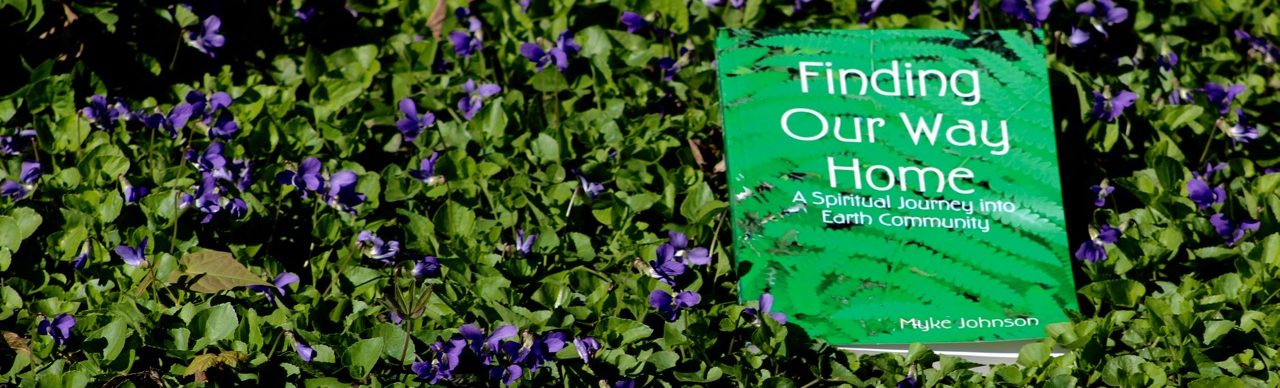
 Finding Our Way Home