Threads of Connection

I believe God is everything, say Shug. Everything that is or ever was or ever will be. And when you can feel that, and be happy to feel that, you’ve found It.
                                                                                                 Alice Walker

Daffodils Early MJ DSC03512

We’ve finally arrived in April. In a couple of weeks, the daffodils will begin to bloom in our front yard, and the first bright yellow dandelions will pop open behind the house. The forsythias will be first–maybe as soon as next Sunday?  But I can’t wait for the moment when the first daffodil breaks through its luminescent green casing, opening up pale yellow to reveal an orange center.

In spring, I keep taking short walks around our yard and down the street just to see what will happen next. The small wild strawberry flowers. The green buds of bushes opening into curled leaves. The leaves of the violets coming up out of the bare ground where I thought they might have perished in the fall. And down the road, the first fiddleheads of the ferns beginning to poke through the ground that a day ago had been fern-less.

This awakening seems to happen all at the same time. This week there are the bare branches and brown grasses, and then suddenly, everything will be green and lush and colorful. How do they know to break through, all in the same week? It helps me to understand what I have read about evolution—that species co-evolved with each other. That flowers emerged along with their pollinators, and each flower with its particular pollinator, so interdependent that we do them a sort of injustice to think of them as separate entities.

And of course, the insects will also come out with the flowers here in the spring, small ground bees hovering over the grass as if waking from a long sleep. The hummingbirds will arrive when the pink flowers of the viburnum open near our kitchen window. When the buds begin to get ready, it is our signal to put out the feeder, so we can join in.

All around us, like a choreography of dance, like a vast symphony, the beings of the earth move in harmony. And in this particular time of the year, this beautiful season of awakening, we can see it and hear it and smell it and feel it, if we pay attention. We can feel the threads of connection that make of many beings, one indivisible whole.
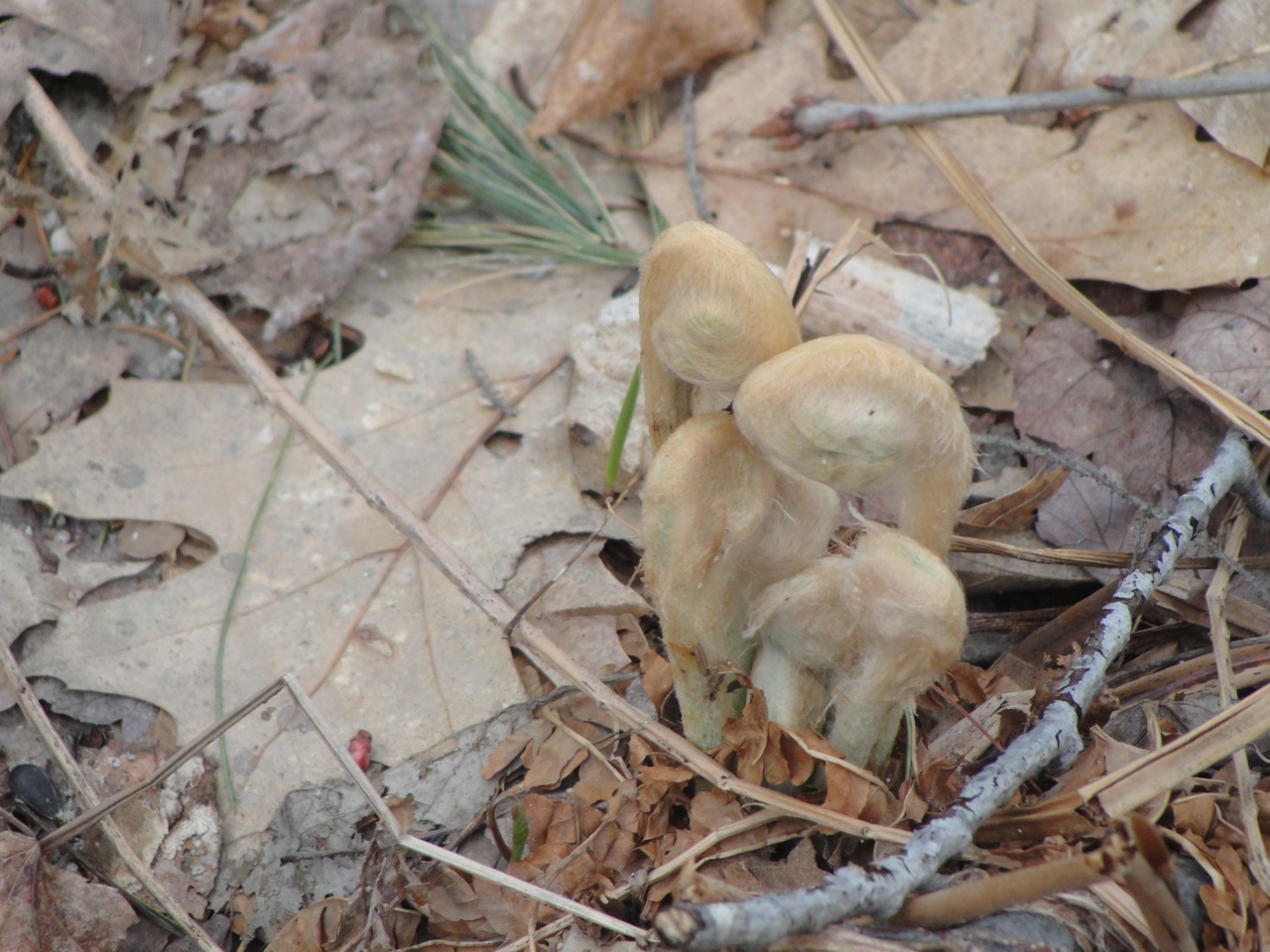
Fiddleheads DSC00234

Truly, we live with mysteries too marvelous

Truly, we live with mysteries too marvelous
to be understood…
Let me keep company always with those who say
“Look!” and laugh in astonishment,
and bow their heads.
                                Mary Oliver

Ice Crystals MJ DSC01894

From “Mysteries, Yes,” in her book, Evidence

God, if You are real, I need a sign

If we’ve never tried to make a spiritual journey, it can seem complicated and difficult, like me trying to make sound come out of a saxophone. But once you’ve found the music, it can be as simple as turning a dial. We learn to recognize the sound of the Mystery’s still small voice. There isn’t just one right way to do it. The practices of the religions of the world are all attempts to find a way to tune in.

We might take up serpents, or practice sitting meditation, but we don’t need to. We don’t need to call it God or Goddess, or Spirit or Mystery, or call it anything at all, though that can be helpful to some people. We don’t have to come up with faith we don’t possess or sacrifice our desires. Whatever is going on in our deepest heart can help. Even doubt or despair can call it forth. We don’t have to abandon our intellect, or be a perfect icon of virtue. But we do need to slow down, change our frequency. We need to pay attention. We need to open a channel or a doorway, invite a connection.

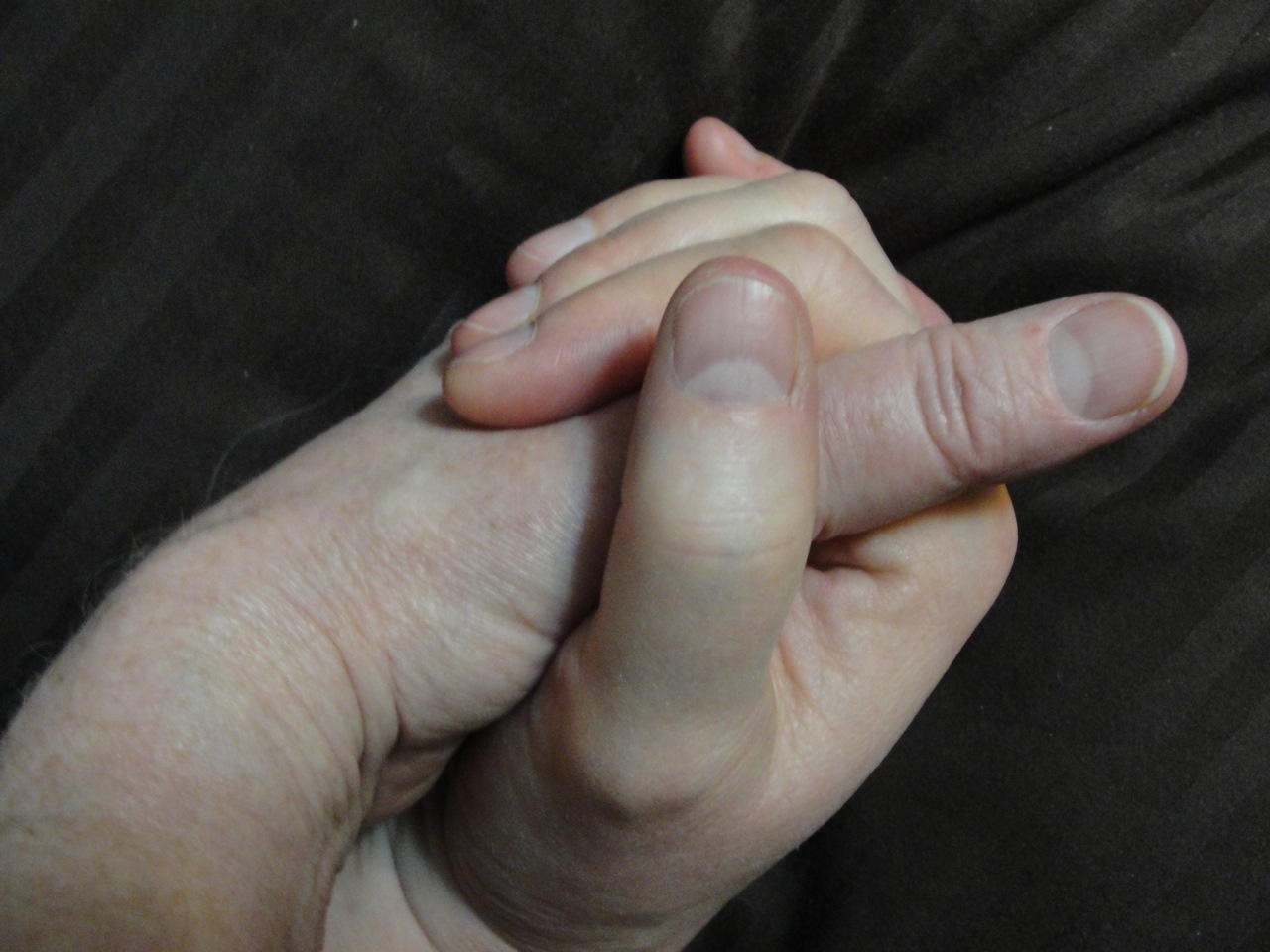
Hands MJ DSC02028One evening, during my first year in college, my best friend and I were sitting in the quiet candlelit chapel of our campus. A few other people were also there, scattered about the pews. I remember feeling that we each seemed so isolated in our private meditation. I was moved to reach out and take the hand of my friend. Little did I realize, at that very moment, she had been wrestling with her own inner spiritual struggles.

Feeling a certain despair, she had just prayed, “God if you are real, I need a sign. It doesn’t have to be a miracle, I just need you to touch me in some way.” Then, I innocently took her hand, and it was the touch of God that she experienced.

Would you climb a mountain if you knew for sure that you could have a spiritual experience at the top? Would you go down into the river? Would you risk an invitation?

Experiencing the Mystery

I think back to the image of the radio waves that I have spoken about before. All the time, there is music moving through the air but we are unaware of it. However, if we tune our radio to the right frequency, we can suddenly hear the music. A whole invisible world opens up to our ears. In the same way, the larger reality, the Mystery, is already here, all the time. The Mystery is the unseen energy that connects and upholds all that exists. An even better image is wifi or a cell-phone. It isn’t just about hearing the voice of God, like music in the air, but also about our own voices being heard. We are connected. Someone, something, is paying attention to us, too.

We might think we are tiny insignificant specks of dust in a vast universe. Why would the Mystery want to pay attention to any of us, prophets or otherwise? I’m not sure, but I do know that there are moments when I feel paid attention to, when I feel connected. When that white truck took me to Massachusetts, I felt it. The Jewish religion has a belief that what we call angels are the manifestations of God into our individual lives. Not huge earthquakes, but a tiny whispering breeze that touches our hearts. A still small voice. Some call it synchronicity or serendipity. When I have opened my heart to the Mystery, the Mystery responds.

There is another part of the Elijah story that speaks to me. Just after Elijah heard that the queen was trying to kill him he went into the nearby wilderness. He prayed, “Yahweh, I have had enough! I wish I were dead.” Then he lay down and went to sleep. But an angel woke him and said, “Get up and eat.” He looked around, and there at his head was a scone. It doesn’t say what kind of scone. Did they have cinnamon or raisin scones then? I like to imagine that if God was thoughtful enough to send a scone, it would be a favorite kind. The angel said, “Get up and eat, or the journey will be too long for you.” So he ate the scone, and then he was ready to make that forty day trip to Mount Horeb.

My experiences of the Mystery are like that. A little scone, so I have the strength to make the long journey.  Or a small bird.  Or a hidden chipmunk watching me on the path.Chipmunk in Log MJ DSC04989

Miracles

One of the first things to be discarded by the early Unitarians, as reason was adopted as their guide, was their belief in miracles. They celebrated the wonder of the natural world, but decided that healing and prophecy and other supernatural events found in the Bible were imaginative stories from a more superstitious age. And it all makes sense: those events were not a part of their own lived experience.

However, there are many mysterious aspects of our human experience. More recently, even scientists have grown curious about healing, extra sensory perception, and other phenomena that seem to defy logical understanding. As the orderliness of Newtonian physics gave way to the strange chaotic properties of matter and energy encountered in Quantum physics, people began to wonder if spiritual mysteries had been cast aside too soon.

It has been difficult to use the scientific method to sort out the very subjective realm of spiritual experience. If some people can experience God, does that mean all people should be able to do so? Are there spiritual methods and practices that should consistently produce a spiritual experience? Buddhist and other forms of meditation have had an appeal for skeptical thinkers because meditation is a practice offered in the manner of an experiment. It is a method, not necessarily linked to particular beliefs, and anyone can try it out. But this is not to say that results are easy to measure.

I believe when we move beyond religious dogma that tells us we must believe certain miraculous things have happened in the past, we can move toward a thoughtful openness and curiosity about the inexplicable experiences of our own lives and the lives of those around us. Let me tell you a story from my life. It is actually a rather simple story, nothing big or dramatic. But it taught me something about miracles.

In the spring of 1986, I was living at the Seneca Women’s Peace Camp in upstate New York. At that time of year, there were only a few of us there, staying in an old farmhouse on land near the Seneca Army Depot. We were there to protest nuclear weapons, but this story is not about a prayer for world peace. At that time, my lover was living in western Massachusetts, and I missed her. I didn’t have a car, or much money. My prayer was a wish that I might find a way to go visit her.

The camp was a crossroads of sorts, and it wasn’t uncommon for us to have visitors. Peace activists from all over would stop in for a day or a week. Not so many during the winter or spring, but still a few. In my prayer, I was conscious of my wish to see my love, and I remember imagining someone coming like a knight on a white horse to carry me to Massachusetts. Quite a small prayer.

The very next day someone drove into the driveway. The visitor was driving to Massachusetts in a white pickup truck. It would have been enough to get a ride, which I did. But the white pickup truck was an added ironic touch that still sends goose bumps up my arms. So whimsical and tender a response. 

Photo by Margy Dowzer

Photo by Margy Dowzer

Feeling After God Is a Dangerous Business

Would you climb a mountain if you knew for sure that you could have a spiritual experience at the top? Would you go down into a river? About fifty years ago, theologian Harvey Cox predicted that religion would decline in the face of modern progress, and many educated people agreed. They were skeptical about all matters religious or spiritual. But his prophecy did not turn out to be accurate.

Many people began looking for spiritual experience again, evidenced by such widely diverse phenomena as the New Age movement, the popularity of the Pentecostal movement, and the growing number of people who call themselves “spiritual but not religious.” What they have in common is the desire for an experiential connection to the larger reality, to the mysterious, to the divine. But for many this is still unfamiliar terrain. What is Spirit anyway? What is the Mystery that connects and upholds all life? By what signs would we recognize it if we experienced it?

September 15, 1946 (National Archives and Records Administration). Photo by Russell Lee.

September 15, 1946 (National Archives and Records Administration) Photo by Russell Lee.

One group of people who thought they had the answer were the snake handling churches of the Appalachian south. Perhaps they offer a cautionary tale. Dennis Covington wrote about them in his book Salvation on Sand Mountain. He entered into the world of the “Church of Jesus Christ with Signs Following.” Its name and its practices were drawn from an obscure verse at the end of the gospel of Mark: “And these signs shall follow those who believe: in my name they will cast out demons; they will speak in new tongues; they will pick up serpents, and if they drink any deadly thing, it will not hurt them.”

Interpreting these words literally, their church services regularly invite believers into prayers for healing, the handling of rattlesnakes, and the drinking of strychnine poison. While on the surface, it doesn’t sound like this would play well as an advertisement for divine encounters, the author was amazed to find himself drawn more and more into the power of their experience. What began as a journalistic investigation became a much more personal exploration.

Eventually, he too joined in, and took up serpents. He described it like this:

I didn’t stop to think about it. I just gave in. I stepped forward and took the snake with both hands. I turned to face the congregation and lifted the rattlesnake up toward the light. And it was exactly as the handlers had told me. I felt no fear. The snake seemed to be an extension of myself. And suddenly there seemed to be nothing in the room but me and the snake. Everything else had disappeared… all gone, all faded to white. The air was silent and still and filled with that strong, even light. And I realized that I, too, was fading into the white. I was losing myself by degrees… The snake would be the last to go, and all I could see was the way its scales shimmered one last time in the light… I knew then why the handlers took up serpents.

 What makes an experience a spiritual experience? By what signs would we recognize it? Is an experience of ecstasy an experience of God? Covington would later compare the ecstasy of snake handling to the adrenaline induced high of being on a battlefield, surrounded by the risk of death. But eventually, he mistrusted this emotional surge. It wasn’t the physical danger that drove him away. Rather, it was the dogmatism of the spirit-filled preachers, who condemned him when he didn’t accept their whole system of beliefs. Near the end he remarked, “Feeling after God is dangerous business.”

The Sun Shines on All

Reconciliation and forgiveness require us to seek out those whom we have hurt, or who have hurt us, to make things whole again. We must mend the threads of connection between ourselves and other people, between ourselves and the earth, between ourselves and the Mystery of life.

This is not easy work. It is not just big societal evils that we face. We also face the everyday betrayals and regrets. Self-forgiveness may be the hardest of all. We face the perennial faults that are unique to us, yet common to so many. We mean to be kind, but find ourselves cranky and rude instead. We mean to be supportive to a friend or family member, but feel judgmental instead. We mean to be honest, but tell little lies to avoid upsetting someone. We mean to be generous, but feel greedy about our pleasures.

Can I forgive myself the belief that I am right when I argue with my neighbor? Can you forgive yourself the angry words shouted at your child as you are trying to get out of the house to make it to school or work on time? Can we forgive ourselves the end of a relationship with a partner or spouse? Can I forgive myself for needing help when I don’t know how to face a situation on my own?

Sun and Snow DSC06016What helps me to forgive is to remember the sun. The sun shines down on all of us, each day, making no distinction between the good and the bad, making no distinction between when I am in tune with all my values, or when I fail. Its light is constant, never changing because of virtue or vice, but merely following the rhythm of the seasons and lighting up the blue sky or the gray clouds. Its light keeps shining, giving life to all creatures. When I remember that I am accepted as part of the circle of life, it seems easier to open my heart to forgive myself.

And if I am a part of the circle of life, so is everyone else. If I believe that all people, and all beings are connected, then in order to be whole, I must open my heart to that larger whole, to the connections between all people and all beings. This is the heart of spiritual practice—to open our hearts to the larger whole of which we are a part.

What kind of God do you believe in?

Winter Sun DSC09206

I have never believed in God. Not in your God anyway; the one who looks down onto his chessboard and moves the pieces according to his pleasure, occasionally glancing up at the face of his Adversary with the smile of the one who already knows the outcome. It seems to me that there must be something horribly flawed in a Creator who persists in testing his creatures to destruction, in providing a world well stocked with pleasures only to announce that all pleasure is sin, in creating mankind imperfect, then expecting us to aspire to perfection. …There must be something else, I told myself repeatedly; something beyond sin and solemnity, dust and devotion; something that loved life as indiscriminately as I did.
                                                                Joanne Harris from Holy Fools, p. 32-33.

Throughout history, people have wrestled with the mystery of powers greater than themselves. There are many ways that people have understood these powers—some peoples believed in a pantheon of Gods and Goddesses who ruled various aspects of life; others claimed that there was only one Supreme Being, while still others espoused a belief in natural processes that have unfolded to create the universe as we know it today. We often hear the question now framed simply as: “Do you believe in God?”

Many of us, as children, are presented with one idea of God, framed as if it were the only possible idea of God. If that idea doesn’t work for us, or even hurts our spirits, we may reject the whole notion of God, without further reflection. But there is not just one idea of God, there have been many. People imagine God in one form or another, and it is important to realize that our images of God are not what God really is.

God is a name that some give to the mysterious forces that sustain and uphold the larger reality of which we are a part. These forces are beyond our capacity to actually know or define. We understand them through the use of symbol and analogy. We say God is like this, or God is like that. So, rather than ask, “Do you believe in God,” I think it is much more important to ask “What kind of God do you believe in?” or perhaps even, “What kind of God do you not believe in?” 

In the tree I am held by God

Beech Tree Leaves 133650004There was one more communication I experienced with the four directions tree which was not about writing or speaking or even thinking. Sometimes I merely sat, my body balanced between the sturdiness of the main branches, my eyes resting in the translucent green softening the sunlight.

Even then, the tree and I were involved in a sacred exchange. When I breathed, the tree was my intimate partner. The tree breathed out the oxygen that I needed to be alive, and I breathed out the carbon dioxide that it used for nourishment. Our physical bodies are designed to need each other. We give and receive the very substance of our lives. We have been giving and receiving this way for millennia.

We and the trees are neighbors on this planet, but more than that, we are sacred partners, we are kin. We are genetically and spiritually related to each other. If we are open to respecting the trees, if we value the inherent worth and dignity of the trees, it then becomes possible for us to experience in the trees the presence of the divine Mystery.

Breathing and writing, dreaming and remembering, in the sacred arms of the beech tree, I knew I what it felt like to be held by God and to be one with God. The trees teach us that all of us are related; their quiet language sings the song of the marvelous interweaving unity of life on Earth. Remember this, the next time you walk by the trees near where you live. Listen. And then remember to say thanks.

Blessed Illusion!

Flowing Water MJ DSC02210The Spanish poet Antonio Machado wrote,

Last night when I was sleeping,
I dreamed—blessed illusion!—
there was a fountain flowing
deep within my heart.
Water, tell me by what hidden
channel you come to me,
with a source of new life
I never drank from before.

Last night when I was sleeping,
I dreamed—blessed illusion!—
I had a beehive
deep within my heart;
and the golden bees
were using old
bitterness to produce
white wax and sweet honey.

Last night when I was sleeping,
I dreamed—blessed illusion!—
a blazing sun was shining
deep within my heart.
It burned because it gave off
heat like a red hearth;
it was a sun that illumined
and also made me cry.

Last night when I was sleeping
I dreamed—blessed illusion!—
it was God that I felt
deep within my heart.
                                                                          Translation by Armand F. Baker.

As I have explored in earlier posts, the word God can be a confusing word. God is hard to talk about—whatever we can say about God, that is not really what God is. Machado’s poem uses these stories and images, these dream illusions to describe a movement of mystery within his heart.  Robert Bly, in a more well known translation, calls the original spanish “¡bendita ilusión!” a “Marvelous Error.”

I believe that Machado knows that words can’t really describe what he has found inside his heart.  Only “illusion”–he calls it a blessed illusion–can begin to point to it.  And yet, what we say about God reflects what we worship in the temple in our hearts. What we say about God matters.  And saying this word God is a good reminder to choose something big enough to worship. Saying the word God is a good reminder not to give our devotion to anything which is not worthy of us.

Raymond Baughan, said,

What is required of us…
Is that we go down
Into uncertainty
Where what is new is old as every morning
And what is well known is not known as well…

What is worthy of our worship? What can lead us into the largest reality of which we are a part? What can open our being to the essential Mystery? What will keep expanding, and never be smaller than what we have already known? It is a process never finished.

“What is Required of Us,” by Raymond Baughan,author of The Sound of Silence: a Book of Meditations, 1965, Unitarian Universalist Association.