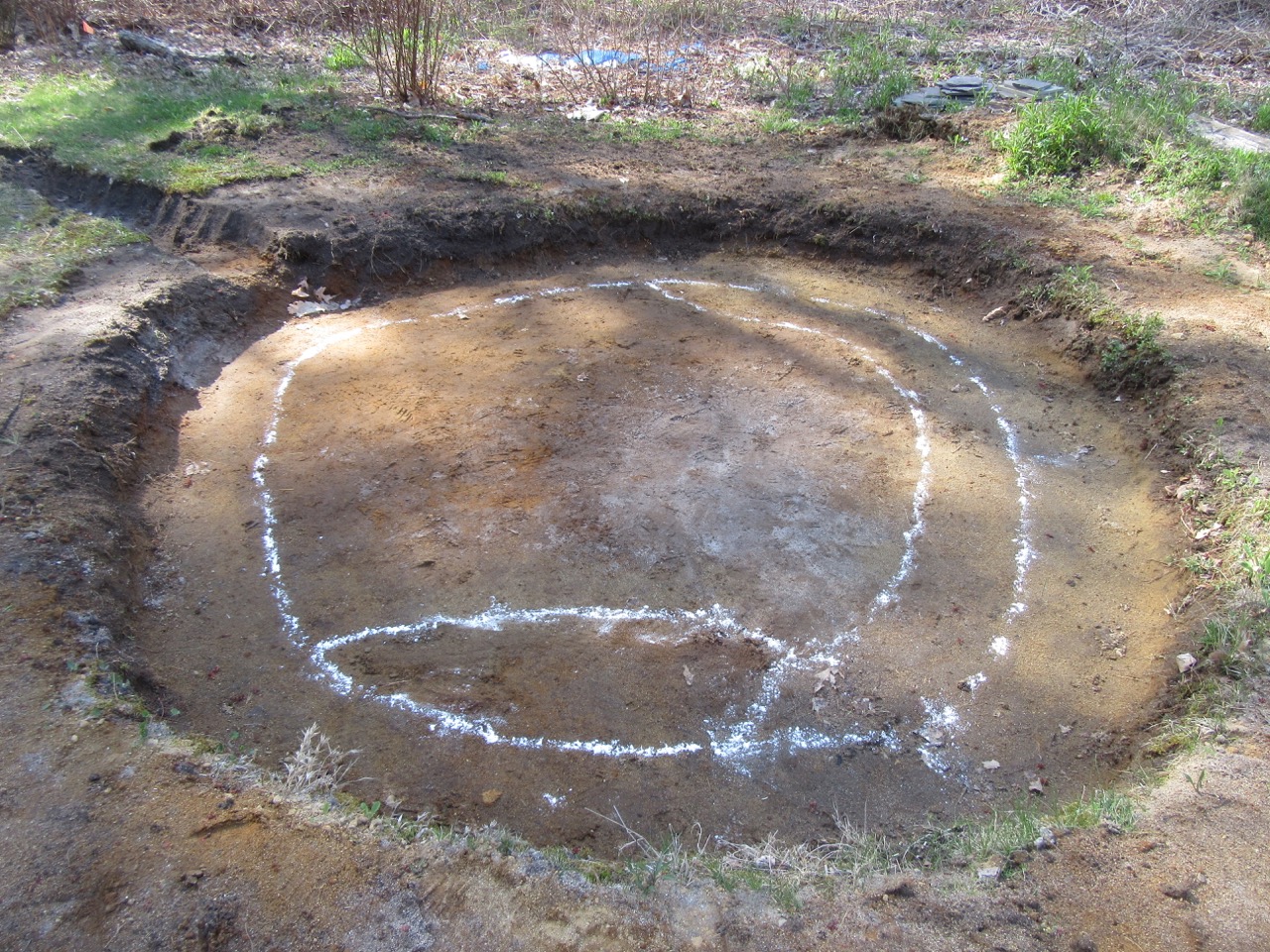
More on my adventures in digging a small pond! Yesterday I finished digging the first layer of the pond, down to the level of the planting shelf, about 1 foot. I checked whether it was fairly level after I was done. And then I did some math to figure out what 1/2 to 1/3 of the total surface area would be, which is the best size for the planting shelves.
For those who might wonder, here is how I worked on that: Using a website that computes circle area, I found that for my 11′ by 11.5′ pond, the total surface area was about 100 square feet. If I made a planting shelf one foot deep, the resulting circle would be 9′ by 9.5′, with a surface area of 67 square feet, meaning the planting shelf included 33 square feet. I was surprised that just 1 foot at the edge already brought it to 1/3 of the area. Doing two feet would leave a circle of 7′ by 7.5′, or 41 square feet, with 59 square feet for planting. So I took half of that, and decided to do 1 foot wide on one half, with 2 feet wide on the other half, approximately. Even though the math is exact, the actual pond will be less so, but it gave me an idea of what I was aiming for. I marked it out with white flour, including a spot for a step, that would be dug to 1 more foot down, to make it easier to get in and out of the pond center.
Meanwhile, I’ve heard back from folks who have bits and pieces of carpet–I had asked for at least 2 feet wide, and the responses have ranged from 2′ by 2′, to a medium size carpet. I picked up some yesterday, and will do more today. It has been fun to have these interactions with folks, limited as they are–so rare for me in a time of COVID. Since I don’t have a truck, the smaller pieces actually work because they fit in the back of my car.
Meanwhile, the pond liner was delivered yesterday too! A very heavy box was dropped in our driveway by UPS. (I think I remember that it was going to be 138 pounds) Unable to lift it myself, or even together with Margy, she had the idea to roll it onto a larger piece of cardboard (which we always have in our garage for various garden projects) and then we could pull that cardboard together along the driveway to a better spot–and it worked. So it is waiting by the side of our house. It made me realize, though, that when I actually install the liner in the pond, I will definitely need help from a few friends.
Four years ago, the pond was part of our original plan for our permablitz–when twenty-some people came by and helped us with all manner of garden projects. (If you are curious about that, you can find more here.) It was such a humbling and gratifying experience to be gifted with the energy of so many to begin to create this permaculture garden where we live. With everything else going on that day, it was decided that the pond would be too much to attempt. But it is wonderful to remember how community enables us to live better with our land, how the gift of each other’s time and energy enriches all who participate. With COVID we’ve been on our own so much, and yet even so, we rely on the help of others–delivery people, for example, and neighbors who have picked up needed items in stores. It has brought us closer together with our neighbors actually. We are so programmed by our society to try to be self-sufficient. It is hard to be reminded of our need for each other–and yet that need is a blessing.
Meanwhile, it was also a blessing to be digging on my own, outside in a beautiful sunny day. Squirrels were playing, birds singing, daffodils shining bright yellow, and the cherry and peach trees are beginning to blossom. I started on the next layer of the pond. Our soil is very sandy and compacted–we had an inch of rain fall on Friday, and none of it stayed in the depression that I had already dug. So the recommendation is to slope the sides as we go down so it doesn’t collapse. Step by step, and with a little help, I think it can be done.

 One more post about the
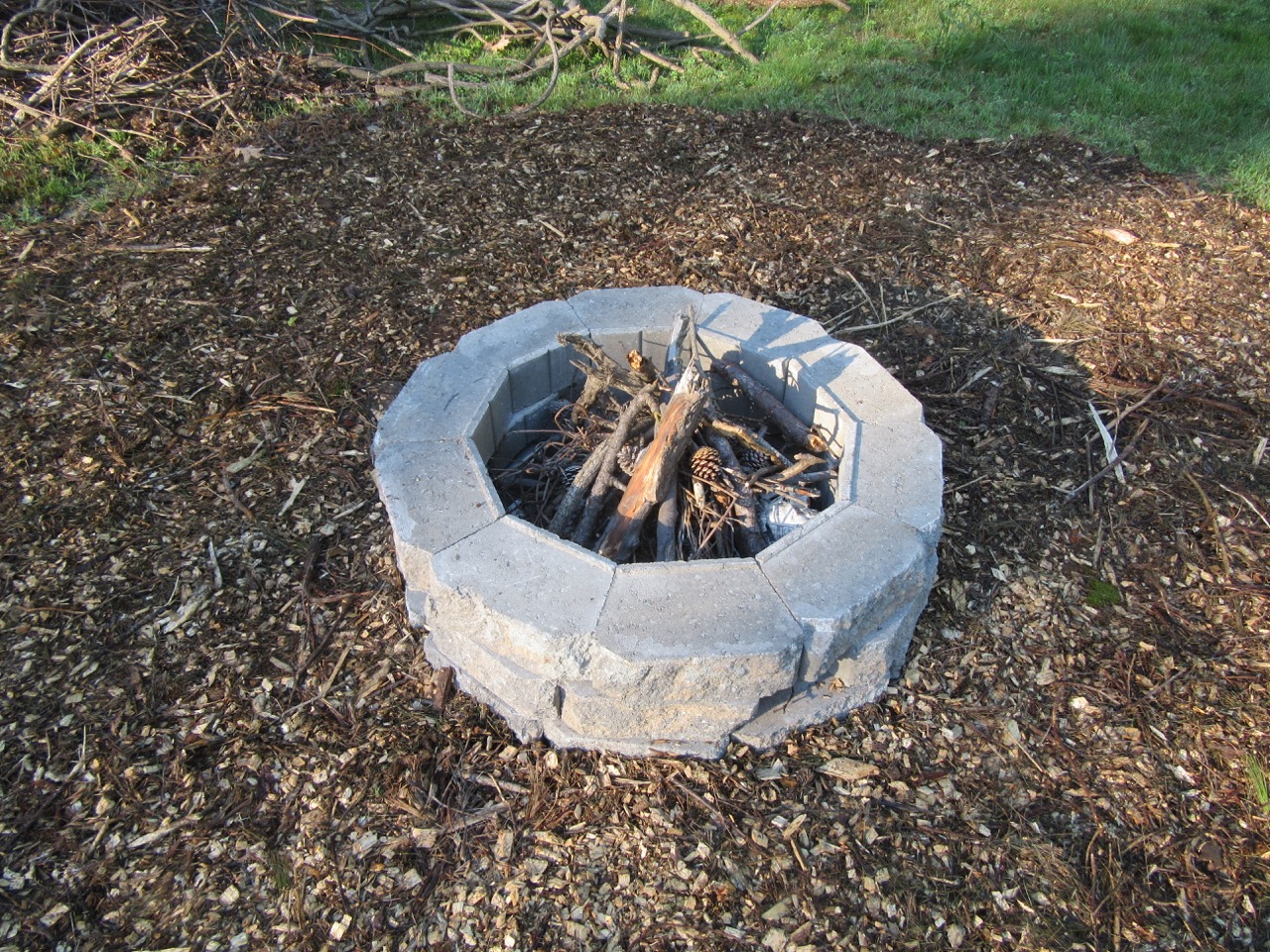 Coming back to the Permablitz of June 24, another project that was completed that day was a fire circle. As Lisa Fernandes said, every home needs a place to burn things. So she was our team leader for the fire circle, and gathered in the layers of community for the element of fire. With a community of workers!
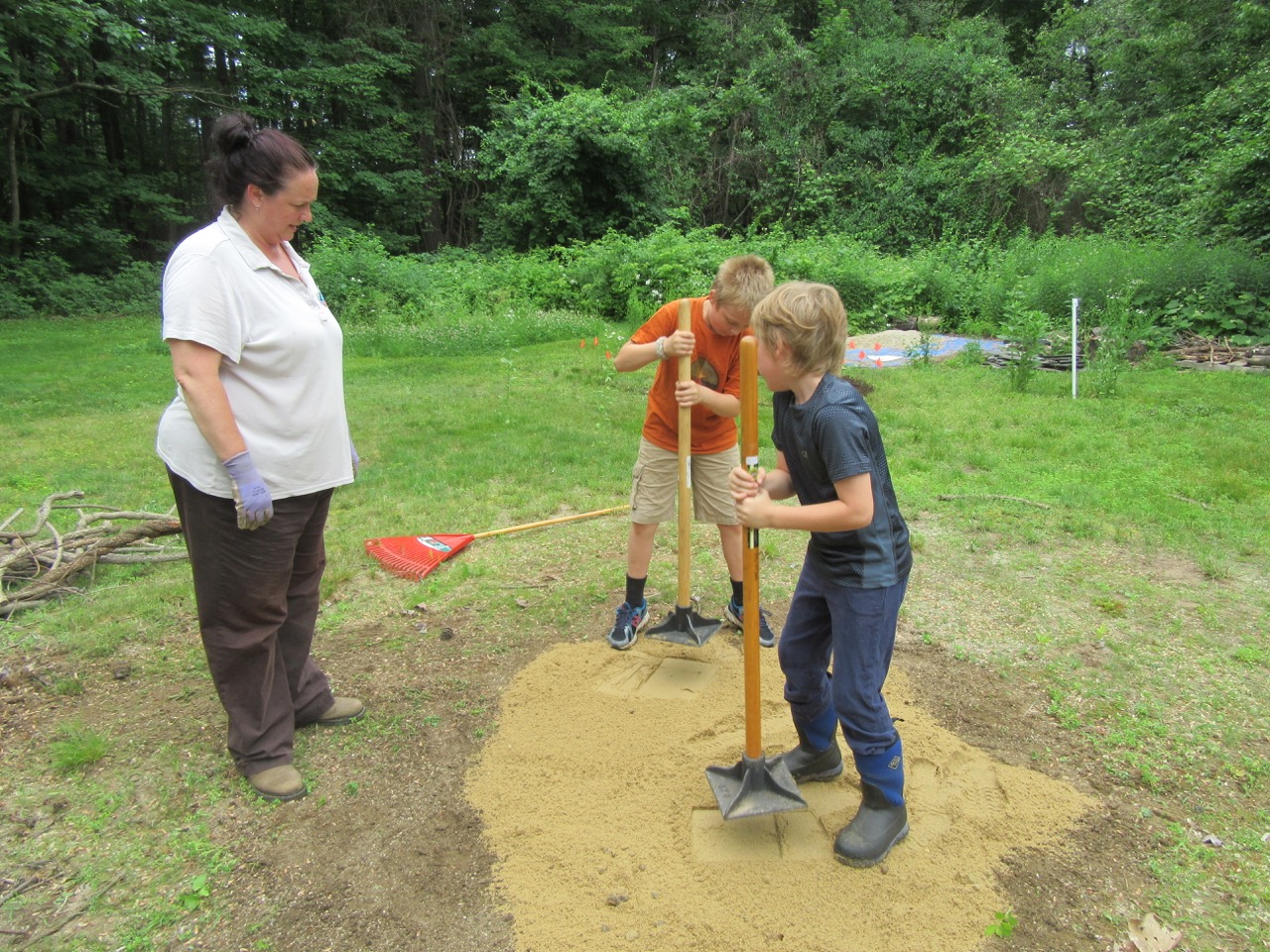 First they had to remove big pile of bittersweet brush (that we will eventually burn) from the spot we had chosen. Lisa and Kristen gathered together the stone blocks that would be used. (But there could have been other helpers–at that moment I was over in the garden beds.) Then they prepared the ground with a layer of sand. Our youngest permablitz members got into the sand-tamping process, as well as Lisa and Kristen.
 Finally, they brought a whole pile of pine mulch for the seating area around it, and then laid some bittersweet brush and pine cones for our first fire. Permaculture is not just about a way of gardening but also about how communities care for each other. Its three principles have been summed up as earth care, people care, and future care. So having a place to gather with others is an integral part of our permaculture design.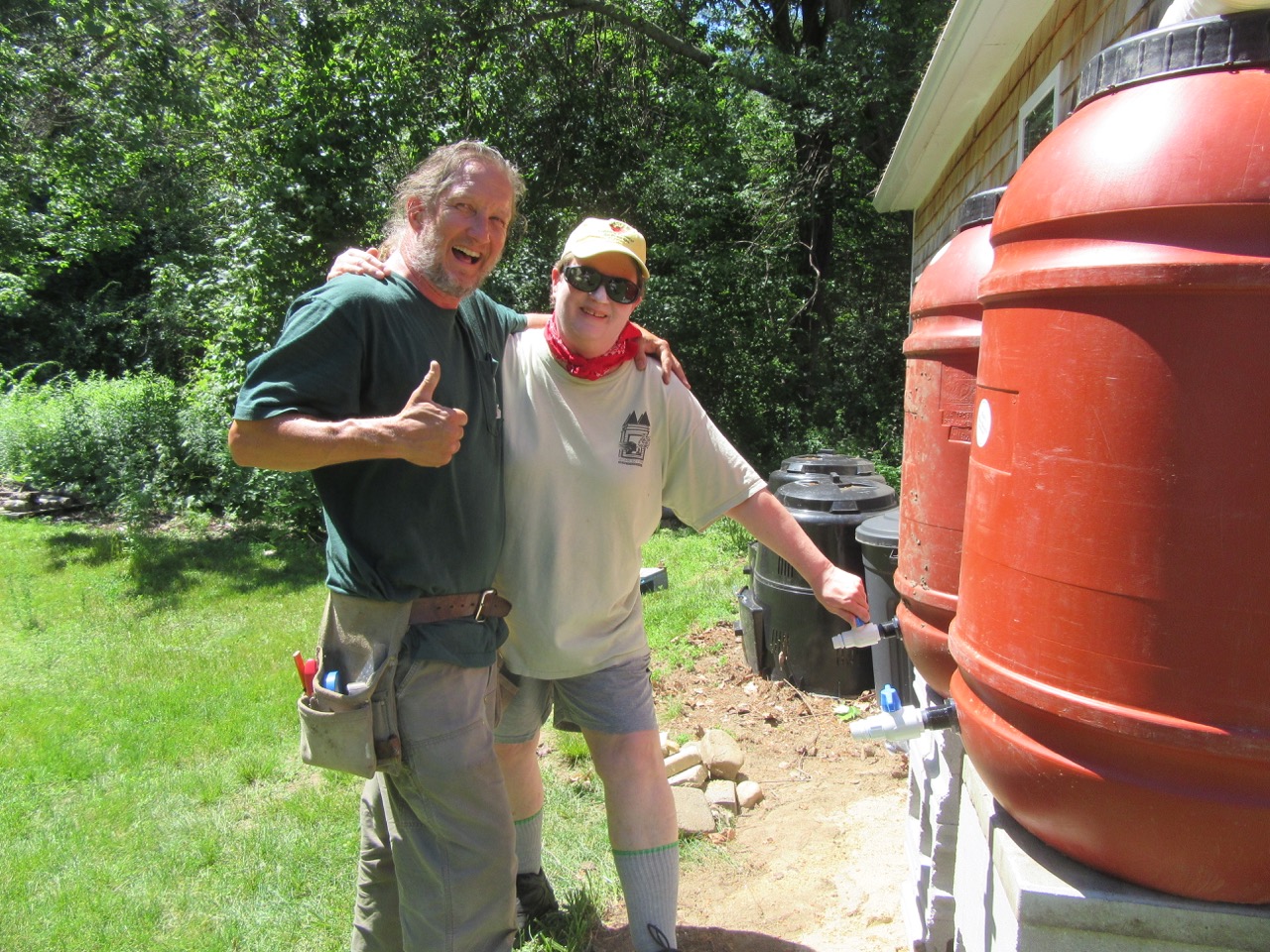
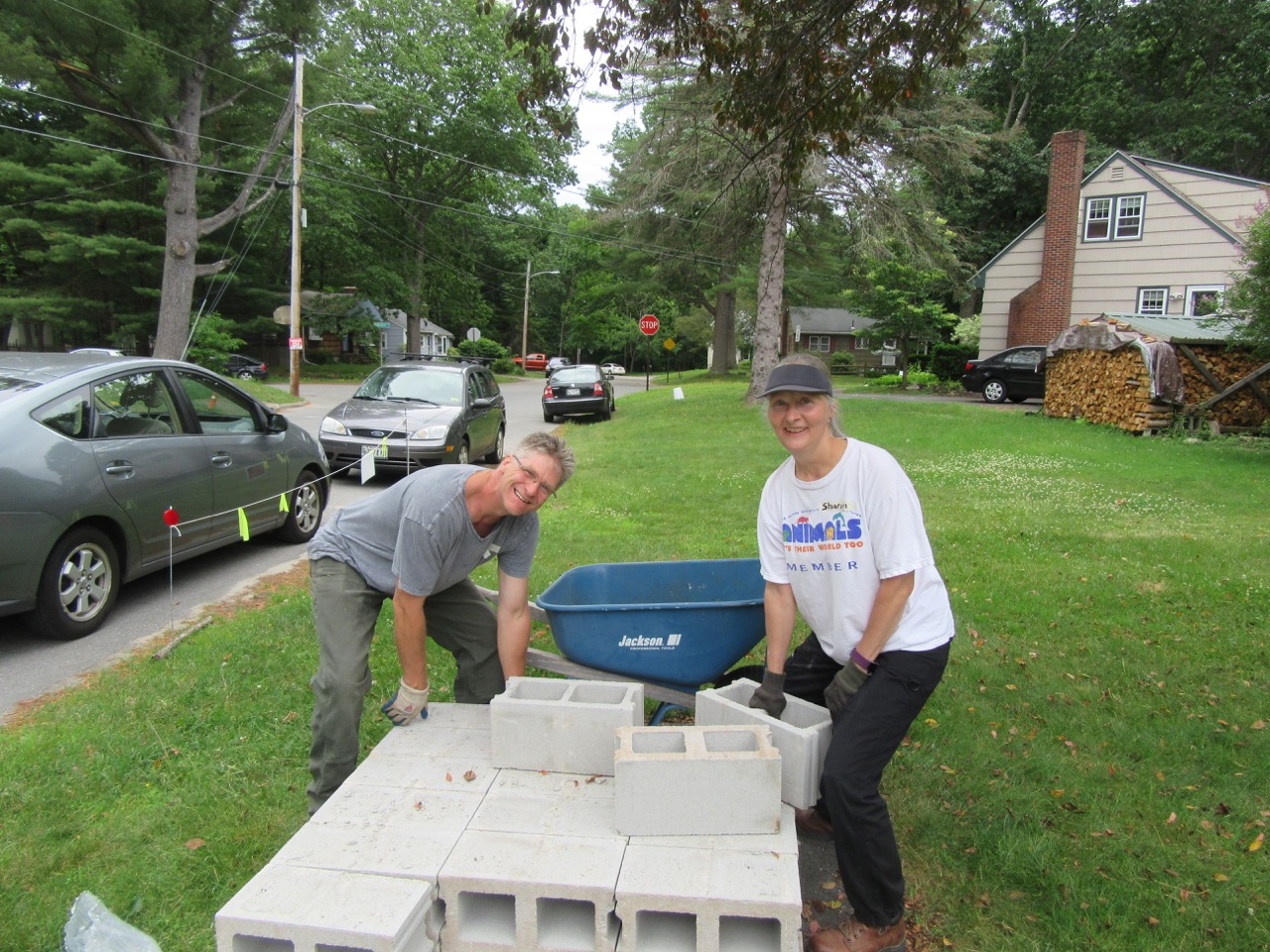

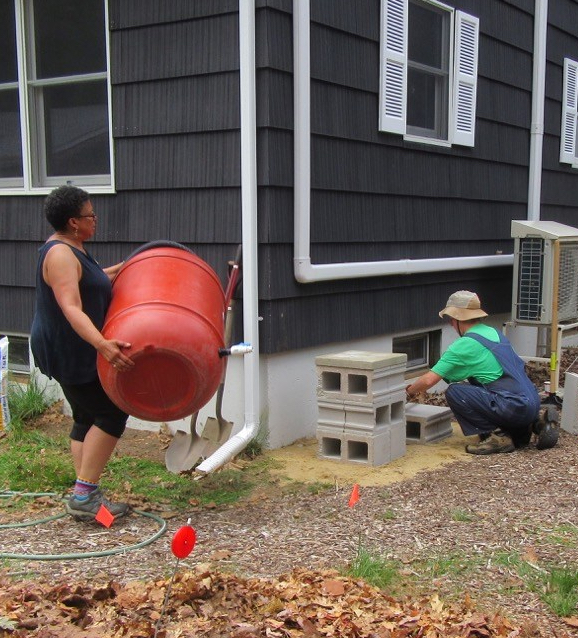

 With all that done, the barrels could be positioned on the concrete blocks. Then, the downspouts were cut short, and a curvy connector was attached to bring the water to the barrel.




 The Portland Water District offers inexpensive rain barrels each year, so Margy and I ordered four barrels to supplement the few we already have. We picked them up amid dozens of barrels at the East End Water Treatment Facility. These are repurposed olive oil barrels so we’re glad to recycle rather than buy something created with new plastic.
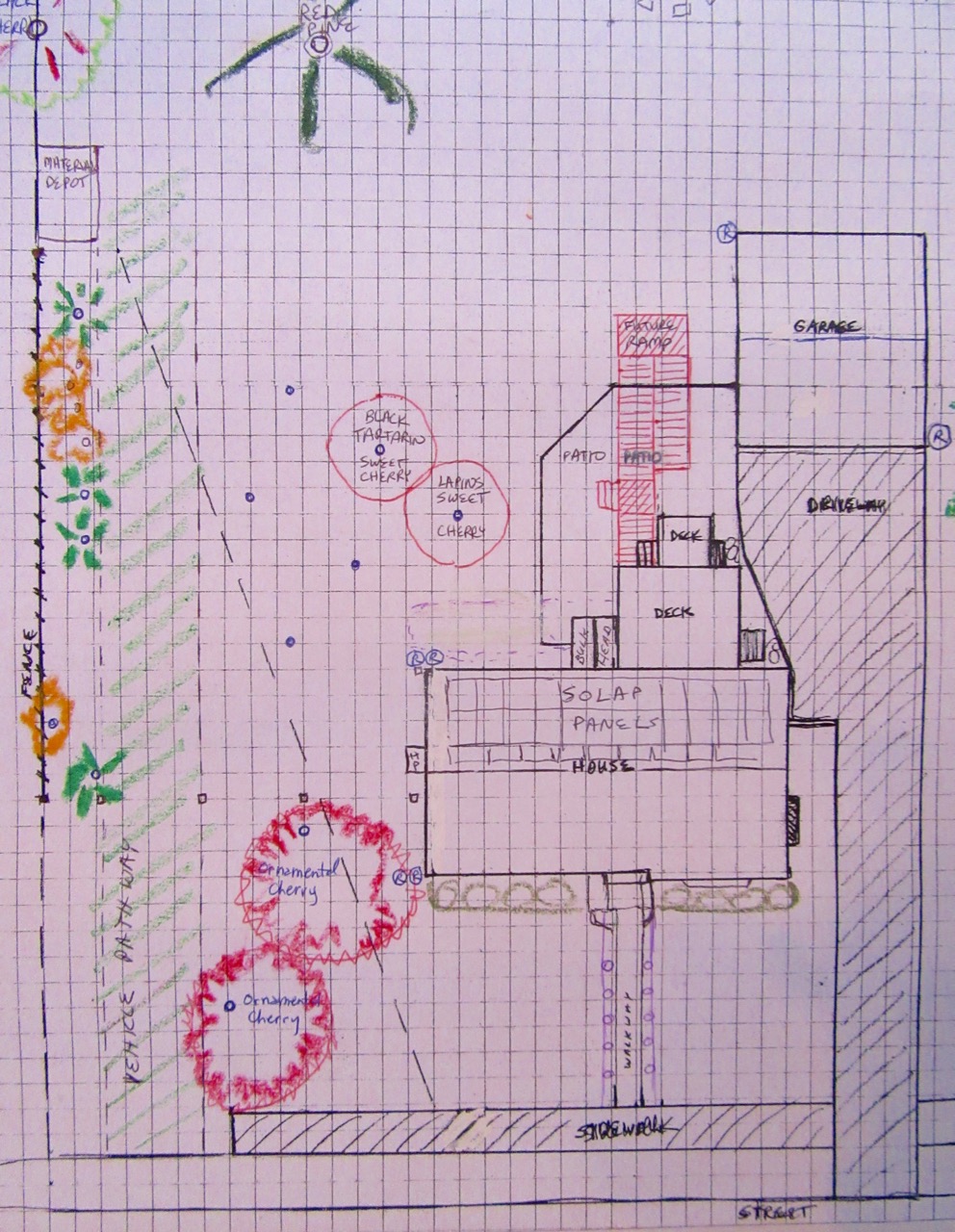 This is a section of our evolving Permaculture Design for our yard. (It didn’t really work to try to put the whole design into one photo, so this is of the half of the yard nearest the house.) I had started this design by measuring everything in our yard and putting them on grid paper–the grids equate to 3 feet square. Then we had lots more input with our
 Finding Our Way Home