God, if You are real, I need a sign

If we’ve never tried to make a spiritual journey, it can seem complicated and difficult, like me trying to make sound come out of a saxophone. But once you’ve found the music, it can be as simple as turning a dial. We learn to recognize the sound of the Mystery’s still small voice. There isn’t just one right way to do it. The practices of the religions of the world are all attempts to find a way to tune in.

We might take up serpents, or practice sitting meditation, but we don’t need to. We don’t need to call it God or Goddess, or Spirit or Mystery, or call it anything at all, though that can be helpful to some people. We don’t have to come up with faith we don’t possess or sacrifice our desires. Whatever is going on in our deepest heart can help. Even doubt or despair can call it forth. We don’t have to abandon our intellect, or be a perfect icon of virtue. But we do need to slow down, change our frequency. We need to pay attention. We need to open a channel or a doorway, invite a connection.
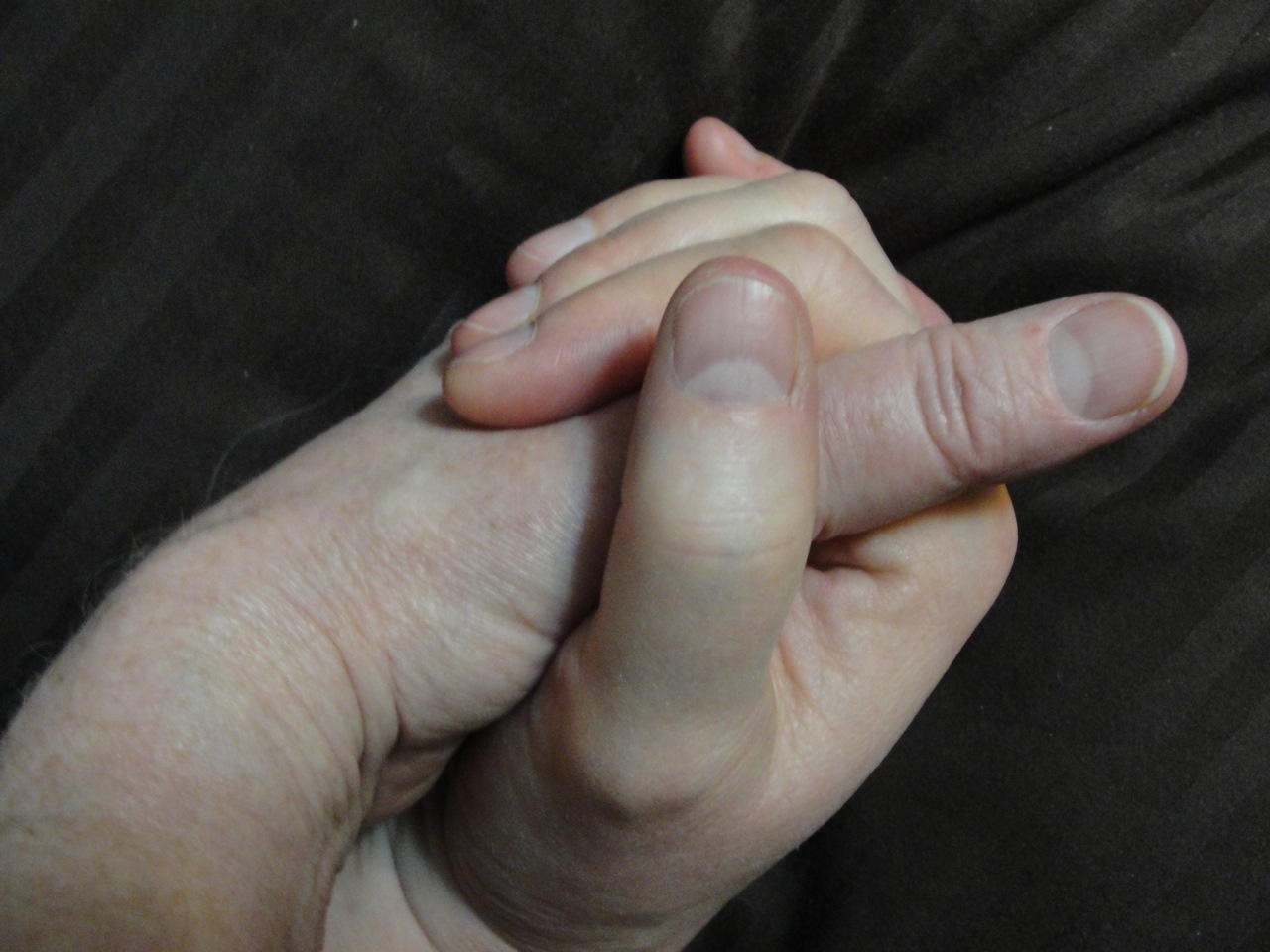
Hands MJ DSC02028One evening, during my first year in college, my best friend and I were sitting in the quiet candlelit chapel of our campus. A few other people were also there, scattered about the pews. I remember feeling that we each seemed so isolated in our private meditation. I was moved to reach out and take the hand of my friend. Little did I realize, at that very moment, she had been wrestling with her own inner spiritual struggles.

Feeling a certain despair, she had just prayed, “God if you are real, I need a sign. It doesn’t have to be a miracle, I just need you to touch me in some way.” Then, I innocently took her hand, and it was the touch of God that she experienced.

Would you climb a mountain if you knew for sure that you could have a spiritual experience at the top? Would you go down into the river? Would you risk an invitation?
Experiencing the Mystery

I think back to the image of the radio waves that I have spoken about before. All the time, there is music moving through the air but we are unaware of it. However, if we tune our radio to the right frequency, we can suddenly hear the music. A whole invisible world opens up to our ears. In the same way, the larger reality, the Mystery, is already here, all the time. The Mystery is the unseen energy that connects and upholds all that exists. An even better image is wifi or a cell-phone. It isn’t just about hearing the voice of God, like music in the air, but also about our own voices being heard. We are connected. Someone, something, is paying attention to us, too.

We might think we are tiny insignificant specks of dust in a vast universe. Why would the Mystery want to pay attention to any of us, prophets or otherwise? I’m not sure, but I do know that there are moments when I feel paid attention to, when I feel connected. When that white truck took me to Massachusetts, I felt it. The Jewish religion has a belief that what we call angels are the manifestations of God into our individual lives. Not huge earthquakes, but a tiny whispering breeze that touches our hearts. A still small voice. Some call it synchronicity or serendipity. When I have opened my heart to the Mystery, the Mystery responds.

There is another part of the Elijah story that speaks to me. Just after Elijah heard that the queen was trying to kill him he went into the nearby wilderness. He prayed, “Yahweh, I have had enough! I wish I were dead.” Then he lay down and went to sleep. But an angel woke him and said, “Get up and eat.” He looked around, and there at his head was a scone. It doesn’t say what kind of scone. Did they have cinnamon or raisin scones then? I like to imagine that if God was thoughtful enough to send a scone, it would be a favorite kind. The angel said, “Get up and eat, or the journey will be too long for you.” So he ate the scone, and then he was ready to make that forty day trip to Mount Horeb.

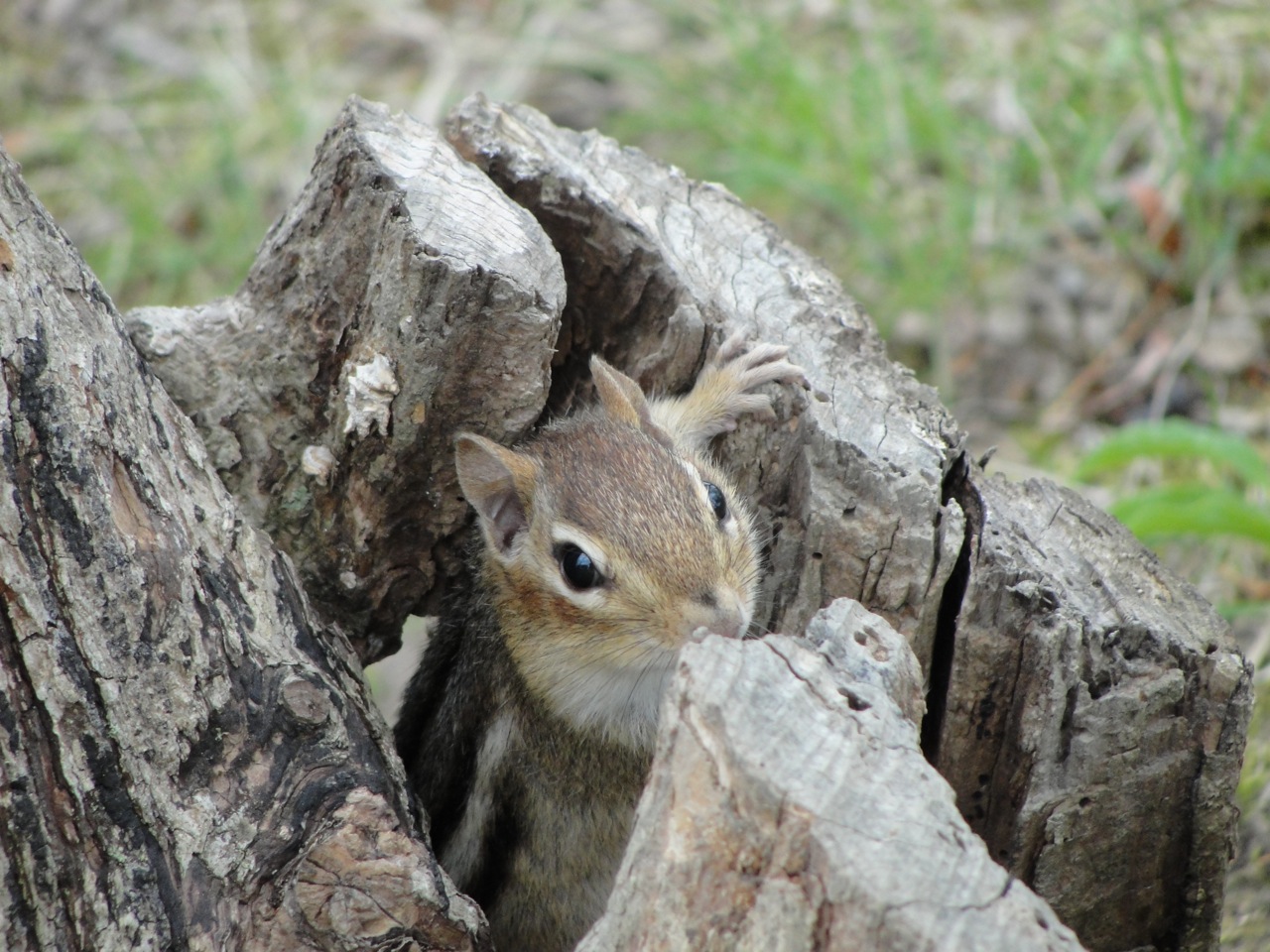
My experiences of the Mystery are like that. A little scone, so I have the strength to make the long journey.  Or a small bird.  Or a hidden chipmunk watching me on the path.Chipmunk in Log MJ DSC04989

Ecological Connection and the Wall of Grief

Jon Young, founder of the Wilderness Awareness School, teaches young people the skills of wildlife tracking and plant identification, fostering an ecological connection to nature. Many skills and techniques are easy to learn, and there is a deepening sense of wonder and gratitude that grows along with their skills. But when the youth reach a certain stage in their learning, they hit what he calls the “wall of grief,” an experience of being overwhelmed with sorrow at the loss and degradation of the natural world around us. That grief is the most difficult challenge the young people face in all of the school’s programs.

Live-video-of-BP-oil-spil-004I felt such a wall of grief, during the spring and summer of 2010 watching millions of gallons of oil pouring into the Gulf of Mexico from the broken BP oil well. It seemed as if the earth itself was bleeding from this gaping human-made wound deep below the waters of the sea.

I believe that our spiritual growth depends on deepening our connection to the interdependent web of all existence, of which we are a part. The natural world is vital to our spiritual journey. We might say that the earth is our Bible, our Quran, our sacred revelation, and our paradise. We echo this principle in the mission statement of my own congregation, when we say, simply, that we walk with care on this earth.

But there are times when that careful walk awakens deep sorrow and anguish. We know so much more than human beings have known before. We know what is happening all over the globe. We see the melting of ancient glaciers, as the climate heats up from greenhouse gases. We know there is a vast soup of plastic refuse possibly twice the size of the continental United States floating in the Pacific Ocean. We know that the topsoil in which our food grows is being depleted, and the rain forests which renew the world’s oxygen are being cut down. We know that increasing numbers of species are threatened with extinction. We know that there are nuclear stockpiles that could destroy most life on earth many times over.

We know so much more than human beings have known before, but we don’t know the solutions to these problems that threaten our future. And that is a wall of grief that can stop us in our tracks as we seek to walk with care on this earth. How do we live with the painful questions that do not yet have answers?  

I learned the story of the Wall of Grief in Starhawk, The Earth Path

Writing as Dialogue

Along with journaling, another form of writing that has been a part of my spiritual journey is to write to someone I care about—not to be sent to that person, but to express what I need to express to them. This can be especially powerful when we have lost someone we love to death. My first romantic partner, Gary, and I were together for six years. After we had been separated for a few years, he was killed in an auto accident. I still loved him, and my heart felt broken at his passing. There was much that had been left unfinished in our connection. I found that I could write to him in my journal—I could tell him all the things that had not been said between us. It was a way to find healing and bring closure to our relationship.

Another side to this writing is to write in the voice of the other person or being. Here is an example of what I mean. I ask a question, whatever question is deep in my heart. One of my perennial questions is “How can I learn to live in harmony with the earth?” I write it down. Snow on Branches DSC05758Then I let the voice of the trees answer the question. I do this literally. I write, “the trees say:” and then keep writing. Here is what came out when I asked this question most recently: “The trees say slow down, stop running everywhere, feel the wind on your face, feel the sun on your skin. Don’t be afraid, you can do this. You belong to the earth.”

It wouldn’t have to be trees. It could be birds, the ocean, the moon. It could be myself at the age of eight. It could be my old love Gary. On a psychological level, in all of these exercises, what I am doing is tapping into parts of myself that hold wisdom. On a spiritual level, we are not separate from trees, birds, the ocean or the moon—so who is to say that if we open our souls we can’t hear the wisdom they might have for us? Writing connects us to the depths of our own hearts, and our hearts connect us to all that is.

Anne LeClaire, a writer I met while living on Cape Cod, said we must take up our pen “like a heat-seeking missile… aiming it for the territory of truth.” We must go to the places we are afraid to go. We so often try to keep our hearts hidden, afraid to expose our secret selves. But LeClaire challenges us: “The heart of the universe is always within our own hearts if only we can be brave enough to expose it.”

Writing is a journey we take to discover who we are and what in us is true. Writing will surprise us. We don’t know ahead of time what will come out on the page, what will emerge within our souls. Like the magic of the ancient runes carved in trees, writing reveals secrets to us.

Quote from Anne D. LeClaire, “Writers and… Risks,” in The Cape Codder, Nov. 3, 2000.

Sun and Moon

Campsite View

Morning View from our Campsite

One summer, I was sitting at our campsite at Winslow Park, watching the sun rise over the water. It was a day without a lot of plans, so I could sit and watch the sky and water for a long time. I noticed how fast the sun seemed to move up the sky. I heard somewhere that you can estimate the time by holding up your fist sideways, and counting each fist width from the horizon to the sun as an hour. In a simpler world, it was enough to tell time by noticing where the sun was in the sky.

Curious about this, I discovered that actually, if you took a picture of the sun at noon every day for a year, you’d find that it wasn’t in the same spot at all. Rather, you’d have a photo of an elliptical shape, like a lopsided figure eight. People call this path of the sun an analemma. It is formed from the fact that our orbit is not an exact circle, but an ellipse, and our planet is tilted relative to its orbit around the sun. So we have the seasons, and each day from June to December the sun rises a few minutes later, and a little bit further to the south, passing by due east on Equinox.

The natural world is full of these movements that follow their own intricate rhythms and orderly patterns. As I become aware of them, I begin to feel myself as a part of a vast dance with the sun, the earth, the moon, the stars. Our spiritual journey is such a dance—it too follows intricate rhythms and mysterious patterns. We may imagine that we are going forward, but perhaps we are dancing round and round like the moon.

Each day, the moon rises on average fifty minutes later than the previous day, and the high and low tides are changing at a similar pace. Winslow Park has a tidal beach, so we pay attention to the tides in the summer. You can only swim for about two hours before and after the high tide. One of our city friends didn’t understand about tides. We were planning to go swimming with her on a Wednesday. Two days before, she was visiting the beach and called us from there to make plans. “The sign at the beach house says high tide is at 2 p.m.,” she said, “Shall we meet at 2 on Wednesday?” We had to explain to her that the tide would be later in two days, closer to 3:40 p.m.; that it changes every day.

Once, years ago, I created a moon calendar for my stepdaughter Stephanie, who was six years old at the time. I was curious myself about why the moon was sometimes seen in the morning, and sometimes in the evening, and I thought it would be fun to learn about it and share it with her. So I tracked it, and began to understand its pattern.

The full moon rises at sunset and stays in the sky all night, setting at sunrise. Then, as the days go by, the moon begins to grow smaller, and it rises about fifty minutes later each day, until you can only see it in the morning just before and after dawn. About two weeks after the full moon, the moon rises unseen with the sun and sets invisibly with the sun. The night is dark. This is called the dark moon or the new moon. Then a day or two later, a thin waxing crescent appears in the western sky just after sunset and sets soon after. Each day it is seen in the evening for a little longer time until we come round to full moon again.

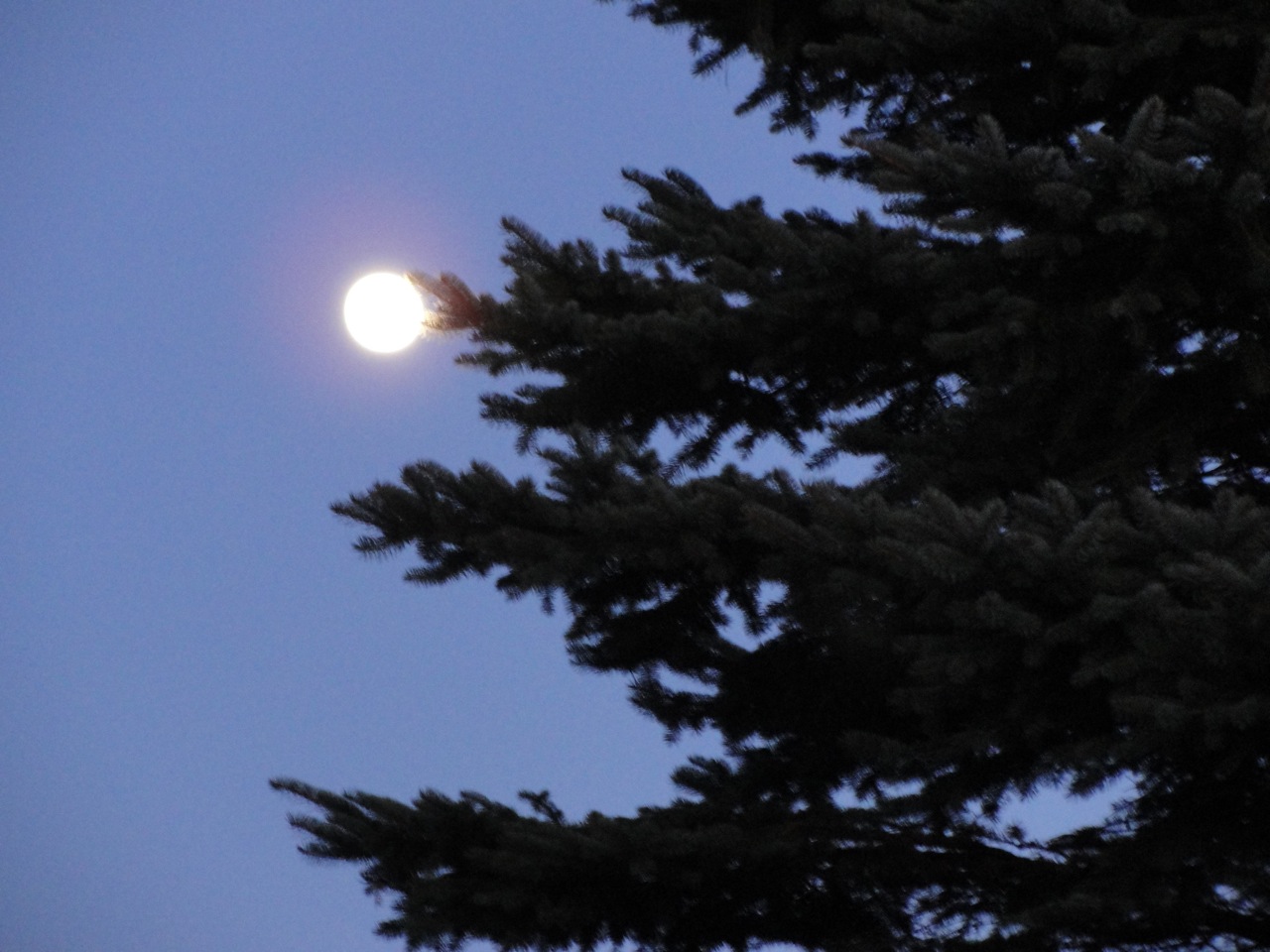
Full Moon

Life Moves In Cycles

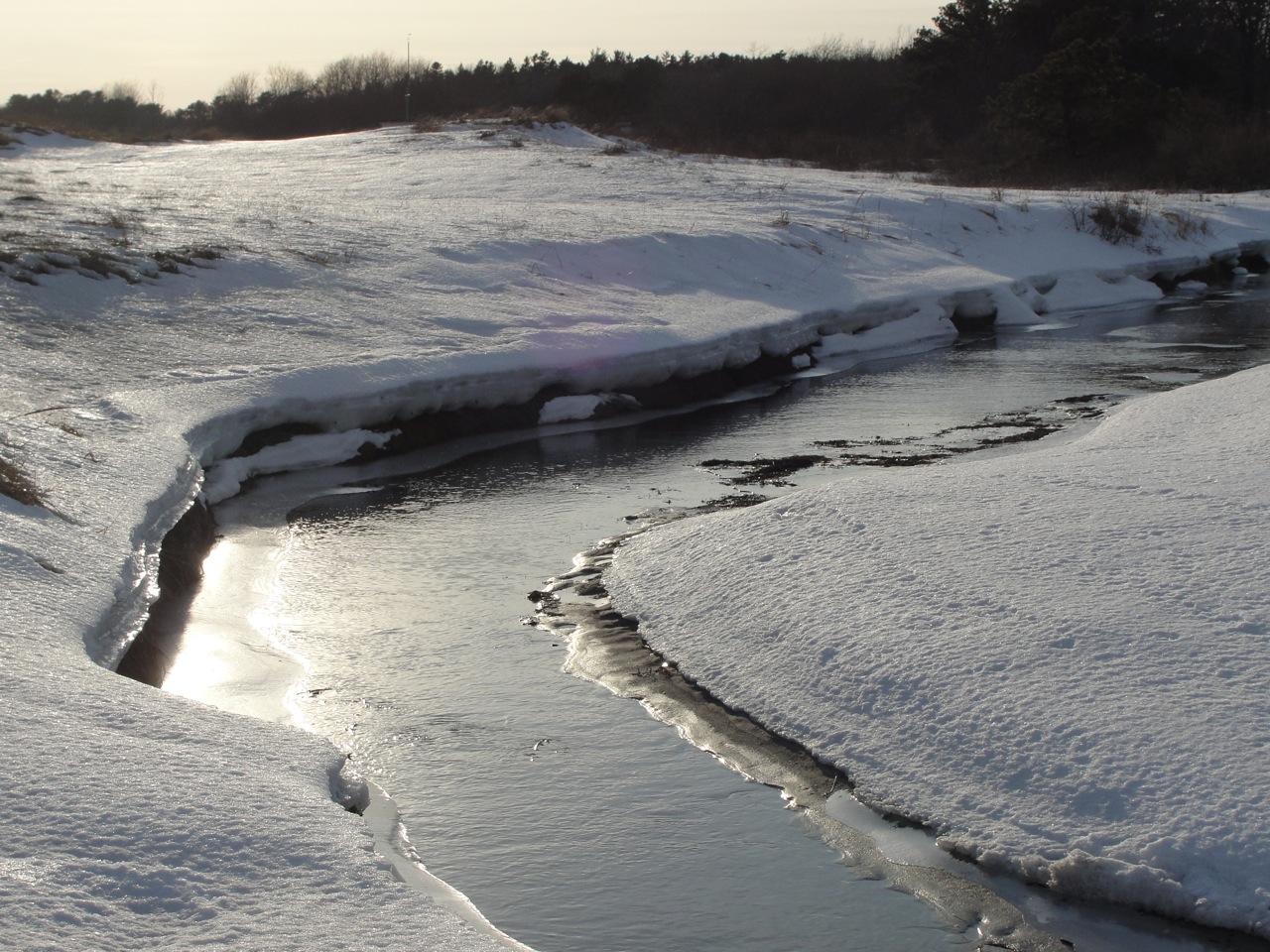
Curve of waterNothing moves in a straight line,
But in arcs, epicycles, spirals and gyres.
Nothing living grows in cubes, cones, or rhomboids,
But we take a little here and we give a little there,
And the wind blows right through us…
Marge Piercy

My colleague the Rabbi fell on some ice in the parking lot of her congregation in December of 2009. Several months later, she was diagnosed with a brain injury, and was unable to work any longer. In 2011, she started a beautiful blog called Brainstorm. In her blog, she described one of the curious ways that her brain is different now. She writes:

I didn’t notice that I no longer broke time up into chunks like minutes, hours, days. In, fact, I didn’t notice there was such a thing as time at all. I still don’t feel time. I don’t know what day it is. I have a watch that tells me and I am learning to memorize that information in rehab. If you and I meet and begin to talk, I will be totally present. I have attained Buddha-hood; there is no before or after — only now.2

Later, she asks, “How long is a year anyway? Is it before lunch or after? And is February leaves, snow, mud or sun? That is how I tell time. … We are either in leaves or mud right now. it is hard to tell.” “Soon we will stack logs for the wood stove. Put on socks and fleece, sit on the porch swing and drink tomato soup in the mugs the children made.  I do not feel months, days or dates, but I haven’t lost the seasons. I never knew how precious they were until I lost every other marker of time’s passage.”

We think that time moves relentlessly in a straight line, going from past to present to future. Similarly, we might imagine our spiritual journey as a going forward from one thing to another. But our relationship to time is mysterious, located in a spot in our brain which can be damaged or destroyed. If that happens, then linear time disappears. But the circular patterns of movement are still observable. All around us there is evidence that life moves in cycles: the earth spinning around its axis each day and night, planets spinning around the sun, tides going in and out, the stars circling round the night sky.

Some cycles are easier to notice than others. Here in Maine, the autumn comes with bright colors and the falling of leaves. Winter is cold and snowy, spring full of mud and new plants, summer warm and full of plentiful greens. These seasonal changes register in a deep layer of our minds.

Poem Excerpt from Marge Piercy, “I Saw Her Dancing,” in Available Light, p. 118.

Replacing the Floors

I want to share a secret about the life of a preacher. Preaching itself is a kind of spiritual practice, a paying attention to the present moment. I post my sermon titles and descriptions in our congregation’s newsletter at the beginning of the month, which means that they have been created in my mind at least as early as the end of the previous month. So the topics are hovering around my awareness for a few weeks at least, and they help me to notice things. So as I began to think about the spiritual journey, in preparation for talking about it to my congregation, I was pondering the practices of various religious traditions—things like Zen meditation, or journaling, or daily prayer, and what these might offer to us.

But then, the week before I was to preach, we discovered that our church building had a problem—people were reacting to some sort of mold or mildew in the air, and we needed to fix the problem. The people who volunteer their time on the building committee and the board of trustees responded. They decided to replace the old carpets with tile flooring. Of course this would mean a big disruption. Everything needed to be taken out of the rooms where the floors would be replaced, and put somewhere else. And if you take everything out of the church office, the church administrator can’t do her job. No computer, no copy machine, no email. No Sunday “Order of Service.” It all stops.

I had just gotten this news and I was driving to church on the Monday before the sermon, when suddenly it hit me: All of this disruption was also about our spiritual journey. Growth doesn’t happen just when we plan for it, but in what we do when our plans go awry. We can use everything. In fact, preachers always use everything when we are working on Sunday sermons. We use the books we read and the things that happen to us, and the songs we hear and the stories on the news. We can use everything. And we must.

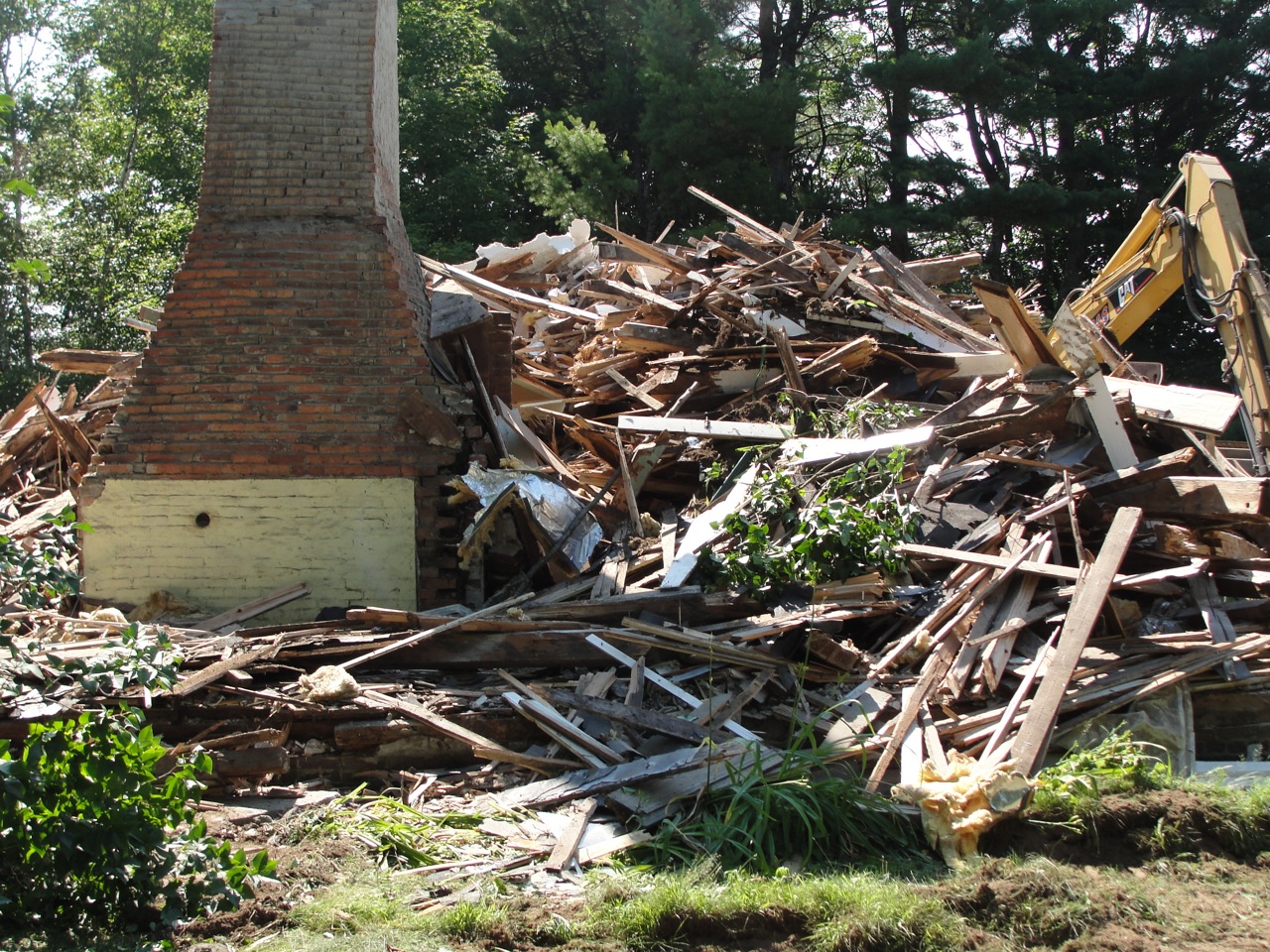
House Destroyed DSC04194Because when we open our hearts to the spiritual journey, we open them to the larger reality of life. We embrace reality, and reality is full of disruptions. So the week that the floors were replaced was the perfect week to preach about the spiritual journey. The floor under our feet had been literally ripped apart, and we faced a new surface to stand on. People were sitting without any familiar order of service to guide them, and thus had an opportunity to embrace the uncertainty of what might happen next. It is called by theologians a liminal time—a time when ordinary events are suspended, and we hover on the threshold of what might come next. A time when we lose the illusion that we are the ones in control of our lives. We will either hang back, or take a leap.