Why I No Longer Support Leonard Peltier

Edit: December 2024.  I have appreciated folks who commented on this post, sharing further information and concerns (see the comments).  I have been surprised by how many people are still reading this post even though it has been six years since it was published–(and there have been over 6000 views since it was published!) I want to say again today that my knowledge is limited, and I posted these personal thoughts out of concern for Annie Mae Aquash’s family. I am glad that some readers learned more about her story. But I am also concerned that my thoughts might have had more influence than is warranted regarding Leonard Peltier. As I hear the recent calls by so many for President Biden to pardon Peltier before he leaves office, I can’t see the point of resisting that effort. After almost 50 years in prison, isn’t it time to let him go home? 

Original post: For many years, I supported the campaign to free American Indian activist Leonard Peltier, who had been convicted, many said wrongly, of the death of two federal agents in a shoot out on the Pine Ridge Reservation.  Even Amnesty International signed on to his case.  But after moving to Maine, I learned more about the murder of Annie Mae Pictou Aquash, and I began to have reservations.  I stopped my support, but didn’t really know how to speak about it.

Yesterday, via my friend Sherri Mitchell’s Facebook feed, I started to listen to a live feed of the National Inquiry into Murdered and Missing Indigenous Women and Girls that was taking place in Montreal. Denise Pictou Maloney was testifying about the death of her mother Annie Mae.  I listened for an hour and a half, and then after she had completed, I went back to hear what I had missed at the beginning of the tape.

Anna_Mae_Pictou-AquashAnnie Mae was a leader in the American Indian Movement, originally from the Mi’kmaq First Nation at Indian Brook Reserve in Shubenacadie, Nova Scotia.  I first learned about Annie Mae in the song by Buffy St. Marie, “Bury My Heart at Wounded Knee”, in which she sang,

My girlfriend Annie Mae talked about uranium
Her head was filled with bullets and her body dumped
The FBI cut off her hands and told us she’d died of exposure

The implication, the narrative, the story so many of us believed for many years, was that she was killed by the FBI.  But in fact, the truth later came out that she was killed by other AIM members.  In 2004 and 2010,  Arlo Looking Cloud and John Graham were convicted of her kidnapping and murder.  They also implicated AIM leadership in her death, though no one was ever charged.  You can find out a lot more if you listen to the tape of Denise’s testimony, or even if you look up Annie Mae on Wikipedia.

Hearing the pain in Denise’s voice moved me to want to speak publicly this time.  It feels risky to do so, because, as a white person who tries to be an ally, a co-conspirator, with Indigenous people, I know that I will always know too little about all of this.  I do know that the FBI tried to sow dissension in the ranks of activist movements, especially those of Indigenous people and people of color.  This included planting informants within the movements, and also casting suspicion on dedicated activists to cause others to suspect that they might be informants.  This is one theory about the motive for killing Annie Mae.  Another theory claims she was challenging AIM leaders on their behavior, or that she had heard Leonard brag about killing the agents.  I don’t know the answers to that.

But I want to speak today, despite not knowing all the answers, because I have in the past spoken in support of Leonard Peltier.  Denise talked about how painful it has been for their family, every time there is more public support for Leonard.  So I want to interrupt my own participation in that process, (which most lately has been through my silence), and let my friends and colleagues know that I can no longer support Leonard Peltier’s campaign for release from prison.  And I also want to acknowledge how difficult a journey we make when we intend to be allies or co-conspirators.  We often make mistakes and get it wrong.  But that does not make it less worthwhile to try, to show up for what is right.

What I carry away with me today is sadness and anger.  Sadness and anger for the fall of heroes–the leaders we wanted to be better than they were, because the cause they fought for was so important.  Sadness and anger for the children and family and friends of Annie Mae, who have waited so long for the world to know the real story, and often feel as if their voices are not welcome because the truth interrupts the stories people want to believe.  Sadness and anger that in my ignorance as an outsider, I was drawn in to the narrative, and thus contributed to their sorrow.  Sadness and anger at the insidious complexity of colonization and oppression, and the brokenness within all of us left in its wake.

Portland Gardens

About a hundred years ago, in 1912, Jacob Wilbur decided to “develop” the large area of  land in which the old white pine tree lived and is living.  He purchased it from H.H. Holm. He called it “Portland Gardens,” but the first thing that happened was that he had a plan created in which the open land was divided into very small rectangles.  Over the years, some roads were created and houses built, but the area in the upper left corner of the plan–where our old pine lives–was never completed.

Plot plan Portland Gardens

In 1924 that area was sold to Amato Kataruchi, and then a couple years later the City of Portland took possession of it for taxes unpaid.  In 1969 the city sold it cheaply to the D—– family that had bought our house when it was first built in 1967. (Our house is actually in an adjacent development that was called Sunset Heights–it was “developed” by a firm called Jordan and Hammond in 1967.)

I learned all of this by searching online land records and deeds via the Cumberland County Registry of Deeds.  After thinking about the pine tree’s possible 162 year life, I was inspired to see what I could learn about the history of the land to which we now belong.  I didn’t realize how easy it was for anyone to trace one aspect of the history of their land through deeds, its so-called “ownership.” And, I didn’t realize the challenges either.  The boundaries of our yard were formed in 1969 through the combination of two lots–front (where the house is) and back–which in our deed is actually described as four small lots, and a corner of another.

So I could trace the “owners” of our yard from us back to the D—– family, with three families/individuals in between.  But prior to 1967, I had to start searching separately the front and back sections–the back section leading me to the Portland Gardens development plan in 1912.  Then the search got even more complicated because tracking how the developers acquired the land meant investigating multiple sellers, and entirely different descriptions of the land.  Still working on that.

All of this feels important to me as part of understanding our relationship to this land, and as part of a decolonization process–moving beyond the norms of our society which treats land as a possession, rather than as the place to which we might belong. And understanding the many ways that colonizers sought to acquire land–through purchase, through theft, through trickery, and through misinterpreting the early agreements made with indigenous peoples–they treated the offer to settle here in right relationship with the indigenous people as instead granting ownership of the land for whatever use they might want to make of it.

There are so many land records in the registry of deeds.  So many pieces of paper dividing the land into large and small pieces. There are whole professions built up around establishing who owns or owned what pieces of land.  Title insurance, title search companies, and all the rest.  I want to understand the history, but it is wearying to track such an ultimately destructive operation.  My ancestors were not part of this process here in Maine, but perhaps by learning more about this land right here, I can better understand the process as it happened over the whole continent.  It is a long story of the ways those of us who have European descent broke our relationship to the land and to her peoples.

Names & Shadows

Shadows

Ousamequin of Pokanoket, the Massasoit “great sachem” (sôgemak).  Weetamoo, also known as Namumpum, female leader/sachem (sôgeskwak) of Pocasset. Wamsutta of Pokanoket, son of Ousamequin, husband of Weetamoo. Wootonakanuske, sister of Weetamoo, wife of Metacom. Metacom also known as Philip, son of Ousamequin, husband of Wootonakanuske. Tuspaquin of Nemasket, son-in-law of Ousamequin, husband of Amie. Amie of Nemasket, daughter of Ousamequin, wife of Tuspaquin. Awashonks of Sakonnet, Conbitant, father of Weetamoo, sachem of Pocasset. Nanamocomuck, Penacook, son of Passaconaway, Penacook. (Wampanoags)

I have been reading Our Beloved Kin: A New History of King Philip’s War, by Lisa Brooks. It is an amazing narrative, in which she goes back to original documents and source material, combined with local Indigenous knowledge to reexamine the stories of the New England colonies and the Indigenous peoples during the later 1600s, particularly the unfolding of hostilities that came to be known as King Philip’s War.

Reading this book has unlocked a deeper process of decolonizing my mind. What I have been most struck by are the individual stories, the actual names of individual people and the places in which they lived, planted, fished, traveled, escaped, returned.  How they were related and how they negotiated and were ambassadors on behalf of their relatives. How they adapted and resisted and strategized. Their names and their stories.

Warrabitta (female leader) of Owaskoag. Skitterygusset, her brother. Sagawetton, her brother, who lived with his wife on the Saco River.  (Wabanaki leaders around Casco Bay).  Canonicus, Miantonomo, sachems, Quaiapin of Woossowenbiskw, female sachem. Mixxano her husband, Scuttup and Quequegunent, her sons. Ninigret, her brother, leader of Niantic. Cojonoquant, cousin of Mixxano. (Narragansett leaders). James Printer, or Wawaus, a Nipmuc scholar from Hassanamesit.

Brooks brings to light people who had been hidden in the narratives told by the English settlers, people who had been hidden in the shadows as “Native people in the wilderness who were conquered by the English settlers.”  But–of course–they had names.  They had towns and regions and farms. They had families, with names.  Our Beloved Kin is a dense and long book (346 pages not counting the notes), slow reading, ultimately devastating because of the betrayals of the colonists which we anticipate throughout. But even the betrayals are identified specifically to people with names, betrayed by other people with names. I have only listed a few of the hundreds of people she identifies.

Because I speak English, I have had to say “female leader” in these lists to note that in fact there were female leaders. Among the Indigenous peoples of this region, the words for Sachem, or leader, were gendered, (sôgemak) (sôgeskwak) but to have a female leader was no more unusual than to have a male leader.  Just thought I should note that.

There is no way to convey here the immensity of what Lisa Brooks brings from out of the shadows into the light. I imagine that a lot of people won’t try to navigate this exposition. But if you care about our relationship to this land, and to the people of this land, it is mind-blowing.


Groundhog Day

IMG_4560

We’ve made it half-way to the Spring Equinox–Groundhog Day, Candlemas, Imbolc according to the Celts… Whatever we call it, I have always liked this festival. Even the birds seem to know that something is up.  On my walks the last couple days, they have been singing so that I notice it.  The height of the sun? The change in the light?  Even though it’s been cold, and today snow was covering everything, they sing.

Today, in my neighborhood, the groundhog would not have seen his shadow–so that means that spring will come early.  But in fact, groundhogs are still in hibernation here, and since technically, it will still be six weeks until spring no matter what, I don’t actually count on the groundhog to confirm the weather.  But this day still awakens the hope that winter won’t last forever.

I was happy to learn that the Groundhog Day tradition comes from Americans with German ancestry–since that is part of my own heritage.  Back in German-speaking lands, it was instead a badger, and originally a bear, whose emergence would predict the weather on Candlemas Day.  Candlemas was a Catholic feast, but was retained even after Protestant Reforms, likely because it was an even earlier pagan feast that had been Christianized. There are sayings in English, French, and Latin as well that correspond to the myth: “If Candlemas is fair and clear, there’ll be two winters in the year.” This attests to its antiquity as a European tradition.

Imbolc is the feast of Brigid, the goddess of smithcraft, poetry, and healing.  When Margy and I visited Ireland, we visited more than one Brigid’s well where the waters are known for their healing properties.  But I also think of this festival as a celebration of fire–fire is the key component of welding and smithcraft, and it is also a symbol of creativity–the inner fire that inspires poetry and art and music.  It is the fire which inspires social change, transformation, and healing.

Years ago, this came together for me in the poem by Cherrie Moraga, “The Welder,” in the book, This Bridge Called My Back: Writings by Radical Women of Color.  It concludes with these lines:

I am now
coming up for air.
Yes, I am
picking up the torch.

I am the welder.
I understand the capacity of heat
to change the shape of things.
I am suited to work
within the realm of sparks
out of control.

I am the welder.
I am taking the power
into my own hands.

Thank you Cherrie Moraga!  And thank you to the singing birds!  Thank you dear neighborhood groundhog for not eating my kale last summer!  And to all of you reading this, may your day be filled with creativity and healing.

What We Give to Each Other

Yesterday I met a Passamaquoddy woman, S—, who talked about how she is trying to remove herself as much as possible from the money economy, to live with the values of a gift economy.  One way she does it is to volunteer a lot in her community.  I was moved by the conversation, and it stirred up questions in me about its application in my own life.  We were part of a gathering hosted by Maine-Wabanaki REACH for Wabanaki and Maine residents to explore together the topic of decolonization.  (If that term is unfamiliar, take a look at my earlier post called Living into History.)

Dish with One Spoon Wampum

Photo from IndianTime.net

Colonization brought the capitalist economy to this continent.  Another Wabanaki participant told us about the One Dish with One Spoon Wampum belt, which was a covenant acknowledging mutual care, first between the Haudenosaunee and then with other Indigenous communities prior to settlement.

The Great Law of Peace speaks of it:

We will have one dish, which means that we will all have equal shares of the game roaming about in the hunting grounds and fields, and then everything will become peaceful among all of the people;

We also heard about how in the Passamaquoddy nation, they are creating a community garden with an orchard of fruit trees, and teaching people how to cultivate them.  As people learn to provide for their community’s own food, true sovereignty becomes possible.

I was thinking about how back at my own home, we are also creating an orchard, but it is a difficult process to undo the individualistic capitalist systems.  To be connected to this land we have to “own” it in the capitalist manner.  We can share it with our friend who has a garden here with us, and we’ve also been blessed by the permaculture community’s support through our Permablitz work party last June.  And we received many of our companion plants in the plant swap last spring.  So we are trying to imagine community as a part of our relationship to this land.  But there is so much further to go.

I had brought flyers with me to the gathering about my book, not sure if it felt like the right place to share.  (Our invitation had mentioned we could bring materials about our related work if we wanted.) The content of the book is so much about how we journey into earth community–how we restore that spiritual relationship with the land and with our neighbors on this land.  How we acknowledge and heal the harm caused by the history of this place. But the book is also a product that I sell. So I was torn.

After our conversation about gift economy, I was moved to give a copy of the book as a gift to S—. I had so appreciated her sharing, and it felt to me like this would be a way to plant a seed–to shift something within me that might grow the possibility of a gift economy in this world, and in my life.  I was surprised when she responded by giving me a gift of her beadwork–beautiful turtles. There is magic in this. May it be blessed.

A No-Win Gamble

The other day I read the “Medicare and You” brochure in preparation for my own “graduation” to Medicare this coming summer.  It has been hard since then to shake a sense of foreboding.  My first reaction to all of it is how can our society treat our elders with such lack of care?  I don’t mean that it is bad that we have Medicare–I wish we had something like Medicare for all–single-payer health care–in our country.  But what we have now seems so bereft of full medical care, that participants are encouraged to buy extra care to cover all the gaps in care.

But it is not merely that you can choose to spend a certain amount per month to cover the gaps–a kind of gambling in itself about whether you will save more than you will spend.  It is that you have to decide between a dozen or more types of options, which kind of product to buy–all seemingly based on making a guess about your own unknown future health needs and prescription needs.  The supposed explanations for the different types of plans amount to gobble-di-gook, if you ask me….

Does anyone besides me see this as a particularly insidious way to torture people?  “You can choose!  Read all this information!  Oh, whatever you choose today will affect your future!”  A gambling game based on what?  (Is it anything besides a way to bring further profit to insurance companies?)  Then in today’s paper I read Michelle Singletary’s column The Color of Money, “Medicare trend causes palpitations,” and felt even worse.  She writes:

New analysis by the Kaiser Family Foundation has found that out-of-pocket health care costs for Medicare beneficiaries are likely to take up half of their average Social Security income by 2030.

I hesitate to blog about this issue because by doing so I have to reveal elements of my own financial situation–and money is one of the last taboos.  But I am feeling bold today. I will admit that despite the many blessings in my life, when I stop working, I will be one of those senior citizens living on a fixed low income.  We have been very lucky–we have a home, with solar panels (lower electricity costs) and a yard for gardens.  But homes also cost money for upkeep.  I worry that eventually I will be one of those who has to decide between medical care and eating.  And I am so angry that elders are put into that position today!

In the world I dream of, “health insurance” would be something paid for by the healthy, to take care of anyone who becomes sick–which eventually will be most of us, as we age. In that world, no one would risk losing their home because they become ill, no one would have to gamble based on unknown future events, no one would be left to die because of a lack of money.  There is a lot more to say about all this, but I have to stop now and go to the ocean… get some perspective.IMG_4237

What We Are Here For

IMG_3796

“Life is the expression and fulfillment and celebration of beauty. This is what we are here for.  We’re not here to do anything else.” (Sarah Susanka in The Not So Big Life)

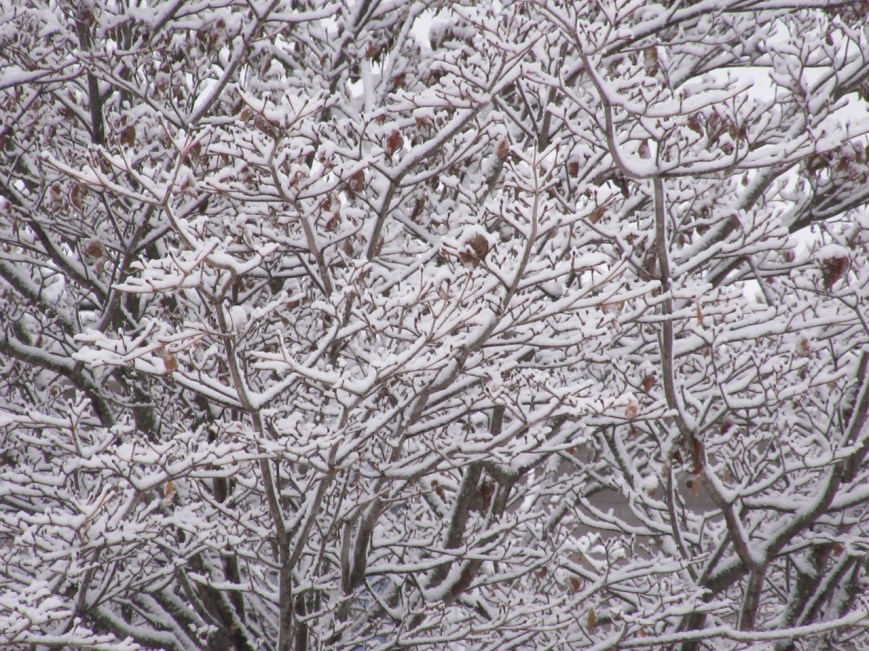
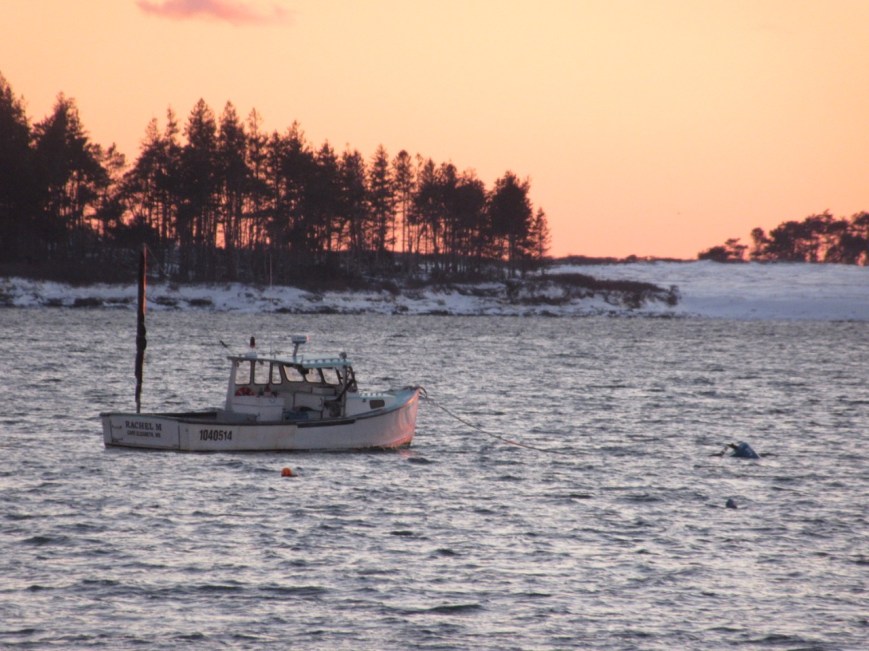
Perhaps this is an odd sentiment, when so much in our country is going wrong these days. Aren’t we also here for justice, for compassion, for interconnection?  But what is beauty anyway?  Is it the unexpected sighting of a wild raccoon near the brook during a morning walk?  Is it the fluid colors of the sky in the dawn?  Is it a coating of ice or snow on the branches of every tree and bush in the neighborhood?

Why do these things enliven our souls?  Perhaps beauty is the mark of an essential wholeness, a harmony we can recognize with our eyes, our ears, our hearts, our whole being.  If that is the case, then I believe beauty also includes justice, compassion, interconnection.  We recognize instinctively the wholeness within justice, within acts of kindness, the miracle of our interconnection.

Beauty has something to teach us about how to work for justice as well.  To express and celebrate beauty is to turn our attention away from the ugly hatefulness we deplore, toward acts of creating what we aspire to.  This is why I love permaculture and solar panels and work parties and gardens.  We are bringing into being the wholeness we hope for.  I am not saying that protests are not important as well.  On the contrary.

But as Rebecca Solnit promises, in her book Hope in the Dark,

…if you embody what you aspire to, you have already succeeded. That is to say, if your activism is already democratic, peaceful, creative, then in one small corner of the world these things have triumphed. Activism, in this model, is not only a toolbox to change things but a home in which to take up residence and live according to your beliefs, even if it’s a temporary and local place… Make yourself one small republic of unconquered spirit.

May you be a beacon of beauty today!

“Part Indian”

Yvonne DSC01872I don’t know the whole story about Elizabeth Warren’s claim to have Native ancestry.  I have heard her mocked by being called “Pocahontas.”  That mockery is wrong on so many counts, not the least of which is the tragic story of the actual Pocahontas that has been obscured and romanticized by American culture and cinema.  But what I want to explore today is the sometimes confusing experience of those of us who are white but have some Native ancestry.

I know enough now to know that having Native ancestry does not make one a Native American.  But I didn’t know that when I was young.  It was through trying to understand what my Native ancestry meant that I grew to understand what it meant to be white.

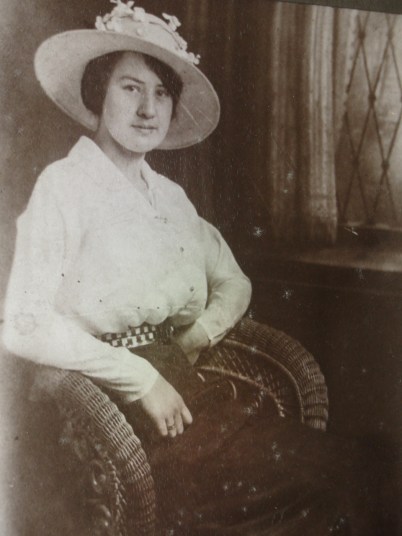
When my siblings and I were growing up, all we really knew was our family stories.  Our mom told us she was part Indian.  She didn’t know what tribe.  It was through her mother’s family, my grandmother Yvonne who came from Quebec to Detroit.  (That is Yvonne’s picture I have included above–taken on the day she crossed the border from Canada to her new life in America with my grandfather.) My mom was proud of being part Indian.  My dad had worked as a cowboy, so we used to joke about our parents being the cowboy and the Indian.

Our family stories opened in my heart a curiosity toward Indigenous peoples. As a young adult I learned more about American Indian political struggles, and began to take what action I could in solidarity.  But I also learned that white people who claimed to have Native ancestry were often joked about, considered Wannabes, and especially tasteless was to claim a great-grandmother who was a Cherokee Indian princess.

Perhaps that was why I was relieved to discover that we were not part Cherokee.  I was the one who researched our family history and learned that we were related to the Innu people, who are indigenous to the land now called Quebec and Labrador. The French settlers called them Montagnais. I learned that the Innu know their land as Nitasinnan, which means “our land.”  Later, in the midst of my activist work, I had a chance to meet Innu activists, working against the hydrodams that Quebec was trying to build on their rivers.

Gradually, I learned more about the Indigenous experience in America, and was able to better understand my own position as a white woman.  But in between my childhood and my better understanding, it was confusing to me.  There were a few occasions that I said I was Native American, many other occasions I kept silent.  My sister once took an art class that she got into because she was 1/16th Indian (we thought).  For a short while, I said I was Metis–mixed–because that was a word used in a book in French that spoke about some of my ancestors.  Not being in Canada, I didn’t know about the actual meaning of that word in English to describe another distinct group.  It took a long time to sort out that it was more accurate and respectful to say that I was white.

This is why I have some sympathy for Elizabeth Warren right now.  With only family stories to guide us, it is hard to sort out the dynamics of race and privilege from cherished ancestral connections.  And the stories of my grandmothers are also meaningful to me still.  I say grandmothers, because it was my matrilineal descent that originated in Nitasinnan.  My Innu great-great-great-grandmother was Marie-Madeleine, who married a Scottish trapper near Chicoutimi, Quebec.  Her daughter was Angele, whose daughter was Claudia, my great-grandmother, and Yvonne’s mother.  When we were kids, we thought we were 1/16 Indian, but it turned out to be 1/32.  Much later, a DNA test confirmed that matrilineal descent.

These grandmothers were gradually–or perhaps quickly–assimilated into the white community, first in Quebec, and then in the United States.  I learned that assimilation itself was part of the long campaign to divide Indigenous people from their land and their history.  When an Indian woman in Canada married a white man, she lost her legal status as an Indian.  So, on the census records for Angele, for example, she was referred to as Scottish like her father.  The mother disappears, through a combination of sexism and racism.  I don’t think the assimilation was without difficulty.  I don’t know the early stories, but my mom mentioned once that her mom and her aunts didn’t go in the sun, because they didn’t want their skin to darken and people to think that they were Indians.

Their lingering shame says something to me about the difficulties of the assimilation process.  And yet–they told the stories–they didn’t forget their ancestry.  And that means something to me as well.  The Innu word for “my grandmother” is Nukum.  Even though I am now very clear about being white, I pray to Nukum for guidance in my life, and she has helped me on my journey.

Living into History

As we approach the holiday called Thanksgiving, how can we move past the American myths that support colonization, and find ways to decolonize our minds and our communities? I have not been able to blog recently, but want to share with you elements of a worship service on this topic I led on November 19th. 
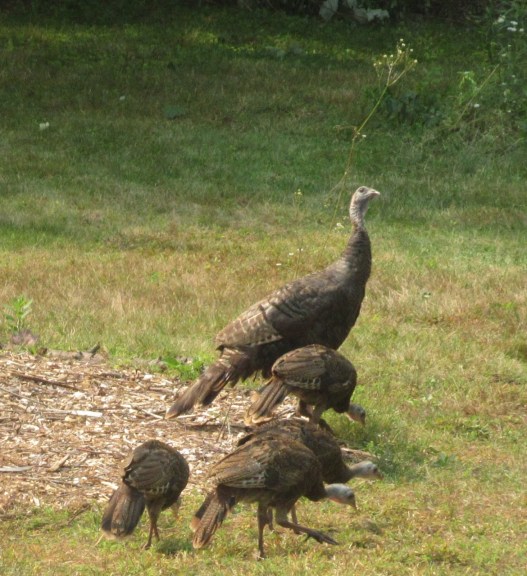
TurkeysOpening Words

It is always good to give thanks! All that we have is a gift from life. Our food, our relationships, our shelter from the cold. And when we give thanks, it is always good to be mindful of all people, and notice those who are suffering and do what we can to ease suffering and change its causes. Today we give thanks, and we explore suffering. We must always do both together, so that our hearts are strong for the journey.

Before our Centering Music:

When you came into church today, the ushers handed each of you four slips of paper. I invite you to write on those four slips of paper the names of things that are precious to you—perhaps people, perhaps values, perhaps places—it could be anything. Perhaps what you are most thankful for. I invite you to keep those four slips in a pocket or purse, or hold them in your hand. We’ll come back to them later in the service.

Reading: “I am tired of being invisible to you all” Winona LaDuke

LaDuke11Winona LaDuke is the executive director of Honor the Earth, and an Ojibwe activist and economist on Minnesota’s White Earth Reservation. She writes:

There is this magical made-up time between Columbus Day (or Indigenous People’s Day for the enlightened) and Thanksgiving where white Americans think about native people. That’s sort of our window. November is Native American Heritage month. Before that, of course, is Halloween. Until about three years ago, one of the most popular Halloween costumes was Pocahontas. People know nothing about us, but they like to dress up like us or have us as a mascot.

We are invisible. Take it from me. I travel a lot, and often ask this question: Can you name 10 indigenous nations? Often, no one can name us. The most common nations named are Lakota, Cherokee, Navajo, Cheyenne and Blackfeet—mostly native people from western movies. This is the problem with history. If you make the victim disappear, there is no crime. And we just disappeared.

…But here’s what I want people to know today about native Americans: There are over 700 indigenous nations in North America. …We are doctors, lawyers, writers, educators, and we are here. We are land-based, and intend to stay that way. … America was stolen or purchased for a pittance. …Of the 4 percent of our land base which remains, we intend to keep it. …

I am tired of being invisible to you all. …What I want to say is that we are beautiful, amazing, tough-as-can-be people. It would be nice if we thought of each other kindly and with compassion. I am certainly not too tired to battle, but I would really like us all to do our part, beyond Native American Heritage Month.

Reflection on Living into History

Winona LaDuke asks, “Can you name ten Indigenous nations?” I am going to simplify her question—how many of us can name the four Indigenous nations whose territories lie in what we call the state of Maine? I am not going to put anyone on the spot—I invite you just to think about it in your own mind. If you can name those nations, think about how you learned about them and why. If you cannot name those nations, think about why that might be something no one ever taught you.

Remember what LaDuke said, “If you make the victim disappear, there is no crime.” In 1875, citizens of Maine passed an amendment to the state constitution that would forbid, in all future printings of the constitution, the printing of several sections of Article Ten. Some of these sections were obsolete instructions about the forming of the state of Maine. But one section was about the new State’s obligations to Indians within the territory. These hidden sections of the constitution would remain in force, but could no longer be read.

The four nations, by the way, are Penobscot, Passamaquoddy, Micmac, and Maliseet, and collectively they are part of the Wabanaki confederacy. [There were many other nations who lived here, but these are the contemporary recognized nations.] Two years ago, the Maliseet Representative to the State Legislature, Henry Bear, petitioned for a bill to make those sections available, and now, though they are still not printed with the constitution, they can be found on the website of the legislature. Here is part of the critical passage:

The new State [that is, Maine] shall, as soon as the necessary arrangements can be made for that purpose, assume and perform all the duties and obligations of this Commonwealth [that is Massachusetts], towards the Indians within said District of Maine, whether the same arise from treaties, or otherwise; and for this purpose shall obtain the assent of said Indians, and their release to this Commonwealth of claims and stipulations arising under the treaty at present existing between the said Commonwealth and said Indians;4

A 2015 article in the Portland Press Herald by Colin Woodard points out that it also

“directs Maine to set aside land valued at $30,000 for tribal use, at a time when undeveloped land in Maine sold for between 3 and 4 cents an acre. In 1967, Maine’s first Indian affairs commissioner, anthropologist Edward Hinckley, discovered Maine had received $30,000 from Massachusetts in compensation, but the state never actually set aside new land for the tribes.”

“If you make the victim disappear, there is no crime.”

And so, every autumn between October 12th and the fourth Thursday in November, we find ourselves once again in the season of false and misleading stories about European settlers and Native Americans. The story that Columbus discovered America in 1492. The story about the feast of the Pilgrims and the Indians described as the first Thanksgiving.

What influence does the past hold over the present? History shapes the social landscape of today, but our social landscape also shapes the stories we canonize as history. A mythology about benign ancestors settling a new land is part of what ensures the continuity of the ongoing process of colonization. How can we reckon with the past, to live in greater wholeness in the present?

I realize, each Sunday, as we gather in worship, that many, if not most of us, are going around these days in some state of trauma. We are watching democracy fall under the weight of plutocracy, we are witnessing climate change’s effects in mega-storms and forest fires, we are watching the rise of neo-Nazi’s and attacks on immigrants. Many of us are fighting against the attempt to take away health care from millions, and a tax plan being voted on in Congress that might better be described as a huge theft from the majority of American citizens to benefit the richest 1 percent. The list could go on and on. Even to read the news these days can be a trigger for trauma.

So I ask myself when I prepare for worship, how do we come together in the midst of trauma? How can I ease the burdens that people are carrying, rather than add to them? And is there any value in sharing difficult information? I come back to that indelible link between history and the present day. If we don’t understand our history, we won’t be able to understand the present day. If we believe the myths that are told to us about our history, we won’t be able to pierce through to the truth within the myths that are generated today to keep us in confusion.

For the past year and a half, I have been involved in a Maine-Wabanaki REACH sponsored project called “Decolonizing Faith.” Led by a group of Wabanaki and non-Wabanaki people in partnership, we operate on the belief that decolonizing our minds and our communities means learning about and acknowledging the full truth of the past and the full truth of the present. It means committing to creating a just future, despite the obstacles.

The process of decolonizing ourselves as non-Indigenous people begins with letting go of guilt and instead opening to feelings of grief and anger in response to centuries of genocide and white domination.  It means recognizing and acknowledging the benefits that have come to us because of colonization, and holding ourselves accountable for what is happening now. It means turning away from the complacency encouraged by mainstream culture, toward resisting further harm.

Maria Girouard, a member of the Penobscot Nation, spoke at a 2014 gathering sponsored by Maine Wabanaki REACH, about the possibility for hope in these times. She said,

Everything that Native peoples have had to endure has been prophesized by my ancestors. A series of prophesies now referred to as the Seven Fires Prophesies describe all these eras or epochs through which Native peoples were going to have to live. Each era or epoch was called a fire. The seventh fire in the Seven Fires Prophesies talks about a time when the world is befouled, when the rivers and the waters run bitter with disrespect, and the fish become too poisoned and unfit to eat. It seems to me, sadly, that we’ve reached that time now.

So what’s next, you might wonder. What’s next is a period of great hope has been prophesized. Some ancestors call it the great healing. Many believe we are entering the times of the great healing now. But the great healing is not a spectator sport. It’s a critical call to action. All peoples, of all races and religions, must come together and work for the good of all. And in order for any change or healing to take place the truth must be told, and received on compassionate ears.

“The truth must be told, and received on compassionate ears.” The effort to understand old myths and uncover truth is an important part of the process of decolonization. I want to talk briefly about the myths of Thanksgiving, and I hope our ears can be full of compassion.

There is an idea that the Europeans conquered the Native nations by their superior weaponry and military might. This holds a partial truth. The Europeans did try to conquer and control every indigenous nation they encountered. But it would not have been possible without another factor. Between 1492 and 1650, possibly 90% of the Indigenous people of the Americas were killed by plague and other European diseases, to which they had no immunity. The Europeans, unwittingly and often purposefully, brought an unprecedented apocalypse to this land.

Millions upon millions of people died. And this figures importantly in the New England story.

In 1617, a few years before English settlers landed, an epidemic began to spread through the area that became southern New England. It likely came from British fishermen, who had been fishing the waters off the coast for decades, and also capturing Native people for slavery. By 1620, 90 to 96% of the population had died. Villages were left with so many bodies, that the survivors fled to the next town, and the disease continued to spread. It was a catastrophe never before seen anywhere in the world.

It is hard even to imagine it. It devastated the tribes, and left many of their villages empty. One of those villages was Patuxet. When the English settlers arrived in Plymouth harbor they found a cleared village, with fields recently planted in corn. This was a big part of the reason they chose it for their settlement. All of the village’s people had died from the epidemic, except for Tisquantum, whom we know as Squanto. We never usualy hear the whole story about Squanto either. We hear that he taught the settlers how to plant corn and fish and hunt the local area. When I first heard that, I remember wondering how it was he spoke English.

Well, here is the story told by James W. Loewen.*

As a boy, along with four Penobscots, he was probably stolen by a British captain in about 1605 and taken to England. There he probably spent nine years, two in the employ of a Plymouth merchant who later helped to finance the Mayflower. At length, the merchant helped him arrange a passage back to Massachusetts.

He was to enjoy home life for less than a year, however. In 1614, a British slave trader seized him and two dozen fellow Indians and sold them into slavery in Malaga, Spain. Squanto escaped from slavery, made his way back to England, and in 1619 talked a ship captain into taking him along [as a guide] on his next trip to Cape Cod.

… now Squanto walked to his home village, only to make the horrifying discovery that he was the sole member of his village still alive. All the others had perished in the epidemic two years before.

Perhaps this was why he was willing to help the Plymouth Colony which had settled in his people’s village. Another theory holds that he was sent there by the Wampanoag chief or Sachem, Massasoit, to keep an eye on them. It was a depleted and downhearted people who had survived the epidemics. Perhaps they thought it might prove beneficial to make an alliance with these newcomers.

The settlers, too, had lost half their people during the first hard winter. There were only 53 settlers who survived until the harvest festival that was later declared to be the first Thanksgiving. One theory suggests that when the settlers sent out men to hunt for fowl for the feast, the Wampanoags heard the gunfire and went to investigate. Massasoit and 90 of his men arrived. Seeing a harvest festival going on, they went out hunting and brought back 5 deer as a gift, and they all ate together and visited for three days. It was a brief moment of tentative peace. Colonization continued, and one generation later, the English settlers and the Wampanoag were at war.

For many Native people in our time, the day called Thanksgiving has become a Day of Mourning, to remember the hundreds of years of losses suffered by their peoples. But the story that is held up, the story that is remembered in elementary schools with fun pageants about Pilgrims and Indians, is a story that indicates all was well. This myth of Thanksgiving helps to erase the troubling history of genocide in our country.

Now, I know that what we share with children is often simplified and made more gentle. But I couldn’t help but contrast this approach to what I have read about how German people acknowledge the history of the Holocaust in their country.

Every German school child must visit a concentration camp; as essential a part of the curriculum as learning to write or count. The country’s cities are landscapes of remembrance. Streets and squares are named after resisters. Little brass squares in the pavements …contain the names and details of Holocaust victims who once lived at those addresses. Memorials dot the streets: plaques commemorating specific persecuted groups, boards listing the names of concentration camps…, a giant field of grey pillars in central Berlin attesting to the Holocaust.

What might it look like if we in our country acknowledged the devastating underpinnings of our own history? If we acknowledged the land thefts, the diseases, and the forced march relocations; the boarding schools that Indian children were forced to attend whose purpose was to wipe out Indigenous languages and cultures? What if we acknowledged the church’s role in this history?

But this country does not want to acknowledge its past, because in fact, it has not ended the colonization process—our understanding of our history is directly linked to our current social landscape. One of the effects of the myths about Columbus and Thanksgiving is to situate stories of Indigenous people in the distant past. To make disappear the ongoing pervasiveness of the colonization process.

Even when European Americans begin to acknowledge the real stories, and become aware of the devastation suffered by Indigenous peoples, we might feel a sense of disconnection—after all, we think, it wasn’t me, personally, who stole Indian land, or caused disease among the people, or took away children or killed anyone. Perhaps some of us might feel a sense of guilt by association, for what our ancestors have done. But we still imagine it as something long ago and far away.

However, land taking and destruction continue into the present day. For example, just this past week, November 15, 2017, the Old Town Planning Board gave final approval for a mega-expansion of the Juniper Ridge Landfill. This landfill expansion directly threatens the Penobscot River, which is the water home of the Penobscot people. The site is used for out-of-state waste storage. The US Army Corp of Engineers has also approved the expansion, and made the determination not to hold a public hearing on the project.

Back in June of this year, the 1st U.S. Circuit Court of Appeals in Boston sided by a 2-to-1 majority with a 2015 ruling by U.S. District Judge George Singal that the Penobscot Indian Reservation includes the islands,“Indian Island… and all islands in that river northward,” but not the river itself. The 1st Circuit dismissed a claim that the Penobscot Indian Nation’s sustenance fishing rights were threatened.

Kirk FrancisIn a dissenting opinion, Circuit Judge Juan Torruella noted that treaties signed in 1796, 1818 and 1833 preserving the Penobscot’s sustenance fishing rights “only make sense and can only be exercised” if their reservation includes at least part of the water of the river. Ironically, even the federal government sided with the Penobscots in this case, arguing that at least the river to the mid-line should belong to the reservation. This was a taking of Indian land done by our own state government in collusion with Federal judges.

Colonization in the form of land-taking and destruction continues into the present day. These are just two of many more examples I could name. From oil pipelines at Standing Rock, tar sands oil in Canada, uranium mining in Nevada, to sports team mascots and name-calling. Understanding our history can help us to understand the present.

I want to ask you to look again at the four slips on which you wrote things that are precious to you. That which you are most thankful for. Identify at least one slip that represents the kind of things that might have been taken from Native people, such as home, land, family, children, language, spirituality. I ask you to surrender this slip to my helpers as they go around with baskets. I will be reading what you give to them.

Now look at what remains in your hand, the three slips you have left. In the spirit of feeling what has happened in colonization, we are going to come around again and take another slip from each person and read them aloud. This time the helpers will take whatever slip they want.

I invite all of us to pause for a moment, and notice our feelings and responses to the loss of these precious items.

And what if I were to offer a prayer of thanks that these items were now mine?

Of course, this simulation was symbolic, not actual, and the takings from Native people occurred relentlessly over generations, in so many aspects of their lives. So we really can’t appreciate the magnitude of what has happened in our country.

One first step in the pursuit of decolonization is to listen to Indigenous people’s stories of loss and pain. Listening is not about fixing something, or feeling guilty, or giving advice. Listening is about being present and opening our hearts to the experience of someone who has a story to tell. We need to let our hearts be broken by the stories. Healing begins to be possible through telling the stories and through listening to the stories with compassion. When we listen together, there is hope.

I mentioned earlier that so many of us are now carrying trauma in our hearts from what is happening to our country and to the earth in these times. I believe that we can’t solve the problems of today, without being open to the roots of our society’s destructiveness. All of us need this truth-telling. All of us need a time of healing. I find hope in the Indigenous prophecy that we are entering a time of healing.

Maria Girouard finished her talk about the Seven Fires Prophesies with these words:

Interestingly enough, our traditional teachings tell us that this new change, this new move towards a new harmonious world, will begin in the East. And it is supposed to sweep across Turtle Island like the dawn of a new day. So here we are, perfectly positioned in Wabanaki land where the light from a new day first touches Turtle Island. … Thank you very much, you are pleasing to the eye, I’m glad you are here. The ancestors have been expecting us.


*From James W. Loewen, “Plagues & Pilgrims: The Truth About the First Thanksgiving,” in Rethinking Columbus, p. 81.


Too much water, too little water

I have been thinking about the flooding in Houston, and all the other devastating ways the planet is adapting to our carbon in the air, with changing weather patterns, intense storms, different water patterns.  Thankfully, my sister and other family members in the Houston area are safe.  Meanwhile, we have drought here in Maine.  It hasn’t rained for over ten days. I don’t have answers for what to do about the new reality of flooding in our land, but I thought I could talk about what we are doing to address drought here in Maine.

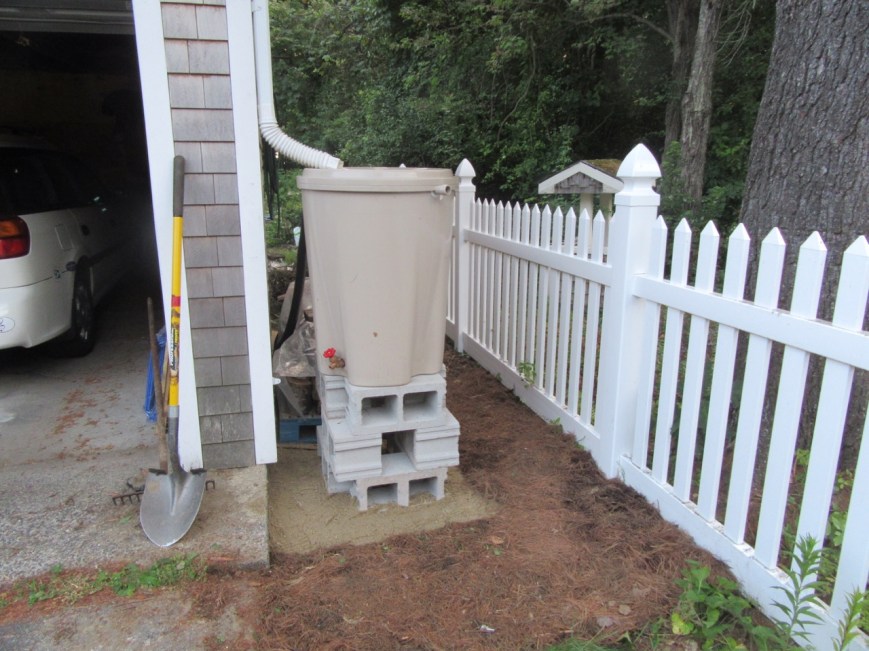
So, last week, we were able to finish the rest of our rain barrels!   One of the useful aspects of rain barrels is to preserve water in the landscape to be able to weather the ups and downs of water flow.  We now have rain barrels gathering the run-off from each roof on our land.

IMG_2823

The final rain barrel is finished!

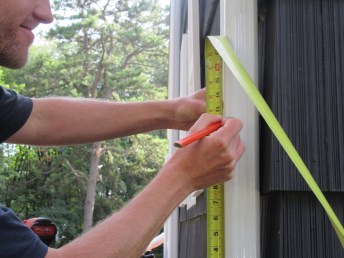
Measure the downspoutI want to post about the learning session that Dave led on the 23rd to finish our rain barrels and teach a few of us more about how to install rain barrels.  I will talk today about how to attach the barrels to the downspouts of our gutters.  Once the rain barrels themselves are positioned, you can measure and mark the downspout about 8 to 12″ above the top of the barrel.

Unscrew the downspout attachment


Then remove the downspout by unscrewing the fastening screws on the wall and to the gutter.  Once those are unfastened, you can pull the vertical downspout apart from the connectors to the gutter.

Unscrew the connector


The fun part is cutting the downspout itself to the right length with tin snips, using both right-handed and left-handed snips.  (Right handed are red-handled, and left are green.) The basic idea is to mark the downspout with a pencil line all around, and be aware of the part you are going to keep, and the other part which will not be part of the finished downspout (the scrap side–but you can save it for other uses.)  Then punch a hole with the point of the snips near your line, but in the scrap side, and start cutting around the marked line.  But, also, about an inch further into the scrap side, you start another cut, so that you can work both those cuts at the same time.  It makes it easier to go round the downspout.  If you are right-handed, you use the right hand snip for your “good” cut, and the other snip for the helping cut.  This picture shows a left-handed person making the good cut.  As you go around the pipe you can cut off that little strip so it doesn’t get in your way.Cutting the downspout

Once the downspout is cut, you reattached it to the gutter, and reattach the screws, or make new ones as needed to attach it to the wall.  Then, attach a plastic downspout extension piece that you can buy at a hardware store in large or small sizes, and position it to end over your rain barrel  (see first picture).  Hurray!