Another Reason I Love Maine

Our appraiser rescues injured birds!

As part of our search for greener housing, we are applying for financing with our local bank, based on our equity in our current house.  That way, we don’t have to exactly synchronize the buying of a new house with the selling of our current house. Yesterday, an appraiser came to our house, as part of that process. We had de-cluttered the house and tidied and cleaned before she arrived.

Window MJ DSC00331But what I love about Maine is that people don’t stay on topic or on task. She noticed the striping we had put on some windows to help prevent birds from crashing into them, and we got talking about birds. It turns out she cares for injured and orphaned birds. She has been doing this for many many years, in conjunction with a local vets office. She spoke about her robin that can’t fly, but hops around on the enclosed porch, and sometimes releases the earthworms instead of eating them. She has cared for bluejays who could speak words, and a crow who liked to wait for the fax machine in her office to get an incoming fax so he could tear it apart. When possible, the birds were released after they had grown up or healed, but a few she kept on.

She described each bird by name and I love how much she appreciates their intelligence and their unique personalities. I love that she searches for the perfect beach to release young seagulls who are now able to make it on their own. I love her story of the crow barking like a dog because he had been raised around her dogs.

You never know what little delights a day will bring, and I love that in Maine, folks don’t stay on task, and you can discover kindred spirits when you least expect it.

Letting Go and Giving Away

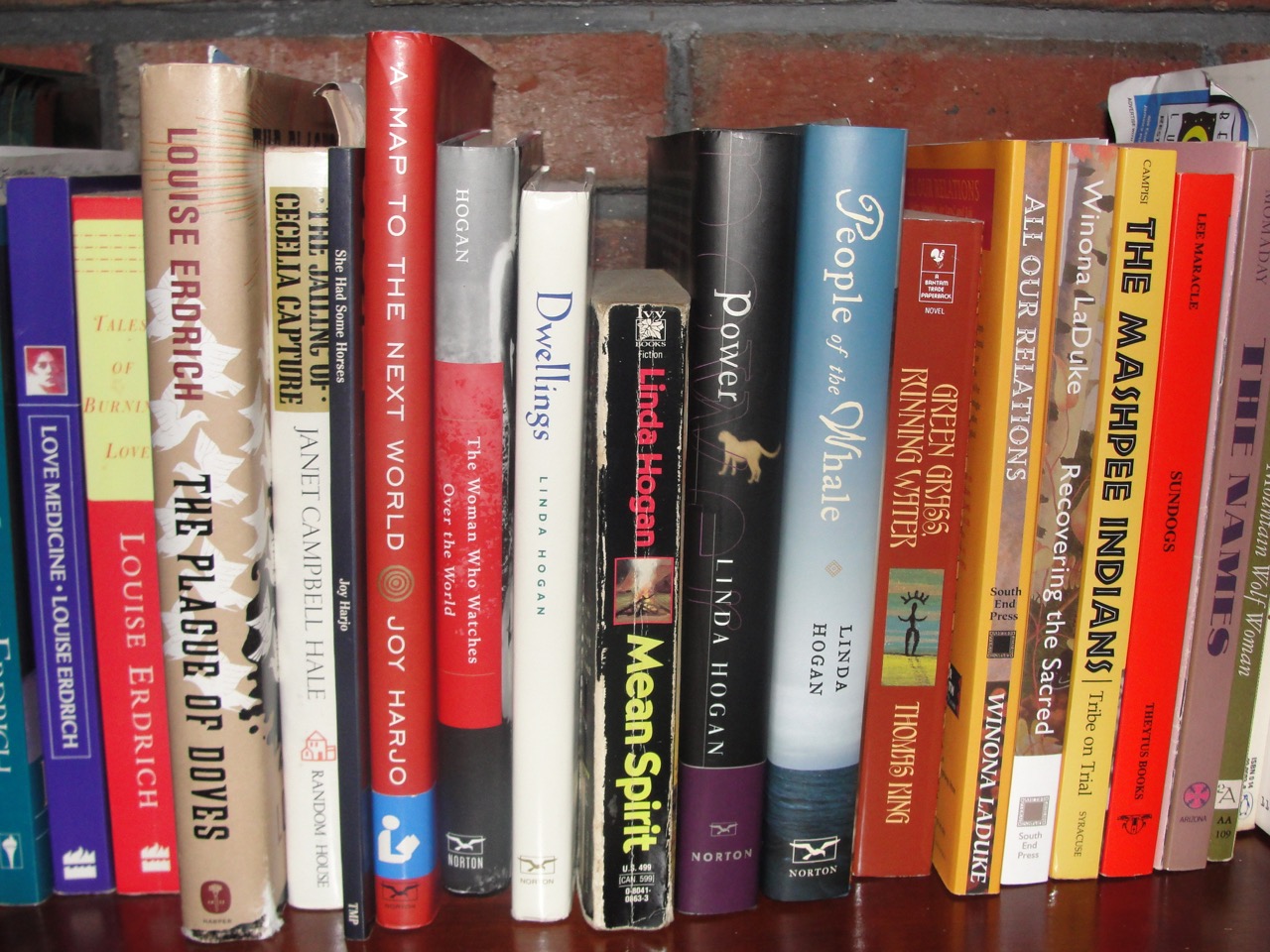
Books on Shelf DSC00283Even when there are no new houses to look at, there is plenty to keep me busy. Another side of searching for greener housing is getting ready for the move into a smaller place. This means paring down what we have collected over the years in a space that has abundant room for keeping things.

First stop: Books. I have shelves full of books that I have read and loved for many years. But I also have developed an allergy to any book that is more than a few years old. If I want to read one of my older books, I have to put on a mask and gloves, and even then I might get a headache from it. So perhaps now is a good time to let go of most of these old friends, and to pass them along to others who can enjoy them.

I had to take a deep breath when I thought about actually giving away my books. I decided to take pictures of the books on the shelf, because it makes me happy to see the titles there. And I still have to keep a few of my long-time, life-changing favorites. Even with a mask, I might need to read them again. I will also keep the books I am currently using in my work. In other words–I will still have a lot of books, just not as many as before.

I learned that our local independent bookstore, Longfellow Books, will take used books in trade for store credit. You can only bring in one bag or box at a time. My first grocery-size brown bag netted about $14 in store credit. It’s not a way to get rich, or even get very many new books. But it is a way to re-use and re-cycle and get a few new books, and support a great local institution.

I also did some research to see if prisons would accept book donations for their libraries–but I learned that certain ingenious addicts had figured out a way to import drugs into the prisons through book donations from their friends–so no more donations are accepted from individuals. But then, I heard about a Native group collecting books by Native authors to donate to the prison for the benefit of American Indian prisoners in Maine. I can’t imagine a better home for these particular treasures. I gathered two boxes that I will drop off.

I now know that the Portland Public Library will take book donations, and that Preble Street accepts donations of books and magazines for its center for homeless youth and adults.

There is a kind of joy in simplifying one’s life, in having fewer possessions to haul around. But it is an even deeper joy to think that someone else might be inspired through these books, by insights and stories that were so important to me on my journey.

Changing Lanes Without Signaling

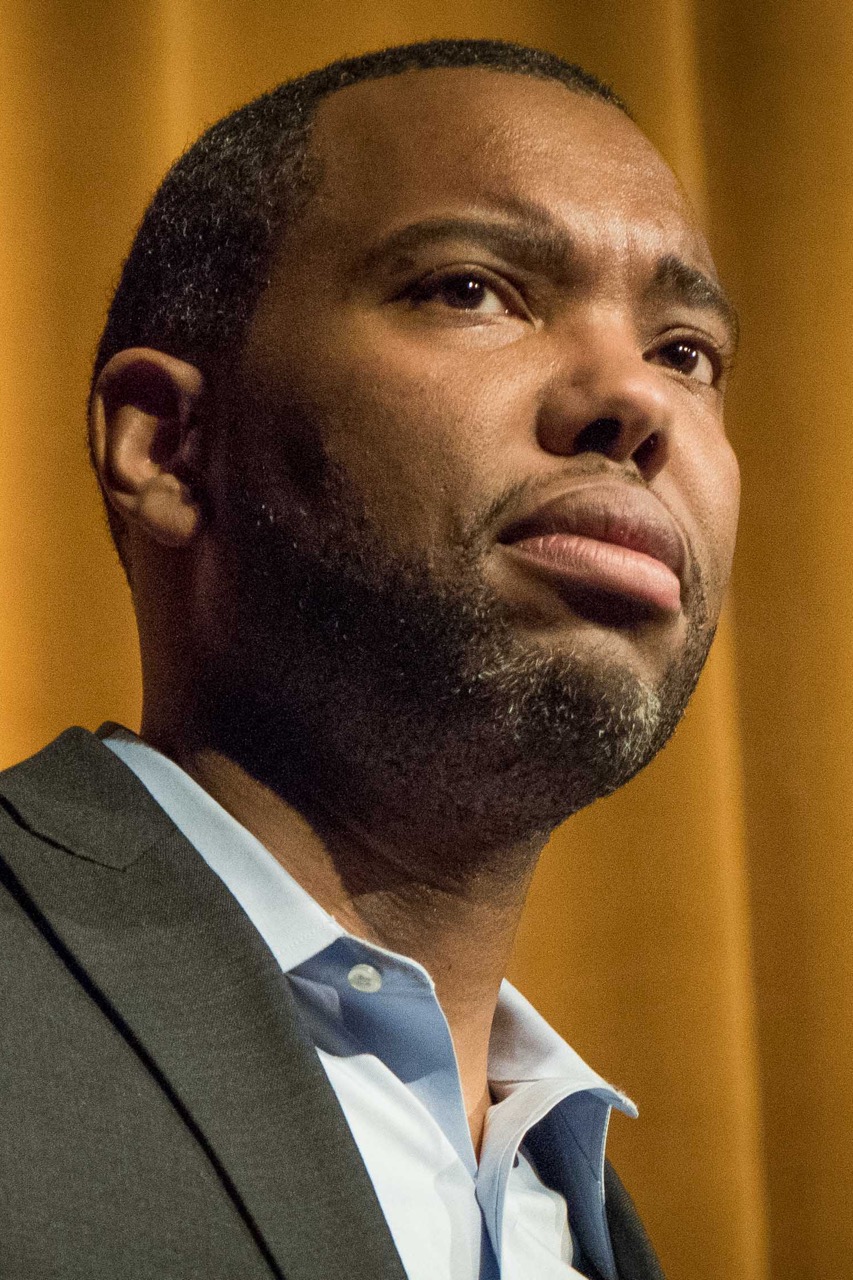
"Ta-Nehisi Coates" by Eduardo Montes-Bradley. Licensed under CC BY-SA 4.0 via Wikimedia Commons

“Ta-Nehisi Coates” by Eduardo Montes-Bradley. Licensed under CC BY-SA 4.0 via Wikimedia Commons

Ta-Nehisi Coates’ new book, Between the World and Me, is a powerfully devastating window into the experience of living in a black body in America, a body that is constantly vulnerable to assault, to capture, to torture, to destruction, to death.

I am a white woman who has long been involved in the white anti-racist struggle–I say this, not with any attempt at boasting, but merely to point out the map that my reality has followed over the last more than thirty years of my life. But even so, Coates’ words painted a picture of soul-shattering fear that struck me to the core.

I grew up with a general feeling of safety. I belonged to a working class family in Michigan, living in suburban Detroit for the most part, raised to believe that “all people are the children of God,” but also living in all-white communities where racial violence was something that appeared only on our television screen. A liberal white world aspiring to be “colorblind,” in the “Dream” that Coates describes as the place where white America lives as if asleep, unaware that it is built on the violence against black bodies.

I was asleep like that, but in my young adulthood I began to wake up to the horrific realities that America was built upon–the theft of the land and destruction of Indigenous people, the slavery and destruction of Black people. The first window into those realities came through my own awakening to the violence that was perpetrated on female bodies. That violence was hidden under the mantle of (white) safety. I did not actually experience sexual violence in my own body, only the constant threat and fear of it. Don’t go out at night, don’t talk to strangers, don’t dress to draw attention to your body, and so on. But here was the irony–a woman could “feel” safe if she stayed “asleep.” It was only upon waking that the fear undergirding my life became visible.

Once I woke up to that illusion, other illusions began to break through as well, and racism became visible and anti-racism became important to me. But so much remained hidden. Layer upon layer, I kept being surprised again and again at the horror of it, the extent of it, the insidious forms it takes, the interlocking systems that perpetuate it. I got it that we are all implicated, that no one can escape the systems in which whiteness benefits those who are understood to be white, and devastates those understood to be not white.

Ta-Nehisi Coates broke open for me a new and deeper layer of the reality of racism–his words, along with the revelations of the #blacklivesmatter movement, which have kept before the public eye the many recent killings of black people by police. Last week, I watched videos of the police officer’s traffic stop of Sandra Bland. Pulled over for failing to signal a lane change, three days later, she was dead in her jail cell. Something about her story–her innocent journey to start a new job, her bright spirit–brought it all home. No black person is safe anywhere.

This week, as I passed the flashing lights of a police vehicle behind a pulled-over car, I felt an unfamiliar shudder in my gut. A tiny glimpse into the terror. When I read Coates describing the terror he felt when he was stopped in his car by police, these images and videos came to mind, and I understood his fear for his life, his shaky relief when he was let go. A few months later, his friend was killed by the same police force.

The thing is, Coates continues to live with this original and constant fear in his body, just as my body still holds that original feeling of safety, even though I realize its illusory nature. I have to choose to stay awake, to remember. I can take a break, not think about it for a while.

It is not easy to stay awake. Mab Segrest talks of choosing white anti-racism as becoming a “Race Traitor.” There is a loneliness in it, a separation from the mainstream American dream, a separation from family and friends. Most often, I feel more resonance with my friends who are people of color, but I will never really belong to that world either. So staying awake is often lonely and sad. I usually don’t have a clue how to create change, or make things any better. But I believe that if we stay asleep we will never find transformation. We have to wake up to reality, bear its pain, before any change can happen. So thank you Ta-Nehisi Coates for being willing to be so open about the reality in which you live, in which we all live.
How to Face the Mess We’re In Without Going Crazy

Redwood Sky DSC06718I was away for eleven days at an intensive retreat in northern California on The Work That Reconnects with Joanna Macy. I have loved Joanna’s work for over thirty years, from when she was leading workshops on Despair and Empowerment in a Nuclear Age.  If you haven’t yet encountered her work, a great book to begin is Active Hope:  How to Face the Mess We’re in without Going Crazy, co-authored with Chris Johnstone.

Here is the description of the book from the publisher’s page:

The challenges we face can be difficult even to think about. Climate change, the depletion of oil, economic upheaval, and mass extinction together create a planetary emergency of overwhelming proportions. Active Hope shows us how to strengthen our capacity to face this crisis so that we can respond with unexpected resilience and creative power. Drawing on decades of teaching an empowerment approach known as the Work That Reconnects, the authors guide us through a transformational process informed by mythic journeys, modern psychology, spirituality, and holistic science. This process equips us with tools to face the mess we’re in and play our role in the collective transition, or Great Turning, to a life-sustaining society.

A true gift I have experienced in Joanna’s work is a way to experience my own grief for the world, not as a debilitating or paralyzing weight, but as a doorway into experiencing my deep interconnection with all beings.  We begin in gratitude, and the spiral of the work takes us through grief and interconnection, and we go forth with new strength for changing our lives and our world. I came away from the intensive feeling more alive and whole, and with new ideas for bringing people together around this work. Reading a book or a blog can be a solitary experience, but gathering with others to discuss a book, or doing practices together that make the ideas come alive, can be profoundly healing.  I am dreaming of how I might bring this work to Maine.

Linda Hogan’s Solar Storms

My favorite novel of all time is Chickasaw writer Linda Hogan’s Solar Storms.  Published in 1997, it is the story of Angel, a girl who was taken from her Native relatives as a tiny child and raised in foster care, after being abused by her mentally ill mother.  At 17, she comes back to find her grandmothers and learn about who she is.  During this time, people in her small village discover that hydroelectric dams are planned for their ancestral homeland in the north, so four women travel by canoe to help in the struggle against it.  I first read this book when I was working (with Massachusetts “Save James Bay”) against the hydroelectric dams that were being built in Quebec, and I learned later that Hogan had drawn from that situation in creating her fictional account.

But this brief description of the plot can’t do justice to the many layers of poetry and meaning that are woven into her narrative.  I learned about what it might mean to be deeply connected to a place–to be indigenous to a place.  I learned that loving the earth isn’t just about loving the planet, but rather about loving a particular island or river or peninsula or forest.  I learned that we can love the earth even if we are not indigenous, even if the earth keeps some secrets from us.  It helped me along my journey to find my own connection to the earth.  The elder Tulik tells Angel, “Here a person is only strong when they feel the land.  Until then a person is not a human being.”⁠ [p.235]

Linda Hogan tackles issues that face Native people–including the taking of children and the taking of land–and brings alive for all of us the heartbreak and courage that are born in this brokenness, and the beauty that may be created as people move toward healing.  As we face more and more destruction on our planet, we all so much need to learn to “feel the land.”

Broken Rock DSC00135

Clearing Out the Clutter in Our Character

Fence DSC03309As I continued on my Journey into Emptiness, I discovered a third kind of clutter, which might be identified as the clutter in our character. This is made up of all the tools and maneuverings that we use in our relationships with others.

Does every vacation—for those of us who are partnered—have to include at least one big argument? Mine seem to, and they unfailing arise out of habits that might have some usefulness in completing work projects, but not in being with the one I love.  My colleague, the Rev. Barbara Merritt, drew my attention to the advice of modern theologian, Richard Rohr, who claims there are three things we need to let go of here: 1) being in control, 2) being effective, and 3) being right. Then she told a story that I could have written myself. She said:

Having just read that list, I was a passenger in the car as my husband drove us to the movies Thursday night. I couldn’t help but notice that he’d taken a very slow and, I believed, inferior route. I shared this observation with him. He reminded me that I was not driving (number 1, I was not in control.) I replied that he was not being as effective as was possible (I wanted maximum efficiency) and finally I comforted myself with a smug sense of being right. In less than a minute, I had violated all three precepts of ‘letting go.’ I had struck out.

One day Margy and I were driving to the movies, and I managed to strike out in just exactly the same way. From my point of view, we were rushing to get to the movie, and she was foolishly taking a longer route. There was nothing intrinsically unpleasant about the journey, yet I was worried about wasting time on the way to the movie. I was attached to control, effectiveness, and a sense of myself as being right.

Antoine de Ste. Exupery, in The Little Prince, tells us that it is the time we waste on our friends that makes them so important to us. Of course, there is a paradox here. Being with friends is not really a waste of time. But we cannot enter that time with productivity or effectiveness in mind. Wasting time is the essence of a playful spirit. We are not trying to gain anything, grow anything, accomplish anything. We move from doing some thing, to being some one.

On the journey into emptiness, the third step was to let go of these compulsions of my character, and to waste time. Perhaps because I am partly introverted and partly extroverted, I needed to waste time both alone and with others. I needed unstructured solitude, and I needed unstructured time with friends.

How often do we just take time for being with friends? After one such dinner conversation, I wrote in my journal: I feel saner, restored to myself. This is what I am looking for, finally, this sense of being restored to myself. In order to be in the present moment with others, I needed to stop doing and doing. I needed to let go of control, to let go of being effective, to let go of being right.


The quote from the Rev. Dr. Barbara Merritt was from a sermon “The Spiritual Practice of Letting Go” preached February 25, 2001, at First Unitarian Church in Worcester, MA.

The Power of the Story

Today I am concluding my series of blogs about Dr. Martin Luther King, Jr., in honor of the anniversary of his death, April 4th. I have been exploring what his life can teach us about the experience of the Divine Mystery.

I don’t understand the mechanics of experiencing the divine presence. I wonder if, as for Dr. Martin Luther King, Jr., it has something to do with the commitment to give oneself to a sacred calling, or to do the work of justice. I don’t know why some people call for help, and never seem to hear an answer. There is no formula that I can teach you, except to say that trouble can sometimes be a doorway, too, if we knock.

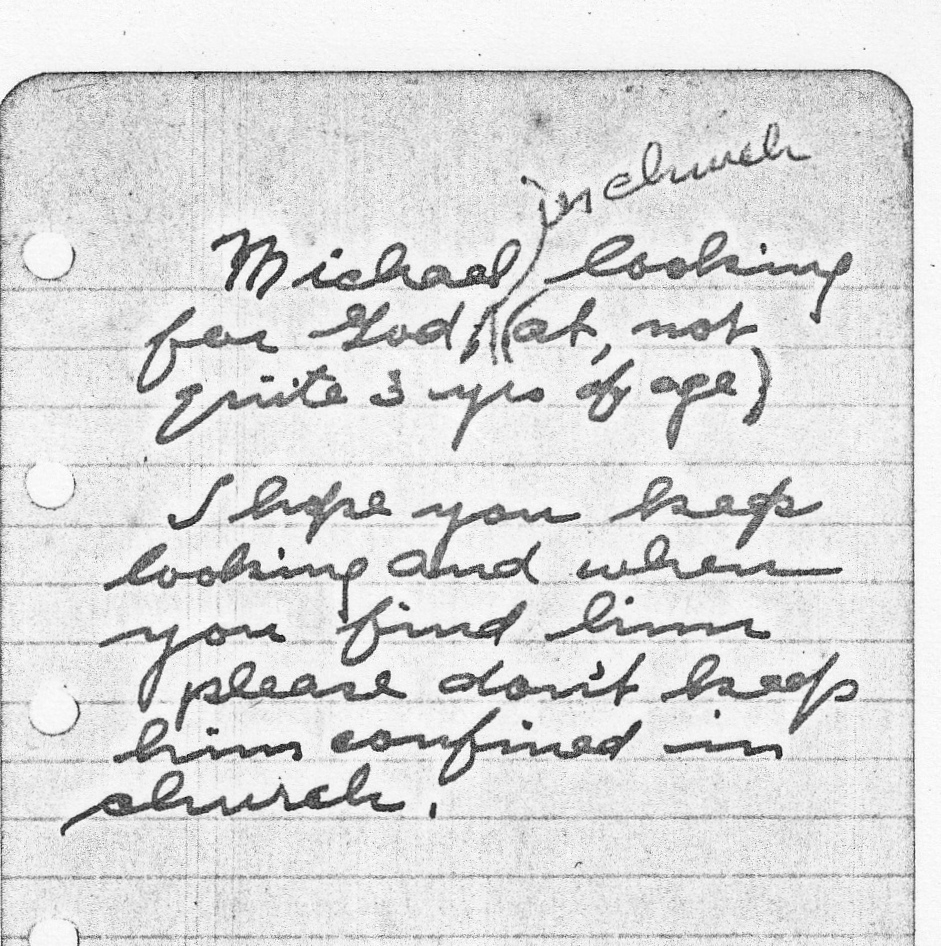
It makes me think about something my grandfather wrote in a little black notebook that disappeared for many years. April 4th, the anniversary of King’s death, is also the anniversary of the death of my grandfathers, one in 1964, and one in 1967. My grandpa Johnson died when I was not quite 11 years old. He was not a Catholic, which was a big deal in my family. But I am told he had been a spiritual man, and had even considered a call to ministry as a Unitarian or a Lutheran. The story I remembered from the notebook was this: My grandfather said that my young cousin Michael at the age of three had gone into a church building and was looking for God. My grandfather commented, “If you can’t find God outside of the church, you will never find him inside the church.”

But just before Easter a few years ago, while my uncle was dying, another cousin sent me a message on Facebook, about going through papers of her father, and finding a copy of Grandpa’s note. It turned out the actual quote was slightly different than I remembered. He had written, “I hope you keep looking. And when you find him don’t keep him confined in church.” But it speaks to the same impulse—that God is beyond what happens in church.

Grandpa's Notebook

Grandpa’s Notebook

Even without a formula, even without a sure way to find this God who helps the lowly, I believe the stories of such a God can give us hope and courage. I am reminded of an old Jewish legend recounted by Elie Wiesel. Whether it is true or not, I do not know. But that is the thing about stories. The truth to be found in stories is not about whether or not they are factual. Some of the most helpful stories happen only in fiction.

This is a story about a Jewish community who had a very wise and powerful Rabbi. When the people were in trouble, their Rabbi used to go into the woods, to a special place, where he prayed a very special prayer, with ritual and song, and the people would be helped. But eventually the rabbi died, and his successor did not know the full ritual with all its songs. So when the people were in trouble, he went into the woods, and prayed the special prayer, and it was enough, and the people were helped.

Eventually, he too died, and the next Rabbi who came to them did not know the place in the woods. But he did know the special prayer, and so when the people were in trouble, he prayed the prayer, and it was enough, and the people were helped. Finally, he too died, and the next Rabbi didn’t know the rituals or the songs, he didn’t know the place in the woods, or even the special prayer. But he knew the story. And it was enough. And the people were helped.

Leslie Marmon Silko writes, in her novel Ceremony:

I will tell you something about stories,…
They aren’t just entertainment.
Don’t be fooled.
They are all we have, you see,
All we have to fight off
illness and death

You don’t have anything
if you don’t have the stories.

I found God in myself and I loved Her fiercely

I am continuing in my series of blogs about Dr. Martin Luther King, Jr., in honor of the anniversary of his death, April 4th. I am exploring what his life can teach us about the experience of the Divine Mystery.

I want to acknowledge that there are many people who do the work of justice, without relating to a God of justice. Their work comes out of a belief in human dignity and connection, and God has nothing to do with it, for them. And that is really fine with me. When we have experienced the connection we share with other human beings, I believe it naturally leads to a concern about justice and equality.

But for some of us, there have been moments when we were in despair about injustice, or afraid of what our truth was revealing to us, or ready to give up, like Dr. King had been in his moment of despair. And in those moments, we also felt a divine presence, a presence of courage and hope and strength, empowering us into transformation. This God may not have intervened to take away a difficult challenge, but rather enabled us to find wholeness and self-worth in the meeting of it.

For me, the divine presence gave me the courage to leave the church of my childhood, and leap into the unknown, to find myself as a woman, as a whole and equal person. When all around me the church was saying that women had their place, and it was not in the priesthood or the leadership, when I was hearing that women were weak and vulnerable and needed men to guide and protect them, something enabled me to reject that characterization, and claim fullness. Something I barely even had a name for—but it was a sacred power nonetheless.

Photo by Rick Kimball

Photo by Rick Kimball

For me, the risk involved imagining that God might be a woman, a Goddess. That I might be created in the image of that Goddess. And even though there was nothing in the Bible that described this Goddess, yet it was still the stories of the God of justice that led me out of those old male-dominant images and into new possibilities. As Ntozake Shange put it, “I found God in myself and I loved her fiercely.”

This experience in my own life became a window to understand, at least in part, the kind of transformation the slaves had experienced. How miraculous and lonely it could be, how long the journey, and how frightening the desert. But yet, something unmistakable like a fire to guide the way. It taught me that the divine is a power beyond institutions, beyond containers, yet able to be present in our lives—especially in those moments of transformation, when “the mighty are cast down from their thrones, and the lowly are lifted up.”

I do not ask that anyone believe in the God of my own transformation. It doesn’t work like that. But I do offer it to you as an option of hope. If you are going through a hard time, if you are discouraged, if you are seeking to follow the truth of your heart, if you are sore oppressed. If you are having trouble believing in your own worth and dignity. I invite you to call on that God, and see whether there might be a presence that can help you through.

The God of the Bible is the God of Justice

I am continuing in my series of blogs about Dr. Martin Luther King, Jr., in honor of the anniversary of his death, April 4th. I am exploring what his life can teach us about the experience of the Divine Mystery.

mlkmemphisspeech1968On April 3rd, 1968, the night before he was killed, Dr. King delivered a speech in Memphis, Tennessee, where he had come to support the sanitation workers’ strike. There had been threats against King related to this trip to Memphis; he mentioned the threats in his speech. He mentioned earlier dangers, too, including the time he was stabbed by a deranged woman in New York City. But he talks more about his gladness. He speaks about his gratitude for being alive to witness the sit-ins, and the bus boycott, and all the other ways that black people had aroused the conscience of the nation and stood up for freedom. He encourages the striking workers not to be afraid, and talks about all the practical necessities of their current struggle.

He ended his speech in words that his listeners would have known were an echo of the story of Moses. As the Hebrew people were close to entering the promised land, God brought Moses up on a mountain, where he could see the promised land, even though he would not be allowed to enter it with them. It was on that mountain that Moses died.

Here is what Dr. King said:

Well, I don’t know what will happen now. We’ve got some difficult days ahead. But it doesn’t matter with me now. Because I’ve been to the mountaintop. And I don’t mind. Like anybody, I would like to live a long life. Longevity has its place. But I’m not concerned about that now. I just want to do God’s will. And He’s allowed me to go up to the mountain. And I’ve looked over. And I’ve seen the promised land. I may not get there with you. But I want you to know tonight, that we, as a people, will get to the promised land. And I’m happy, tonight. I’m not worried about anything. I’m not fearing any man. Mine eyes have seen the glory of the coming of the Lord.

There is power in a story. For Dr. King, the story of Moses was a doorway into the power of God to lift up the lowly. King said that preachers should draw on the prophet Amos to say, “Let justice roll down like waters and righteousness like a mighty stream.” He said that preachers should say with Jesus, who himself was quoting the prophet Isaiah, “The spirit of the Lord is upon me, because he hath anointed me to deal with the problems of the poor.” Dr. King took the stories of the prophets and wove them into new words of hope and liberation, words that gave people the power to make a change.

There are still many people who try to argue against this justice-loving God of the Bible. Four years ago, just a few weeks before the anniversary of Dr. King’s death, Fox News commentator and radio personality Glenn Beck attacked churches that preach a gospel of social and economic justice. Glenn Beck said if your church preaches that, you should “run as fast as you can.” According to Beck, social and economic justice are code words for communism and Nazism.

Rev. Jim Wallis, founder of the progressive Christian group Sojourners, responded to Beck on his own videoblog. He said,

When I was in seminary, we did a study of the Bible and we found 2000 verses in the Bible about the poor, about God’s concerns for the left out, the left behind, the vulnerable and God’s call for justice. One of my classmates took an old Bible, and cut out every single reference to the poor, to social justice, to economic justice, and when we were done, the Bible was just in shreds. If I were ever to talk to Glenn Beck, I would like to hand him that old Bible from seminary and say, Glenn, this would have to be your Bible. …The God of the Bible is the God of justice.

When you are standing up for righteousness, God will be at your side

Today I am continuing in my series of blogs about Dr. Martin Luther King, Jr., in honor of  the anniversary of his death, April 4th. I am exploring what his life can teach us about the experience of the Divine Mystery.

There was a time shortly after the beginning of the Montgomery bus boycott, when Dr. King was seriously doubting whether to continue his involvement in the movement. He had been receiving threatening phone calls and letters at his home, and while at first he took them in stride, after a while, he began to grow afraid. After a particularly strenuous day, late at night, already in bed, he got a phone call with yet another angry threat. He got up and began to pace the floor and then went into the kitchen.

He wrote about this moment:

I was ready to give up. I tried to think of a way to move out of the picture without appearing to be a coward. In this state of exhaustion, when my courage had almost gone, I determined to take my problems to God. My head in my hands, I bowed over the kitchen table and prayed aloud. “I am here taking a stand for what I believe is right. But now I am afraid. The people are looking to me for leadership, and if I stand before them without strength and courage, they too will falter. I am at the end of my powers. I have nothing left. I’ve come to the point where I can’t face it alone.”

He goes on to say,

At that moment I experienced the presence of the Divine as I had never before experienced him. It seemed as though I could hear the quiet assurance of an inner voice, saying, “Stand up for righteousness, stand up for truth, God will be at your side forever.” Almost at once, my fears began to pass from me. My uncertainty disappeared. I was ready to face anything. The outer situation remained the same, but God had given me inner calm.

Three nights later, his home was bombed, but he was able to deal with it calmly. His experience of the presence of God had given him a whole new strength.

As in the story of the Israelites leaving the slavery of Egypt, Dr. King experienced a divine Mystery that is involved in the struggles of human beings to achieve dignity, equality, and justice. As I said before, there is no way to prove that such a God exists. At least, there is no proof outside of the experience of it. But there is a power in the experience that enabled Dr. King to go on to lead his people with courage and truth. And there is a power in the story, just the experience of hearing that story about Dr. King, that inspires me in my own search for strength in the work for transformation.

220px-Martin_Luther_King_Jr_NYWTSTo look closely at the story of Dr. King is to see its deep resonance with the story of Moses. God didn’t speak to Moses to give Moses a comfortable life. When Moses heard the voice of God, in the story of the burning bush, it was a voice calling him to free his people. And just so, Dr. King wasn’t praying about material wealth or success in his career, or even protection for his family. He was praying about standing up for what he believed was right—the struggle of black people to be treated with dignity and equality. He was praying for the courage to bear witness to justice. And the answer he received was linked to that justice work—that inner voice said, “when you are standing up for righteousness, God will be at your side.”

Dr. King went on to lead the movement with courage and strength. There were other threats and many troubles that came his way. His God didn’t protect him from all those troubles, but King felt God at his side. And the story of Moses continued to be a constant source of his inspiration.

Quote from Martin Luther King, Jr. is from The Strength to Love, Chapter 13, reprinted in A Testament of Hope, The Essential Writings and Speeches of Martin Luther King Jr.