
The One Who Lifts Up the Lowly

 He has cast down the mighty from their thrones,
and has lifted up the lowly.
He has filled the hungry with good things,
and the rich he has sent away empty.
Luke 1:52-53

April 4th will be the 46th anniversary of the assassination of Dr. Martin Luther King, Jr.  Earlier this year, I invoked his presence to explore how the values of partnership and nonviolence were important to find an experience of wholeness.  I spoke about the concept of the Beloved Community, a goal to which we might strive in the process of reconnecting to our fellow human beings.  I want to focus for the next several days on further reflections about his life and faith, and how our connections to each other are related to our experience of the Mystery at the heart of life, that some have called God.

Four years ago, I heard Dr. Melissa Harris-Lacewell speak at the MLK Breakfast in my city. She is a professor of Political Science and African American Studies at Princeton University, and also studying at Union Theological Seminary in New York. I was struck by her comments about the amazing faith experience of black people in America—how black people “came to believe in a loving, benevolent and just God when there was so little empirical evidence to support that world view.”

After being stripped of every vestige of human dignity, forced to abandon their languages and religions, and cut off from their families, they were compelled to adopt the religion of the slave-holders. And while the masters used the Bible to justify slavery, within the stories of Moses and the prophets black people began to find a message of hope and liberation. They were inspired and encouraged to believe in their own worth and dignity. She said,

It is humbling to remember that women and men who were born into slavery, and never expected anything but slavery for their children and grandchildren, nonetheless believed that they were equal human beings worthy of the love of a benevolent and intervening God. It is a different kind of knowing, one with at least as much power as reason and evidence.
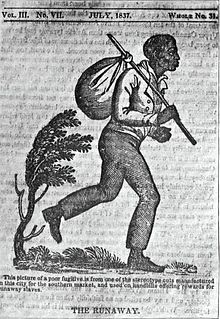
220px-Runaway_slaveThey were inspired to rebel against the masters, to escape from their bondage, and seek a path to freedom. And really, what were the slave-holders thinking? The central story of the Jewish scriptures, and also adopted into the Christian bible, is the story of Moses leading the slaves out of bondage in Egypt, on a journey toward freedom and the promised land. If you take away that story, you don’t have a story. The God of Moses, the God of the Bible, was willing to intervene to help a suffering people find a new life.

Now, I want to interject a comment here, to say that there is no way to prove that this kind of God exists. How could anyone prove that God intervenes on the side of the poor and the outsider? We can’t. In fact, historians and scholars will argue that there is no historic evidence that the exodus of slaves from Egypt ever happened. We are moving outside of the realm of reason and evidence and into the realm of mythic truths. As Harris-Lacewell says, “It is a different kind of knowing.” But we do know that the slaves in America created their own kind of exodus. They found some kind of power in the stories that strengthened their hearts and lifted up their spirits and set them free.

Quotes from Harris-Lacewell are from “Progressive Bible Study,” and “Our Jeremiah.” 

Choosing the Honorable and the Just

…To those of our bodies given
without pity to be burned, I know
there is no answer
but loving one another,
even our enemies, and this is hard.
Wendell Berry

Rev. Bill Schulz, former executive director of Amnesty International, wrote eloquently about the power of human resistance to evil. I want to share his words:

In every situation of incomprehensible terror there are always a few people who have cast their lot with the Honorable and the Just… Such people need not be well-educated or sophisticated or even successful in their witness; they simply need to be those who, in the face of sorrow, choose honor and blessing and life. And when they do, they redeem if not humanity, then at least their generation. …For if even only one person in a generation or a country or a culture chooses honor and blessing and life—even only one—then it means that anyone could have made that choice; it means that the Radiant had not completely died in those days; it means that Glory has not been silenced.

We are challenged to respond to the horrible situations of our time with a courageous endeavor—to remember that we are connected. There might be occasions when remembering this connection demands great heroism. The sufferings of the world are so big, and we feel so small. It is frightening to contemplate. But most of the time we are responding to smaller divisions; we must practice finding relationship in the everyday world of conflict and difference—the neighbor whose dog barks too much, the family member whose religious beliefs are contrary to our own, the person whose culture we do not understand, the child who is asserting her own independence.

The promise is that whenever we stand up for human dignity and connection, we bring the power of Grace into the world, we bring the power of God into the world. Whenever we choose mutual respect instead of violence, we strengthen the possibility of Goodness. Whenever we reach out to one who is suffering, we keep alive the Radiant for one more day.

Sunset Winslow DSC02433

Bill Schulz quote from his sermon, “Too Swift to Stop, Too Sweet to Lose”
Wendell Berry quote from “To My Granddaughters,” in A Timbered Choir

The Line Between Good and Evil Passes Through Each Human Heart

Photo by Margy Dowzer

Photo by Margy Dowzer

In the book The Lucifer Effect, Philip Zimbardo reports on prison experiments he conducted at Stanford University in 1971, in which ordinary young men began to commit abusive actions within the context of an experimental mock prison setting. The students playing the role of guards were given, as a team, power and authority over the students playing prisoners. The prisoners were given numbers and were deprived of anything that affirmed their unique identities as human beings.

Within six days, the experiment had to be halted because the level of brutality rose so dramatically. The researchers drew the conclusion that evil was not dependent upon inherently evil persons, but rather could be evoked in good people by situational factors.

Some of the elements that were found to promote evil include a hierarchy of power, de-personalization, the normalization of harm through laws and rules, and social pressure to conform. Zimbardo applies these factors to other historic and contemporary situations of extreme abuse, such as Rwanda, where ordinary citizens were drawn into unspeakable genocide, and Abu Ghraib, where American soldiers committed atrocities against the prisoners under their watch.

His research brings me back to the question of terrorism, and my dream about locking the doors of my house. We cannot defeat evil by locking the doors or building more walls or more prisons. When we put up a wall, we are cutting off the possibility of relationship. We are putting some human beings outside of our circle of connection. When we define terrorists as evil, we are participating in the same process of dehumanization that contributes to terrorist acts. It is a dangerous myth that evil lurks only outside the wall.

The Russian thinker, Aleksandr Solzhenitsyn, has said,

“the line separating good and evil passes not through states, nor between classes nor between political parties either—but right through every human heart.”

Zimbardo admonishes us that if we want to resist evil we must first of all recognize that we too can be drawn into evil. He offers concrete practices which might help us to resist unwanted influences. These include taking responsibility for our own actions; being willing to say “I made a mistake;” holding respect for just authority, but rebelling against unjust authority; understanding our need for group acceptance, but also valuing our independence; and not sacrificing personal or civic freedoms for the illusion of security.

Such admonitions might also influence our understanding of the divine. The divine energy becomes present when we connect with each other in mutual reverence. The divine energy helps us to resist the temptation to build walls, to cast out those who seem to us as evil, but instead to lean toward the beauty of relationship—not dominance or obedience, but respect and compassion and dignity.

Zimbardo concludes his book by celebrating as heroes those who—in the midst of reprehensible situations—have taken a risk to validate human dignity and connection.

A God Who Is Not All Powerful?

A while back I picked up a book by Andrew Greeley called God Game. His premise intrigued me. A man is asked to test a new computer game. In this game, he interacts with characters who are people in a computer generated world. He types in commands which the characters perceive as an inner voice coming from their God. He uses this influence to shape the direction of the story in progress. In a process similar to writing a novel, he can create a tragedy, a comedy, a romance. He can use commands to influence the weather, or physical objects.

When our narrator begins the game he discovers the people are fighting a war, and likely to soon destroy each other. Being a benevolent author, he begins to direct them to make peace with their enemies. But soon it is apparent that the game is more complicated than that.

First of all, he learns that he can command the characters to take certain actions, but sometimes they choose to ignore his direction. The programmers have included freedom as one of the parameters of the program. He must work with the characters that are open to his leading, and use the actual abilities written into their personalities. Then to top it off, sometimes trouble arrives in the form of random events. Eventually, he become totally immersed in the game and finds he loves the people under his care. He agonizes over how to help the peace succeed.

The book explores the premise of a loving God who is not all powerful. I found myself feeling sympathy for such a God who might feel frustrated, and worried, and angry sometimes. He wants the story to come out well. He wants the characters to live happily ever after. But all he can do is offer assistance and inspiration as they face the problems of their world: he was not able to eradicate evil in one fell swoop.

In contrast, I grew up with the idea of a God who was supposed to be in charge of everything. All-powerful, all knowing, and all good. Whatever happened, it must fit into the will of God, and therefore be for the good. Even when bad things happened, we were to accept it as a part of God’s mysterious plan. But Elie Wiesel challenged such a view with his unrelenting questions: How could anyone accept a God who could ordain such an evil as the Holocaust? How could anyone trust a God who would stand by and let it happen?

Photo Source Unknown

Photo Source Unknown

Episcopal theologian, Carter Heyward, was deeply influenced by the questions of Elie Wiesel. For Heyward, as for Wiesel, the Holocaust was an indictment of the churches’ understanding of God as a supreme power who dominates the world. It was an indictment of the idea of obedience as morally desirable. Likewise, it found unacceptable a God who is merely an observer, a spectator in the face of such horrors. If God is indifferent to human suffering, then there is no use to us for such a God.

Heyward writes that for Elie Wiesel nothing is of more fundamental value than mutual relationship. The only ethical God must be found in loving relationships between people. In the camps, the opposite happened: the Jews were treated as if they no longer existed. The camps were a systematic assault on every element of personhood: numbers instead of names, meaningless hard labor, separation from family, arbitrary selection for extermination. The only ethical response to such evil would be to make a connection with those who suffer, to resist evil’s capacity to destroy the power of relationship.

Irving Greenberg put it like this: “…to talk of love and of a God who cares in the presence of the burning children is obscene and incredible; to leap in and pull a child out of a pit, to clean its face and heal its body, is to make the only statement that counts.” In other words, to face the problem of evil, we must resist violence and dehumanization by acts of connection and relationship.

An Old Question, An Old Story

Apples DSC06312How do we make sense of evil in the world? Where does it come from, and what can we do about it? And what does it say to us about spirituality, about God?

These questions are not new ones. All of the world’s philosophies and religions, from time immemorial, have tried to account for the problem of evil. The Jewish bible begins with a beautiful story of creation, and concludes that, “God saw that it was very good.” But the very next chapter is about the fall from paradise. Yahweh God gave the humans an admonition: “You may freely eat of every tree in the garden, but of the tree of the knowledge of good and evil you shall not eat, for on the day you eat of it you shall die.”

But then the serpent came to Eve saying, “No, you will not die! God knows that when you eat it your eyes will be opened and you will be like gods, knowing good and evil.” And so Eve and Adam took fruit from this tree and ate it. Then the eyes of both of them were opened and they realized that they were naked, and they covered themselves. When Yahweh God came to them, he said, “See, the human has become like one of us, knowing good and evil. He must not be allowed to eat from the tree of life also, and live forever.” And so they were banished from the garden, and suffering entered their lives.

It is a powerful story. One way of interpreting it has been as a literal history of our first ancestors. According to some, Adam and Eve—and especially Eve—made a really colossal mistake by disobeying God, and now the rest of us are paying for it big-time. Original sin. But I don’t think it was ever meant as a story about a stolen apple. The Jewish writers were not so much speculating on origins, as describing the perennial human predicament. They saw the brokenness and suffering in their world and tried to tell a story that might express its painful contradictions.

The story itself is full of contradictions. Why did the tree of the knowledge of good and evil sit in the middle of the garden if it was forbidden? Why wouldn’t it make sense to trust the serpent, who is described as the most subtle of all the wild beasts that God made? Why did God make the serpent, if it would become a tempter? Adam and Eve lose their innocence, but why are they then described by God as “like one of us, knowing good and evil.”

The Jewish writers seem to be saying—reality is a trade-off. We try to imagine a perfect world, where nothing bad ever happens. But then there is no story. Only one chapter. We wouldn’t be who we are. Our eyes are open: we have knowledge, and the power to choose between good and evil. That’s reality. We can no longer be naked and unaware of it. Rebecca Solnit writes:

…imaginative Christian heretics worshipped Eve for having liberated us from paradise… The heretics recognized that before the fall we were not fully human—Adam and Eve need not wrestle with morality, with creation, with society, with mortality in paradise; they only realize their own potential and their own humanity in the struggle an imperfect world invites.

So we become choice-making agents, with power to act upon the world for good or evil. We can choose to conceal or to reveal ourselves, and thus the concept of truth and falsehood comes into being. Every choice we and others make has consequences which limit or expand the scope of our freedom. We are influenced and deceived and acted upon by those around us. Good and evil even masquerade as each other. This freedom and power in us means that anything can happen. The story is suddenly a real story. Unfinished, and unpredictable. Outcome uncertain.

Facing Up to the Reality of Evil

It is an amazing thing to feel safe in our homes and communities. A while back I was reading a novel about the Lost Boys of Sudan, What Is the What, by Dave Eggers. The story stirred up questions in my heart.  What would it feel like, I wondered, to have marauders showing up in your village, shooting people, burning houses, assaulting women and children? What would it feel like to lose your whole family, and your whole village?

When the death camps of the Nazis were discovered after World War Two, people swore, “Never again!” Yet, genocide continues in our day. Bosnia, Rwanda, southern Sudan, Darfur.

We asked ourselves, “How could someone fly a plane into a building with thousands of innocent people inside? How could someone massacre thousands of women and children of their own country?” Elie Wiesel, a survivor of Auschwitz, spoke of the incredulity of his village of Sighet in Transylvania in the months leading up to their deportation to the camps.

One man of the village had been taken away earlier and managed to escape, returning with terrible news. The Gestapo had forced the Jewish prisoners to dig huge graves, and then slaughtered the prisoners. “Each one had to go up to the hole and present his neck.” The villagers refused to believe the man. How could such a thing even be imagined? Right up to the moment when they themselves arrived at Birkenau, they clung to the impossibility of such a horror. Most of us feel incredulous in the face of evil.

Elie Wiesel wrote,

Never shall I forget that night, the first night in camp, which has turned my life into one long night… Never shall I forget that smoke. Never shall I forget the little faces of the children, whose bodies I saw turned into wreaths of smoke beneath a silent blue sky. Never shall I forget those flames which consumed my faith forever… which murdered my God and my soul and turned my dreams to dust…

I have never had to face personally the horrors described by Wiesel or by the Lost Boys of Sudan. Am I willing to listen to their stories and the stories of others who have encountered evil? Am I willing to let go of my own incredulity to face up to the reality of evil?  And what about those of us do experience such horror? How do we make sense of evil in the world? Where does it come from, and what can we do about it?

n_holocaust_wiesel_130127

Elie Wiesel quotes are from Night.

Why Is There So Much Evil and Suffering?

Bars DSC00601_2To my granddaughters who visited the Holocaust
Museum on the day of the burial of Yitzhak Rabin

 Now you know the worst
we humans have to know
about ourselves, and I am sorry,
for I know that you will be afraid.
                                                                         Wendell Berry

If we are paying attention, we have to notice that life holds not only beauty, but tragedy. It holds not only goodness, but greed and hate and oppression. It holds unspeakable acts that human beings commit against each other and against the earth. Some people ask, if there is a God, especially a God of Love, why is there so much evil and suffering in the world?  I want to explore this question over the next several blog posts.

Every once in a while I have a dream in which there is a dangerous person lurking about outside of my house, and I am frantically trying to lock the doors. But in this dream I keep finding openings to the outside that don’t lock. Here in America, we associate locked doors with a sense of safety from evil. We think of evil as something that has to be kept out.

It makes me think about walls. There is a wall being built in Palestine, purportedly to keep terrorists out of Israel. Some sections of the wall go right between a family and their own olive grove. There is a plan to extend a wall across our entire border with Mexico, as part of Homeland Security. That doesn’t make any sense to me at all. I mean, even if a wall could protect us from terrorists, I have never heard of a Mexican crossing the border to blow up a building in the U.S. But the thing with keeping evil out is that you’ve got to blame somebody. Immigrants have often born the brunt of our feelings of insecurity.

Since September 11th, 2001, many previously safe Americans have felt as if evil has gotten through the doors, and we must frantically try to find a way to feel safe again. Terrorism has become the new face of evil.

Wendell Berry quote is from “To My Granddaughters” in A Timbered Choir: The Sabbath Poems 1979-97

What Unitarian Universalists Believe

UU Chalice InterfaithI have found spiritual companions in Unitarian Universalism. Its  congregations now include people of many different spiritual beliefs: Christians, Jews, Buddhists, Muslims, atheists, pagans. We include people who believe in a personal kind of God, and those who believe in a divine force of connectedness between everything that exists. We include people who love the Goddess, and people who do not imagine any God at all. Sometimes people say that in Unitarian Universalism you can believe whatever you want—but that is not really true. Though we have many more diverse beliefs today as Unitarian Universalists, you could say we are still arguing with Calvin.

We don’t believe in a God of anger. We don’t believe that people are born evil. We don’t believe that our bodies are shameful. We don’t believe that someone had to die to appease an angry God. We don’t believe that God loves some people and sends other people to hell. We want to get rid of that guilt and shame producing kind of religion, that heavy burden people still carry around because Calvinism is so ingrained in our culture.

We do believe that Love is at the center of the Universe, and those of us who believe in a God, believe in a God of Love. We do believe that each person is important and lovable and that we are all part of one family. We do believe that we are called to live a life of service and compassion, and that human beings, however imperfect we may be, can make a choice to follow our values.

We believe in a democracy of spirit—that each person has a share of wisdom and truth and love. We believe in the importance of community—that we learn and grow most by sharing with each other. We believe that love is contagious, that we cannot find fulfillment and purpose without knowing that we are loved, and loving others. We believe that love can transform lives.

To believe in Love as the foundation of the universe is an act of faith. There is no proof, we don’t know in some objective way that love will win out over the forces of hate and greed. We have to make an experiment of it—perhaps that is why the Quakers could sing “Love is Lord of Heaven and Earth” with such conviction. They practiced nonviolent love in their doings with other people, and learned something of its strength. And perhaps we too have experienced something of its power in our times—those moments when gentleness transformed a heated situation, those historic movements when love crumbled oppression and brought justice into society.

To believe in Love, to make this act of faith, is to strengthen Love’s power in our world, to make it more likely that our relationships will be mutual and kind, that our society will bend toward fairness and compassion. May it be so.

God is Love

FriendsTo me, the statement that “God is Love” can evoke a person who stands close by through thick and thin, the friend who doesn’t run away when you have to go to the hospital, or when you make a big mistake. The one who doesn’t mind that you have faults, that you get cranky sometimes, or feel overwhelmed by the problems of the world. The friend who doesn’t mind when you get into a controlling mood, but just shakes you a little, and says, “relax.”

For many people, the image of a God who loves us unconditionally like a father or a friend is very powerful. We imagine God as a person because we are persons, and it can help us to relate to that God; we model it on our closest human connections. That is one way of understanding the idea that God is love. But for other people, that image of a person doesn’t work. To say that God is love means that God does not have to be imagined as a person who loves us. God can be understood as the very flow and energy of love itself: that energy that moves between people and connects us and empowers us.

Ultimately, it matters less how or if we imagine God, and it matters more how we are living our lives—if we are living in love, then God is inside our very living. And there doesn’t have to be just one image or one story—we might ask instead what does it mean that Love is at the center of the universe?

Of course, love is another one of those overused words that become hard to really understand. Love is based on the essential connections between people, and the sacredness within people. When we love someone we see the beauty in them, the gift of their being, and we know that it matters to us that they are alive. When we are loved by someone, we feel the beauty in ourselves, the gift of our own being, reflected in our connection to another. We feel seen. We feel alive in relationship to others.

Rev. Mark Morrison-Reed says that “the great insight of Universalism is that you cannot coerce people into loving one another.” He says,

No one has ever or will ever draw true love out of another with punishment. God’s love is given to all and is a more positive force for good than fear ever will be. Behind this is a simple truth: in being loved we learn to love. Those who are loved will in turn love others. Those who feel God’s infinite love within themselves will in turn feel so good about themselves, so connected to life and so full of compassion that they will not be able to help but to spread that love for they will overflow with it.

There is a traditional Quaker hymn that says “Love is Lord in heaven and earth.” Love wins. Universalism was called the gospel of success. When the Universalists opened the doors to heaven, that led the way to opening the doors here on earth. Over time they opened up their churches to expanding ideas of religion—they began to see that there must be wisdom and truth and holiness in all religions, and they reached out to learn from others. They were open to the wisdom of science and the blessing of nature. Where ever love was, that was holiness and truth.

Abundant Love

According to Rev. Gordon McKeeman, the Universalists introduced the belief in a God who loved so abundantly that he would drag “the last unrepentant sinner, kicking & screaming, into heaven.”

Wow! A God who loves so much, who wants joy and blessing for all people, even if we have to be dragged into it against our will. It is such a gospel of hope, in contrast with the harsh and judgmental gospel of Calvinism.

One of the questions another of my colleagues, Rev. Mark Morrison-Reed, asks is why didn’t Universalism spread all over this country? Who could resist a religion with no hell?  Why was it so much harder to believe in a God of overwhelming love than in doctrines like the virgin birth or the resurrection? He answers his own question like this:

What we yearn for is unconditional love but it is contradicted by our experience. Instead, the principle message each of us received over and over again was this: behave and be loved, behave and be loved. The implication is: those who are good and compliant are loved, all others not. Universalism calls this “partialism.” In other words, people have taken their own experience of conditional, judgmental, imperfect human love and ascribed it to God.

What does it mean to believe that God is love? The phrase may have become so familiar that we almost don’t hear it anymore. One of the letters in the Bible says it, “God is love, and those who abide in love, abide in God, and God in them.” We can get derailed if we imagine God as an all powerful ruler sitting on a throne granting favors. Then, if something tragic happens to us, we feel that God must not love us. But if God is love, then the image of favor-granting dictator doesn’t work. God is more like the Sun, shining on everything and giving life to everything, no matter what, enabling all things to unfold in the way that they will by being alive.

Sun Shining on People

Photo by Margy Dowzer

Quote from Mark Morrison-Reed from “Dragged Kicking and Screaming into Heaven