Clearing Out the Clutter in Our Character

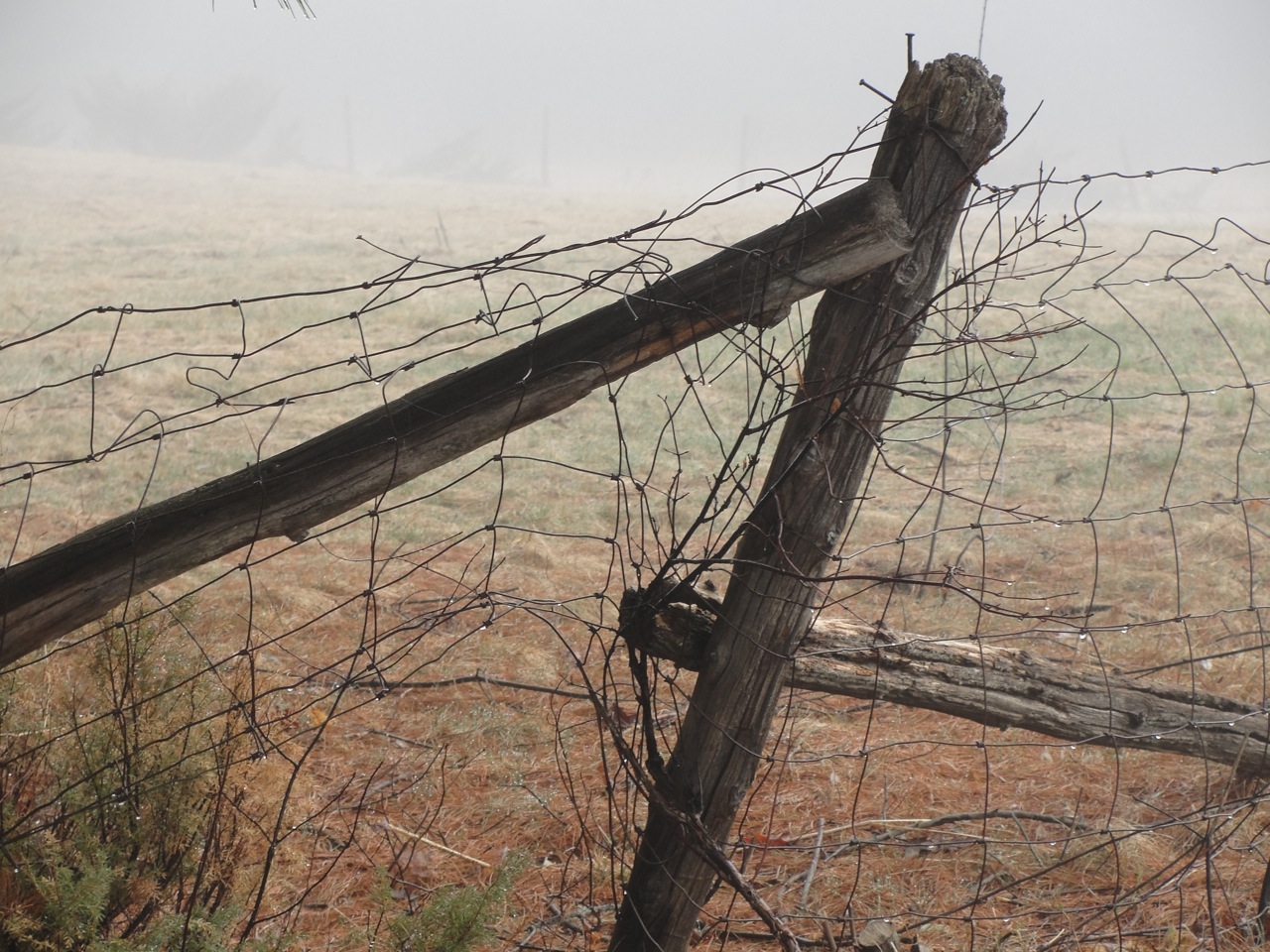
Fence DSC03309As I continued on my Journey into Emptiness, I discovered a third kind of clutter, which might be identified as the clutter in our character. This is made up of all the tools and maneuverings that we use in our relationships with others.

Does every vacation—for those of us who are partnered—have to include at least one big argument? Mine seem to, and they unfailing arise out of habits that might have some usefulness in completing work projects, but not in being with the one I love.  My colleague, the Rev. Barbara Merritt, drew my attention to the advice of modern theologian, Richard Rohr, who claims there are three things we need to let go of here: 1) being in control, 2) being effective, and 3) being right. Then she told a story that I could have written myself. She said:

Having just read that list, I was a passenger in the car as my husband drove us to the movies Thursday night. I couldn’t help but notice that he’d taken a very slow and, I believed, inferior route. I shared this observation with him. He reminded me that I was not driving (number 1, I was not in control.) I replied that he was not being as effective as was possible (I wanted maximum efficiency) and finally I comforted myself with a smug sense of being right. In less than a minute, I had violated all three precepts of ‘letting go.’ I had struck out.

One day Margy and I were driving to the movies, and I managed to strike out in just exactly the same way. From my point of view, we were rushing to get to the movie, and she was foolishly taking a longer route. There was nothing intrinsically unpleasant about the journey, yet I was worried about wasting time on the way to the movie. I was attached to control, effectiveness, and a sense of myself as being right.

Antoine de Ste. Exupery, in The Little Prince, tells us that it is the time we waste on our friends that makes them so important to us. Of course, there is a paradox here. Being with friends is not really a waste of time. But we cannot enter that time with productivity or effectiveness in mind. Wasting time is the essence of a playful spirit. We are not trying to gain anything, grow anything, accomplish anything. We move from doing some thing, to being some one.

On the journey into emptiness, the third step was to let go of these compulsions of my character, and to waste time. Perhaps because I am partly introverted and partly extroverted, I needed to waste time both alone and with others. I needed unstructured solitude, and I needed unstructured time with friends.

How often do we just take time for being with friends? After one such dinner conversation, I wrote in my journal: I feel saner, restored to myself. This is what I am looking for, finally, this sense of being restored to myself. In order to be in the present moment with others, I needed to stop doing and doing. I needed to let go of control, to let go of being effective, to let go of being right.


The quote from the Rev. Dr. Barbara Merritt was from a sermon “The Spiritual Practice of Letting Go” preached February 25, 2001, at First Unitarian Church in Worcester, MA.

Letting Go of Old Feelings

When we encounter old unfinished feelings within our hearts, we may be tempted to try to sweep them up and move them along, to push them out of the way. But unfortunately, this doesn’t really work. I have found two methods that do help me to let go of old feelings.

Creek DSC01248The first is a devotional practice. I turn over my troubles to the larger Mystery of which I am a part. Sometimes I imagine it with the image of a river—I place my feelings in the flowing river and let them float away. By turning them over, I am relinquishing my control over them. I place them in the hands of something larger, in whom I feel trust.

A second method that works for me is related to a form of meditation. I cultivate an awareness of what is going on within my mind and body, including whatever may be troubling me. I let myself breathe with it, and experience it in a state called mindfulness. I give it my attention, without attempting to change it in anyway. I just keep breathing into the feelings, as they are. I let go of my attachment to pushing the feelings away. Eventually, feelings will change and move of their own accord, if we give them this mindful attention.

There is no way to finish with emotions, just as there is no way to finish our house projects once and for all. As long as we are alive, new emotions keep happening. In the journey into emptiness, I am trying to move from doing something about emotions, to doing nothing, to merely being with the emotions. By the practice of being with my inner clutter, rather than doing something about it, I am getting closer to emptiness. 

The Inner Clutter of Old Emotions

Patterns DSC02538The second step on my journey into emptiness was getting to my inner clutter. When I had longer spells of unplanned time, I found myself feeling a little depressed—sometimes sad or cranky. One day, I found myself writing a long letter to one of my conservative sisters. Two years before, she had refused to let me stay with her family, because she didn’t want her children to be exposed to a different perspective on the world. I had never been able to respond to her letter. I needed to let her know how deeply she had hurt me. I couldn’t pretend everything was fine between us, except for this small matter of not being allowed to have a relationship with my nieces. The empty time gave me space to feel and grieve and name the reality between us, and write my own letter back to her.

When we take time for emptiness, old feelings emerge, all the unresolved emotions that we haven’t attended to. Perhaps that is one reason we like to keep busy. If you had a long period of silence, (and you had already completed a list of all your unfinished projects,) you might start to remember some of your own unfinished emotional business, the inner clutter you carry in your heart. Perhaps a friend or relative you haven’t talked to in a while. An unresolved conflict. Guilt, pain, anxiety, anger, loneliness. By calling it clutter, I do not mean to imply that the feelings are unimportant, but rather that the feelings are stuck.

As my own unfinished emotions emerged that summer, I wrote in my journal: Remember the difference between grief and hunger. If I can recognize grief, that will make room for hunger. Keep them separate to keep hope alive. Here is what I meant: Grief involves a process of letting go. Hunger is a kind of reaching for something. In our emotions, if our grief becomes fused to our hungers, we become too attached to our feelings, rather than letting them go. If we do not let go, by grieving whatever is filling our soul with sadness, we will not have any room to draw to ourselves that for which we hunger.

One example of this is unrequited love. If we hold on to loving someone who does not love us in return, we barricade our hearts from the possibility of finding a mutual love. Just as I had to clear away the books I wasn’t using to make room for the books I was, so I had to clear away old unfinished emotions, had to clear away my attachment to situations that I could not change, to make room for something new.


Unfinished Projects and Clutter

At the beginning of my intentional journey into emptiness, I wrote in my journal: So much of life’s activities seem to be preparation for something else, a kind of infrastructure. We need to fix the bulkhead on our house, prune the vegetation in the yard, make a will to protect each other when we die, do the dishes and the laundry, and so on. I wrote down a whole list of unfinished projects. I am sure if you had five minutes of silence, and a pad of paper, you could fill in your own current list of unfinished projects. 

My journal continued: If “everything else” was done—the whole list of infrastructure projects—what would I like to be finally doing then? What are we preparing for? What is at the center? Sometimes I meditate, to feel centered for the rest of the day. But then that also seems to become so much preparation for something else. What is the something else? Is there something at the center? What is worth paying attention to? The yard right now reminds me of my life because it is being taken over by invasive species. When I look at it, I feel a sense of clutter there, too. I feel clutter within, and clutter without.

So, the first step on my journey into emptiness was an attempt to clear out some of the outside clutter. When I woke in the morning, I would gravitate in the direction of some cleaning project or another. I cleaned out my office at home. I moved books I wasn’t using from the bookshelves into the basement, to make room for the books I was using, that were stacked all over the floor. I cleared the surfaces of my dresser, of the desk, of the floor, sorting and putting away paper. Another day, I worked in the yard, to try to clear out some of the bittersweet, wild roses, and raspberry bushes that had formed an entanglement over our leach field.

But after a while, I realized that I could spend my whole vacation just working in the yard, or just doing various house projects. It wasn’t even possible that I would get to the end of the list. Even if I did, I wouldn’t find what I was looking for. But I needed to do some of it. If there was too much outside clutter, I couldn’t find the space within for what was most important.

Do you feel your life is full of outside clutter, surfaces that are full of paper or books, projects that you can’t get to?  Part of a journey into emptiness might to clear out some of that clutter.  Try taking one area and see what happens if you clear out the clutter there.

Photo by Margy Dowzer

Photo by Margy Dowzer

A Journey Into Emptiness

Become totally empty
Quiet the restlessness of the mind
Only then will you witness everything unfolding from emptiness
                                           Lao Tse

In order to enter the consciousness of now, we must quiet the activity of the left brain mind. This is not easy. Most of us keep very busy with left brain activities. The United States is a country of work, projects, and keeping busy. We are a country of doing. Did you know that Americans take less time on vacation than all the rest of the industrialized nations of the world? Workers outside the U.S. enjoy as much as three times more vacation than their American counterparts. And often when we do take a vacation, we fill our days with so many activities, we are as busy as when we are working.

I know that has happened for me. I can become so accustomed to a pattern of filling up my days that even my time off is soon filled with more projects. Even spiritual practice can become a project. But when I get too busy, even with work that I love—when I fill my days with more and more activity—I start to feel that something is missing. In the midst of my busyness, I can’t even tell exactly what it is I am missing, but I feel some sort of undefined emptiness within. And so I have learned that for me, it is essential to find a time for not doing anything, so that I can remember that lost something, and find being again.

I entered this process in an intentional way several summers ago. I decided to use my vacation time not in travel or some other highly scheduled activity, but for a different kind of journey. It is interesting to note that the word vacation comes from a Latin root, vacare, meaning, to be empty. I wanted to journey into the emptiness, into the interior of my life. I wanted to find the center.

solar_eclipse_1024x768

I hope to share with you some of what I experienced in my next few blog posts.

Facing My Own Attachment to Separation

Porcupine DSC05211

When I take seriously the interconnected web of all existence, when I begin to try to experience it, I also come face to face with my own attachment to separation. There is more to awakening than a mystical appreciation of the beauty of the larger whole. Something within me, and I believe within all of us, is afraid of opening the heart. I am afraid of feeling the pain of other people, I am afraid of feeling the pain of the earth. I am afraid of letting go of my illusion of control, I am afraid of being hurt by other people, or emptied out by other people. It seems easier to distract myself than to pay attention to the fear around my heart.

But this too is a part of the dance. We have to be aware of our separateness in order to come to awareness of our unity. Because here we are. Here I am in this moment, alive and part of the great circle of life. All the feelings I feel, including fear and separation, are part of the universe at this moment. And, what I have learned from many teachers, is that somehow the only task that matters, the only dance I must do, is to pay attention to the task of the present moment. I am asked to take one step forward, to make the one next choice.

There are many teachers of meditation, in many different traditions. I do not have a particular formula to teach you to use to experience the divine. But many of the mystical systems within the world traditions actually do teach practices, the purpose of which is to help us to work with our fear, and our attachment to separation, and to bring us to that experience of higher consciousness. The Buddha encouraged people not to believe what he taught, but rather to try it out and test it for themselves.  If you want such a formal practice, finding a meditation group with which to work can be very helpful.

Even without a formal practice, we can take small steps. If we can notice the thread of connection between ourselves and one other being, that is a step. When I eat a piece of bread, I might call to mind that I am joining this bread together with my own body—it is becoming human in me. Why do people pray before eating, in so many cultures? There is something about the process of eating that reminds us of our threads of connection.

Even as you sit here reading, notice the sounds that send vibrations across anyone nearby.

If you are outside or near a window, feel the sun on your cheek, and realize that you have a thread of connection across thousands of miles of space—its light is reaching you.

Notice the gravity pulling your body to the ground, attaching you to the chair and the floor beneath your feet.

Notice your breathing, the air going in and out of your nose and mouth.

When you go into the kitchen, and drink a glass of water or a cup of coffee, think about how your body is also a form of water—70% water, and imagine that your hand is pouring water into water.

When you talk to a friend or a stranger, imagine the divine spark inside of them and inside of you, and see how that affects the greeting you bring.

In the end, it doesn’t matter if we use the word God, or God-ing, or light, or love. It doesn’t matter what we call it. What we are reaching for is larger than language, larger than thought. But it is already deep within us—closer than breathing, closer than a song, closer than the DNA of each cell of our bodies. The threads of connection already weave their way into the center of our being, and hold us one to the other. There is a blessing in it, when we can feel it and see it. There is a sense of coming home and a feeling of belonging. May it be so. May we awaken like the spring flowers.


God Is a Verb

The Jewish mystics suggest that God is a verb. Instead of thinking of God as a being, we might think of it as Be-ing. Instead of using the word God, we might use the verb, God-ing. This process in the universe, this God-ing energy, is evolving, creating, transforming the universe, always changing, always leaning toward greater perfection. Or perhaps we should say it is leaning toward greater beauty, since perfection implies that there is something out there we are trying to copy. But God-ing, the activity of God the verb, includes the birth of newness and unpredictability within the wholeness. And all of us are a part of this God-ing.

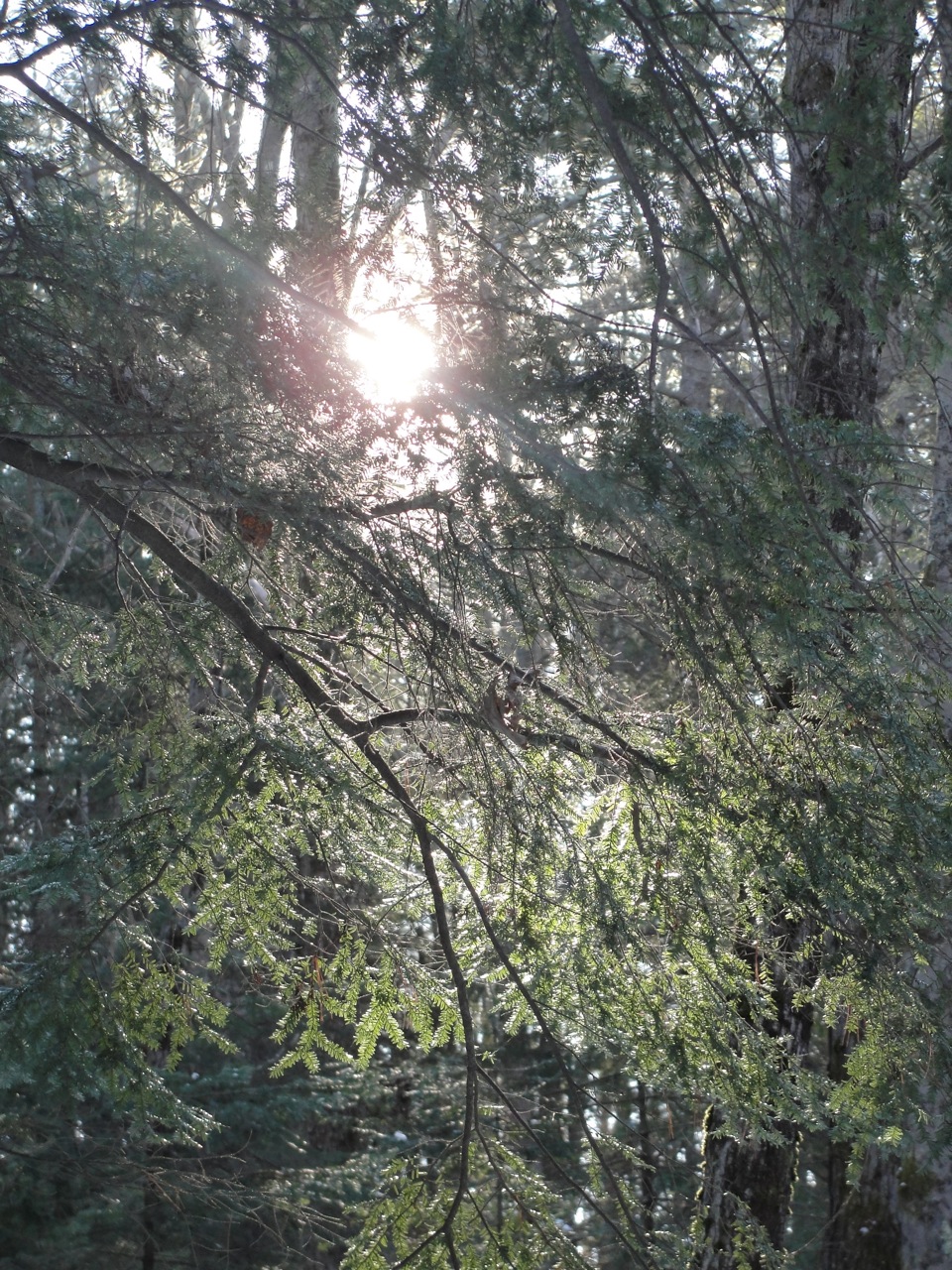
Sun in Trees DSC01708Jewish mysticism sees a particular dignity and purpose in the lives of human beings. It describes it in the form of a story—the Kabbalah speaks of sparks of divine light that were trapped in the husks of all things in the universe when this material world was created. The purpose of life is to raise the sparks, and bring together the separated light into one whole. Part of how we do this is through becoming aware of the larger whole. But what makes humans significant is that we exist with free will. So not only are we a part of the harmonious symphony of the all, but we can actively shape the music. Whatever we choose has an effect on the larger whole.

Rabbi David Cooper tells a story about Rabbi Schlomo Carlebach, one of the great mystical rabbis of the twentieth century. He was always late everywhere he went, because every time someone asked him for help, he stopped and responded. He would not simply give money, but also have a short conversation. “Each person was treated as if he or she were a saint. …Reb Shlomo believed that the world was balanced on our ability to help one another. Should someone fail to assist another person, the world could be destroyed.”

As human beings, then, our actions have ultimate value. We are not here to follow a bunch of rules, or to pass a test, or to clear a kind of judgement, to get into a personal heavenly afterlife. Rather, by the choices we make, we are shifting the essence of the universe. When we choose selfishly and with egotism or cruelty, we keep the world broken and dissonant. We cover up the light within ourselves and others. When we expand our hearts and choose acts of loving-kindness and compassion, we are releasing the divine sparks of light in ourselves and others. We transform the universe as we transform ourselves.

Quotes from Rabbi David Cooper, God is a Verb: Kabbalah and the practice of mystical judaism.

Everything Is God, God Is Everything

Ferns just out DSC00286In the Buddhist tradition, there is not much discussion about God—in fact, Buddhism has been called a religion without a God. But more to the point, the Buddha was said to regard such questions as irrelevant. The point of his teaching was to enable people to overcome suffering. By the practice of meditation, we might come to understand ourselves from the perspective of the larger whole—once we gained such a perspective, we would no longer be attached to the pains and desires of the individual life of the individual self. We would reach nirvana.

However, the theologian in me can’t fail to notice that this experience–transcending the self to encounter the unity of everything–is common to the mystics of most traditions–and in many of those traditions, that experience of the larger unity is described as the experience of God. J.D. Salinger, who was a student of Zen Buddhism and Vedantic Hinduism, wrote an account of a moment of such insight in his short story “Teddy.”

“I was six when I saw that everything was God, and my hair stood up, and all,” Teddy said.  “It was on a Sunday, I remember.  My sister was a tiny child then, and she was drinking her milk, and all of a sudden I saw that she was God and the milk was God.  I mean, all she was doing was pouring God into God, if you know what I mean.”

There are many paths to the awareness of the larger whole. Some paths use the word God, and others do not. Using the word God is one way to express the beauty and awe we encounter in the mystery of the interconnected universe. But the word God is not a proper name. We can just as easily call it Mystery, or Light, or the Evolving Universe, or Love.

Sometimes I think we should abandon the word God, because of all the oppression and abuse that have been engendered by those who claim to be acting on God’s behalf. But at other times, that is the very reason I want to use that word. I know how healing it can be, for someone who has been banished from the realm of the holy, to recognize that they too are part of ultimate reality and value. How better to say it, in our world, than to claim that we all belong to the realm of God?

The story “Teddy,” was originally published in the January 31, 1953 issue of The New Yorker and reprinted in the collection, Nine Stories.

Our Own Life and the Life of the Universe Are One

In many posts on this blog, I have been exploring the concept of God. I hope to help us to move past old rigid images of the big man in the sky with a beard and white robe, the judge, the king, these all too human inventions that people have created in the quest for understanding, or often, in the quest for power.

The mystics of almost every tradition tell us that our images cannot come close to what divinity might be all about. But the mystics also speak to us of something, or no-thing, that is not a being, but more like a process, more like an energy that permeates all beings, an energy of which we are a part, and of which we can come to greater awareness.

“We are here to awaken from the illusion of our separateness.” Zen Buddhist teacher, Thich Nhat Hanh invites people to do an exercise, to begin to grasp with our minds the symphony of the larger whole. He invites us to think about an object—it could be any object. He talked about a table, but I like to reflect on a piece of bread. Find a piece of bread and hold it in your hand. Then, let yourself imagine what has conspired in order for this bread to be here in your hand.  

First of all, think of the wheat. In order for it to grow, it needed topsoil, with its fungal and bacterial components, its minerals and small worms. It needed the decomposition of the plants of many years, decades, and even centuries to create this fertile soil. You can continue to let yourself follow in this line of imagination, or if you want to follow my imaginings, go to this link to an earlier post.

One could keep talking all day to follow all the threads of connection linked to just one piece of bread. Paraphrasing what Thich Nhat Hanh would say:

If you grasp the bread’s reality then you see that in the bread itself are present all those things which we normally think of as the non-bread world. If you took away any of those non-bread elements and returned them to their sources…[the honey to the bees, the metal to the mines, or the farmers to their parents], the bread would no longer exist. A person who looks at the bread and can see the universe, is a person who can see the way.

As long as we think of God as “up there” somewhere, like a father or a king or some other kind of person, we imagine that we are separate from God, we imagine that we can think or not think about, believe or not believe in, pray or not pray to that God. But in a spirituality of connection, the gaze shifts to understand that there are no truly separate things, that there is no separate self or separate God—that our “own life and the life of the universe are one.” Maple in Spring MJ DSC03502

Threads of Connection

I believe God is everything, say Shug. Everything that is or ever was or ever will be. And when you can feel that, and be happy to feel that, you’ve found It.
                                                                                                 Alice Walker

Daffodils Early MJ DSC03512

We’ve finally arrived in April. In a couple of weeks, the daffodils will begin to bloom in our front yard, and the first bright yellow dandelions will pop open behind the house. The forsythias will be first–maybe as soon as next Sunday?  But I can’t wait for the moment when the first daffodil breaks through its luminescent green casing, opening up pale yellow to reveal an orange center.

In spring, I keep taking short walks around our yard and down the street just to see what will happen next. The small wild strawberry flowers. The green buds of bushes opening into curled leaves. The leaves of the violets coming up out of the bare ground where I thought they might have perished in the fall. And down the road, the first fiddleheads of the ferns beginning to poke through the ground that a day ago had been fern-less.

This awakening seems to happen all at the same time. This week there are the bare branches and brown grasses, and then suddenly, everything will be green and lush and colorful. How do they know to break through, all in the same week? It helps me to understand what I have read about evolution—that species co-evolved with each other. That flowers emerged along with their pollinators, and each flower with its particular pollinator, so interdependent that we do them a sort of injustice to think of them as separate entities.

And of course, the insects will also come out with the flowers here in the spring, small ground bees hovering over the grass as if waking from a long sleep. The hummingbirds will arrive when the pink flowers of the viburnum open near our kitchen window. When the buds begin to get ready, it is our signal to put out the feeder, so we can join in.

All around us, like a choreography of dance, like a vast symphony, the beings of the earth move in harmony. And in this particular time of the year, this beautiful season of awakening, we can see it and hear it and smell it and feel it, if we pay attention. We can feel the threads of connection that make of many beings, one indivisible whole.

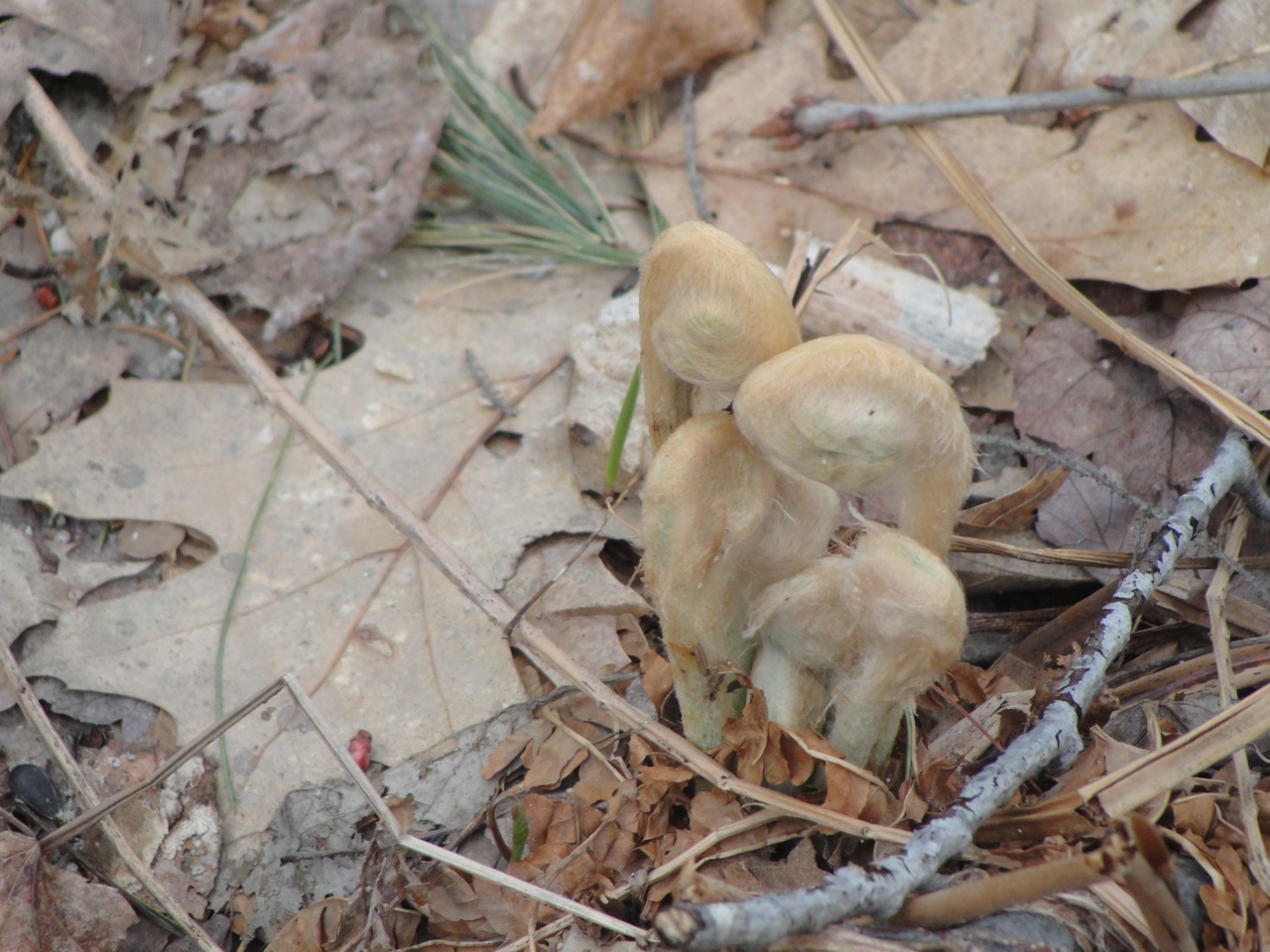
Fiddleheads DSC00234