Everyone needs water

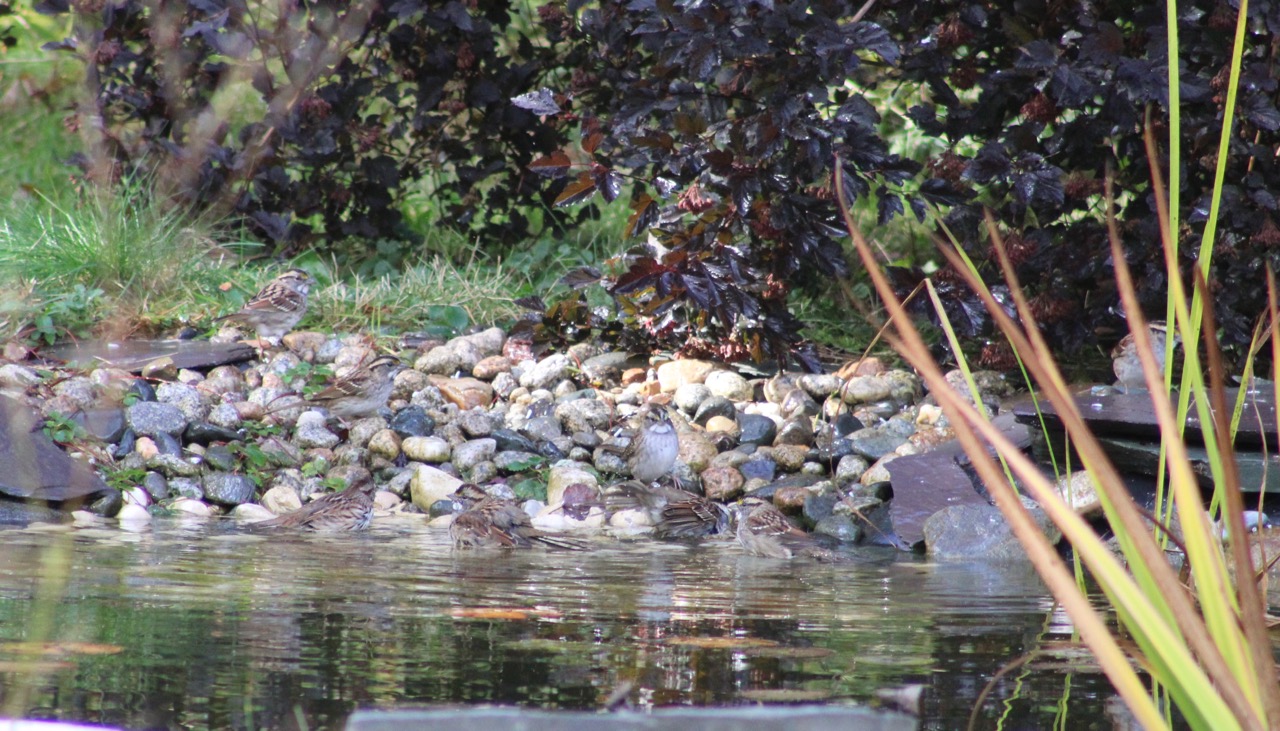
If you look closely you can see 8 white-throated sparrows visiting the pond.

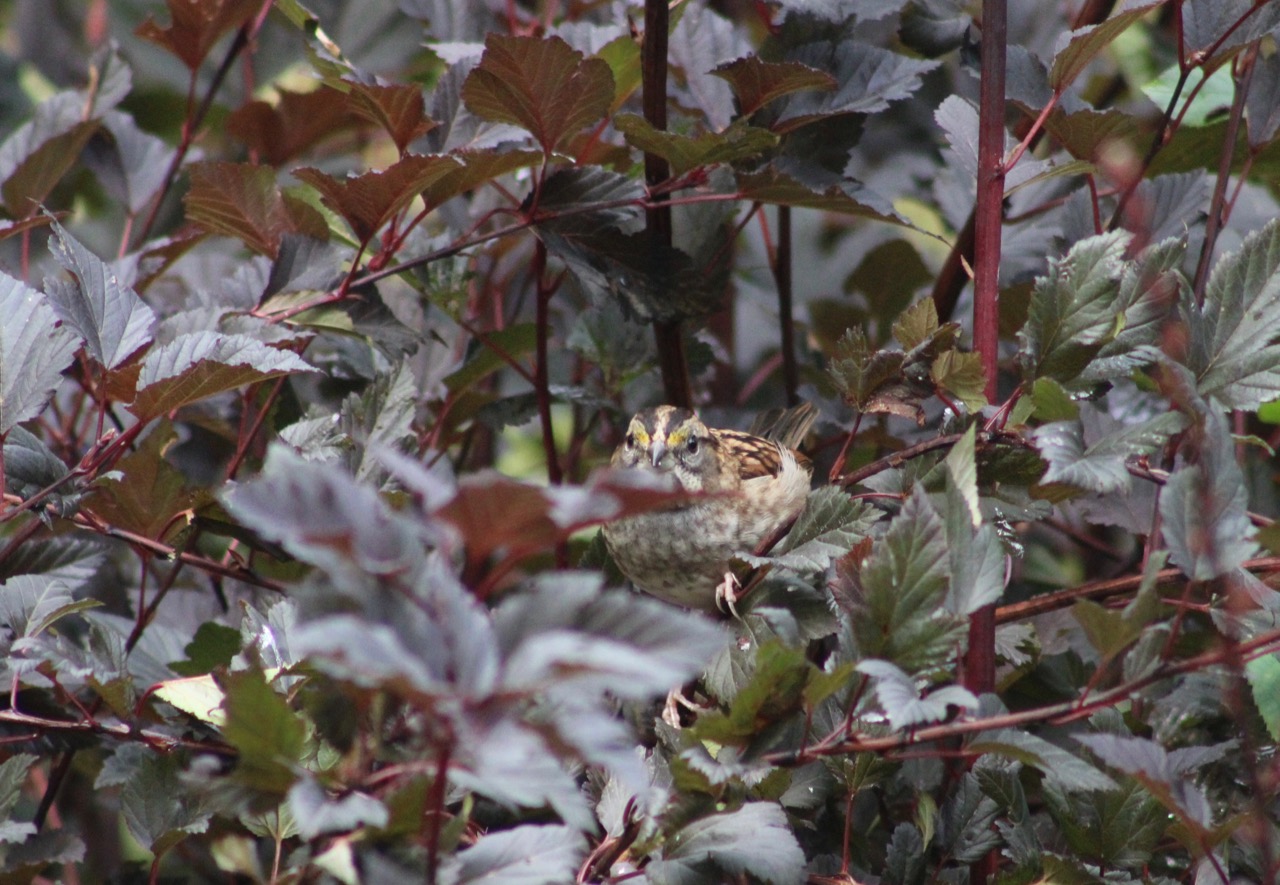
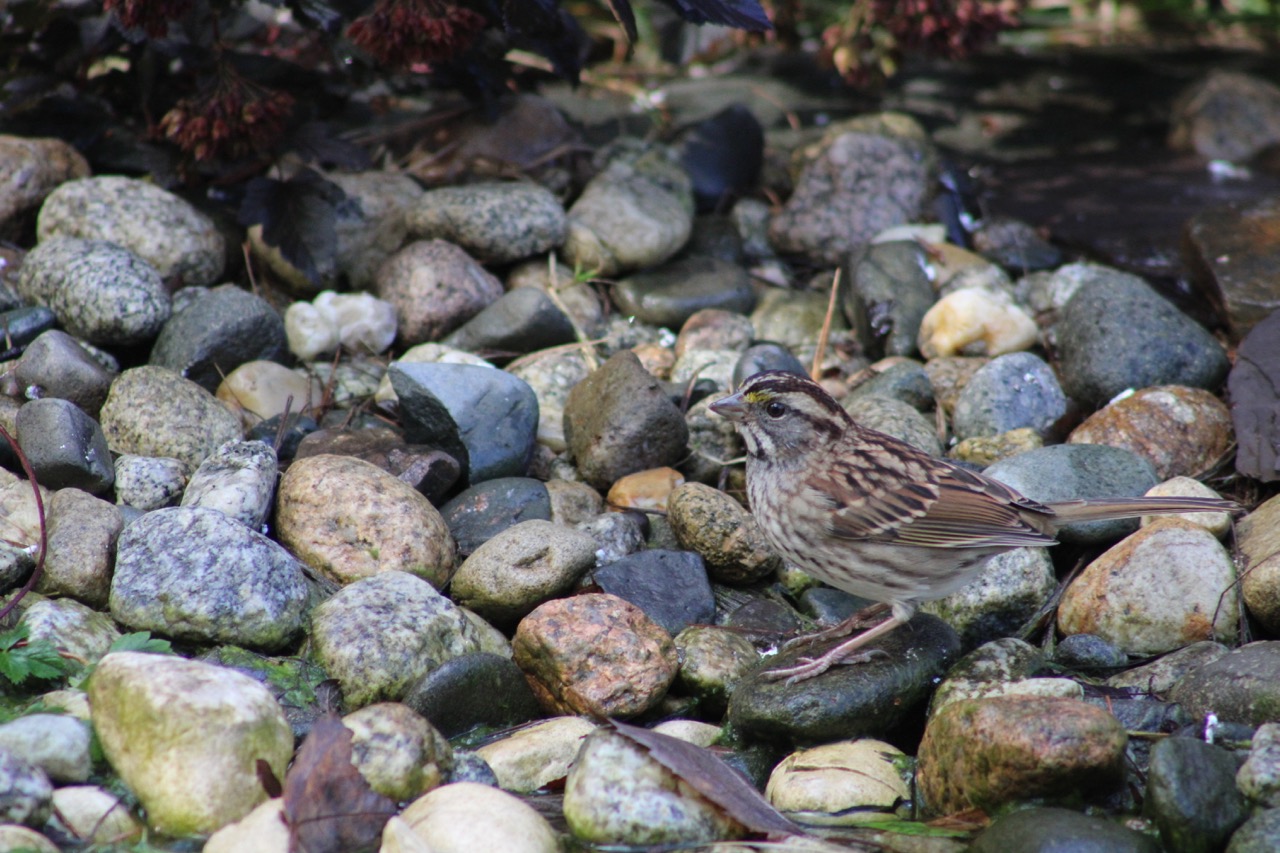
This week we’ve had a flock of dozens of white-throated sparrows in our back yard and the field and trees next to it. I love their little striped heads and loud chirping. They are drawn by the water of the pond, and I’ve seen them drinking and bathing there. It is such a blessing to feel the yard full of birds. If I am sitting right next to the pond, they are a bit timid, but yesterday I took the photo above from a little further away so as not to spook them. A few days before, one sparrow kept peering out from the nine-bark branches, but wouldn’t come any closer.

Then a couple days ago, when I sat quietly for a long while, a few began to venture near to drink even with my presence on the other side of the pond.

Every living being needs water. A human being can only survive for about 3 days without water. I am thinking about water in relation to the people in Gaza under siege, where Israel has cut off water and the electricity needed to pump and purify the water for drinking. The killing of innocents is always wrong, I believe that what Hamas did was wrong. But I also believe that the government of Israel is wrong to attack the civilians of Gaza, or cut off their access to water, food, and fuel. I am not unaware of the long history that is the context for these attacks. I have been following Jewish Voice for Peace for information and guidance in the midst of this deeply sad time. As someone who is neither Jewish nor Palestinian I can’t begin to grasp the depth and complexity of it all, but I trust the deep values of the Jewish Voice for Peace.

In the midst of this larger sadness, about which I can do nothing really, except to bear witness, I find peace with wild things gathering at the water. Everyone needs water. We are all relatives in this, whether large or small, near or far.

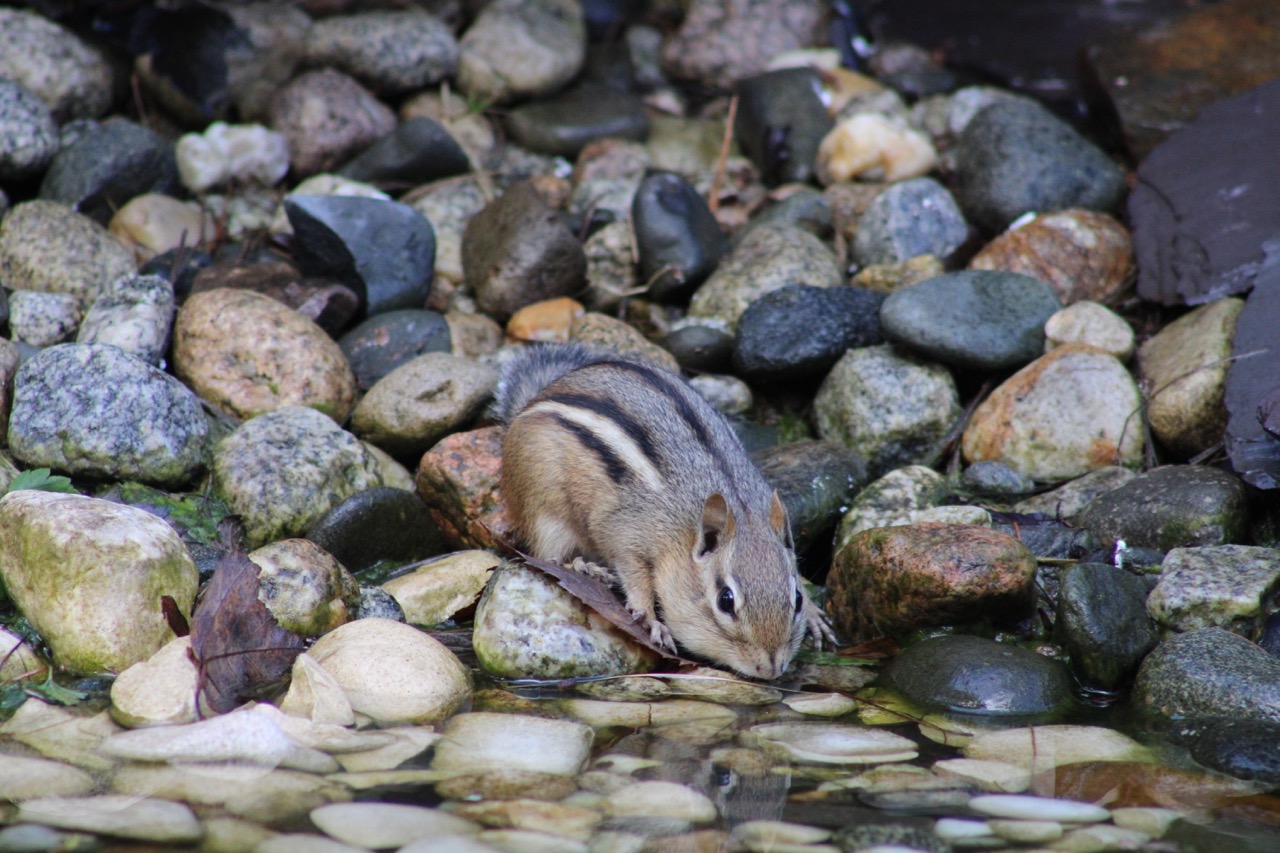
Chipmunk drinking water at the pond.

Gardening Gifts & Challenges

Cluster of many asters with pink centers and white petals.
Asters are blooming!

My favorite part of gardening is when native plants show up and bloom all on their own! Asters are all around the edges of our yard, and in so many other Maine yards in our neighborhood right now. Different varieties, all beloved by pollinators, tiny beautiful blossoms when you look closely.

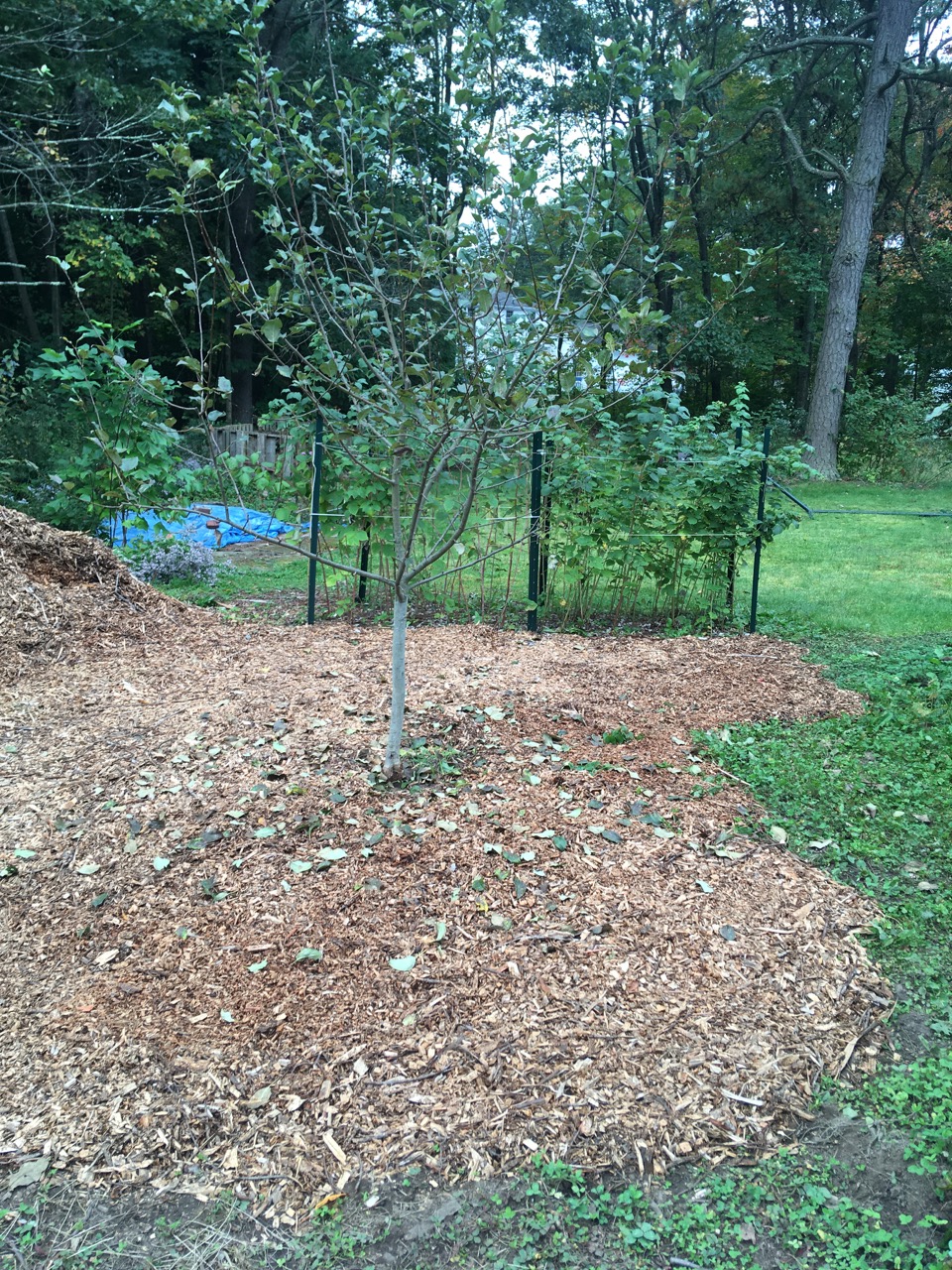
My least favorite part of gardening is wrestling with the invasive species that show up on their own. For the last three weeks I’ve been pulling buttercup plants that spread all over under the honeycrisp apple tree, and were also just starting to infiltrate the raspberry patch. So first I pulled up all the plants I could, in sections, then I set down cardboard over the area, watered it, and spread a thick layer of wood chips on the cardboard. Handily, the tree is right next to our pile of wood chips. The hope is that the cardboard and wood chips will smother the rest of the buttercup roots that I am not able to eradicate.

Small apple tree with wood chip pile to the left, half circle of cardboard on the ground almost covered in wood chips, and front right plants including buttercup plants.
Halfway done pulling buttercup plants and layering cardboard.

While I was at it, I also pulled up all the oregano under that tree–my other nemesis, though it has its uses as an herb. It was intermixed with the buttercup. I was sad that I had to cover other ground plants like wild strawberry, and I hope they will spread again over the wood chips once things settle down. But finally, it was finished. (For now–I imagine I will have to be on the lookout next season for sneaky little survivors.)

Small apple tree surrounded by wood chips in a big circle. A raspberry patch is visible behind it, and green lawn.
Completed!

Meanwhile, the other least favorite thing about gardening is watching how climate change is disrupting the patterns that nature usually unfolds in each season. Yesterday, I discovered that there were open blossoms on the cherry trees–just a few–but this is October in Maine! Last winter’s unseasonable warming and freezing killed all the blossoms that should have come out in the spring. We have yet to harvest any cherries from these trees beyond one or two. And now this. I have heard that other people are noticing weird blooming out of season on other plants too. I don’t know if the cherry trees will survive. I hope they will. I tend them as well as I can, but there are forces far beyond the little garden here in our yard.

white five petal cherry blosom on branch, with leaves in background.

Meanwhile, I try to be grateful for the gifts that still emerge, the asters and goldenrods, the frogs and birds, and that I am able to go outside to watch and learn.

Photos help me see

Three frogs on rocks near pond
Three frogs on rocks.

Since beginning to blog, I have loved taking photos of creatures and plants. It is like a third eye that helps me to see the beauty all around me. Sometimes it helps me to look more closely, later. Like with the frogs in our pond–I think these three might be bullfrogs, because of the ridge that goes behind their tympanum (their external ear drum for hearing), but not down their backs. I tried comparing them with images online, which helped, but then I noticed how often frogs have actually been misidentified in photos on the web. So I am not sure. They are bigger than some of the frogs that have been in the pond.

But when I look back to earlier photos of frogs that I identified as green frogs, I am confused. I knew those were green frogs because they were very small, and their little squeak as they dove into the water was distinctive. But they also seemed to have the ridge behind their ears and not always down their backs. Photos enable me to keep looking and wondering. I’ll have to wait and hear what these frogs sound like. They were out on those same rocks today.

Pink cosmos blooms
Pink cosmos blooms

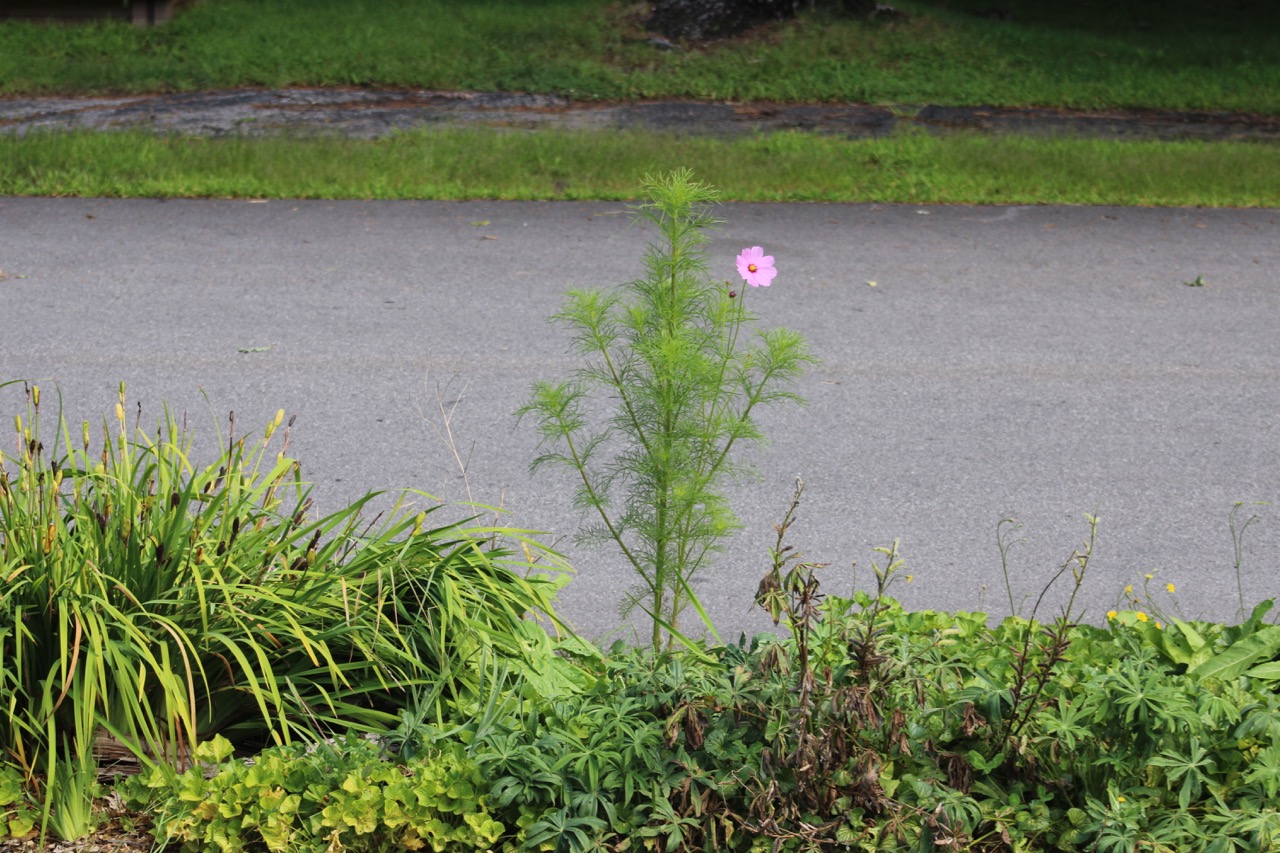
Sometimes, photos help me see beauty that is ephemeral yet durable. This cosmos was a volunteer by the side of the road, and started tall, with just one blossom. In the winds of last weekend, it fell over, but it keeps blossoming, and the bees keep coming by for nectar. It just keeps on blooming. It makes me smile.

Then, the other morning these turkeys wandered into the orchard, the sun making a little halo around their funny heads and big bodies. I was sitting in my chair and saw them outside the window. So I jumped up to go outside to take photos. The camera motivates me to watch them on their travels through the back yard. Then I can enjoy them once again in the photos.

Turkeys with sun making halo around heads and bodies.
Turkeys in the morning.

Boundaries & Buttercups

Green buttercup leaves in a mat/
Buttercup leaves forming a mat.

Earlier this summer, I discovered a few lovely yellow buttercup flowers under the Honeycrisp apple tree. I didn’t think too much about it. They were so pretty. Later, when I was mowing the orchard undergrowth, I mowed those flowers along with everything else. But more recently, I realized that the buttercups had spread all over the ground near that tree, and were crowding out any other plants. So once again, I did some research and discovered that Ranunculus repens, creeping buttercup, is considered invasive in Maine.

I don’t know how it got here. And it is likely that I won’t be able to get rid of it entirely–each plant puts out horizontal stems that take root at its nodes and form new plants at each node. But I have to try. Further research suggested that using a garden fork to loosen the soil and lift up the plants was a good way to pull the plants with their roots. Also, it prefers acidic soil, so adding lime to make the soil less acidic can discourage them. I started pulling them yesterday, and did some more this morning before the rain came.

Small tree with a few apples on its branches, at the ground we see green  all over, except in one area where soil is visible, and a garden fork in the lower right.
Here you can see the section I pulled and the other huge section covered with buttercup plants.

I was complaining about all this to Margy, and she reminded me that a large part of our gardening is removing problematic plants in order to encourage beneficial plants. So while I delight in the violets that spread everywhere, and the wild strawberries–both native ground covers that have flourished in the orchard, I also have to reckon with these invaders that come in from who knows where.

Invasive plants don’t have good boundaries! Now, there are also some native plants that are quite aggressive growers too. One example is Canada anemone, or anemone canadensis, which Sylvia planted in the herb garden. The difference is that native plants have more benefits for the local ecosystem. But I pulled hundreds of these plants to make room for the littlest apple tree. I put down cardboard boundaries around the circle, and over the circle, then covered it with wood chips. I may also use that method for the buttercup areas to see if that helps.

Very small tree in a circle of wood chips, with lush green plants at the back of the circle.
Small Blue Pearmain apple tree, with a ring of Canada Anemone around the back.

So once again, lessons can be learned from plants and the process of tending them in the garden. Plants have many different relationships with each other. Can aggressive or invasive plants eventually find some sort of balance? Some non-native plants find a useful niche and honor the boundaries of plants around them. We might also ask ourselves, How are we in our own relationships with others? Are we aggressively pushing out others to claim all the space and goods for ourselves? Or are we good at sharing space and goods with our neighbors? Are we also careful with our own boundaries, not letting others treat us aggressively?

And I can’t even consider these questions without thinking about the early colonization of this continent by Europeans–they certainly fit the definition of an “invasive species,” destroying so much in their spread across the continent. Yet here we are now. Can we learn to live in harmony with all beings around us?

Orchard Learning

Mottled red apples in green leaves and branches
Our first Honeycrisp apples are almost ready to pick!

Our semi-dwarf apple tree is bearing fruit for the first time this year, and we are excited for the dozen or so apples that will be ripe soon.

How naive I was when I first decided to plant an orchard in our back yard. We started with two dwarf cherry trees in 2017, of the varieties Lapins & Black Tartarian. The next spring we planted a Contender peach tree, the Honeycrisp apple, two blueberry bushes, some raspberries, and three hazelnut bushes. In 2019 I grafted two other apple trees, Black Oxford and Blue Pearmain, this last just transplanted to its new bed this year. (Not to mention our mulberry tree further back in the yard, and three more blueberries planted later.)

I think I imagined that one would put in a lot of effort at the beginning, with preparing the ground, planting the seedlings, adding companion plants, tending, and so forth, then the work would ease and the fruit would be there for the picking in the years to come. Maybe that was some of what attracted me to permaculture and a food forest. Little did I realize that an orchard requires even more tending as the seasons go on.

And there are the ups and downs–the first peach harvest went entirely to the squirrels-we were so sad. Then we had an amazing crop last year, that we ate fresh, shared with the neighbors, and froze, some packages of which are still in the freezer. This season, no peaches at all. We have yet to have a cherry harvest. This would have been the year, I think, but the abundant flower buds were empty from the deep winter freeze. On the other hand, the raspberries are very reliable, and the blueberries have begun to come into their own. And the number of birds have multiplied in our yard, whether or not there is any fruit on the trees. They love the orchard.

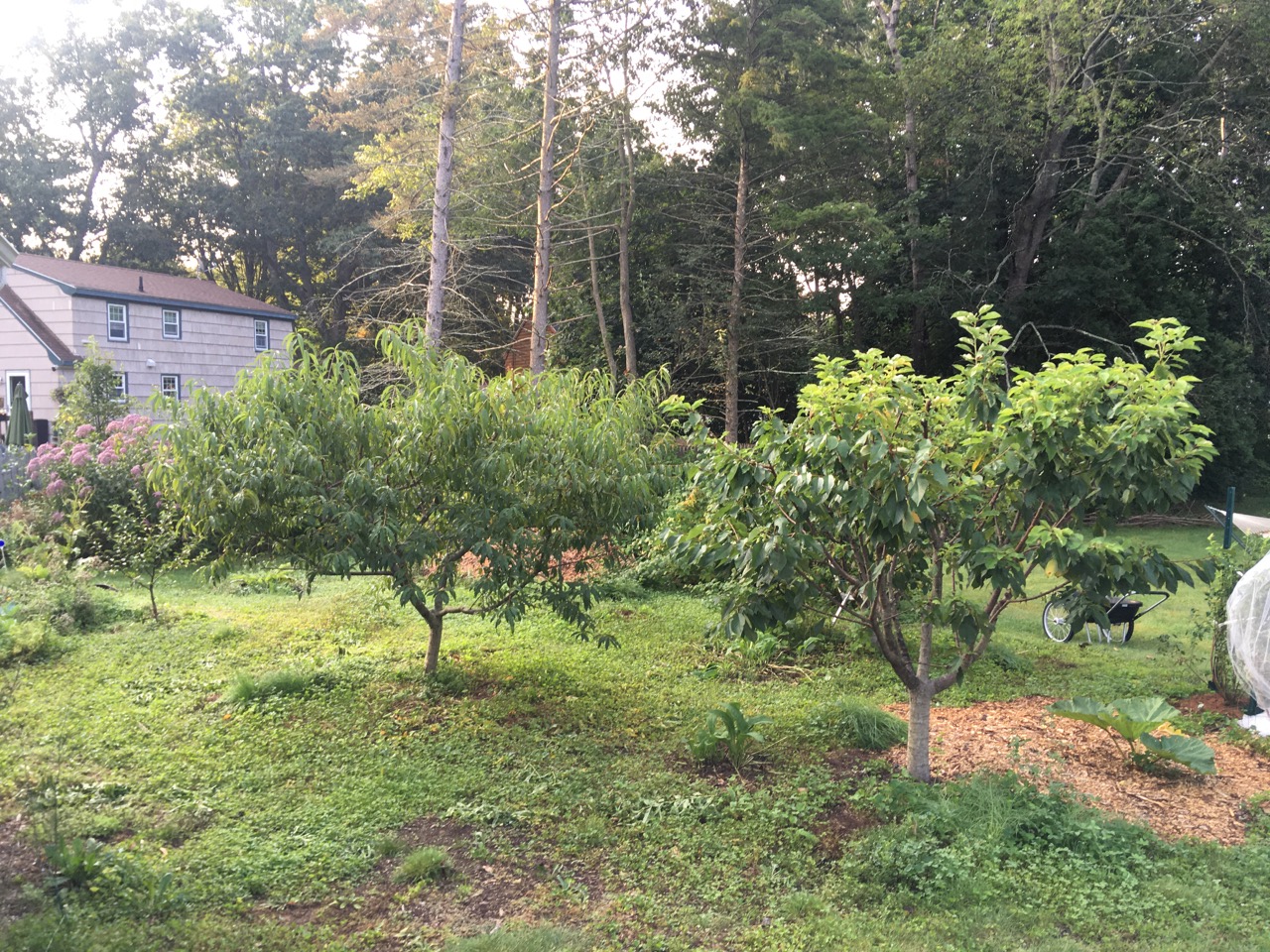
All that preamble to say, I did some more pruning this past week! After watching a whole bunch of Youtube videos about summer pruning, I gained the courage to go and cut off a whole lot of branches that were vigorously seeking the sky on the peach tree and the Black Tartarian cherry. (I had already done some pruning on the Lapins because of its black cherry aphid problems.) When I post the “after” pictures below, you might not believe how many branches were piled up on the patio waiting for me to take them to the compost. The trees still look flush with abundance green, though I think their tops might be about three feet lower than before.

Peach tree and Lapins cherry after pruning.

I also discovered a lot of small curled leaves on the Black Tartarian, without any evidence of aphids. After some research I learned that there is a fungal disease, cherry leaf curl, similar to the peach leaf curl that I dealt with by picking off the affected leaves. I can’t be certain what it is, but I went back around and pruned off any branch ends with those curled leaves on both cherries. All the pruned cherry branches I cut up and put into garbage bags to go out with the trash–three bags full–so they wouldn’t spread the problem.

You might notice from the photo that the companion planting under the trees is now very low to the ground. I have taken to mowing most of it, including the oregano that spreads everywhere, and I put the cuttings in the compost to bring back later. The mowing doesn’t seem to bother anything, it all comes back. Under the Lapins cherry tree, I actually put down some cardboard to inhibit the oregano and then covered it with wood chips. It is an experiment.

Pruned Black Tartarian cherry tree.

This is not to say that the trees won’t also need winter pruning. That is the thing. They will always need lots of pruning, summer and winter. The work is never done. I might do less of it or more of it, depending on my own energy levels. But there is always more work that I could do to tend to their care. Even with my trying-to-be-minimalist approach. (I have read that there are people who secretly plant fruit trees in random places, to great environmentalist applause; but I wonder about who will do the tending.) So while I often wax eloquent about permaculture and gardening, please be warned about the other side: this relationship with garden trees requires a lot of work, more than I ever expected.

I should end this post with a caveat: I consider myself a learning gardener, and none of these reflections should be taken as advice. I have no idea what I am doing at least 50 percent of the time. My intention is creating a mutual relationship with the earth and the plants, and reflecting on that process. As always, I am humbled by it all.

Belonging

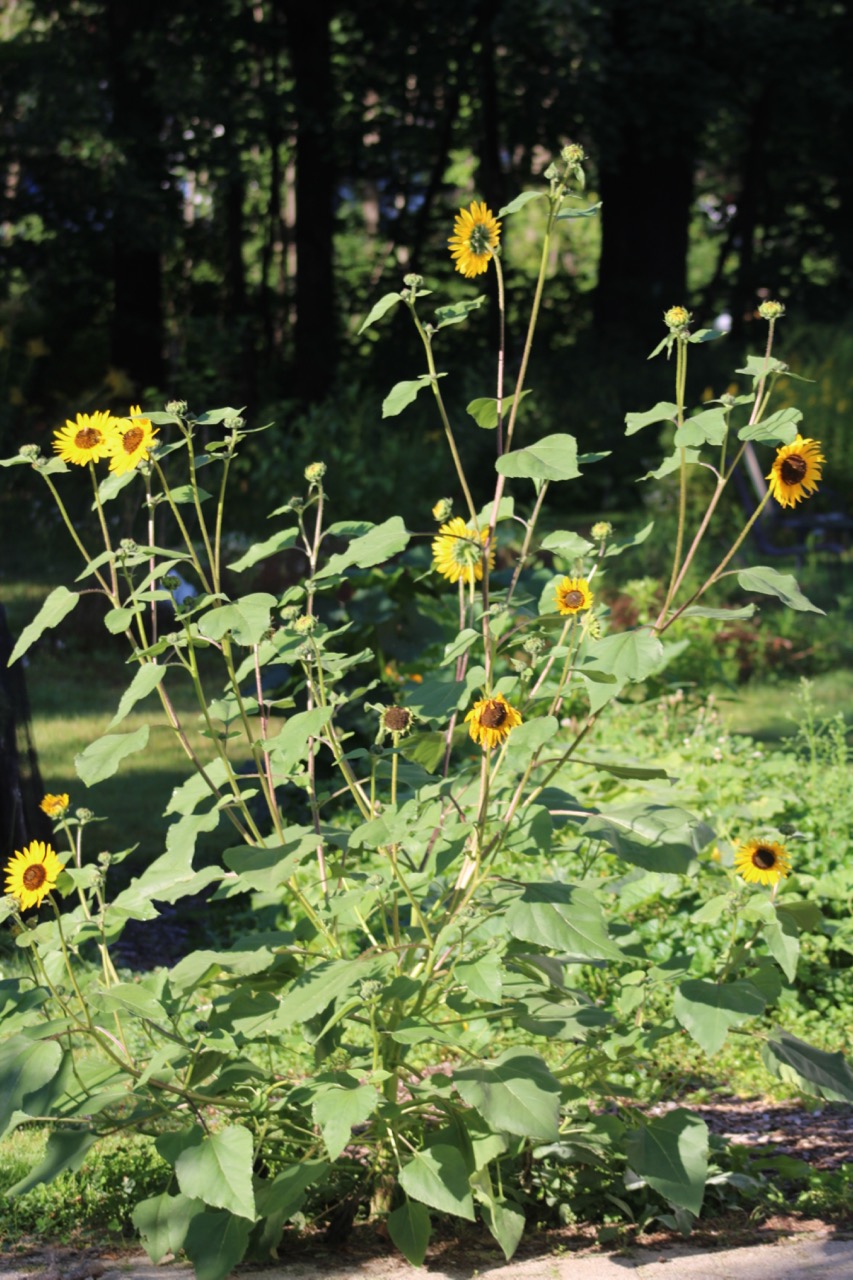
Multi-branched sunflower with many yellow flowers, tall with green leaves.
One sunflower plant has all these blooms!

This year one volunteer sunflower plant came up next to the patio, starting small. Now it has expanded into this multi-branched extravagantly flowering giant! Doing a little research, it seems to be a native wild sunflower, because of its branching habit and the size of its flowers, and its continuing blooms. It is still one plant though, a community of flowers that is connected at the root, and much loved by all sorts of bees, other insects, and birds. It is easy to see how they belong to this place and to each other.

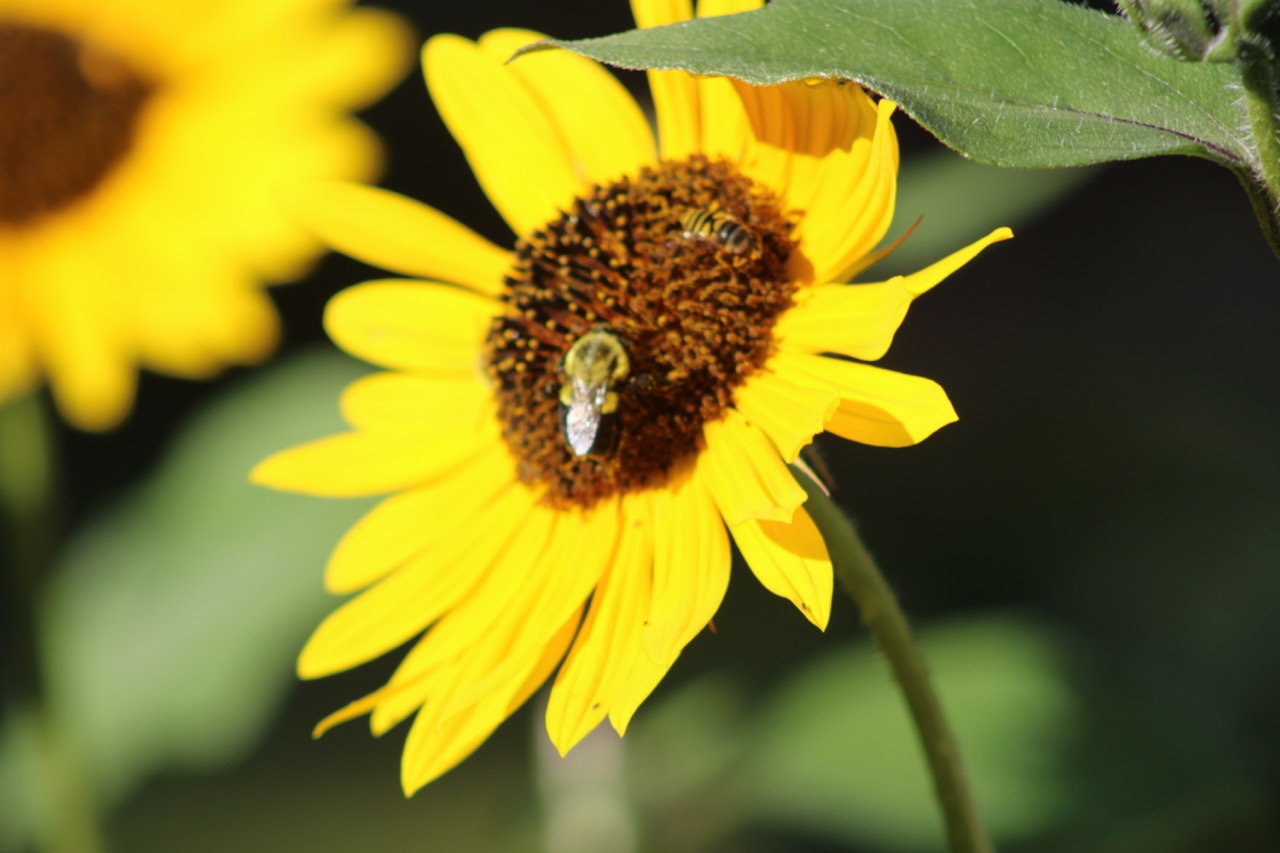
bumblebee and honey bee perched on center of yellow sunflower
Bumblebee and honey bee on center of the sunflower.

What does belonging mean? It is easy for me to get caught in a “not-belonging” wound, the scar of a childhood moving from place to place, always starting on the outside, trying to find my way in, feeling invisible and unconnected. It is not that I haven’t had some times of belonging–there was the group of friends at college, the group of activists at the Catholic Worker or the women’s peace camp, the lesbian community in Boston. Changing perspective sometimes took me away from earlier forms of belonging, sometimes into new communities–sometimes not. In some ways I belong to my family of origin, but my lesbian identity and feminist politics created a deep barrier.

On this personal journey, becoming a UU minister created an avenue for me to nurture community, to bring other people into a sense of belonging. And in that ministry, I had a form of belonging, too, right at the center of community, but also always a bit set apart in my role. And it also meant moving once again. Even though I have retired, I am still a bit set apart because of the role of a minister. Reflecting on it, I’ve also experienced a form of belonging in my connections with ministry colleagues. But the wound continues to shape the ways I navigate the current chapter of my life. I continue to wonder, “Where do I belong?”

As I explore various facets of belonging, the feeling remains elusive. Do I belong to this place like the sunflower and the bees? I am not indigenous to this land, it is Wabanaki land. When I reach back to my own ancestors, language is a barrier between us–I don’t speak the German of my father’s ancestors. I don’t speak French (even if I understand a little), the language of my Quebec ancestors, and even of my distant Innu relatives in these times. I don’t belong to Nitassinan (which would be my matrilineal homeland) or Quebec or Austria or Germany. I don’t belong to an ethnic community. What does belonging mean in white America, especially for those of us who reject the racism of its founding?

All these thoughts are coming round in a scattered fashion. When the feelings come up in me of “not-belonging,” it helps me to remember these childhood wounds, these societal wounds. I can acknowledge and honor those feelings but then make a choice to open my heart to new possibilities of interconnection. I am becoming interconnected to this land, as I tend the trees, appreciate the wildflowers, make habitat for birds and frogs, eat the blueberries that grow. There is a reciprocity that is developing between us. I must choose to open my heart to new people as well–not dwelling in the old fear that there will be no room for me, but being curious about the ways that we might be interconnected already, or the ways that we might find to connect right now.

Today I see one more lesson about belonging in a tall pink cosmos flower that we didn’t choose or plant, but somehow it rooted itself next to the road we live on. It is now blooming on its own after the rest of the plants have faded. It is not in the “color scheme” of the roadside garden bed. I guess its motto is a variation of the old adage: “Bloom where you are planted.” Bloom wherever your seed happens to land.

One pink cosmos flower on tall stem with feathery leaves, next to road, near greenery.

Native wild flowers

glowing yellow goldenrod flowers on tall stalks, with dark green background
Goldenrod flowers are in bloom.

We have now lived in our home in Portland for 7 years, and are gradually getting to know the plants around us. We have our share of invasive plants, but today I want to highlight a few of the beautiful native wildflowers that are blooming right now in our yard. They come up on their own, and Margy has encouraged them by pulling invasive species, and leaving certain areas alone as she mows paths around the back yard.

I believe our goldenrod might possibly be the solidago sempervirens, or seaside goldenrod, native to eastern North America. This identification fits with our sandy pine forest soil, and photos online look similar. But it is very difficult to distinguish between species of solidago. Solidago is considered a keystone species, and has been called the single most important plant for North American pollinator biodiversity. They are very loved by many bee and butterfly and moth species. We love them too.

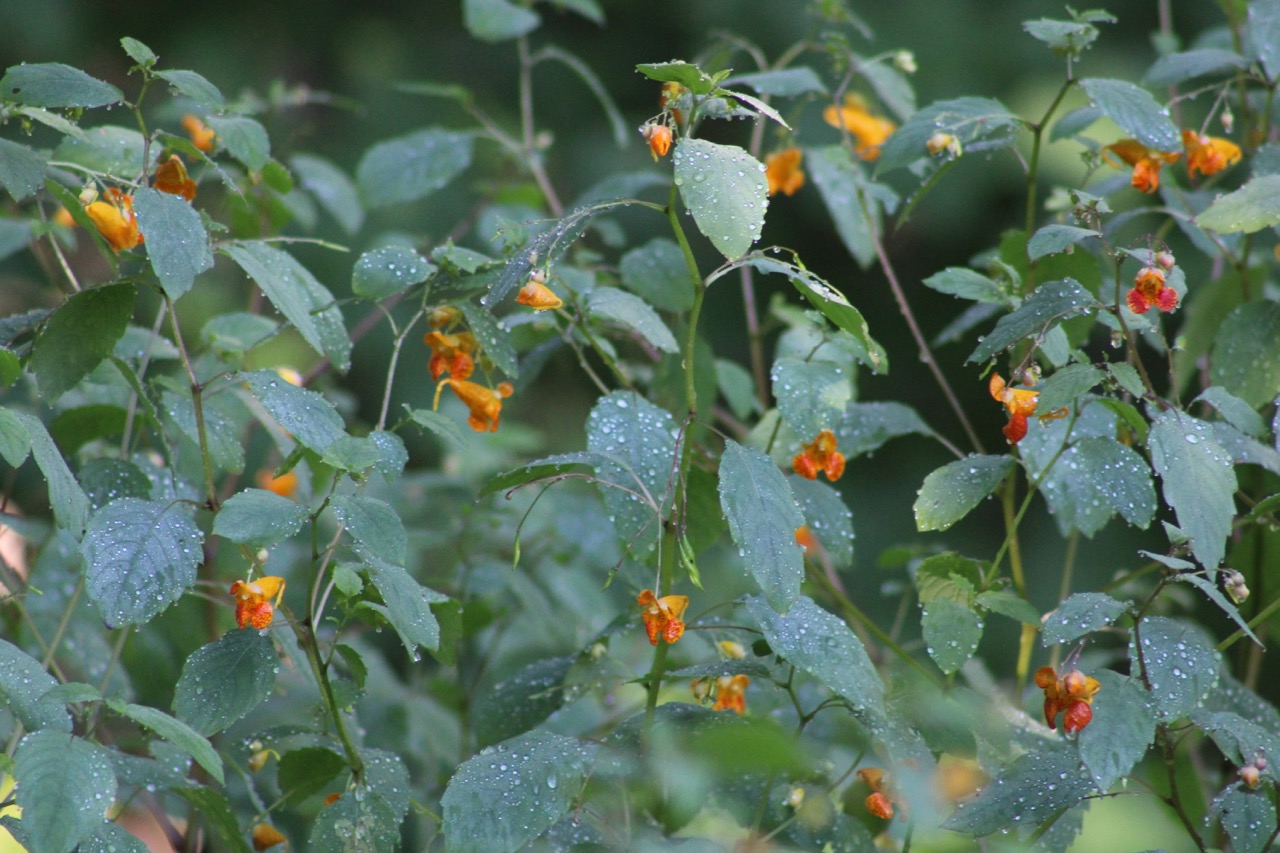
Tiny orange flowers on thin stems with oval serated leaves, droplets of water on the leaves.
Jewelweed after a rain.

Jewelweed grows profusely at the back and sides of our yard. Impatiens capensis is also called touch-me-not, because of the way the ripe seeds pop open when touched. It often grows near poison ivy (which we don’t have) and has traditionally been used as a remedy to prevent the rash caused by exposure to poison ivy. This year it has gone a little crazy all around our old white pine, and in Margy’s mound bed nearby. Hummingbirds and bumble bees are their major pollinators.

tall stems with small yellow flowers at the tips, many plants in 1/2 wine cask planter, on patio near deck railing.
Evening primrose in an old half wine cask container.

I got to know evening primrose last year, when it was the favorite plant for goldfinches after it had gone to seed. This year, it has self-propagated into two containers, as well as all around the patio and orchard. Oenothera biennis is a biennial plant, forming a small rosette the first year, and then in the second year shooting up to great height before blooming. It is native to eastern and central North America. Evening primrose oil is considered medicinal for a variety of conditions, though we haven’t tried harvesting it for such.

evening primrose closer
Evening primrose, closer look at the blooms.

What I love about these three species is that they grew on their own. We didn’t plant them, we just began to notice them and appreciate their presence. True gifts from the earth. There are many others we have begun to notice as well. It takes a while to learn about them and to identify them. It feels like such an important part of finding our way into earth community.

Bird visitors

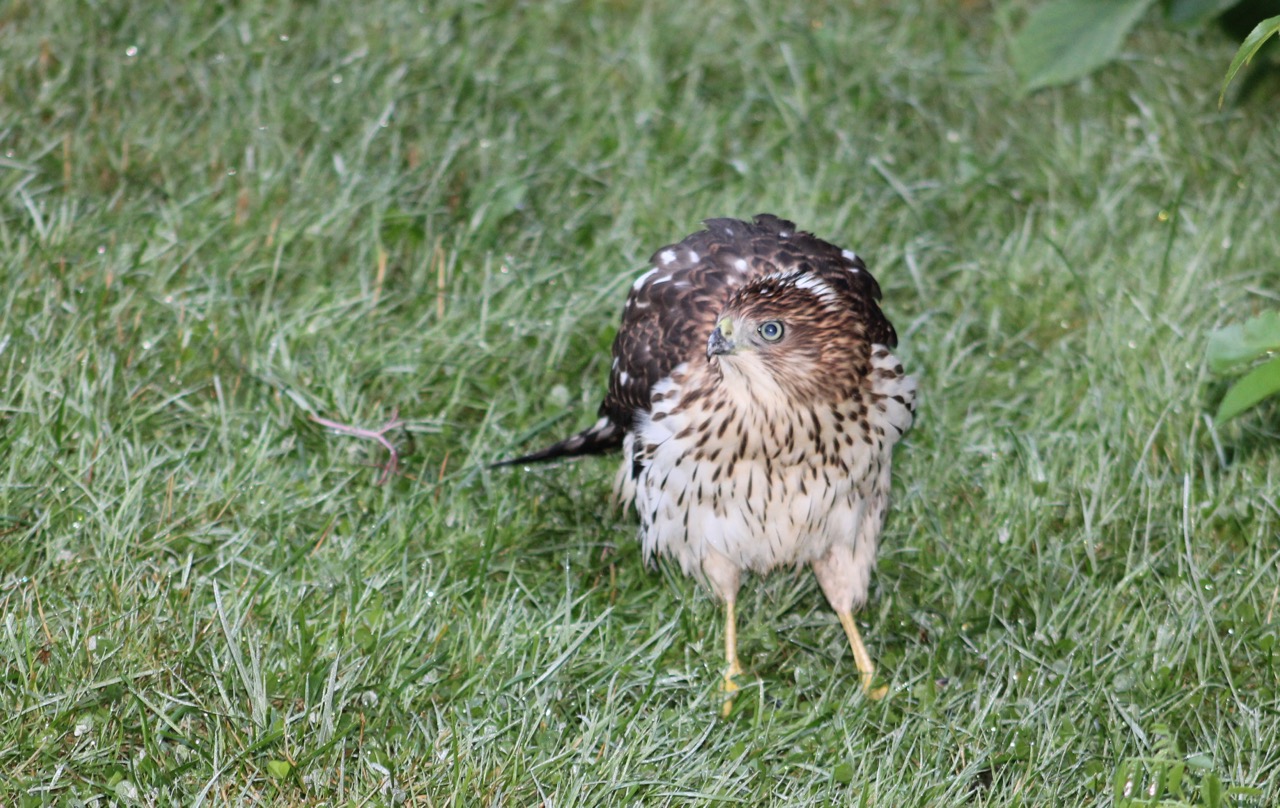
Mottled brown and cream juvenile cooper's hawk on grass
Juvenile Cooper’s Hawk on the grass.

Excitement in the yard this morning! I woke to see out my window a juvenile hawk standing in the grass between the bird feeder and the elderberry bush. I went outside to take a photo, and they seemed undisturbed by my presence–I got within 4 yards of them. At one point they turned in my direction, checking me out. I didn’t really want them to be stalking the birds that come to the feeder, so I looked back at them. After a bit, they turned and flew into one of our spruce trees.

Juvenile Cooper's Hawk facing me, with yellow irises and yellow legs, cream colored breast with brown markings.

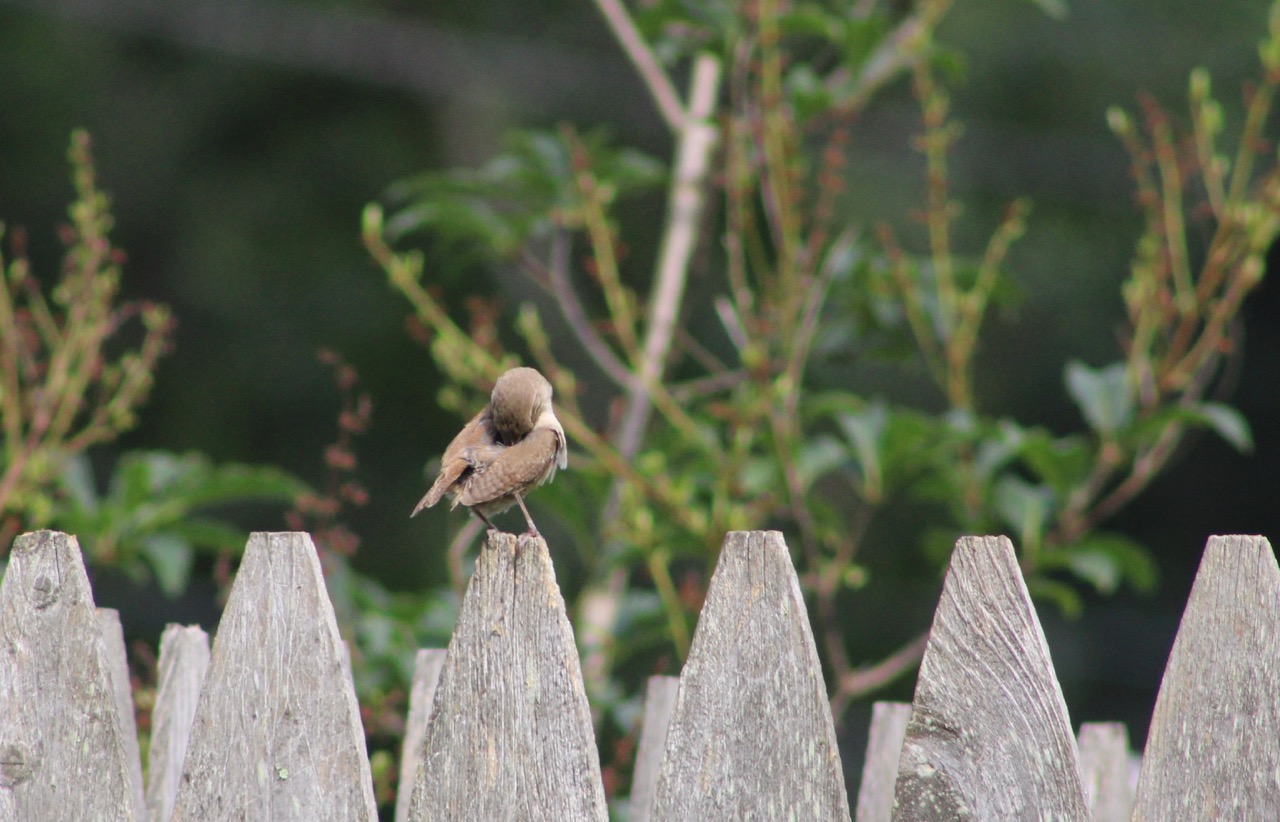
But that wasn’t the only excitement. Later, after doing errands and coming back again, I heard a wren chittering in the yard. I saw that a small bird was caught inside the screen tent, flying from side to side, unable to find a way out.

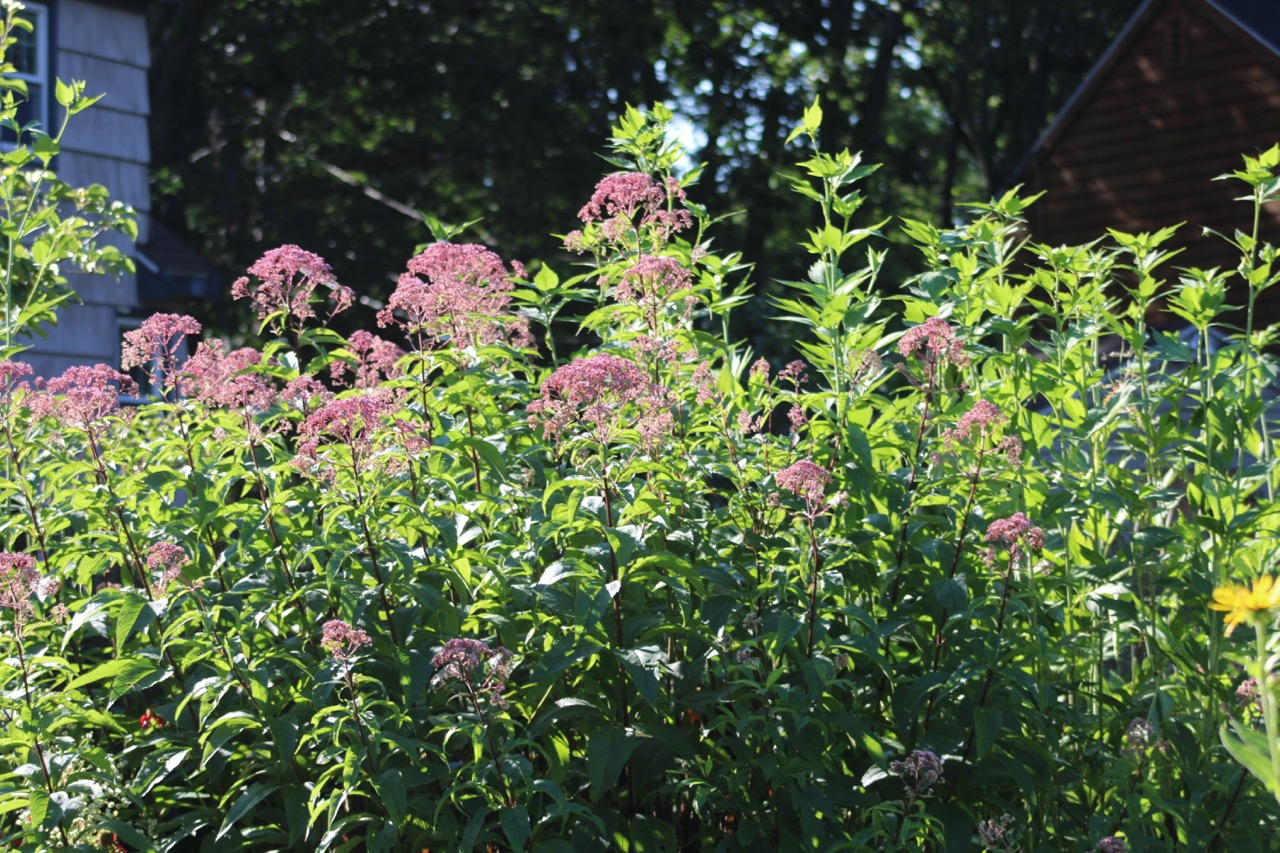
During the last two days I had heard a tiny brown bird chittering away over near the Joe Pye Weed and perching on the fence of our neighbors. I thought perhaps there might be a nest in the underbrush there, because the bird moved about like they were trying to lure me away. The Joe Pye Weed is so tall that it towers over the fence and over us, and with other tall wildflowers nearby, it would make a very secluded area underneath. I saw and heard enough to identify the bird as a wren.

Pink flowers on tall stalks of Joe Pye Weed.
Flowers in bloom on the tall Joe Pye Weed plants.

So yesterday, our friend Sylvia came by to tend to her herb garden–she is the one who originally planted the Joe Pye Weed, and other native plants that we love. We were sitting out in the orchard chatting, and the wren came back to the fence. We hadn’t seen any wrens earlier in the season. So that in itself was exciting–bird visitors! Maybe a nest.

Small brown/tan bird perched on gray wooden stockade style fence, with greenery behind.
Tiny wren grooming itself on the fence.

But today, I was distressed to find a wren in the screen tent. I went over and opened one of the panels, and walked inside the tent to try to encourage the bird to go out. They kept going away from me, from one screen panel to another, but not out. So I opened up another panel so the opening was wider. I worry about how long they had been in there. They would have to have entered either underneath the panels in the grass, or through very narrow slit openings at the corner of the roof. Finally, they flew out the wider opening and over to the nine bark bush by the pond.

I came back into the house, and told Margy about the wren and the hawk. She was excited too, and told me how much she loves my bird adventures. I love that I have her as an audience for my joy.

Later, I wondered if the juvenile hawk was stalking the wren earlier, and the wren had creeped into the tent for safety. We humans only ever see part of the story. The rest is a mystery. But today feels like one of those days where we really are a wildlife sanctuary. I hope my story can bring a little joy to your day.

First harvests

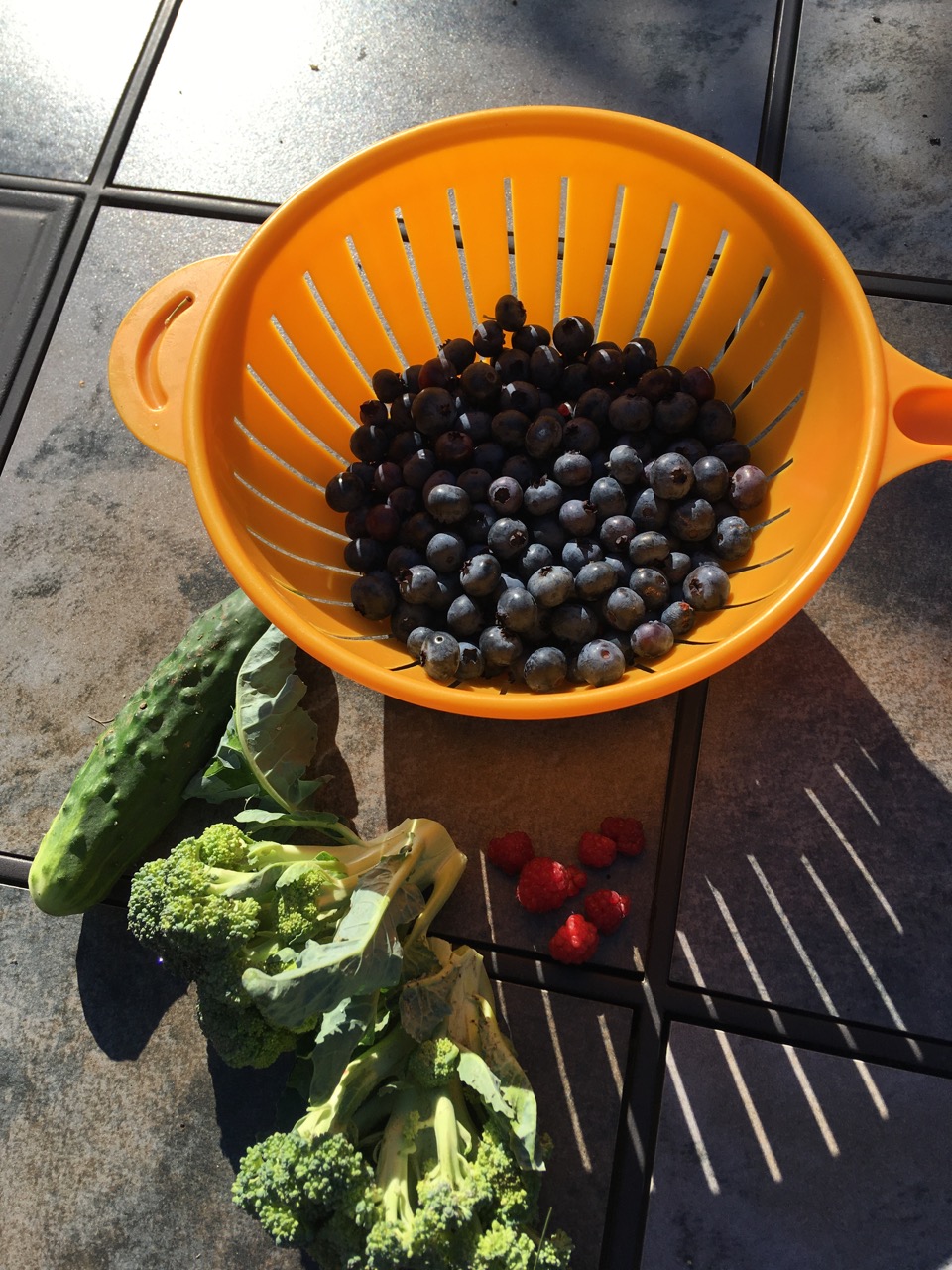
Orange slotted container with blueberries half full, and small cucumber, cut broccoli and a few raspberries.
Blueberries, cucumber & broccoli

In the excitement of the fledgling robins, I didn’t post about our Lammas harvest. The photo is of our fruit and veggie harvest of August 1st. It has been a great year for blueberries! We have also harvested some kale–there is more that wants to be cut today– some zucchini, some raspberries, and more cucumbers. Lammas is the first harvest festival of the season, and I am grateful and amazed that despite all our limitations, we actually receive food from this land.

We can’t control anything about this land. We can’t control what plants will thrive each season–no cherries or peaches this year, for example. But in partnership with the land, in our belonging to the land, these moments of yield emerge. So grateful!

Robins at Lammas

Fledgling robin looking at mother robin who is looking back, perched on gray wooden railing, greenery behind.
Fledgling robin with mom on the deck railing.

Our Lammas harvest festival blessing was being able to watch the fledging of the robins’ third brood of three chicks. (That makes nine chicks all together!) They had been getting active the last couple days so we were expecting it. But what a nice surprise to look out the window and see the first fledgling perched all alone on the deck railing, looking around at the big wide world for the first time.

Fledgling robin alone on gray deck railing looking out to greener beyond.

They probably saw their mother hopping on the ground further in the back yard. (We did too.) Then the mother flew up next to it on the railing for encouragement. (That was photo number one). After looking at each other, they each looked out beyond, and then the mother flew off, and the baby soon followed, alighting high in the hazelnut bushes.

Fledgling and mother robin on gray wooden deck railing looking away from camera toward greenery beyond.

The other two remained in the nest for a little while, but soon the second one flew out toward the orchard. Finally there was just one left. I wandered around outside, but the parents were chirping at me, their warning calls. I saw the parent robins also diving and shrieking at squirrels in the pitch pine tree branches, and angrily calling at a cardinal who came into the cherry tree–too close as far as the robins were concerned. Back inside for a while, I saw the dad robin come to the nest–with a piece of grass in his beak, but I didn’t see food. He sat with the third baby for a while, so tender. After he left, the baby shrunk down into the nest, only its beak visible. Hiding mode.

Baby robin, just head showing above brown grassy nest, with dad robin above and behind in nest, between white painted beams underneath and on side.

I had to go out in the orchard to do some mulching, and then I sat at the patio table. I could hear number three chirping every so often from the nest, their head visible again, and then I’d hear another chirp from the direction of the hazelnut bushes. When I came back inside, I kept an eye on them through the windows. They got out of the nest finally, and hopped along the beam to the other side. While the first fledgling had seem so confident and proud of itself, this one seemed quite scared about jumping from its safe little home. But everybody had left. It huddled up next to the opposite side beam.

Baby robin visible from belly up, on white beam, next to side beam, looking toward the camera.

Finally, the little one started to stretch their legs, and move their wings a tiny bit. They moved up to the very edge of the beam. They hovered there for quite a while. One of the parents came back to the deck railing down below and behind the nest. I also saw a female gold finch perched on the railing in front of the nest. Not sure what that was about. A chipmunk was scurrying below on the patio. I stood still next to the back windows and just watched–I didn’t take any more photos. The gold finch left, the parent left, the chipmunk left. The little one perched on the edge. Then they bravely jumped off.

I heard a flutter of wings against the screen window of our music room, just to the left of the deck out of my sight. I went out the door to observe, and saw that the baby was hanging by one claw stuck in the screen, and flapping their wings against it. I walked to the edge of the deck, reached over and cupped my hands gently around the baby, careful to contain their wings, lifted them to release the claw. I let go and they flew down to the lemon balm patch. Be still my heart. They slowly hopped out onto the patio, hopped over some garden hoses, making their way over to the mulched area under the cherry tree. They hopped into the grass behind, and finally they flew up over the grass into the trees.

And then the nest was empty. They say that robins raise two or three broods a season, and if that is true, they may be done with the nest for now. They’ll feed the babies for a few more weeks out in the bushes and trees. I wonder how all nine of their children are doing? Did they all survive? I hope they are thriving. We don’t see them once they leave the nest, so we never know.

I feel a sense of joy, and a sense of loss, all at the same time. I feel grateful for the privilege to observe the robin family, and for the moments I was able to capture in photos. I feel sad to look out the window and see them gone. I am also grateful that I was able to give them a little shade from the sun, and maybe that helped.