On My Walk

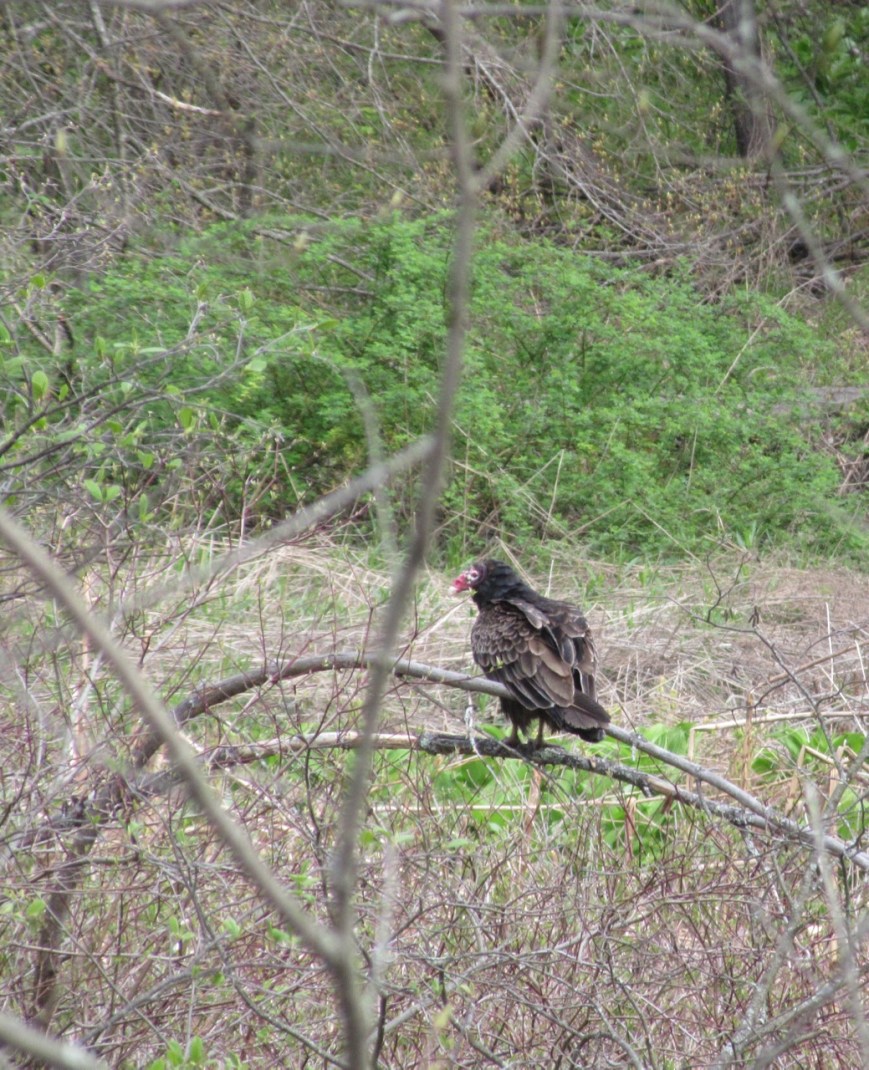
Turkey VulturesOn my walk yesterday, I followed the brook trail by the Hall School. Then, as I was going along the road that crosses over the brook, I happened to look through the chain link fence to my left, and saw these huge birds resting in the underbrush near the brook.  They had not been visible from the trail–in fact I went back to see if I could get a closer look, and they were completely hidden.  Turkey vultures.  I had never seen them in the neighborhood before, but while watching for several minutes, another bird emerged–looking scruffy like a juvenile.  So maybe this was mama and papa’s protected home for raising their baby.

Turkey Vulture Juvenile

You never know what you’ll see in the little thickets and woods along the brook.  Further along my walk, I cross over another branch of the brook.  (My neighborhood is situated between two branches of flowing water that both feed into Capisic Brook.)  Stopping to see what I might see, I almost missed this tiny bird. I want to guess that it might be a black and white warbler–I saw one of those last year on the warbler walk at Evergreen.  But I am not sure.  Anyone?

Black & White Warbler?

American Redstart

American Redstart

Yesterday, Margy found the binoculars, and I walked to the Evergreen Cemetery to join in the Audubon Warbler Walk.  During the walk, this American redstart flew right up to where our group was standing next to the pond.  I had never seen one before.  How amazing that I was able to take photos of a warbler with my small camera!

I love the warbler walk because wise folks will identify and point out birds that I might not have noticed–tiny, and often hidden in thick brush, or in high branches.  I am getting better at spotting them and moving between using my eyes alone and switching to binoculars. I can’t keep track of too many new species, though, so after seeing a wood thrush, a pine warbler and this American redstart, I made my way back home.

American Redstart 2

Permablitz!

We just found out that we were chosen to be a Permablitz site this season, on June 24!  Permablitzes are organized by the Resilience Hub in Portland, and as described on their website:

Permablitzes are essentially the mother of all work parties, permaculture-style.  With permablitz events we tap into our own local “barn raising” ethos to help each other install edible landscapes, renewable energy, water collection systems and more all in one day.

Our hopes are to install several rain barrels, create a frog pond and a fire circle, maybe help with our bittersweet control, and do more soil enhancements and aeration.  We think of these as structural components of our garden, and it is also suggested by permaculture experts to do any earth shaping projects near the start of your work–the frog pond is in that category.   Also, depending on where we are in our planting process, we might get help with sheet mulching and plantings for our cherry tree guilds, and Sylvia’s herb garden.  Our friend Sylvia, who helped us plant our cherry trees, has studied herbal healing.  She doesn’t have land where she lives, so we invited her to create an herb garden here at our home.  We are so excited about this collaboration!

I have been to several Permablitz work parties over the last few years, and while there is a great benefit to hosting a Permablitz, there is also a lot of benefit to participating as a worker. Along with the joy of helping someone’s garden grow, I have learned a little more each time about the principles of permaculture, about strategies for water collection, about soil health, about growing gardens in general, about ideas for edible landscapes that I might never have heard about.  It is also a lovely way to meet folks who care about the earth, and our relationship to it.  So if you will be in Portland on June 24th, you are invited to come to our  Permablitz.  When the event is posted with all the details, I’ll share it.

Permaculture Design, Phase OneThis is a section of our evolving Permaculture Design for our yard.  (It didn’t really work to try to put the whole design into one photo, so this is of the half of the yard nearest the house.) I had started this design by measuring everything in our yard and putting them on grid paper–the grids equate to 3 feet square.  Then we had lots more input with our Intro to Permaculture Design class, and a conversation afterward with the leaders, Heather and Julie.

Last weekend, I went back to the original, and filled in some trees that were already on our land, and then began adding the design elements that are among our first steps in the plan.  I added color!  I haven’t drawn in all of our future ideas.  We are growing our garden slowly, so that we can learn what we need to learn as we go, and not take on more than we can handle right now.  (I am thinking of taking this design and making copies on which to draw our speculations for future ideas.)  I also haven’t yet drawn in Sylvia’ herb garden, which will be near the ornamental cherries, but she hasn’t determined the configuration yet.

I love the design part of the process, and while I sit in the back yard, I am always getting new ideas about where future plants might go.  Blueberries, hazelnuts, apple trees… and then I step back and breathe, and let myself go slow, and enjoy.  Because every step of this process has been such a joy!
Planting the Cherry Trees

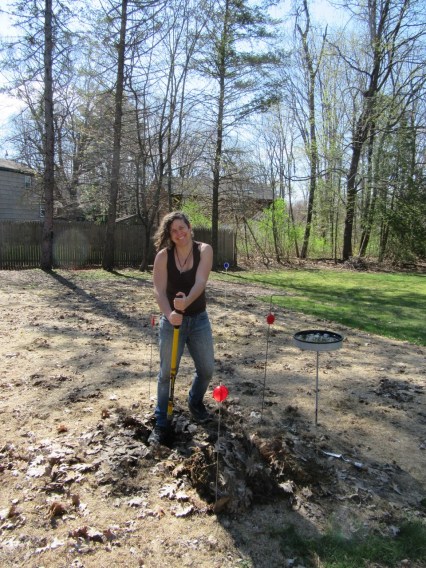
Today was the perfect day to plant our cherry trees, May Day Eve.  I had figured out the locations, and marked them the day before.  Our friend Sylvia came to help with strength and muscles.  She dug the holes!  Thanks, Sylvia!

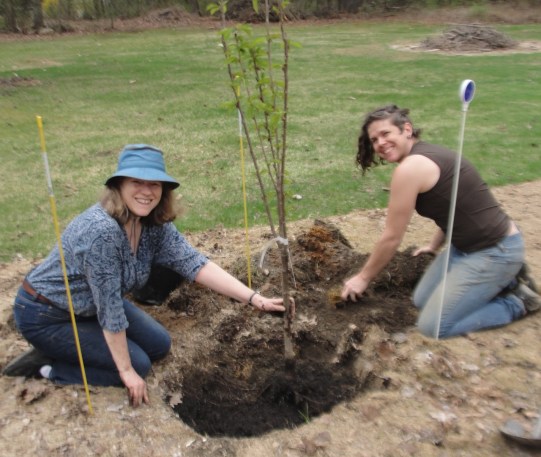
Our friend Mihku had given us compost from her garden (Thanks, Mihku!) and we realized we needed even more, so Margy drove to buy some, while Sylvia and I positioned the first tree.  I applied mycorrhizal inoculant to the roots (from the wisdom of Mihku), while Sylvia held the tree.  Then we filled in what we could.

Cherry Planting Hands in Dirt

[Photo by Margy Dowzer]

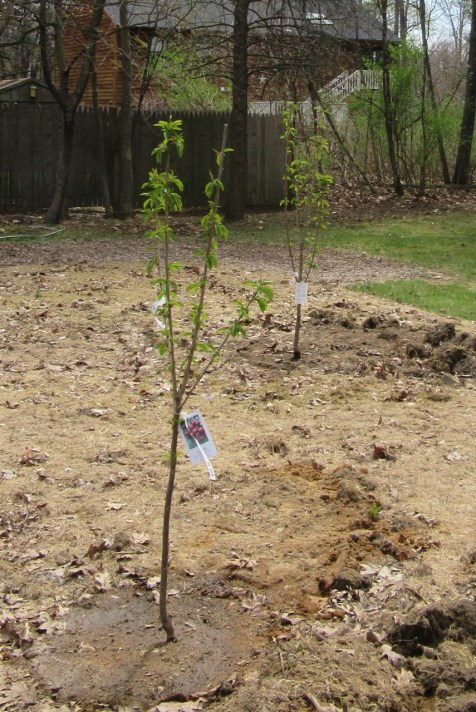
When Margy returned, she took photos while Sylvia and I finished filling the hole with compost and dirt.  I placed the Lapins Cherry closest to the patio, and the Black Tartorian Cherry about twelve feet beyond. We discovered the soil under the Black Tartorian was darker and richer, so we used some of that to fill the first hole too.

It felt so good to have my hands in the dirt, to give good energy and nutrients to these young beings that will live with us in our home.  It also felt good to have help from a younger stronger friend, my aging body just not able to do as much physical labor as I used to do.  It felt really good to share the process, to create a celebration of earth and sun and soil and friendship and the fertility of the land.

More photos:Sylvia starts digging

Myke & Sylvia – Version 2

[Photo by Margy Dowzer]

Cherry Trees in the Ground

Sylvia and Margy

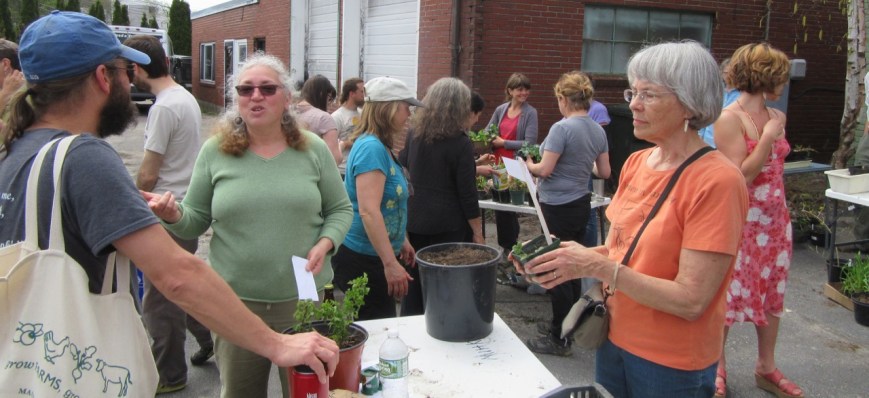
Plant Swap

Yesterday, Margy and I participated in the annual plant swap at the Resilience Hub.  We didn’t have plants to swap, but Margy gathered seaweed to bring, and I made some grain-free, sugar-free cherry brownies to share.  We were able to get lots of plants we need for our cherry tree polycultures–plants that we will place around the trees that help the trees to thrive and also have benefits for us.  Back at home, I put them in pots and set up a little “nursery” area near our water spigot, for them to live until we are ready to put them in the ground.

Plant Nursery – Version 2Some of the plants and their functions:

  1. chives–use in a ring around the base of the tree to deter pests, attract pollinators, provide anti-fungal support (cherry trees are prone to fungal issues), plus herbs for eating
  2. comfrey–draw up nutrients from deep in the ground, attract pollinators and beneficial insects, cut the leaves to create mulch, and use for herbal healing
  3. rhubarb–more mulch, and delicious eating
  4. oregano–aromatic pest confuser, anti-fungal, can handle foot traffic when harvesting cherries, and cooking herb
  5. thyme–aromatic, one of my favorite herbs for cooking and health
  6. chamomile–anti-fungal , attract beneficial insects, draw up nutrients
  7. lupine–nitrogen fixer
  8. kale seedlings–especially as the tree is growing, to use the space for growing my favorite vegetable.

We also plan to plant daffodils around the drip line, to deter pests, attract pollinators and have beauty; plant the perennial seakale for good eating, maybe some asparagus; and sow white clover in the spaces between other things, as a nitrogen fixer.

The plant swap was a lot of fun, meeting other permaculture gardeners, and learning more about some plants that I didn’t know about.  I also met someone who was using my book for teaching classes at her Quaker meeting. How great is that?

Plant Swap

Turtles

Snapping Turtle at Evergreen

Margy and I took a walk at the ponds at Evergreen Cemetery on Sunday afternoon.  Right away we saw this big snapping turtle who lives in the largest pond.  We walked around to the back, and several people were walking out on the fallen log and acting goofy.  But as soon as they left, the little painted turtles started climbing onto the log to bask in the sun. There were turtles on every available log.

Turtles on the Log

Now it feels like spring has really arrived.  We also saw three ducks, and lots of happy people wandering the trails.  And of course, both of us took lots of photos.

Cherry Trees

Cherry Trees in potsOn Friday the 21st, Margy, our friend Mihku, and I went to Broadway Gardens and picked out two sweet cherry trees.  Mihku is a master gardener and her help was invaluable–in fact, the sales person suggested she should have a job sitting with their trees and telling people about them.

We purchase a Lapins semi-dwarf and a Black Tartarian semi-dwarf. The Lapins will self-pollinate, but the Black Tartarian needs another tree, such as the Lapins, to pollinate.   I thought about just getting the Lapins, but it seemed like they would enjoy having each other for company.  So it is beginning.  Our little permaculture garden in our back yard.  Starting with one of our favorite fruits–sweet cherries.

I have been sick for a few weeks with this horrible respiratory virus/flu going around, and really haven’t had energy to do much but keep work at church afloat–so no blogging, no gardening, not even taking my morning walk most days–it just triggers too much coughing.  So getting the cherry trees really perked me up.  We will plant them this coming weekend.  Mihku suggested that we need to get some mycorrhizal inoculant for the roots, some compost from her yard, and then train the branches with props to help them widen out while they are still pliable.  The semi-dwarfs can grow to 15-18 feet high, and we want to keep them more like 11-13 feet.  I will post more pictures as we plant.

In the meantime, getting back to the blog today is cheering me up too, though I am still not feeling great.  But today is the New Moon, and this blogging is one way to remember the beings and values closest to my heart.  May this day bring joy and sweetness to you too.

Book Launch Party

book-2-send

[Photo by Rick Kimball]

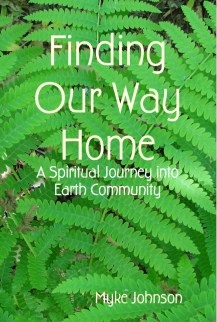
On January 14, I had my first book reading and a wonderful book launch party for Finding Our Way Home: A Spiritual Journey into Earth Community.  It was organized by several members of Allen Avenue UU Church, and held at the church, but open to the public.  Thank you Mark, Cathy, Connie, Sally, Sonia, Tirrell, and Sharon, and everyone who brought food, and everyone who came.

Book Launch Party MD

[Photo by Margy Dowzer]

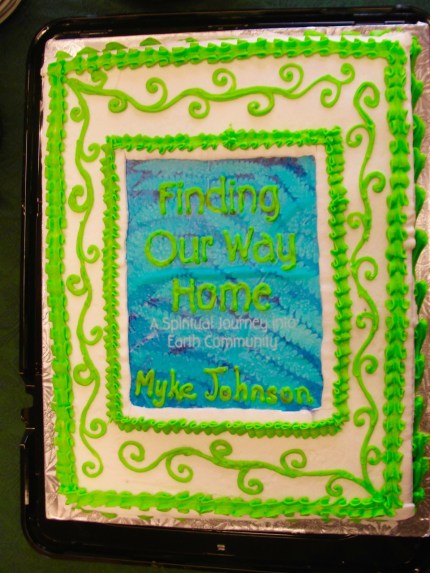
I did a reading from the book, and sold and signed many copies. There was music by Dale Churchill and lovely refreshments, including a cake reproducing the cover of the book.  It was the perfect launch, since so many ideas and stories in the book were born in the context of my relationship with this community of people.  Thank you everyone!

Book Cake MD

[Photo by Margy Dowzer]

Business Is Funny

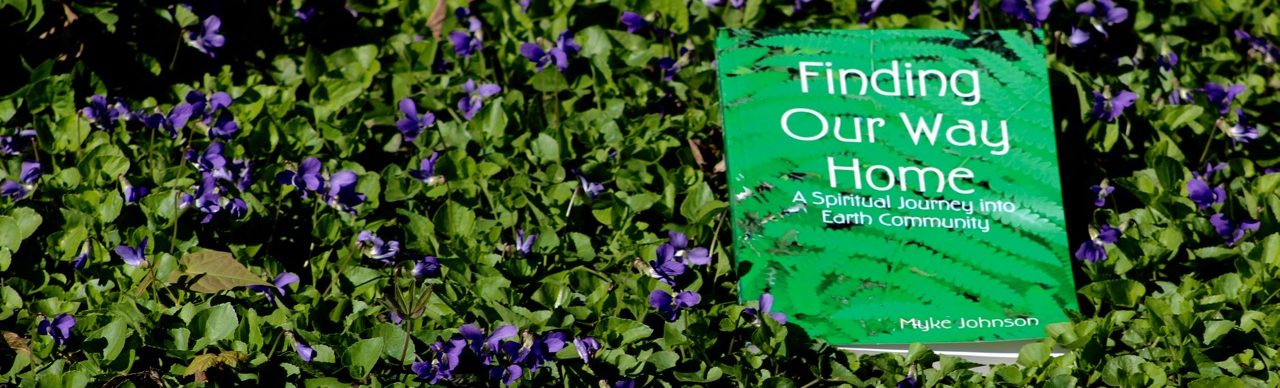
title-pageMy book, Finding Our Way Home: A Spiritual Journey into Earth Community is now available for $17.99 through Amazon.com, BarnesandNoble.com, and via special order at your local bookstore through Ingram, as well as directly from lulu.com.  You can follow the links, or search using my name.  It may ask you, Did you mean “Mike Johnson”?  Say, no, “Myke Johnson.”

A funny thing.  If I go to its listing  at Amazon.com, it also says there are “2 used and 11 new copies” available from other sellers. But obviously, there are no used copies in existence yet–this is a print-on-demand book that was just released.  But there are all kinds of discount booksellers who list it at prices varying from $14.52 to $24.44 plus shipping.

From the business side of things, it is still better for me (financially) when folks order it directly from lulu.com or get a copy from me in person.  This is because other sellers take over half the list price, so I receive about a third of what I would receive if someone ordered it directly from lulu.com.  On the other hand, if someone orders it from their local bookstore, it helps to support local booksellers, which is fabulous. And I myself use Amazon.com for its convenience and speed, and its free shipping when I accumulate a few titles. Plus, you can look “inside” the book on their website.  So all in all, it feels good to have it listed out there in multiple venues, so folks can get a copy in the easiest way.

It has been illuminating to learn more about the business side of book publishing.  I don’t expect to make a lot of money from this adventure in publishing, but I do want to get the message out to wherever it might be welcome.  It is up to me to do the promotion and marketing for the book.  But it won’t really work without some help from my friends. Thanks very much to those who have already purchased a copy!

And thanks very much to some wonderful members of my congregation who are hosting a book launch party this weekend.  If you are near Portland, Maine it is from 12-2 at the Allen Avenue UU Church on Saturday, January 14th.  There will be copies of the book to buy, a reading of selections from the book, music, refreshments and I will sign your copy. Everyone is invited.

Other ways you can help:  If you read the book and appreciate its message, tell your friends about it or give it as a gift.  Share it on Facebook.  You can also help promote it by writing a review under its listing at lulu.comAmazon.com, or BarnesandNoble.com and then sharing it via Facebook or Twitter.  Thank you in advance!

The Chamomile & Me

From the Introduction to my new book, Finding Our Way Home:  A Spiritual Journey into Earth Community:

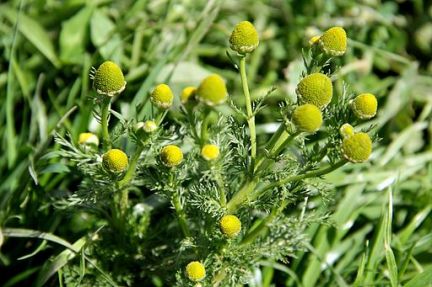
When I was a young adult I became intrigued with the use of natural herbs for healing. I read how particular flowers and leaves and roots were able to address different ailments of the body. I purchased herbal products in the local food coop, and steeped them in teas when I didn’t feel well. I learned, for example, that chamomile tea was calming during a time of stress. Then one day, with a group of peace activists protesting outside a nuclear weapons facility, someone pointed out to me a chamomile plant growing wild by the side of the road.

wild-chamomile

[Photo by Lazaregagnidze via Wikimedia Commons]

It was tiny, easy to overlook, with tight yellow-green berry-like flowers. Its feathery leaves branched out over a stony patch of ground.

I suddenly felt the connection. Chamomile wasn’t merely something I bought at the store. It was a plant that grew by the side of a road. Something in those chamomile flowers could ease my stress. We were related to each other in a deep, essential way—physically, chemically. And not only chamomile. I understood in that moment I was not separate from any of the plants or animals or people on the earth. We were all one, all interconnected. Something in me woke up.

But if we were one, why did we lose our awareness of our connection? What broke us apart? And more importantly, what could bring us back together? Standing outside that nuclear weapons facility, the contrast could not feel more devastating. If we truly felt our interconnection, how could we even imagine such destruction? Somehow, we had become lost, we had become divided—from the plants, from the earth, from other human beings, from the Mystery binding all of us together. How could we find our way back to each other?

…Without experiencing our connection, we cannot begin to address the dangers facing us in our time.

I invite you to join me on this journey into earth community. I offer stories from my own path, and stories from others who have helped me to find the way. Along this winding road, I had many teachers. Human teachers, to be sure, but also a red bird, a copper beech tree, a piece of bread, a common mushroom, my cats. I have not reached the destination, but I have come to understand a sense of the direction we must travel. We must cultivate deeper relationships with our fellow inhabitants of this planet, both human and non-human. We must understand that the Divine Spirit is here with us as well, not separate, but present in each being, and present in the larger reality of which we are a part.