Closets

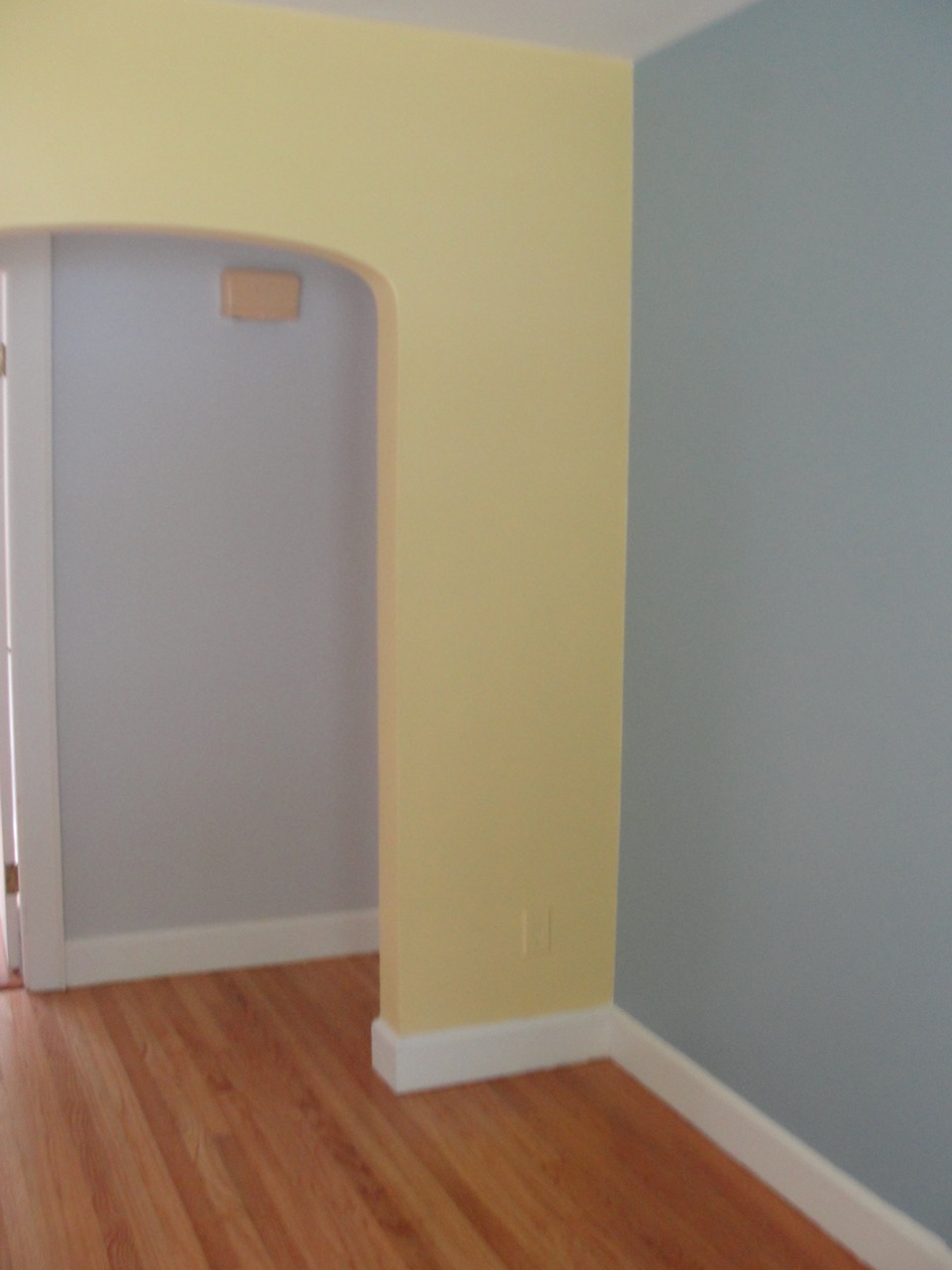
Broom DSC00663It is funny what bubbles up. In our search for greener housing, there were some things that didn’t make it onto our dream list. Like closets. But after writing the post about the beautiful window house, as I lay in bed trying to go to sleep, I realized that that house had almost no closets–one big bedroom had an okay-sized closet, the other big bedroom had a very tiny closet, and there was one very tiny closet in the hall. That was it.

I began to try to imagine–where would we put our coats and boots and scarves and mittens? (We live in Maine after all.) Where could we put our bathing suits and beach bags? (Maine in summer!) Not to mention clothes and linens and shoes. Where would we put an ironing board or vacuum cleaner or broom? We are trying to simplify our lives, but we also need the tools that go into daily life, and a place to put them.

Then I started to notice other things about the house that weren’t very good. For example, there are two and one half bathrooms (we only really need one) but if a guest comes to stay, they have to go into another bedroom to use the shower. Isn’t that a little crazy? The big beautiful window can’t be opened, so what does that do to airflow? The basement was musty–will it freshen up with some attention so that we’d feel comfortable storing boxes down there, or will it be off-limits to us?

Our realtor reminds us that some of the features we do like about this house don’t come along very often. We are going back to the house today to see if we can imagine solutions that work. But at this moment, this morning, I am paying attention to the voice that says, “maybe not?” How do we find clarity? Perhaps the voice of wisdom will come through the silliest thoughts and feelings that creep into our hearts as we try to sleep.

A Beautiful Window

Window DSC00652 - Version 2Continuing our search for greener housing, today we saw a house that had a lot of features we liked. The rooms were full of light, even on a rainy day. The living room had this really great full length window that we fell in love with. The house could be made accessible by widening a couple doorways on the inside, and a ramp to the front porch which was only a step or two up. (Very unusual for the houses we have seen.) The house had character–it had two bedroom suites, each with their own bathroom and room for office/study space. There was a fireplace in the living room.  Wood floors and lovely windows throughout. A small but usable kitchen. A small guest bedroom. It had a front porch (visible through the cool window), and two back decks on different levels (which is both a positive for outdoor space and negative for access). Oh, and another half bath, with hook-up for washer and dryer on the first floor. Outside, it had a big side yard as well as a sweet back yard and small front yard. It had an apple tree. According to the listing it was .3 acres. A quiet street and close to a bus line.

On the negative side, it had only a one-car garage, but it looked like there would be room in the front of the side yard to build another garage. We weren’t sure about whether solar panels could be installed on the roof, but we would have to cut down an ash tree on the back property line for it to work. On the other hand, if we built the garage, it might be situated well for solar too. If we make an offer on this house, we’d put in a contingency that it would work for solar panels. We’d also need to buy a washer and dryer, a dishwasher, and a hot water heater. Along with the air-source heat pumps. I think we might use up our budget for all of this.

Other good news, we were approved for a home equity line of credit on our current house that will cover the initial costs of buying a house and renovations, so we don’t have to make an offer contingent on selling our current house. (Though we would put our house on the market once we have a house under contract.)

It is hard to make a decision. Margy and I talked it out tonight, and both of us are leaning toward making an offer, but now we are going to sleep on it. It is really nice to find a house that has character, that I feel like we could love. I feel a little overwhelmed by all of it right now. Mother Earth, please will you guide our hearts into clarity? Ash tree, are you willing to give yourself to this project of our search for greener housing?

I remember the words of the Tao:

Do you have the patience to wait 
till your mud settles and the water is clear? Can you remain unmoving 
till the right action arises by itself?

The Hope that Springs from Uncertainty

This week there have been no new houses to look at, but that is just as well because we are waiting to see what loan amount the bank will approve for us. I have also shifted from sabbatical time to a week of study and preparation for fall worship and return to full-time ministry. Today I’ve been reading books on Life Coaching, to learn strategies that coaches use to help people achieve their goals. I’ve thought that perhaps the tools of coaching might be useful for leadership in my congregation, and also useful personally to achieve our goal of finding greener housing, and living in ways that unite us with the living Earth.

I completed one book, whose author describes the most important tools for achieving coaching results as: motivation, positive frames of thinking, and confidence. I am going to be snarky for a moment and say it sounds a little like the worst of new age thinking–“just believe it and you can make it happen.” I do believe that we can access resourcefulness in ways that help us to achieve our goals. I like the tools that enable us to do that. But I don’t buy how everything seems to hinge on positivity and rejection of the possibility of failure. (I have two more books to explore, so perhaps I will discover that this one isn’t the best representation of the coaching philosophy.)

I am remembering Joanna Macy‘s advice to honor our pain for the world, to honor all the so-called “negative” emotions as well as the positive. Our pain is not just a hindrance to achieving our goals, but also a resource for compassion: our pain for the world comes from our deep interconnection with all of life.

Joanna speaks about the three stories of our time–the ways we understand what is happening in our world. The first is “business as usual” in the industrial growth society, believing we can just go on as we have been doing, and everything will sort itself out. But the industrial growth society is actually on a suicidal path because it is built upon destroying the natural world. The second story is called the “Great Unraveling,” a story of the destruction of our society, the mass extinction of species, climate disasters, and nightmarish post-apocalyptic scenarios in which people fend for themselves and turn on each other. The third story is called the “Great Turning,” in which human beings make a profound shift toward a life-affirming society, through major changes in our energy consumption, our social and economic structures, and especially in growing to understand that all beings are a part of one living Earth.

My desire for greener housing springs from my hope to be a part of a Great Turning. But Joanna points out that we have no assurance of success in our work to transform the world toward a life-affirming society. We could just as easily fail in our efforts, and witness the downfall of humanity and the extinction of our species along with so many others. Yet that very uncertainty can be the source of our hope and of our motivation.

Bald Eagle, photographer unknown

Bald Eagle, photographer unknown

I went for a swim at Winslow beach today, and as I floated on the ocean waters, I saw a beautiful bald eagle flying overhead. A small bird was chasing it at first, but then it soared on a long straight path towards the western sky.

As I ponder the concepts of motivation and hope, I realize that I don’t find my own motivation through messages of assured success and positivity.  I feel more resonance with the hope that springs from uncertainty.

There is no guarantee that Margy and I will find greener housing, and no guarantee that human beings can turn our society around toward a way of living in harmony with the earth. But for that very reason, we must give it our passion and our dedication and our best efforts. We must put our whole energy into the story that offers Life.

Another Reason I Love Maine

Our appraiser rescues injured birds!

As part of our search for greener housing, we are applying for financing with our local bank, based on our equity in our current house.  That way, we don’t have to exactly synchronize the buying of a new house with the selling of our current house. Yesterday, an appraiser came to our house, as part of that process. We had de-cluttered the house and tidied and cleaned before she arrived.

Window MJ DSC00331But what I love about Maine is that people don’t stay on topic or on task. She noticed the striping we had put on some windows to help prevent birds from crashing into them, and we got talking about birds. It turns out she cares for injured and orphaned birds. She has been doing this for many many years, in conjunction with a local vets office. She spoke about her robin that can’t fly, but hops around on the enclosed porch, and sometimes releases the earthworms instead of eating them. She has cared for bluejays who could speak words, and a crow who liked to wait for the fax machine in her office to get an incoming fax so he could tear it apart. When possible, the birds were released after they had grown up or healed, but a few she kept on.

She described each bird by name and I love how much she appreciates their intelligence and their unique personalities. I love that she searches for the perfect beach to release young seagulls who are now able to make it on their own. I love her story of the crow barking like a dog because he had been raised around her dogs.

You never know what little delights a day will bring, and I love that in Maine, folks don’t stay on task, and you can discover kindred spirits when you least expect it.

Why find greener housing, anyway?

Oil furnace DSC01553We have to wean ourselves away from our dependence on fossil fuels. Think about petroleum. The industrial economy treats oil as a resource free for the taking, with a price based only on the cost of extraction and delivery. It shaped a world which became completely dependent on cheap oil. But we have passed the time when oil can be easily extracted, and now riskier and dirtier methods are required. Deep sea drilling like that which caused the spill in the Gulf of Mexico. Tar sands mining in Alberta Canada that destroys the forest, and devastates the health of the people and animals of the region. Arctic Sea drilling. Burning oil for fuel will increase greenhouse gasses and bring our climate closer to disastrous changes.

I know we have to stop burning oil. But when I look at my own life I see how big a challenge that will be. Our home is heated by oil. I drive a car than runs on gasoline made from oil, to buy food and other needed items, and also to go back and forth to the congregation I serve. It would take several hours to walk to these destinations from my house, and there is no public transportation nearby. The whole structure of suburban life is dependent upon oil. My congregation is a suburban congregation, and almost every person who comes to worship drives there in an automobile. Without oil, it is likely the church, and my house, would not have been built in these locations. The whole geographic structure of our society has been shaped by oil.

And not only that—many material goods in our lives are also fabricated from oil. Plastics are made from petroleum, and there is plastic in every room in our houses. I write on a computer with plastic components. Alarm clocks, toothbrushes, synthetic fabrics, telephones, televisions—all from oil. Modern agriculture is dependent on fertilizer made from oil, and machines that use oil, and a transportation system that uses oil. The asphalt on our roads is made from oil. If oil disappeared tomorrow, the whole system would collapse. And eventually, oil will run out. That is one of the realities we are learning in our time.

None of us have the ability to undo our dependence on oil individually. It is too entrenched, too societally enmeshed. But we can begin to imagine some partial solutions—in fact, the technology to live without oil already exists. I was inspired when I learned about “zero-carbon” houses that actually generate more energy than they use. We may not be able to fully achieve such a goal, but why not try to get closer to that ideal?

I know that even if we succeed beyond our wildest dream—even if we create a zero-carbon home from which we could walk to most functions of our lives, even if we could afford an electric vehicle that we charge from solar panels for other transportation—oil companies will still be breaking open the earth in Alberta, and spilling oil into the Gulf of Mexico. The children living near refineries will still be getting asthma. The ice of the arctic will still be melting, and thousands of species will go extinct each year. We need not only individual change, but a social will to transform our relationship to the earth. But I believe that each change we pursue as individuals also works its magic on that larger transformative process in ways that we can’t fully understand. And so we take the one step we are able to take.

In the Talmud it says, “Do not be daunted by the enormity of the world’s grief. Do justly, now. Love mercy, now. Walk humbly, now. You are not obligated to complete the work, but neither are you free to abandon it.”

The Search for Greener Housing, Part Three

House Search #1 DSC09847Following our dream of finding greener and accessible housing, we have now looked at six houses. The first was in a great location (halfway between the houses of two friends!) and had an amazingly private back yard, despite being right in town, though it was hard to get to the yard from the house. It had an almost south facing roof, but narrow hallways, and we couldn’t imagine how we could make it accessible without major reconstruction. Plus, there was a tenant in the basement who had lived there over 25 years, and the house wouldn’t have worked for us without the basement space. Bad karma?

The second house had such great character–it was a house we would love to live in. There were blueberries and raspberries in the yard, which we were told we could pick, and so we did. House Search 2 DSC09736There were gardens and a hoop house for extending the growing season. Lots of windows, sunny, and though it was a bit out of town, it was close to a lake, which was a nice bonus. There was not quite as much work to make it accessible, (though still some) but it was a very old house, and there was water along the edges of the basement–along with a mildew smell. And because of the unique shape of the house, it might be hard to insulate and put up solar. Regretfully, we decided it was too much to take on.

The third house had a great open living/dining/kitchen area, a lovely back deck, and also a great yard–though the very back of it fronted onto an in-use railroad track. It looked like we could put solar on the garage. But the bedrooms were dark and felt small, and there were two very tiny bathrooms that would have to be remodeled into one. We talked about whether we could put in more windows. Also there were a lot of steps to the front door.

The fourth house was on a busy street, too small, and not really worth looking at.

The fifth house was fully accessible! It had a lovely open kitchen/living area, a great deck, and nice bedrooms and bathroom. BUT–it was larger than our current house, and so that didn’t fit our goal of downsizing and having fewer expenses. They said it had been insulated, but it had used quite a bit more gallons of oil over the season than where we are now. However, it was great to see what someone else had done for accessibility and beauty.

The sixth house inspired a long conversation with our green-building savvy real estate agent. (That was one of our practical steps–to find an environmentally experienced agent!) The house was in great shape, with a lovely living room with a fireplace, a big mud room, two nice sized bedrooms on the first floor and extra finished space in the basement. It had a one car garage that probably could have been expanded to two ($), we’d need to remodel the bathroom for access, widen a doorway–and once again, it was an odd-shaped roof, so solar might be more expensive. Plus it had these great old cast iron radiators along the baseboards, but if we went electric they would all have to come out with much ado. And even with a lot of work, we probably couldn’t get to zero-carbon in this house, would have to keep using oil.

Our agent suggested that with all of these houses we’d seen so far, we were trying to squeeze ourselves into a house that wasn’t really quite right for what we wanted. Each one would require a lot of renovations in addition to solar and air-source heat pumps and insulation. It is an emotional up and down–excitement over houses that seem worth seeing, and in some ways are so close to what we want, or have such nice qualities, but then the disappoint that they don’t quite work. AND tomorrow could mean another house comes on the market that could be just right.
The Search for Greener Housing, Part Two

After deciding it is the right time to start searching for a more ecologically friendly house, my partner and I sit down together and make a list of what we hope for in a home.

  • One-level living that can be made wheelchair accessible (because my partner can’t do a lot of steps, and we have friends who use wheelchairs, and universal design makes sense for a house we want to get older in.)
  • South facing roof that is solar energy suitable
  • Able to be retrofitted with more insulation and air-source heat pumps
  • Location closer to Portland and public transportation, near some sort of village center
  • Quiet street
  • An area safe for lesbians and people of color
  • Privacy in the back yard
  • About a quarter-acre lot, smaller than where we are now, but still room for permaculture gardening. Some parts shady with trees, some parts sunny, and flat enough for easy access. We want to get rid of lawn to mow, and have other kinds of plantings instead.
  • And, perhaps counter to our village center idea, a location close to woods and critters?
  • About 1200 square feet of house (this number to be adapted as we actually look at houses and see what the spaces feel like.)
  • Two bedrooms plus some office space and guest space
  • Living area that can hold ten people or so for gathering together
  • Some extra space, like a basement
  • Wood floors or equivalent–no carpet, no mold, no smokers. (We have allergies. If there is carpet, plan to replace with wood floors.)
  • Big windows, lots of light
  • Two-car garage (because of Maine winters, and for now we need two cars)
  • Laundry on first floor
  • Mudroom area
  • Fireplace or wood stove, more for the feeling of a hearth than for heat
  • Deck
  • No vinyl siding (That stuff is really bad for the environment! Watch the documentary Blue Vinyl!)
  • Electric appliances

Okay, that’s our list, that’s our desire. And of course, we want a sound, well-built house that will last. The other part of the equation is that we want the price to be enough less than our current house so we can afford to do the retrofits and add solar energy without taking on more debt. Our goal is to own it debt-free before we come to retirement, and to have the ongoing taxes and utilities and maintenance costs affordable to us on a low retirement income.

There is a strange magic to finding a new home. There are practical steps we need to take, but then, it all depends on what is out there. And what will emerge in the next day or week or month. I have moved dozens of times in my life, and it always brings up a lot of anxiety for me. Will we find a home that works for us? Will we recognize it when we see it? What is essential on our list, and where can we compromise? It took us four months to find our current home when we moved here to Maine. Will it take that long for this process? If we find a house we like, will we be able to bid for it successfully? My partner has her own list of fears.

In this magic of finding a new home, we are placing our desires up against our fears. That is why it feels important to me to name our very specific desires for a new home, and also to acknowledge and honor our fears. I know that magic works that way. But there is another deeper movement going on as well. It comes to mind again as I look at houses-for-sale online. In the listings, they don’t mention the orientation of the house, so I try to figure it out by looking closely at the maps. It is discouraging how few houses have a south-facing roof.

Then I remember that we are trying to do something new with this move–we are trying to re-orient our home environment into harmony with all life on earth. The current built environment is oriented around cheap oil and other fossil fuels. It can’t last. We are trying to take our own small steps closer to a whole new way of living that is about beauty and sustainability and a future for the generations yet to be born. There is a great Earth energy that is beneath our feet guiding our way down this path.

It says to me, “Remember to embrace the process. Enjoy the whole journey, right now! You don’t have to wait until everything is ‘settled.’ Keep taking small steps until you are ready to leap. Until the time comes when it is clear. You do not have to rush. Keep holding hands with the ones you love.”

Photo by Margy Dowzer

Photo by Margy Dowzer

The Search for Greener Housing, Part One

For a long time, I have been saying to whomever might listen that my fantasy is to live in a zero-carbon home, a home that is so energy efficient that it doesn’t put carbon into the atmosphere through burning fossil fuels, or use energy that is based on fossil fuels.  There is more to it than that, but ultimately, I am hoping for a way to live more in harmony with the whole of the living earth, to live as if our human future holds life-sustaining possibilities.

So, my partner and I have started on a new adventure toward this greener living.  We have decided to downsize from our current home, and look for a smaller home that could be retrofitted to approach zero-carbon efficiency.  It is an adventure full of anxieties and tensions, so I decided to create a blog journal as we go.  I want to remind myself of the core values involved in this transition, and the grace and magic available to us when we take steps toward our deepest earth connection. It is also a way to honor the challenges we face as we seek to create change.

Our house with trees

Our house with trees

There are so many things we love about our current home–it is a well-built ranch-style house on one acre of land full of grand mature trees–large maples in the front yard, and tall oaks, pines, hemlocks, spruce, and birches in the back yard. We have such privacy and beauty around us when we go outside, and this place has been a teacher for my journey into deeper connection with the earth. There are birds and chipmunks and other critters who wander through. The house is full of light.

So why leave? For one reason, there are limits to what can be done with this house toward greater sustainability.  It doesn’t have the right alignment for solar power, for example. Secondly, it is out in the country/suburbs, and totally dependent on automobile transportation for every human need. So even if the house could be made more efficient, the location is oil-dependent. Thirdly, and perhaps most basically, it is more house and land than we really need, and expensive for us to maintain and take care of.  We couldn’t afford to do much more than we have already done toward greener living in this house. And as we look toward the possibility of future retirement, we realize we couldn’t afford to stay here at all on a retirement income.

One essential part of this process of change is the grief that emerges when we contemplate letting go of a home we have loved, and these trees that are older than we are. When we open our hearts to the land, we open our hearts to the particularity of a place.  This unique place.  I have taken hundreds of walks down this road, taken photos of these trees in all seasons, walked to the conservation land and the water district land just half a mile away.  I’ve cross-country skied back behind the yards and houses through little paths in woods out to hidden fields.  I know where the lady slippers bloom in the spring. We’ve planted flowers and bushes and young trees here, along with blueberries and raspberries.

Can a part of the magic of this change create protection for this land we have nurtured? Only if some new resident falls in love as we fell in love when we arrived here. Maybe someone with more resources could even take this place further on its own path to sustainability.  In the meantime, we keep our hands in the soil and our hearts open. We gather this season’s raspberries and keep going outside. Perhaps our love for this land is a part of the magic of this journey.

Next time, I will share our particular dreams for the new home we are seeking…

How to Face the Mess We’re In Without Going Crazy

Redwood Sky DSC06718I was away for eleven days at an intensive retreat in northern California on The Work That Reconnects with Joanna Macy. I have loved Joanna’s work for over thirty years, from when she was leading workshops on Despair and Empowerment in a Nuclear Age.  If you haven’t yet encountered her work, a great book to begin is Active Hope:  How to Face the Mess We’re in without Going Crazy, co-authored with Chris Johnstone.

Here is the description of the book from the publisher’s page:

The challenges we face can be difficult even to think about. Climate change, the depletion of oil, economic upheaval, and mass extinction together create a planetary emergency of overwhelming proportions. Active Hope shows us how to strengthen our capacity to face this crisis so that we can respond with unexpected resilience and creative power. Drawing on decades of teaching an empowerment approach known as the Work That Reconnects, the authors guide us through a transformational process informed by mythic journeys, modern psychology, spirituality, and holistic science. This process equips us with tools to face the mess we’re in and play our role in the collective transition, or Great Turning, to a life-sustaining society.

A true gift I have experienced in Joanna’s work is a way to experience my own grief for the world, not as a debilitating or paralyzing weight, but as a doorway into experiencing my deep interconnection with all beings.  We begin in gratitude, and the spiral of the work takes us through grief and interconnection, and we go forth with new strength for changing our lives and our world. I came away from the intensive feeling more alive and whole, and with new ideas for bringing people together around this work. Reading a book or a blog can be a solitary experience, but gathering with others to discuss a book, or doing practices together that make the ideas come alive, can be profoundly healing.  I am dreaming of how I might bring this work to Maine.

Birds We Met in Ireland

Before we left home to visit Ireland, I had learned that there were no cardinals there.  The fact of different birds brought home to me that we were really going to a foreign land.  So one of the delights of our visit was to meet new birds–common birds in that place–but curious and unique to us.  Some birds aren’t easy to photograph–we never did catch a picture of the magpies, which we usually saw along the road while driving.  But here are a few that were more happy to be captured for our memories. I took the first three of these photos at Ashley Park near Nenagh.  The later ones were in the Japanese Garden restaurant where Margy and I handed the camera back and forth, and we lost track of which ones were which.

Pied Wagtail

Pied Wagtail

A waterhen calling for her chicks.

A waterhen calling for her chicks.

This is a Robin--a totally different species than our American Robin, though I can see why the Europeans gave the name to ours.

This is a Robin–a totally different species than our American Robin, though I can see why the Europeans gave the name to ours.

The robins were very friendly!

The robins were very friendly!

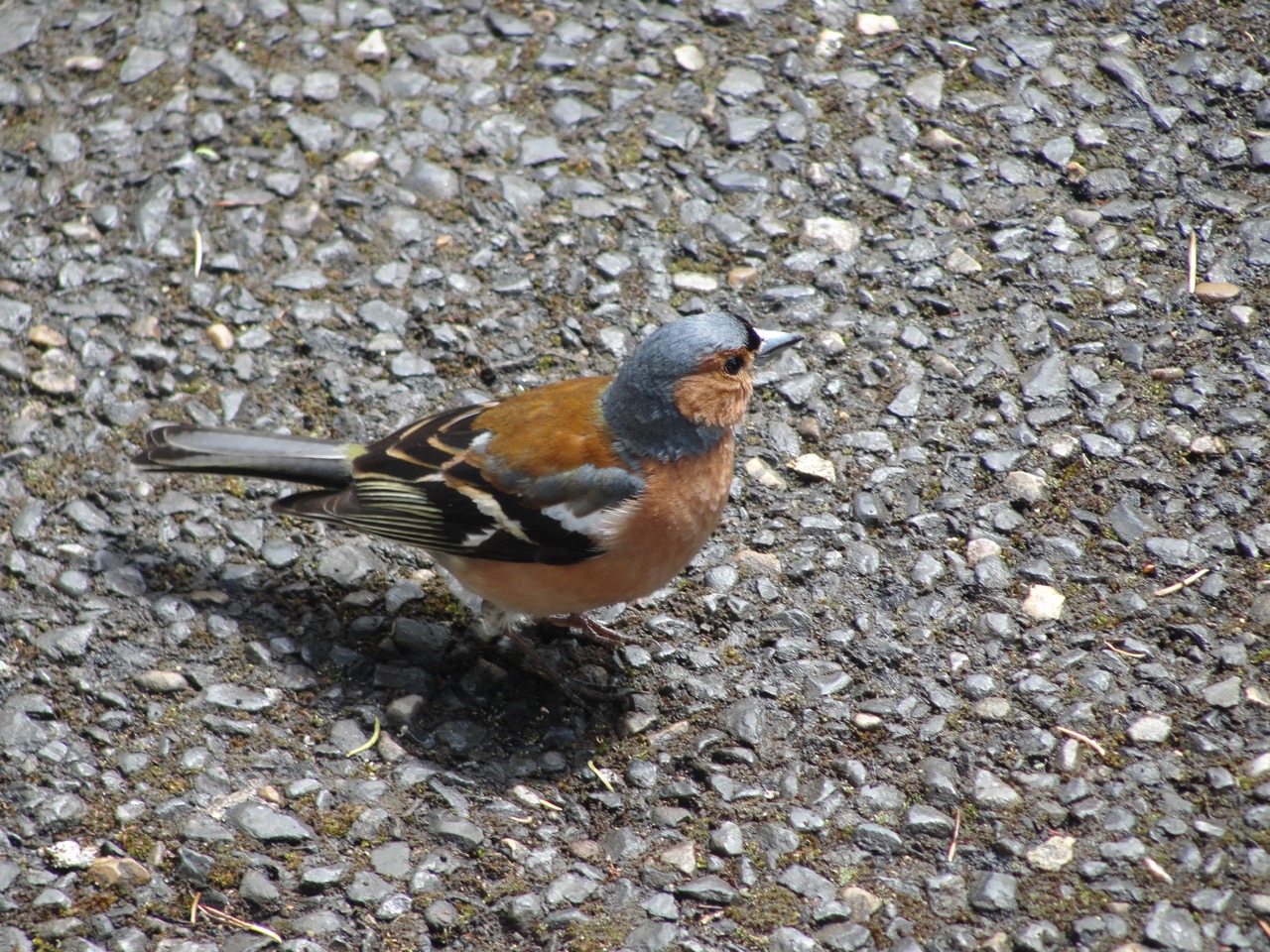
So was this beautiful little bird, the Chaffinch.

So was this beautiful little bird, the Chaffinch.

This fierce looking guy is a Jackdaw.

This fierce looking guy is a Jackdaw.