Pause for Consideration

Egrets MJ DSC02113_2I began this blog to share ideas that have been brewing in me for some time, which I had been gathering for a book about spirituality.  Each post was part of the third draft of the book.  The blog was structured based on the chapters of the book.  You can find out more about that on the about page of Finding Our Way Home.  

I have been thrilled to share these ideas in this format, and to connect with readers who have followed the blog, liked or commented on posts, and shared their own thoughts and feelings.  Thank you!  I have now posted everything in this draft of the book, and have come to a crossroads–what next?

Do I continue to blog on waking up to the earth, to each other, and to the mystery with new entries?  Or, do I take some time off to work on the book as book again, and see what I can do to turn this draft into the next draft?   Do I repost the original entries and share the book all over again in that way?  I have noticed that it is rare for someone to read a post, and then decide to read the rest of the blog.  It doesn’t really function like a book.  Yet it has its own appeal. There is a certain momentum that a blog creates, that is hard to let go of.

But in any case, I do need to pause, to have some space to listen to what the next steps will be.  And so I wanted to let you know what was brewing in me, and ask for your blessings on this writing journey.

We Are Already Connected

We have much farther to travel on this journey to renew our connection with the earth, with each other, and with the Mystery at the heart of life. There will be troubles to endure and beauty to behold. What we are becoming together is still to be revealed. This is a journey of our time, of our planet, of all the people and beings who live here together. Most importantly, we must remember that we are not facing these challenges alone. That is what I learn from the mushrooms. We are not alone. We are already connected to the earth, to Mystery, to each other. 

Because we are all connected, any small action that we take has the capacity to affect the wider network. When we begin to honor and celebrate our connection with even one other being on this planet, something reverberates through the whole web. When we express our gratitude for the water we drink, and do our part to preserve its cleanliness, we are nurturing the web of life. When we share our resources with those who have less, we are nurturing the web of life. When we listen, really listen to each other’s differences, we are nurturing the web of life. When we listen, really listen to the water, the wood, and the stone, we are nurturing the web of life.

We are trying to wake up to what already exists. We are learning to know the deep truth that we are already at home.

So I returned to the river, I returned to
the mountains. I asked for their hand in marriage again,
I begged—I begged to wed every object
and creature,
and when they accepted,
God was ever present in my arms.
                                           Meister Eckhart

Branches MJ DSC03740

Meister Eckhart quote is from “When I Was the Forest,” Love Poems From God: Twelve Sacred Voices from the East and West.

Helpers for Finding Our Way Home

Cardinal

Margy Dowzer Photo

There are beings all around us who want to be called upon, who want to help us in this work of returning to wholeness, this work of finding our way home. I have shared stories of a few of the beings who have helped me. The bright red cardinal singing its beautiful song. The four directions beech tree. The waters of lakes and streams. The ground, the very ground we walk upon, that holds me when all around me everything is falling apart.

Now that I know about the mycelial network, the ground feels more alive to me. But it was always true that something happened when I sat down upon the ground. If I sleep on the ground for a longer period of days, there is a glow that surrounds my body. I remember this from my time at the Women’s Peace Camp, where I was living in a tent for four months. I felt alive in some new way that I began to miss when I went back inside an apartment in Chicago. I forget it easily, but I feel more alive when I am outside.

Jesus has been such a helping presence too. First in my childhood and youth, when he was the one who loved me and who called me to the path of love. But even later, when I was leaving Christianity to follow the path of the Goddess, Jesus was a guide and a friend. If we can experience the divine within every being around us, the theological questions about Jesus seem less of a quandary. People have been asking, over the centuries, Was Jesus a man or a God? I would answer, Aren’t all of us both human and divine?

When Winifred Gallagher wrote about her quest for a spiritual home, she described the essential spiritual practice of the Christian tradition as the practice of love for everyone. She commented that it seemed a lot easier to meditate for an hour every day, than to have to practice love for everyone—it was not an easy alternative. It has been a deep tragedy that Christianity has been used to foster hate and oppression. Jesus stays in my life as the teacher of love, the human example of what divine love looks like.

I want you to know that we are not alone. In this time of great challenges and transitions, there are a host of beings who love life and want to help us find another way to live. As we reach out to them, they are reaching out to us. I understand that every person will have their own ways of connecting to earth, to each other, to Mystery. The mycelial network might not be the thing that helps you to experience the connection between all beings. You might not resonate with Jesus or with trees. But I encourage you to find out what it is that does help you. In these times we need critical thinking and activism and also mysticism.

Just as we can now sit in front of a plastic and metal panel and communicate with people across the world, so there are technologies to communicate across species and across dimensions. The threads of life weave us together in ways we have barely begun to imagine. But I know this: we belong here together and we need each other now more than ever. Poet Barbara Deming wrote:

Our own pulse beats in every stranger’s throat,
and also there within the flowered ground beneath our feet.
Teach us to listen:
We can hear it in water, in wood, and even in stone.
We are earth of this earth, and we are bone of its bone.
This is the prayer I sing.
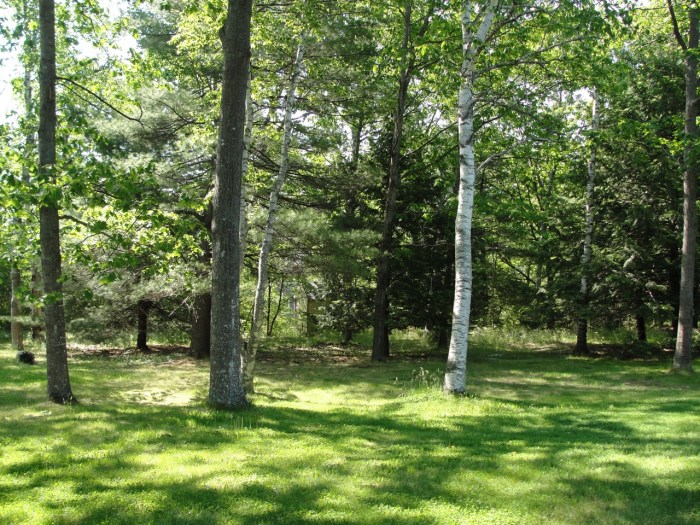
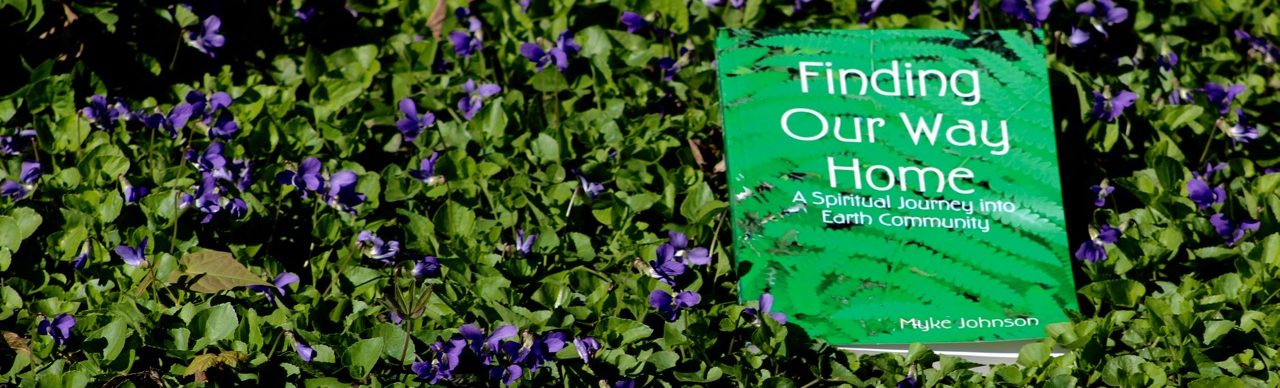
Green Back Yard DSC05265

A Bowl Full of the Universe

There are helpers and elders all around us; there is wisdom, if we open to it. There are animals and plants and fungal networks, and rivers and mountains and the wild winds. We can enter into relationship with all beings, and find help from them for the great struggles of our time. We have not been looking to our relatives and our ancestors for connection, and so we often are unaware of the powers that exist all around us. When Paula Gunn Allen speaks of consciousness as an attribute of being, it helps me to move beyond the narrow vision of my own culture, and claim my own experience of relationship with other beings.

Once, after the difficult ending to a relationship, I was rocking in a hammock on the back porch of the home I would soon have to leave. In that place of loneliness and unknown futures, I saw something like an image, felt a presence. Later I described it in a poem:

How can I trust my senses
in a moment full of loneliness
when the old dark woman appears
gray hair gathered in a bun in the back
squatting near a fire holding
a bowl full of the universe?

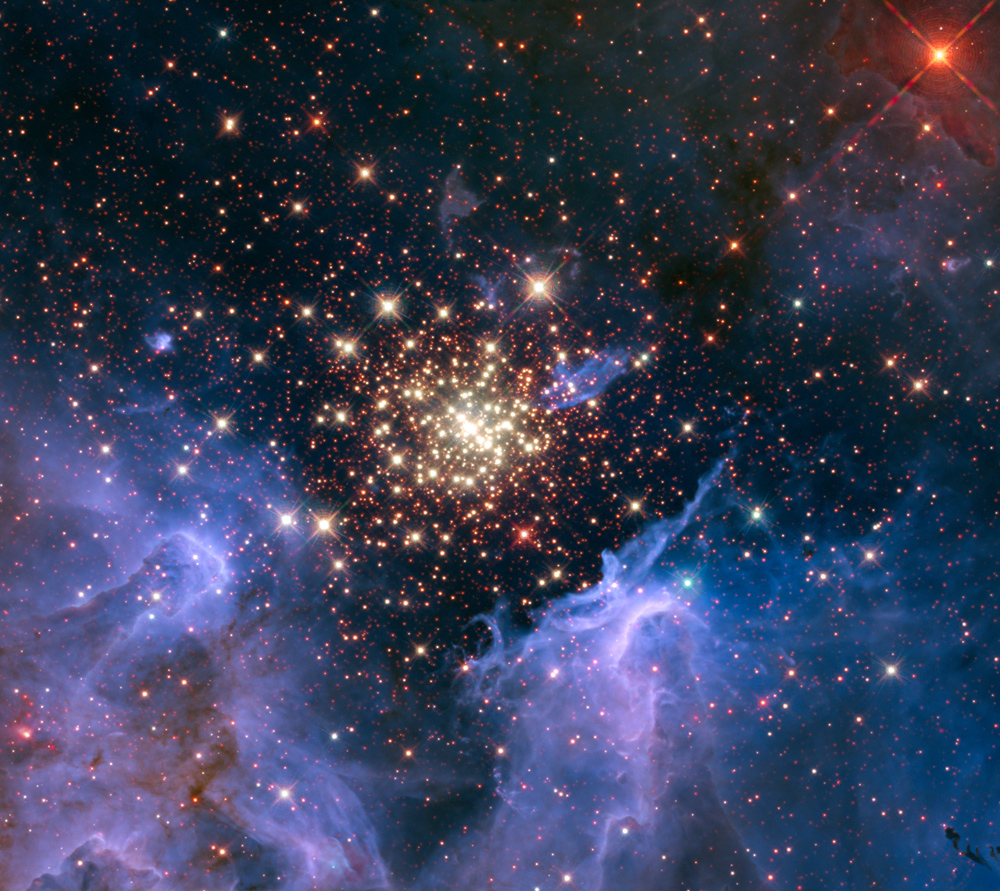
It was an ancient Innu grandmother, my ancient Innu grandmother from many generations ago, and in her hands she was holding a bowl. I could see the darkness and the stars swirling inside.

Image from the Hubble Telescope

Image from the Hubble Telescope

What is a bowl full of the universe? What did it mean? I am continuing to learn about that.

I know that a bowl is a container, a shape that can hold something. When we are facing the great mysteries of the universe, we need some sort of container. That might be the definition of a spiritual practice. We create a container to be able to connect with the earth, with each other, with Mystery. And even though the container is small, humble, it opens up to so much more―the whole universe is there, the oneness of everything, the larger whole of which we are a part, infinity.

The Innu grandmother says to me, “The universe is in your heart, and you are in the heart of the universe.”


How Mushrooms Can Help Us Save the World, Part Two

Photo by Margy Dowzer

Photo by Margy Dowzer

Paul Stamets, in Mycelium Running, How Mushrooms Can Help Us Save the World, talks about the Gaia hypothesis, which suggests “that the planet’s biosphere intelligently piloted its course to sustain and breed new life.” He goes on to say:

I see mycelium as the living network that manifests the natural intelligence imagined by Gaia theorists. The mycelium is an exposed sentient membrane, aware and responsive to changes in its environment. As hikers, deer or insects walk across these sensitive filamentous nets, they leave impressions, and mycelia sense and respond to these movements. A complex and resourceful structure for sharing information, mycelium can adapt and evolve through the ever-changing forces of nature.

In other words, he proposes that there is a vast intelligent aware network in the ground beneath our feet.

It makes me wonder, what is intelligence? Human beings consider ourselves to be the most intelligent species on earth. Our intelligence has given us the power to build nuclear weapons that can destroy life on earth. But we haven’t yet been able to figure out how to avoid war and oppression.

Stamets believes that the mycelium operates at a level of complexity that exceeds the computational powers of our most advanced supercomputers. He sees the mycelium as the earth’s natural Internet.

Traditional Mexican shamans and curanderas use certain mushrooms that create visions and healing. Stamets says that psychoactive mushrooms can cause such affects on the human mind because of the chemicals that we share in common.

On a very practical level, it has been discovered that mycelial mats have the capacity to break down petroleum products into harmless components; they can also clean up nerve gas agents, dioxin, plastics, and radioactive cesium. Paul Stamets believes that mycelia not only have “the ability to protect the environment but the intelligence to do it on purpose.” 

In my faith community we speak about respect for the interdependent web of all existence of which we are a part. Mycelial networks are a visceral manifestation of that web, and we can see and measure their beneficial support for plant life, and for our lives. Scientists like Stamets imagine that if we partner with mycelia, we would be able to greatly accelerate our work to repair the damage we have done to our environment. And that gives me hope for our future.

With these mysterious mycelial allies just beneath my feet, I had the courage to write that sermon about nuclear weapons, and their haunting mushroom clouds of death. And each time I remember this old and vast elemental wisdom, I feel less fear. I feel more clearly that I am part of a larger network of beings who are contributing to the health and wholeness of the planet. As we reach out to the beautiful web of all beings, those beings are also reaching out to us.

How Mushrooms Can Help Us Save the World, Part One

Let me tell you a story. In our congregation we have an auction every other year and one of the things auctioned off is a chance to request a sermon topic. One year the member who won that auction item requested that I talk about nuclear weapons. Well, sure, I said… and then I put the suggestion in my sermon topic folder. Each month as I chose sermon topics for the next month, I would see it there, but I wasn’t sure yet what I would do with it. What could I say about nuclear weapons?

I was reminded of the old story about President Calvin Coolidge. One Sunday, with his wife sick, he went to church alone. Upon his return she asked, “What did the pastor talk about?” Coolidge said, “Sin.” “And what did the minister say about sin?” “He was against it.” Well that’s about what I had for nuclear weapons: I was against them.

For me, a worship service is meant to be about hope. And nuclear weapons are one of the most terrifying dangers that we face in our world. The mushroom cloud image of the atomic bomb represents the potential destruction of most life on earth. So I have to admit, I didn’t feel like researching how bad things were, what new weapons were being created, or who might try to use them. And most of all, I wasn’t sure what I could say next. I never want to send people home from worship with more fear or despair than they came in with. So the topic sat in my folder, and I occasionally added an article or resource to the file; but each month, I’d say, I’ll do that one later.

How do we face the biggest dangers that threaten our world? What gives us courage and hope? Several months later, I came upon an article about mushrooms. It was an interview with Paul Stamets, about How Mushrooms Can Help Save the World.

I have to admit that I had never been a big fan of mushrooms. I tolerated their presence on pizza and in casserole dishes. I had never experimented with the psychedelic varieties back in college. A while ago, Margy started taking photos of mushrooms, as they popped up in our back yard, and that helped me to appreciate their strange and diverse beauty. But I had no idea.

I had no idea that mushrooms were the fruit of the mycelium, a vast underground network of fungal fibers that can stretch for miles. I had no idea that those fibers form one entity called a mycelial mat. I had no idea that a mycelial mat in eastern Oregon was considered by scientists to be the largest organism in the world. It covers twenty-two hundred acres and is more than two thousand years old.

I had no idea that mycelial networks regulate the nutrients of plant life in the forest, transferring sugars from tree species that have enough to other tree species that need more to survive. And most of all, I had no idea that mycelial networks communicate. To do this they use methods similar to those found in the nerve fibers in our own brains; they use some of the very same neurotransmitters that allow us to think.

Photo by Margy Dowzer

Photo by Margy Dowzer

Consciousness is an Attribute of Being

Remember the sky you were born under,
know each of the star’s stories…
Remember you are all people and that all people
are you.
Remember you are this universe and this
universe is you…
Remember.
                                   Joy Harjo

I think it was Laguna Pueblo author, Paula Gunn Allen, who said it, but now I can’t find the original quote. She said something like this: “Many people think of consciousness as an attribute of being human, but we know that consciousness is an attribute of being.”

I have been intrigued and transformed by her observation. What might it mean that human beings are not alone in perceiving, in awareness, in communication? Sometimes the scientists ask those questions about beings most like humans—the apes, the dolphins, the dogs. But beyond that—and not even merely for beings with eyes as we know them? I think about it. Trees are sensitive to light and plants turn toward the sun. Isn’t it less lonely to imagine that trees, birds, water, and stones are conscious, too.

Our culture has wanted to feel that human beings are unique. That we are above the rest of the created world, special. Even in our growing ecological understanding there is a sense that we are the privileged children of the universe. I think it was Carl Sagan who said it, though many ecologists have echoed the sentiment: “We are the universe becoming conscious of itself.” And it is a tremendous gift that we are able to perceive and explore and study the universe of which we are a part. But how do we know that we are the only ones? How do we dare to assume that we are the only ones? Why would we want to be the only ones?

I want to stay with this thought for a few days, and see what changes if we change that one assumption.  If we open to the idea that being itself includes consciousness.

Photo by Margy Dowzer

Photo by Margy Dowzer

New Ways to Think About Prayer

Larry Dossey is a physician who attempted to study prayer scientifically. He challenged the way we have been taught to think about prayer and God. He said people think of sending prayers “up there,” as if God were a spiritual communications satellite, granting or denying requests at whim. He felt the studies seem to point, not to the arbitrary power of that kind of God, but to some inherent power in the human being, something that linked us together beyond the limits of space and time.

That also helps with a problem raised by Episcopal Bishop John Spong. He asked, “Should prayer work?” When his wife had cancer, thousands of people prayed for her, since he was a well known bishop. She did live longer than expected, but he began to be troubled by the implications of it being due to all the prayers. Would this mean that God cared more to relieve the suffering of those who were lucky enough to be well connected? Suppose there were a poor sanitation worker, whose wife wasn’t high profile, or well-connected. Wouldn’t it be a capricious God who would treat her differently, according to worldly standards of human importance? It didn’t fit the kind of God in which he wanted to believe.

Perhaps we can let go of that idea of a God granting or denying requests at whim. If prayer is a way of opening up a connection to the larger whole, then it means that our energies are tuning in to larger energies, and we can be influenced by those energies, and also influence the energy of that whole, in subtle and significant ways. Rupert Sheldrake put it in terms of scientific field theory. Prayer could be understood as an activation of our energy within a larger field of energy, similar to how magnets exert an influence within a magnetic field.

Now, that is all very intellectually stated—but the experience is felt more in the heart. So it helps to be able to imagine the larger Mystery in some tangible form. We just need to be aware of the kind of image we choose. A capricious granter or denier of favors may leave us feeling betrayed and hurt. But other images feel more true to a transforming power of kindness.

We may imagine the Mystery as a God full of unconditional love, or imagine the power of the bountiful Earth. We might envision Jesus who fed the crowds, or a vast River of Life, or a great web of connection. Images are the best way to focus and direct energy. Our minds might be hesitant about such images, or think of them as childish. But I find I can understand with my mind that these images are images–symbols, metaphors–and yet assent with my heart to engage in a relationship to the Mystery through them. What images help you to engage in prayer?

Prayer is a kind of paying attention, a doorway, a silence. A recognition of smallness and largeness. Prayer creates a relationship between our individual self and the universe. Or rather, prayer creates an awareness of that relationship which already exists. Prayer opens up our experience of divine power manifesting within us. Right in the midst of our utter helplessness, we discover a limitless energy beyond our own personal effort.

Sunset Crescent MJ DSC09460

The thoughts from Bishop Spong were from an article in IONS (Institute of Noetic Sciences) #51 

Prayer Links our Smallness to the Larger Kindness

You can only pray what’s in your heart
so if your heart is being ripped from your chest
pray the tearing
if your heart is full of bitterness
pray it to the last dreg…
pray your heart into the great quiet hands that can hold it
like the small bird it is.
                                          Elizabeth Cunningham

Photo by Margy Dowzer

Photo by Margy Dowzer

The spiritual journey brings us into experience of our connection to the larger Mystery of which we are a part. But spirituality is not only about something we experience, something we receive with awe and gratitude. Spirituality is also about the power we hold to shape, to create, to cause change in the larger whole. Sometimes this power has been called prayer. I have also heard it called magic. But we don’t usually think of prayer as a power we hold. We usually think of prayer when we feel powerless, when we feel our need.

Why do we pray when we are in need? During our day to day lives, many of us often feel a sense of control over our lives, a sense that we are making choices, and things can be expected to turn out based on our work and our effort. But when things go wrong—when someone we love is ill, or we lose a job, or we face death, or a child is in trouble—we are confronted with our limits as human beings, we are face to face with our utter vulnerability. Think about the saddest or scariest or most difficult moments of our lives. In those difficult moments, we feel our smallness in this world.

Prayer is an appeal to the kindness in the universe, to the mysterious power of goodness and blessing that some call God. Prayer is a reaching out from that place of smallness to the larger reality in which we find ourselves. When we were very small, when we were children, we needed the help of someone larger than us. We relied on our parents or other caregivers for everything—our food, our shelter, our learning, our basic needs. That may have been a blessed experience or a painful one. And growing up in any situation, we feel a pull to become independent, to be able to do things for our selves.

As adults we are working out a balance: between giving and receiving, between helping others and getting help when we need it. But for many of us asking for help is difficult. Probably because we don’t really like to experience our vulnerability, our smallness. Possibly because we’ve had the experience of asking for help and not receiving it. In some settings in our world, to show our weakness might mean to be taken advantage of.

Prayer has this baggage attached to it. It requires that we face our vulnerability, and be willing to ask for help. Prayer is like letting go into a kind of floating—a hope that if we are in over our heads, the ocean will hold us up, rather than swallow us. Prayer opens a link from our smallness to the larger kindness in the universe.  The Sufi poet Rumi said,

Don’t do daily prayers like a bird pecking,
moving its head up and down.
Prayer is an egg.
Hatch out the total helplessness inside.

Fractals Teach Us That We Matter

Oak MJ DSC03499There is another reason why fractals matter. Fractals teach us that we matter. By becoming aware of the fractal patterns throughout the natural world, we can see that all things are connected. The circulatory system of the human body branches out like the limbs on a tree. The patterns of waves on the shoreline are similar to the patterns of radio waves beaming through space. Even though we are infinitely small in comparison with the rest of the universe, what happens on a small scale reflects what is happening on a larger scale.

Some of these patterns may seem to be unchanging and eternal, but there is also unpredictability in the system. Scientists use the word chaos to describe this unpredictable behavior. Without chaos, there could be no creativity, because creativity means the emergence of something new and unpredicted.

Perhaps you may have heard of the “butterfly effect.” This phrase was used by Edward Lorenz to describe the impossibility of predicting the weather, despite creating complex computer models that looked at multiple variables. Lorenz found that a small change in the initial conditions would produce large changes when the patterned cycles repeated many times. It was expressed in metaphor as the butterfly effect: a butterfly flapping its wings in South America can change the weather in Maine.

We have creative power as human beings. That means that what we do within our patterns has an effect on the rest of the fractal network. We are part of an interdependent web of all that exists. If we change a pattern in our lives, it reverberates through the rest of the web; it ripples out like a stone thrown into a pond. We have the power to create more beauty, more love, more truth, and more goodness in the web. We never really know what greater effect we will have on the future of the universe. We cannot control the ripples that flow out. But human beings for centuries have observed that acts of kindness multiply into more kindness in the world.

There is a fable told by the ancient Greek storyteller Aesop:

A sleeping lion was awakened one morning by a mouse running over his face. The lion became so angry that he grabbed the little mouse in his paws and was about to eat him up. The terrified mouse begged for his life. “Please let me go,” he cried. “If you do, one day I will repay you for your kindness.” The idea of such an insignificant little creature ever being able to do anything for him amused the lion so much that he laughed out loud and good humouredly let the mouse go.

Then, one day the lion got caught in a snare set by a hunter and was unable to get himself free. The mouse heard and recognized the lion’s angry roars and ran to the spot where he was. He went right to work gnawing at the ropes with his teeth. Soon the lion was set free. “You laughed at me when I promised to repay you. But now you see that even a little mouse can help a lion.” So remember: no act of kindness, however small, is ever wasted.

What we do matters. No matter how small we are, we are intimately connected to the vast universe. We are part of its beauty and its creativity and its love. The patterns in the stars live in the patterns of our hearts. We do not walk alone. These are the lessons I learn from the beautiful geometry brought into the world by Benoit Mandelbrot. May these fractal mysteries teach us ever to be mindful of our power.