What Is Hidden

gray day photo, snow covered ground, dark green bird feeder on pole, bush branches nearby, faintly visible tracks in the snow

At 4 a.m. this morning, I woke in the dark of the night to pee. On the way back to bed, I saw a shadow outside the window. It was a bright night, with white snow on the ground, and a clouded sky backlit by a full moon. I opened the curtain and saw that the shadow was a small deer by the bird feeder. It was investigating the seeds on the ground below, and perhaps the water in the heated bird bath. Then it walked toward me and made its way through the orchard, passing over to the side of the house and then toward the road.

So beautiful. Things that are hidden, and then revealed. I had seen deer tracks since the snow fell a few days ago, but we rarely see the creatures themselves as they pass through our yard. What a thing to be awake at 4, and gazing toward the windows. As I lay back down in bed, I wanted to remember the blessing of the moment, not lose it to sleep. So I fed phrases to my mind, like “that which is hidden” and made associations, like, “I should pull up the small green fence around the licorice patch, so the deer won’t get caught in it if the snow covers it.” I took this photo this morning. Of course, the deer is gone, hidden again. But some tracks remain, reminding me of all that I cannot see.

All of this also made me think of a photo I recently discovered, that I had never seen before. One of my relatives had posted it. It is a picture of my grandmother Yvonne (née Tremblay), with grandfather John Hochreiter and their two oldest children, about 1921. I had seen a photo of Yvonne when she married, in 1916, and a photo when she was holding me as a baby, sometime before she died in June of 1954. But this one brought to life a young woman in her early twenties, surrounding by her family. So much of her life was hidden from me, not by any conscious decision by anyone. My mother was the youngest of eight children, so perhaps this time before her birth was hidden from her as well. What a gift to get a small glimpse into their lives, over one hundred years ago now.
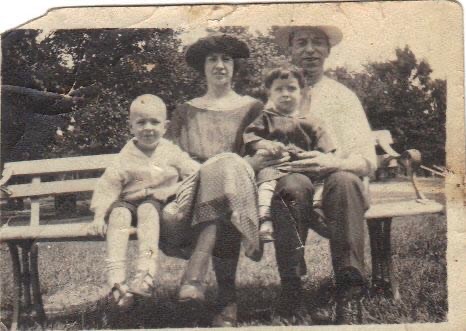
sepia toned photo of young woman and man seated on a park bench, holding two boys, one next to woman on the bench, and one on man's lap.

Last night before I fell asleep I prayed to the Spirits I have known. The moon, the cardinals, the frogs, mother Earth. Is seeing the deer a sign of connection? That my prayers are heard? Spirits, thank you for the gift of seeing that which is usually hidden. May we always remember that so much is hidden.

Living lying down

mussed up light blue sheet with two cat paws peeking out, black and white fur

I’ve been trying to figure out what it all means. I mean my life these days. What does it mean to be ill, to be mostly fatigued, to be compelled to rest most of the hours of my days? I wasn’t sure what photo could go with this question, and then I happened to see this photo of Billie from five years ago, her body hidden under a sheet on the bed, just her little paws sticking out. Somehow that fits. These days I am mostly hidden, lying down somewhere, sometimes under a sheet, and just a tiny part of me emerging into the world now and then.

I used to admire the elders who were out on the picket lines into their eighties and nineties. It makes me sad, but I don’t think that can be me. I still care about the things I used to care about. I hunger for justice, for human rights, for kindness, for peace. I still rage against cruelty, oppression, violence, and genocide. I scroll on Facebook and try to bear witness to all that is happening out there. I share posts that document the atrocities, in the hope that bearing witness is better than silence. I share posts that document the resistance, in order to foster hope in the face of so much despair. But is that diminished activism what my life now is meant to be about? Is it what it means?

Spoon theory is a method of managing energy for many people with disabilities and/or chronic illness–if we only have so many spoonfuls of energy, we have to ration our activities to match the spoons we have. Lately I am always running out of spoons before I can finish the tasks of daily living. I am lucky if I can keep up with the dishes in the kitchen sink, keep up with cleaning out the litter box for the cats, keep up with watering the vegetables I was so bold to plant. Are these tasks of daily living what my life means now? Do I need to cultivate that Zen approach to being fully present in each moment, however mundane?

Meanwhile, I spend many hours lying on the couch watching tv shows on Roku. Sometimes I have to manage my energy for that too. I can’t handle too much drama. British mysteries are about right, especially if I have seen them before and they are well done. Nature shows are usually okay, unless there is too much about how we are destroying it. Sometimes I nap during the shows. Lately, I’ve been watching “Would I lie to you?” on Britbox for laughs. It all feels rather pathetic actually, but this is the unvarnished truth.

I don’t have the answers to my questions. I don’t know what it all means. But I feel like I have to wrestle with this reality I am living in, wrestle with the meaning, because that is also still who I am, a wrestler-with-meaning. I can look out on the world, but I must also look into this intimate space under the covers. I believe that each human being has inherent dignity, each life has ultimate value. I believe that we are all connected. So how do I find the ultimate value in this life of mine, right now, not based on what I have done or who I have been, but right now. Still able to write sometimes, but about to lie down for the rest of the day.

Revealing the hidden

deer tracks in snow

One thing I love about snow is the way it reveals all sorts of hidden activities. We haven’t seen any deer on our land for quite a long time, but after the snow storms of the last weeks, we found their tracks making a path through the yard. The deer have been quietly passing through in the dark. They have come to drink the water that we keep thawed for the birds, and come to eat the sunflower seeds scattered near the bird feeder. They have nibbled the yew bushes in front of our windows.

There is so much that is hidden that is only revealed through storms. There is so much that we cannot see, and may never know. In the face of all that is coming undone in our country, in the face of all that is being destroyed, this gives me a kind of hope. Not optimism or naivety. I know that there is a coup happening right now against the ideals of democracy we have cherished, ideals we have tried to expand and perfect. Human dignity, diversity, equity, inclusion. Compassion for the vulnerable. I feel anxiety and rage in the face of the dangers that hang over us.

But as Rebecca Solnit says, “Hope locates itself in the premises that we don’t know what will happen and that in the spaciousness of uncertainty is room to act.” The deer tracks remind me that, in truth, we don’t even know what is happening right now, right outside our windows in the dark. We don’t know what may be happening that will change the trajectory of the future.

The deer tracks remind me that we are not alone in our yard, our home is the home of many other beings, those we can see, and those who are invisible to us. And just so, we are not alone in our struggles. In ways that we cannot begin to understand, we are all connected. That interconnection means that even our small actions of love and kindness may have beautiful consequences, and there are others unknown to us whose actions may bring liberation to all. May it be so!

Three new little frogs

We’ve had a string of very hot weather and then lots of rain, and I hadn’t seen our three bullfrogs in the pond for a while. I wondered what that might indicate? Today, I went out and a pond lily was blooming, and there were three new tiny green frogs sitting on lily pads. Who knows where they came from?

I woke this morning feeling heavy and sad with all the problems in the world, with isolation, with a lack of direction or purpose. So I brought myself outside and this little surprise happened and it lifted my spirits. I am grateful for that.

More dragonflies

Yesterday, I went over to the pond in the morning, and saw nine or ten dragonfly nymphs who had climbed up onto leaves. I didn’t see them climbing, but they were holding on to the leaves, and slowly emerging from the husk of their nymph bodies. They were on the sweet flag, the blue flag iris, and the arrowhead plants. They say that nymphs live for two years in the water, so perhaps these were deposited as eggs in the pond two years ago and survived over winters, and now were coming of age all together. Sometimes, the leaf stalks they were clinging to would shake a little, not from the wind, but from the effort of their struggle. Is the photo from later exactly the same, or did it progress a little bit more? Truthfully, I can’t tell.

There was an adult dragonfly hovering around close by, it could have been the same one I had seen earlier in the summer. I wondered if it was watching over the nymphs protectively, or perhaps threatened by them, or interested in mating with them? It did stay close. A beautiful creature with black and white spots on its wings and a mostly gray body with black eyes.

I wasn’t able to watch all day, and then we had some rain in the evening. This morning, when I went back, it seemed like all of the creatures on the leaves were just husks of nymph bodies, and there was a new dragonfly at the pond. Turquoise eyes, mostly clear wings, white tail with a black end.

All of it felt quite magical, and also mysterious. An accident that I saw it at all, and yet amazing that I saw some of the process. In Passamaquoddy, the word for dragonfly is “apuciqaha.” According to my teacher, “apuci” means inside out, and “iqaha” refers to the way they fly in any direction. Seeing the adults emerge from inside of the bodies of the nymphs gave me a new sense of the meaning of “inside out.”

Once again, I see how the pond is home to all sorts of life that lives by its own rhythms, and what a privilege to witness some small aspect of that ongoing life.

Fallen Spruce

It is raining here in the northeast and the wind is blowing mightily, with gusts past 50 miles per hour. This healthy spruce tree suddenly fell down from its very roots. I was inside and heard something, but didn’t realize what had happened until I poked my nose out the door. Thankfully, it just missed our deck! And our house! 

I found this little squirrel within the branches, perched on a cherry tree branch, probably wondering what the heck just happened! And also eating a seed. The spruces are like squirrel highways over here.

I went fully outside into the rain to survey the damage and was amazed by how we lucked out. The spruce landed in the orchard, tucked neatly between the trees. Some orchard tree branches are bent or broken, but not the trunks. Also, it could have hit our house if it had fallen in a different direction, but it did not.

Earlier, I had been worrying about an entirely different spruce–a dead one with a squirrels nest. That one is still standing so far, but this one took me by surprise. The whole root ball had come out of the ground. This photo is from that root, from the bottom of the tree, looking to the top, where you can see how it landed between the white painted trunks of apple and peach. The patterns of the branches are so beautiful, even in its dying.

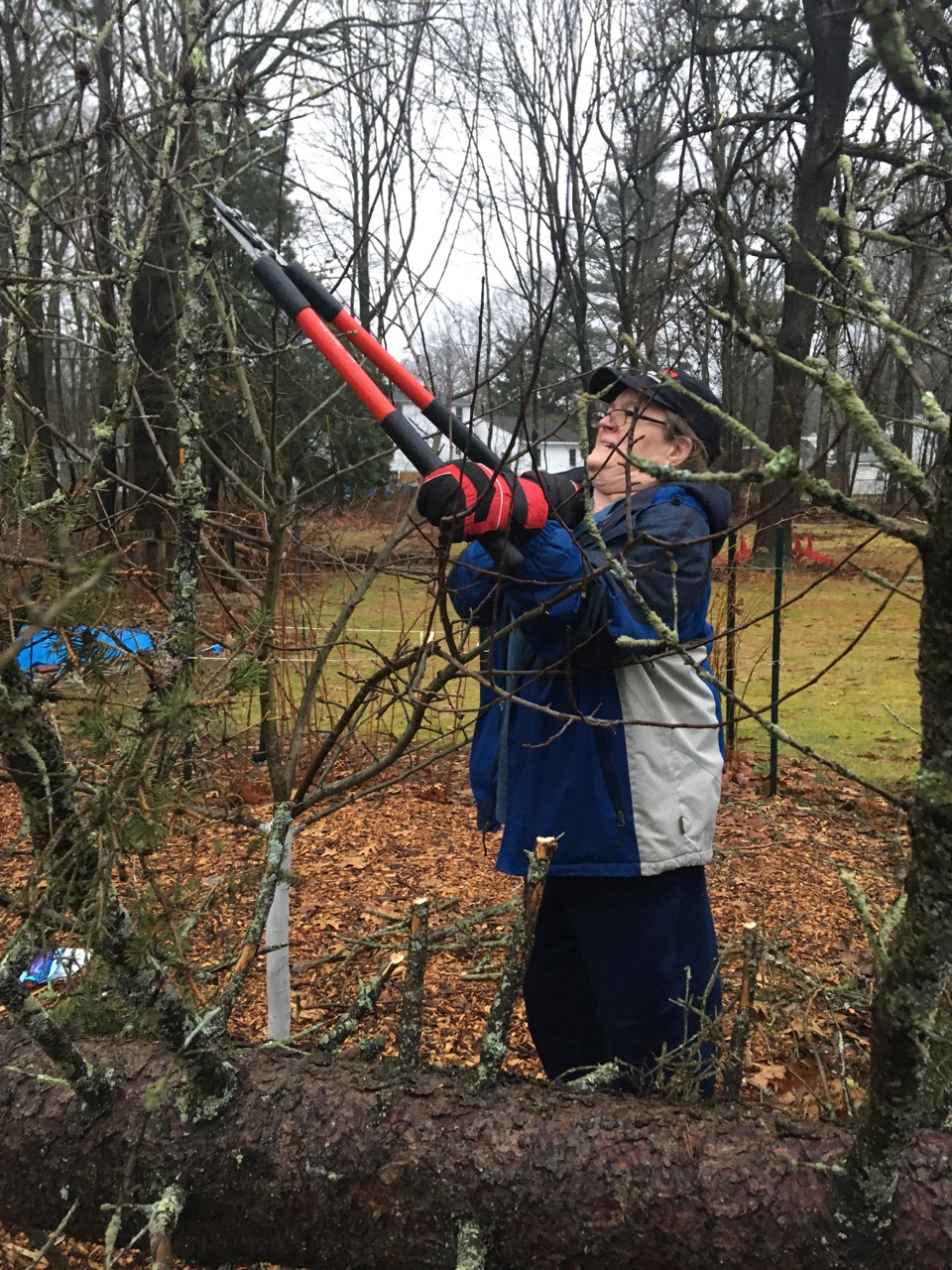
I don’t know how much damage the orchard trees suffered. When Margy got home from an appointment, she went out in the rain immediately to begin cutting spruce branches that were interfering with orchard tree branches. I guess that is something else that I love about her. Going outside in all sorts of weather, and caring about trees. I think if the branches can be freed from where they are bent, they might have a better chance of recovering.

Meanwhile, I am inside thinking about how vulnerable we all are to the wind and weather. How even with so much care put into this orchard, it could be wiped out with a storm. Or a tree could fall on our house. I tend to worry, to imagining worst case scenarios. Yet, I have been so blessed in so many ways, protected from harm by what magic? I can’t put it on “being blessed,” because I don’t think people who face tragedy or catastrophe do so because of not “being blessed.” (I don’t think people being killed in Gaza are outside of the view of that Mystery who blesses all, and who is especially with those who are suffering.)

Luck? Fate? I am reminded of the Chinese story about a farmer whose horse escaped into the hills. When his neighbors came by to sympathize with the old man over his bad luck, the farmer replied, “Bad luck? Good luck? Who knows?” The next day, the horse returned with a beautiful wild stallion. This time the neighbors congratulated the farmer on his good luck. His reply was, “Good luck? Bad luck? Who knows?” Then, when the farmer’s son was attempting to tame the stallion, he fell off its back and broke his leg. Everyone thought this very bad luck. But the farmer again replied, “Bad luck? Good luck? Who knows?”

Some weeks later, the army marched into the village and conscripted every able-bodied youth they found there. When they saw the farmer’s son with his broken leg, they let him off. Now was that good luck or bad luck? Who knows?

When a tree falls I am reminded that the world we live in is much bigger than we can understand or imagine. 

Robins at Lammas

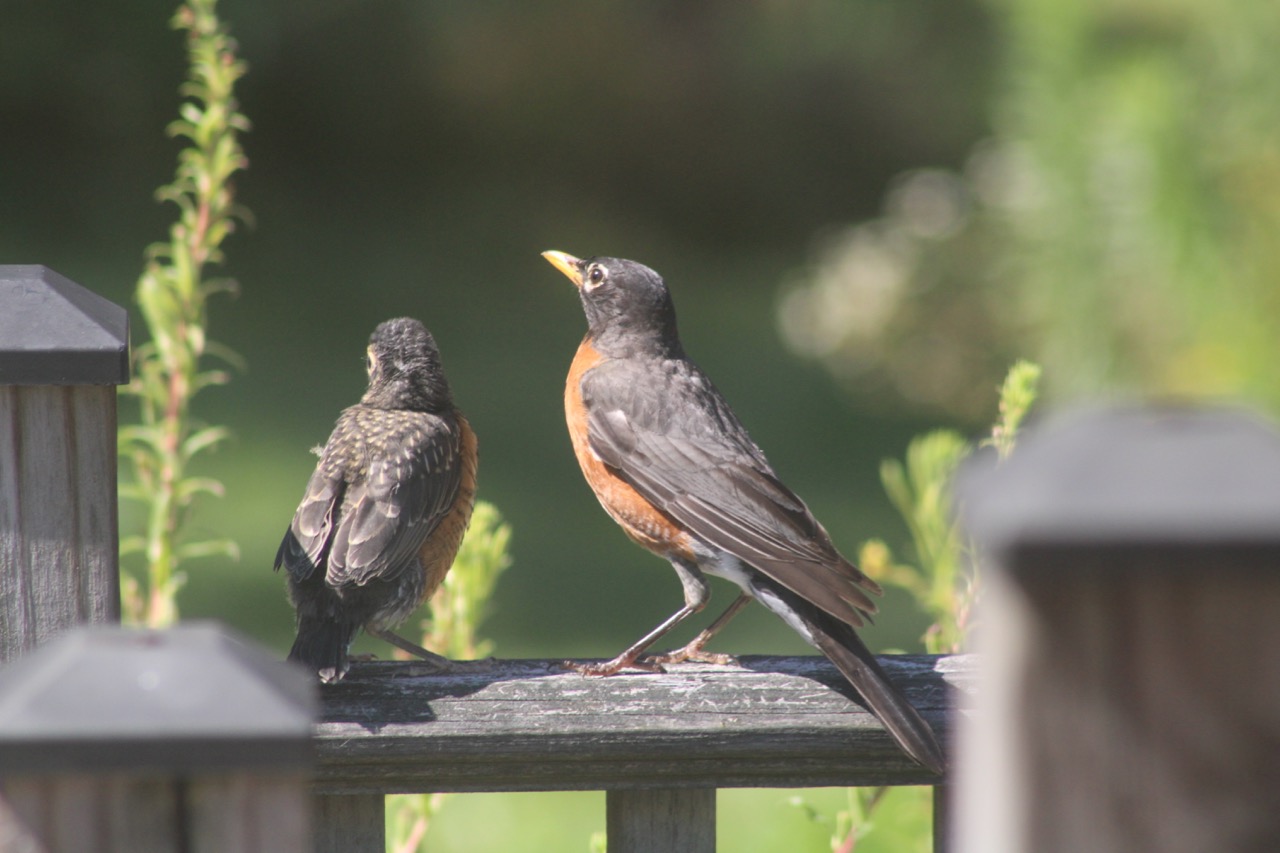
Fledgling robin looking at mother robin who is looking back, perched on gray wooden railing, greenery behind.
Fledgling robin with mom on the deck railing.

Our Lammas harvest festival blessing was being able to watch the fledging of the robins’ third brood of three chicks. (That makes nine chicks all together!) They had been getting active the last couple days so we were expecting it. But what a nice surprise to look out the window and see the first fledgling perched all alone on the deck railing, looking around at the big wide world for the first time.

Fledgling robin alone on gray deck railing looking out to greener beyond.

They probably saw their mother hopping on the ground further in the back yard. (We did too.) Then the mother flew up next to it on the railing for encouragement. (That was photo number one). After looking at each other, they each looked out beyond, and then the mother flew off, and the baby soon followed, alighting high in the hazelnut bushes.

Fledgling and mother robin on gray wooden deck railing looking away from camera toward greenery beyond.

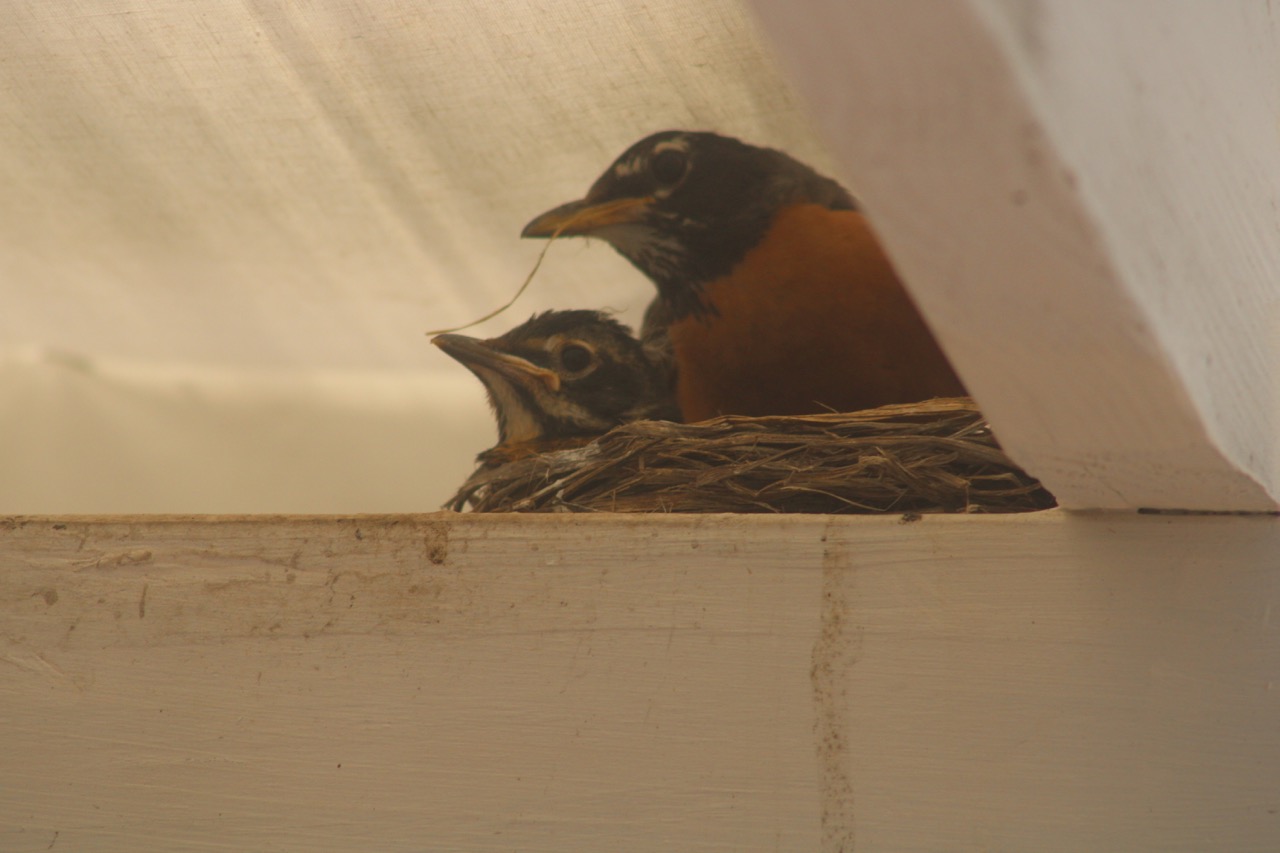
The other two remained in the nest for a little while, but soon the second one flew out toward the orchard. Finally there was just one left. I wandered around outside, but the parents were chirping at me, their warning calls. I saw the parent robins also diving and shrieking at squirrels in the pitch pine tree branches, and angrily calling at a cardinal who came into the cherry tree–too close as far as the robins were concerned. Back inside for a while, I saw the dad robin come to the nest–with a piece of grass in his beak, but I didn’t see food. He sat with the third baby for a while, so tender. After he left, the baby shrunk down into the nest, only its beak visible. Hiding mode.

Baby robin, just head showing above brown grassy nest, with dad robin above and behind in nest, between white painted beams underneath and on side.

I had to go out in the orchard to do some mulching, and then I sat at the patio table. I could hear number three chirping every so often from the nest, their head visible again, and then I’d hear another chirp from the direction of the hazelnut bushes. When I came back inside, I kept an eye on them through the windows. They got out of the nest finally, and hopped along the beam to the other side. While the first fledgling had seem so confident and proud of itself, this one seemed quite scared about jumping from its safe little home. But everybody had left. It huddled up next to the opposite side beam.

Baby robin visible from belly up, on white beam, next to side beam, looking toward the camera.

Finally, the little one started to stretch their legs, and move their wings a tiny bit. They moved up to the very edge of the beam. They hovered there for quite a while. One of the parents came back to the deck railing down below and behind the nest. I also saw a female gold finch perched on the railing in front of the nest. Not sure what that was about. A chipmunk was scurrying below on the patio. I stood still next to the back windows and just watched–I didn’t take any more photos. The gold finch left, the parent left, the chipmunk left. The little one perched on the edge. Then they bravely jumped off.

I heard a flutter of wings against the screen window of our music room, just to the left of the deck out of my sight. I went out the door to observe, and saw that the baby was hanging by one claw stuck in the screen, and flapping their wings against it. I walked to the edge of the deck, reached over and cupped my hands gently around the baby, careful to contain their wings, lifted them to release the claw. I let go and they flew down to the lemon balm patch. Be still my heart. They slowly hopped out onto the patio, hopped over some garden hoses, making their way over to the mulched area under the cherry tree. They hopped into the grass behind, and finally they flew up over the grass into the trees.

And then the nest was empty. They say that robins raise two or three broods a season, and if that is true, they may be done with the nest for now. They’ll feed the babies for a few more weeks out in the bushes and trees. I wonder how all nine of their children are doing? Did they all survive? I hope they are thriving. We don’t see them once they leave the nest, so we never know.

I feel a sense of joy, and a sense of loss, all at the same time. I feel grateful for the privilege to observe the robin family, and for the moments I was able to capture in photos. I feel sad to look out the window and see them gone. I am also grateful that I was able to give them a little shade from the sun, and maybe that helped.

Humble

Red rain barrel in front of house, heat pump seen on upper right, behind oregano plants all over the place, green with white flowers
Overgrown oregano all around the rain barrels and heat pump.

I love sharing photos of beauty in the yard. But it is harder to know how to share the challenges and failures. I actually feel like a failed gardener right now. Yes, there are little harvests, yes there are elements of beauty. But there is so much that is overwhelming. I don’t enjoy “weeding” which seems to be what real gardeners often talk about enjoying. A weed is merely a wrong plant in the wrong place. We make further distinctions to talk about invasive plants that are harmful to the local ecosystem. And there are also native plants that are aggressive in the ecosystem.

One of my overwhelming senses of failure comes from the oregano that is spreading all over the orchard. When I originally planted some donated oregano as a companion plant to the orchard trees, I had no idea how it would take over. Oregano is a tasty herb, not native, but useful, and the bees love the flowers; I’ve dried some of the plant for seasoning. Last year as it spread, I thought, okay, just let it go where it wants. This year I tried taking out a tiny patch using a garden fork. Its roots form a thick mat under the soil. Even a tiny patch was challenging to remove. I’ve lately taken the mower through the orchard a few times. With the rain and heat inhibiting our outdoor time this summer, I can’t imagine how to get it under control. I hate the feeling of needing to get a plant under control.

Everything in the yard is ragged and overwhelming. For each native plant I newly discover and appreciate (like the evening primrose that the goldfinches adore), there is another tall unknown plant that I have no idea about. The orchard trees have to be pruned each year, and face challenges from mysterious pests and diseases. Will the Lapins cherry survive its challenges?

Perhaps in all of this, I discover that I don’t enjoy tending and caring for this patch of earth the way I thought I would? I am not good at gardening? I’ll never be good at harvesting much food? I want to give up sometimes, but how can I? Everything is right outside my door. I acknowledge that it is much more difficult for all gardeners because of the climate catastrophe of our times. I realize that I don’t have teachers to show me how–mostly just books really, and the internet. I don’t think gardening was meant to be so all alone.

But I have made this commitment to a spiritual journey into earth community. These overwhelming challenges are part of that journey too. So what can I do? This morning, I took myself out to our new screen tent, placed a blanket on the ground, and sat on the ground. It has been a while since I have done that. At our old yard, I used to sit on the ground in a screen tent almost every day. Lately, instead, I have been walking around looking at things that need tending. Today, I sat on the ground and let the ground tend to me. I turned to each of the four directions, to honor the powers of east, south, west, and north–and the powers of the earth below, the sky above, the spirit within.

The sun shining through in the eastern sky, from within the screen tent.

It reminds me that I am small, and these powers are large. Spirit is large. They are my teachers and carers. I hear the cardinal singing from the tall trees. Truthfully, I am not really the one who tends the earth, the earth is the one who tends to me.

I am remembering a chant song I learned from a friend in English, and then heard later in Wolastoqey; As far as I can discern, it originated from Wolastoq people, and has since been performed by other indigenous people as well. My friends and I sang it something like this, in several verses substituting the word “creator” with all manner of beings, such as trees, ancestors, water, stars, dragonflies, children–all the creatures around us.

We've got to humble ourselves in the eyes of the creator, we've got to bend down low.
We've got to humble ourselves in the eyes of the creator, we've got to know what they know.
We can raise each other up, higher and higher. We can raise each other up.

Perhaps the failures are also teachers, a reminder of our ultimate dependence, an opening into something more mysterious and powerful in whose eyes we are seen and held.

And they’re gone!

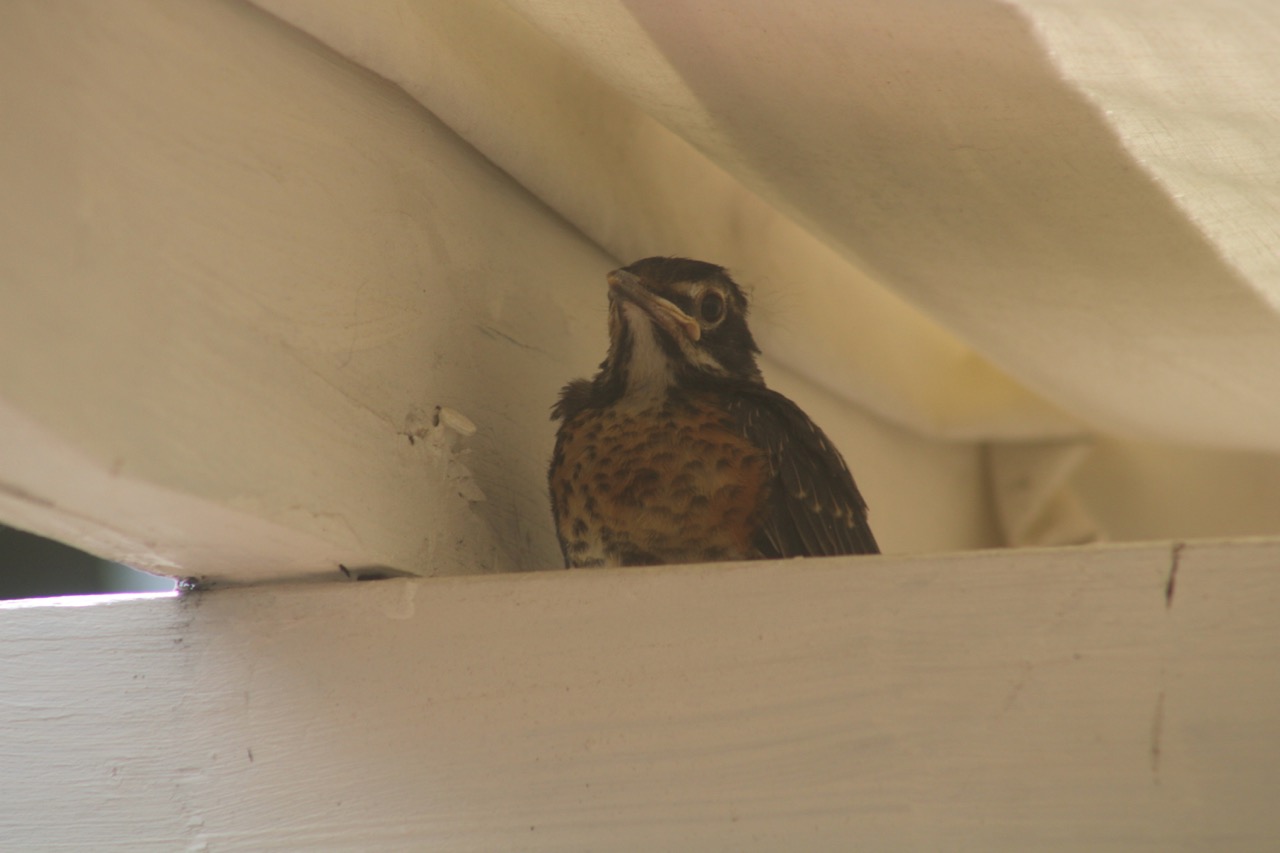
Fledgling robin with stripy breast feathers, perched on white beam, under shade cloth.
Baby robin perched boldly on the beam.

During the night the two baby robins were back cozy in the nest. This morning, they came back out on the beam, one of them perching boldly on the edge. I was sitting at the kitchen table watching through the window, and then a few minutes passed by and suddenly they were gone! I went outside on the porch, and then saw a small bird fly from the ground in the nearby orchard up to the trees by the fence. I was in a Zoom meeting, so I went back to do that for another 30 minutes, then went outside to look for the babies–I guess I should call them fledglings now. After walking around in the orchard a bit, I saw one of the parent robins in a tree near the fence.

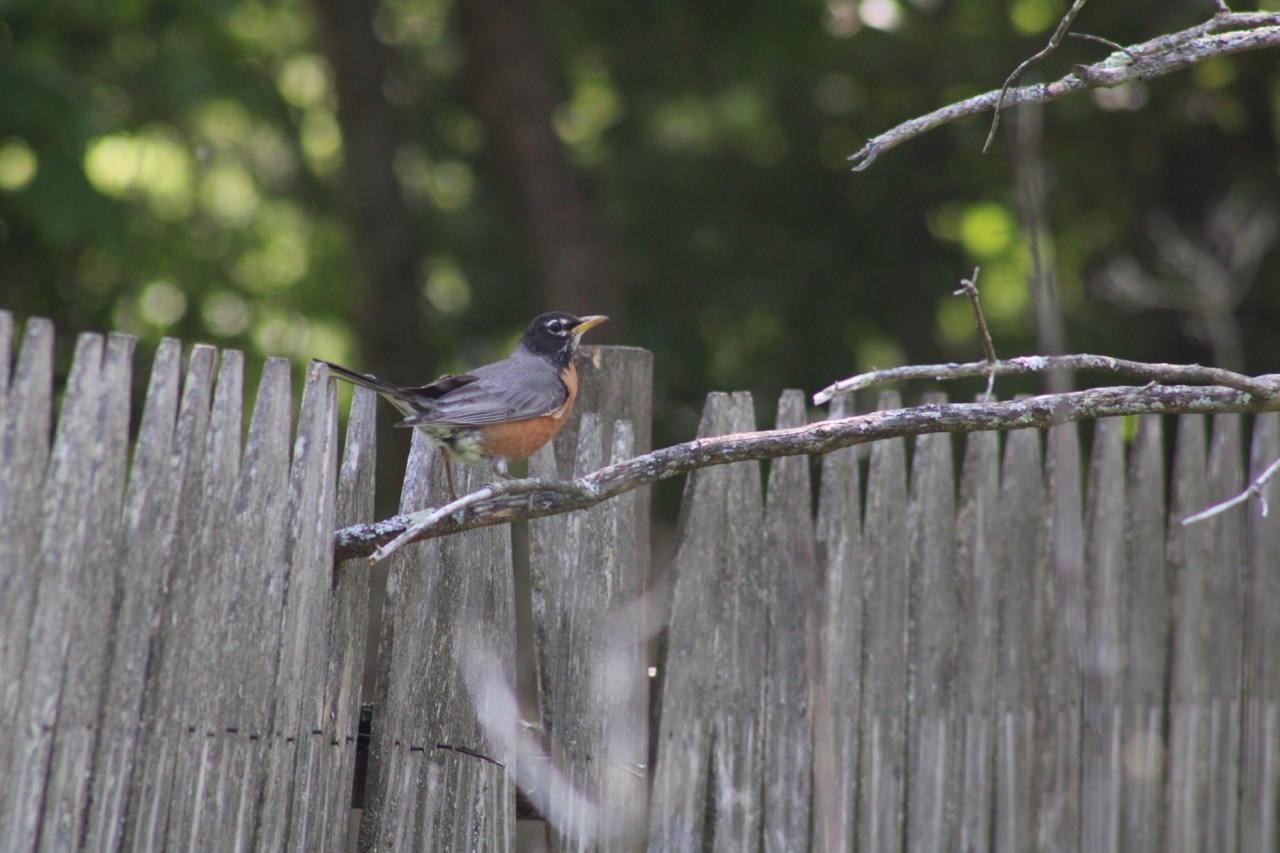
Robin on a bare gray branch in front of a gray wooden fence, with blurred green leaves in the background.
Parent robin near fence.

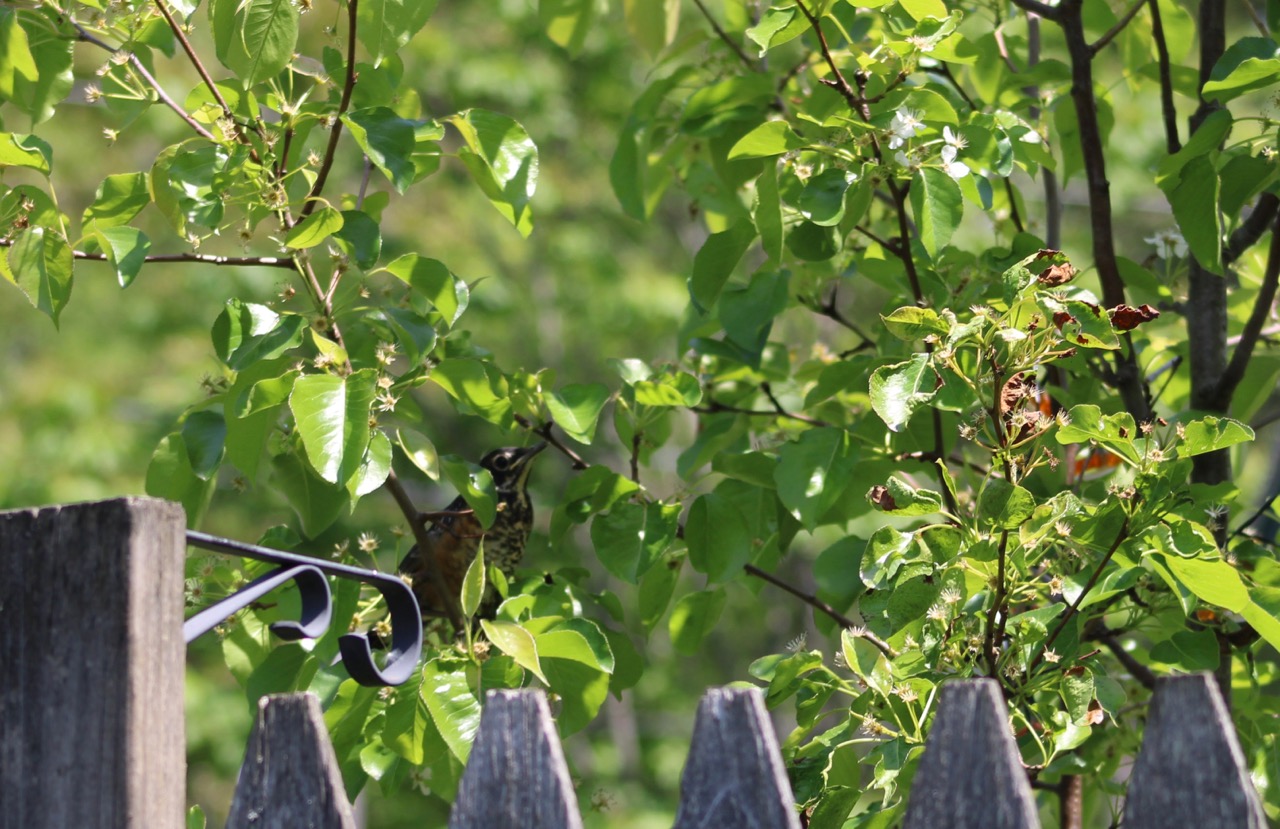
So I looked all over near the fence, and then stood on a little block of wood to see over the fence. There it was! I saw one of them in our neighbor’s young pear tree. It was being quite still and quiet, hiding among the leaves.

Tips of wooden fence showing at bottom, with green leafed tree above, and hidden among the leaves, a baby robin.
Robin fledgling hidden in the leaves of the pear tree over the fence.
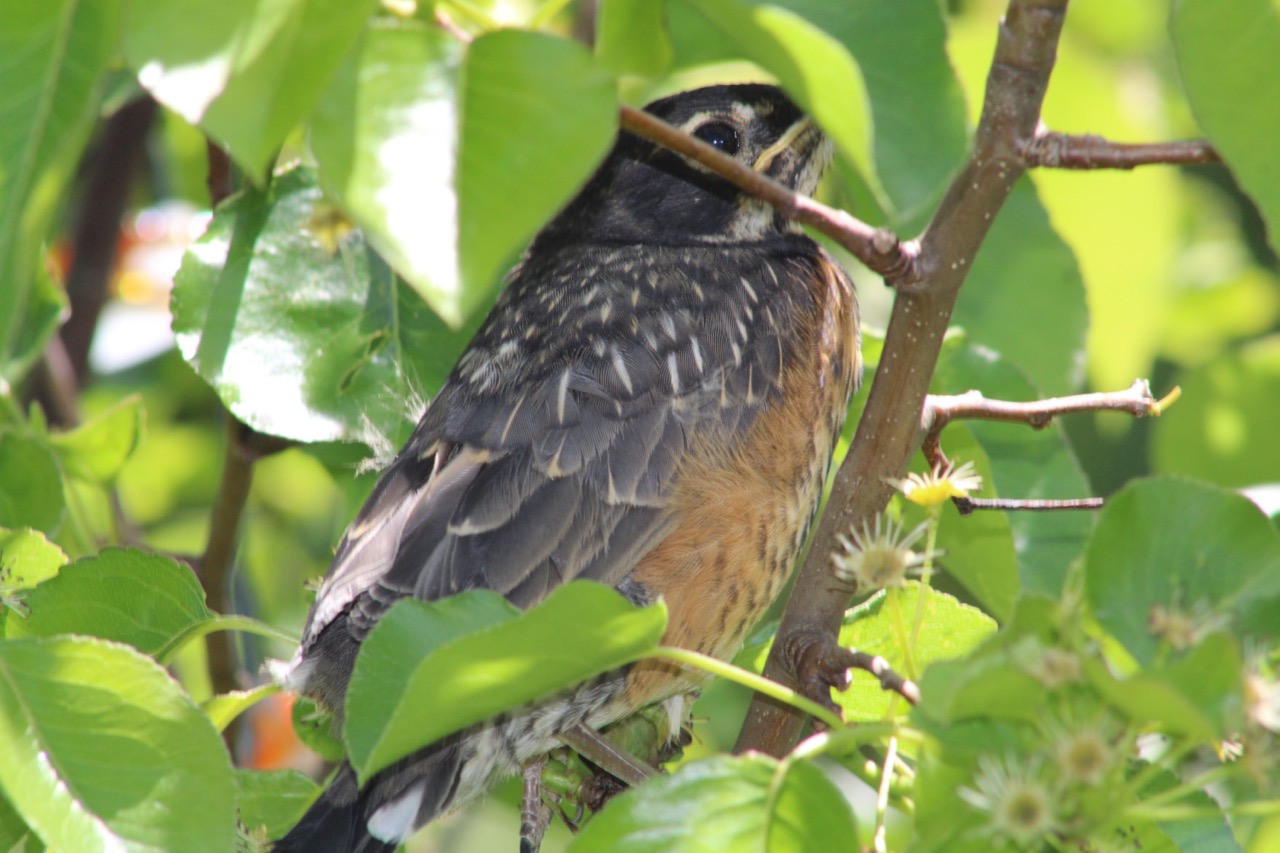
Close up of fledgling robin hidden among green leaves on branch of pear tree.
Close up of fledgling robin

I was reassured to see this one on its perch in the tree. I didn’t find the other one, but we have so many trees around our yard that it could be anywhere. When I went back to the fence a couple hours later, this one was gone too. And just like that, no more baby robins on our porch, at least for now. I am assuming they won’t come back to the nest. It has been one month since the first egg was laid. Most of that time they were hidden from sight, but every sighting was a joy. And I am so happy that the robin parents finally fledged their first youngsters!

E-book Is Now Available!

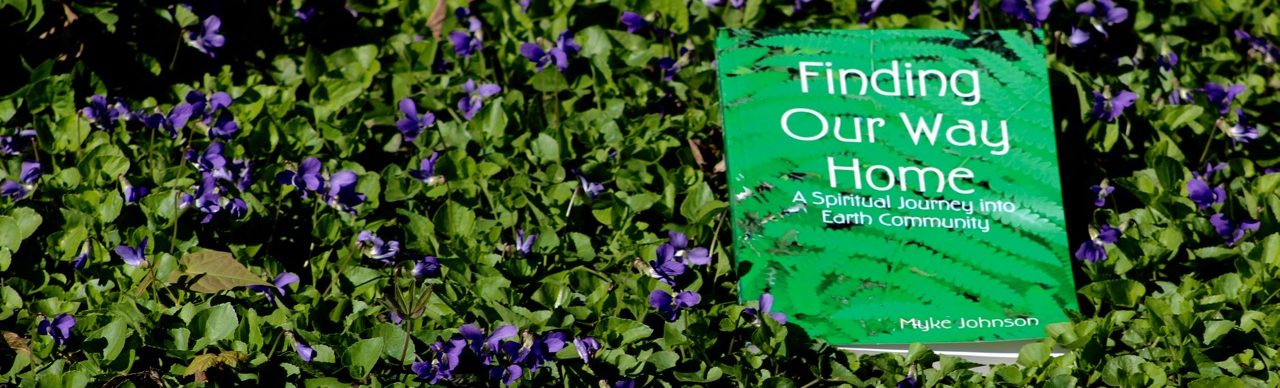
Finding Our Way Home: A Spiritual Journey into Earth Community, by Myke Johnson, front cover photo with cream print, background of green ferns.

The E-book of Finding Our Way Home is now available! You can get an EPUB version at lulu.com for $9.97. (The link should take you directly to the book, or you can search by author and title.) In 3-5 weeks there will also be versions on Amazon, Barnes & Noble, Kobo, and other ebook stores. EPUB is readable on Apple Books as well as Nook, Kobo and other readers.

In 2016, when I first published Finding Our Way Home: A Spiritual Journey into Earth Community, I was happy to use an ecologically oriented print-on-demand source for a paperback format. That is still available for $17.99 plus shipping. I have been told it is the kind of book that does well with slow reading, a chapter at a time, with spiritual practices offered at the end of each chapter. Personally, I enjoyed doing the layout and choosing the typeface, and creating all the formatting. I assumed I would also do an e-book at some point, but with chronic illness and not very much energy, it took longer than I expected.

For some mysterious reason, during the last few weeks, I was inspired to get back to it. The first step was reading “how-to guides” at lulu.com. I had to create a new document and undo all the formatting I had previous used, substituting standard formats. I checked all the internet links that showed up in the notes, to make sure they were still functioning. I also updated the author page, but did not change anything else in the content.

My hope is that this new format will make the book more accessible to more readers, both financially and visibly. I especially want to thank my friend Diane K. for her cheerleading and enthusiastic support. Just a little note to mention that when you purchase directly from the publisher more of your payment goes to me as the author. But another way you can help, if the message appeals to you, would be to leave a review wherever you purchased the book. In the end, most of all, in my small way I want to keep fostering a spiritual journey of waking up to interconnection—to the earth, to each other, and to the Mystery within and between all.