The Lost Words

I haven’t had many words this autumn. Now, here we are in mid October. Leaves changing color, lovely cool days and cooler nights.

On the autumn equinox, we had a ritual with a few friends around our fire outside. I had gathered some acorns and we passed around a basket of them and each took out one acorn to express our thanks for some aspect of our lives, and then one for a wish or intention that we wanted for the next darker season. My intention was to bring back more music into my life. For whatever reason, I hadn’t been singing or playing my guitar for ages–I mean, years. So I put on new strings, and tuned the guitar, and then started singing a song here and there.

I found this hauntingly lovely song, Lost Words Blessing, originally shared by a colleague in a worship ritual. The song was inspired by a book The Lost Words created by by Robert Macfarlane and Jackie Morris. “The book began as a response to the removal of everyday nature words – among them “acorn”, “bluebell”, “kingfisher” and “wren” – from a widely used children’s dictionary, because those words were not being used enough by children to merit inclusion. But The Lost Words then grew to become a much broader protest at the loss of the natural world around us, as well as a celebration of the creatures and plants with which we share our lives, in all their wonderful, characterful glory.” [You can find out more about it on their website, and order books and albums there as well.]

One of my favorite things to do with songs is to figure out how I can sing and play them, and so I did with this one. And then, I found myself thinking about Passamaquoddy/Wolastoqey words, and how the language is in a fragile place, with original speakers growing older, and newer speakers trying to find their way into the language after long years thinking in English. How many of those words have been lost, or almost lost?

It has been a powerful gift for me to be learning the language with Roger Paul, via the University of Southern Maine during the last six years. Roger told us that the elders had given permission to share the language with outsiders, so that others might wake up to the world view hidden within. But I am always conscious that the language is filled with triggers of pain for all that was lost and taken by the violence of colonization.

There was something about the language that resonated for me with the song “The Lost Words Blessing.” So I decided to try to translate the song into Passamaquoddy–which I quickly found out isn’t really possible. It isn’t possible in part because the structure of English poetry is based on filling the lines with many words to evoke an experience, while the structure of Passamaquoddy, as well as I can understand it, is to use words that themselves are full of descriptive action. I learned a lot about how different the two languages are, by trying to create a version of the song in Passamaquoddy.

Still, I kept at it, not “translating” but pulling out words and sentences that created a similar experience in me, and also fit the phrasing of the music. While I am only an intermediate learner, I have learned how to research using the pmportal.org, to try to identify patterns and options and vocabulary. I couldn’t do it without that aid, and likely I made mistakes. I still don’t know if or when it might be respectful for me to sing this song. Can I, as a white woman, bring the language into this particular experience? When might it be appropriate to enter deeply into the language such that I can create a song with it? But to learn the language is, in a way, to fall in love with it. I want to honor Roger’s teaching by speaking as well as I can. Whether I ever sing the song for anyone but myself, I have learned so much by trying to create it.

Here is a sample, the first verse, with the original English, the Passamaquoddy, and then a more literal rendering of the Passamaquoddy into English. [Note: edited Dec 2024 with updated draft]

  • Enter the wild with care, my love
  • Kuli-nutahan elomahkiwik
  • In a good way, go out to the wilderness
  • And speak the things you see
  • on ktitomon keq nemihtuwon
  • and say what you see
  • Let new names take and root and thrive and grow
  • Piliwihtomun on kminuwiwihtomon
  • Name it/them newly and name it/them repeatedly
  • And even as you travel far from heather, crag and river  
  • Peci-te pihcehkomon nit sip weceyawiyin
  • Even when you go far from the river where you are from
  • May you like the little fisher, set the stream alight with glitter
  • Ansa pokomkehsis sipuhsis seskahtuweht
  • Like the little fisher make the stream sparkle brightly
  • May you enter now as otter without falter into water
  • Ansa kiwonik cupotomhat, kini-cupotomha
  • Like the otter slides into water, boldly slide into water

More dragonflies

Yesterday, I went over to the pond in the morning, and saw nine or ten dragonfly nymphs who had climbed up onto leaves. I didn’t see them climbing, but they were holding on to the leaves, and slowly emerging from the husk of their nymph bodies. They were on the sweet flag, the blue flag iris, and the arrowhead plants. They say that nymphs live for two years in the water, so perhaps these were deposited as eggs in the pond two years ago and survived over winters, and now were coming of age all together. Sometimes, the leaf stalks they were clinging to would shake a little, not from the wind, but from the effort of their struggle. Is the photo from later exactly the same, or did it progress a little bit more? Truthfully, I can’t tell.

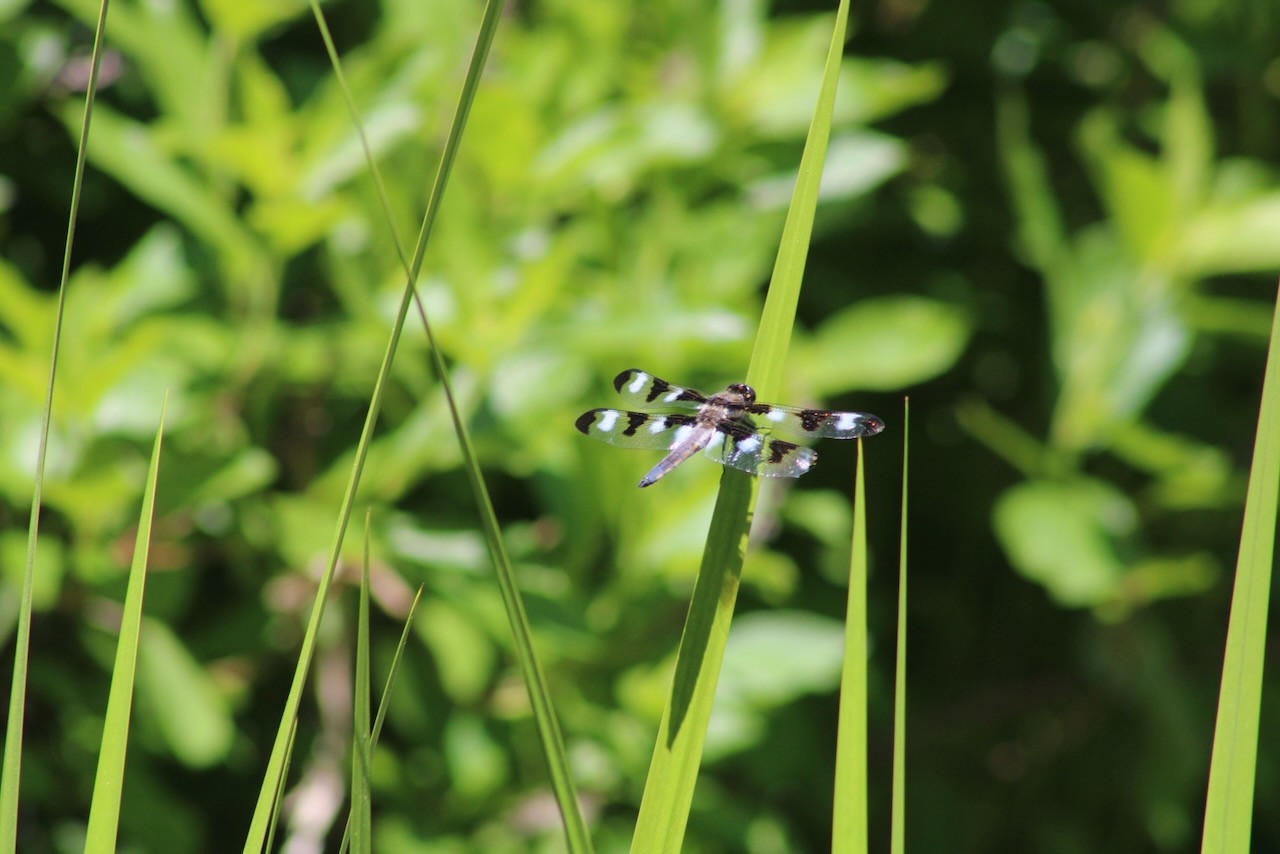
There was an adult dragonfly hovering around close by, it could have been the same one I had seen earlier in the summer. I wondered if it was watching over the nymphs protectively, or perhaps threatened by them, or interested in mating with them? It did stay close. A beautiful creature with black and white spots on its wings and a mostly gray body with black eyes.

I wasn’t able to watch all day, and then we had some rain in the evening. This morning, when I went back, it seemed like all of the creatures on the leaves were just husks of nymph bodies, and there was a new dragonfly at the pond. Turquoise eyes, mostly clear wings, white tail with a black end.

All of it felt quite magical, and also mysterious. An accident that I saw it at all, and yet amazing that I saw some of the process. In Passamaquoddy, the word for dragonfly is “apuciqaha.” According to my teacher, “apuci” means inside out, and “iqaha” refers to the way they fly in any direction. Seeing the adults emerge from inside of the bodies of the nymphs gave me a new sense of the meaning of “inside out.”

Once again, I see how the pond is home to all sorts of life that lives by its own rhythms, and what a privilege to witness some small aspect of that ongoing life.

Dragonflies

Black and white dragonfly on green stalk of iris

I’ve seen dragonflies flying around the pond, mating above the pond, and dipping their tales into the water to lay eggs. I’ve seen dragonfly larvae in the pond swimming around. But until this week, I never knew if any of the larvae had lived long enough to transform into adult dragonflies. During the last few days I saw what I thought might be some sort of insect perched near the bottom of an iris stalk. But with a little research, I now realize that it is an empty husk from which a dragonfly larva has molted.

Dragonfly husk on a green iris stalk over pond.

The pond never ceases to delight with the cycles of life of so many creatures. This month also saw these toads clasped in their mating posture, the male on the back of the larger female. I don’t know if any of the tadpoles from before have survived–just because I don’t see them doesn’t mean that they aren’t hiding somewhere. But they are low on the food chain, eaten by frogs, and also by dragonfly larvae. However, with more eggs in long strings, maybe more tadpoles are on the way.

Male toad clasped to back of larger female toad, in murky pond water.

The heavy rains of the last several days have delighted the tree frogs who are singing in the night. I haven’t seen any of them in the pond this year. Each year it seems that different species choose to inhabit this little pool of water. Thankfully, even on days when I don’t have the energy to tend to the many plants in the garden that would love some attention, I can sit by the pond and appreciate all that it holds.

Photos help me see

Three frogs on rocks near pond
Three frogs on rocks.

Since beginning to blog, I have loved taking photos of creatures and plants. It is like a third eye that helps me to see the beauty all around me. Sometimes it helps me to look more closely, later. Like with the frogs in our pond–I think these three might be bullfrogs, because of the ridge that goes behind their tympanum (their external ear drum for hearing), but not down their backs. I tried comparing them with images online, which helped, but then I noticed how often frogs have actually been misidentified in photos on the web. So I am not sure. They are bigger than some of the frogs that have been in the pond.

But when I look back to earlier photos of frogs that I identified as green frogs, I am confused. I knew those were green frogs because they were very small, and their little squeak as they dove into the water was distinctive. But they also seemed to have the ridge behind their ears and not always down their backs. Photos enable me to keep looking and wondering. I’ll have to wait and hear what these frogs sound like. They were out on those same rocks today.

Pink cosmos blooms
Pink cosmos blooms

Sometimes, photos help me see beauty that is ephemeral yet durable. This cosmos was a volunteer by the side of the road, and started tall, with just one blossom. In the winds of last weekend, it fell over, but it keeps blossoming, and the bees keep coming by for nectar. It just keeps on blooming. It makes me smile.

Then, the other morning these turkeys wandered into the orchard, the sun making a little halo around their funny heads and big bodies. I was sitting in my chair and saw them outside the window. So I jumped up to go outside to take photos. The camera motivates me to watch them on their travels through the back yard. Then I can enjoy them once again in the photos.

Turkeys with sun making halo around heads and bodies.
Turkeys in the morning.

Fledging Day!

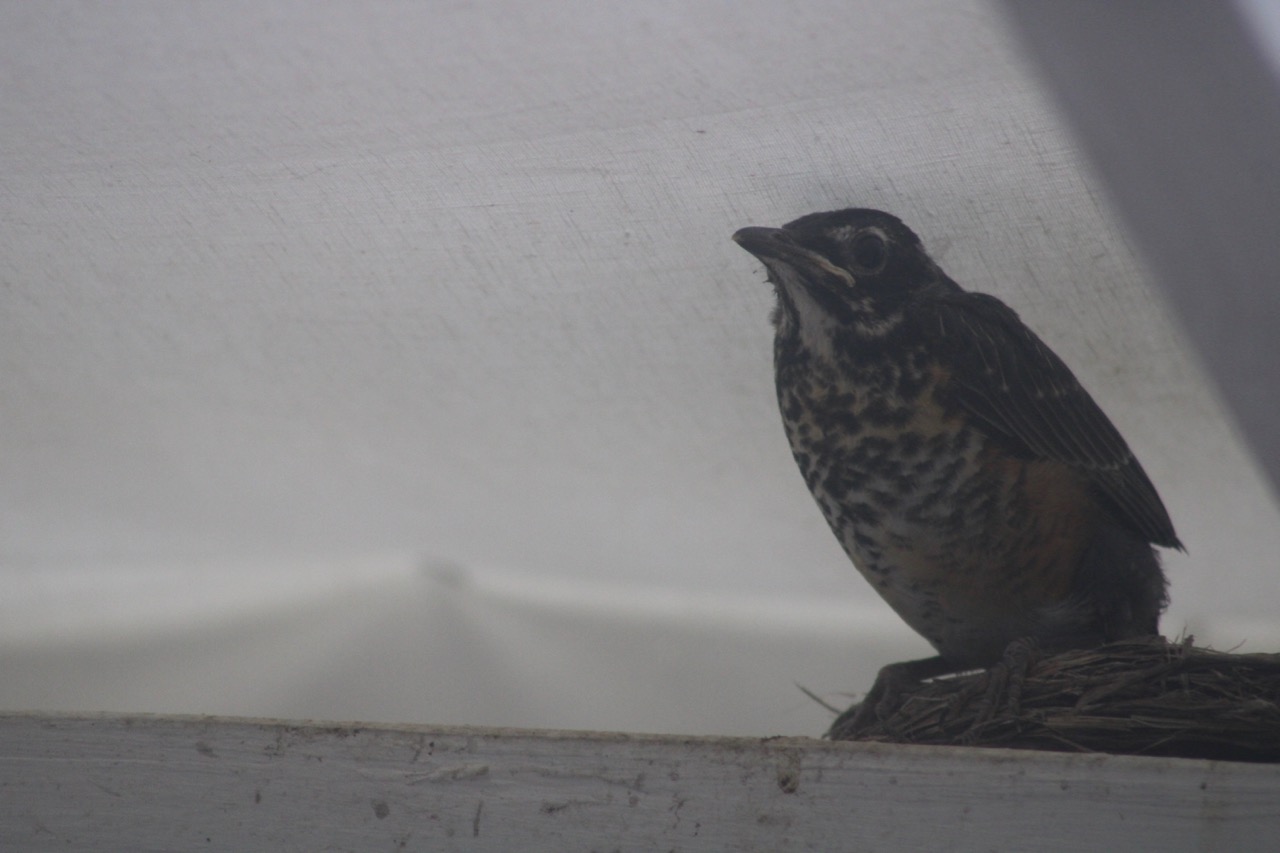
Robin chick perched in nest, under cream colored covering.
The last robin chick in the nest. The others have left in the night.

Today all the robin babies fledged from the nest. When I woke, there was just this one left. Its parent came by to check on it, not bringing food, but flying up to the nest and then back down, as if to say, here is what you do now.

Robin perched on wooden deck railing near post.

Shortly after, I saw it take its first flight, flopping over to the screen window of our house, where it tried to grab hold but then fell down to a soft patch of lemon balm below the window. (Now I am wondering about a sound I heard last night, of something bouncing on the screens in my room. Might that have been earlier chicks making their first flights?) A bit later, I went down to the patio, and something flew by from a perch on the chairs, then to the grass on the other side of the orchard. All the while the parent robins were chirping loudly and continuously, whether to warn me away, or to reassure the chick, I don’t know.

Robin fledgling in grass.

I was wondering what would happen next for the fledglings, and learned via research that the parents will keep feeding and teaching them for the next few weeks, while they hide on the ground or in bushes, trying to avoid predators and learning to find their own food. I am so glad that there are no more neighborhood cats roaming in our yard. The mother might start another brood soon, but the father will keep watching out for these fledglings during this time. All the chicks will stay in this territory for about 4 months or so.

I wandered around the orchard and the yard trying to see what I could see, while the parents chirped at me, and I spotted this chick on the pallets that form our yard waste bins, with a parent nearby perched on the same bin.

Robin fledgling with mottled feathers perched on wooden slats of bin.

Finally, I was heading back to the house and suddenly saw another chick perched quietly in the hazelnut bush.

Robin fledgling on branch surrounded by green leaves.

I had to go inside then to eat my own breakfast, and download the photos. As I have been writing this, outside on the patio, I’ve seen the parent robins go into that bush with food, so it must still be there–it is a great hiding spot. I am torn by competing desires: to observe and photograph the young ones, or to just go inside and ease the parents alarm. They should know by now that I won’t hurt their babies. Actually, they don’t seem to mind me when I am sitting at the patio table, not walking about.

In the meantime, I am glad we have lots of tall plants and bushes and trees that make good spaces for the next phase of their young lives. It all happens so quickly–less than four weeks from the eggs in the nest to the small birds out and about. I wish them all the best!

And they’re gone!

Fledgling robin with stripy breast feathers, perched on white beam, under shade cloth.
Baby robin perched boldly on the beam.

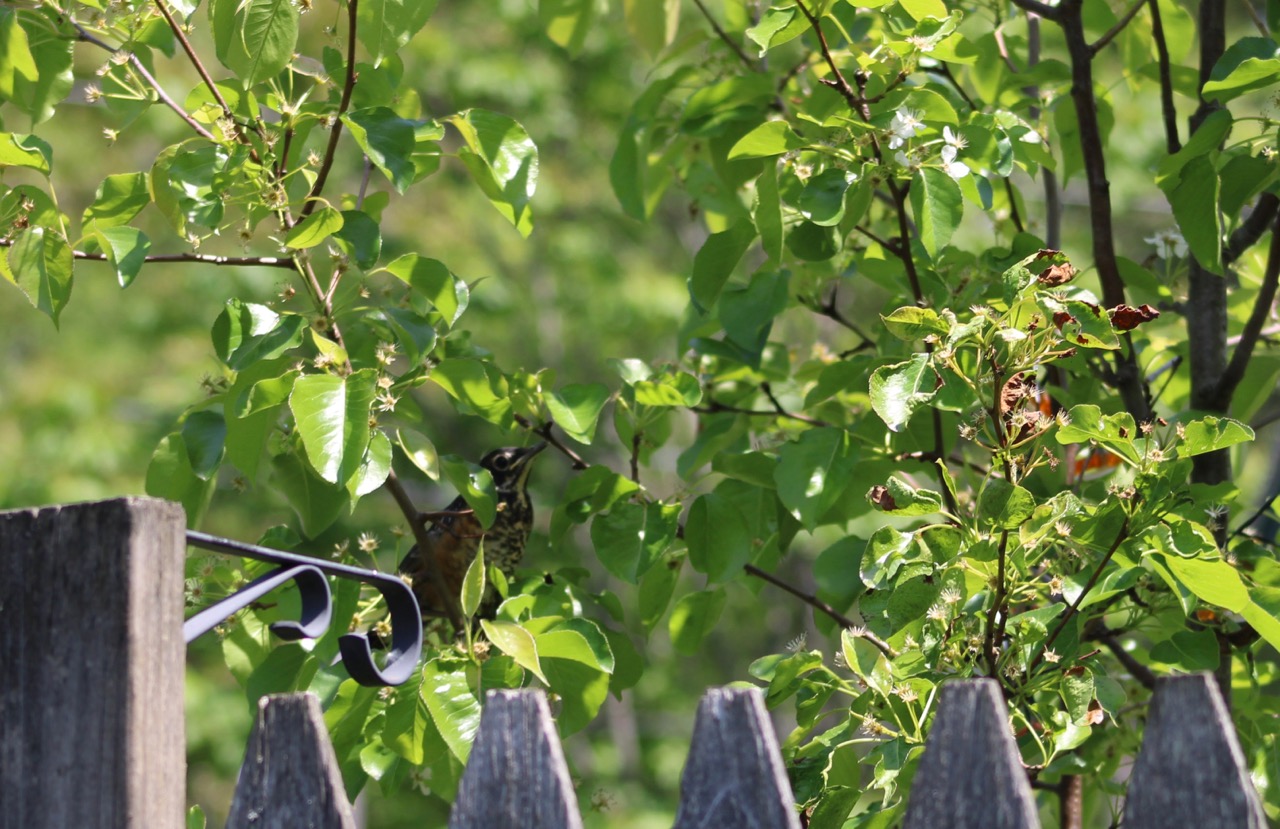
During the night the two baby robins were back cozy in the nest. This morning, they came back out on the beam, one of them perching boldly on the edge. I was sitting at the kitchen table watching through the window, and then a few minutes passed by and suddenly they were gone! I went outside on the porch, and then saw a small bird fly from the ground in the nearby orchard up to the trees by the fence. I was in a Zoom meeting, so I went back to do that for another 30 minutes, then went outside to look for the babies–I guess I should call them fledglings now. After walking around in the orchard a bit, I saw one of the parent robins in a tree near the fence.

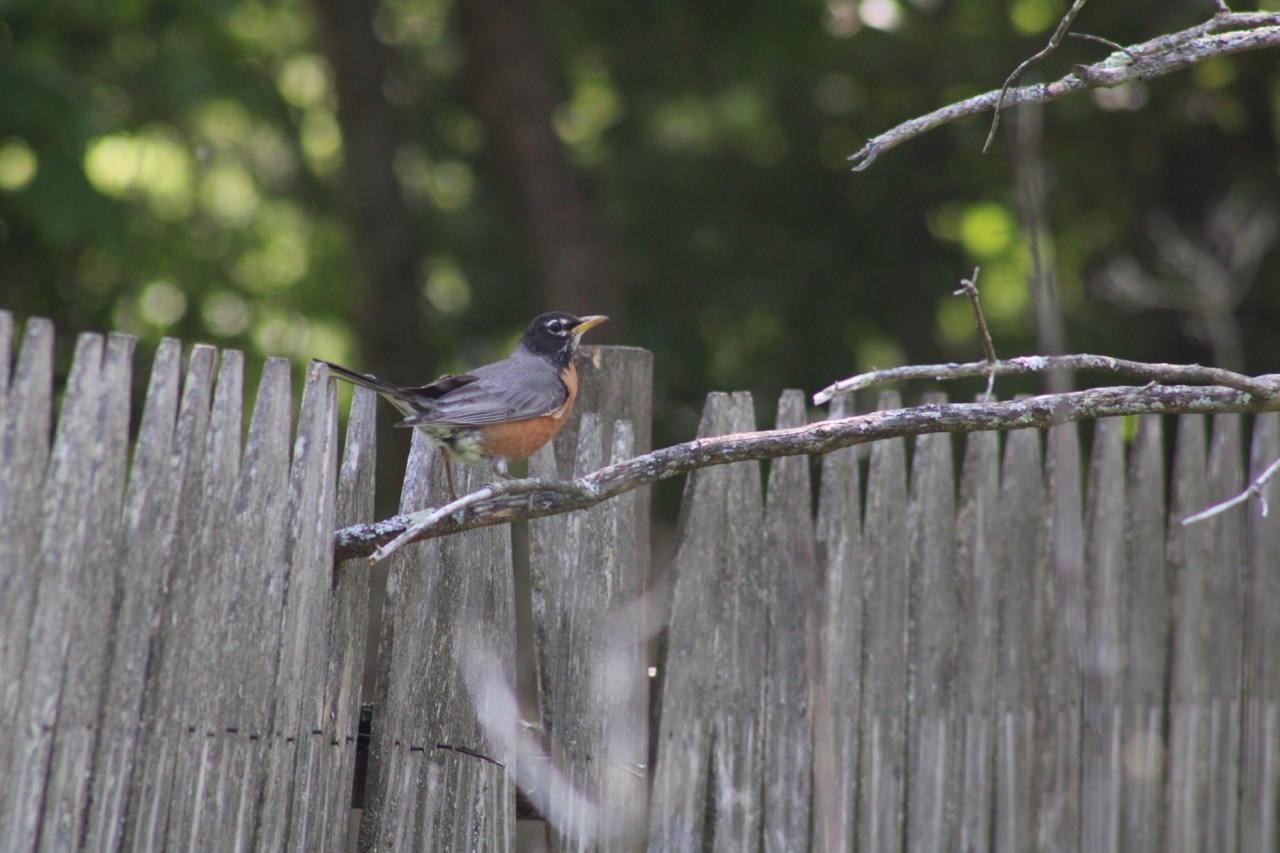
Robin on a bare gray branch in front of a gray wooden fence, with blurred green leaves in the background.
Parent robin near fence.

So I looked all over near the fence, and then stood on a little block of wood to see over the fence. There it was! I saw one of them in our neighbor’s young pear tree. It was being quite still and quiet, hiding among the leaves.

Tips of wooden fence showing at bottom, with green leafed tree above, and hidden among the leaves, a baby robin.
Robin fledgling hidden in the leaves of the pear tree over the fence.
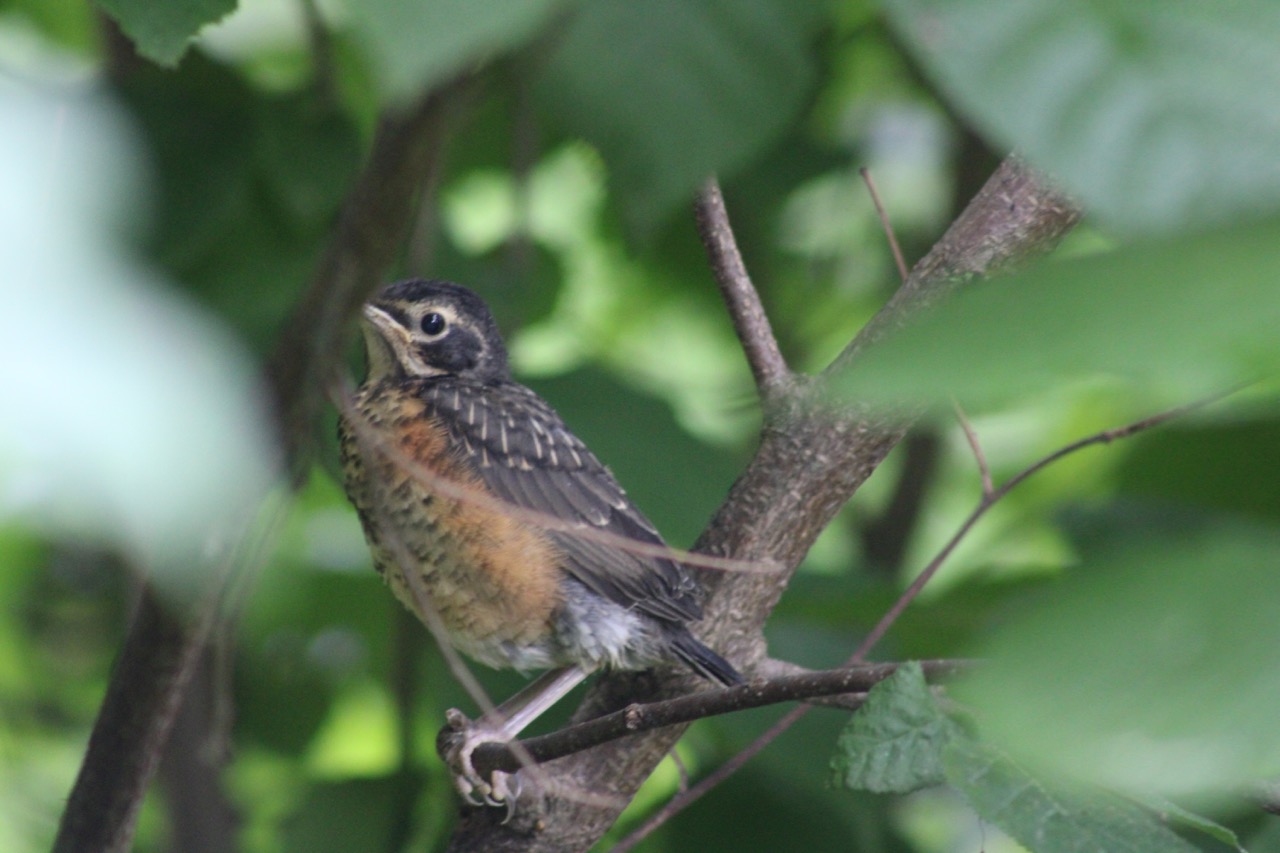
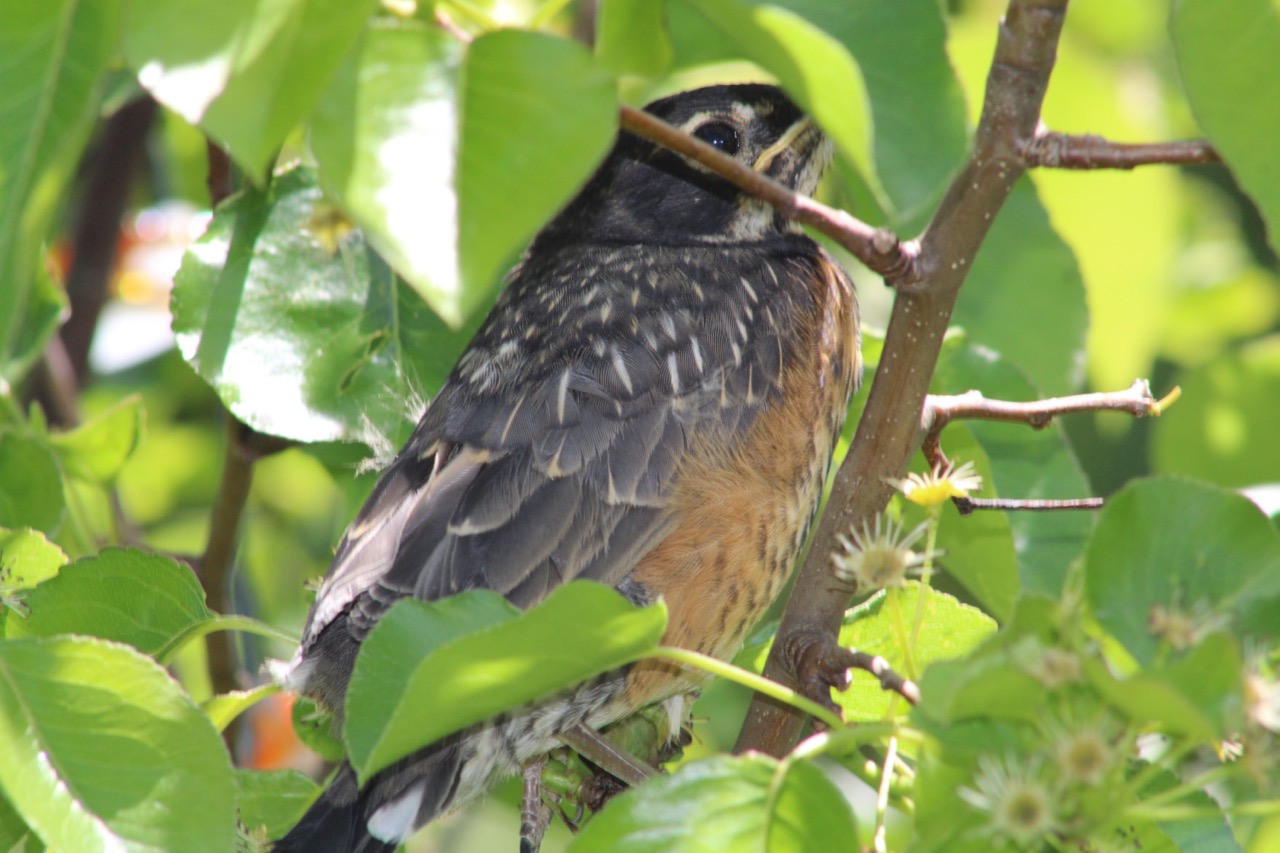
Close up of fledgling robin hidden among green leaves on branch of pear tree.
Close up of fledgling robin

I was reassured to see this one on its perch in the tree. I didn’t find the other one, but we have so many trees around our yard that it could be anywhere. When I went back to the fence a couple hours later, this one was gone too. And just like that, no more baby robins on our porch, at least for now. I am assuming they won’t come back to the nest. It has been one month since the first egg was laid. Most of that time they were hidden from sight, but every sighting was a joy. And I am so happy that the robin parents finally fledged their first youngsters!

Robin Excitement

Two baby robin heads peaking up from the nest, under a white beam.
Robins peaking over the edge of the nest!

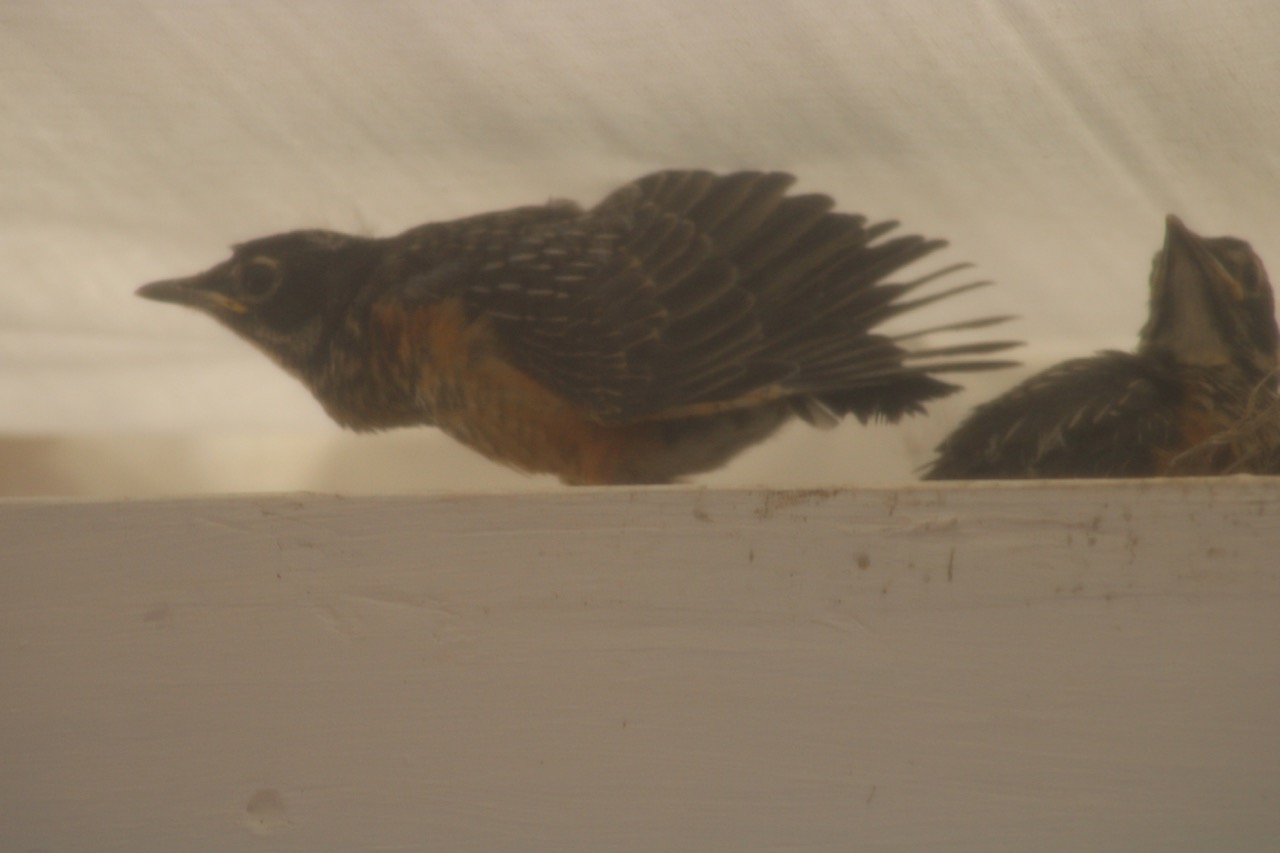
What could be better than to watch baby robins venturing over the nest? Yesterday we saw their little heads popping up and then hiding back down in the nest. Today, they were out of the nest, onto the beam next to it! It is actually two beams with a lower beam between, so they can hide down and lift up there too. They are beginning to try out their wings, and explore the length of the beam. Still clamoring for food from parent! Their reddish color is starting to show. I wonder how long until they flutter a bit further. Can’t be long now.

Two robin heads facing forward, peaking over the edge of a white beam, next to the nest.
Robins peaking over the edge of the beam, out of the nest!
Two baby robins beaks up, one with worm, on beam, parent robin on nest to right.
Parent robin on the nest, babies next to it, eager, one has got the worm.
Baby robin folding its wings, while sibling looks on from the right.
Trying out the wings!

So Much Beauty

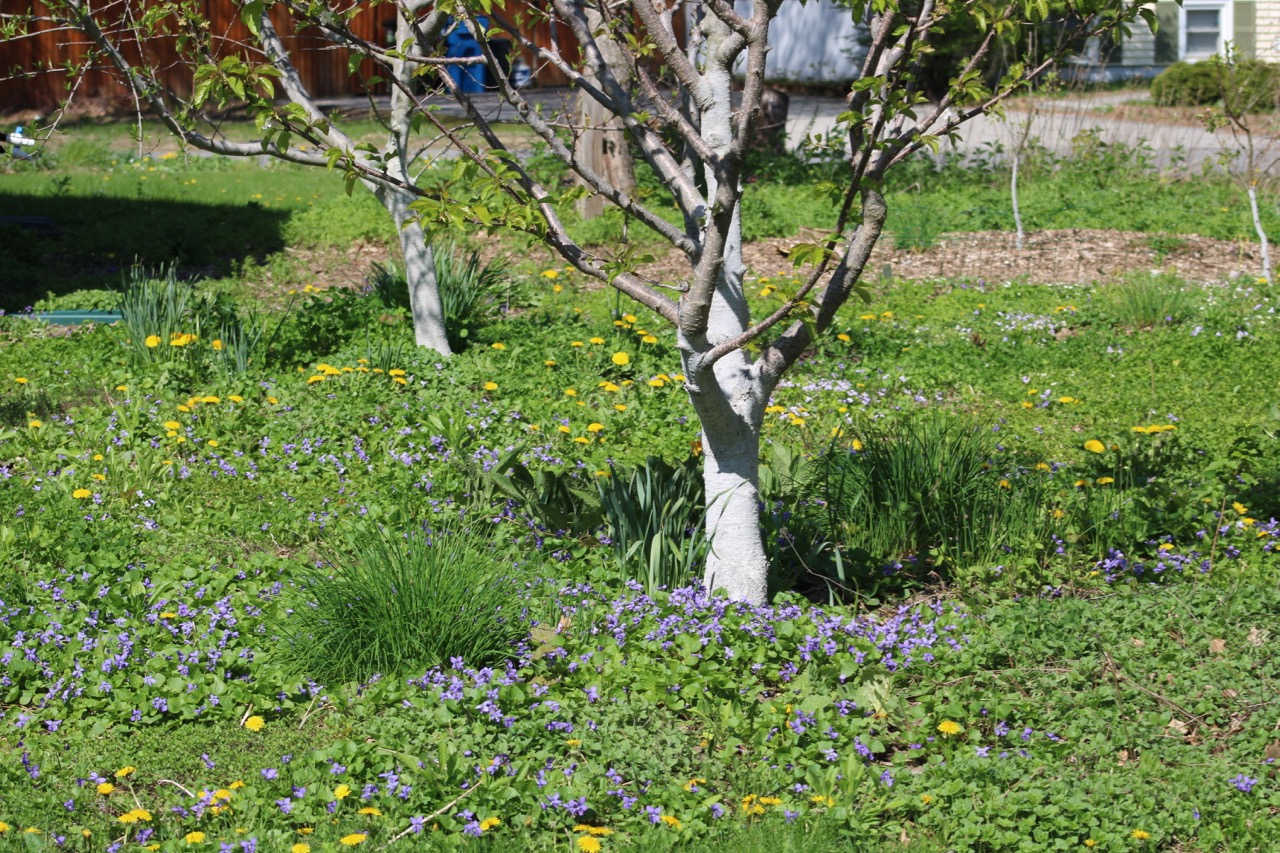
Orchard scene with tree trunks and branches painted white, surrounded by ground cover of violets, dandelions, and chives

I walk through the orchard and marvel at the beauty of violets which have naturalized all over the ground. Dandelions offer a scatter of yellow along with a few daffodils, and clover has spread over the beds and paths in a swath of green. Chives and oregano and thyme are coming up in their clumps. I can’t capture it in a photo, but perhaps the one above hints at how lovely it has grown, mostly all on its own.

The cherry trees actually now have a few blossoms–maybe a dozen new buds have opened after initially all of the buds were empty. Not enough really for a fruit crop, but I wanted to note it. However, our Honeycrisp apple tree is covered with buds, for the first time. Maybe this will be the year of our first apple harvest?

I haven’t tried to do any veggie planting yet. Mostly I just walk around enjoying how the wild flowers shine in the sun. Yesterday I lay in the hammock reading for a while, and we had a lovely visit with a friend by the pond. We haven’t seen any tree frog eggs there, despite the repeated singing in the night. It is all a process of discovery–will they choose our pond or not? Meanwhile, the marsh marigolds have bloomed! My favorite flower colors are yellow, blue, and violet, so right now I am in paradise!

Marsh marigolds have yellow buttercup style flowers on tall stems, with round green leaves. the background is pond water with out of focus reflections of trees.
Marsh marigolds in the pond.

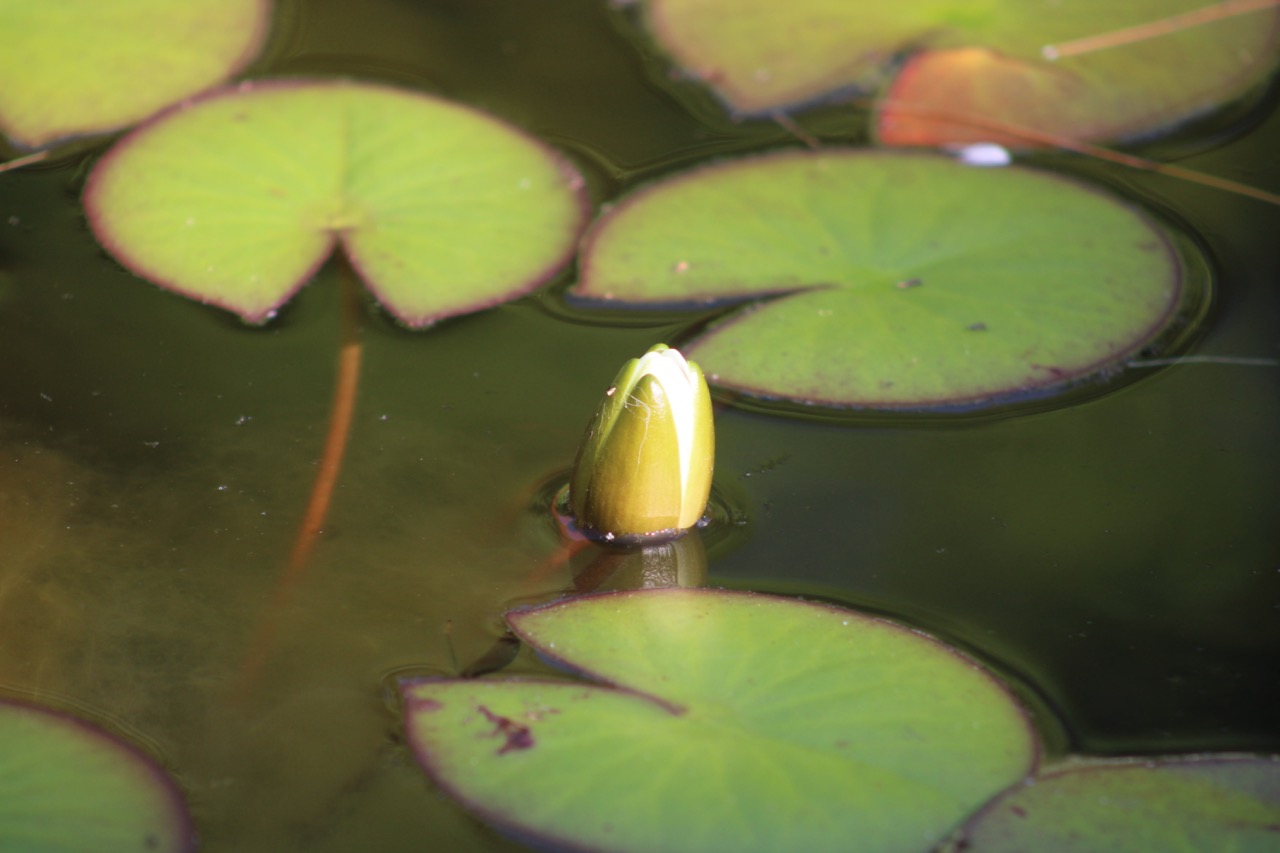
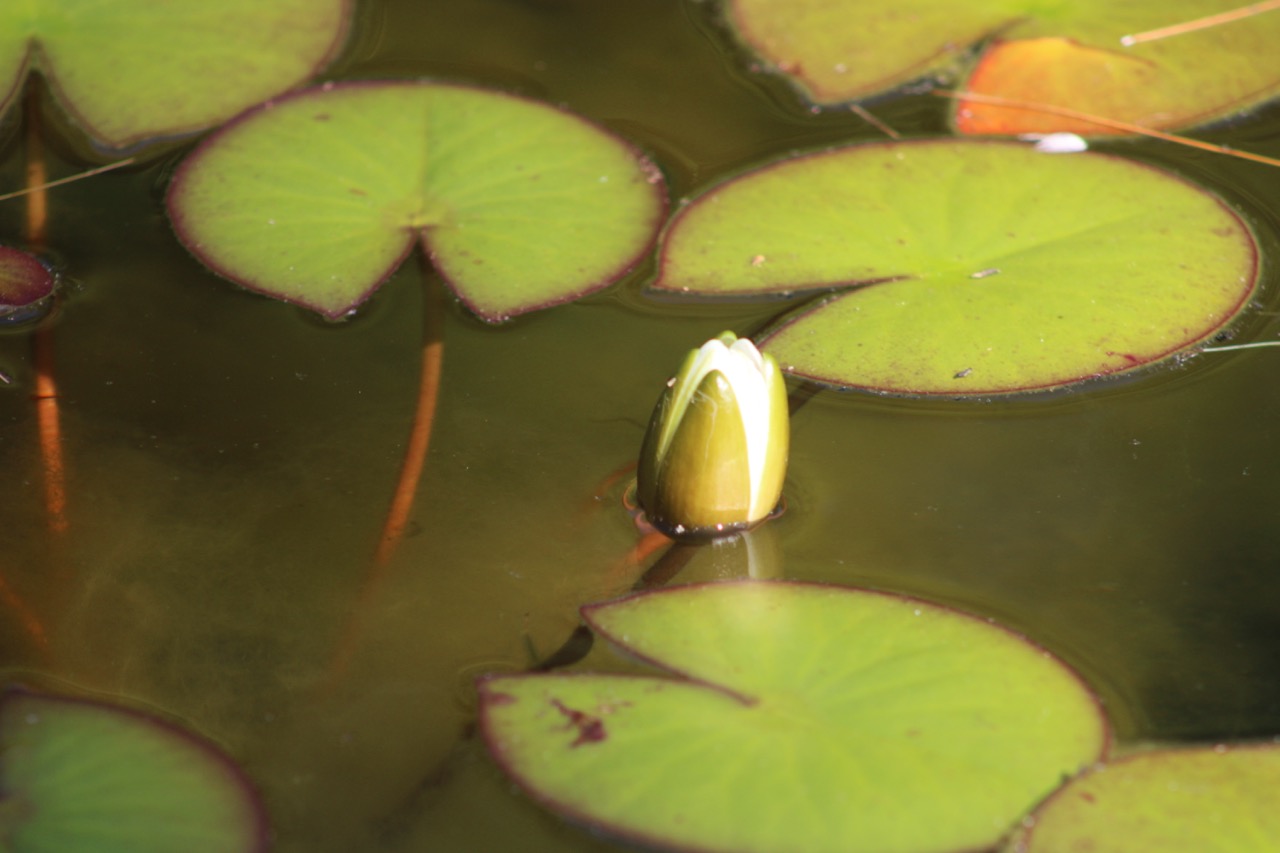
Pond lily opening

The first pond lily bud appears on Saturday in our pond.
It starts to open slowly on Sunday.
I sit by the pond during the morning to watch it as it changes.
very slowly…
It is so meditative to sit by the pond watching the lily. I also see a frog, and some dragonflies. I add some water to the pond from the rain barrel, which is why the lily now seems deeper in the water.
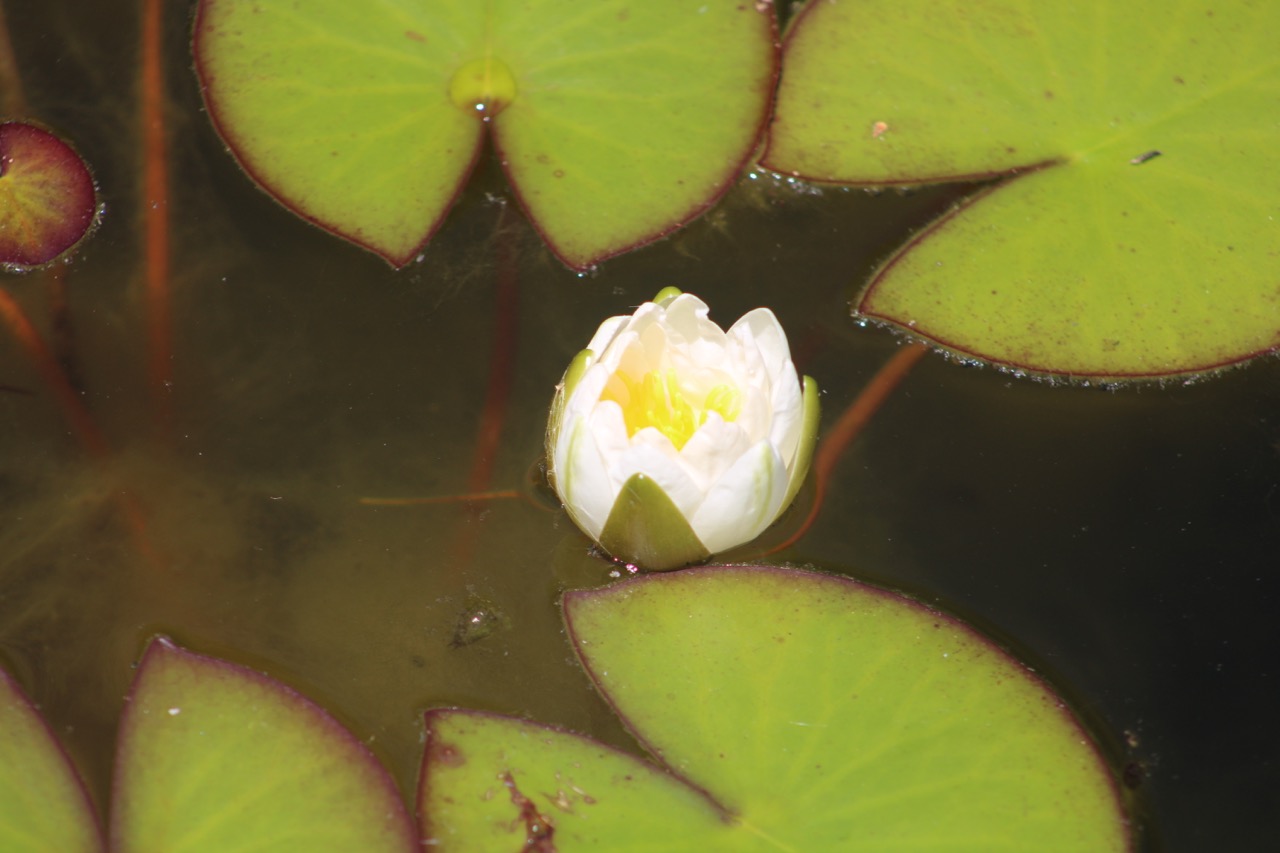
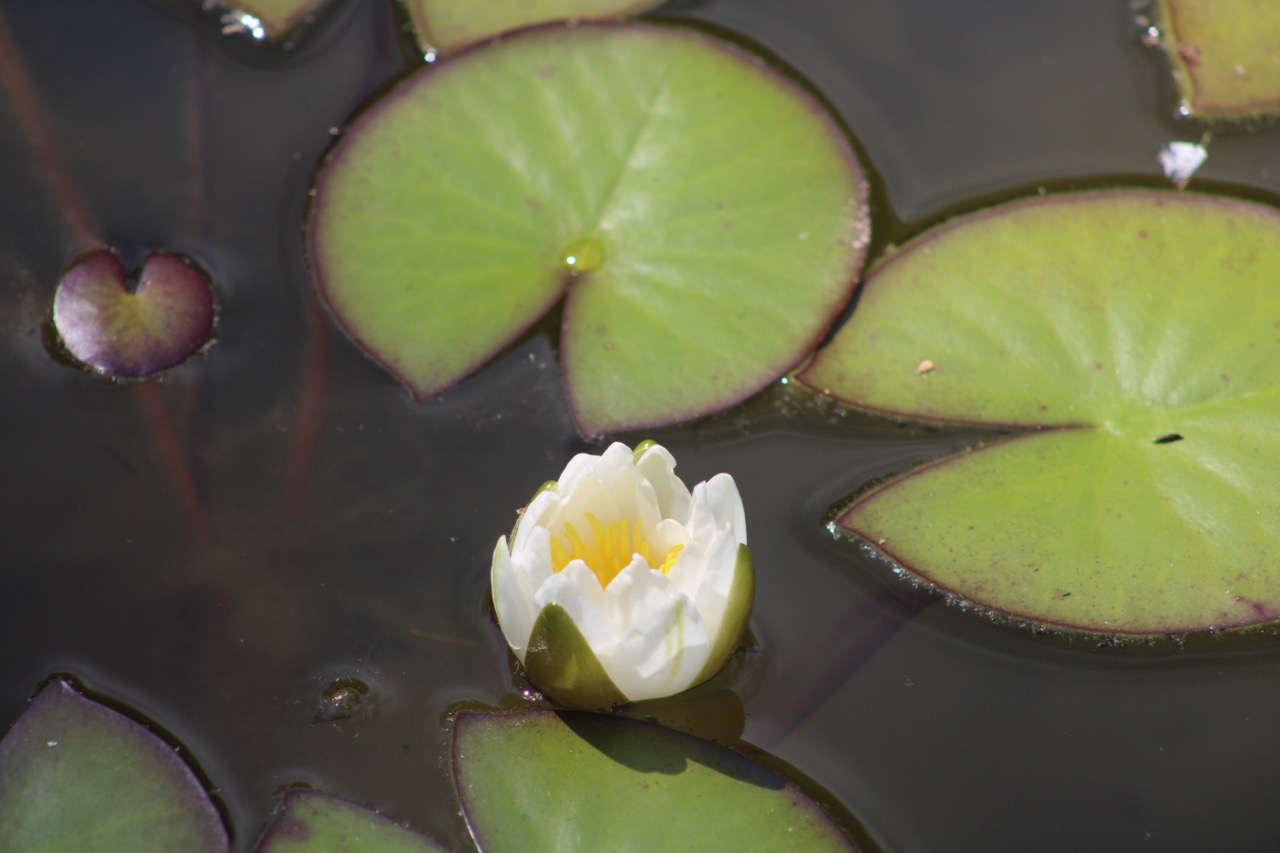
As it opens it forms a little white cup, with yellow peaking out from the center.
It reminds me of an egg.
It doesn’t fully open on Sunday, and once the shade of the trees cover the pond in the early evening, it closes up again.
This morning, early, it is still closed up. I watch for a while, and then go inside to eat breakfast.
When I come back out mid-morning, here it is in all its beauty!

Tiny Magical Moments

Dandelions with puffy seed heads, after the birds were gone

Sometimes the best pictures are only in the mind, never caught on a camera. I was sitting with Billie in my blue easy chair in the bedroom, and something caught my eye outside the window. It was a goldfinch couple, perching in the peach tree, and then hopping down to the plants beneath. The bright yellow male landed on a dandelion stem–it was a long stem with the flower already gone to seed in a fluffy sphere. The olive green female was perched nearby on another long stem, with a closed flower head above her.

The male carefully made his way up the stem, even as it was bending down under his weight. He made a few tries on different stems. Finally, he succeeded in reaching the fluffy sphere and began pecking at the seeds. I never knew that dandelion seeds were a source of food for goldfinches. I’m glad that I didn’t cut them down! A short while later, they had gone, but I took this photo of the place where they had been. Even though you can’t see them there, in my mind, I can’t forget his purposeful climb along the stem.

Later, I went to sit by the pond, and noticed something tiny and new and green. Several of the perennial pond plants that I planted last year haven’t come back at all. Cardinal flower, blue-eyed grass, arrowhead, and pickerel rush. They were supposed to survive Maine winters so it was a great disappointment, but I kept waiting and watching, since this is the first spring for the pond. Well, today, I found three new tiny stems with distinctive leaves. There are three new arrowhead plants coming up. They are near where the previous plants were, but don’t seem to be emerging from the roots. Maybe they are sprouting from seeds that fell into the water last fall?

You never know when something new might emerge from the hard work that you did before.

New arrowhead shoot with one leaf, enlarged photo