And they’re gone!

Fledgling robin with stripy breast feathers, perched on white beam, under shade cloth.
Baby robin perched boldly on the beam.

During the night the two baby robins were back cozy in the nest. This morning, they came back out on the beam, one of them perching boldly on the edge. I was sitting at the kitchen table watching through the window, and then a few minutes passed by and suddenly they were gone! I went outside on the porch, and then saw a small bird fly from the ground in the nearby orchard up to the trees by the fence. I was in a Zoom meeting, so I went back to do that for another 30 minutes, then went outside to look for the babies–I guess I should call them fledglings now. After walking around in the orchard a bit, I saw one of the parent robins in a tree near the fence.

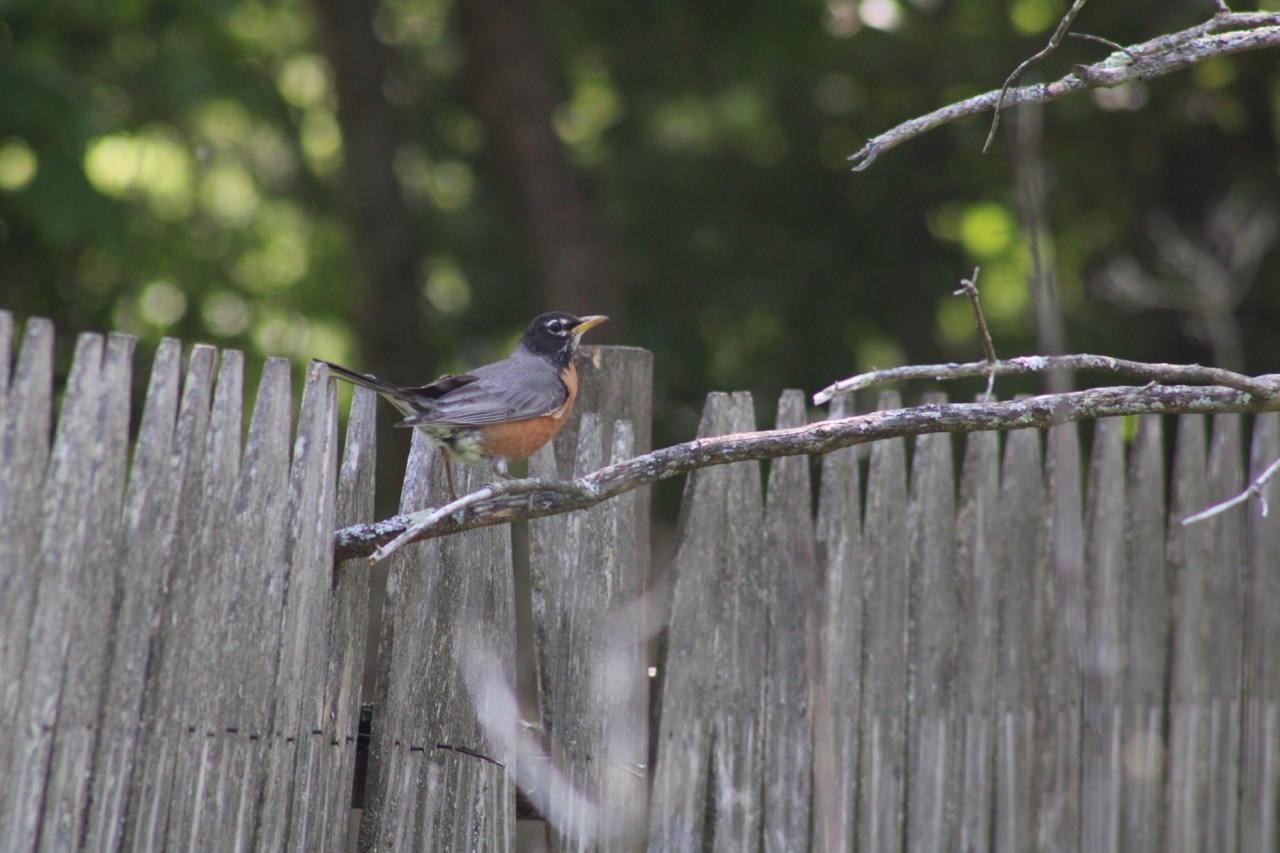
Robin on a bare gray branch in front of a gray wooden fence, with blurred green leaves in the background.
Parent robin near fence.

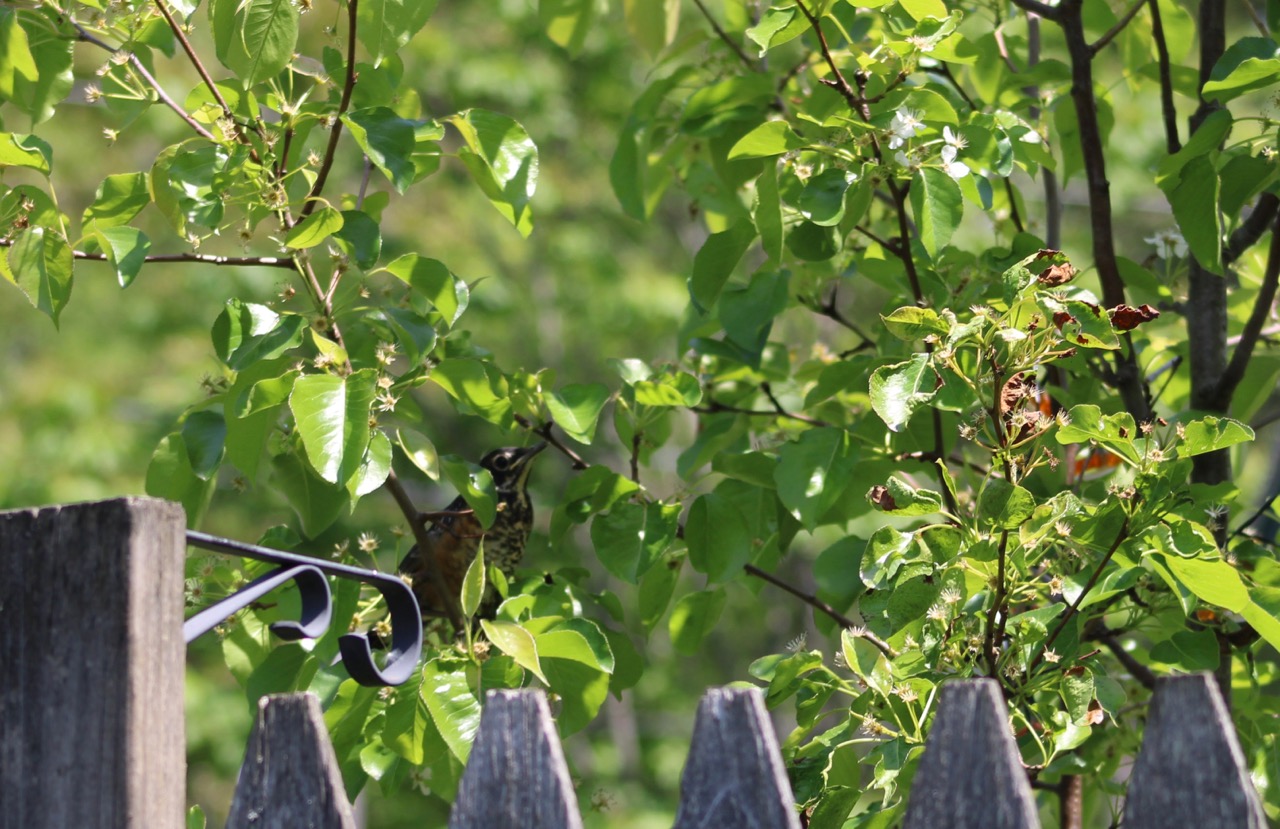
So I looked all over near the fence, and then stood on a little block of wood to see over the fence. There it was! I saw one of them in our neighbor’s young pear tree. It was being quite still and quiet, hiding among the leaves.

Tips of wooden fence showing at bottom, with green leafed tree above, and hidden among the leaves, a baby robin.
Robin fledgling hidden in the leaves of the pear tree over the fence.
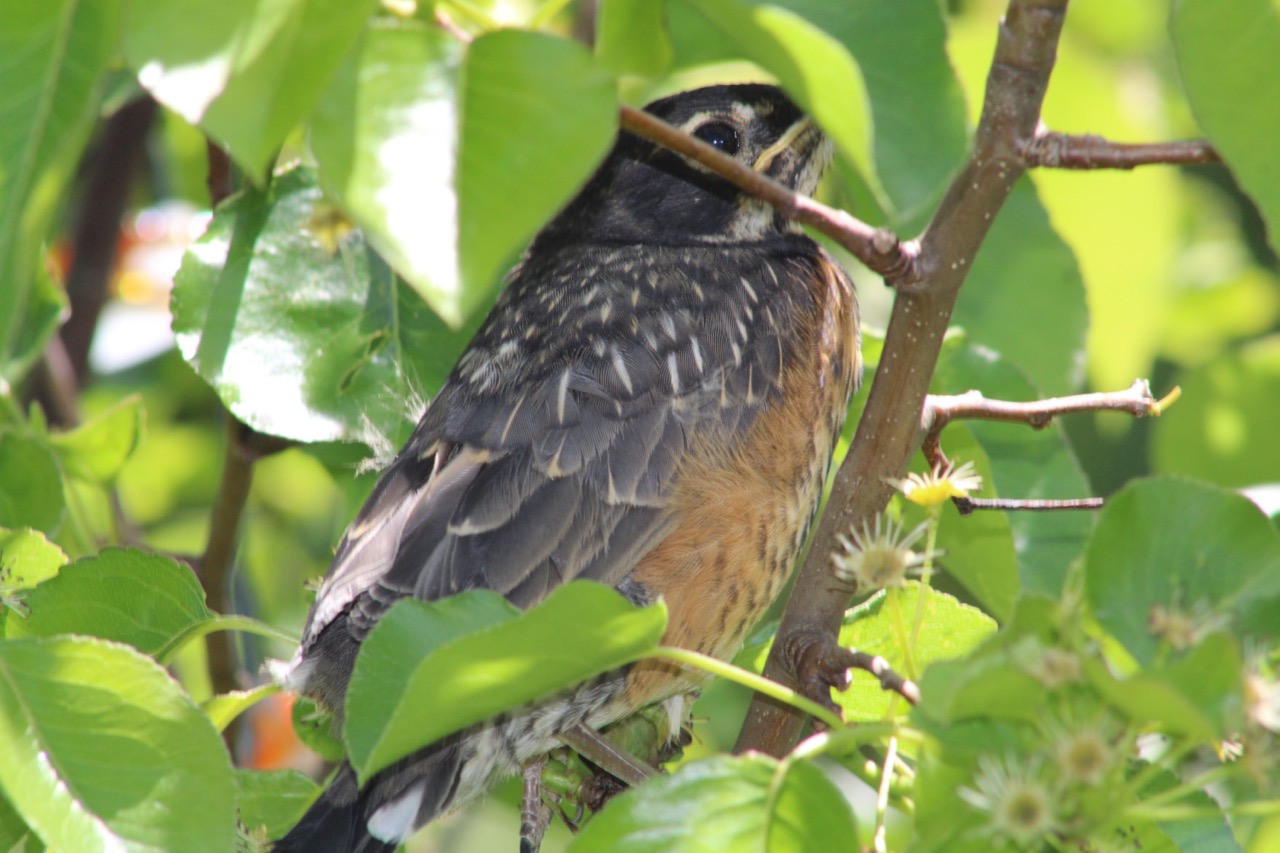
Close up of fledgling robin hidden among green leaves on branch of pear tree.
Close up of fledgling robin

I was reassured to see this one on its perch in the tree. I didn’t find the other one, but we have so many trees around our yard that it could be anywhere. When I went back to the fence a couple hours later, this one was gone too. And just like that, no more baby robins on our porch, at least for now. I am assuming they won’t come back to the nest. It has been one month since the first egg was laid. Most of that time they were hidden from sight, but every sighting was a joy. And I am so happy that the robin parents finally fledged their first youngsters!

Robin Excitement

Two baby robin heads peaking up from the nest, under a white beam.
Robins peaking over the edge of the nest!

What could be better than to watch baby robins venturing over the nest? Yesterday we saw their little heads popping up and then hiding back down in the nest. Today, they were out of the nest, onto the beam next to it! It is actually two beams with a lower beam between, so they can hide down and lift up there too. They are beginning to try out their wings, and explore the length of the beam. Still clamoring for food from parent! Their reddish color is starting to show. I wonder how long until they flutter a bit further. Can’t be long now.

Two robin heads facing forward, peaking over the edge of a white beam, next to the nest.
Robins peaking over the edge of the beam, out of the nest!
Two baby robins beaks up, one with worm, on beam, parent robin on nest to right.
Parent robin on the nest, babies next to it, eager, one has got the worm.
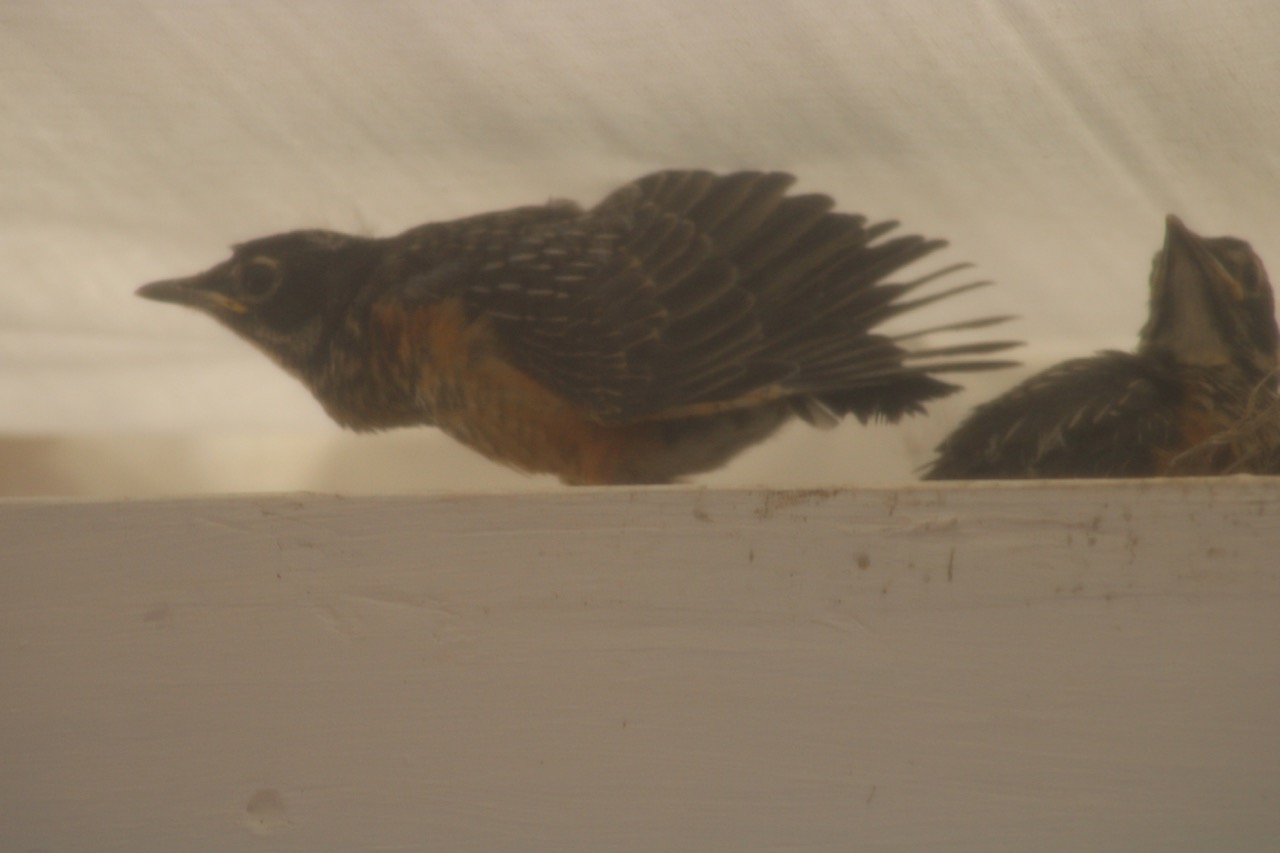
Baby robin folding its wings, while sibling looks on from the right.
Trying out the wings!

So Much Beauty

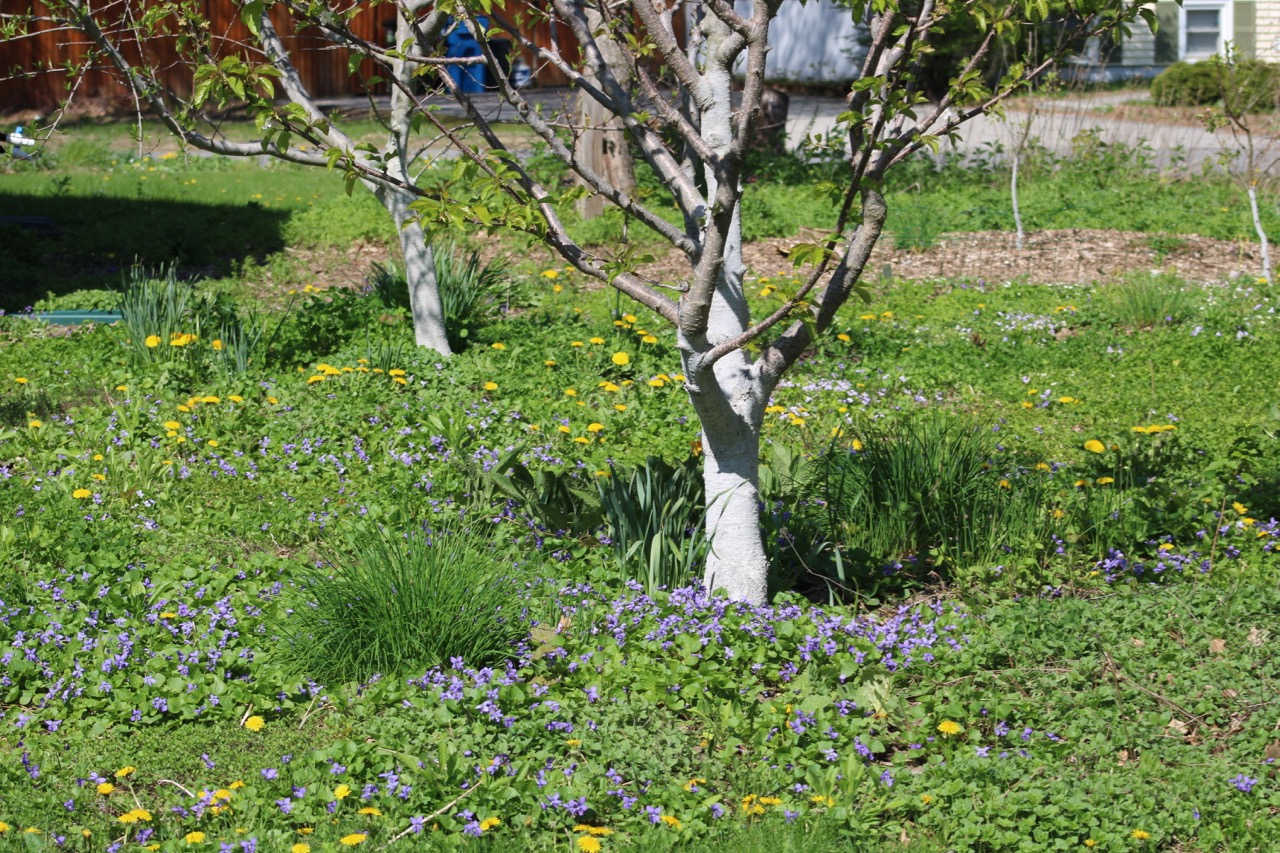
Orchard scene with tree trunks and branches painted white, surrounded by ground cover of violets, dandelions, and chives

I walk through the orchard and marvel at the beauty of violets which have naturalized all over the ground. Dandelions offer a scatter of yellow along with a few daffodils, and clover has spread over the beds and paths in a swath of green. Chives and oregano and thyme are coming up in their clumps. I can’t capture it in a photo, but perhaps the one above hints at how lovely it has grown, mostly all on its own.

The cherry trees actually now have a few blossoms–maybe a dozen new buds have opened after initially all of the buds were empty. Not enough really for a fruit crop, but I wanted to note it. However, our Honeycrisp apple tree is covered with buds, for the first time. Maybe this will be the year of our first apple harvest?

I haven’t tried to do any veggie planting yet. Mostly I just walk around enjoying how the wild flowers shine in the sun. Yesterday I lay in the hammock reading for a while, and we had a lovely visit with a friend by the pond. We haven’t seen any tree frog eggs there, despite the repeated singing in the night. It is all a process of discovery–will they choose our pond or not? Meanwhile, the marsh marigolds have bloomed! My favorite flower colors are yellow, blue, and violet, so right now I am in paradise!

Marsh marigolds have yellow buttercup style flowers on tall stems, with round green leaves. the background is pond water with out of focus reflections of trees.
Marsh marigolds in the pond.

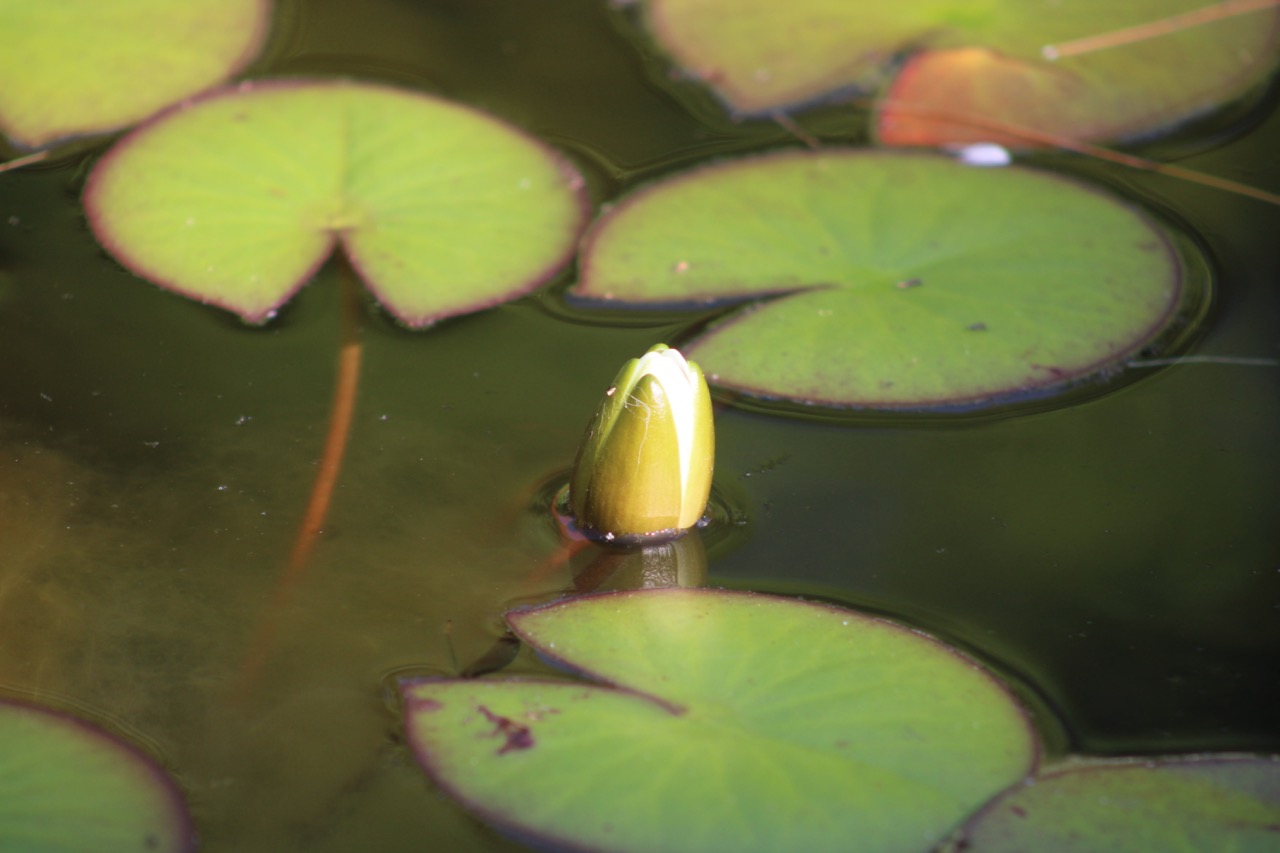
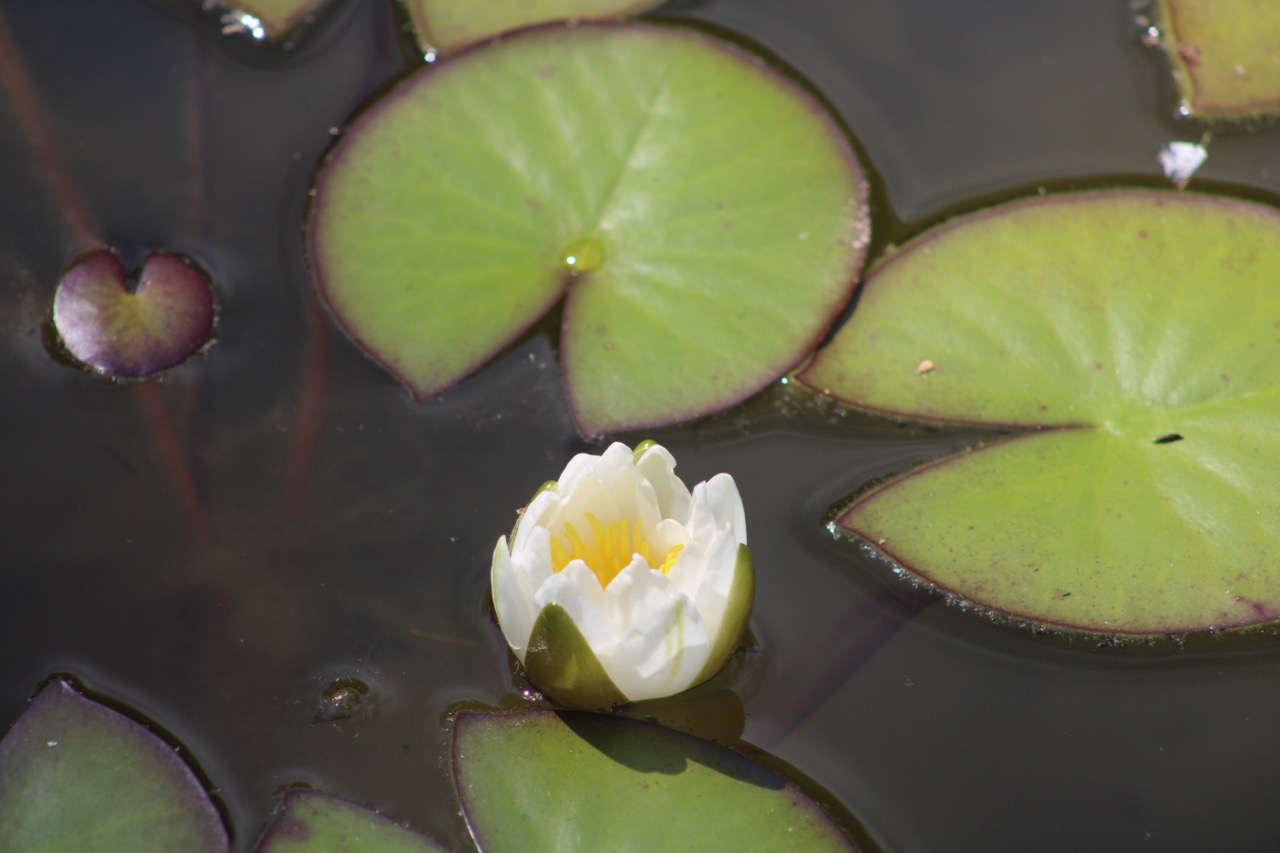
Pond lily opening

The first pond lily bud appears on Saturday in our pond.
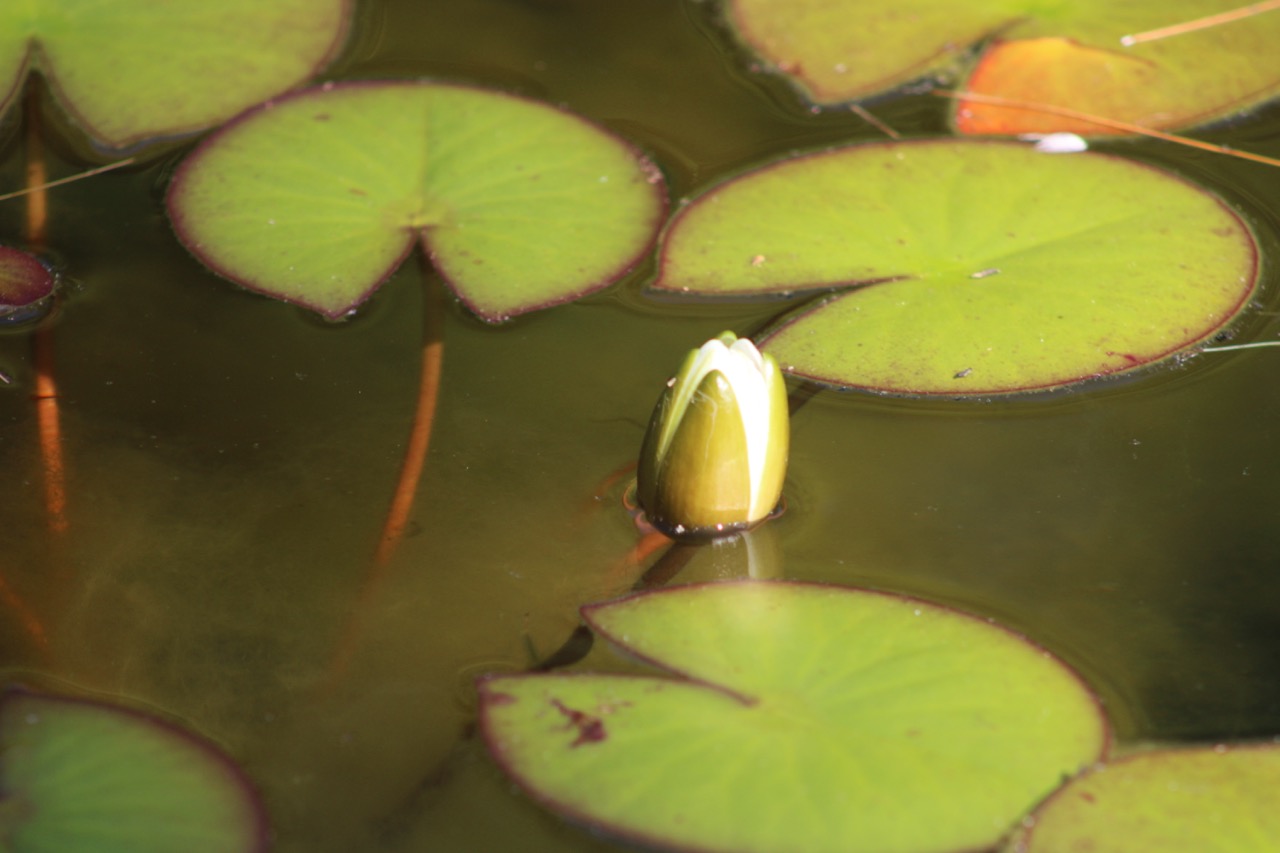
It starts to open slowly on Sunday.
I sit by the pond during the morning to watch it as it changes.
very slowly…
It is so meditative to sit by the pond watching the lily. I also see a frog, and some dragonflies. I add some water to the pond from the rain barrel, which is why the lily now seems deeper in the water.
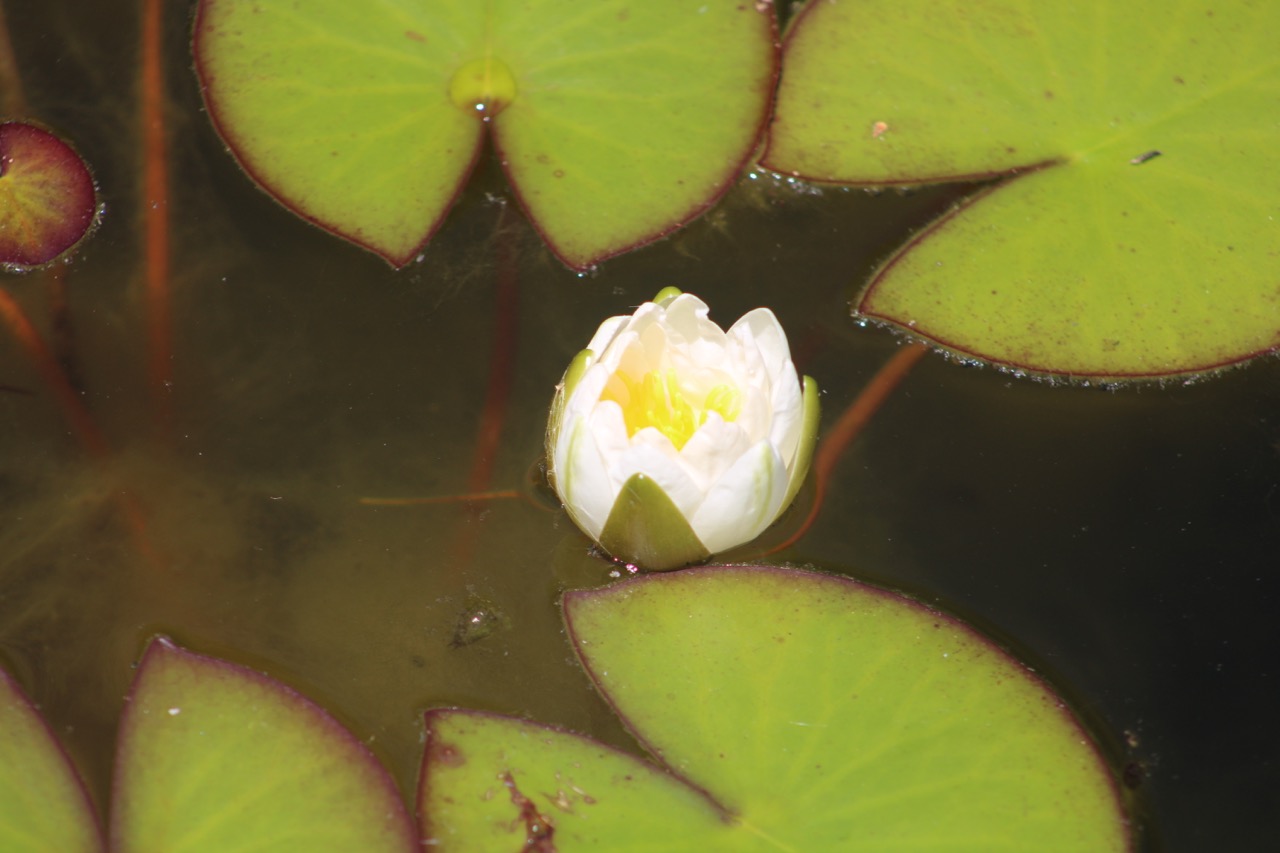
As it opens it forms a little white cup, with yellow peaking out from the center.
It reminds me of an egg.
It doesn’t fully open on Sunday, and once the shade of the trees cover the pond in the early evening, it closes up again.
This morning, early, it is still closed up. I watch for a while, and then go inside to eat breakfast.
When I come back out mid-morning, here it is in all its beauty!

Tiny Magical Moments

Dandelions with puffy seed heads, after the birds were gone

Sometimes the best pictures are only in the mind, never caught on a camera. I was sitting with Billie in my blue easy chair in the bedroom, and something caught my eye outside the window. It was a goldfinch couple, perching in the peach tree, and then hopping down to the plants beneath. The bright yellow male landed on a dandelion stem–it was a long stem with the flower already gone to seed in a fluffy sphere. The olive green female was perched nearby on another long stem, with a closed flower head above her.

The male carefully made his way up the stem, even as it was bending down under his weight. He made a few tries on different stems. Finally, he succeeded in reaching the fluffy sphere and began pecking at the seeds. I never knew that dandelion seeds were a source of food for goldfinches. I’m glad that I didn’t cut them down! A short while later, they had gone, but I took this photo of the place where they had been. Even though you can’t see them there, in my mind, I can’t forget his purposeful climb along the stem.

Later, I went to sit by the pond, and noticed something tiny and new and green. Several of the perennial pond plants that I planted last year haven’t come back at all. Cardinal flower, blue-eyed grass, arrowhead, and pickerel rush. They were supposed to survive Maine winters so it was a great disappointment, but I kept waiting and watching, since this is the first spring for the pond. Well, today, I found three new tiny stems with distinctive leaves. There are three new arrowhead plants coming up. They are near where the previous plants were, but don’t seem to be emerging from the roots. Maybe they are sprouting from seeds that fell into the water last fall?

You never know when something new might emerge from the hard work that you did before.

New arrowhead shoot with one leaf, enlarged photo

Pond: a little frog

Photo: The pond sides are now covered with stones.

This morning, when I approached the pond, I heard a distinctive plop! And later, approaching again, I saw a tiny frog leap quickly from the beach rocks into the water. Another plop! It is our first frog. (Or maybe it is a toad–still not sure). No chance to catch it in a photo. But I am sure it was the best sound all day! And in more good news, most other pond projects are now complete.

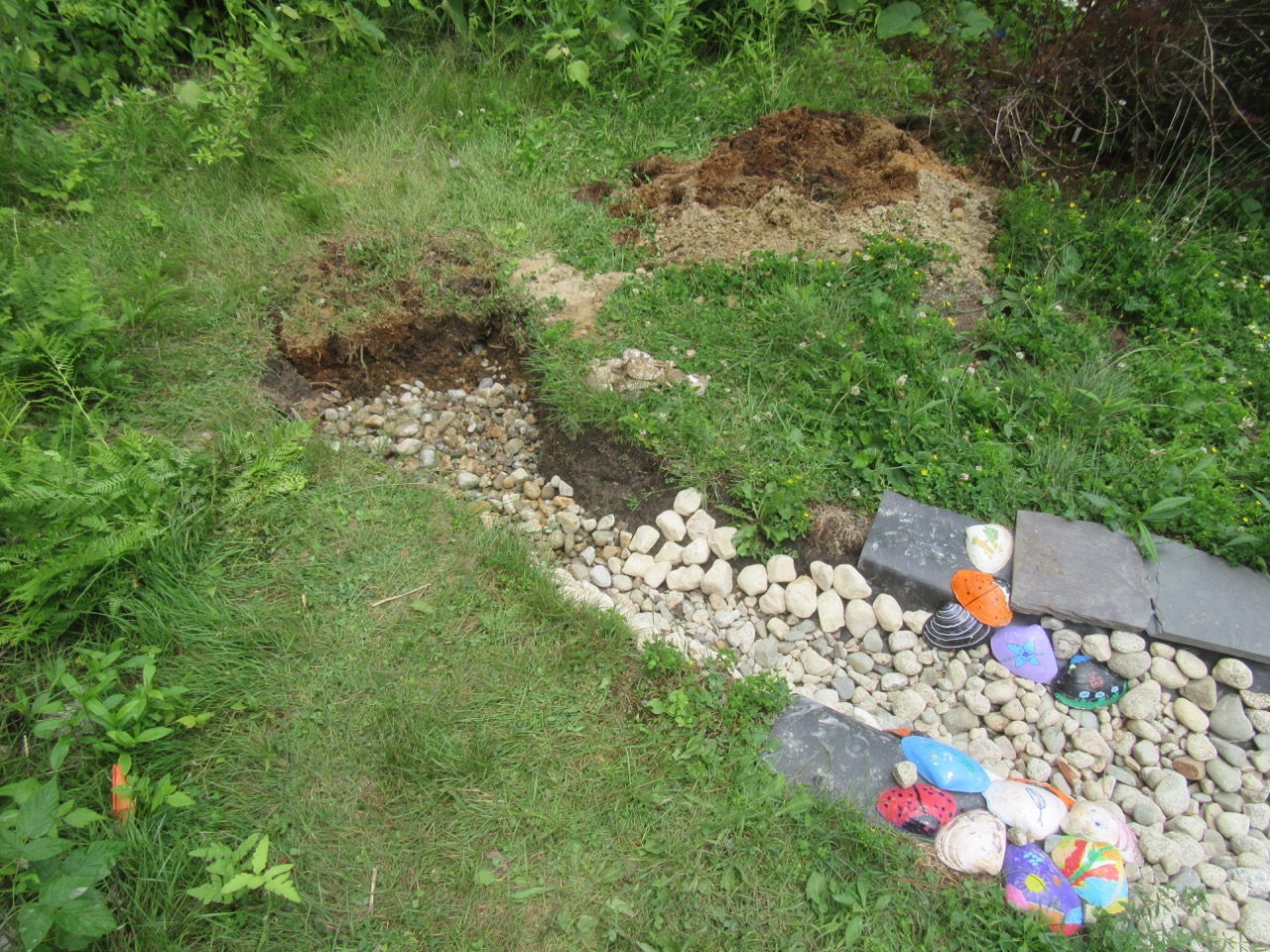
The other day I used up the rest of the half-yard of stones I had gotten delivered early in the process–I added more to the planting ledge so that the plants were better anchored, and then I planned to use the rest of the stones in an upgraded overflow channel spill hole.

We had two inches of rain from tropical storm Elsa, and I was out there in my raincoat in the rain with a shovel, digging the spill hole bigger so muddy water wouldn’t flow back into the pond. Yesterday, I took a leaky five gallon bucket and drilled lots of holes all over it, so water would flow through it easily, but it could hold stones. Then I dug the spill hole deep enough to put the bucket down below the level of the spillway. I filled the bucket with small stones, and also put stones underneath and around the outside of it, finishing up with it today. Another rain is coming tomorrow so I will see if it works.

Photo: white plastic bucket, after drilling holes in the sides and bottom
It is hard to show the slope, which goes down from the spillway on the right gently down to the hole on the left. The bucket is completely buried with more stones on top. I also repurposed some painted shells that had been made for me by the kids in my old church when I retired.

I have gone on many adventures looking for stones on the side of country roads, but I finally succumbed to the temptation to buy a few more bags of stones at the big box store. (I had tried that once before but the quality was terrible.) I needed more small stones to fill up the spill hole, and I needed larger ones for one small section of pond siding under the little deck. The small ones enabled me to complete the spill hole. The larger ones were a weird cream color, that left a creamy residue when washed. I don’t know what they do to them. But I put them in place, along with a few bricks, under the little deck, and now it is complete.

Since my last posting, I was also delighted to receive some blue flag iris from our friend Lisa Fernandes, who gleaned it from her pond. They are already growing new shoots! You can see them in the upper photo, the largest plants on the other side of the pond. I also transplanted my little pond lily tubers into a larger basket filled with stones, and placed them on the lower shelf.

It is so lovely to sit by the side of the pond and watch the reflections on the water… may you have such loveliness in your life.

Ice Beauty

No matter how many years I have lived, I am still brought to utter delight by the icy beauty of plants in the sunshine, after a freezing rain. There is nothing so bright, so crystalline, so shimmering!

I have lived most of my life in Northern areas of the United States (except for 6 months in Texas when I was seven.) So we here are accustomed to all sorts of wintery weather. But today I am also thinking of my relatives in Texas who are in their own icy cold, so rare in that place that they are dealing with burst water pipes, lack of heat, lack of electricity. I wish for them and all their neighbors warmth, help, and support to face the challenges.

These are the among the dangers we face more and more from climate change, or as some say so accurately, climate catastrophe. I wish we could come together as one earth community to begin to live differently, to live as if our lives are totally dependent on our mother Earth and all of her beings. Because we are. And even working together we will face difficult days ahead. So much has already been lost and altered. And still, we must also be so compassionate during these difficult times, because unless we love, we can never come together as one earth community. And we must keep hold of joy and beauty, or we will lose hope altogether.

So I am sharing these photos from around our yard for beauty. May the beauty of nature help us in all of our troubling times!

Icy tree branches sparkling in the sun.
Icy plants against the fence.
Icy St. John’s Wort through the window.
Icy yew branches just outside the door.

All the Water Is One Water #3

In honor of World Water Day, part 3 of my chapter “All the Water Is One Water”from Finding Our Way Home.

At the Earth Activist Training we learned about Permaculture, a science of designing systems that can meet human needs while regenerating the land around us. Its ethical mandates are to care for the earth, to care for the people, and to share the surplus. I especially loved the cheerful atmosphere of hope and creativity that was engendered. Much of the environmental situation is foreboding and terrifying. But at the training I discovered a merry band of folks who sang while they gardened and went around the world demonstrating alternatives that make a real difference.

Permaculture observes natural patterns to create highly productive environments. For example, it uses the model of the forest to create food forests—gardens of fruit and nut trees, vines, bushes, and ground cover that can function together to feed a family while nurturing the land in a sustainable way. Agribusiness narrowly regards one crop as the only valuable entity, and sees all other life forms as weeds or pests. But if we look more closely at the natural world, we discover diversity is the norm and there are beneficial relationships throughout the plant and animal realms. In one example recounted by bio-chemist Linda Jean Shepherd,

Researchers at the University of California at Santa Cruz studied the traditional Mexican farming practice of pruning back, rather than pulling, a weed that commonly sprouts between rows of corn. They found that the roots of the weed Bidens pilosa secrete compounds lethal to fungi and nematodes that destroy corn. Instead of competing with the corn, the weed controls the pests without significantly stealing soil nutrients from the corn. The practice protects the soil and provides more wholesome food.[i]

The more we learn about nature, the more we see that everywhere diverse plants and animals are interconnected with each other, offering mutual benefit and function; modern agribusiness has ignored this to our detriment. To live sustainably, we must learn from nature, we must open our eyes to the lessons it can teach us about how all beings are related to one another.

Permaculture design also offers sustaining and restorative approaches to our use of water. In a natural landscape, water is absorbed and held in place by plants and trees, and advances very slowly through the ecosystem. When the surface of the earth is covered with concrete for buildings and roads, the water rushes quickly over the surface, picking up pollutants it brings to rivers and lakes. When forests are cut down, or grasslands uprooted for agriculture, the drylands can devolve into desert. Permaculture designers have created tools to slow the water down, and capture it for use. These designs can purify water moving through a system, or reverse the process of desertification.

Swale

[Swale creating at the Earth Activist Training]

We learned about and built one such tool, called a swale. This is a small ditch created in alignment with the contour of the sloping soil, so rain washing over the soil will be captured, and can be used in plantings near the edge of the swale. The plantings then serve to keep the moisture in the landscape. A swale can also be used to direct water from one area to another. The goal is to slow the flow of water for as long as possible, and thus restore the fertility of the soil, rather than letting the water wash away into creeks that flow rapidly out to rivers and to the sea.

Adopting another practice, Margy and I purchased two rain barrels to collect the rain-water that ran off our garage roof, for use in watering the blueberry bushes and vegetables and flowers we had planted in our front yard. We learned about how high off the ground the barrels needed to be, in order for gravity to pull the water all the way to the plants. We learned that water in a rain barrel heats up in the hot summer sun. We learned how quickly a rainstorm can fill two fifty-gallon barrels.

It is important to take these small steps toward changing our relationship to water use, even in our comparatively water abundant climate in Maine. Even here we need to learn about conserving water and treating it with respect. We face challenges from multinational corporations who bottle our Maine water for sale around the world. The bottled water industry isn’t concerned about the water needs of local communities or ecosystems. They negotiate contracts to extract the water for almost nothing, and put it into plastics that end up in the waste system causing further pollution.

Permaculture design follows the principle that in nature there is no waste. What one system doesn’t need, another system uses. Our human society wastes an incredible amount of water, even though we know it is scarce. We use it for washing and showering and then let it drain into the septic system or sewer. Why not build gray water systems that take the water from washing and showering and pipe it out for use in the garden?

[i] Quote from an article by Linda Jean Shepherd, “My Life with Weed,” The Sweet Breathing of Plants: Women Writing on the Green World, edited by Linda Hogan & Brenda Peterson (New York: North Point Press, 2001), 200.
Life and Death in the Back Yard

Yesterday I was sitting in a recliner in our back yard, just soaking up the sun, and listening to the birds and other critters. Suddenly, a hawk flew to the ground about 20 feet away from me and landed awkwardly. Its wings seemed to be splayed over the ground, and it was facing away from me. I didn’t have a chance to get a good enough look to identify it, but got an impression of a light color. I was surprised it was so close to me. Then it flew away toward the back of the yard, and I saw it was carrying a chipmunk in its talons.

I was astonished and humbled to witness this moment of life and death in the world of nature.  Perhaps the hawk was taking food to its young.  Perhaps the chipmunk was the one who, earlier in the day, had been startled to see me in the screen tent, when it poked its head under the fabric at the bottom.  I thought it would run off, but then it scampered right under my foot on its way to the other side of the tent.

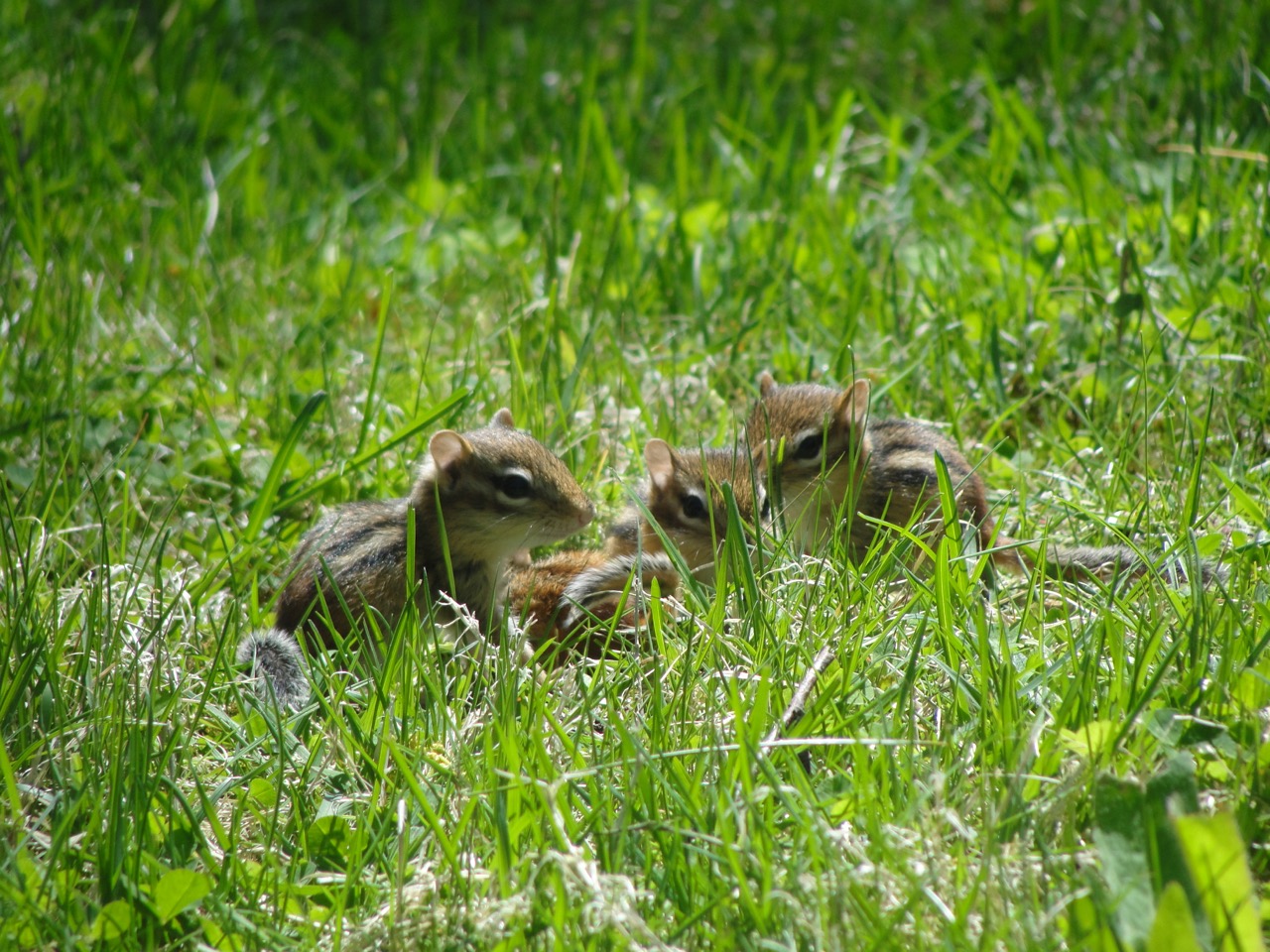
Two years ago, just a little later in May, I had seen four baby chipmunks in the yard, in about the same place.  I went outside and sat down near them and watched them play.  They were completely unafraid of me and didn’t mind my presence close by.  At one point, they heard an alarm call from their mother, and ran to the hole to their underground homes, and sat right nearby looking around and waiting to hear if they must go back inside.  But mother must have given the all clear, because they resumed their play.

I wonder if today there are babies underground waiting for a parent to return. The yard became utterly quiet after the hawk attack, except for an alarm cry from a bird or another chipmunk–I wasn’t sure. No birds at the feeder, so squirrels chasing each other up the trees, no chipmunks emerging from the rain spout. But later in the evening, life went on.  At least two other chipmunks were dashing back and forth, and gold finches lined up to get their turn at the feeder.

What a gift to sit outside each day, learning what the land wants to reveal of her secrets.  What secrets have you discovered, just sitting outside being quiet?

Chipmunk babies

Chipmunk babies

Human Beings Are Part of Nature

Many of the ecological problems we face are rooted in a foundational assumption of western culture that human beings are separate from nature. We see ourselves as distinct and superior to nature, and imagine that the earth is like a resource bank to exploit for our own use.

Starhawk, in The Earth Path, notes that some environmentalists go the opposite extreme. Because of the devastation that human actions have caused, they see human beings as a “blight on the planet,” and suppose that the earth would be better off without us. But, as she points out, “it’s hard to get people enthused about a movement that …envisions their extinction as a good.”

What we need to understand—emotionally, intellectually, physically, spiritually—is that we are not separate from nature at all. We are part of nature. She passes on a story from Allan Savory, about land management in Zambia and Zimbabwe in the 1950’s.

People had lived in those areas since time immemorial in clusters of huts away from the main rivers because of the mosquitoes and wet season flooding. Near their huts they kept gardens that they protected from elephants and other raiders by beating drums throughout much of the night… [T]he people hunted and trapped animals throughout the year as well.

The herds remained strong and the river banks lush …until the government removed the people in order to make national parks.” The parks set up rules to protect all the animals and vegetation from any sort of disturbance. Within a few decades, the vegetation had disappeared from miles of riverbanks. What they discovered was that the fear of human beings kept certain grazing animals on the move, and that prevented over-feeding that damaged soils and vegetation. With the removal of one species—the human farmers and hunters—the ecosystem had lost its balance.

Photo by Margy Dowzer

Photo by Margy Dowzer

This story illustrates the truth that human beings belong to this earth—we are a part of the ecosystem, for good or ill. We can be a part of the balance as well as a cause of the imbalance.

Some Indigenous stories of North America say that we are like a younger sibling on this earth. The other beings and species are more acclimated to their purpose and their relationship to the whole. And so, when we are feeling overwhelmed by these messes we have created, we might turn to our older relatives on the earth to find wisdom for our journey.