Planting Peas

Planting peas

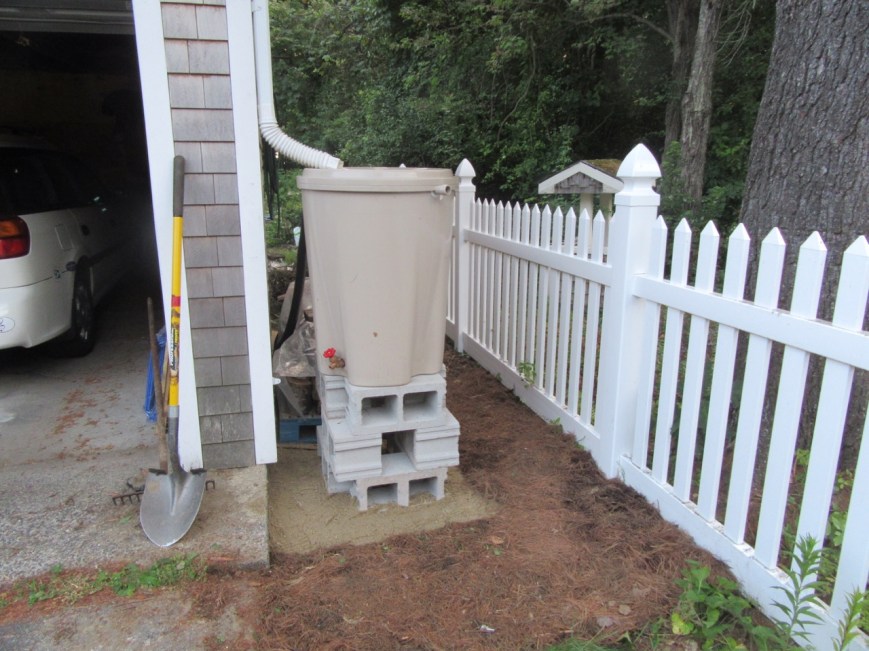
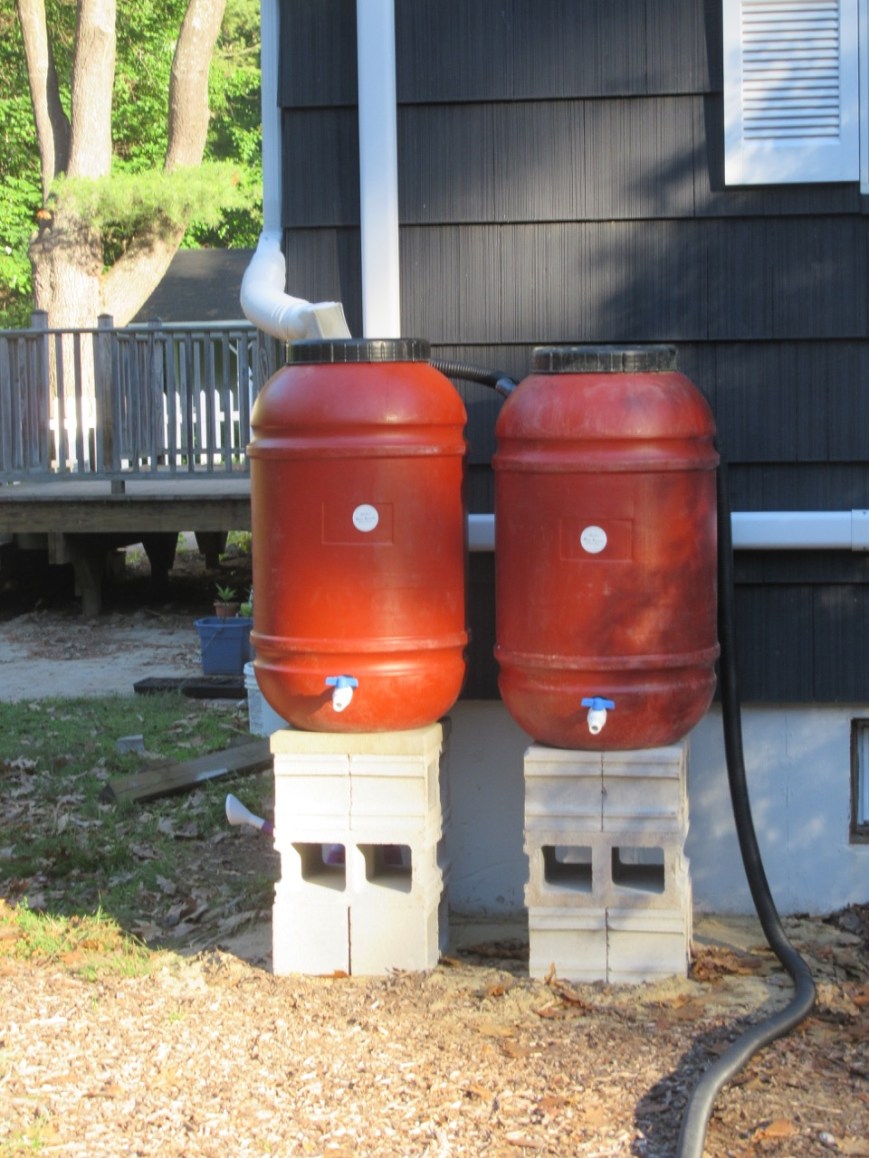
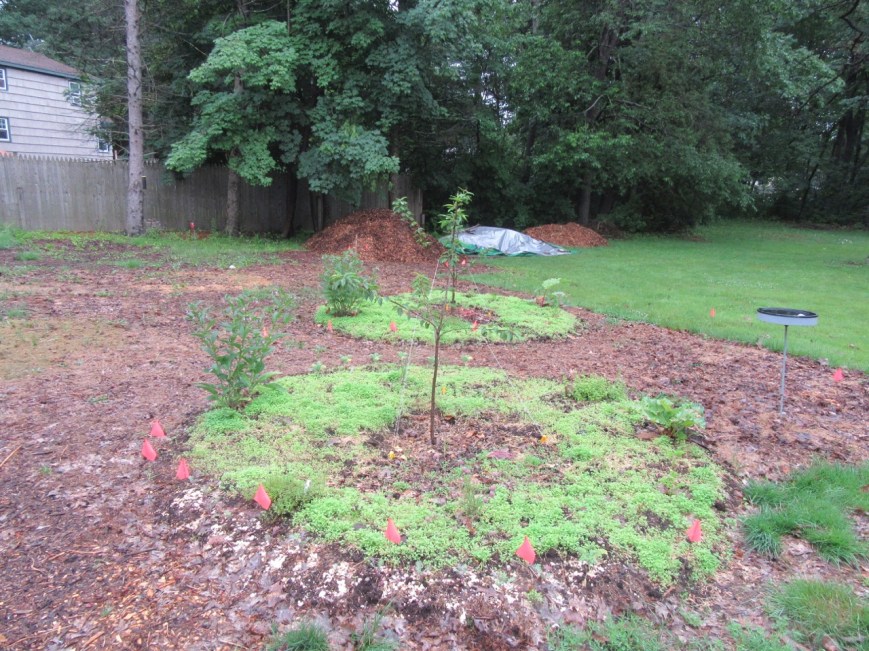
Friday, March 30, on the day before the full moon, I planted 32 sugar snap peas in the garden bed that I created last fall.  It seems early, but the ground was workable, and I set up the string trellis for them to climb, and re-attached the rain barrels near the back of the garage to make it easy to water them.  (And today it is raining!)  We’ll see how they do.  I will plant more a couple weeks later so that we get peas ripening in stages.  And we’ll add lettuce and carrots and spinach which like to grow with peas, and maybe other things too.  Last year I focused on perennials, but this will be an annual bed.

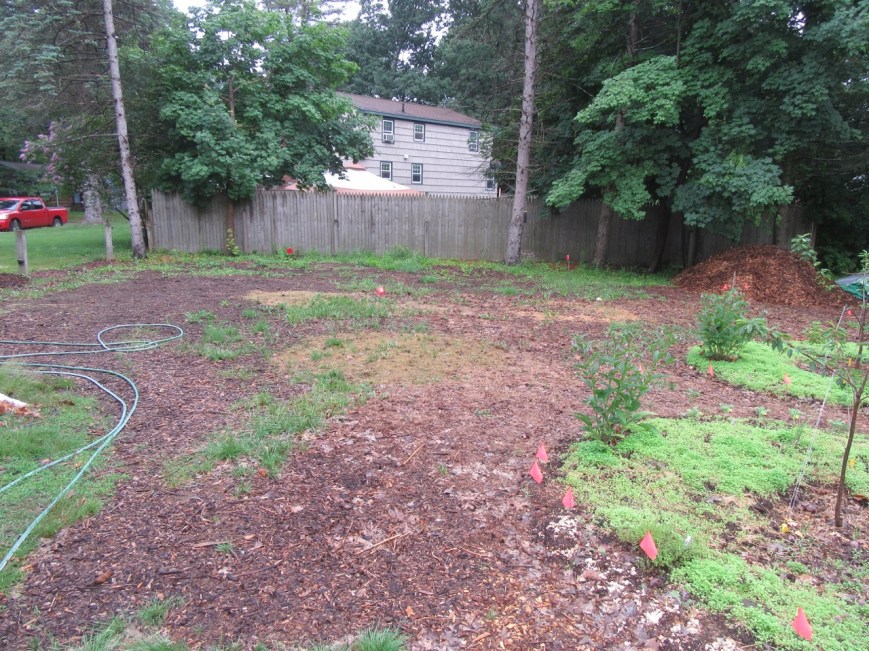
We noticed last spring that this area was free of snow before other parts of the yard, and got some good sun.  In permaculture, observation always comes first!  So we put this spot into our plan for a veggie bed.  Then, as I was starting to dig out the pond late last summer, I needed to put that top soil somewhere.  So I laid down cardboard over the grass in this spot, and then added layers of soil with compost and grass clippings and other amendments to create a raised bed.  There is still a long ways to go before the pond will be done–who knows how many more raised beds it will inspire?

By the way, that long black hose you can see in the photo is an overflow from the rain barrels, and eventually will be attached to another length of hose to be the water source for our pond.


Too much water, too little water

I have been thinking about the flooding in Houston, and all the other devastating ways the planet is adapting to our carbon in the air, with changing weather patterns, intense storms, different water patterns.  Thankfully, my sister and other family members in the Houston area are safe.  Meanwhile, we have drought here in Maine.  It hasn’t rained for over ten days. I don’t have answers for what to do about the new reality of flooding in our land, but I thought I could talk about what we are doing to address drought here in Maine.

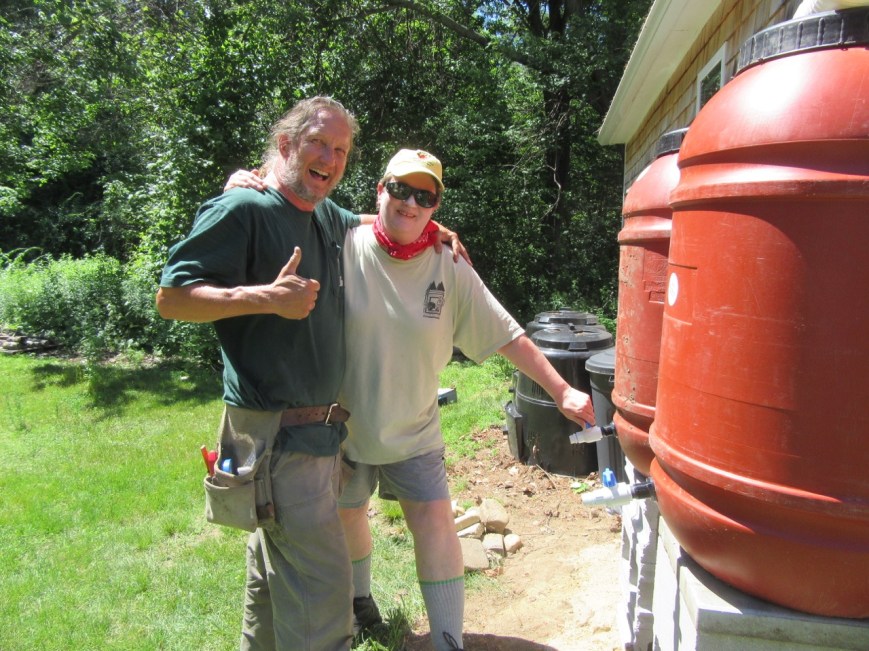
So, last week, we were able to finish the rest of our rain barrels!   One of the useful aspects of rain barrels is to preserve water in the landscape to be able to weather the ups and downs of water flow.  We now have rain barrels gathering the run-off from each roof on our land.

IMG_2823

The final rain barrel is finished!

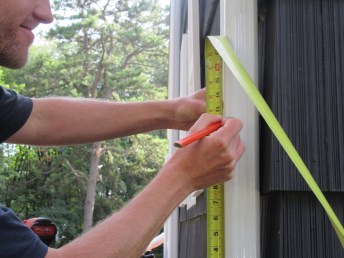
Measure the downspoutI want to post about the learning session that Dave led on the 23rd to finish our rain barrels and teach a few of us more about how to install rain barrels.  I will talk today about how to attach the barrels to the downspouts of our gutters.  Once the rain barrels themselves are positioned, you can measure and mark the downspout about 8 to 12″ above the top of the barrel.

Unscrew the downspout attachment


Then remove the downspout by unscrewing the fastening screws on the wall and to the gutter.  Once those are unfastened, you can pull the vertical downspout apart from the connectors to the gutter.

Unscrew the connector


The fun part is cutting the downspout itself to the right length with tin snips, using both right-handed and left-handed snips.  (Right handed are red-handled, and left are green.) The basic idea is to mark the downspout with a pencil line all around, and be aware of the part you are going to keep, and the other part which will not be part of the finished downspout (the scrap side–but you can save it for other uses.)  Then punch a hole with the point of the snips near your line, but in the scrap side, and start cutting around the marked line.  But, also, about an inch further into the scrap side, you start another cut, so that you can work both those cuts at the same time.  It makes it easier to go round the downspout.  If you are right-handed, you use the right hand snip for your “good” cut, and the other snip for the helping cut.  This picture shows a left-handed person making the good cut.  As you go around the pipe you can cut off that little strip so it doesn’t get in your way.Cutting the downspout

Once the downspout is cut, you reattached it to the gutter, and reattach the screws, or make new ones as needed to attach it to the wall.  Then, attach a plastic downspout extension piece that you can buy at a hardware store in large or small sizes, and position it to end over your rain barrel  (see first picture).  Hurray!


Oh!!!!

Digger ProblemI had a revelation!  I have been thinking I was having a tug of war with a groundhog, because despite the fact that I had been using a very potent deterrent liquid, each morning I would discover this mess around my cherry tree beds.  But no more plants were being eaten.  So what to do?  I did more research and discovered that the mess in my garden was likely not caused by a groundhog at all.  Because the digger is nocturnal, and groundhogs are not.

Rather, it is likely a skunk (who is a nocturnal digger) is rooting in the mulch for the grubs of Japanese beetles.  And then I realized that the rooting appeared about the same time as the Japanese beetles on the cherry tree leaves (which I have been picking off and dumping in soapy water).  So I don’t really have a digger problem, I have a grub problem.  In fact, the skunk is helping get rid of the Japanese beetles.  But I’ve ordered some Milky Spore disease to inoculate the soil to create a more permanent and organic solution to the Japanese beetle problem and that will eventually deal with the digger problem.

I learn so much every week about gardening, usually through problems.  But I haven’t seen the groundhog lately!  (Knock on wood chips.)  Thank you, skunk!

Layers of Community-Composting

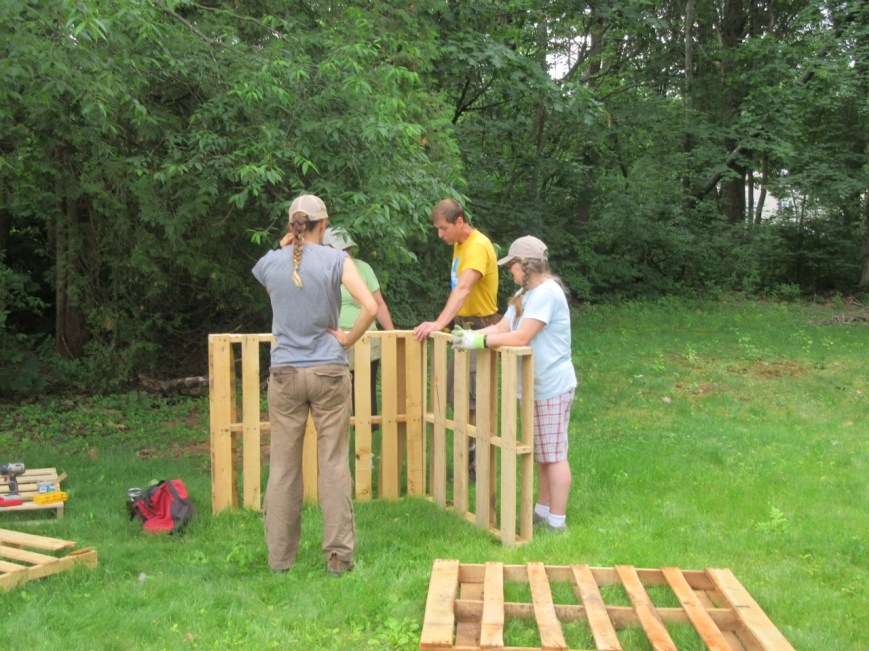
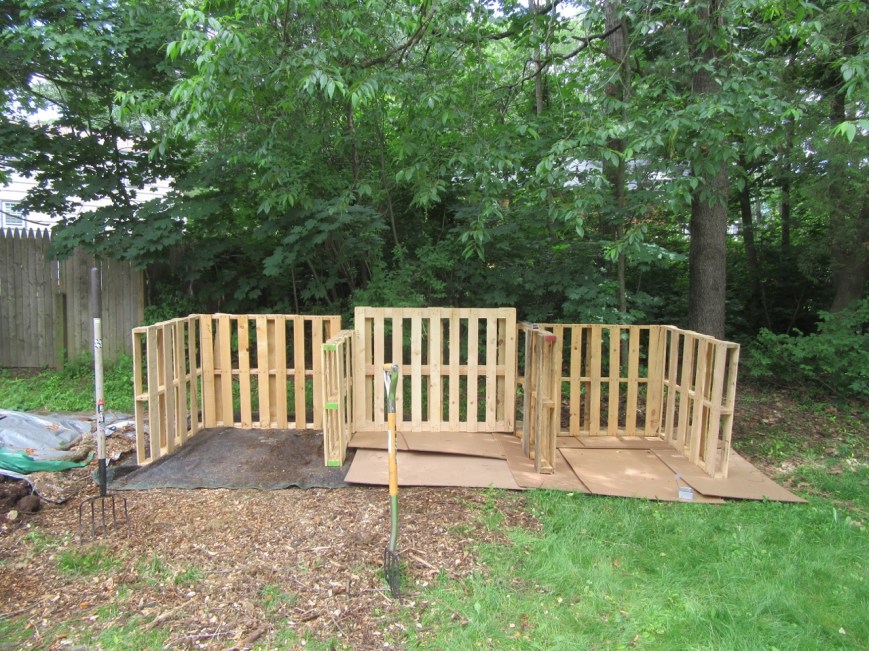
Compost Bin Team Ian, Sally, Ali, MihkuOne more post about the Permablitz!  We had a team of folks who created a composting system from recovered pallets.  We have been using a container system for our kitchen waste, but these will enable us to compost more yard waste.  One of the principles of permaculture comes from the fact that in nature there there is no such thing as “waste”–the “surplus” from any process is shared to be used by another process.  So too in the community of our yard–leaves, grass clippings, weeds, can all be repurposed to create great soil.  And it is a further repurposing to use surplus pallets for the construction!

These use deck screws to attach them together.  And by the way, if you want to make your own, it is important to find Heat Treated pallets, rather than chemically treated–so that your compost isn’t contaminated by arsenic or other metals.  Heat treated pallets are marked with an HT on the wood.  Heather found these lovely-looking pallets for us.  Margy and I had been finding them here and there, but most of ours were pretty banged up.

When you first establish a permaculture garden, you often have to import soil amendments and wood chips and such, but ultimately, you want a garden that is self-contained, that creates its own mulch and compost and good soil.  We imported 4 cubic yards of compost for our garden bed project, (and just the other day purchased more for the blueberry beds) but hopefully at some point in the future, we won’t have to import compost any more, because the yard itself will making enough of it.

What might our world be like if we eliminated the whole idea of “waste” from our communities?  If every surplus was shared for another process or function?  If nothing and no one was ever thrown away?

Compost Bins Done!

Finished!  By the way, you don’t have to put cardboard or tarps on the bottom–we did because of the bittersweet in our yard–to discourage it from growing into the compost bins.


The Visitor

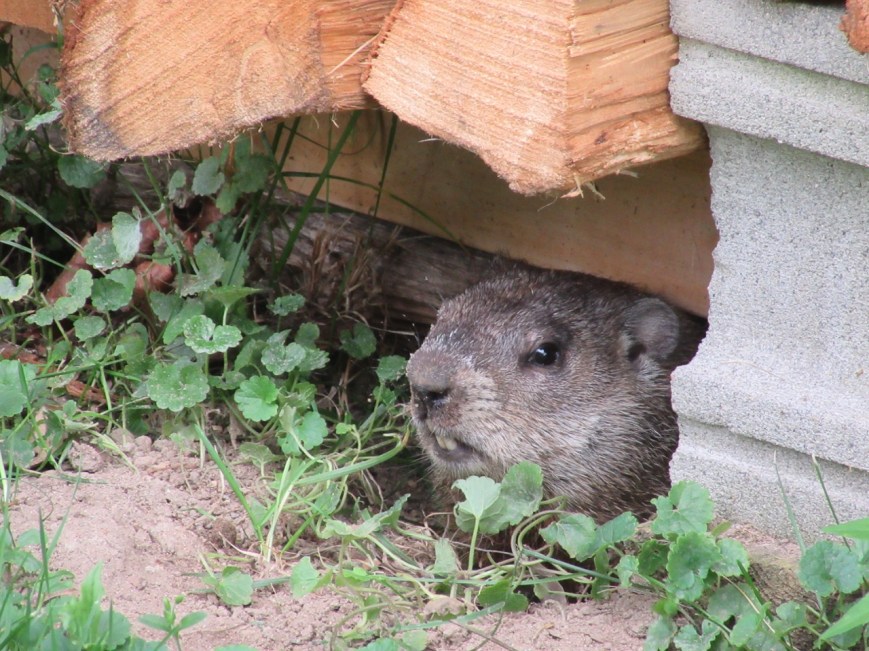
Woodchuck hiding under woodpile

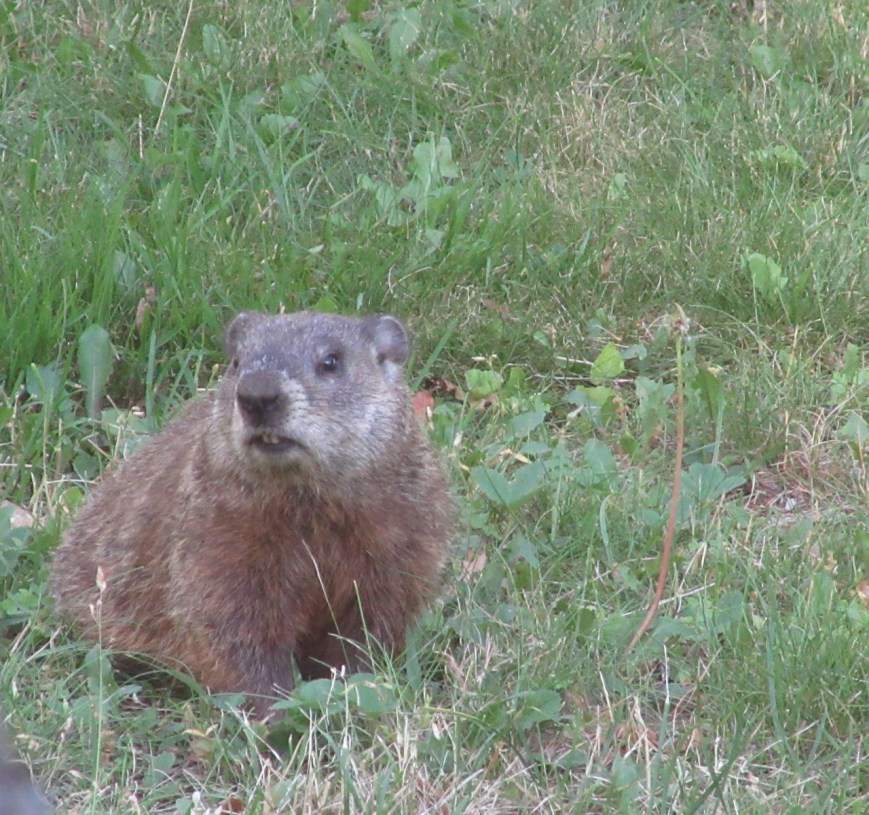
Our neighbor mentioned this little woodchuck (aka groundhog) had eaten her flowers when she planted them, and now she or he has been visiting our yard.  When we saw him the other day through the side window, he was eating something in the grass between our two houses.  I went outside to take a photo and he lumbered over to hide below the neighbors woodpile.  So cute.  But the next morning, some of my kale plants had been eaten. Coincidence? I don’t think so.

Ever since we’ve been planting trees and making new garden beds, we’ve had many more birds and other critters come into the yard.  So mostly that is a wonderful thing.  But we are hoping to grow food!  So I will be searching the internet for natural ways to repel them.  Have any good ideas?

Woodchuck


Layers of Community-Fire

After- Fire Circle Close-upComing back to the Permablitz of June 24, another project that was completed that day was a fire circle.  As Lisa Fernandes said, every home needs a place to burn things.  So she was our team leader for the fire circle, and gathered in the layers of community for the element of fire.  With a community of workers!

Ground prep for Fire Circle Lisa & the boysFirst they had to remove big pile of bittersweet brush (that we will eventually burn) from the spot we had chosen.  Lisa and Kristen gathered together the stone blocks that would be used.  (But there could have been other helpers–at that moment I was over in the garden beds.)  Then they prepared the ground with a layer of sand. Our youngest permablitz members got into the sand-tamping process, as well as Lisa and Kristen.

I love the first layer of stones, and the circle that it creates on the sand. I heard that they found this method of creating a fire pit via a youtube video.  The second layer (in case anyone wants to copy) uses a staggered spacing on top of these, and includes four openings for air–which they positioned to the north, east, south, and west.  Then a third layer is placed on the top.  Somewhere in the process, for the middle layer, you have to knock off a little edge on the bricks.Fire Circle first layer on sand.jpgFinally, they brought a whole pile of pine mulch for the seating area around it, and then laid some bittersweet brush and pine cones for our first fire.  Permaculture is not just about a way of gardening but also about how communities care for each other.  Its three principles have been summed up as earth care, people care, and future care.  So having a place to gather with others is an integral part of our permaculture design.

By the way, if you want to see all the photos from the day, you can find them at the Meet-up site.

Layers of Community-Rain Barrels

Barrel Spigot Trial Dave & Margy

[Margy and Dave testing the spigot height]

Part of the work of our Permablitz on Saturday was installing rain barrels.  How is this a layer of community?  Because water creates a link between all living beings.  When it rains, water washes over the land, and also pours from our roofs into gutters and downspouts.  By installing rain barrels, we have the capacity to slow down the flow of water–to bring more of it into use for the community of plants we are cultivating.  So when it rains, it waters our garden twice–once during the rain, and then once more when we use the water in the barrels to water plants on the dry days.Mike & Sharon hauling cinder blocks


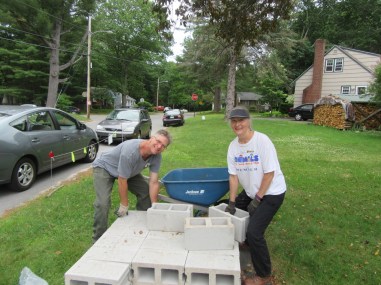
AND: we had a community of people helping to install the rain barrels.  First they had to haul cement blocks to the five sites for the barrels.

Rain barrel team-Dave, Chris, Carla, Harold, Mike, Sharon (hidden)

Then David taught everyone on the team the process of the installation.  I wasn’t able to be a part of that team, but some things I observed.

Rain barrels Carla & Chris

The land at the site was cleared of mulch and grass, and leveled off.  Then sand was added, and tamped down and leveled.  The cement blocks were positioned on the sand base.


Rain Barrel Spigots Dave & Carla


Meanwhile, another part of the team was drilling correct size holes in the barrels for spigots.  These spigots are able to be removed in the winter, so the rain barrels can stay in place. So the spigots were installed.  Holes were also drilled for connecting tubes for overflow and to connect more than one barrel per downspout.

Rain Barrels Dave & SharonWith all that done, the barrels could be positioned on the concrete blocks.  Then, the downspouts were cut short, and a curvy connector was attached to bring the water to the barrel.


Finally it was possible for it all to be hooked up.  The team was able to complete the hook up for four rain barrels, and do everything except the hook up for two more.  We have two more rain barrels that we hope to install later.

After- Rain Barrel close-up


Mushrooms in the Cherry Tree Beds

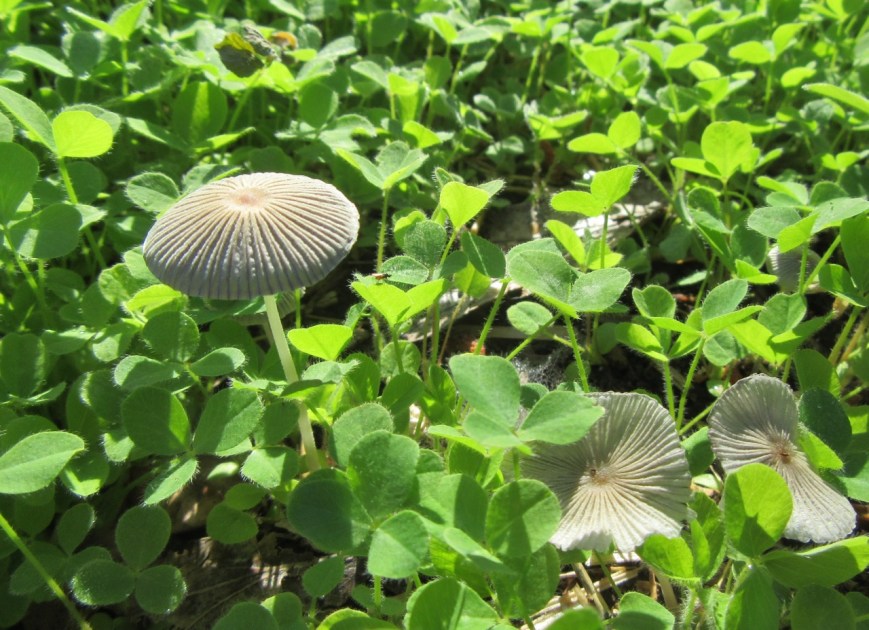
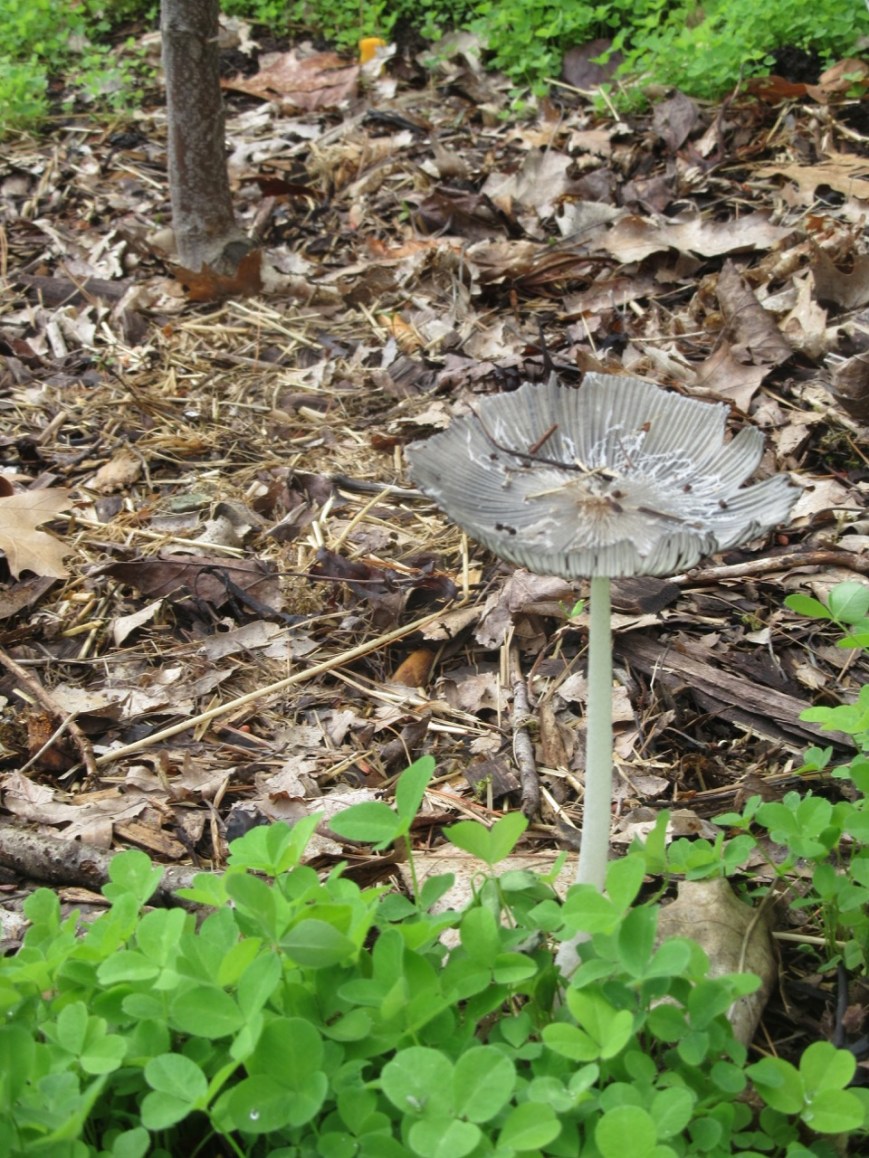
Mushrooms in the cherry bedOur efforts to enhance the fungal community in our yard are suddenly materializing in mushrooms popping up in the cherry tree circle beds.  (Or at least it seems that these efforts are linked.) These came up on my birthday, and then had disappeared by the next day, to be followed by another variety altogether.Mushrooms in the cherry bed, day two

Then, all of those disappeared, but today, I found these in the other cherry tree bed.Mushrooms in the other cherry bedI don’t know mushrooms well enough to identify–is anyone more familiar with these than I am who might give them names?

The Layers of Community

Before-marked for fruit tree beds

[Before–Growing beds marked with flour and flags]

On Saturday, we hosted our Permablitz! (See “more before” photos here.)  Over 20 people came to our yard and worked together on projects such as installing rain barrels, building a composting system from pallets, building a fire circle, and creating five more  growing beds for future fruit trees, raspberry bushes, & hazelnut bushes, and one bed for flowers & herbs.  We also got the first shovelfulls dug for a pond.

Opening Circle-Sylvia, Cathleen, Ali

[Opening Circle]

At the end of the day, I got teary-eyed with the sense of Gift.  The generosity of so many individuals coming together and creating something so beautiful and full, helping us to realize our dreams for this piece of land was deeply moving.  There is something about this giving and receiving of human attention and wisdom and care, that feeds our hearts. Much of our lives are shaped by transactions—we pay a certain amount of money, and receive a product. Or, we put in so many hours and receive a paycheck.  But giving and receiving freely and generously touches something much deeper. Giving and receiving must trigger deep neurotransmitters in our internal chemistry, sparking a profound sense of well-being and belonging.

I also realized how many layers of community are involved in such a project.  One layer is this community of people who care about the earth, and who come together to give and receive, to learn, to share, to grow, to get to know each other.  People connections are made.

Another layer is the community of the soil.  During the blitz I was mostly working with several others on the project for creating new growing beds.  We were adding nutrients through sheet mulching so that the soil could create a thriving fertile community.  I have learned so much about the variations in soil communities from the book The Holistic Orchard by Michael Phillips.

What a food forest needs, what fruit trees need, is soil whose fungal community is stronger than its bacterial community.  In contrast, annual vegetables and flowers and grasses prefer soil with a stronger bacterial community.  A bacterial community is enhanced by tilling the soil and incorporating organic matter by turning it into the soil.  A fungal community is enhanced by no tilling, but rather adding organic matter on the top of the soil to decompose, as it happens in the forest. (Similarly, compost that is left unturned will generate a stronger fungal community.)
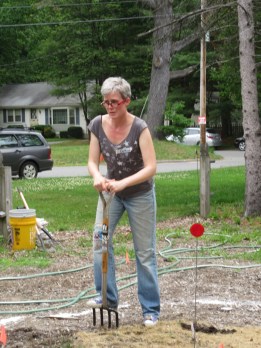
Forking the beds Cathleen

[Cathleen forking the soil]

We prepared the soil by aerating it with garden forks–since it had been rather compacted.  We added some granite dust for mineral enhancement, then put down a layer of cardboard to kill grasses and weeds.
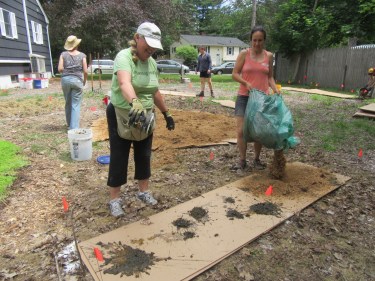
Raspberry Bed-manure & chaff Mihku & Heather

[Mihku & Heather adding manure and chaff]

Then, we added chicken manure, coffee chaff, seaweed, leaves, grass clippings, composted manure, and a really thick layer of deciduous wood chips.  We were able to get a delivery of 8 yards of wonderful ramial deciduous wood chips–these are chips which include lots of thin branches, which have more lignin content that is not yet woody.  The wood chips are the most important part of enhancing the fungal community.

We also made several pathways with cardboard and wood chips, and I will complete those bit by bit in the next days.  Now, the process works on its own–I add some water or it gets rained on–and the microbes will work together over the next several months (and years) to create a thriving soil community.  We will plant trees and bushes next spring.  My friend Roger Paul said that the Wabanaki word for “soil” means giver of life.After-Fruit Tree & Flower/Herb Beds
Permablitz, almost here!

We’ve been getting ready for our Permablitz this coming Saturday–a big permaculture work party where 20 or more people gather to do projects in our yard.  We’ve gathered cardboard for sheet mulching, had a great big pile of deciduous mulch delivered, got a bucket of granite dust, ordered concrete blocks for rain barrel stands, got clearer on a few design elements, met the wise and wonderful folks who will be team leaders for our various projects, and many other details.  And we’ve talked to our blitz coordinator and friend Heather many many times.  Thank you Heather!  We still have to gather seaweed, and get pallets, and make food, and….  You can find more details about the blitz here:   https://www.meetup.com/maine-permaculture/events/240585144/

In the meantime, our cherry tree polycultures are now green with clover. Cherry Tree clover rings

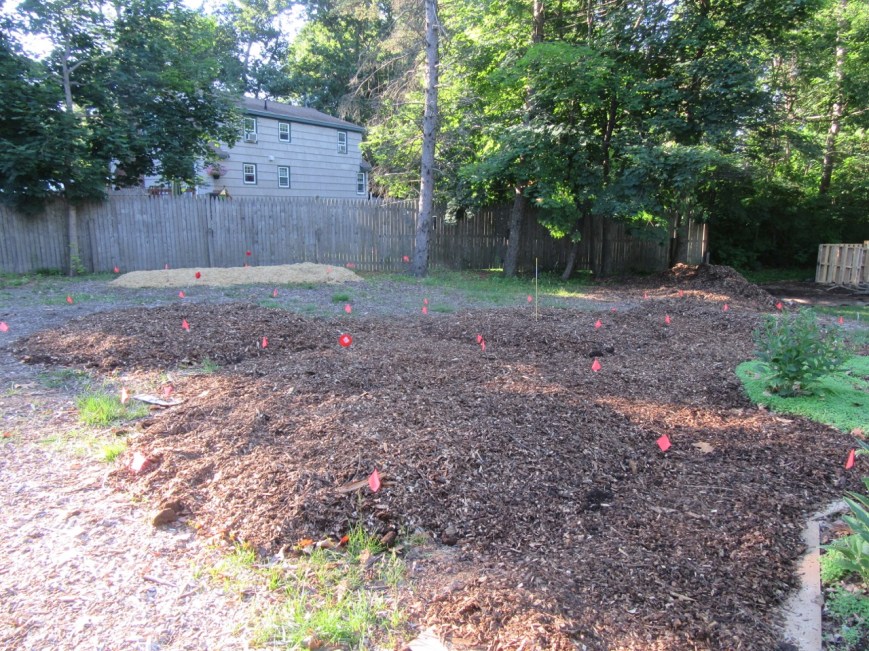
Here are some “before pictures for the yard, first, where fruit tree, raspberry and herb and flower beds are going to be created.

Permablitz before photo

And here the yellow markers mark a future bed for hazelnut bushes to form a little hedge.Permablitz before photo 2