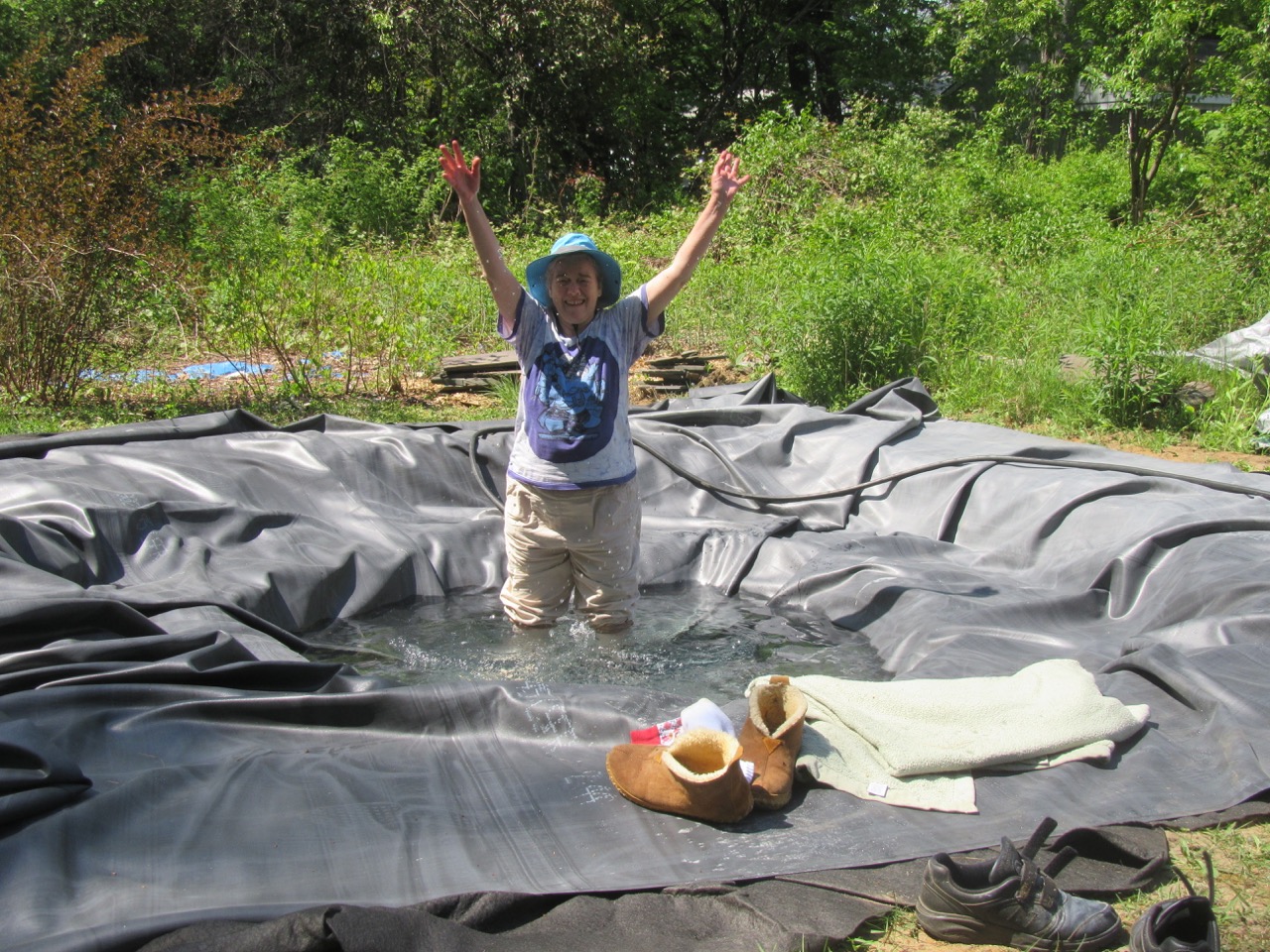
Such an exciting moment when we began to put water in the pond yesterday! It was a sunny hot day, so being in the cold water was great. I found I had to get right into it to do the folds of the pond liner which are necessary when you take a square liner and put it into a round hole. We filled it up to just under the level of the planting shelf.
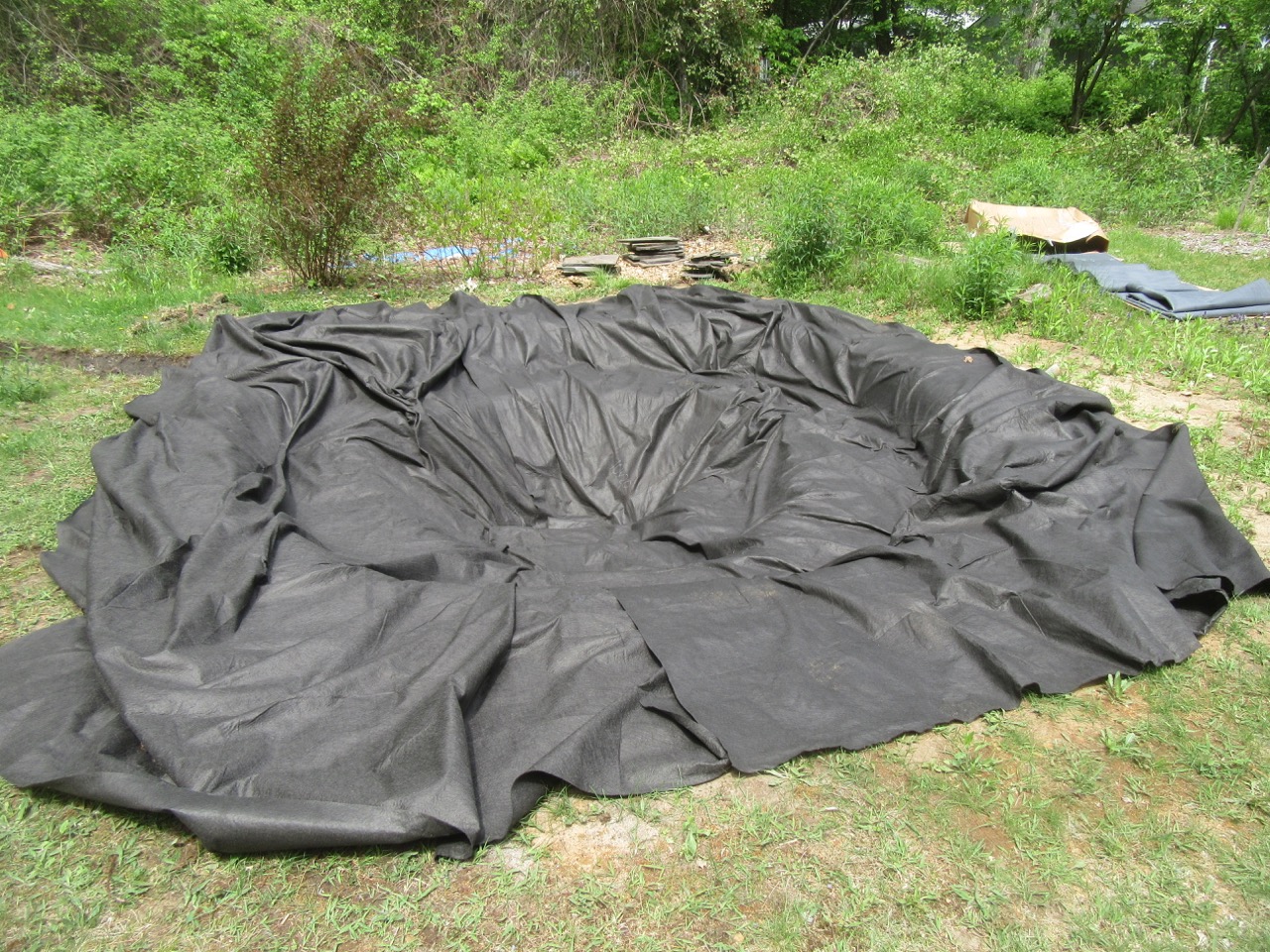
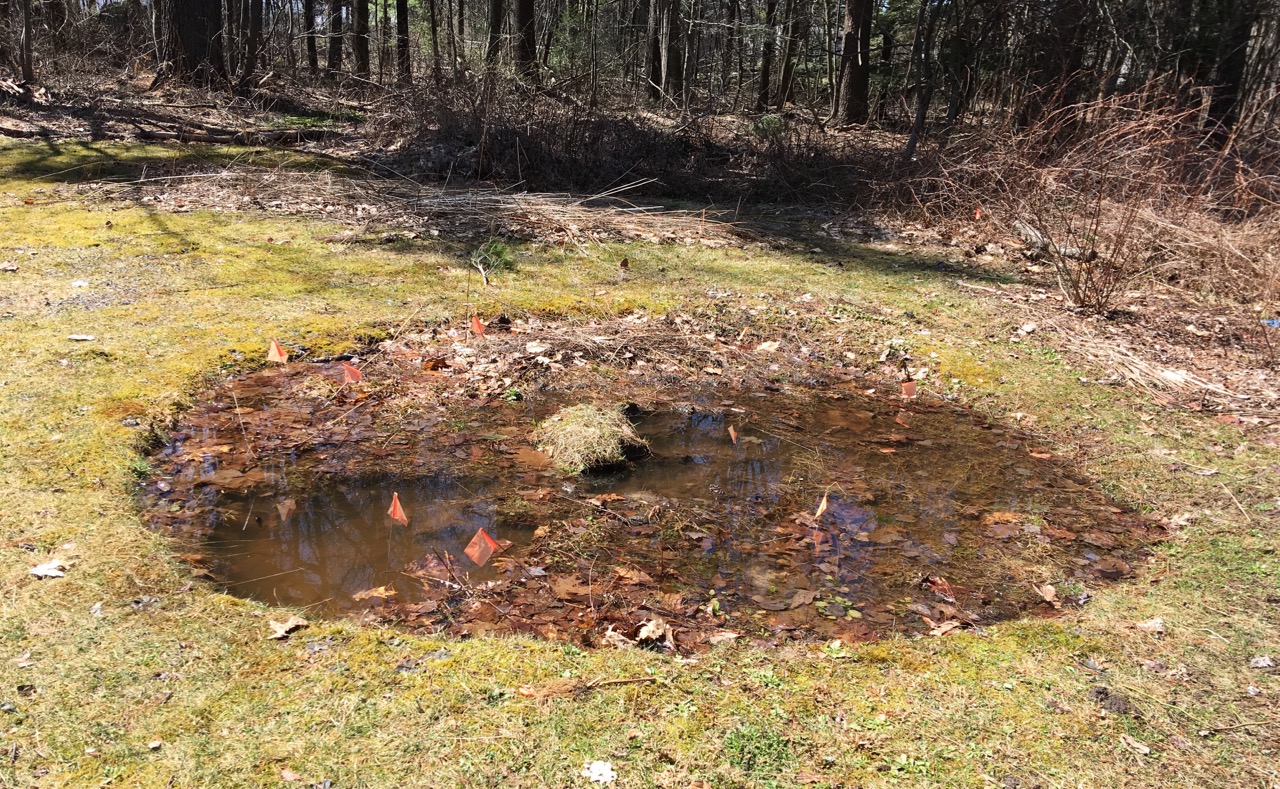
But back to the earlier parts of the process–the first thing I did yesterday was install the pond liner underlayment–a very light felty fabric thing that protects the pond liner. We might not have needed it, because of the carpet strips, but the pond liner is guaranteed for life if you use the underlayment. I had purchased a 20 by 20 foot 45 mil EPDM liner, and the underlayment came in two pieces of 10 by 20. I overlapped them about 3 feet. After that, I also dug further and deeper on the overflow channel, and made sure it sloped away from the pond. You can see it in the left on the photo.
Then, midday, our neighbors came by to help with installing the pond liner itself–the liner is very heavy, but with the three of us (plus a kid!), it wasn’t hard to position it over the hole. So grateful for helping hands! Because the pond wasn’t quite as deep as planned, I knew we’d have extra liner on the sides, so we didn’t have to worry about getting everything exactly centered.
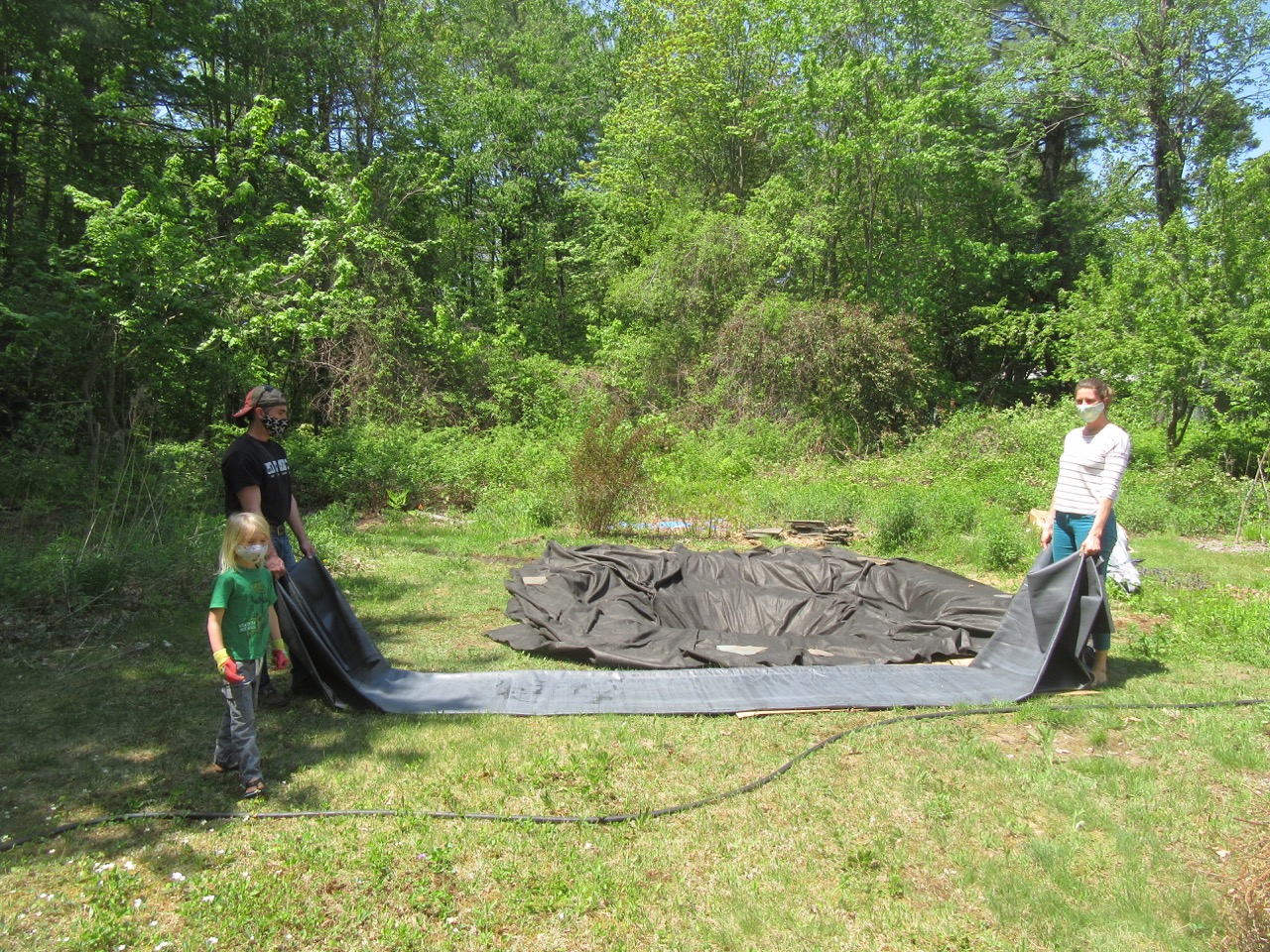
As it turns out, black rubber gets very hot in the sun, so we all wore gloves, along with our masks for COVID.
After the liner was roughly in place, the neighbors went home. I got into the hole and adjusted everything so it was flush with all the surfaces underneath, creating folds where needed. It was recommended by my Building Natural Ponds book to not step on it with shoes, but socks weren’t enough to protect my feet from the heat–so I pulled out my fuzzy slippers and a blanket.

After a short break, we started filling the pond with our garden hose. Water from the house has chlorine in it, but the chlorine will evaporate quickly and so this water is fine to use especially before we have any life in the pond. Eventually, we’ll use water from the rain barrels you can see in the back of the photo, but we’ve had no significant rain for a while. While the hose was running, Margy and I wandered around the back of the yard looking at plants, and then finally pulled up chairs to watch the water fill. And I got in a few times to keep adjusting the liner–glad to have an excuse!
It isn’t the end of the process by any means. I have been doing this step by step, not knowing how long each step would take. The next thing to do, and why we only filled up to the planting shelf, is to cover the planting shelf with stones and pebbles. I’ve collected lots of rocks from around the yard, but will definitely need to purchase more. And that is a bit more complicated than I realized, likely involving borrowing or renting a pickup truck. But in the meantime, I went online and ordered 5 native pond plants that will arrive in about 10 days. It is really happening! And there is water in the pond!




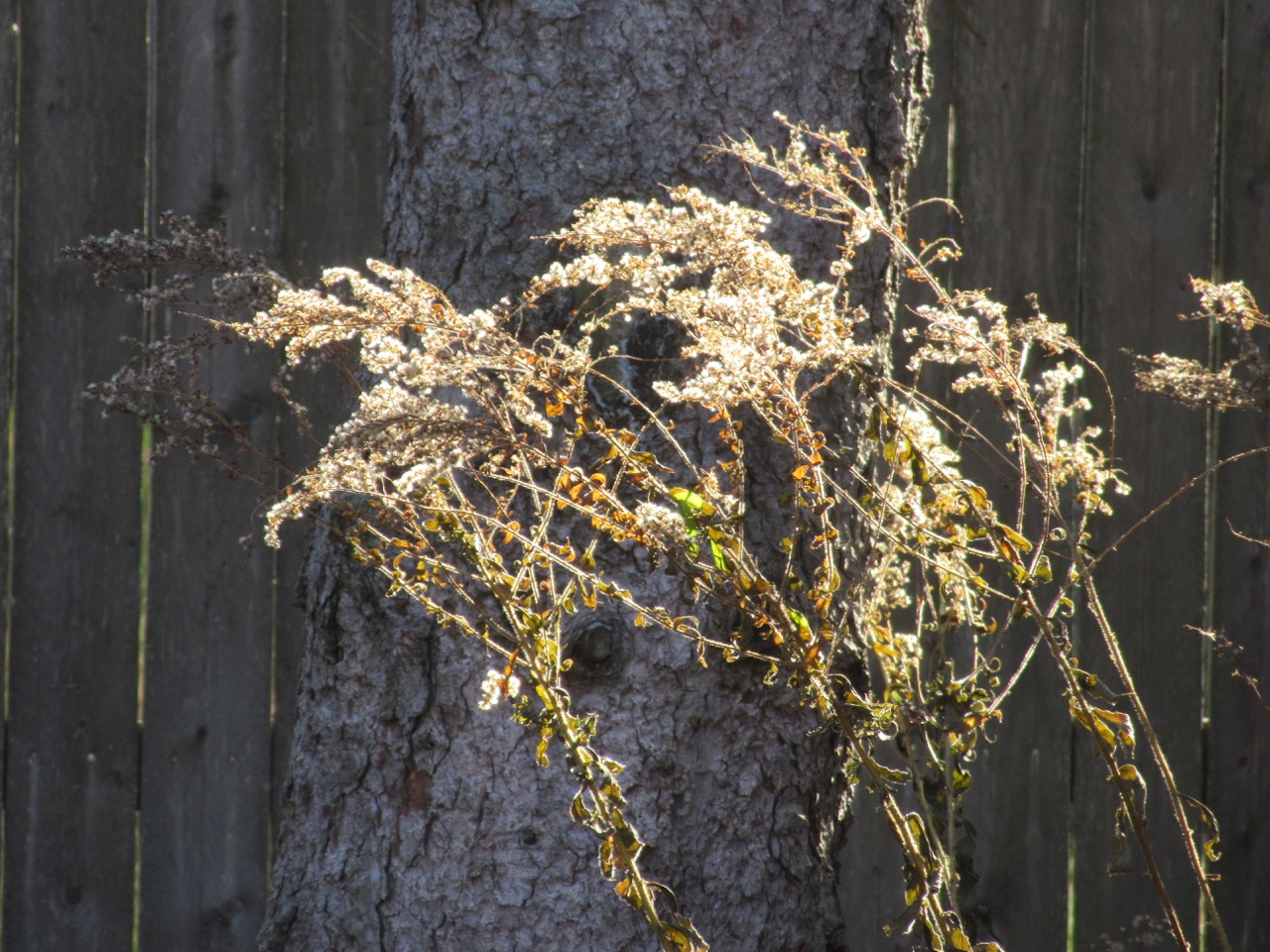
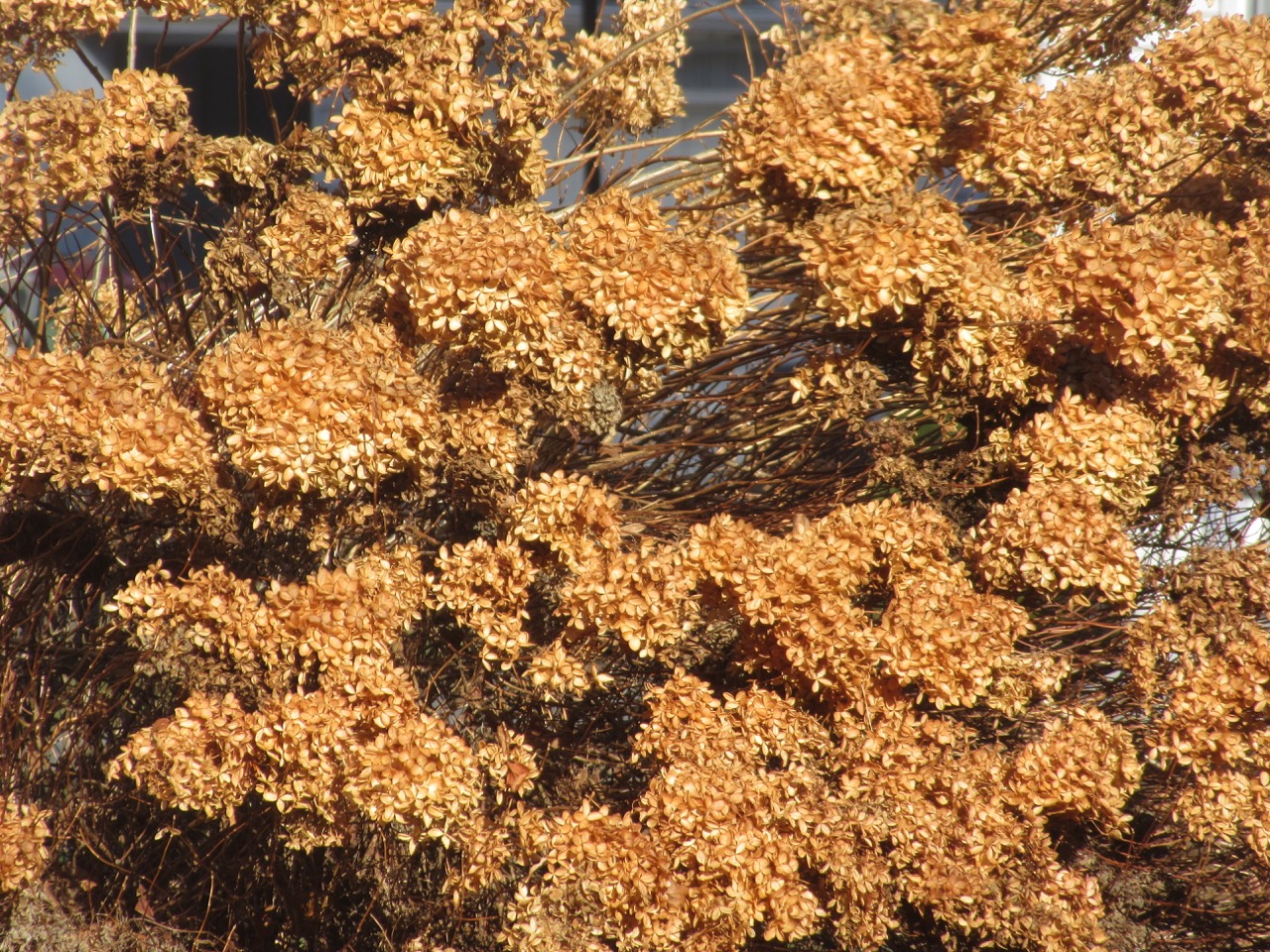

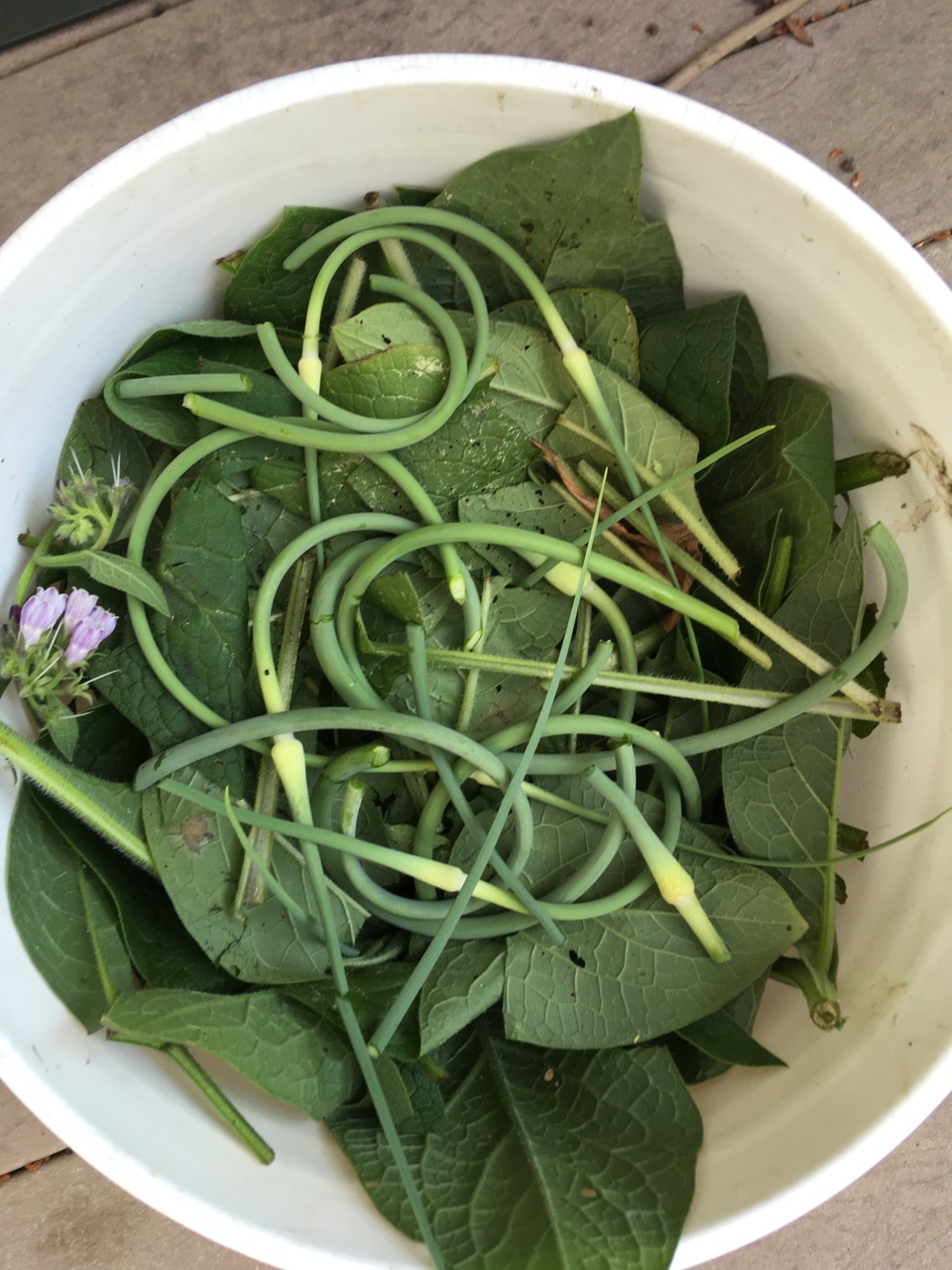 To make the fermented tea, you use a five-gallon bucket. Cut plant leaves into the bucket and loosely pack them in. Then, pour a kettle of boiling water over the leaves to get things started, and add unchlorinated water to fill it to the top. I used water from our rain barrels. Then “let sit for seven to ten days somewhere outside, loosely covered to prevent significant evaporation. This fermentation period makes the constituents that much more bioavailable for foliar absorption.” It gets pretty smelly with sulfur compounds–that’s how it is supposed to smell. You strain it when you use it. Once brewed, you dilute it, using about a cup of the tea per gallon of spray.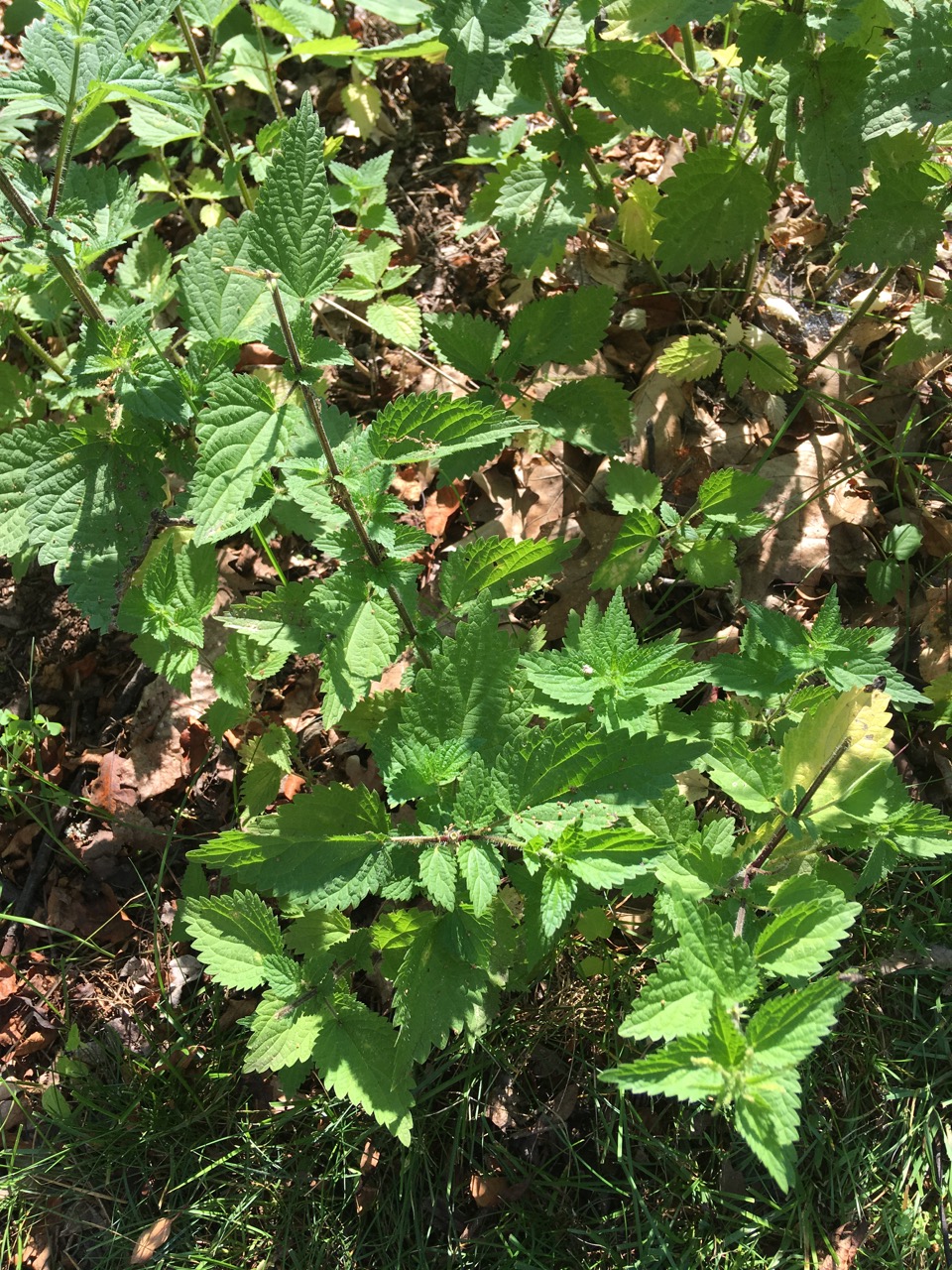



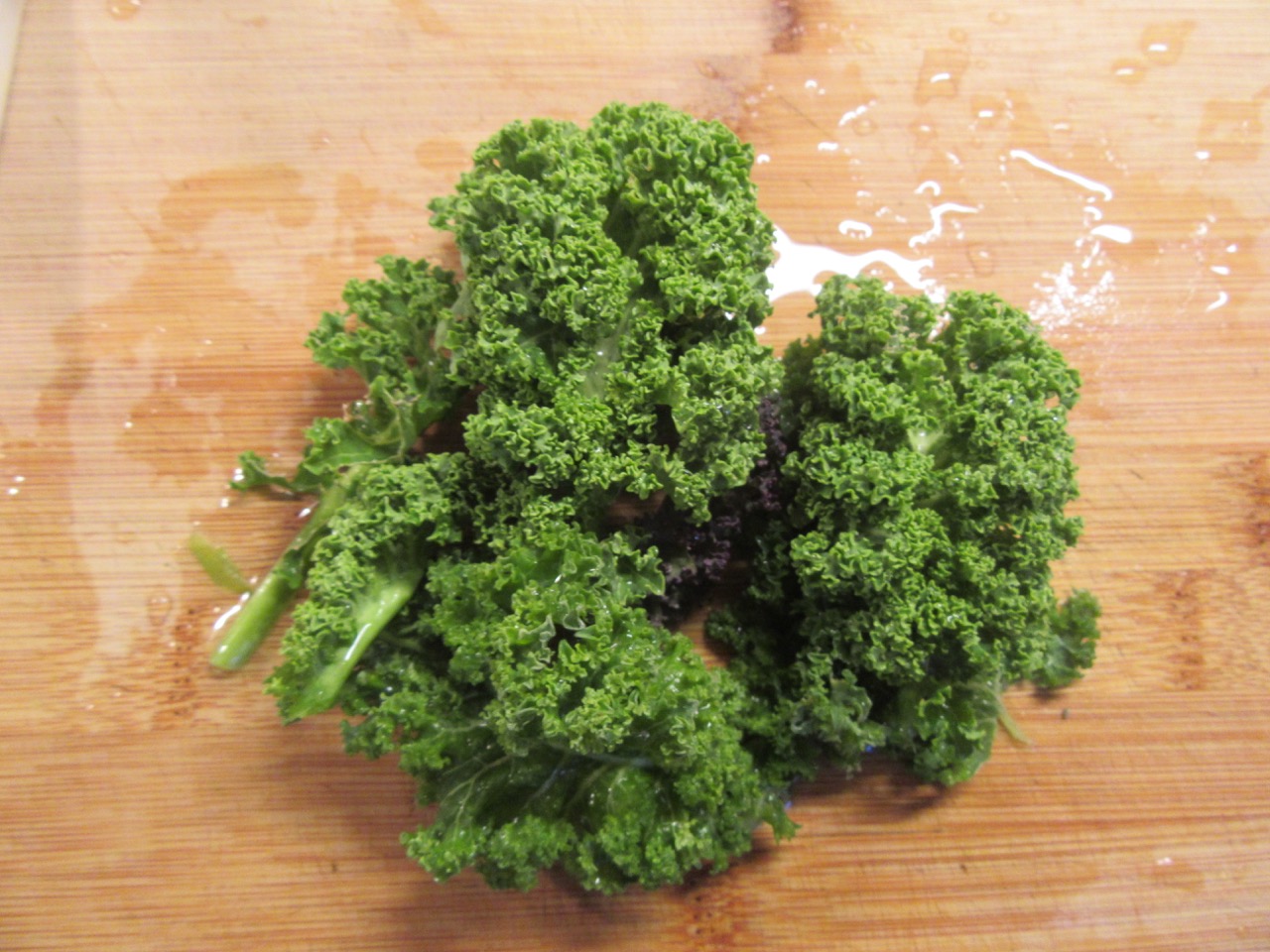 I just have to say it once more: kale is amazing! I picked this kale yesterday morning, leaves frozen on the stalk, snow on the ground. I had already picked most of the kale–just leaving a few tiny leaves that didn’t seem big enough for anything. But they must have grown a little in the meager sunlight and freezing snowy weather we’ve been having the last two weeks of November. I don’t know how they do it, but that is why they are so amazing. The plant just isn’t willing to succumb to the freeze/thaw weather that has killed off most of the other plants. So when I was walking through the winter orchard, I found several small frozen leaves, broke them off, and cooked them up for breakfast–they taste great!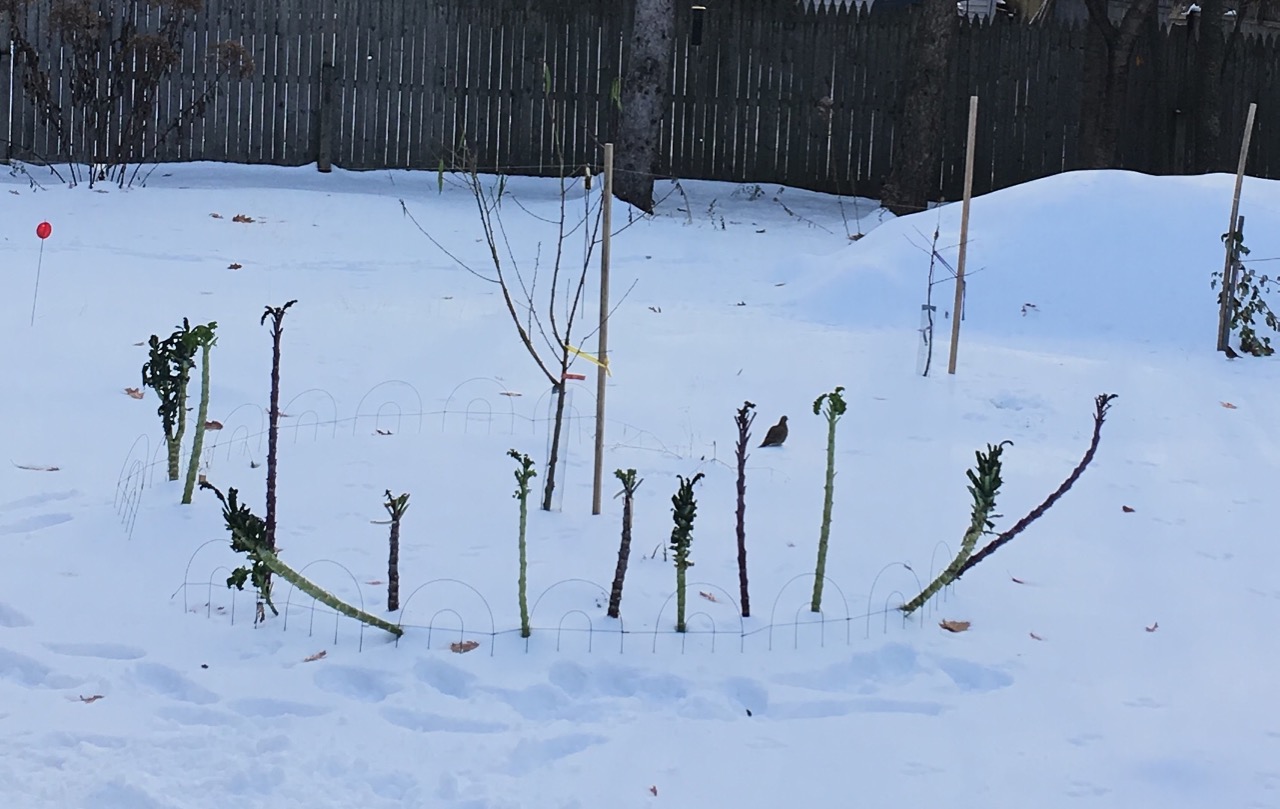
 Finding Our Way Home