Spiritual Practice

Windy Sails

Photo by Margy Dowzer

As we grow older, we begin to understand non-object realities such as the wind, or electricity, or heat. We experience the wind through clues such as blowing leaves, or the feeling of its force on our faces in the cold, or the tug on a kite at it rises into the sky. There are many forces of connection that are so ever present that we might never notice them without flashes of insight. One of these is gravity. 

We are used to being held to the ground, we are used to thinking in terms of up and down. Let yourselves notice the force of gravity on your body right now.

Do you feel the heaviness of your body?
Imagine floating up out of your chair into the air above you.

Try to do it.
(Do you need more time?)

Now can you feel the pull of the earth keeping you attached?
What would it be like if we all just floated off the earth into the vast reaches of empty space?

If we wish to begin a spiritual journey, we need a way to shift our attention, to tune in to the larger reality of which we are a part, to the mysterious forces that connect and uphold life. A method for shifting our attention is called a spiritual practice.

We usually don’t notice radio waves which surround us all the time. But if we turn on a radio, and tune into a particular frequency, we will hear the sounds of music. The radio waves are always there—it is us who need to tune in to hear them. Spiritual practices are the radio tuners that help us to tune into the music of the universe. We are trying to move beyond our ordinary experience of everyday life, into a different channel of consciousness. The very beginning of spiritual practice is to shift our attention to the energy of the present moment. 

Beginning a Spiritual Journey

A spiritual journey is our path of waking up our awareness to the larger reality of which we are a part. It is simpler than we think. It is so simple, that if we don’t pay attention, we can miss it entirely. I invite you to experiment with me:

Start by noticing the energy level wherever you are at this moment, both around you and within you. Are you alert? Restless? Calm or anxious? Tense or relaxed?

Now, sit up as erect as you can without straining. Notice how the energy level changes.

Now I invite you to breathe deeply, breathe all the way down into your belly. As you breathe in and out, let go of whatever might be on your mind, and let yourself relax and recharge. Just pay attention to your breathing in and out, as you sit quietly for a minute in the silence.

Now pay attention to the energy around you and within you. Do you notice any changes?

The very beginnings of a spiritual journey are in the practice of paying attention to the energy of the present moment. When we are first born, we see and hear everything around us without definition or understanding. Gradually, we come to assign meaning to shapes and colors and sounds. We say mama, or daddy, or ball, or doggie. We separate the world into smaller objects that we can name and grasp. Perhaps we learn about God as a kind of separate object that we might name and grasp.

But once we assign such names, once we divide the world into objects, we sometimes forget to see what is actually before us. When I was in high school, I took several drawing classes. Our first lesson was to stop drawing objects, and to start sketching out shadows and light. In order to draw, we have to see at a different level from the level of objects. To pay attention, spiritually, is like that. We are shifting our consciousness from small separate objects to larger connecting energies.

Shadow & Light

Photo by Margy Dowzer

I learned the awareness meditation from Starhawk, in her book, The Spiral Dance: A Rebirth of the Ancient Religion of the Great Goddess.

DNA, Breathing & Trees

There are many signs all around us that can help us to awaken from the illusion of our separateness, help us to awaken into an awareness of the larger whole to which we belong. Science has always been a form of revelation for me. For example, I am amazed when I think about DNA. All forms of life are propagated by this microscopic code. The human DNA includes elements in common with the DNA for yeast. Even microbes discovered deep within caves—bacteria that feed on poisonous chemicals and never enter the light of the sun—these strange bacteria also have a DNA code that has been measured by scientists. All life, as we know it, is written in the same language.

Our biological unity is present in the continuous interconnecting of all life on earth. It was bacteria that first began to create oxygen, billions of years ago, originally as a volatile waste product. Now, all of us are breathing oxygen every minute of every day.

Take a moment to notice yourself breathing right now.
As you breathe in, small molecules of oxygen are entering your lungs
and then passing through the membranes of its cells into your bloodstream;
from there those molecules flow to every cell in your body.

Imagine those oxygen molecules flowing down
into your belly, your legs, your toes.
Imagine the oxygen flowing up
into your arms, your face, your brain.

Without oxygen we cannot survive for even ten minutes. When we breathe, we bring into our bodies molecules that have been inhaled and exhaled by other beings. This air is common air. These molecules may have sailed here from the winds of Africa, or through the tempest of hurricanes in Japan. Lions may have roared these molecules; whales may have spewed them forth in a fountain above the sea.Misty Trees

Look at the trees outside your windows.
We breathe each moment with the trees.
As we breathe out, we release carbon dioxide into the air,
which the trees need for life.
As the trees breathe, they take in carbon dioxide
and exhale the oxygen that we need.
Breathing teaches us that we are one.

Community as a Spiritual Practice

Here is how it works when we choose community. There will be people in any community who inspire us. And there will be people in any community who rub us the wrong way. Those irritating people are the ones who are the biggest blessings for us. There is a story about a rabbi who was the leader of a spiritual community. There was one member who always gave the rabbi a hard time. The other members of the community hated it.

After many years, this person died. And many people were secretly relieved that they wouldn’t have to put up with him any more. But the rabbi wept at the funeral. When they asked, he said, “That man was the only friend I had. Here I am surrounded by people who revere me. He was the only one who challenged me. I fear that with him gone, I shall stop growing.”

To choose community does not mean to accept abuse, or to let people walk all over us. It does not mean always agreeing with someone, or refraining from speaking our own truths. Community includes challenging each other, arguing with each other, and sometimes saying no. But we don’t write each other off, we don’t speak disparagingly of one another, we don’t give up on each other. We treat each other as if we were treasures to each other. Because that is what we are.

To choose community means to be glad that each other person is here, to assume that they belong here, and to revere them as a part of our family. To choose community means to hold ever ready an attitude of curiosity and respect. To choose community means to look for the insights that the other might offer to expand our own limited viewpoint. To choose community means to assume that even when someone is acting badly, they are doing the best they can do at the moment. When we can practice getting past the irritations that arise in us, we have a chance to discover the magic.

Choosing community is a form of spiritual practice because it opens us to that which is divine within our neighbor. What has been hidden is revealed by the light of love. We come to realize that we are not alone. We are surrounded by family. The divine light is shining in the threads between us, and deep within each person. Dostoyevsky said: “If you love everything you will perceive the Divine Mystery in all things.”

Sunset

Photo by Margy Dowzer

Quotes from Anthony De Mello, in The Heart of the Enlightened: A Book of Story Meditations, (New York: Image/Doubleday, 1991, 1989) p. 79. and Fyodor Dostoyevsky, The Brothers Karamazov, translated by Constance Garnett, (New York: MacMillan, 1922), p. 339.

Feeding the Birds

Female Cardinal

Photo by Margy Dowzer

It is also possible to make a relationship to animals by feeding them. At our house, we offer sunflower seeds that are loved by cardinals, chickadees, and tufted titmice; suet for the woodpeckers, and thistle for the gold finches. Some of the birds are around all year long, but in late spring it is a delight to see the travelers again. We put out a hummingbird feeder at the beginning of May, and we put out orange slices and wait for the orioles to show up. They bring so much beauty to our ears and eyes.

 Thich Naht Hanh says,

When we recognise the virtues, the talent, the beauty of Mother Earth, something is born in us, some kind of connection, love is born… We want to be connected. That is the meaning of love, to be at one. When you love someone you want to say I need you, I take refuge in you. You do anything for the benefit of the Earth and the Earth will do anything for your wellbeing.

When we make a deep connection with one small part of Mother Earth, we are helped to make a connection to the whole of our mother. We are helped to see that we too are a part of the Mother Earth, that we belong here. And then we can honor the whole harmony of connections that make up life. May we find a way to experience the joy that comes with knowing this deep harmony.

Thich Naht Hanh quote from an article by Jo Confino, “Beyond environment: falling back in love with Mother Earth,” Feb 20 2012, The Guardian

Sacred Animals

We may not be able to know and appreciate all the animals and plants, but we sense that something important might emerge if we can know and appreciate one animal. This has led some to have an interest in looking for a “power animal.” I think this interest comes from a desire to be connected to our fellow creatures here on earth.  Finding a power animal began in some ancient shamanic traditions but has become popular in the modern spirituality marketplace, where often the idea is romanticized. People look for the exotic and the wild.

But there is another way to find a power animal. First, you can start by thinking about your food. If you eat meat or fish, or eggs or milk, what are the animals that give you their life, so you can have food?

In our culture, it is difficult to honor the animals who are most important to us. Chickens, cattle, and pigs are the most widely eaten animals in the United States. Most of them are raised in horrible conditions. My purpose right now is not to talk about the nightmare of factory farming. But when we begin to open our hearts to our connection with other animals, we have to ask ourselves about the animals we eat for food.

Chicken

Photo by Margy Dowzer

Let’s focus on the chicken—the animal most eaten in the United States. Sometimes they have been given a bad image in the media—we call someone “chicken” when they are lacking in courage. But chickens lay eggs that feed us, and give their lives to feed us. When allowed to roam a yard, chickens will kill and eat the ticks that can cause Lyme disease. They have their own nobility and useful simple lives. A chicken would be a fine power animal. Except that perhaps we feel too ashamed of how the humans have treated them. If we respected the chickens, how could we consider the agricultural practices that confine them to torturous cages?

To eat is a sacred act. So often, we eat mindlessly. We don’t pay attention. When we eat, we take one part of Mother Earth, and unite it with another part of Mother Earth—our own bodies. Eating is necessary for life, and yet always includes death of some kind, whether of plants or animals. The great mystery of life and death can be present to us every single day, in the ordinary communion of eating a meal. But most of the time we are separated from that mystery because we can pick up our food in the grocery store, without any indication that this food is from living beings.

One of Henry David Thoreau’s practices when he went to the woods was, for a time, to try to catch or grow whatever he ate. He spoke about how needing to kill and prepare one’s meat was something that inclined him toward being a vegetarian. Some people do make that choice, out of respect for the animals. For my part, I try to honor the sacredness of food by thanking the creatures who have given their lives that I might eat. And because of that, I try to buy meats of animals who have been raised with dignity. In our culture, it can be a difficult thing to do. But it all begins by making one simple change—to recognize and celebrate the source of our food at each meal.

The Indigenous Innu people of northern Quebec did rituals in which they asked the caribou spirit to help them in the hunt. They believed that the caribou spirit helped them find caribou to kill and eat. They did rituals after they killed a caribou, and made sure that none of the bones touched the ground. The animal they ate was the animal to which they prayed. We can do that too.

Cats facing Window DSC03590When I watch our cats looking at the birds outside, it seems to me that they are doing something like praying. We don’t let them go outside—we’ve interrupted their hunting of birds. But when they shiver and chatter in excitement just watching the birds, it seems very much like deep devotion.

One Other Species

Cats CuddleAnother way to enter this sphere of earth connection is through making a relationship with one other species. Maybe for you it is with your cat or your dog. We can play with our companion animals, cuddle and pet each other, curl up for a nap, and feel love for each other. Sometimes when I am meditating in the morning, one of our cats climbs up into my lap and sits with me there, purring. Isn’t it amazing that we can make a bond across species and communicate in so many silent and vocal ways?

I heard an amazing story about a connection between a man and some elephants. Lawrence Anthony worked with rogue elephant herds in a reserve in South Africa. He had taken on these elephants because they were causing trouble in other reserves, and were about to be shot. He spent time living with the elephants, feeding them, talking to them, until finally they relaxed in their new home. He became known as the Elephant Whisperer, and other troubled animals were sent his way. It is a wonderful story.

But here is the amazing thing. When Mr. Anthony died in March of 2012, a few days later two of the elephant herds were seen walking slowly, as if in a procession, toward his house. They walked for twelve hours from a distant part of the reserve, and when they came to his house, they stayed around for two days, as if to say goodbye to the man who had saved their lives. How could they have known that he had died?
Rabbi Leila Gal Berner said,

If there ever were a time, when we can truly sense the wondrous ‘interconnectedness of all beings,’ it is when we reflect on the elephants of Thula Thula. A man’s heart’s stops, and hundreds of elephants’ hearts are grieving. This man’s oh-so-abundantly loving heart offered healing to these elephants, and now, they came to pay loving homage to their friend.

Mother Earth

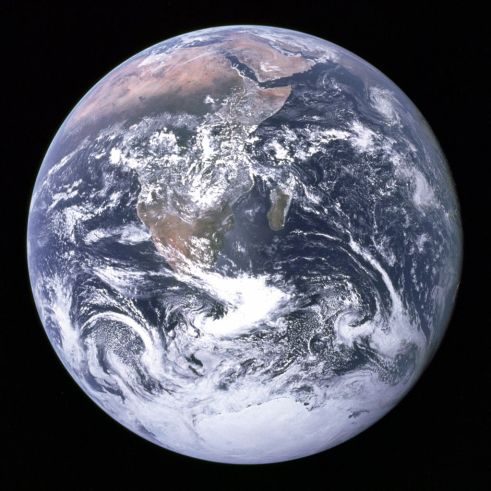
Blue Marble EarthFor how many years have people been calling the earth our mother? The image dates to the days before history, in cultures all around the world. And no wonder. Our mother is the one who feeds us. Before we are born, in our mother’s womb, we are literally fed and shaped from out of her body. After we are born, we are fed milk from her body. The earth is our mother because we are created and fed from her body. We are a part of her, and all of our life is out from her.

We live in a time when this ancient understanding is coming to the fore again. During the industrial age, people treated the earth as a resource to be exploited. Whatever could be mined or cut down or damned up or harvested was taken for human use. So much was taken and destroyed that now for the first time in history, we can see the fearful limits of the earth’s abundance. In order to find wholeness, we must restore a relationship of respect and honor between people and the rest of nature. We are beginning to understand that we are not separate from the earth.

Buddhist teacher Thich Naht Hanh speaks about this. He says,

You carry Mother Earth within you. She is not outside of you. Mother Earth is not just your environment… Fear, separation, hate and anger come from the wrong view that you and the earth are two separate entities…. That is a dualistic way of seeing… So …breathe in and be aware of your body and look deeply into it and realise you are the Earth and your consciousness is also the consciousness of the earth…

It is one thing to mentally acknowledge that we are part of the earth, that we and the earth are one. But it is more challenging to experience it in our bones. We have been taught by our culture to think of ourselves as separate from all that. We live in houses that divide the inside from the outside. We think of some things as human and other things as natural. It is a mental leap to imagine ourselves as a part of the larger life of the earth. But if we desire to understand our connection, to awaken our instinct for feeling the unity of it all, connecting to one tree, one rock, or one place, can bring it down to our human level. 

Here is a practice for paying attention to a very small place:

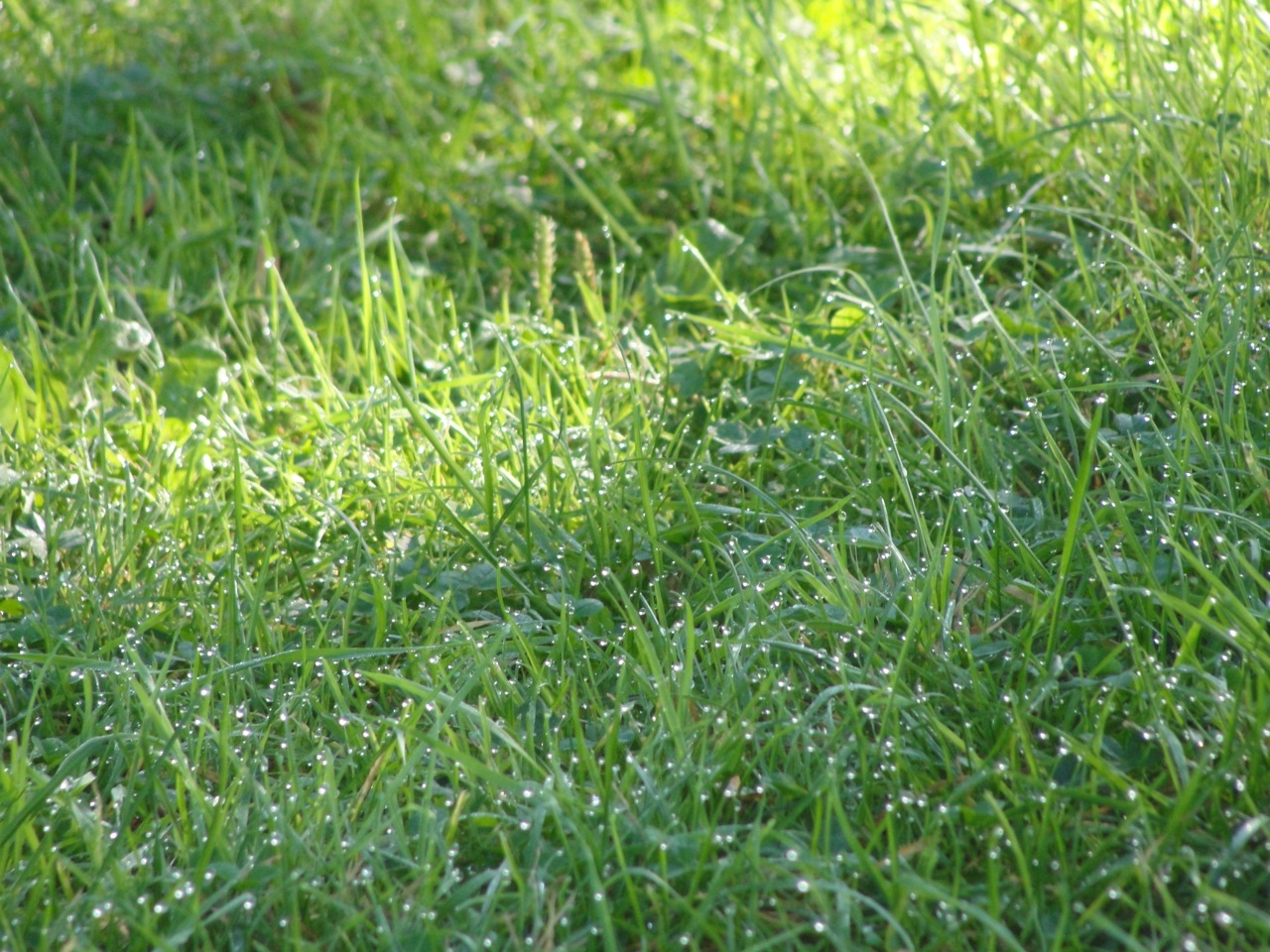
GrassMark out one square foot of earth, perhaps with some sort of string on a few sticks hammered into the ground. Then sit near your square foot, and observe all the life forms you find there. Look for the different kinds of plants—maybe clover and grass and wild strawberries and moss. Look for the insect life—some of it moving in and out, like bumble bees and flies; other staying close, maybe an earthworm or a group of ants. Perhaps you might take pictures of the ones you don’t know, and look for them on the internet, or with a biology teacher or friend.

Then, realize that there are also microscopic life forms in that square foot of soil. Thousands of them. If you are up for it, get a microscope and check out our hidden neighbors in the soil.

Biologists say,
When we are standing on the ground, we are really standing on the roof top of another world. Living in the soil are plant roots, viruses, bacteria, fungi, algae, protozoa, mites, nematodes, worms, ants, maggots and other insects and insect larvae (grubs), and larger animals. Indeed, the volume of living organisms below ground is often far greater than that above ground.

 It is because of all these living beings that plants can grow and be fruitful.  If we want to wake up our awareness of connection to the whole, it can help to wake up our awareness of connection to the small.

Thich Naht Hanh goes on to say,

If we are able to touch deeply the historical dimension – through a leaf, a flower, a pebble, a beam of light, a mountain, a river, a bird, or our own body – we touch at the same time the ultimate dimension. The ultimate dimension cannot be described as personal or impersonal, material or spiritual, object or subject of cognition – we say only that it is always shining, and shining on itself.

Thich Naht Hanh quotes from an article by Jo Confino, “Beyond environment: falling back in love with Mother Earth,” Feb 20 2012, The Guardian
Biology quote from Dr. Jill Clapperton and Dr. Megan Ryan, “Uncovering the Real Dirt on No Till

Trust Your Own Journey

Gate The spiritual journey is a path of waking up our awareness. It demands that we trust our experience, become friends with our burning. It does not matter if your hunger is a different hunger than mine: you must trust your own hunger. Sufi mystic Rumi writes that our hunger itself is proof of the existence of bread. Our thirst is proof that there is such a thing as water. If we trust our deepest inner hunger it will lead us on our own spiritual path.

I cannot tell you what your spiritual path must be. I can only offer you some gleanings, some sparks of light for your spiritual journey from my experience of following my own burning, and my experience of being in community with the people of my congregation and other spiritual searchers. Hallway with DoorsSomeone once described our faith community as a hallway with many doors to the holy. One temptation is to get stuck in the hallway, celebrating the freedom to choose whichever door we want, rather than to open any of them. There is a Buddhist parable that says we can’t find water by digging many shallow wells. To begin a spiritual journey we must actually open a door, and walk through to where it leads us.

Albert Einstein’s questioning hungers led him to open a door into scientific experimentation and mathematical reasoning, and he followed that pathway more deeply than most minds are able to fathom. Was that a spiritual journey? I think so. He became a friend to his own burning. His vision has inspired and changed our lives, even if most of us could not explain the theories he developed.

Spirituality is not an escape from the world. Spirituality is about experiencing more deeply our relationship to all that is. Spirituality is awakening to awe and gratitude for all that is. We don’t have to be a Rumi or an Einstein to enter a spiritual doorway. We only need to become friends with our own burning.

Frederick Buechner says,“Listen to your life. See it for the fathomless mystery that it is. In the boredom and pain of it no less than in the excitement and gladness: touch, taste, smell your way to the holy and hidden heart of it because in the last analysis all moments are key moments and life itself is grace.” 

To be spiritual means to pay attention to our own experience of the mysterious reality of which we are a part. I am inviting you to take a risk—to befriend your hunger, to pay attention, to go through the doorway, to see what you might experience about our miraculous world.

To take that next step through the door can be difficult. We might be suspicious of what lies on the other side. We may be drawn to mystery, but uncomfortable with the irrational or unproven. We might discover old wounds triggered by the symbols or language from difficulties in our religious past.  How do we heal?  How do we re-imagine or reclaim our own connection to divinity?

For now, I invite you to notice what is in your heart.  Notice the hungers you feel, the questions, the passions, the fears.  Notice, just notice, any wounds you may carry that surface when you approach a doorway into spirituality. Make a list.  Explore what triggers those wounds, and let yourself remember any painful experiences from your own religious past.  I will continue to explore these questions in future posts.

Risky Talk

I have some of my own baggage attached to spirituality. From my earliest memories, I knew that it was risky to talk about spirituality. It was sure to mark you as strange or crazy, or get you into trouble. I don’t even know how or where I learned this—maybe at school among my classmates? There was something embarrassing, or dangerous, or profoundly broken with the idea of speaking about this realm.

But in my immediate family, it was just the opposite. Spirituality was an ever-present force. My father didn’t just believe in God, he was in love with God. He had called out to God, and experienced an answer. It filled his life like a contagious fire. A spark of that fire ignited in my heart, too.

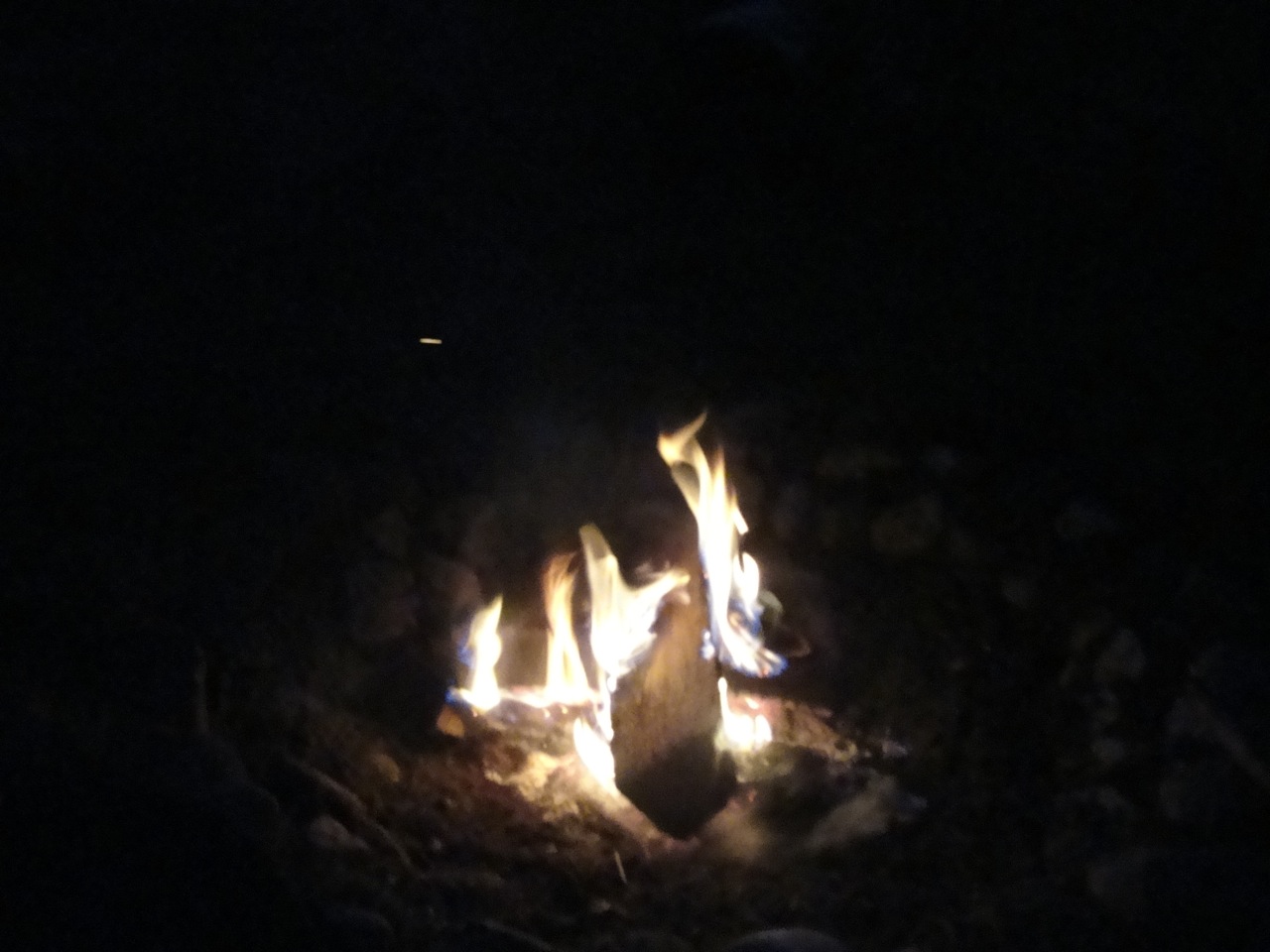
FlameI was hungry for this burning love. But I was also afraid of what other people would think of me. How often do we deny our own deep experience to gain social acceptance? It seemed to me that most people outside my family said they believed in God, but they didn’t really expect anything to come of it. So I learned to keep certain things hidden—especially the solitary and mysterious experiences of longing or feeling loved.

Because I was a child growing up Catholic, I fit my experience into the stories I learned, the beliefs that were given to me. It was safer to talk in the language of belief, rather than to reveal my feelings. Later, those beliefs were challenged by my experience, and my journey brought me into a very different place. My beliefs got turned upside down, in order for me to be true to my experience. But that fire of burning love kept re-igniting.

Today, when I venture inside my own heart, I still experience deep longings, these hungers that feel almost like pain, or sometimes like restlessness. It is difficult to feel this and I am tempted to read a book, or find something else that might fill up that empty place. But instead of escaping or fixing it, I invite myself to try to be present with it. I breathe into the longing and let myself experience the hunger. Is this what it means to become friends with my burning? I accept the feelings of my heart just as they are. I connect with the experience of my deeper self.

Perhaps that is all that happens. But sometimes, something else happens too. My heart opens up, the emptiness becomes a doorway, and I fall into a larger awareness. I feel the earth, the sky, the wind. I feel joined to everything. I find answers to questions and guidance when I face a crossroads. I feel held in the arms of tenderness. I feel that I have come home. Sometimes, as Rumi says,

Something opens our wings
Something makes boredom and hurt disappear
Someone fills the cup in front of us
We taste only sacredness.

This has been my experience of spiritual awakening. Hunger itself becomes a doorway into sacredness, into feeling connection beyond my aloneness. Does it matter, on any particular day, whether I feel longing or feel love? Whether I feel questions or feel answers? The Buddhist mystics would say no. What matters is that I am becoming conscious. Vietnamese Buddhist teacher, Thich Nhat Hanh, says,

“If we want to enter Heaven on Earth, we need only one conscious step and one conscious breath.”

Take some time to notice what is brewing in your heart. Do you feel a sense of emptiness? A sense of connection? Do you feel questions? Don’t try to change anything, just become aware of what you are carrying in your heart in this moment.

Quotes from: The Essential Rumi, trans. Coleman Barks p. 280.
Thich Nhat Hanh, Touching Peace: Practicing the Art of Mindful Living, p. 8.