Wounds Remembered

View from our tent MD

[View from our tent Friday morning, photo by Margy Dowzer]

Healing the Wounds of Turtle Island was a powerful, moving, four-day gathering, with teachings and ceremonies led by Indigenous elders from near and far.  It included the stories of so many people, many of which are not mine to tell. But I want to share some of my own story at the gathering.

Wabanaki means people of the dawn, and there were ceremonies at sunrise each day led by Bobby Billie, a spiritual leader from the Seminole in Florida. I am also a person called to the dawn, so I was present each day for that time.

The first day, several of us had gathered near the arbor in the mist around 5 a.m., but no one had yet arrived to lead the lighting of the fire.  So I prayed my own dawn prayers, and felt this message from the sun–“You are all bathed in love.”  Later that morning, Anishinaabe women from the Midewiwin Lodge sang a song about the love the Sun has for all of us.  I was so moved by the melody, the voices, the drumming on the Little Boy drum.  It went straight to my soul.  They said it was about the first woman to walk the earth, expressing her joy at seeing everything in creation.

The first day was devoted to healing the wounds carried within the hearts and minds of the people from our long history of violence.  The wound that became clear to me was a Great Forgetting:  first there was a great disconnection of my ancestors from their connection with all of creation, and then there was a great forgetting so that the people would be unaware that they were wounded, disconnected, and thus never realize that they had once been connected.  At the end of the ritual, we each were invited to offer tobacco to the fire and make a solemn promise.  My promise was to remember, to remember the wound and to remember the connection.

Also coming into my thoughts was the herb that has appeared on our land–St. John’s Wort–which has traditionally been understood as useful for depression, and also as a wound healer.  I seemed to hear in my mind, this plant can help when you remember the wound of disconnection, when you open to the pain underneath the great forgetting.  I had harvested some of the plants earlier in July, and they were infusing in oil at home–the oil turns red from the plants.  When I got home, I also harvested more of the plants and hung them to dry in our garage, for making tea.

I know that there will be many more rememberings, lessons I carry from this time, but perhaps that is enough for now.  I do want to offer my thanks to Sherri Mitchell who has carried the dream of these ceremonies for many years, and who called us together and enabled it to come alive.
 

Healing the Wounds of Turtle Island

Margy and I are packing up this morning to drive north for a special ceremony.  It has been difficult to pull everything together.  This packing, the 2-3 hour drive, finding the strength it requires to travel–all of this is really a part of the ceremony.  We bring our complete selves, with our own wounds and brokenness, our own love for the earth.  We ask that our participation may be a blessing.  Send us your blessings too.  It is quite an amazing gathering and hundreds of people from around the world will be together from July 14-17. Here is the call and description from the event page posted by Sherri Mitchell:

Prophecy of the Eastern Gate

Our ancestors tell us that the Eastern Gate is where we will gather to begin the healing of this land. It is here in the East where first contact was made between the Native peoples and the newcomers. It is here that the first blood was spilled between our people, and our history of violence began. So, it is here on this same land that the healing must begin.

The Wabanaki, the people of the first light, are the keepers of the Eastern Door. We are the first peoples to greet Kihsus, the Sun, each morning, and Nipawset, the Moon, each evening. Now, we open our hearts and our homes to greet all of you, so that together we may begin to heal the wounds of Turtle Island and set a new path forward for all life.

This ceremony will be a coming together of people from all over the world, to acknowledge the common wound that we all carry from our shared history of violence. No matter where we come from, we all carry the wounds of historical trauma within us. Whether we were the victims, the perpetrators, or the witness to that violence, that wound is imprinted on our spirits. Now, the time has come for us to acknowledge that wound, together, so that we can heal it and begin working together to heal Mother Earth.

Structure of Ceremony
The first day will be for healing the wounds carried within the hearts and minds of the people. The second day will be for healing the wounds of Mother Earth. And, the third day will be for healing the energetic and spiritual imprint of that wound that lays over the Earth.

The ceremonies will be conducted by spiritual elders from Indigenous communities around the world, and by spiritual leaders from other traditions. We will be gathering on healing ground, along the Penawahpskek (Penobscot) River, at Nibezun in Passadumkeag, Maine.

People from every corner of the world, and from all walks of life are welcome. We ask that you come with a good heart, and good mind, and carry the intention of healing with you.

Layers of Community-Composting

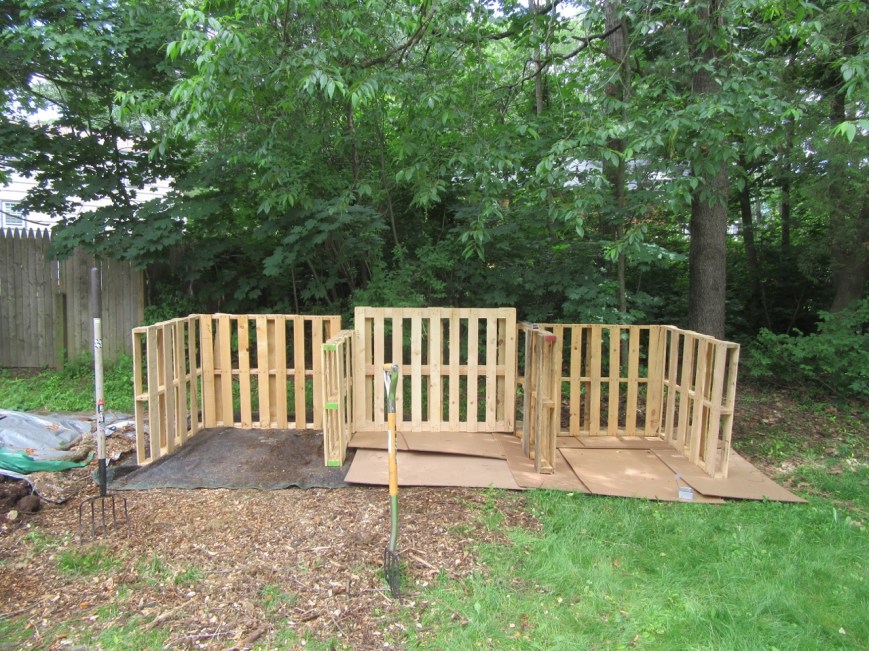
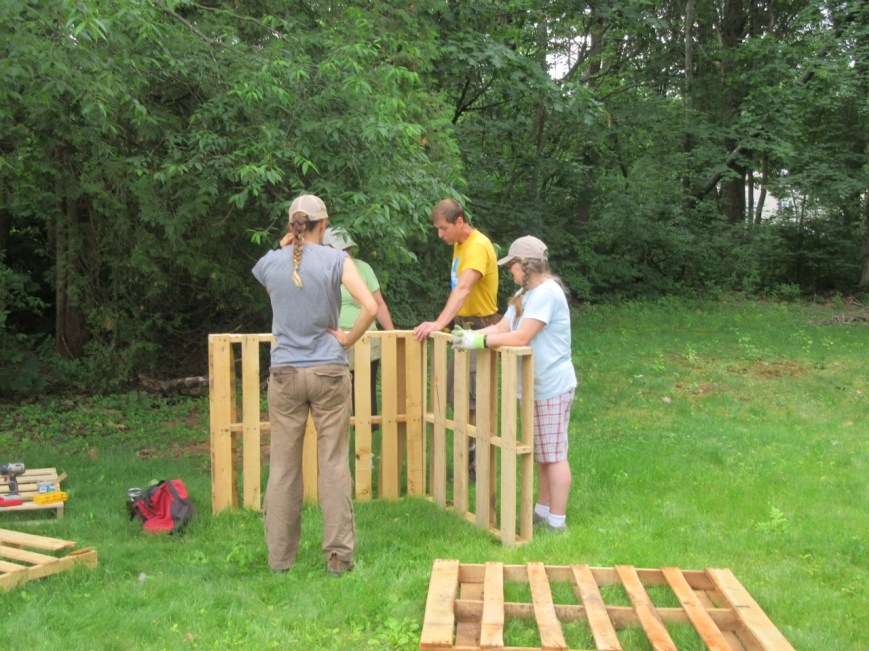
Compost Bin Team Ian, Sally, Ali, MihkuOne more post about the Permablitz!  We had a team of folks who created a composting system from recovered pallets.  We have been using a container system for our kitchen waste, but these will enable us to compost more yard waste.  One of the principles of permaculture comes from the fact that in nature there there is no such thing as “waste”–the “surplus” from any process is shared to be used by another process.  So too in the community of our yard–leaves, grass clippings, weeds, can all be repurposed to create great soil.  And it is a further repurposing to use surplus pallets for the construction!

These use deck screws to attach them together.  And by the way, if you want to make your own, it is important to find Heat Treated pallets, rather than chemically treated–so that your compost isn’t contaminated by arsenic or other metals.  Heat treated pallets are marked with an HT on the wood.  Heather found these lovely-looking pallets for us.  Margy and I had been finding them here and there, but most of ours were pretty banged up.

When you first establish a permaculture garden, you often have to import soil amendments and wood chips and such, but ultimately, you want a garden that is self-contained, that creates its own mulch and compost and good soil.  We imported 4 cubic yards of compost for our garden bed project, (and just the other day purchased more for the blueberry beds) but hopefully at some point in the future, we won’t have to import compost any more, because the yard itself will making enough of it.

What might our world be like if we eliminated the whole idea of “waste” from our communities?  If every surplus was shared for another process or function?  If nothing and no one was ever thrown away?

Compost Bins Done!

Finished!  By the way, you don’t have to put cardboard or tarps on the bottom–we did because of the bittersweet in our yard–to discourage it from growing into the compost bins.


Future blueberries

Blueberry bed complete.jpgThe last few days I have been working on a garden bed for two future high bush blueberry plants.  This was the toughest project so far, in terms of physical stamina.  I was following the guideline of Michael Phillips in the Holistic Orchard.  His first step is to dig a bed one foot deep and 3-4 feet in diameter per plant, (so for me that meant about 7-8 feet long and 3-4 feet wide).

Blueberry bed-bittersweet rootsOnce I had dug the hole, I came upon bittersweet roots, so then spent some time strategizing about what to do for that.  I eventually decided to clip them off where they emerged, and then line the sides of the hole with cardboard. Since I was also making paths around the bed, I bent the cardboard so that it covered the path as well.

Then, the next steps are to fill the hole with 50% peat moss, 40% soil from that you had taken out, and 10% compost.  Peat moss is somewhat controversial (because of environmental questions raised about its extraction), but I did some reading and learned that the percent of peat moss taken in Canada is very tiny compared to the amount of peat moss bogs they have–so in that context it might be considered renewable.  I had to go back to the store to get more stuff, because it was hard to estimate how much I would need.

Blueberry bed-half doneAnd it is a lot of work to dig out a hole, then fill it with other stuff, and then “stir” it around, which really means turn the soil over and over.  I am glad I only have to do it once.  So I would do what digging I could, and then stop and rest for most of the day, and return to it in the evening if I could.  After the peat moss, soil, & compost mix was in, I added 2 cups elemental sulfur, 4 cups green sand, and 2 cups rock phosphate, all organic nutrients.  This whole mix is meant to create the type of soil that blueberries love, with an acid leaning ph, and the nutrients they need.  (You may notice that I purchased more composted manure, because we used up our big pile.)
I topped it off with a few inches of pine bark mulch that is also good for blueberries, and then some pine needles that Margy had collected last year.  After that, I hauled the rest of the unused sandy soil over to our materials area, and did the paths around the bed with more cardboard and hardwood mulch.  And watered all of it well.  Now it is all ready to do its own thing for several months:  the plan is to plant blueberries in the spring.

The Visitor

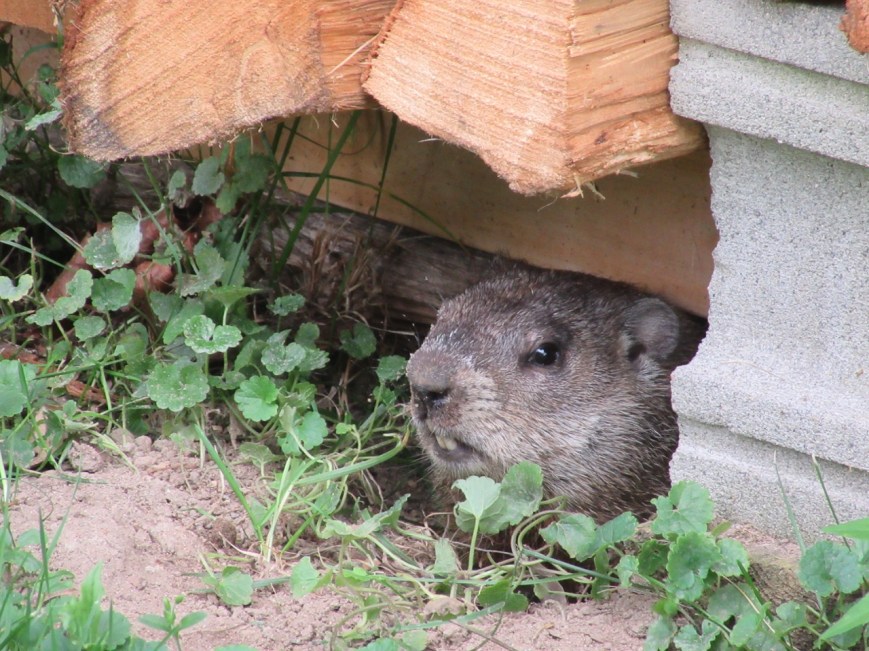
Woodchuck hiding under woodpile

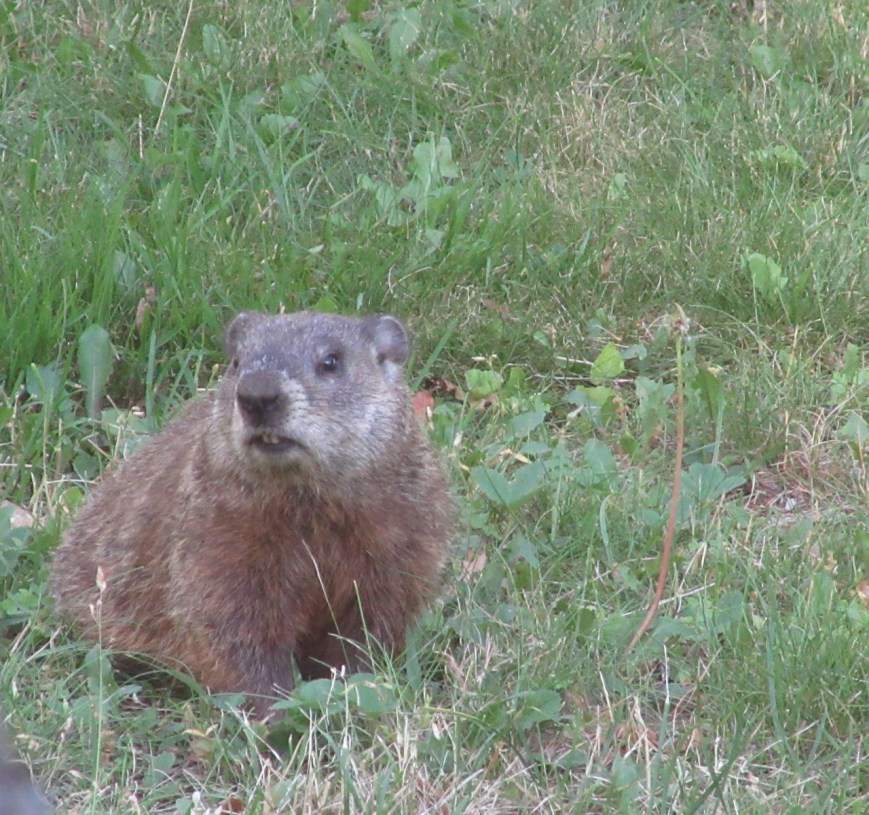
Our neighbor mentioned this little woodchuck (aka groundhog) had eaten her flowers when she planted them, and now she or he has been visiting our yard.  When we saw him the other day through the side window, he was eating something in the grass between our two houses.  I went outside to take a photo and he lumbered over to hide below the neighbors woodpile.  So cute.  But the next morning, some of my kale plants had been eaten. Coincidence? I don’t think so.

Ever since we’ve been planting trees and making new garden beds, we’ve had many more birds and other critters come into the yard.  So mostly that is a wonderful thing.  But we are hoping to grow food!  So I will be searching the internet for natural ways to repel them.  Have any good ideas?

Woodchuck


Layers of Community-Fire

After- Fire Circle Close-upComing back to the Permablitz of June 24, another project that was completed that day was a fire circle.  As Lisa Fernandes said, every home needs a place to burn things.  So she was our team leader for the fire circle, and gathered in the layers of community for the element of fire.  With a community of workers!

Ground prep for Fire Circle Lisa & the boysFirst they had to remove big pile of bittersweet brush (that we will eventually burn) from the spot we had chosen.  Lisa and Kristen gathered together the stone blocks that would be used.  (But there could have been other helpers–at that moment I was over in the garden beds.)  Then they prepared the ground with a layer of sand. Our youngest permablitz members got into the sand-tamping process, as well as Lisa and Kristen.

I love the first layer of stones, and the circle that it creates on the sand. I heard that they found this method of creating a fire pit via a youtube video.  The second layer (in case anyone wants to copy) uses a staggered spacing on top of these, and includes four openings for air–which they positioned to the north, east, south, and west.  Then a third layer is placed on the top.  Somewhere in the process, for the middle layer, you have to knock off a little edge on the bricks.Fire Circle first layer on sand.jpgFinally, they brought a whole pile of pine mulch for the seating area around it, and then laid some bittersweet brush and pine cones for our first fire.  Permaculture is not just about a way of gardening but also about how communities care for each other.  Its three principles have been summed up as earth care, people care, and future care.  So having a place to gather with others is an integral part of our permaculture design.

By the way, if you want to see all the photos from the day, you can find them at the Meet-up site.

Gaze of the Wild

Seal PupMargy and I went to Crescent Beach late yesterday afternoon.  As we were leaving, a harbor seal pup came onto the shore.  What is it about our species that we so love these encounters with other species, with wild species?  Is it the kinship we feel when we look into their eyes gazing back at us?  Or the otherness we feel, the differences magical and intriguing?

It was our first time this season going into the open water.  So cold!  But after some time in the water, it was delicious.  The ocean itself would have been enough yesterday–the way it transformed my body chemistry into a greater sense of ease and well-being.  And then, sitting in the sun warming up on the sand.  Since I have had thyroid disease, it has been harder for me to warm up after swimming, but this time I wore a light hoody, and the air was still warm at 6 p.m. so I was fine.  Later, I changed back into dry clothes and sat and read, while Margy went in for another swim.

I had carried some of our stuff to the car about 7:30 p.m. when the seal pup first arrived. As I met Margy heading into the changing room, she told me about it, so I went back to down to the beach.  The little group of twenty or so people who were still on the beach were gathered near the pup at a respectful distance.  Someone had called the proper wildlife people to let them know.  The pup just lay there looking at everyone, calmly, perhaps resting, perhaps wondering what to do.

Seal Pup turns to go back in the waterAfter several minutes, they turned around and started heading back toward the water, moving slowly and steadily over the sand.  As the pup reached the waves, they turned as if to say goodbye, (or maybe, “I don’t think this was where I meant to land”) and then slid right in and swam away down the beach.
Who can resist those eyes? Seal Pup-one last look


Layers of Community-Rain Barrels

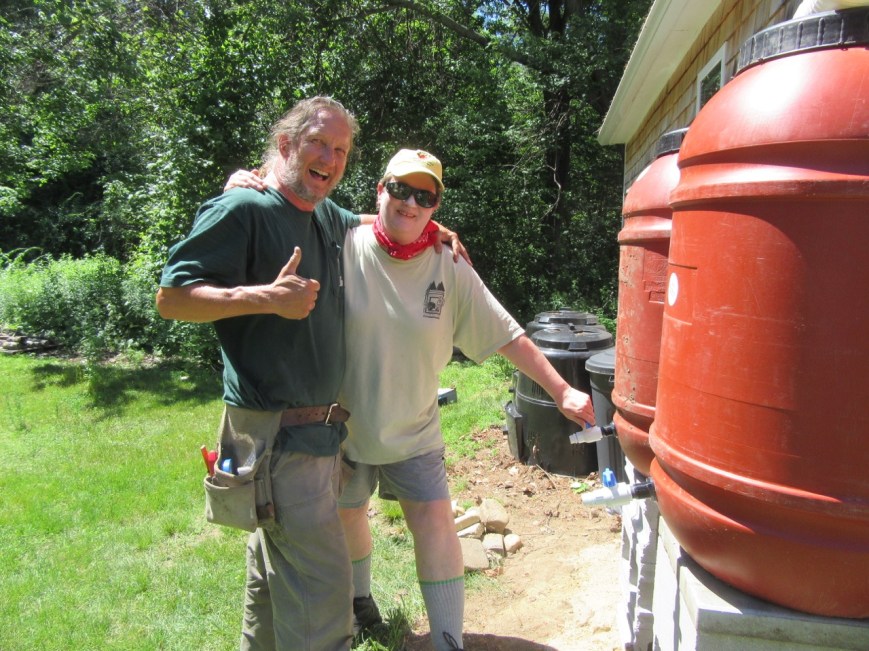
Barrel Spigot Trial Dave & Margy

[Margy and Dave testing the spigot height]

Part of the work of our Permablitz on Saturday was installing rain barrels.  How is this a layer of community?  Because water creates a link between all living beings.  When it rains, water washes over the land, and also pours from our roofs into gutters and downspouts.  By installing rain barrels, we have the capacity to slow down the flow of water–to bring more of it into use for the community of plants we are cultivating.  So when it rains, it waters our garden twice–once during the rain, and then once more when we use the water in the barrels to water plants on the dry days.Mike & Sharon hauling cinder blocks


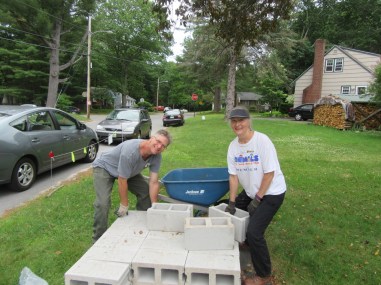
AND: we had a community of people helping to install the rain barrels.  First they had to haul cement blocks to the five sites for the barrels.

Rain barrel team-Dave, Chris, Carla, Harold, Mike, Sharon (hidden)

Then David taught everyone on the team the process of the installation.  I wasn’t able to be a part of that team, but some things I observed.

Rain barrels Carla & Chris

The land at the site was cleared of mulch and grass, and leveled off.  Then sand was added, and tamped down and leveled.  The cement blocks were positioned on the sand base.


Rain Barrel Spigots Dave & Carla


Meanwhile, another part of the team was drilling correct size holes in the barrels for spigots.  These spigots are able to be removed in the winter, so the rain barrels can stay in place. So the spigots were installed.  Holes were also drilled for connecting tubes for overflow and to connect more than one barrel per downspout.

Rain Barrels Dave & SharonWith all that done, the barrels could be positioned on the concrete blocks.  Then, the downspouts were cut short, and a curvy connector was attached to bring the water to the barrel.
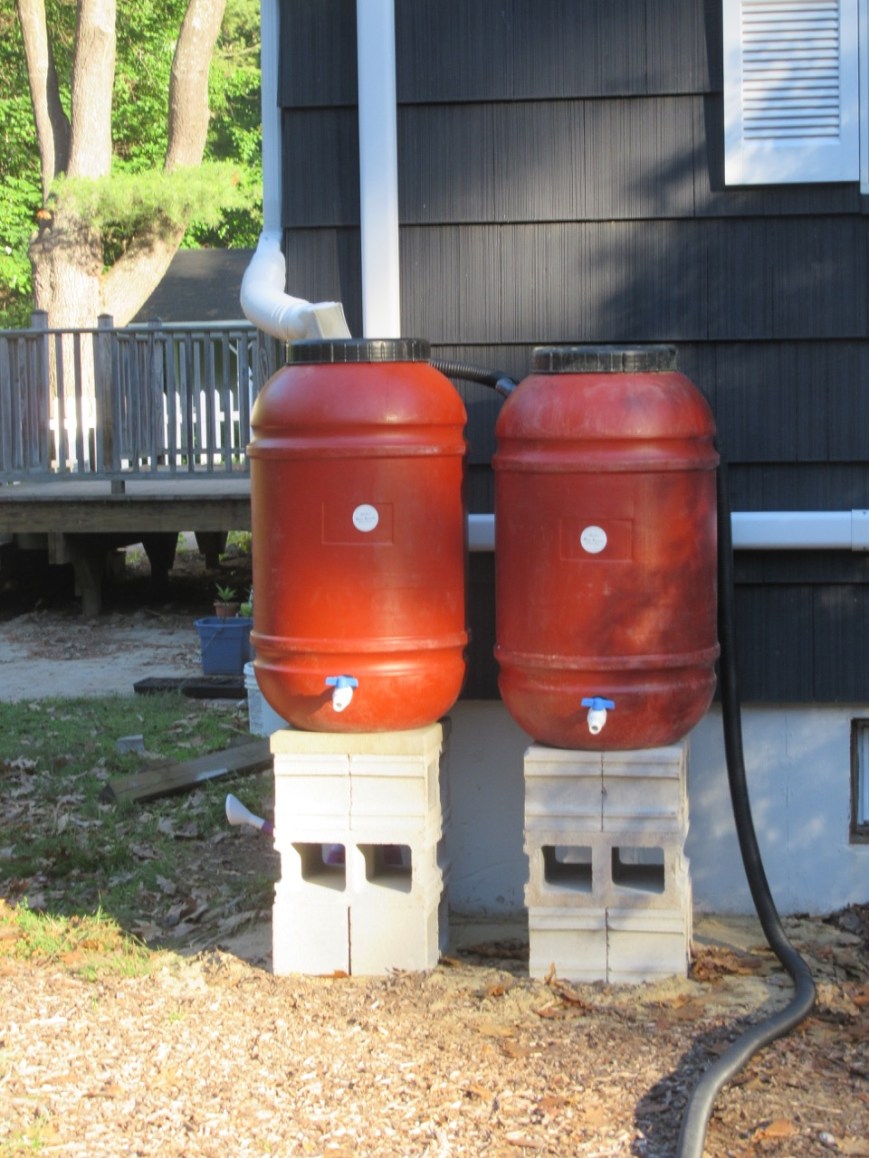


Finally it was possible for it all to be hooked up.  The team was able to complete the hook up for four rain barrels, and do everything except the hook up for two more.  We have two more rain barrels that we hope to install later.

After- Rain Barrel close-up


Mushrooms in the Cherry Tree Beds

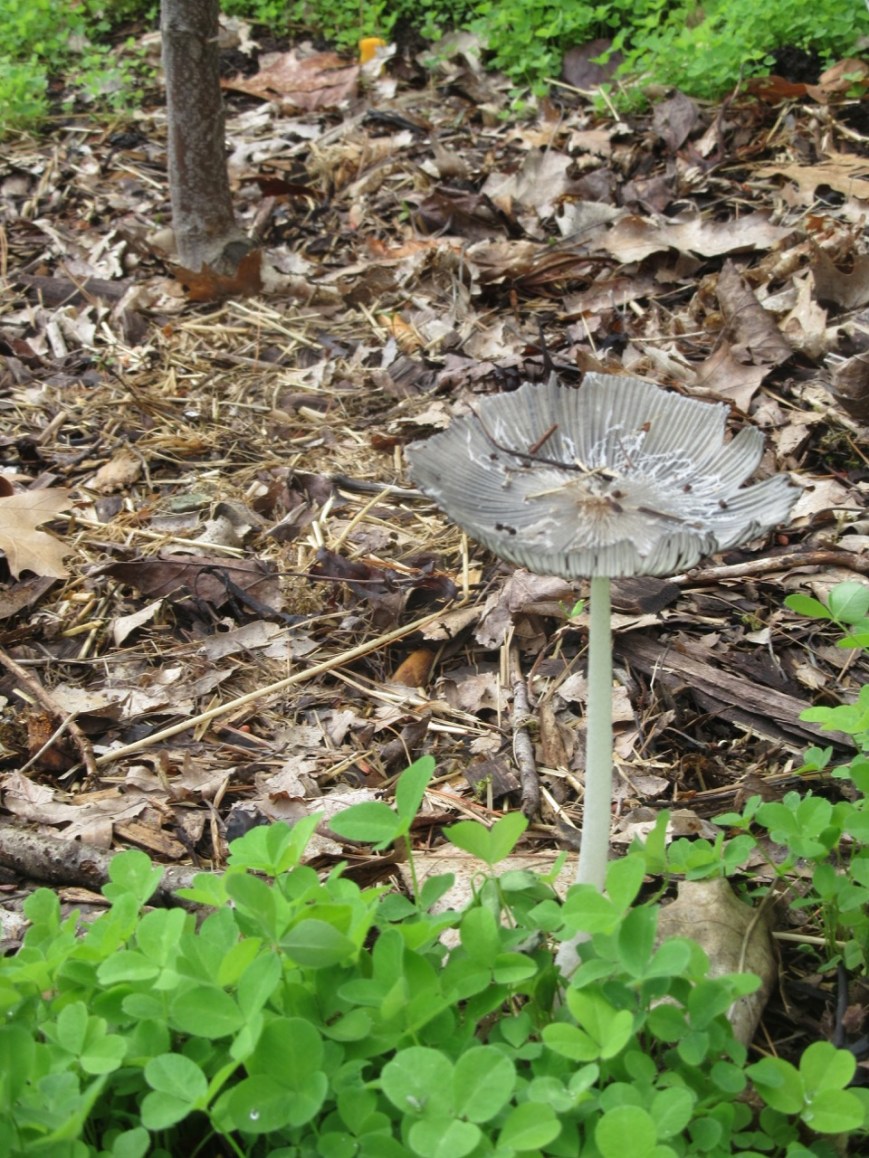
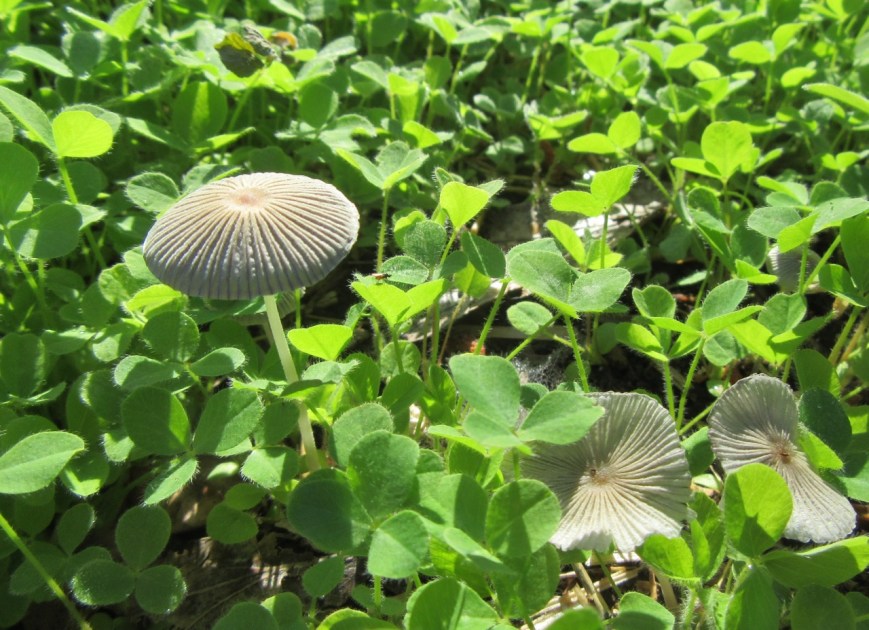
Mushrooms in the cherry bedOur efforts to enhance the fungal community in our yard are suddenly materializing in mushrooms popping up in the cherry tree circle beds.  (Or at least it seems that these efforts are linked.) These came up on my birthday, and then had disappeared by the next day, to be followed by another variety altogether.Mushrooms in the cherry bed, day two

Then, all of those disappeared, but today, I found these in the other cherry tree bed.Mushrooms in the other cherry bedI don’t know mushrooms well enough to identify–is anyone more familiar with these than I am who might give them names?

The Layers of Community

Before-marked for fruit tree beds

[Before–Growing beds marked with flour and flags]

On Saturday, we hosted our Permablitz! (See “more before” photos here.)  Over 20 people came to our yard and worked together on projects such as installing rain barrels, building a composting system from pallets, building a fire circle, and creating five more  growing beds for future fruit trees, raspberry bushes, & hazelnut bushes, and one bed for flowers & herbs.  We also got the first shovelfulls dug for a pond.

Opening Circle-Sylvia, Cathleen, Ali

[Opening Circle]

At the end of the day, I got teary-eyed with the sense of Gift.  The generosity of so many individuals coming together and creating something so beautiful and full, helping us to realize our dreams for this piece of land was deeply moving.  There is something about this giving and receiving of human attention and wisdom and care, that feeds our hearts. Much of our lives are shaped by transactions—we pay a certain amount of money, and receive a product. Or, we put in so many hours and receive a paycheck.  But giving and receiving freely and generously touches something much deeper. Giving and receiving must trigger deep neurotransmitters in our internal chemistry, sparking a profound sense of well-being and belonging.

I also realized how many layers of community are involved in such a project.  One layer is this community of people who care about the earth, and who come together to give and receive, to learn, to share, to grow, to get to know each other.  People connections are made.

Another layer is the community of the soil.  During the blitz I was mostly working with several others on the project for creating new growing beds.  We were adding nutrients through sheet mulching so that the soil could create a thriving fertile community.  I have learned so much about the variations in soil communities from the book The Holistic Orchard by Michael Phillips.

What a food forest needs, what fruit trees need, is soil whose fungal community is stronger than its bacterial community.  In contrast, annual vegetables and flowers and grasses prefer soil with a stronger bacterial community.  A bacterial community is enhanced by tilling the soil and incorporating organic matter by turning it into the soil.  A fungal community is enhanced by no tilling, but rather adding organic matter on the top of the soil to decompose, as it happens in the forest. (Similarly, compost that is left unturned will generate a stronger fungal community.)

Forking the beds Cathleen

[Cathleen forking the soil]

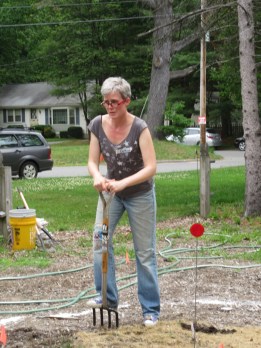
We prepared the soil by aerating it with garden forks–since it had been rather compacted.  We added some granite dust for mineral enhancement, then put down a layer of cardboard to kill grasses and weeds.

Raspberry Bed-manure & chaff Mihku & Heather

[Mihku & Heather adding manure and chaff]

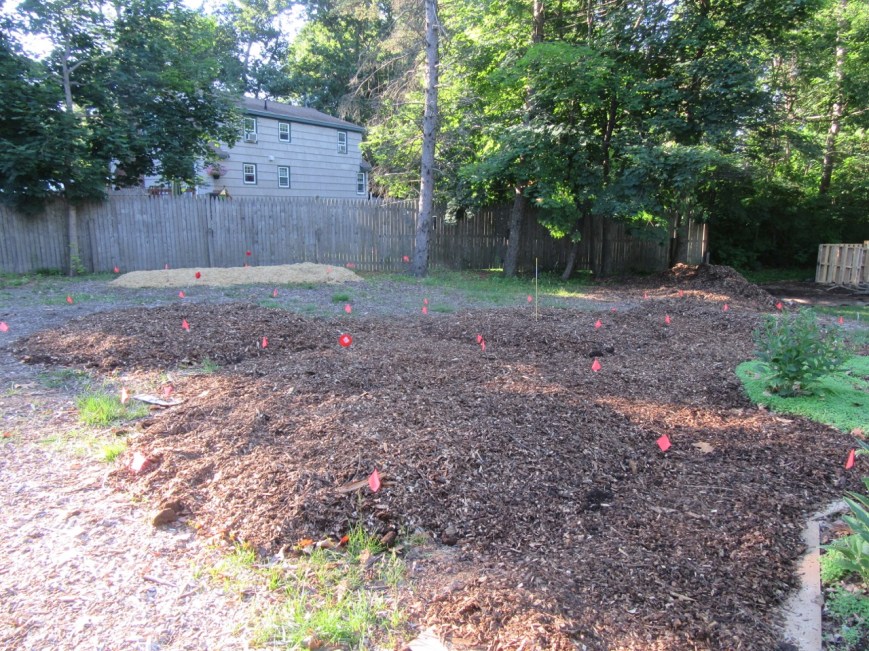
Then, we added chicken manure, coffee chaff, seaweed, leaves, grass clippings, composted manure, and a really thick layer of deciduous wood chips.  We were able to get a delivery of 8 yards of wonderful ramial deciduous wood chips–these are chips which include lots of thin branches, which have more lignin content that is not yet woody.  The wood chips are the most important part of enhancing the fungal community.

We also made several pathways with cardboard and wood chips, and I will complete those bit by bit in the next days.  Now, the process works on its own–I add some water or it gets rained on–and the microbes will work together over the next several months (and years) to create a thriving soil community.  We will plant trees and bushes next spring.  My friend Roger Paul said that the Wabanaki word for “soil” means giver of life.After-Fruit Tree & Flower/Herb Beds