All the Water Is One Water

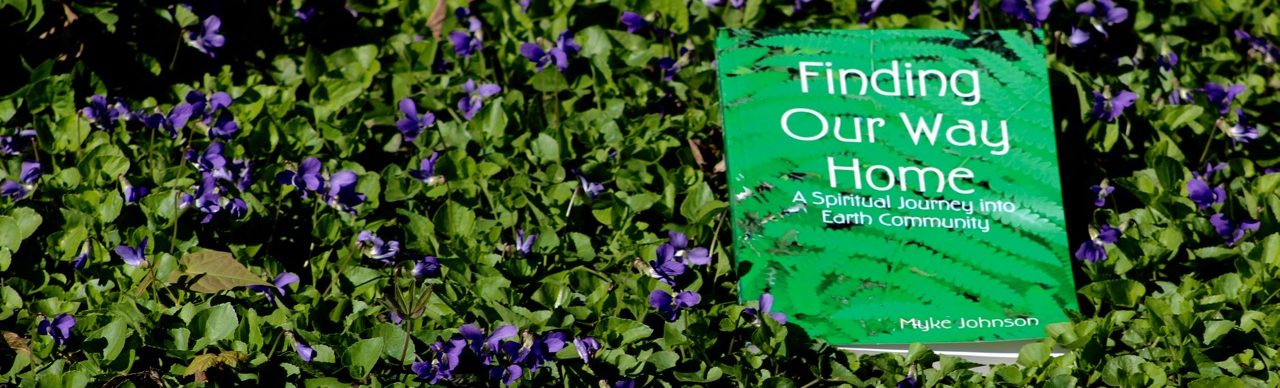
In honor of World Water Day, I offer this excerpt from a chapter in my book, Finding Our Way Home: A Spiritual Journey into Earth Community.  I will share further excerpts during the next few days.  This chapter is entitled, “All the Water Is One Water.”

Water BottleOne summer several years ago, I attended a two-week Earth Activist Training, which combined a Permaculture Design Course with practice in magical and political work on behalf of the earth. We began with a water ritual. We brought water from the places we lived or the places we may have traveled to pour into one container. At the end, each person took some of the water, and we brought it home with us. One of the teachers for the training was feminist witch and eco-activist Starhawk, whose writings had been important for me earlier in my spiritual journey. She had begun collecting water in this way many years ago. She brought water back from her travels around the world, and asked her friends to bring back water when they went to far off places. They brought water from the sacred Ganges River in India, and from the great Nile River in Egypt; they even brought melted ice from Antarctica. After a while, they had water from every continent.
When you pour it into one container, all of the water mixes together, and every drop has some of the molecules of water from every place. So if you take a small bottle of water out, you have the waters from many places in one bottle. Each time you have a water ritual, you add some water from the bottle you saved from the previous ritual. In that way, each ritual, each small bottle, contain the waters from all over the world.

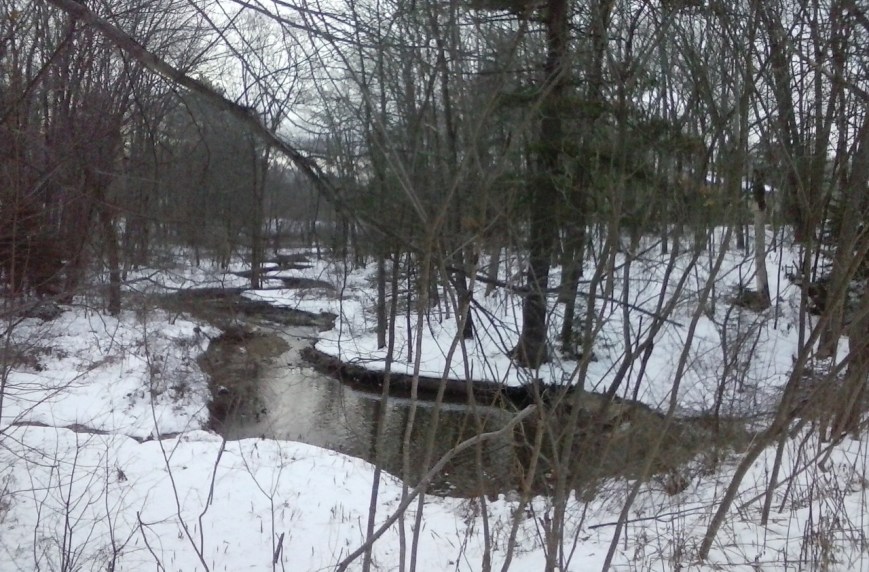
Why would we want to have a small bottle of waters from everywhere in the world? For me, first of all, it is one more way to make tangible the sacredness of water. All life comes from water, and needs water to survive. Water moves through the whole ecosystem, nurturing and transforming life as it moves. It rises from the ocean in evaporation, forming clouds in the sky, and, blown by the winds, it returns to the land in the form of rain or snow. This precipitation falls into the soil, and gathers in streams and aquifers. In the midst of this journey, it also travels through the bodies of every living thing.

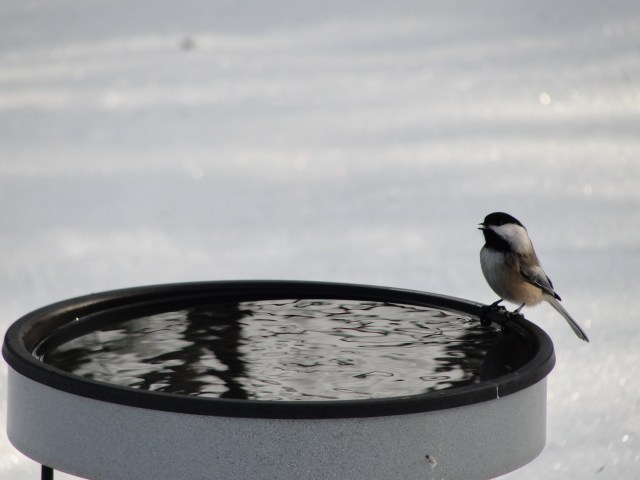
Margy and I have a bird bath outside our back door. Many kinds of birds come to drink the water we keep filled there, but we’ve also seen squirrels, chipmunks, and bees stop to drink. Every being needs water: insects, birds, mammals, fish, humans. Water also rises up into the stems of plants and the trunks of trees. But none of the water is isolated from the rest—even our own bodies are part of the watershed. We drink in the water, it moves through our blood, and permeates all of our cells, and then we sweat it out or pee it out. Sometimes we weep with wet salty tears. The water goes back to the air or the earth and continues in streams and rivers on its way to the ocean. The cycle keeps going round and round.

All the water on earth is really one water, continuously flowing through the biosphere. Even if we get water from our kitchen tap, that water has been around the world on its journey. All water is connected, and connects all of life.

Not Just for Native People

Today about 160-200 people gathered in Augusta Maine, in solidarity with the Native Nations Rise with Standing Rock march in Washington.  Organizer Sherri Mitchell commented how important it was that non-Native peoples were showing up–both because for too many years Native people have been struggling without support from the white community, but also because these issues really affect all of us.  Issues like water to drink, on which depends everything else about our lives, or the problem of toxins in the land, like uranium mining and oil pipelines, which so often have first been situated on land where Indigenous people were living, but then spread everywhere.

People Gathering in Augusta.jpg

[People beginning to gather at the Augusta rally]

I think about how my activism on these issues is often perceived by (white) others as something I am doing “for” Indigenous peoples, or a “special interest.” Perhaps I am misperceiving it, but I get the impression that some see it as too “narrow.”  But Sherri gave voice to what feels true to me–that Indigenous issues are tied in to so many other issues that we are facing in this time, issues that will determine the future of our planet.

I tried to articulate this in my book, Finding Our Way Home.  So many of the issues we are facing are the result of disconnection from the land, from other people, from the spirit within and between all beings.  So many of the issues we face are a result of the original colonization and theft of this land from Indigenous nations.  There is such a pervasive overlay of denial around the true origins of our nation, that it is easy for me to feel tongue-tied just trying to speak or write about it.

After leaving the rally in Augusta, I went to see the movie “I Am Not Your Negro” (directed by Raoul Peck).  What a wake-up call from James Baldwin to white America–again, confronting the pervasive overlay of denial about racism in America.  Can’t we see that racism makes white people monsters!  Our country will rise or fall depending on healing the wounds of colonization and racism, and we can’t heal what we aren’t willing to acknowledge.  Or as James Baldwin said it so eloquently, “Not everything that is faced can be changed; but nothing can be changed until it is faced.”

I grew up in a bubble of “innocence.”  I remember when white people applauded the innocence of children who knew nothing about racism.  But “innocence” is not what we need to heal–we need to wake up, we need full vision, we need to face it.

Some of my colleagues in ministry speak of their congregations growing weary of our preaching about racism, such a downer.   I don’t know if my congregation has grown weary of my words about racism, or my work supporting Indigenous rights.  But here is what I want to say.  It doesn’t feel like a “downer” once it is acknowledged.  Yes, it can bring up tears and rage and regret.  But there is also a sense of relief that comes from experiencing what is really true.  There is a sense of solidarity.  Because it gets to the heart of what is wrong in white America, it gets to the root of what is wrong in all of America.

As I said, I don’t feel very articulate today, but I feel inspired by the rally, inspired by the movie, encouraged in the fog of the everyday illusions that comprise so much of our country, to #staywoke.


What now?

chickadee-bird-bath-mj-dsc00898

Are you getting thrown off-balance by the shocking pronouncements every day from the Trump administration?  I have been wrestling with my heart, needing quiet, needing spaciousness to hear, underneath the din, the voices of the Spirits.  I think I am coming to some clarity.

It is easy to want to pass along the latest Facebook post with one more horror that is being perpetrated on innocent people or the earth.  So much outrage fills my heart when I hear about what is being done.  But it is their plan to stun us with horror, so that we are debilitated and unable to act.  So I plan to stop passing along horrifying posts. I will try to pass along posts of resistance and beauty and solidarity and compassion. I will also continue to post what news I hear from the resistance at Standing Rock, since that is often kept from the media.

Every week I am invited (via Facebook) to several rallies or vigils or demonstrations.  I am happy to see people in the streets–it is important.  But for me, I need so much solitude to keep on track, so much quiet to hear what is going on.  Unlike some people, I don’t find it empowering to be anonymous in a passionate crowd.  I can’t go to the rallies and marches every week.  Maybe I can do this once a month.  Rather, I need to make connections at a personal level.  So when something is coming down that might be hurting people, I will try to reach out to those with whom I have some possible link, to offer more personal support.

Similarly, we’ve been encouraged to inundate our elected representatives to try to stop what is happening.  I know this needs to happen, but it is generally not my own area of strength or passion.  (I have also come to understand that petitions aren’t usually effective, so unless it seems particularly well-suited, I am not going to spend energy on those.)  Phone calls are supposed to be the most effective way of getting counted.  So, I have found a website that sends an email once a week, with simple options for making phone calls on the current issues.  5 Calls uses your location to find your local representatives, and provides phone numbers and scripts so that calling is quick and easy.  I can do that once a week for 5 minutes, and maybe it might work for others too.

I don’t want the Trump administration to hijack my own calling, my own work.  I don’t want to be overwhelmed with guilt or “shoulds” or some internalized expectation of what an activist must look like.  The Spirits say to me, “Be a human being! You don’t have to have all the answers. You don’t have to be the “savior” of the world. Risk your heart. Use your preaching voice to speak the truth. Keep doing your core work.  It is still necessary to wake up to our connection to the earth, our connection to spirit, our connection to each other.  Stay centered in that work.”

Do you have core work that you need to do?  Please know that it is okay to Listen.


Prophecy, # 2

To be a community of prophecy we must see what is happening, say what is happening and act in accordance with what we know.

Right now, there are so many layers to see, and sometimes what is on the surface may be important to us, but is actually being used as a smokescreen for something else that has been hidden. We’ve got to really search for the meaning underneath events, for the important truths hidden behind the drama.

For example, a week before the inauguration of Donald Trump, Representative John Lewis stated that he would not attend it, because he felt that the interference wielded by Russia cast doubt on the legitimacy of the election. Trump immediately attacked Lewis in a tweet, said he was all talk and no action. The media rushed to defend Lewis, bringing out interviews about how he is a true American hero in the cause of Civil Rights. It might seem that they were trying to speak real truths in the face of falsehoods.

But later I read an article in Daily Kos, an online news journal, that gave me new insight about this. The writer, Dartagnan, pointed out that Trump is an expert on creating flashy outrageous distractions via his tweets, and most of the media follow along—so no one was paying much attention to why the Russians may have been trying to influence the election. Dartagnan uncovers the deeper story that much of the media ignored. He writes:

In an interview with the Wall Street Journal on [January 13], Trump confirmed that he’s “open” to lifting sanctions imposed by the US against Russia… The media are lazily treating Trump’s statement as if [the most recent sanctions] are the only sanctions “at issue.” But they’re not.  The far more significant sanctions are the ones [the US] imposed [in 2014] for the Russian invasion of Crimea.  In particular, imposition of those sanctions put up a roadblock to a $500 Billion dollar oil deal between ExxonMobil and Russia for jointly developing oil and gas properties in the Arctic.

.The Russian “state-owned” Rosneft corporation, [is] run by Igor Sechin, ….Putin’s “de facto deputy.”  Sechin was specifically sanctioned by the Treasury Department in 2014 as a response to the destabilization of Ukraine and the deal was blocked by those sanctions. Putin knew going in to the 2016 election that if he could install [someone] like Trump those sanctions would very likely be lifted in a heartbeat, with billions of profits going directly to Putin and his cabal of oligarchs, all with enormous financial interests in the project. …The deal was in fact authored by [Rex] Tillerson, which gives us a clear rationale why he is the perfect person, from Putin’s point of view, to be our Secretary of State.”

Our capacity to exercise prophetic witness is dependent upon our ability to see through the smokescreens put up by the new administration, and dig deeper for the power deals that are being conducted, and for whose benefit. It means turning to news sources whose reporters are willing to dig deep to uncover the issues beneath the surface.

Understanding the implications of the Exxon-Russia deal makes me wonder if most of Trump’s more outrageous statements are merely meant to stir up his base, and inflame his opponents. Perhaps he doesn’t really care what happens to women, or people of color, or GLBTQ people, or Muslims, or even immigrants—not that he can’t generate a lot of damage. Damage has already been done.

But it also may all be a distraction to syphon off the energies of resistance, while he quietly goes about consolidating the power of the super rich and multinational corporations. It may really be about generating outlandish profits through a complete corporate takeover of the land and resources of this country. That could be fatal to the environment and the capacity for all of us to have a future on this planet.

I am not saying that we should ignore what is happening to people who are vulnerable to this new climate of hate. We must continue to speak and act in solidarity with all who are targeted. But to be a community of prophecy we must open our eyes on many levels, and reveal what is meant to be kept hidden.

Sun through Trees

Prophecy, Part 1

Sun through evergreens


What does it mean to be a community of prophecy? Rebecca Parker says: “Our times ask us to exercise our capacity for prophetic witness. By prophetic witness I mean our capacity to see what is happening, to say what is happening and to act in accordance with what we know.”

These are capacities that each of us has, to varying degrees. We can’t always see clearly what is going on—but by sharing what we can see with others, by listening to what others see, we can form a better picture of what is going on, a truer understanding of what is happening.

The Quaker educator Parker Palmer recently described patriotism as a “lover’s quarrel with our country.” He reminds us to quarrel lovingly and passionately about truth, about “what is and isn’t true.” Many of the president’s enablers are saying truth itself doesn’t matter anymore. If you repeat a big lie enough times, people will begin to believe it. Or as one person said, “There’s no such thing … anymore of facts.”

Palmer wrote on January 18th:

We who hold the quaint belief that it’s often possible to tell whether what comes out of a mouth is true or false need to assert the facts every chance we get. Last week, for example, the man who says that only he can save our economy claimed that there are “96 million…wanting a job [who] can’t get [one].” False. There are “roughly 96 million people not in the labor force, but that includes retirees, students and others who don’t want jobs. Only 5.5 million of them want work.” The unemployment rate, which neared ten percent every month of 2010, was five percent or less every month of 2016.

He goes on to say:

Facts are so tedious, aren’t they? And they won’t change the minds of true believers. But we need to preserve them for the same reason Medieval monasteries preserved books: the torches have come to town. Let’s try to remember that science and the Enlightenment gave us ways to test the truth-claims of potentates and prelates, laying the foundations for our little experiment in democracy. Until someone blows up the lab, we must proclaim the facts, then tuck them into a fireproof vault until we need them again.

I am thinking about the scientists who began downloading climate change research data from government websites, to preserve the research against the possibility that a new administration would take it all down. Fighting for and preserving truths in a time of propaganda.

To be a community of prophecy we must see what is happening, say what is happening and act in accordance with what we know.

Note:  Rebecca Parker quote from, “Rising to the Challenge of Our Times,” in Walter P. Herz, Redeeming Time: Endowing Your Church with the Power of Covenant, p. 66-67.

My Dad and the Land

Johnsons 1936.jpg

[1936, his brother, sister, & my dad in back.]

My dad was born in 1930 in Gillette Wyoming, where his parents were homesteading.  Some stories I remember from his childhood there.  My grandmother made cinnamon rolls. They had a fire that burned down their house.  His mother grabbed the laundry, and all the family got out safely, but they lost their other possessions.  One time, maybe 3 years old, my dad went into town, with his dad perhaps, and when he came home he proudly announced “I buyed me this!” He had spent a coin to purchase some candy or some small toy.

The family left their homestead in 1938, when my dad was eight years old, and they ended up in Detroit Michigan.  For the rest of his life, in many ways, he was trying to get back to Wyoming.  He went there at 16 to work on the ranch of a family friend.  Back in Detroit, he met my mom at a riding stable, and we lived in Michigan when I was young.  We moved to Texas when I was 7, but after six months returned to Michigan.  When I was 12 we moved to Sheridan, Wyoming, and my dad worked on a ranch in Montana. There were six children then. I was the oldest, and my sister Mary was the baby.  We went to the Catholic grade school in Sheridan.  We stayed there for one school year.

We could walk to school–I think it may have been about 8 blocks.  One time the weather reported it was 17 below zero.  My mom called another mother to ask whether she should send us to school.  Just bundle them up! she said.  I was in seventh grade that year, and was amazed that the popular kids were also those who got good grades.  I was in a drama club and a science club.  But it took a while to make friends.  By the end of that year, I had gotten close to a girl in my class whose name was Patricia Ann Rhodes.  The drama club put on Thornton Wilder’s Our Town.  I shared the role of Mrs. Gibbs with another student.

My dad stayed up in Montana during the week.  Actually, I don’t remember the exact schedule of him coming home.  He did go back and forth.  That year we spent Christmas week at a one-room cabin in Montana, which was a lot of fun.  Shortly after that, he stopped working at the ranch, and went back to Michigan to work again in drafting.  I didn’t know the full story until years later.  I had always thought he left the ranch because you couldn’t support of family with six children on a cowboy salary.  But really what happened was that he hurt his back in a fall from a horse.  Someone unexpectedly tossed him a bag of feed, and the horse startled and jumped away.  That was how he fell.  It was very physical work, and he was in too much pain to continue.

He told me later how devastating that fall had been for him.  He went back to his old job–but felt a deep sense of failure.  The year before, this company had held a going away party for him, and gave him a gift, a rifle I think, with many good wishes on this new adventure he was looking forward to.  So coming back was to admit the defeat of his dream.  Back in Michigan, he found a house for us to live in, and the family moved back to Michigan after the school year ended.  I cried when we had to go back.

I am thinking about how much he loved the open range, and longed for the land in Wyoming.  He found God in that land.  He said once that “people called it a ‘God-forsaken land’ yet even in that naming they were reminded of God.”  His longing for this faraway land was a part of my growing up years, one root of my own sense of disconnection and longing for the land.

I have been thinking a lot about my dad these last few weeks because he had a fall at home in West Virginia a few weeks ago and hurt his back.  He is now in a nursing home, theoretically to get some rehab and pain management, but he is feeling very discouraged, and not really participating in therapy.  He had a stroke in September of 2014, and recovered well at first, but it has been a hard two years. I am thinking about how much I love him, even though my own journey took me so far away from his world. Cowboy, mystic, dreamer… I send you blessings on this difficult chapter.  And gratitude to my sister Julie who has been caring for him and my mom close up these last eleven years.

Small Bird Press

Version 2

Photo by Margy Dowzer

Small Bird Press is the name for my self-publishing adventure. I  considered several other names, but when Small Bird Press came into my mind while I was on a walk, I realized it expressed so much about the purpose of publishing my book.

First of all, small birds were among my most important teachers for the spiritual journey I describe in Finding Our Way Home. The small chickadee I held in my hands after he was stunned by flying into our window. The cardinals who kept calling me outside at dawn. Small Bird Press is a way to honor those teachers.

Secondly, I had submitted my book to several publishers, but was rejected.  Most of the time, they didn’t really say why, but one publisher was kind enough to say that though my writing was good, they couldn’t take on the book because I wasn’t well-known enough and didn’t have a catchy hook, so it would be difficult to market my book. I understand this is often the way of publishing right now. So I too am a “small bird.”

But I believe that even a small bird–a person who is unknown, or only locally-known– even a small bird can change the world. When we have a vision of how the world might be, when we seek to articulate that vision and live that vision, it can ripple out in untraceable ways to shift reality. I want to be that kind of small bird, to bring about changes for whoever might listen, to shift reality toward earth community, toward human beings living in mutually beneficial relationship with all other beings of earth.

So I am delighted to be publishing as Small Bird Press. And if the message is going to ripple out, it will be because those in my small circles who share my vision are willing to share the book with others in their own circles. Find out more about the book here: Finding Our Way Home: A Spiritual Journey into Earth Community.

And thank you, Margy Dowzer, for capturing my moment with a chickadee in your photo.

The Book

Now available!  The book, Finding Our Way Home: A Spiritual Journey into Earth Communityis being published by my own imprint, Small Bird Press, and available through lulu.com via this link.title-page 

What others are saying:

“Myke Johnson’s beautiful stories from her own journey illuminate the way to reconnecting with ourselves, each other and the entire Earth community. The practices that punctuate the end of each chapter help embody and guide the path of reconnection. A book to savor, it is also a compelling reminder of the legacy of stolen land and genocide, and of the urgency to face the past as a necessary step toward healing and finding our way home.”  Anne Symens-Bucher, Executive Assistant to Joanna Macy and facilitator of the Work That Reconnects

“Myke Johnson’s writings are inspiring, transformative and grounded in the mystic contemplative way of life.  Reading her reflections and meditations gives you a deep sense of connection not only to Mother Earth but to her own personal journey. This is a companion book for all that are seeking a simple but conscious choice of living in peace and harmony on our planet with all of creation.”  Rev. Virginia Marie Rincon, Episcopal priest and Curandera

From the back cover:

In this time of ecological crisis, all that is holy calls us into a more intimate partnership with the diverse and beautiful beings of this earth. In Finding Our Way Home, Myke Johnson reflects on her personal journey into such a partnership and offers a guide for others to begin this path. 

Learning from the Indigenous philosophy that everything is related, she found in her plant and animal neighbors generous teachers for a way back to connection: a chamomile flower, a small bird, a copper beech tree, a garden slug, a forest fern. Their lessons are interwoven with insights from environmental science, fractal geometry, childhood Catholic mysticism, the prophet Elijah, fairy tales, and permaculture design. Each chapter includes practices for further reflection and experience.

This eco-spiritual journey also wrestles with the long history of our society’s destruction of the natural world. Johnson investigates its roots in the original theft of the land from Indigenous peoples and in other violent oppressions between human beings. Exploring the spiritual dimensions of our brokenness, she offers tools to create healing. Here is a map into a new relationship with earth, with each other, and with the Spirit within and between all. Lyrically expressed, Finding Our Way Home is a ceremony to remember our essential unity with all of life. 

You can now order the book for $17.99 (plus shipping) via environmentally-friendly Print-on-Demand at this link:  Finding Our Way Home 

Version 2

Photo by Margy Dowzer

Myke Johnson is a Unitarian Universalist minister and earth activist, serving a congregation in Portland, Maine, while practicing and teaching ecological spirituality. She holds a Master of Divinity from Chicago Theological Seminary and a Doctor of Ministry from Episcopal Divinity School.

More recommendations:

“I work with Unitarian Universalist congregational, environmental leaders across the United States. I am keenly aware not only of my need, but what so many seem to experience as a lack, a daily rift between functioning well on Earth, and Living with All Earth in ways that sustain our core. The messages and ceremonies of Finding Our Way Home are as essential, I think, as sleeping. But like sleeping, we try to do without as much as our hearts, bodies and souls need to meet demands in these times. This book is welcome medicine for the beautiful, difficult work and love of our lives.”  Rev. Karen Brammer, UUA Green Sanctuary Program

“As a student of Naiyantaqt, I have, over the long journey of my life, come to appreciate the rhythm of the Great Mystery; the wondrous Consciousness, the empowered understanding and meaning of Manitou, that exists everywhere and in all living and immobile matter. Such connections are profound, relevant, and mark the passage to the future awaiting the enlightened. I am aligned to such kinships and Myke Johnson is a long-time kinship, a seeker of the Divine, a companion in the awe of the Great Mysterious. She boldly embraces the Divine and her quest to connect with the All-Encompassing Mystery. Her book is the re-telling, the sharing of her wondrous spirit, life, and the path to her awareness. Her book will empower true seekers on this Path of Life, a path she confirms by our friendship and mutual journey together.”  gkisedtanamoogk, Maine Wabanaki-State Child Welfare Truth & Reconciliation Commissioner and author of Anoqcou: Ceremony Is Life Itself

“During times of chaos, whether private or public, the human psyche/spirit seeks inner and outer grounding as its home base. Using her own life as a prism of refracted insights, Myke Johnson has created a tool-kit for the rest of us to use in our personal and/or political struggle to survive, and perhaps even thrive. As she shows as well as tells us how to concentrate and tap into our deepest energy and then send it out into the universe in order to affect change, she does exactly that with this book, her own special gift to the world.”  Gail Collins-Ranadive, author of Nature’s Calling, The Grace of Place

“In Finding Our Way Home, Myke Johnson names the many disconnections that modern people constantly experience as the core spiritual issue of our time.  And then through wisely chosen stories from her own experience, she shows us how we might reconnect the inner pieces of ourselves, our relationships in genuine community, and our relationships with the earth into a more integrated whole. She helps us remember our deep belonging with all that is. And that as we engage this process, we are finding our way home.”  Rev. Deborah Cayer, lead minister, Eno River Unitarian Universalist Fellowship, Durham, North Carolina

ARMY CORPS DECISION: WHAT DOES IT MEAN?

Reposting from Andy Pearson on Facebook.

On Sunday afternoon, the U.S. Army Corps of Engineers denied the easement for the Dakota Access Pipeline to cross under the Missouri River at Lake Oahe, just north of the encampments at Standing Rock. This is amazing, virtually unprecedented, and a movement victory — and the water protectors who have led the fight are right to claim it as such. It’s also likely temporary and by no means the end of this fight. Here’s some context and paths forward as best I understand right now.

WHAT HAPPENED: The Corps denied the easement and ordered an Environmental Impact Statement, which is a formal study which will compare various route alternatives. Denying the easement was a stepping stone to getting to an EIS here for the Corps, and doesn’t mean that the pipeline won’t be built in its current alignment near Standing Rock eventually. The Corps is essentially hitting the pause button and initiating further study.

HOW DOES AN EIS GO? There are usually three phases to conducting an EIS: Scoping, Draft, and Final. The public can generally comment during each phase. The purpose of scoping is to identify what should be studied in the EIS — the scope. Then the Corps and their EIS contractor prepare and release a draft, which the public is invited to comment on. They then rework the draft in light of public input and release a final version, which the public can generally also comment on. The process usually takes several months, and can last for years depending on the project’s complexity. A generic timeline would be about nine months, but we don’t have any actual guidance yet on the timeline for this particular EIS.

WILL THIS ACTUALLY STOP CONSTRUCTION? Debatable. It would be illegal for Energy Transfer Partners to drill under the Missouri, but that’s not to say they won’t do it and opt to pay whatever legal penalties they incur. That would be a fairly shocking move on their part but they’ve hinted they may be open to doing it. It’s easy to imagine that an incoming Trump administration would do their best to make the penalties as minimal as possible.

WHY IS IT IMPORTANT FOR ETP TO DRILL RIGHT NOW? Contracts with oil shippers. These contracts, called take-or-pay contracts, obligate shippers to pay money to the pipeline company over a long, committed period of time regardless of whether they have oil to actually send or not. It’s a great deal for DAPL but not so good for the oil shippers, especially now that the Bakken oil boom isn’t so hot. These contracts expire if the pipeline isn’t substantially complete by January 1, and there’s somewhat of a chance that some shippers will choose to drop out at that point due to changing economics in the industry if the pipeline isn’t complete. Sunday’s decision by the Corps means that the pipeline won’t be complete by January 1 unless ETP breaks the law and drills anyway.

WHAT ABOUT TRUMP? Oh, you had to ask. He’s a problem here. Once he’s president, he’ll be able to stack the deck at the Army Corps so that the EIS is weak or biased in favor of DAPL, and he might be able to stop the EIS process altogether and reinstate the permit, though I don’t know the legal specifics here yet. It’s very doubtful that we’ll see a full and robust EIS with him taking office. The upshot of Sunday’s decision as I see it, assuming that ETP chooses to follow the law, is that it delays approval of the line until after Trump takes office, giving time for the contracts to expire and letting the worst of winter slide by without the need for full forces at the encampments.

WHAT CAN WE DO IN THE MEANTIME? We can continue the work we’ve been doing, because it’s all still relevant and helpful, and will become quite urgent again in at most a few months. We can go after the banks harder than ever to cut off funding to DAPL. We can continue to spread information, lobby elected officials, lobby the Corps, hold events, train for direct action. We can engage in the EIS process once it begins. This isn’t the end of the fight by a long shot, but it’s a brief respite between battles and a sign of how far we’ve come thanks to the indigenous leadership and water protectors at Standing Rock. Let’s celebrate and reflect and keep fighting. #NoDAPL

The Story We Are Called To Be

You don’t have anything if you don’t have the stories.   Leslie Marmon Silko

The word “story” can be used to describe the way we understand the reality in which we live. A story is what we tell ourselves about our lives, the meanings we attach to reality. This past week we saw that people in America are holding vastly divergent stories about what it means to be American, that we hold vastly divergent understandings of the reality of our times.

One thing about stories is that even vastly divergent stories can exist in the same space, and in a sense they can all be true—because people live out their lives based on their particular understandings of reality. Stories are a way to understand reality, but stories also shape reality. In this way, stories have incredible power: to harm or to heal, to destroy or to protect, to create the future and even the past.

One story I heard a lot during the last several weeks was the story of a woman who would finally break the ultimate glass ceiling and hold the highest office in the country. This story identified its beginnings in the sacrifices of the suffragists to win the vote for women. But it also included a vision of a multicultural nation that honored all of its people, and welcomed the immigrants who came into our midst. There were many people who believed in this story, who were deeply inspired by this story. In fact, the popular vote of our country would have elevated Hilary Clinton to the presidency. When the electoral votes were all in, and Clinton had lost, the people who were holding this story in their hearts were crushed and heartbroken.

There was another story that took more effort for me to discover, a story of those who supported the other major candidate, now president-elect Donald Trump. I was able to get some insights into this story by looking at Facebook posts from more conservative members of my own extended family. In the best versions of this story there was a hope that a very imperfect outsider would bring the jobs back; that he would shake things up and pay attention to people in the middle of the country, the working Joes whose lives had been upended by free trade deals. There was a lot of pain in the heartlands that no one was paying attention to. These folks were not oblivious to the problems he represented, but they saw the other candidate as much worse. I respect those folks who wrestled with their values searching for the best way forward.

But there has been a much more troubling story in the support shown for Mr. Trump. It is a very old story, an ideology of white supremacy in this nation that originated in the destruction of Indigenous nations who lived in this land, and in the capture and enslavement of African people. White supremacy has morphed and changed through the centuries, but it has never gone away. Some hoped that the election of Barack Obama signaled a transformation had been achieved. But that was never the case, and during this election season, we saw the flames of hatred stirred up and given more oxygen. Mr. Trump played on the real pain of people in our country, and through scapegoating, channeled that pain into hatred. Hatred against people of color, immigrants, Muslims, women, queer people, people with disabilities.

Since election day, I have been hearing stories about people already experiencing violence from blatant white supremacists emboldened by the Trump election. Muslim women whose hijab scarves have been ripped from their heads, Latino children beaten up in school, Swastikas painted on the door to a Jewish community center, rainbow flags being burned, and heartbreaking fears about what will happen next.

A story is what we tell ourselves about our lives, the meanings we attach to reality. Some of the stories we tell about our lives are so ingrained that they are almost invisible to us. We think of them as just “the way things are.” But we do not have a shared reality as a nation, a shared sense of “the way things are.” That may not be a bad thing, if it helps us to wake up, to ask questions about what story we are telling ourselves.

There are some people saying that now is the time for our country to come back together, now is the time for us to unite as Americans and let go of the hostilities of the election season. I would agree that letting go of hostility is a good thing. Letting go of blame and hate. Henry Wadsworth Longfellow once said: “If we could read the secret history of our enemies we should find in each man’s life sorrow and suffering enough to disarm all hostility.” It is important to understand the suffering in each other’s lives, to understand how we come to the choices we make. It doesn’t help us to hate each other.

But the call to unity covers up something very important—the call to unity relies on our going back to a story that Joanna Macy calls “Business as Usual.” This is the foundational story of our Industrial Growth Society. In this story, our economic and political systems depend on ever increasing extraction and consumption of resources. They require the generation of ever more rapidly increasing profits. In this story, human lives are valued only insofar as they can be used in the generation of profits and the consumption of products. In this story, the Earth is seen as a resource bank for the generation of profits, and also the septic tank for human waste. The underlying power in this story belongs to the multi-national corporations and elite business-owning families. This is the story that sometimes we think of as “the way things are.” We don’t really think of it as a story at all.

So I cannot answer a call to unity like that. I keep hearing in my heart a different call, a call to a whole new story, or a story that is so old it seems new. That call is sometimes just a whisper, but more and more it echoes like a great shout—a call that demands that we look beyond the superficial unity of the realm of the status-quo, and look deeper into a more essential unity that we are beginning to awaken to.

For the Business as Usual story is actually a story built on separation. Business as Usual is a story that says that human beings are separate from each other, that one can build a wall between different races and religions. It is a story that says that human beings are separate from the earth, as if the environment were a special interest and has nothing to do with our food and water and life itself.

Joanna Macy talks about three foundational stories. The first is Business as Usual. But Macy suggests that if we keep trying to follow Business as Usual, we will end up in another story, “The Great Unraveling.” This story is about the disasters the Industrial Growth Society is causing. This story is the stuff of our nightmares of the past week. Race hatred, violence in the streets, the people torn apart fighting over scraps to survive. This story is about the environmental disasters of global warming and rising sea levels and mass extinctions. It foretells a future of destruction, hunger, disease, and war, and the likely extinction of human society as we have known it.

But there is a third story. Macy calls it “The Great Turning.” In this story, people choose to create a transition away from the Industrial Growth Society toward a Life-Sustaining Civilization. In this story, people come to understand their profound interconnection with each other, and with all of the natural world. People join together to make the changes that can heal and defend life on earth.

Human beings have the capacity to meet our needs without destroying our life-support system. We could generate the energy we need through renewable forms such as solar, wind, tides and algae. We could grow food through organic permaculture methods in thousands of small farms and gardens in every yard. We have birth control methods that could bring human population under control. We have developed social structures to mediate conflict, and give people a voice in democracy. When we realize how profoundly interconnected we are to all beings, we know that we need each other, that no one is outside of the circle of worth and dignity. The name of this third story, “The Great Turning,” grew from imagining how future beings might look back on our own time, if humanity survives because we’ve made a transition to a Life-Sustaining Civilization.

Business as Usual. The Great Unraveling. The Great Turning. If we understand the stories, we realize that each of us can make a choice about what story we want to tell about our lives, what version of reality to which we want to give our energy. And there is power in that. We don’t have to sit back and observe with horror the increasing violence and destruction that have been unleashed. Instead, we must remember the story we are called to be. We must recommit ourselves to live out our deepest values. Now, more than ever.

In the contest between Business as Usual and the possibility of a great turning toward Life Sustaining Civilization, the front lines are perhaps most starkly drawn right now on the plains of North Dakota. The Indigenous people of Standing Rock have made a stand to protect the water from the destruction of the Dakota Access Pipeline. They have been joined by thousands of Native people from across the Americas and the world, and thousands of non-Native allies. Robin Wall Kimmerer and Kathleen Dean Moore talk about it in a story called “The White Horse and the Humvees.” I want to share a few of their words:

On one side is the unquestioned assumption that land is merely a warehouse of lifeless materials that have been given to (some of) us by God or conquest, to use without constraint. On this view, human happiness is best served by whatever economy most efficiently transforms water, soils, minerals, wild lives, and human yearning into corporate wealth. And so it is possible to love the bottom line on a quarterly report so fiercely that you will call out the National Guard to protect it.

On the other side of the concrete barriers is a story that is so ancient it seems revolutionary.  On this view, the land is a great and nourishing gift to all beings. The fertile soil, the fresh water, the clear air, the creatures, swift or rooted: they require gratitude and veneration. These gifts are not commodities, like scrap iron and sneakers. The land is sacred, a living breathing entity, for whom we must care, as she cares for us. And so it is possible to love land and water so fiercely you will live in a tent in a North Dakota winter to protect them.

..The people at Standing Rock and their busloads of allies… are making clear that we live in an era of profound error that we mistakenly believe is the only way we can live, an era of insanity that we believe is the only way we can think. But once people accept with heart and mind that land is our teacher, our mother, our garden, our pharmacy, our church, our cradle and our grave, it becomes unthinkable to destroy it. This vision threatens the industrial worldview more than anything else.

Leslie Marmon Silko says, “You don’t have anything if you don’t have the stories.” I know so many are feeling discouraged right now about the change to our elected government. We can see that it bodes suffering and hard times. But here is the thing. A change in stories, a change in world view, has never happened because of the people in power, the people at the top. This kind of fundamental change always happens from people on the margins, people on the bottom, people in unexpected places.

We don’t have to follow the call to return to Business as Usual. We can follow the call of old stories and new dreams, of deep values and courageous ideals. We never know if our own acts of love and kindness might tip the balance. We never know if our willingness to welcome an immigrant to our community or visit a neighbor’s house of worship might tip the balance. We never know if our planting a garden, or living more simply, might tip the balance. We never know if reminding each other of the interconnections between all beings, might tip the balance.

This is not going to be an easy time ahead of us. But it was never going to be easy. If you were hoping it would be easy, it may be that you need to grieve that old story. Let yourself take time to weep and mourn. We are all being called upon to make a choice. We have our work cut out for us. Our job is to keep track of the story we are called to be: to remember our connections with all people and all beings of the earth, and to live in such a way to further those values. May we find strength and courage.Birch light and dark DSC07802