Despair

Almost every day I walk down to Capisic Brook, and most days, all through the winter, I saw a pair of ducks who lived in the water there. I saw them today too. My whole body felt heavy as I walked this morning, and I almost turned back before I reached the brook. I feel such a crushing sense of sadness and despair. I feel for the people who are suffering and dying in a genocide in Gaza. I feel for the foreign students and others who have been detained without warning or due process. I feel for the thousands hurt by the dismantling of government programs that feed people, and in conjunct with that, support farmers. And so much more. So much more is being broken and destroyed by the regime in Washington.

To be an activist has been an empowering thread throughout my life. I followed the advice of Audre Lorde: “Use what power you have to work for what you believe in.” When I feel powerless, I still search around for some small work I might do for what I believe in. And yet, the destruction continues.

As I cast about for some hope to cling to, some antidote to this despair, I find myself remembering the life of Jesus. He lived in a time and place under oppression by an empire that cared little for his life and the lives of any of the people around him. He had no power to change that evil regime, (or if he did, he did not use it–that was one of the temptations he rejected, as described in the gospels). Somehow, he lived his entire prophetic life in the shadow of this evil empire, and taught and healed nonetheless, usually with the most marginalized and the outsiders.

I get especially angry by the people who promote “Christian nationalism.” Jesus preached the opposite of nationalism. He often contrasted the divine “kingdom” with earthly kingdoms. Perhaps there is no story with more clarity about this than the story of the final judgment at the end of the world. According to the book of Matthew, (chapter 25) the divine king said to those judged as righteous: 35 “for I was hungry and you gave me food, I was thirsty and you gave me drink, I was a stranger and you welcomed me, 36 I was naked and you clothed me, I was sick and you visited me, I was in prison and you came to me.’ 37 Then the righteous will answer him, ‘…when did we see thee hungry and feed thee, or thirsty and give thee drink? 38 And when did we see thee a stranger and welcome thee, or naked and clothe thee? 39 And when did we see thee sick or in prison and visit thee?’ 40 And He will answer them, ‘Truly, I say to you, as you did it to one of the least of these my brethren, you did it to me.’”

The divine is with the least of these. And what this means to me is that the divine is in the torture prison in El Salvador with the gay Venezuelan barber. The divine is under the rubble with the emergency medical workers in Gaza. The divine is with the HIV patients in Africa who longer have medicine. The divine is lined up at the food bank. The divine is waiting with the woman miscarrying in Texas unable to receive medical help. The divine is with the sick person feeling isolated at home.

And maybe sometimes that is me, too, feeling the isolation and powerlessness of chronic illness, maybe the divine is here with me in my despair for the world.

Suffering and tending

Myke painting tree trunks in the orchard (Photo by Margy Dowzer).

When I feel devastated by the images of premature babies in al-Shifa hospital in Gaza, without incubators, without oxygen, placed together for warmth, but some dying, (and finally I hear that they are being evacuated today)… When I feel devastated that the initial violence and hostage-taking of Israeli citizens by Hamas has been multiplied by more violence and death by the Israeli government… When I feel devastated by bombs killing innocent civilians and journalists and children… When I feel devastated that I cannot stop the killing or bring food or water to the starving families… I cannot find the words to write…

And so I have been tending the only life I can tend. To get ready for winter, I sprayed the orchard trees with holistic spray (with Neem oil, Karanja oil, hydrolyzed fish, and probiotics in water). And then a few days later, I painted the trunks with my own combination of white milk paint and “Surround.” The white paint protects the trees from sunscald. When the sun warms the trunk by day, and the nights are cold, the extreme fluctuations of temperature can cause the bark to split.

Milk paint is a non-toxic biodegradable paint made from milk and lime. Surround is a natural clay product that protects trees from boring insects. It is also light colored, so I decided that to combine them would make sense. They both come in powdered form that is mixed with water. And so I knelt beneath these trees and tended them with love.

This is not enough to remedy even the suffering I feel in my own heart for all the suffering happening so far away. But somehow I must choose life, choose tending, choose care.

Already Broken

Broken measuring cup

Years ago I heard a Buddhist phrase–“The cup is already broken.” Its intent is for us to meditate on the transient nature of all of our reality. If we think of the cup as “already broken,” we can appreciate the cup now, and not be attached to keeping it in the future. At least, that is my brief paraphrase of what it means to me. Last night I knocked into a glass measuring cup and it fell to the floor, shattering into many pieces. Margy says she thinks that this measuring cup had originally belonged to her mother. But it was not really a sentimental piece, rather a long-lasting useful tool in our kitchen. Very long-lasting. Very useful. I locked the cats in the bedroom so they wouldn’t step on glass, and swept and vacuumed all the pieces from the floor into a paper bag to put into the trash. So it goes.

However, there is another version of “already broken” in modern American life–planned obsolescence. Manufacturers purposefully making products that are designed not to last, so that “consumers” will keep buying more products to replace them. This kind of “already broken” is so frustrating as we try to live in sustainable mutual relationship with the earth. We have these metal yard chairs whose weave has torn so that they are no longer useful, and not repairable. They were not long-lasting–maybe only a few years old. We’re likely going to call The Dump Guy, to come and pick up four of them plus a broken patio umbrella. It just makes me feel angry.

Broken yard chairs

Meanwhile, it seems to be an autumn full of broken mechanical things–but happily so far, most able to be repaired. The garage door was broken and then fixed a month later. A groundhog dug a tunnel under the garage that we needed to get filled, and a contractor worked on it. The clothes dryer stopped working and was able to be repaired. Now the heat pumps won’t work, and someone is coming on Tuesday. (We have a back-up oil boiler, so we are not cold.) I have felt burdened by all of this household decrepitude, yet also grateful–because we have been able to get repairs done, able to afford them, able to find repair people to tackle the jobs that are too big for us.

But I am also reminded of the larger brokenness all around us in our world. I always resonated with the Jewish concept of Tikkun Olam, “repairing the world.” I am not Jewish, but have learned so much from that tradition (and people from that tradition) about working for justice. So much of my life, I was involved in activism to end oppression and injustice. I dreamt of a world of freedom and equality and compassion. Now as I face the latest chapter of my life, with chronic illness, I don’t have the energy or ability to be so active. I feel discouraged about the backlash that has undone many of the hard won victories for the world that we dreamed about.

So I ask myself, what do we do when we cannot repair the world? What do we do when oppression and injustice and violence seem relentless. What do we do when the very earth we rely on is on a course for a mass extinction. What do we do when the world is “already broken?” I have been struggling over this writing for weeks now. I don’t have any answers, but it feels like a critical question for this time of my life. If I have attached my meaning, purpose, and value to improving the world, to repairing its brokenness, then who am I if that is not possible? Who am I if the world is already broken?

I still don’t really have an answer. I still am pondering the question, as I feel such sorrow and grief for those who are suffering right now in ways I cannot alleviate. I remember that many people have lived in times of great horror, have lived in situations which they did not have power to improve or repair. We are tangled in a web of broken relationship. We cannot escape. Yet in every situation, people have made choices to affirm their humanity and interconnection. What choices might I make during this next chapter?

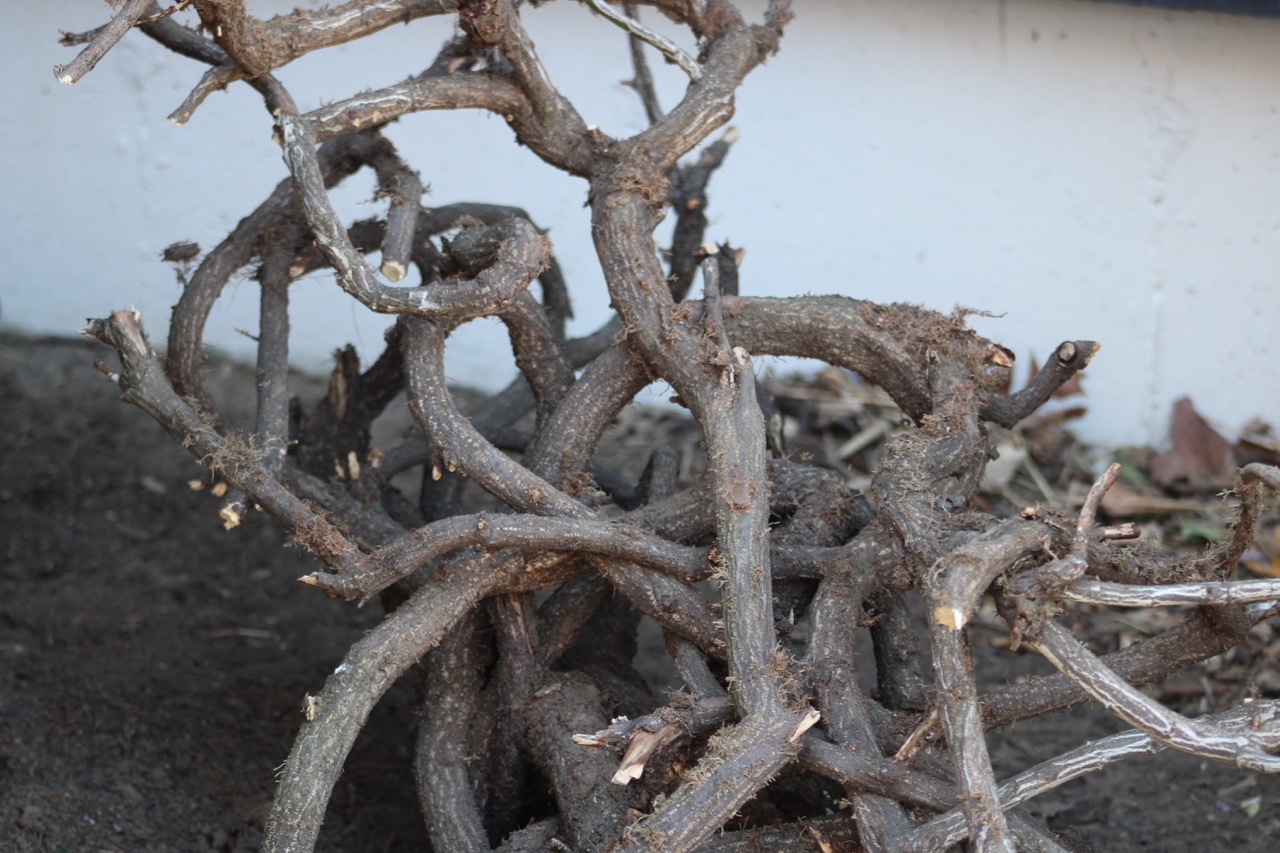
Tangled branches of cut “climbing spindle tree” (invasive in Maine)

Questions to Ask Ourselves

img_0448I have been asking myself and others, what does the change in our country mean for our personal activities and commitments?  Every day I receive dozens of emails asking me to sign this petition or donate to that organization working on behalf of immigrants, or women’s reproductive health care, or the environment, and on and on. Invitations to March on Washington, or Boston, or Augusta. Invitations to lobby my senator or call my congressperson. I can feel overwhelmed by trying to make decisions on what to choose, what to ignore, what to do with the same amount of time in each day, in each week as I have always had.
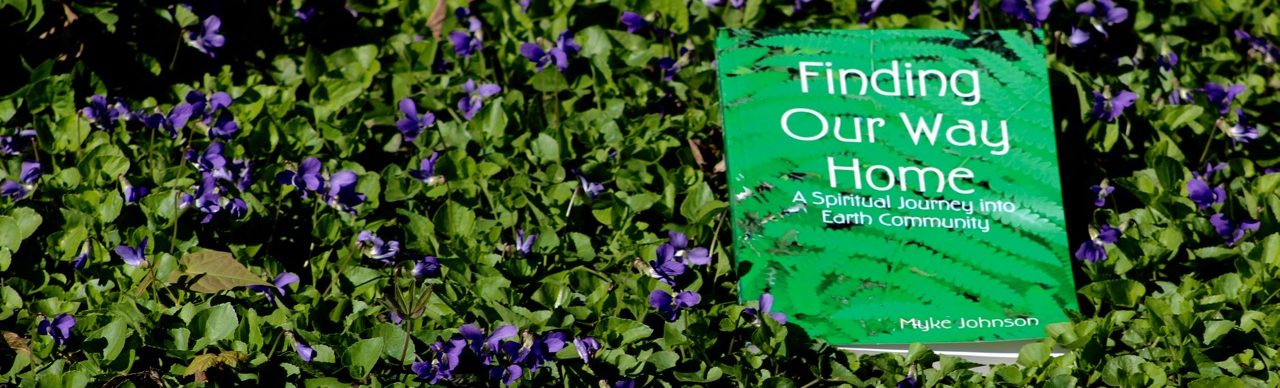
How are we meant to respond to the current challenges in our world, to the pain and suffering we see? On the one hand, we can say simply—follow our values, care for the vulnerable, fight for justice. But Quaker educator Parker Palmer, in his book, Let Your Life Speak, asks us to take a step back, to look more deeply at what we are being called to do. Palmer says, “Our deepest calling is to grow into our own authentic selfhood, whether or not it conforms to some image of who we ought to be… True vocation joins self and service, as Frederick Beuchner asserts when he defines vocation as ‘the place where your deep gladness meets the world’s deep need.’”

So one question we might be asking ourselves is, What is our own deep gladness? What sparks in us a sense of joy, because it taps into the very essence of our gift, our personality, our being? Another way to think of this might be, What are we good at doing? The influential African-American theologian, Howard Thurman, puts it, “Don’t ask what the world needs. Ask what makes you come alive, and go do it. Because what the world needs is people who have come alive.”

But is it really okay to pay attention to our own hearts, to our own deep gladness, to what makes us come alive? Shouldn’t we be mobilizing, organizing and lobbying every day to support our values in a society where they are under attack? I think what Palmer and Beuchner and Thurman are reminding us is that we can’t give what we don’t have. Not that we can’t learn new skills and rise to challenging occasions—but we can’t sustain a commitment if it goes counter to our nature.

For example, some people might be very at home with organizing a protest rally—making phone calls, posting on social media, renting sound equipment, contacting the right speakers, giving a stirring speech, and so forth. Some one else might be very good at going door to door, talking to neighbors and strangers of all political persuasions, making a connection and bridging the divide. Someone else might be good at strategizing behind the scenes, mapping out goals and objectives, and a course of action to take to get there. Someone else might be very good at bringing coffee and cookies to the meeting, and making sure that each new person is welcomed and brought into the conversation, and leaves feeling a sense of connection and involvement. Even in organizing and mobilizing, we each bring our particular gifts to the table.

And by that same token, we each have limits. Parker Palmer points out that he learned as much about understanding his calling from his limits as from his talents and gifts. He said, “Lacking insight into my own limits and potentials, I had allowed ego and ethics to lead me into a situation that my soul could not abide.”

He isn’t referring to the external limits that society places on people because of our gender, or the color of our skin, or the country of our origin. Rather, he means the limits that arise from our personalities, from our natural way of being in the world, from who we are at our core. We are encouraged to be tender with our natural way of being in the world, and not ask our souls to bear what they cannot abide.

For example, if someone is a complete introvert, they would not best serve their soul by forcing themselves to go to a march or a meeting. Rather, they might be happier to write letters to the editor or to their congressperson. Another person might not be able to go door to door, talking to neighbors, but they are really good at tutoring asylum seekers one-on-one to help them learn to speak English more quickly and feel at home in this country. Our limits and our strengths are mirrors to each other. We need to ask ourselves about our gifts and our limits.

I want to mention something about external limits. Parker Palmer admits that he holds a lot of privilege as an educated white male. Even to ask ourselves about “our soul’s calling” assumes that we have the privilege to ponder the question. Many people work overtime in jobs that do nothing to provide gladness, and barely enough to support a home and food. Another important question to ask ourselves is about our areas of privilege or areas of marginalization. What we can offer the community is dependent upon our social location—and that goes both ways. As a woman, I would not be welcome to share a gift for leading worship in the Catholic community. This is an area of marginalization for me. On the other hand, as someone currently with a steady income, it would be inappropriate for me to try to teach people in poverty how to save their money. It would be intrusive and disrespectful.

We must understand our position in a social fabric, the powers we hold and the challenges we face just by who our people are, where we live, the color of our skin. I am reminded of the advice given to budding writers—write what you know.

So we must ask, What are our gifts, what gives us joy, what are our limits, what is our location? Palmer says, “Is the life I am living, the same as the life that wants to live in me?” It is from this place of understanding our own essence that we can best respond to the great needs of our world.

An Old Question, An Old Story

Apples DSC06312How do we make sense of evil in the world? Where does it come from, and what can we do about it? And what does it say to us about spirituality, about God?

These questions are not new ones. All of the world’s philosophies and religions, from time immemorial, have tried to account for the problem of evil. The Jewish bible begins with a beautiful story of creation, and concludes that, “God saw that it was very good.” But the very next chapter is about the fall from paradise. Yahweh God gave the humans an admonition: “You may freely eat of every tree in the garden, but of the tree of the knowledge of good and evil you shall not eat, for on the day you eat of it you shall die.”

But then the serpent came to Eve saying, “No, you will not die! God knows that when you eat it your eyes will be opened and you will be like gods, knowing good and evil.” And so Eve and Adam took fruit from this tree and ate it. Then the eyes of both of them were opened and they realized that they were naked, and they covered themselves. When Yahweh God came to them, he said, “See, the human has become like one of us, knowing good and evil. He must not be allowed to eat from the tree of life also, and live forever.” And so they were banished from the garden, and suffering entered their lives.

It is a powerful story. One way of interpreting it has been as a literal history of our first ancestors. According to some, Adam and Eve—and especially Eve—made a really colossal mistake by disobeying God, and now the rest of us are paying for it big-time. Original sin. But I don’t think it was ever meant as a story about a stolen apple. The Jewish writers were not so much speculating on origins, as describing the perennial human predicament. They saw the brokenness and suffering in their world and tried to tell a story that might express its painful contradictions.

The story itself is full of contradictions. Why did the tree of the knowledge of good and evil sit in the middle of the garden if it was forbidden? Why wouldn’t it make sense to trust the serpent, who is described as the most subtle of all the wild beasts that God made? Why did God make the serpent, if it would become a tempter? Adam and Eve lose their innocence, but why are they then described by God as “like one of us, knowing good and evil.”

The Jewish writers seem to be saying—reality is a trade-off. We try to imagine a perfect world, where nothing bad ever happens. But then there is no story. Only one chapter. We wouldn’t be who we are. Our eyes are open: we have knowledge, and the power to choose between good and evil. That’s reality. We can no longer be naked and unaware of it. Rebecca Solnit writes:

…imaginative Christian heretics worshipped Eve for having liberated us from paradise… The heretics recognized that before the fall we were not fully human—Adam and Eve need not wrestle with morality, with creation, with society, with mortality in paradise; they only realize their own potential and their own humanity in the struggle an imperfect world invites.

So we become choice-making agents, with power to act upon the world for good or evil. We can choose to conceal or to reveal ourselves, and thus the concept of truth and falsehood comes into being. Every choice we and others make has consequences which limit or expand the scope of our freedom. We are influenced and deceived and acted upon by those around us. Good and evil even masquerade as each other. This freedom and power in us means that anything can happen. The story is suddenly a real story. Unfinished, and unpredictable. Outcome uncertain.

Why Is There So Much Evil and Suffering?

Bars DSC00601_2To my granddaughters who visited the Holocaust
Museum on the day of the burial of Yitzhak Rabin

 Now you know the worst
we humans have to know
about ourselves, and I am sorry,
for I know that you will be afraid.
                                                                         Wendell Berry

If we are paying attention, we have to notice that life holds not only beauty, but tragedy. It holds not only goodness, but greed and hate and oppression. It holds unspeakable acts that human beings commit against each other and against the earth. Some people ask, if there is a God, especially a God of Love, why is there so much evil and suffering in the world?  I want to explore this question over the next several blog posts.

Every once in a while I have a dream in which there is a dangerous person lurking about outside of my house, and I am frantically trying to lock the doors. But in this dream I keep finding openings to the outside that don’t lock. Here in America, we associate locked doors with a sense of safety from evil. We think of evil as something that has to be kept out.

It makes me think about walls. There is a wall being built in Palestine, purportedly to keep terrorists out of Israel. Some sections of the wall go right between a family and their own olive grove. There is a plan to extend a wall across our entire border with Mexico, as part of Homeland Security. That doesn’t make any sense to me at all. I mean, even if a wall could protect us from terrorists, I have never heard of a Mexican crossing the border to blow up a building in the U.S. But the thing with keeping evil out is that you’ve got to blame somebody. Immigrants have often born the brunt of our feelings of insecurity.

Since September 11th, 2001, many previously safe Americans have felt as if evil has gotten through the doors, and we must frantically try to find a way to feel safe again. Terrorism has become the new face of evil.

Wendell Berry quote is from “To My Granddaughters” in A Timbered Choir: The Sabbath Poems 1979-97

Will the Real God Please Stand Up

If I say the word God, people run away.
They’ve been frightened–sat on ’till the spirit cried ‘uncle.’
Tom Barrett

Steeple DSC01264Spirituality is our experience of the larger reality of which we are a part, the Mystery that connects and upholds all life. Many people call that Mystery God. But the word God is a challenging one. Some people have a hard time with it. A few may stop listening immediately. Others may call to mind particular beliefs and images from their own religious community that are difficult for them. Some may be very clear what it means to them, and very assured that everyone else is wrong about it. Some may be moved with emotion, wounded by the betrayals of those who used that word in hurtful ways. Others may feel a sense of confusion, perhaps tinged with longing. The word is powerful and charged with conflict. I want to wrestle with that word.

When I was growing up, there was a TV game show called, “To Tell the Truth.” Three contestants each claimed to be the same person. The first would say, “My name is Jane Doe.” The second would say, “My name is Jane Doe.” The third would also claim to be Jane Doe. A celebrity panel tried to guess which one was telling the truth. At the end, we all learned the truth when the game show host commanded: “Will the real Jane Doe please stand up!”

Don’t we wish sometimes that there were a game show host to shout—“Will the real God please stand up?” If only it wasn’t so confounding and mysterious! We know that this is not merely a debate about ideas. People fight wars and hurt each other over the issue of whose God is the real God. And, if God is real, others ask, why is there so much trouble in the world? Why aren’t our prayers answered when we are suffering? Why doesn’t the real God just show up, make it all clear?

Wendell Berry asked that question, too, through his character Jayber Crow, who was the town barber in a fictional village called Port William, Kentucky. Jayber was very troubled by the war going on—it was the time of the Second World War—troubled by all the pain it caused. He says: “In the most secret place of my soul I wanted to beg the Lord to reveal Himself in power… to lay His hands on the hurt children. Why didn’t He cow our arrogance? …Why hasn’t he done it at any one of a thousand good times…?” He goes on to say:

I knew the answer. I knew it a long time before I could admit it, for all the suffering of the world is in it. He didn’t, He hasn’t, because from the moment He did, He would be the absolute tyrant of the world and we would be His slaves. …From that moment the possibility that we might be bound to Him and He to us and us to one another by love forever would be ended.

 Berry asks how could we be human beings if God appeared in the sky and took away our ability to search, to struggle, to think for ourselves, to love? As soon as God stood up, the game would be over—the adventure of human life would lose its meaning. There would be nothing left to do.