September Musings

Four huge turkeys in the shade of some green grass, behind leaves of zucchini in the front corner of the photo

The summer garden had some successes and some fails. And it is sometimes hard to tell which is which. This turkey family visited the yard many days, and walked through the garden beds in the back. They mostly left the veggies alone, except they liked to eat the tops off the bean plants. We still got a few beans even so. And they left alone the zucchinis, which did well, the cucumbers which did fair, and the broccoli, also fair. We appreciated their visits–we want to support wildlife after all.

However, we tried to lessen our support for the chipmunks and squirrels that became such little rogues. Despite netting over the blueberries, once they figured out they could squeeze holes into it, they got the rest of the blueberries, though we did get a bunch before that. I am happy to say that the baffle on the bird feeder totally worked. They never got up to the feeder after the baffle was installed. So I am hoping that without all that extra food to stash, the population won’t explode like it did this year. The long game. And the birds keep coming back to the feeder.

In the front yard, we never had monarchs lay eggs on our milkweed plants, despite their visit. Maybe next year? The netting on our kale and carrot bed was a great success. It protected the kale from cabbage moths, and no one tried to get into it. We have a ton of kale harvested and still to harvest.
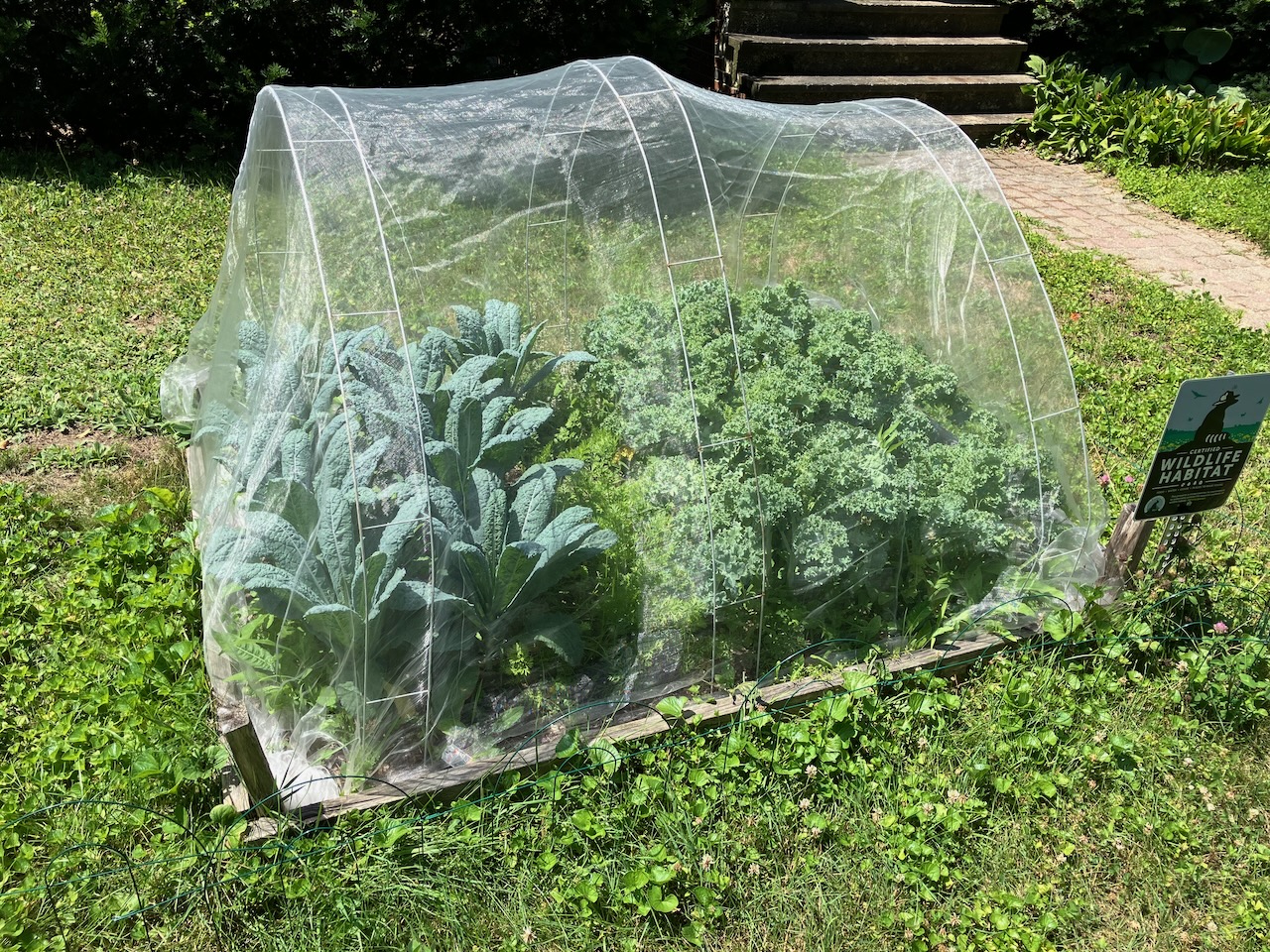
Rectangle garden bed filled with green kale of two kinds, covered over with a translucent net on white metal supports.

The robins never came back to their nest on our back porch after the babies had been attacked. Still so sad about that. We’ve had some lovely visits with human friends out by the pond. The pond water level went down with the drought, but this weekend’s rain helped, especially after adding water from the newly filled rain barrels. Still a few frogs, though I am not sure about the tadpoles. They hide under the lily pads, and it’s a lucky day to see them.

And… and… and… Gaza is still being attacked night and day, and starved by blockades. International resistance is growing but too slowly for the people killed each day. I keep bearing witness, and praying. It’s the same with the rising fascism of our country, and the attacks on immigrants both documented and undocumented, and citizens who are brown or black or speak Spanish. The only thing that gives me hope are the multiple levels of resistance from huge demonstrations to lawsuits to governors who slap back. Here we do the best we can to get by, day by day, accepting our situation as elders and those who are chronically ill. In the face of so much cruelty and hate, we add our little love to the mix, hoping to be part of the larger Love which is our only real hope.

Balance in the Garden

Raised bed with wooden sides, on left are pea plants on string and bamboo, middle is broccoli seedlings surrounded by pine cones, wire fencing around edge.

This earth love is a balancing act. We love critters in the yard, after all, they live here too, and have the right to be here. They bring so much joy to us. But we want to grow food too. The last time we bought organic broccoli at Hannafords, it was $8 for one crown. These twelve broccoli plants in this raised bed will be very valuable food for us. I’ve also planted cucumber seeds here. So we try to use gentle methods to discourage the critters from eating the plants we want for our food.

Margy saw a groundhog poke its head up out of a hole in the grass, over near the fence. There was a burrow underneath where a spruce tree fell before, and after it was removed there was still a mound of old roots and dirt. Groundhogs can be the worst for eating garden food, despite how cute they are. At times, we’ve used human pee to mark a line around the beds. Last year, we covered that bed with an old screen tent to protect the kale–and it did. All of it is a kind of communication, with respect.

This year, I am trying out a new method for deterring critters from the garden bed–putting pine cones in between the plants as mulch. (I saw it on Facebook.) Apparently many critters do not like the prickly feel of the pine cones under their feet–and these pine cones are very prickly. They come from our pitch pine, and we have tons of them everywhere. Margy had a bag full of them in the garage, so I used those first, and then started twisting them off fallen branches under the pitch pine. I had to wear gloves to do it, that’s how prickly they are. I’m putting them in the hugel mound as well.

We’ll see how it works.

In the meantime, in critter news, a few days ago we saw a mother turkey walk through the yard with about ten baby turkeys. Ducks stop in to take a dip in the pond. The frogs hang out there, and the tadpoles are getting big. They like to linger under the lily pads. The robin has four new eggs she is incubating. The chipmunks fill up on sunflower seeds at the bird feeder, but are also eating the maple seeds that blew all over the yard.

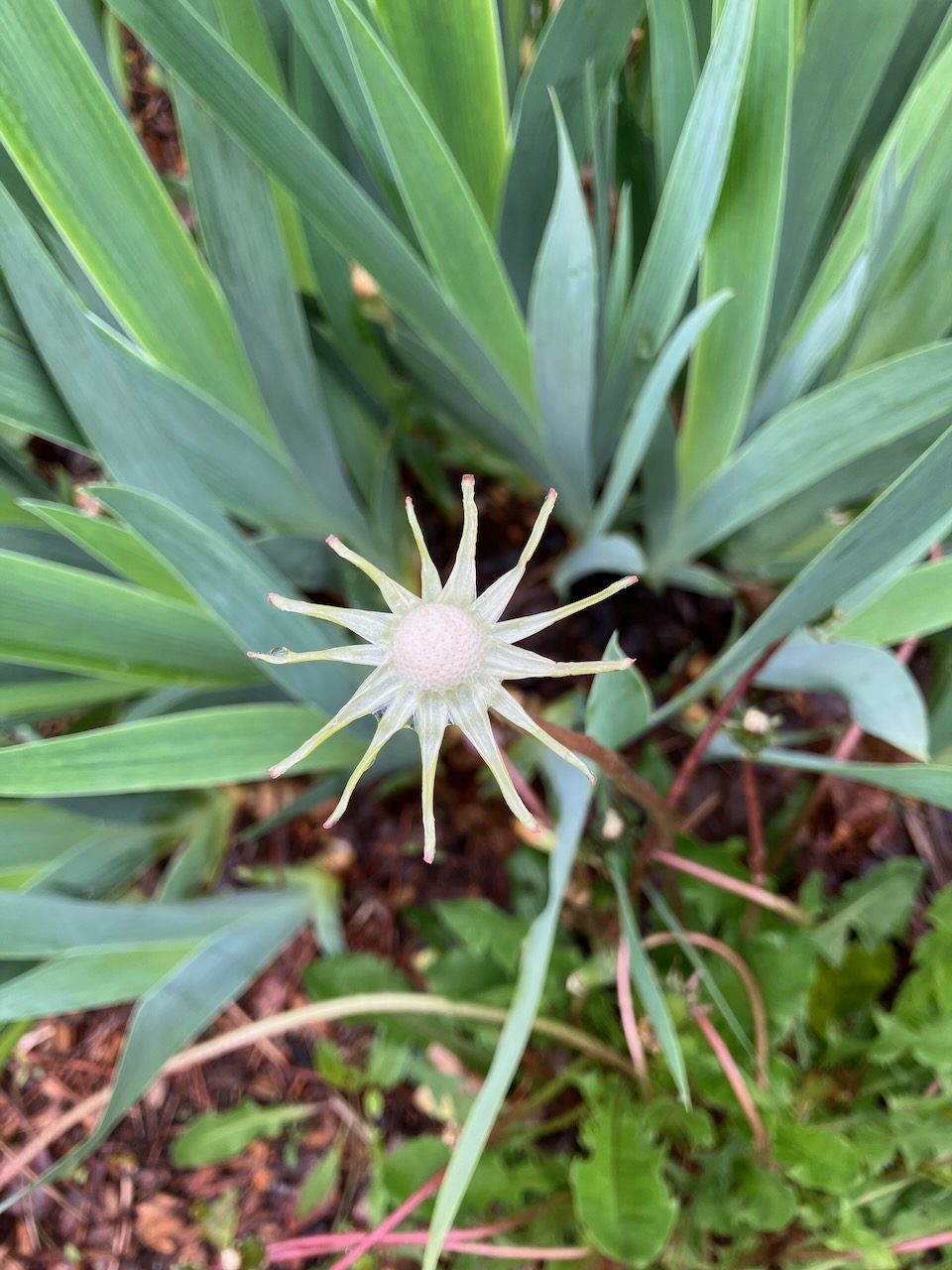
And sometimes, beauty emerges in unlikely ways–this is a dandelion after the rain washed away all the fluffy seeds. A perfect star.

a white star shape of a dandelion plant, surround by angular green iris leaves.

Autumn Colors

The last few days have been so beautiful in our back yard. The autumn color has come to us. The best times are when Margy and I curl up in the hammock together and just look at all we can see: the trees, the sky, the clouds, the birds, the orchard. When the dusk of evening falls, we see bats fly from the trees into the clearing, diving after insects.

It is raining today, but this past week of sunny cool days I felt some new energy to work in the garden. I am weeding and cleaning up scraggly herb plants under the fruit trees–who knew that oregano could get so so wild? Two and a half patches finished and two and a half to go. The plan is to clean them up, then plant a few garlic bulbs around the trees, then refresh them with more compost. I have already sifted some compost from our very root-laden pile and added it to the hazelnut hedge.

Also, what a difference a good hand held pruner makes! I treated myself to buy a really good one, a Felco #8, which arrived at the end of September. I love it! The pruners I had before never did a good job, no matter how much I sharpened them. Now pruning is effortless. I am using them to cut the woody oregano flower shoots. Our mulberry tree (our second attempt to grow one actually) didn’t do well again–we just got two long side branches, so I pruned off the lower branch and trained and staked the higher one to be a new leader–we’ll try again to help it grow next year.

I also finally cut off the dead flowers from the plants near the street. I should have been dead-heading them all along, down to the next leaves, but so it goes. I learned this from watching old episodes of “Gardener’s World” with Monty Don, now available on Amazon Prime. When I am too tired to do much of anything, I’ve been watching that show. I’ve learned a lot, despite the climate in Britain being so much milder than in Maine. For example, I learned that dead plant stalks can sometimes provide beautiful winter structural elements.

Despite feeling like I didn’t have enough energy for everything the garden demanded this year, I got caught up into a new idea. I blame Margy because she put a cedar raised-bed kit into our Amazon save-for-later list. Now that the fruit trees are so much larger, it hasn’t worked as well to grow kale or other veggies around the perimeter of their circular beds. So after some further research, we purchased a kit for a 3′ by 6′ by 11″ raised bed. (I know most permaculture people buy wood and build their own, but sometimes you just need a kit to make it happen. So it goes in our world.)

We are going to place it next to the hugelkultur bed, with a 3 foot path in between, leaving three feet on the other side towards the hazelnut hedge. I’ve marked the space, loosened the soil there with a garden fork, and the other afternoon, I just sat on the ground slowly weeding out the crab grass as evening fell. Not much energy required, and it felt good to have my hands in the dirt. I also ordered some hardware cloth to make a barrier below the raised bed against the many small tunnelers who seem to delight in our wood chip paths. Once everything arrives, we will fill the bed with layers of seaweed, leaves, compost, soil, and so on, giving it the winter to percolate.

Still too much to do in the garden, but I feel delighted by the autumn colors, and the opportunity to learn and plant and grow, and sometimes just to lay in the hammock as the days grow shorter.

Zucchini Plants!

hugelkultur jun 13

Zucchini plants June 13

This was our hugelkultur bed on June 13–the zucchini plants were coming up nicely. The green beans I planted never sprouted–must have been too old.  In the back you can also see a kale plant that is doing great.  And then, in the next two weeks, the zucchini plants just exploded with growth. Here below is a photo from yesterday, June 27. The plants are as high as the hugelkultur mound.

hugelkultur June 27

Zucchini plants June 27

In the background of this photo you might see towels hanging on the side of the deck–we went to the beach on June 26 for our first swim of the season. It was so great. We arrived about 4 p.m. and very few people were there–we never had to be closer than 20 feet from anyone else, though we wore our masks as we walked to the beach. Sand, water, wind, waves, and that restoration that comes from being in mother ocean. So needed!

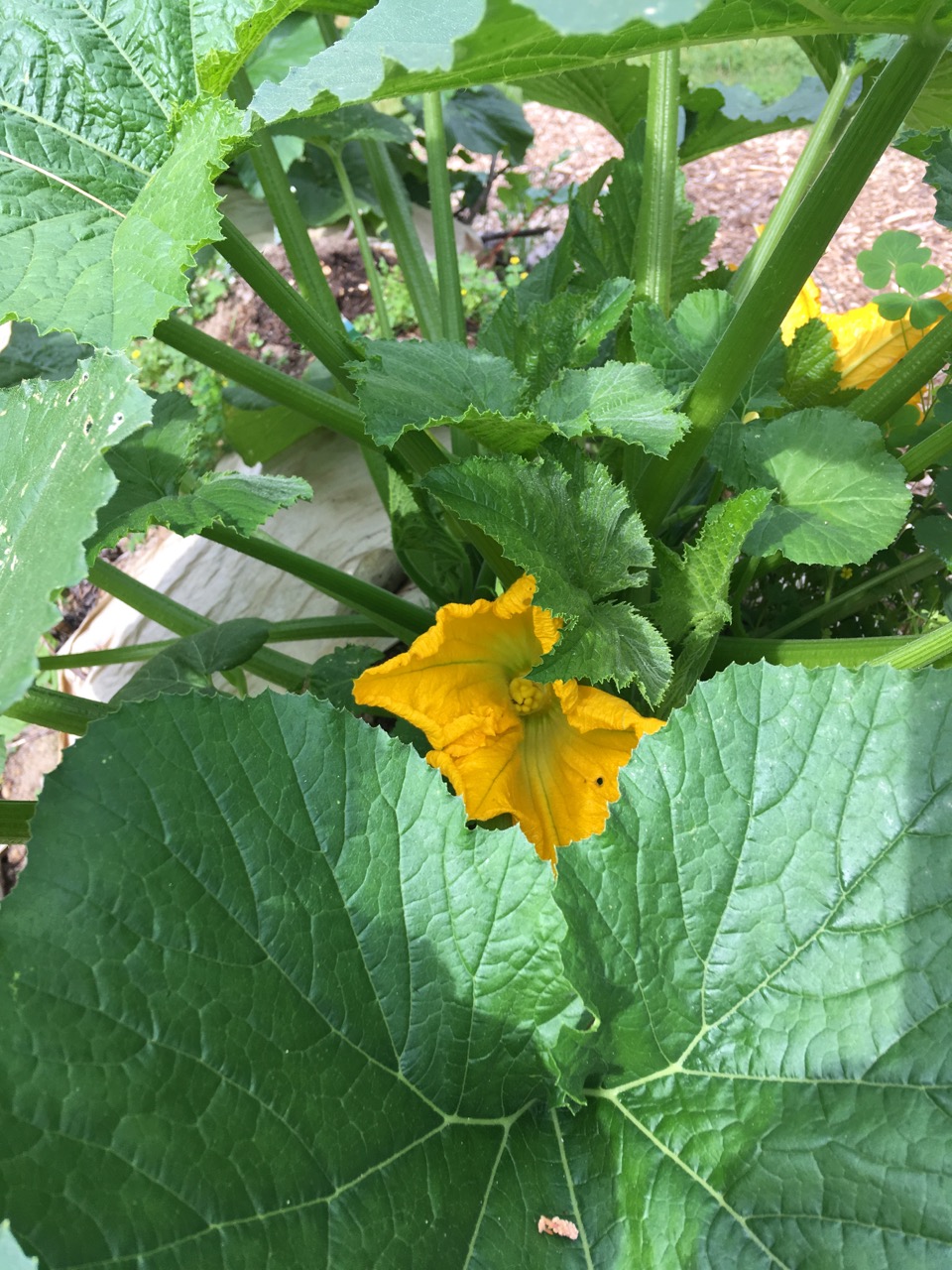
If you look very close in the photo, or just jump to the next one, you’ll see that yesterday I also found huge yellow flowers inside the zucchini plants.

Zucchini flower June 27

Zucchini flowers June 27

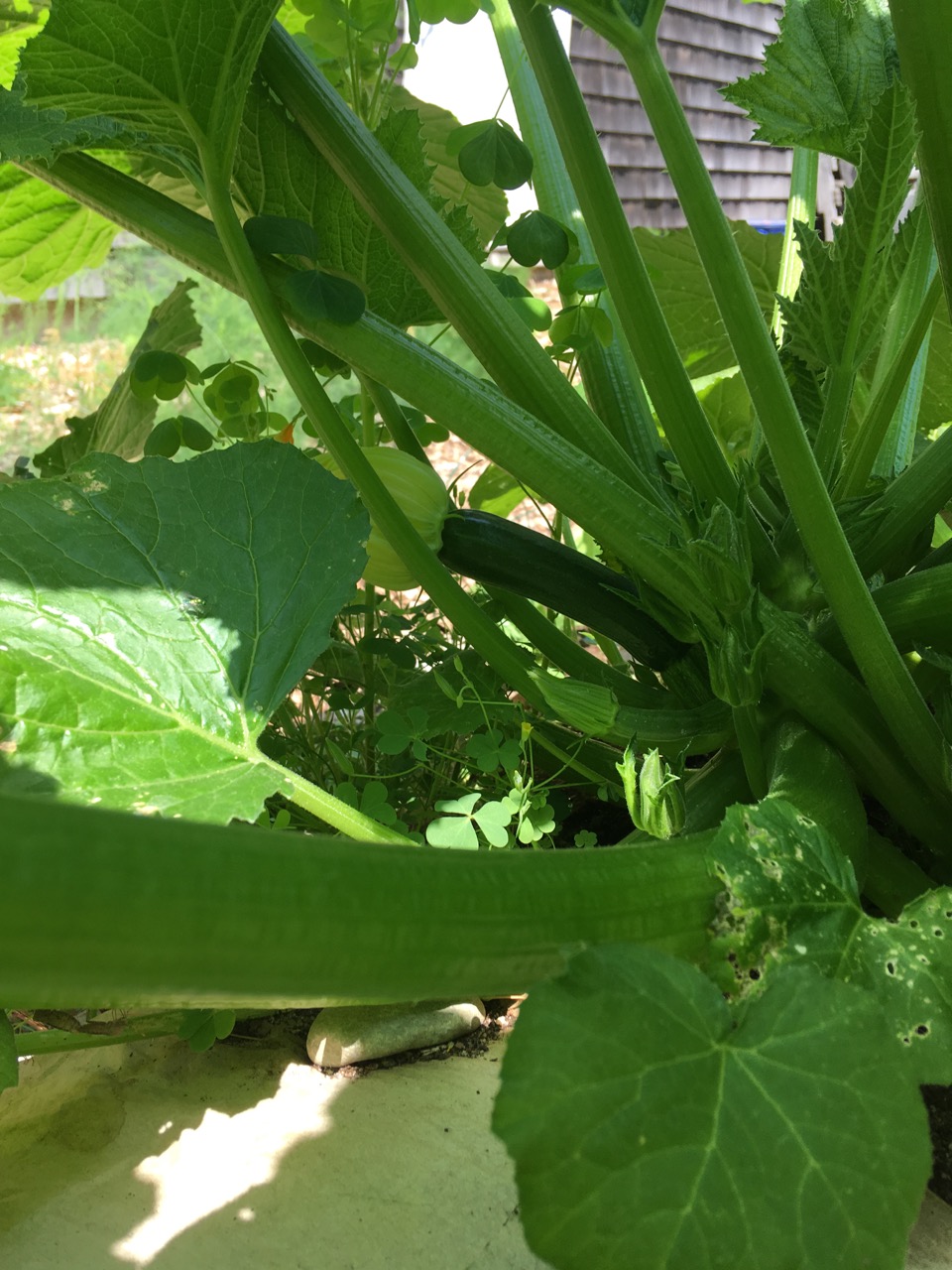
And then, today, we could already see tiny zucchinis forming behind the flowers. I know that people joke about the prolific nature of zucchini plants. But this is my first time growing them, and it is truly amazing how quickly they grow and flower and fruit, and how huge and beautiful they are. Hopefully, they will stay healthy and we’ll be those people asking all our neighbors if anyone wants some zucchini.

Baby zucchini June 28

Baby zucchini! June 28


Hugelkultur

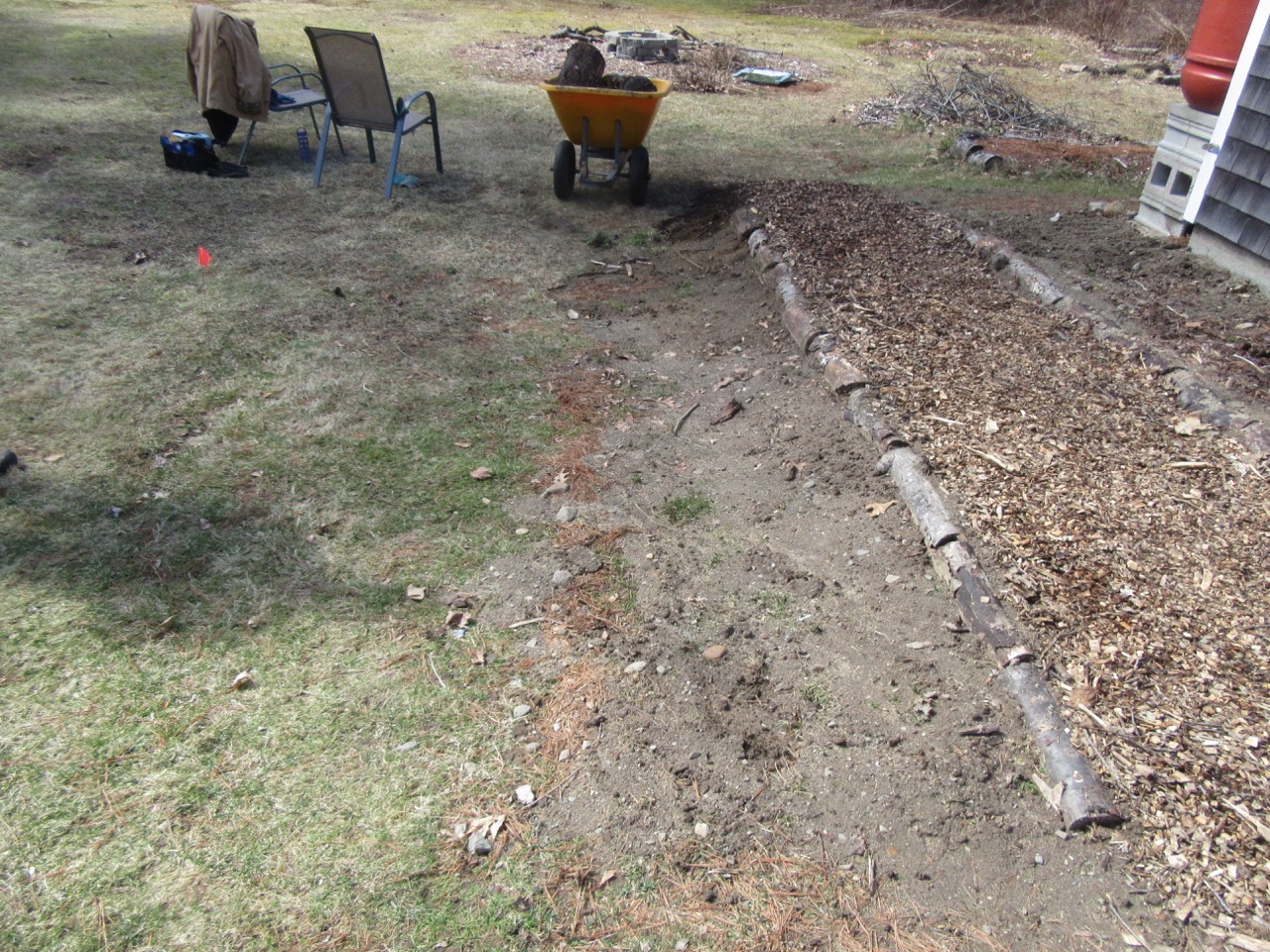
Today we started the process of building a hugelkultur garden bed.  Here is the “before” picture, though I had already created a path, next to the asparagus bed at the side of our garage. I lined the path with logs from the land, leveled it, and covered it with wood chips. Ever since I created the asparagus bed, that slope has been a bit of a mess, from all the dirt that I moved around to do asparagus plantings.

Before hugelkultur

Hugelkultur means hill culture, or hill garden, and is one of the tools in a permaculture tool kit that we had never used before. It is a kind of raised garden bed, with rotting logs at the base, brush, leaves, and other organic materials over that, and soil over the whole mound. The logs hold moisture, so that eventually you don’t need to water your plants as often, and they contain nutrients that are gradually released to the soil. They also extend your growing season because their slow decomposition warms the bed. It also serves as a use for old rotting wood and brush that otherwise might go to the dump, and it sequesters carbon in the soil. Some folks make them 6 feet high, but ours will be smaller than that.

With everything happening because of the COVID 19 pandemic, we felt it would be a good time to increase our capacity to grow more food. So far in our garden, we’ve focused on cultivating fruit trees and bushes, and herbs and other perennials. The only annuals I have grown are snap peas and kale, in amongst the trees. So this bed will be for annual vegetables, like carrots, lettuce, and zucchini.

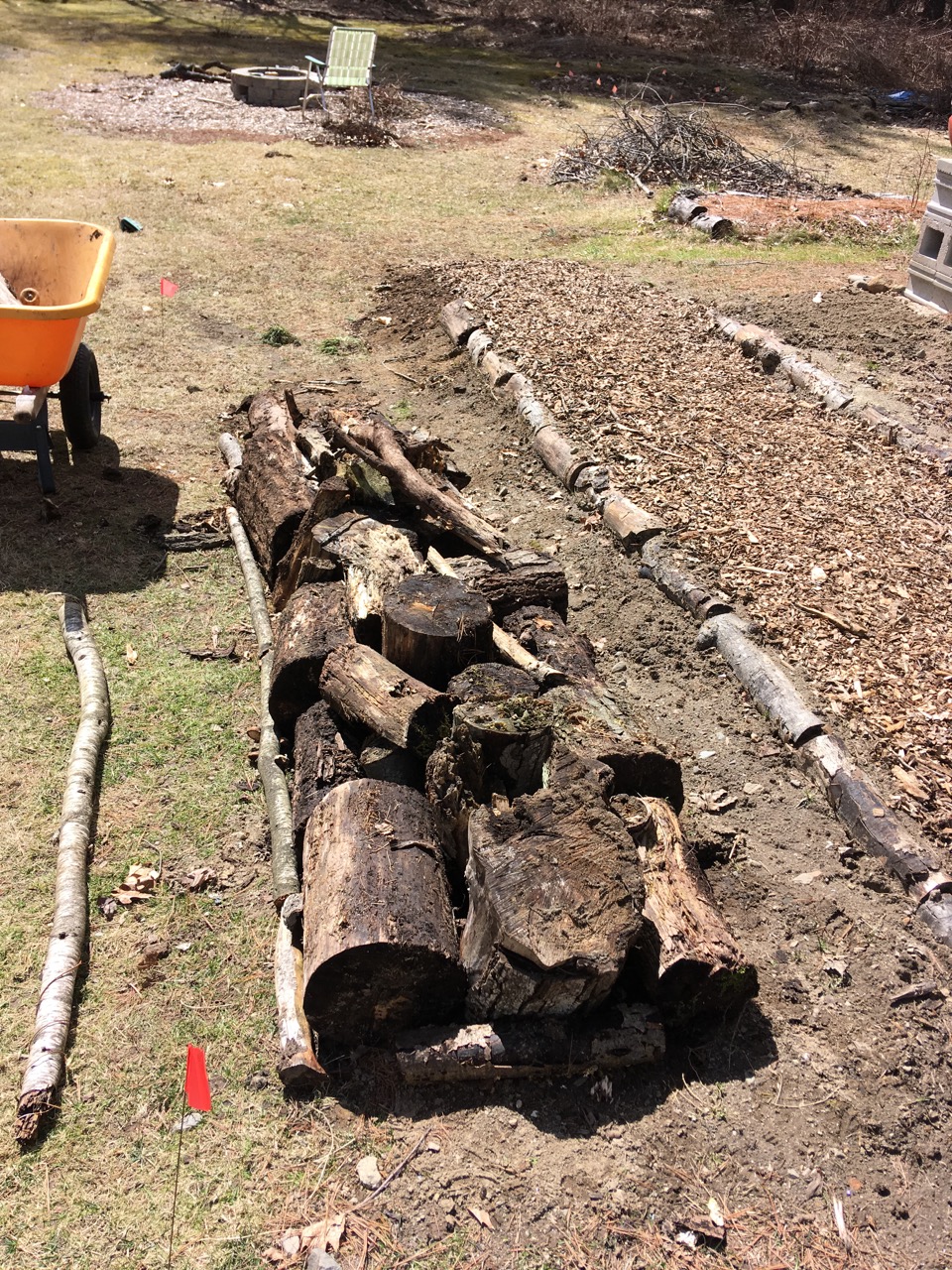
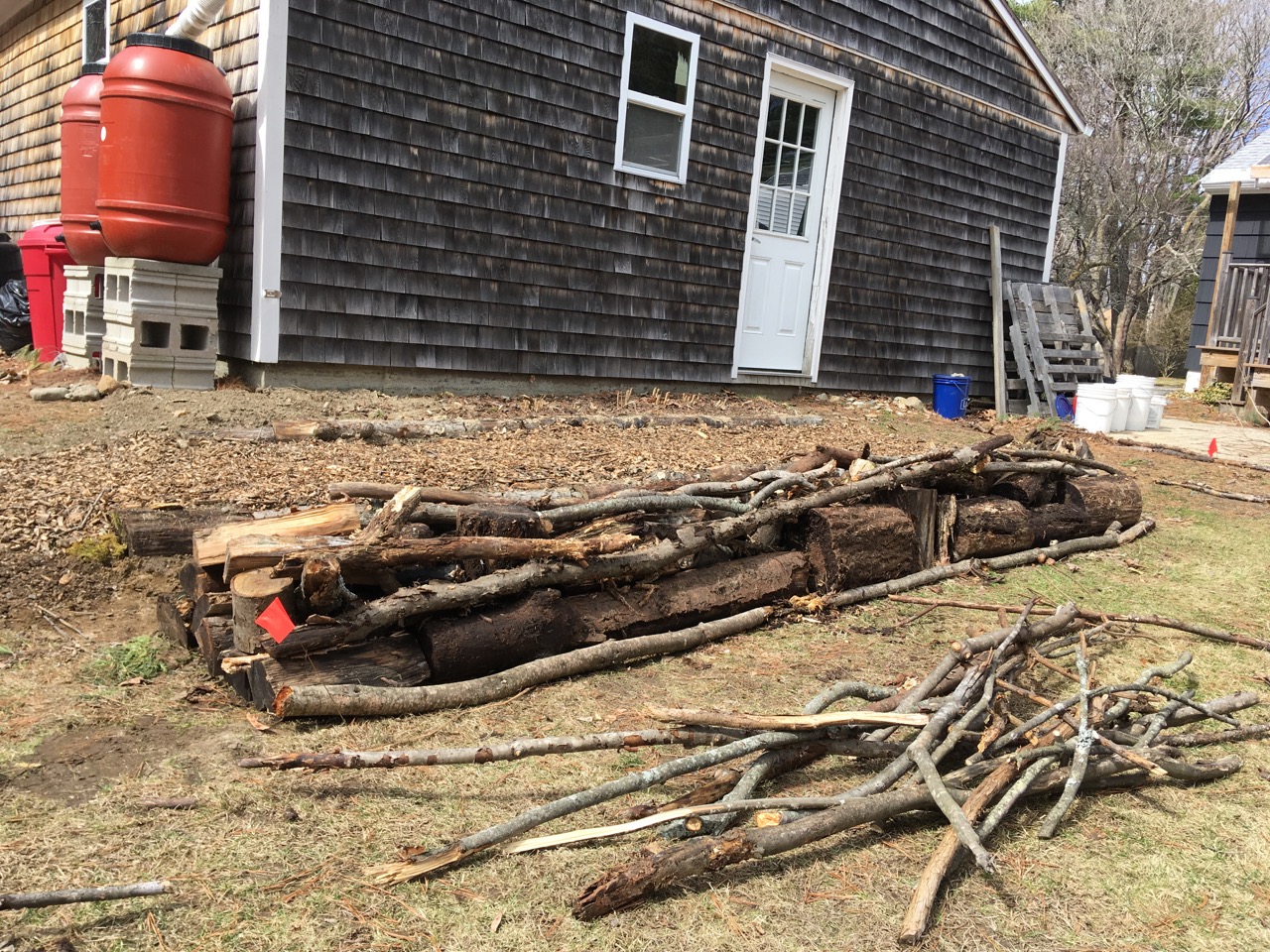
The first stage was to go around with a wheelbarrow and collect old logs that have accumulated on the edges of our land. Most of them were there when we arrived four years ago. I think this will be the hardest part. These logs were heavy! Margy and I both had to rest in between loads. But it has been a beautiful sunny day, so what could be better than to sit in our yard in the sun.Logs for hugelkultur

The next step is to arranged the logs every which way in the area that will be the bed. Some people might be more orderly than this, but it doesn’t really matter. It does matter what kinds of wood you use. Hardwoods are preferred, but not cedar, which doesn’t rot, or black walnut, black cherry, or black locust because of how they protect themselves in the soil. Pines have tannins, and might make the soil more acidic, plus they don’t last as long. We were also careful not to use any bittersweet cuttings, and to make sure no bittersweet roots had colonized the rotten logs. Margy spends half her time going around cutting back all of that.Logs layer hugelkultur

After the big logs were laid out, we filled in with smaller logs and long branches. And that was as far as we got today. I came in to have a cup of tea, and to write all about it. Tomorrow’s weather is supposed to stay nice so we’ll do the next steps then, and I’ll do an update.hugelkultur branches

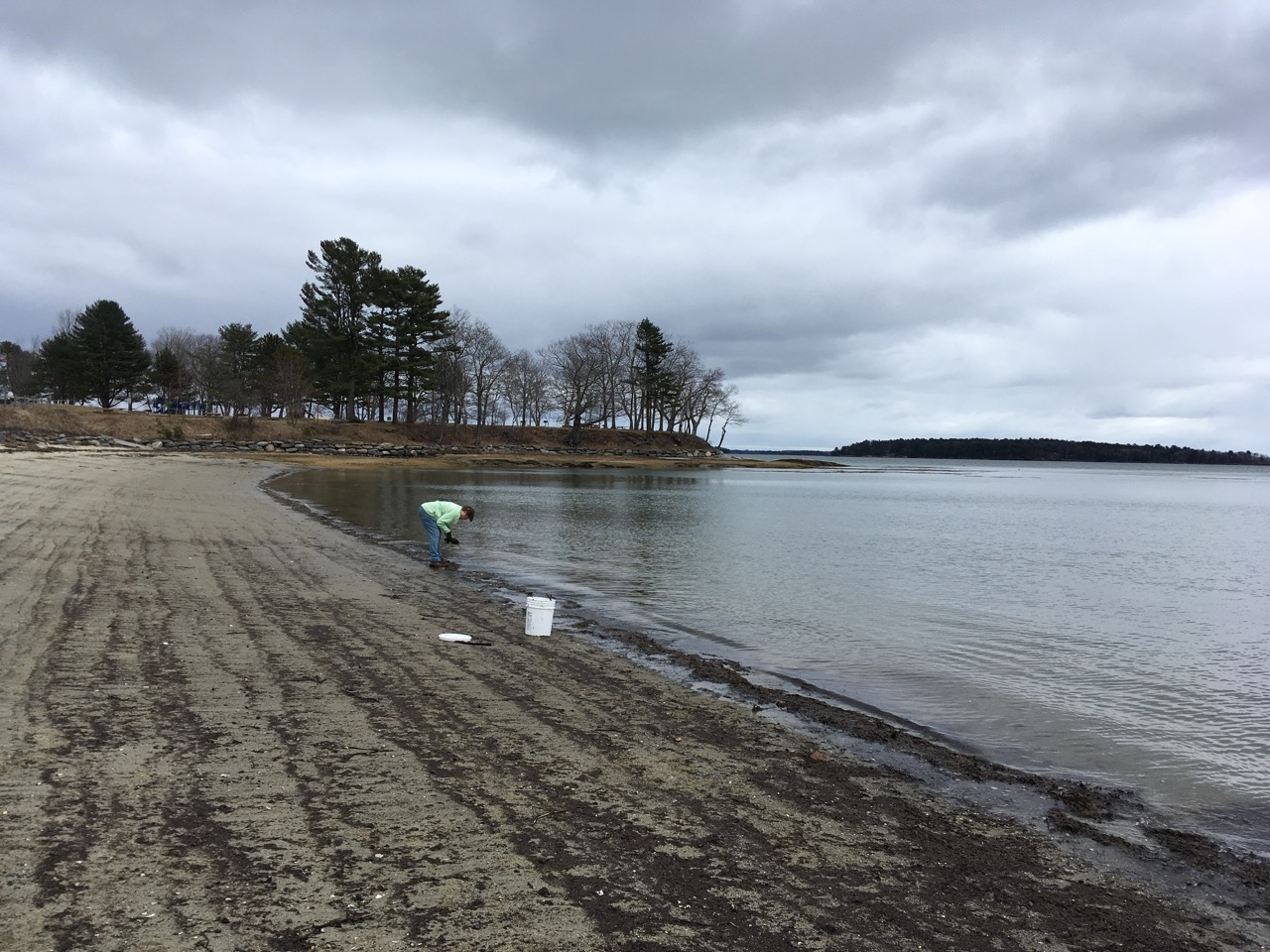
Oh, I should also mention that Wednesday Margy and I had a big outing–since we’ve been staying home for three weeks now.  We went out to Winslow Park beach, and gathered seaweed, and got to see the beautiful ocean. All that seaweed will go into the hugelkultur too. One of my favorite things about permaculture is that nothing is wasted–what we might think of as waste is passed along as food for another part of the cycle of life. So rotten logs, brush, dead seaweed, fallen leaves, cut grass, vegetable scraps–all of it goes back to help create fertile soil. That is something beautiful to perceive.

Gathering seaweed

Emergence

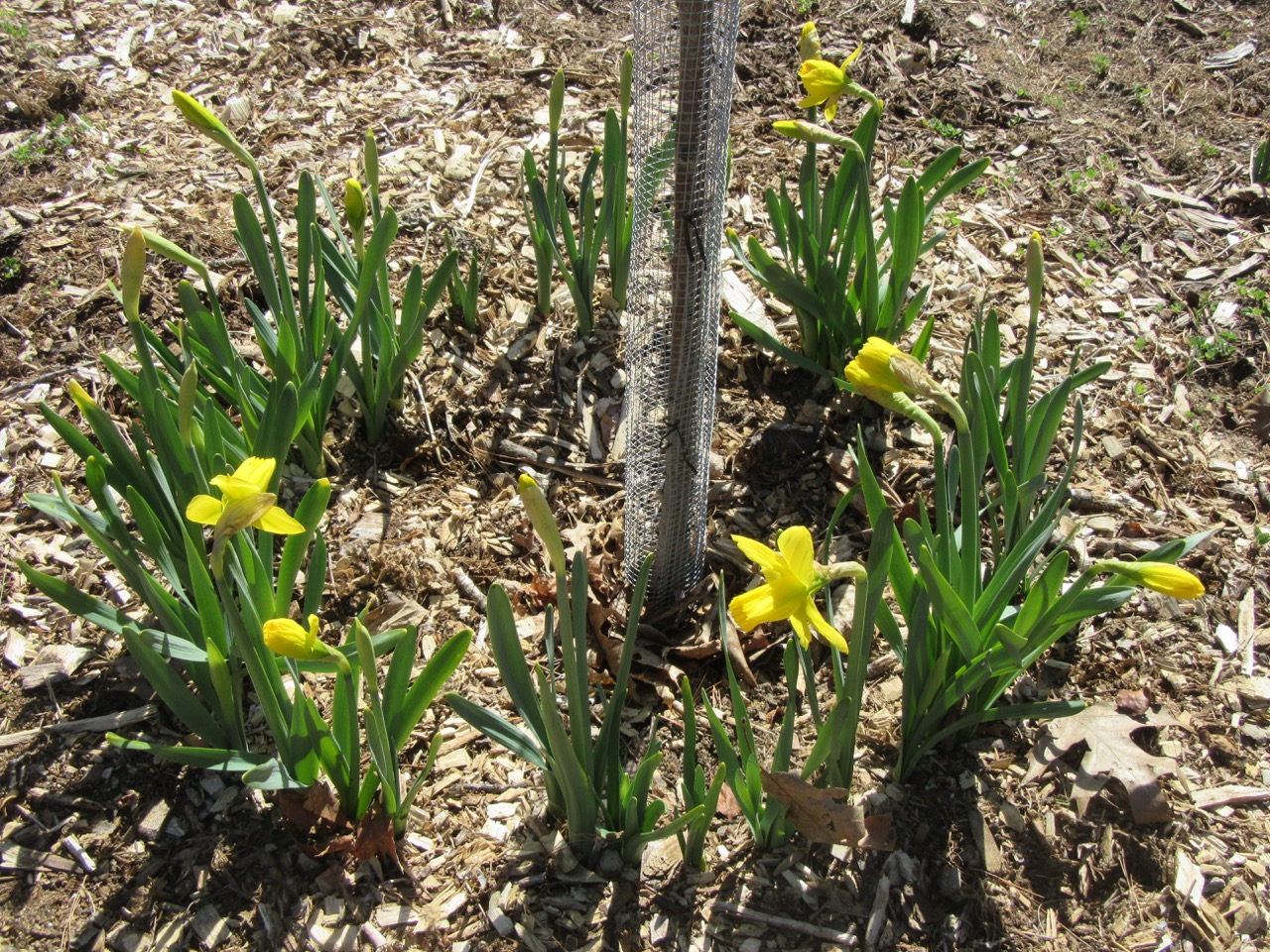
Daffodils OpeningI love this week of the year in Maine!  The daffodils just opened today around one of the cherry trees.  Everything is late this year, the weather has been colder than usual.  But they are also just in time, because I am going to New Mexico tomorrow, and I was worried I would miss their grand openings.
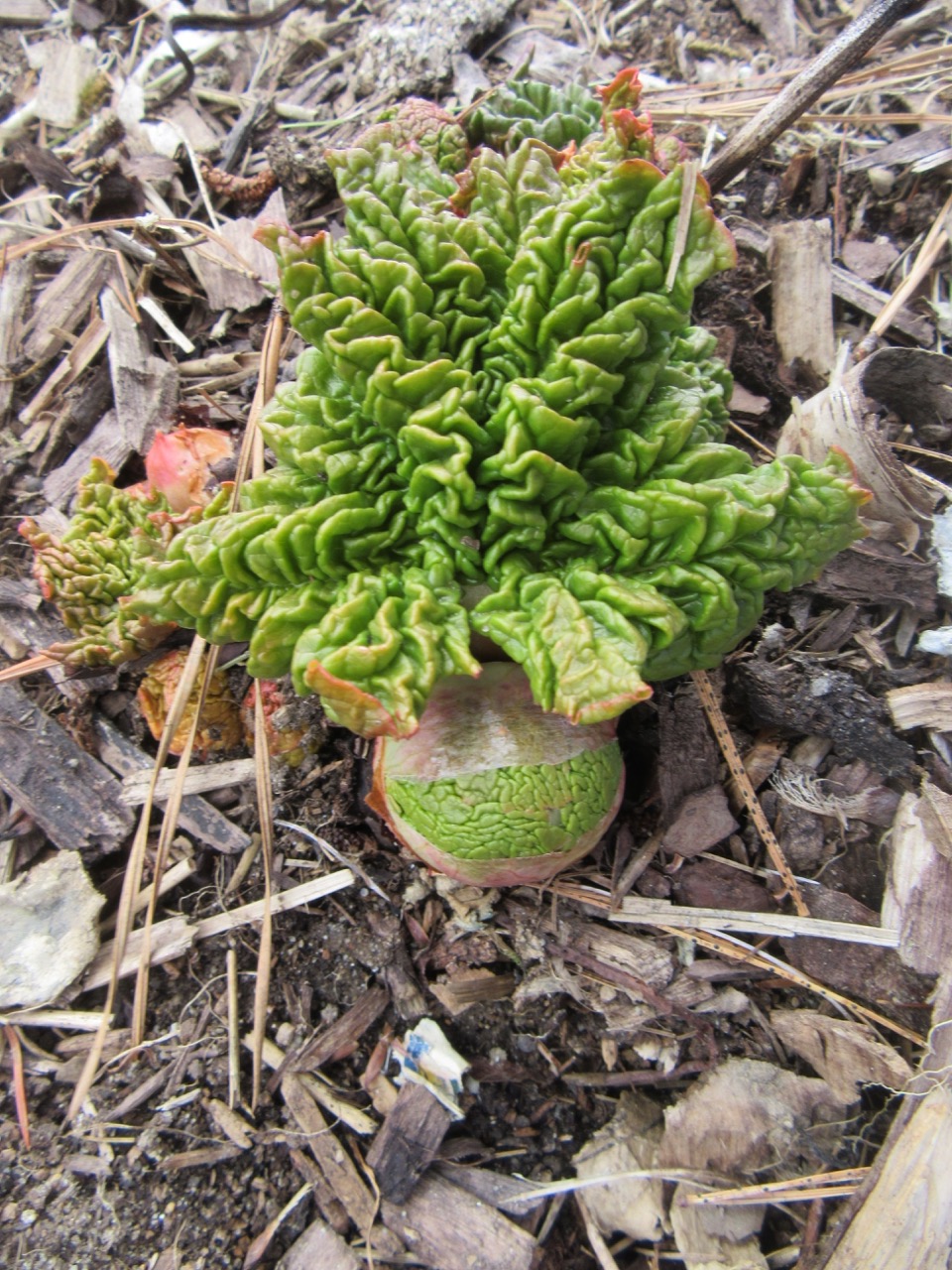
Rhubarb opening

[Rhubarb]

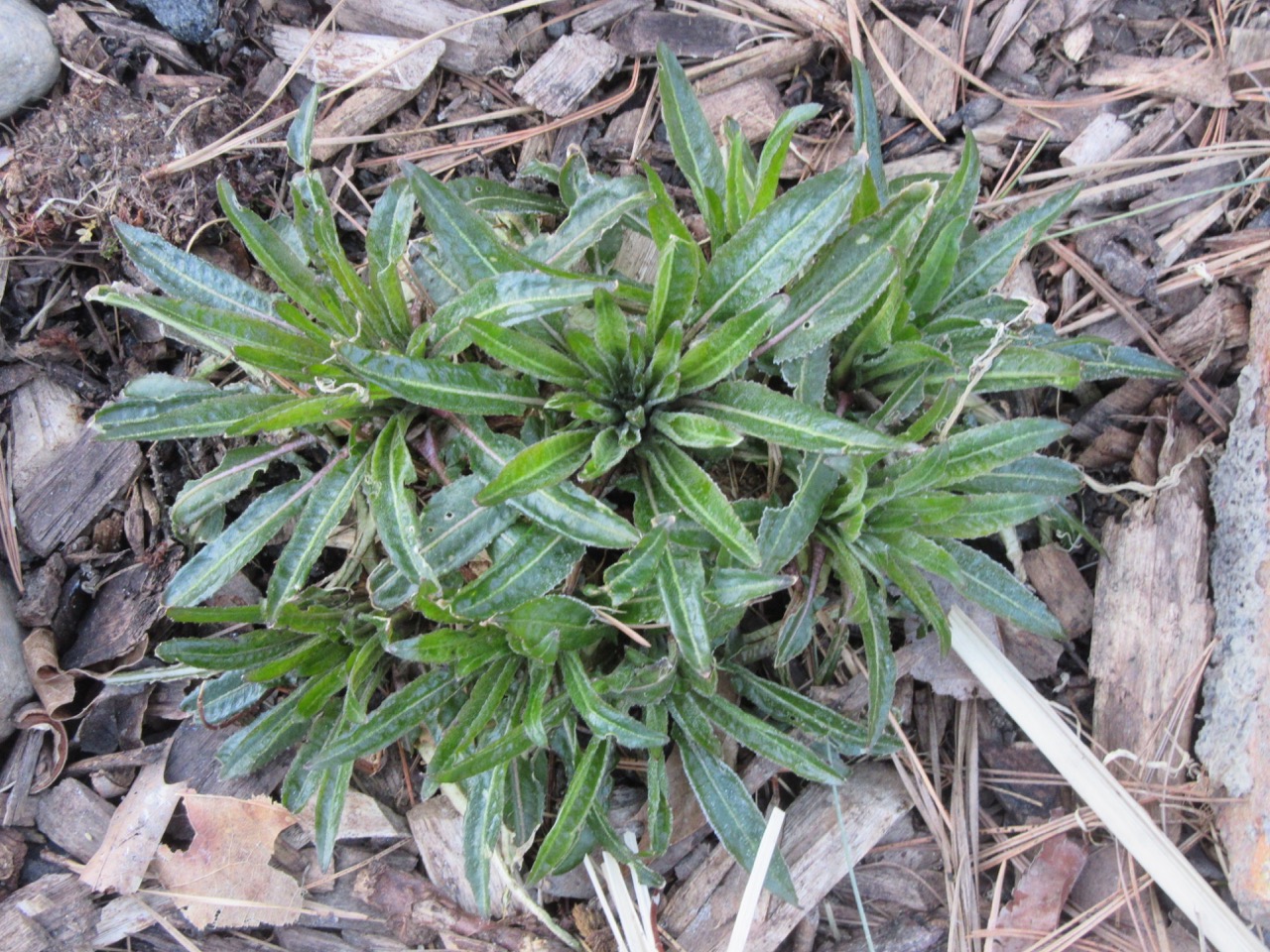
I have also been watching the emergence of the perennials we planted last year.

Who knew that rhubarb looked so weird as it comes out?  Like a translucent reddish egg splitting open with wrinkled up green brains inside.

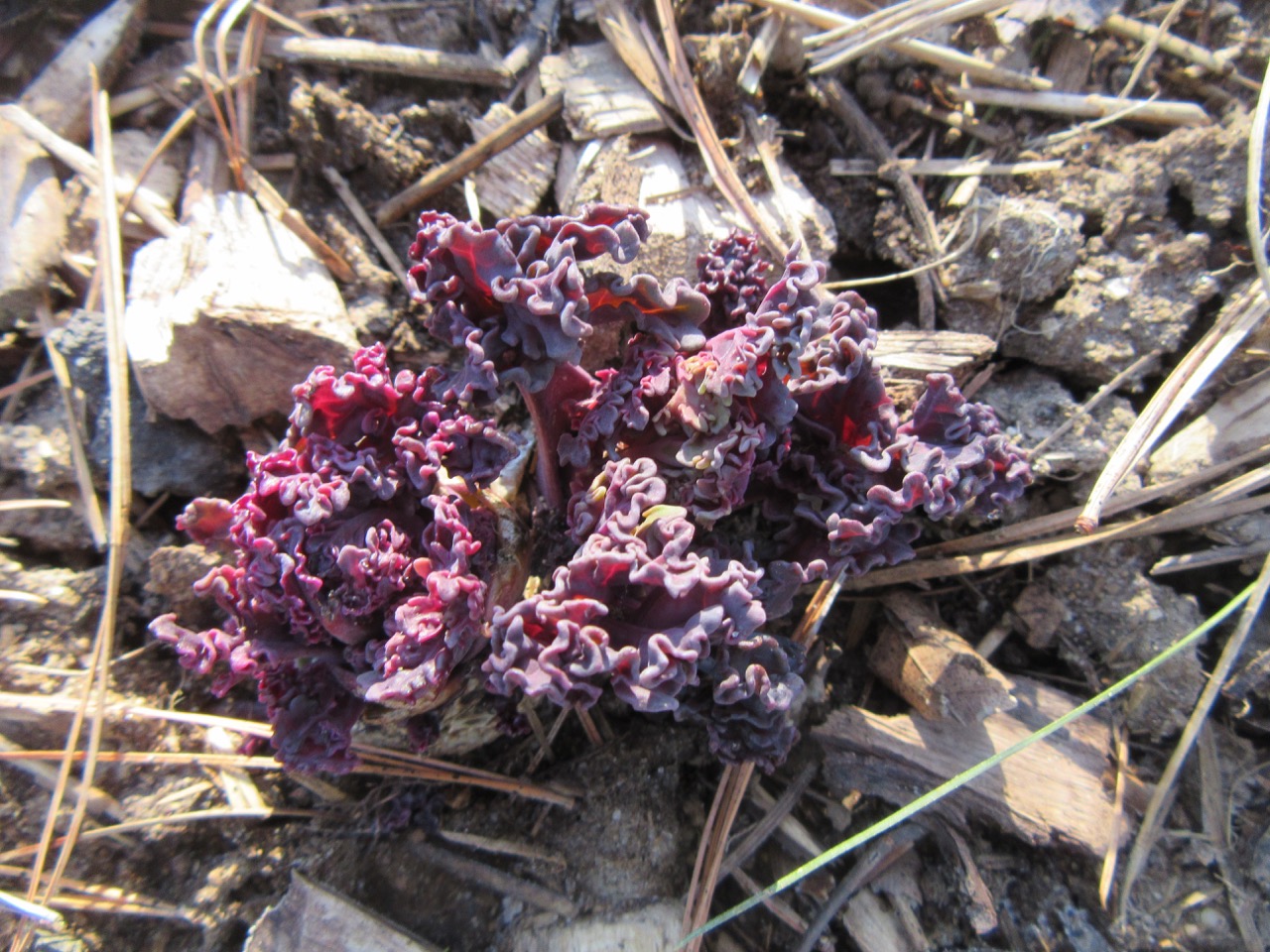
Sea Kale emerging

[Sea Kale]


And the sea kale is purple and wrinkly too.  It will get much bigger as it grows!

The turkish rocket looks healthy and multiple.  This will be the first year we can really taste these perennial vegetables–I hope we like them!  I’ve also now planted some lettuce and carrots, and the snap peas are just breaking the surface of the soil.  Margy is going to water them while I am away for these next few days.

turkish rocket

[Turkish Rocket]

Synchronicity

Today I woke late, so I started my walk late–and just as I was coming out onto our street, I said hello to a woman who was walking with her big black dog.  Turns out, she grew up in our house–her family built it. Her dad, who passed away earlier this year, had a huge garden in the back yard. He used a rototiller, and brought in manure and loam, and involved all the neighbor children in planting vegetables.  He’d give them a stick and point to its length and say plant the seeds this far apart.

He planted a peach tree–which did very well, (sadly no longer here) and lots of raspberries and blackberries–which are still coming up behind the garage on the land just next to ours which had belonged to them.  (It still belongs to her mother who lives in a house we can see from our yard–which we already knew.)  Her dad would do the planting and her mother liked to weed.

The big spruce tree next door would be lit up like a Christmas tree every year, to the delight of all the kids.  The man who lived there was in the fire department, so when the tree got tall, he would put on the lights with a fire truck ladder.  (Sadly, that spruce, along with the others in our yard are no longer doing very well.)  At that time, all the families in the neighborhood knew each other, and the kids played together all the time.  She also spoke about the delight of wandering into the big woods behind the house.

She was thrilled about our solar panels and our rain barrels, and hoped she might do that where she now lives on an island.  She is staying with her mother a few nights a week while she takes a class in town. I invited her to come back sometime when the snow had cleared and we were able to be out in the yard.

It delights me to know that there were gardens in this place fifty years ago, and people who were tending to it with care. It delights me that a small unexpected change in my routine led to an unexpected encounter.  Meanwhile, the snow is melting, and the ground will soon be workable–maybe peas this weekend?

back yard

The Back Yard