The Sacredness of In-Between

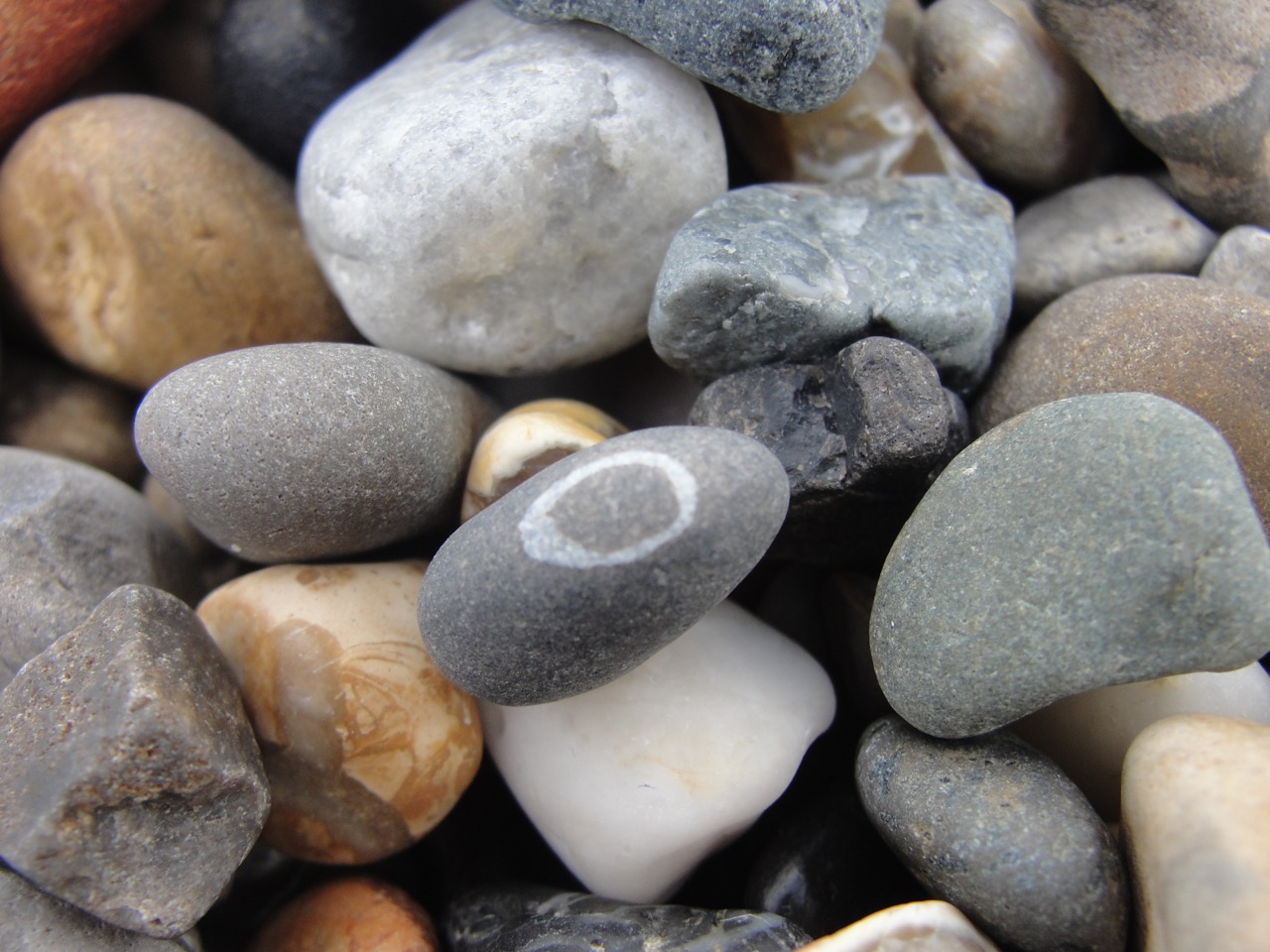
Circle Stone MJ DSC09547I love that there is a word for the sacredness of being in between one time and another, one place and another. It is called Liminal Time, or Liminal Space. It is the moment when magic can happen, when anything can happen.

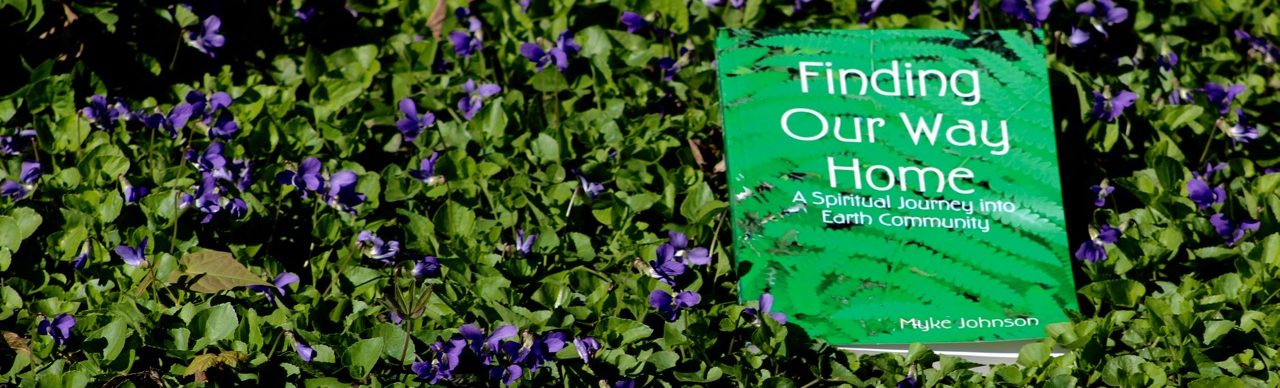
I am now in the last week of my four-month sabbatical, and I am noticing that I haven’t finished any of the big goals I set for myself at its beginning. But that is okay–I am in a liminal space with each of those goals.  One goal is to publish my book, Finding Our Way Home. I have completed another full edit, and sent out queries to some publishers and sent out the manuscript. Now I am in the time of waiting to hear back.

Another goal is to find greener housing. Again, Margy and I have started on that process–we talked about what we want in a new home, we engaged a green realtor, we looked at some houses that didn’t fit, we sorted out some financing options. I’ve begun the process of simplifying and letting go of things I no longer need. That process will take a lot more time, and we are waiting for the right house to show up on the market.

A goal that emerged during these months is to do more with the Work that Reconnects. I want to devote myself to making changes that will move human beings into a more beneficial relationship with all life on earth. That in itself is not a new goal, but rediscovering the tools that Joanna Macy has created for this work has been a true gift of these months. I am imagining how I can bring those tools to my ministry in the congregation, and beyond. I’ve had a chat with a local colleague who is also interested, and I look forward to plotting together.

I feel like I have been planting seeds and tending the soil, but the harvest time is still up ahead somewhere, unknown and unknowable. And for now, it is important to let it be unknowable. If I want to experience the sacredness of this time, I must open to its mystery and uncertainty, I must celebrate its possibility, I must wait for its unfolding. The Holy is right here.
Letting Go and Giving Away

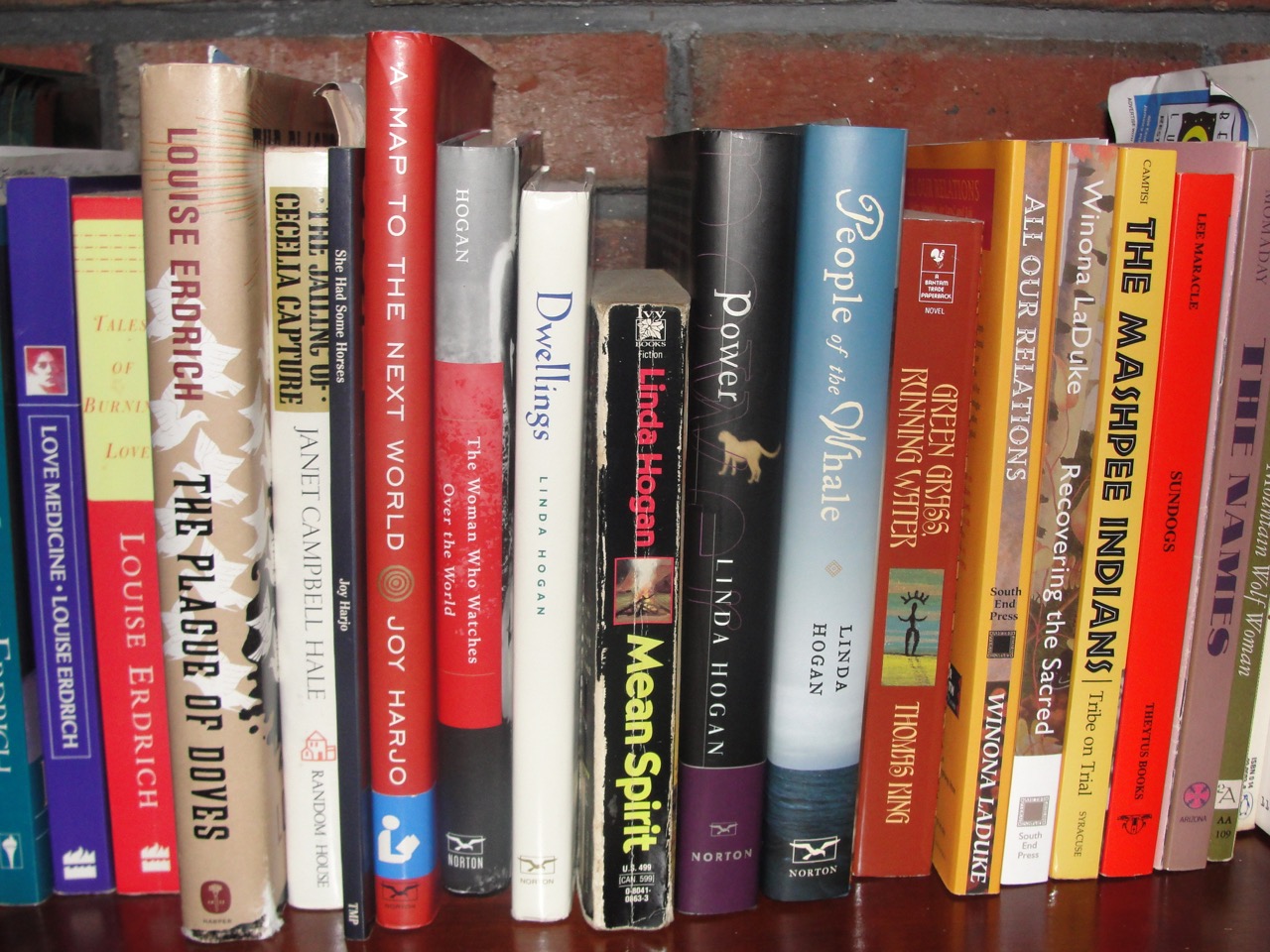
Books on Shelf DSC00283Even when there are no new houses to look at, there is plenty to keep me busy. Another side of searching for greener housing is getting ready for the move into a smaller place. This means paring down what we have collected over the years in a space that has abundant room for keeping things.

First stop: Books. I have shelves full of books that I have read and loved for many years. But I also have developed an allergy to any book that is more than a few years old. If I want to read one of my older books, I have to put on a mask and gloves, and even then I might get a headache from it. So perhaps now is a good time to let go of most of these old friends, and to pass them along to others who can enjoy them.

I had to take a deep breath when I thought about actually giving away my books. I decided to take pictures of the books on the shelf, because it makes me happy to see the titles there. And I still have to keep a few of my long-time, life-changing favorites. Even with a mask, I might need to read them again. I will also keep the books I am currently using in my work. In other words–I will still have a lot of books, just not as many as before.

I learned that our local independent bookstore, Longfellow Books, will take used books in trade for store credit. You can only bring in one bag or box at a time. My first grocery-size brown bag netted about $14 in store credit. It’s not a way to get rich, or even get very many new books. But it is a way to re-use and re-cycle and get a few new books, and support a great local institution.

I also did some research to see if prisons would accept book donations for their libraries–but I learned that certain ingenious addicts had figured out a way to import drugs into the prisons through book donations from their friends–so no more donations are accepted from individuals. But then, I heard about a Native group collecting books by Native authors to donate to the prison for the benefit of American Indian prisoners in Maine. I can’t imagine a better home for these particular treasures. I gathered two boxes that I will drop off.

I now know that the Portland Public Library will take book donations, and that Preble Street accepts donations of books and magazines for its center for homeless youth and adults.

There is a kind of joy in simplifying one’s life, in having fewer possessions to haul around. But it is an even deeper joy to think that someone else might be inspired through these books, by insights and stories that were so important to me on my journey.

Why find greener housing, anyway?

Oil furnace DSC01553We have to wean ourselves away from our dependence on fossil fuels. Think about petroleum. The industrial economy treats oil as a resource free for the taking, with a price based only on the cost of extraction and delivery. It shaped a world which became completely dependent on cheap oil. But we have passed the time when oil can be easily extracted, and now riskier and dirtier methods are required. Deep sea drilling like that which caused the spill in the Gulf of Mexico. Tar sands mining in Alberta Canada that destroys the forest, and devastates the health of the people and animals of the region. Arctic Sea drilling. Burning oil for fuel will increase greenhouse gasses and bring our climate closer to disastrous changes.

I know we have to stop burning oil. But when I look at my own life I see how big a challenge that will be. Our home is heated by oil. I drive a car than runs on gasoline made from oil, to buy food and other needed items, and also to go back and forth to the congregation I serve. It would take several hours to walk to these destinations from my house, and there is no public transportation nearby. The whole structure of suburban life is dependent upon oil. My congregation is a suburban congregation, and almost every person who comes to worship drives there in an automobile. Without oil, it is likely the church, and my house, would not have been built in these locations. The whole geographic structure of our society has been shaped by oil.

And not only that—many material goods in our lives are also fabricated from oil. Plastics are made from petroleum, and there is plastic in every room in our houses. I write on a computer with plastic components. Alarm clocks, toothbrushes, synthetic fabrics, telephones, televisions—all from oil. Modern agriculture is dependent on fertilizer made from oil, and machines that use oil, and a transportation system that uses oil. The asphalt on our roads is made from oil. If oil disappeared tomorrow, the whole system would collapse. And eventually, oil will run out. That is one of the realities we are learning in our time.

None of us have the ability to undo our dependence on oil individually. It is too entrenched, too societally enmeshed. But we can begin to imagine some partial solutions—in fact, the technology to live without oil already exists. I was inspired when I learned about “zero-carbon” houses that actually generate more energy than they use. We may not be able to fully achieve such a goal, but why not try to get closer to that ideal?

I know that even if we succeed beyond our wildest dream—even if we create a zero-carbon home from which we could walk to most functions of our lives, even if we could afford an electric vehicle that we charge from solar panels for other transportation—oil companies will still be breaking open the earth in Alberta, and spilling oil into the Gulf of Mexico. The children living near refineries will still be getting asthma. The ice of the arctic will still be melting, and thousands of species will go extinct each year. We need not only individual change, but a social will to transform our relationship to the earth. But I believe that each change we pursue as individuals also works its magic on that larger transformative process in ways that we can’t fully understand. And so we take the one step we are able to take.

In the Talmud it says, “Do not be daunted by the enormity of the world’s grief. Do justly, now. Love mercy, now. Walk humbly, now. You are not obligated to complete the work, but neither are you free to abandon it.”

Prayers at Dawn for our Housing Search

I wake today about 5 a.m. and feel called to come outside to pray in the dawn light. It rained during the night and the morning is misty and golden. I am visited by a cardinal, whose silhouette on a branch is dark against the eastern sky. I hear it chirping as another cardinal a bit further away trills their evocative songs. I am visited by a tiny toad or frog (I am not sure which), who moves quietly along the edge of the screen tent where I am sitting. I am visited by a golden slug my old teacher of slowness. A pileated woodpecker pounds away on some dead branches looking for breakfast. I hear the familiar songs of many tiny birds as they wake the sun, which is starting to appear through the branches of the spruce. Later, in the light, the chipmunks and squirrels dash about.

I feel so grateful for this place of trees and birds and critters. In our search for greener housing, I pray that we can find a home where I am called outside in the morning by the songs of cardinals, where Margy can find frogs and toads where they hide in the damp. I pray for this journey we are walking, hoping to move closer into harmony with all beings. I call on the magic of the dawn and the magic of all these beings to help us find our way. And, I open my heart to change, to what is hidden and cannot yet be seen.Morning Photo on 8-4-15 at 7.02 AM

The Search for Greener Housing, Part Three

House Search #1 DSC09847Following our dream of finding greener and accessible housing, we have now looked at six houses. The first was in a great location (halfway between the houses of two friends!) and had an amazingly private back yard, despite being right in town, though it was hard to get to the yard from the house. It had an almost south facing roof, but narrow hallways, and we couldn’t imagine how we could make it accessible without major reconstruction. Plus, there was a tenant in the basement who had lived there over 25 years, and the house wouldn’t have worked for us without the basement space. Bad karma?

The second house had such great character–it was a house we would love to live in. There were blueberries and raspberries in the yard, which we were told we could pick, and so we did. House Search 2 DSC09736There were gardens and a hoop house for extending the growing season. Lots of windows, sunny, and though it was a bit out of town, it was close to a lake, which was a nice bonus. There was not quite as much work to make it accessible, (though still some) but it was a very old house, and there was water along the edges of the basement–along with a mildew smell. And because of the unique shape of the house, it might be hard to insulate and put up solar. Regretfully, we decided it was too much to take on.

The third house had a great open living/dining/kitchen area, a lovely back deck, and also a great yard–though the very back of it fronted onto an in-use railroad track. It looked like we could put solar on the garage. But the bedrooms were dark and felt small, and there were two very tiny bathrooms that would have to be remodeled into one. We talked about whether we could put in more windows. Also there were a lot of steps to the front door.

The fourth house was on a busy street, too small, and not really worth looking at.

The fifth house was fully accessible! It had a lovely open kitchen/living area, a great deck, and nice bedrooms and bathroom. BUT–it was larger than our current house, and so that didn’t fit our goal of downsizing and having fewer expenses. They said it had been insulated, but it had used quite a bit more gallons of oil over the season than where we are now. However, it was great to see what someone else had done for accessibility and beauty.

The sixth house inspired a long conversation with our green-building savvy real estate agent. (That was one of our practical steps–to find an environmentally experienced agent!) The house was in great shape, with a lovely living room with a fireplace, a big mud room, two nice sized bedrooms on the first floor and extra finished space in the basement. It had a one car garage that probably could have been expanded to two ($), we’d need to remodel the bathroom for access, widen a doorway–and once again, it was an odd-shaped roof, so solar might be more expensive. Plus it had these great old cast iron radiators along the baseboards, but if we went electric they would all have to come out with much ado. And even with a lot of work, we probably couldn’t get to zero-carbon in this house, would have to keep using oil.

Our agent suggested that with all of these houses we’d seen so far, we were trying to squeeze ourselves into a house that wasn’t really quite right for what we wanted. Each one would require a lot of renovations in addition to solar and air-source heat pumps and insulation. It is an emotional up and down–excitement over houses that seem worth seeing, and in some ways are so close to what we want, or have such nice qualities, but then the disappoint that they don’t quite work. AND tomorrow could mean another house comes on the market that could be just right.

The Search for Greener Housing, Part Two

After deciding it is the right time to start searching for a more ecologically friendly house, my partner and I sit down together and make a list of what we hope for in a home.

  • One-level living that can be made wheelchair accessible (because my partner can’t do a lot of steps, and we have friends who use wheelchairs, and universal design makes sense for a house we want to get older in.)
  • South facing roof that is solar energy suitable
  • Able to be retrofitted with more insulation and air-source heat pumps
  • Location closer to Portland and public transportation, near some sort of village center
  • Quiet street
  • An area safe for lesbians and people of color
  • Privacy in the back yard
  • About a quarter-acre lot, smaller than where we are now, but still room for permaculture gardening. Some parts shady with trees, some parts sunny, and flat enough for easy access. We want to get rid of lawn to mow, and have other kinds of plantings instead.
  • And, perhaps counter to our village center idea, a location close to woods and critters?
  • About 1200 square feet of house (this number to be adapted as we actually look at houses and see what the spaces feel like.)
  • Two bedrooms plus some office space and guest space
  • Living area that can hold ten people or so for gathering together
  • Some extra space, like a basement
  • Wood floors or equivalent–no carpet, no mold, no smokers. (We have allergies. If there is carpet, plan to replace with wood floors.)
  • Big windows, lots of light
  • Two-car garage (because of Maine winters, and for now we need two cars)
  • Laundry on first floor
  • Mudroom area
  • Fireplace or wood stove, more for the feeling of a hearth than for heat
  • Deck
  • No vinyl siding (That stuff is really bad for the environment! Watch the documentary Blue Vinyl!)
  • Electric appliances

Okay, that’s our list, that’s our desire. And of course, we want a sound, well-built house that will last. The other part of the equation is that we want the price to be enough less than our current house so we can afford to do the retrofits and add solar energy without taking on more debt. Our goal is to own it debt-free before we come to retirement, and to have the ongoing taxes and utilities and maintenance costs affordable to us on a low retirement income.

There is a strange magic to finding a new home. There are practical steps we need to take, but then, it all depends on what is out there. And what will emerge in the next day or week or month. I have moved dozens of times in my life, and it always brings up a lot of anxiety for me. Will we find a home that works for us? Will we recognize it when we see it? What is essential on our list, and where can we compromise? It took us four months to find our current home when we moved here to Maine. Will it take that long for this process? If we find a house we like, will we be able to bid for it successfully? My partner has her own list of fears.

In this magic of finding a new home, we are placing our desires up against our fears. That is why it feels important to me to name our very specific desires for a new home, and also to acknowledge and honor our fears. I know that magic works that way. But there is another deeper movement going on as well. It comes to mind again as I look at houses-for-sale online. In the listings, they don’t mention the orientation of the house, so I try to figure it out by looking closely at the maps. It is discouraging how few houses have a south-facing roof.

Then I remember that we are trying to do something new with this move–we are trying to re-orient our home environment into harmony with all life on earth. The current built environment is oriented around cheap oil and other fossil fuels. It can’t last. We are trying to take our own small steps closer to a whole new way of living that is about beauty and sustainability and a future for the generations yet to be born. There is a great Earth energy that is beneath our feet guiding our way down this path.

It says to me, “Remember to embrace the process. Enjoy the whole journey, right now! You don’t have to wait until everything is ‘settled.’ Keep taking small steps until you are ready to leap. Until the time comes when it is clear. You do not have to rush. Keep holding hands with the ones you love.”

Photo by Margy Dowzer

Photo by Margy Dowzer

The Search for Greener Housing, Part One

For a long time, I have been saying to whomever might listen that my fantasy is to live in a zero-carbon home, a home that is so energy efficient that it doesn’t put carbon into the atmosphere through burning fossil fuels, or use energy that is based on fossil fuels.  There is more to it than that, but ultimately, I am hoping for a way to live more in harmony with the whole of the living earth, to live as if our human future holds life-sustaining possibilities.

So, my partner and I have started on a new adventure toward this greener living.  We have decided to downsize from our current home, and look for a smaller home that could be retrofitted to approach zero-carbon efficiency.  It is an adventure full of anxieties and tensions, so I decided to create a blog journal as we go.  I want to remind myself of the core values involved in this transition, and the grace and magic available to us when we take steps toward our deepest earth connection. It is also a way to honor the challenges we face as we seek to create change.

Our house with trees

Our house with trees

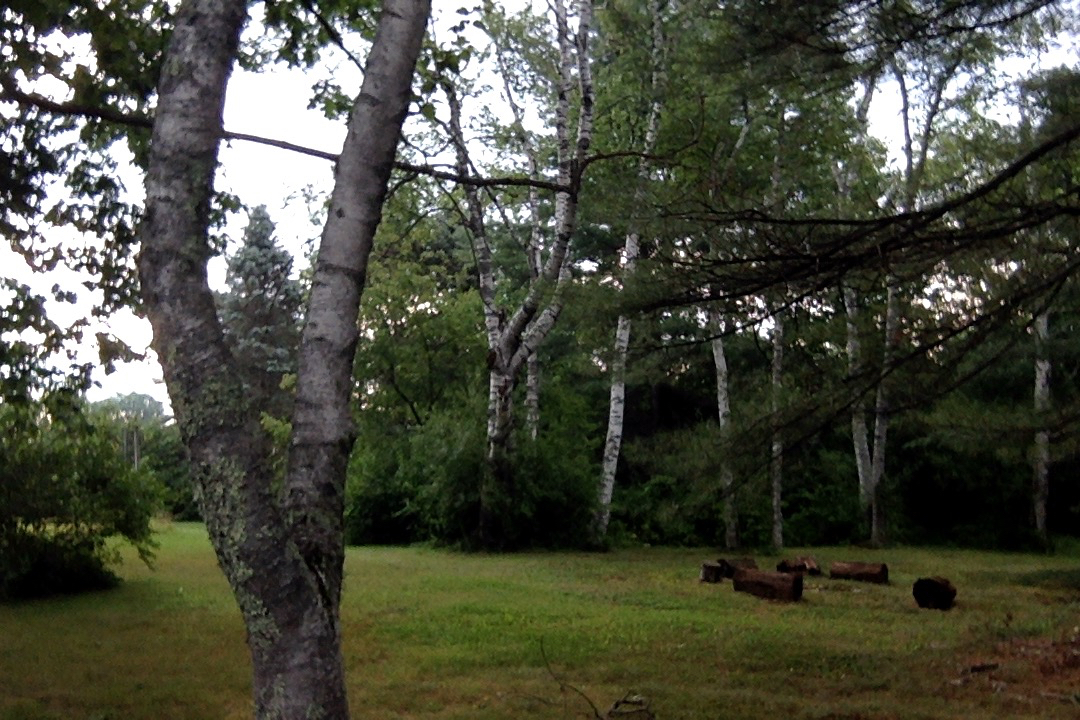
There are so many things we love about our current home–it is a well-built ranch-style house on one acre of land full of grand mature trees–large maples in the front yard, and tall oaks, pines, hemlocks, spruce, and birches in the back yard. We have such privacy and beauty around us when we go outside, and this place has been a teacher for my journey into deeper connection with the earth. There are birds and chipmunks and other critters who wander through. The house is full of light.

So why leave? For one reason, there are limits to what can be done with this house toward greater sustainability.  It doesn’t have the right alignment for solar power, for example. Secondly, it is out in the country/suburbs, and totally dependent on automobile transportation for every human need. So even if the house could be made more efficient, the location is oil-dependent. Thirdly, and perhaps most basically, it is more house and land than we really need, and expensive for us to maintain and take care of.  We couldn’t afford to do much more than we have already done toward greener living in this house. And as we look toward the possibility of future retirement, we realize we couldn’t afford to stay here at all on a retirement income.

One essential part of this process of change is the grief that emerges when we contemplate letting go of a home we have loved, and these trees that are older than we are. When we open our hearts to the land, we open our hearts to the particularity of a place.  This unique place.  I have taken hundreds of walks down this road, taken photos of these trees in all seasons, walked to the conservation land and the water district land just half a mile away.  I’ve cross-country skied back behind the yards and houses through little paths in woods out to hidden fields.  I know where the lady slippers bloom in the spring. We’ve planted flowers and bushes and young trees here, along with blueberries and raspberries.

Can a part of the magic of this change create protection for this land we have nurtured? Only if some new resident falls in love as we fell in love when we arrived here. Maybe someone with more resources could even take this place further on its own path to sustainability.  In the meantime, we keep our hands in the soil and our hearts open. We gather this season’s raspberries and keep going outside. Perhaps our love for this land is a part of the magic of this journey.

Next time, I will share our particular dreams for the new home we are seeking…