Just Be

Hammock View

My birthday isn’t until the end of June, but Margy gave me a wonderful free-standing hammock as an early birthday gift.  With all of the working in the garden, it is easy to forget to just BE–to just lie there and watch the sky and the trees and the birds.  It is large enough for both of us, and on Friday afternoon Margy and I were just being in it together.  Several little birds came to check us out in the trees close by–a tufted titmouse was singing, so much louder than one might expect from its small size.  Catbirds, cardinals.  “What is this new nest in the back of the yard?” they seemed to be asking.  “What new thing are you humans doing here?”

But we weren’t doing anything.  We were just being, watching, enjoying, listening, seeing.  On Saturday, I came back and tried again.  I especially like the symbolism of this gift, since this summer I will be retiring from my work at the church.  It is a bittersweet time, because I have loved my work at the church, and I will miss the people there.  But I like to imagine that in retirement I will have more opportunity for just being.  The hammock is a reminder to take that time–to not get caught up in all the projects I might be doing in the yard or the house or out there in the wide world–but to be still and spacious, to relax, to observe, to delight.  Thank you, Margy!  I love this gift!

Hummingbirds?

Hummingbird Feeder

Margy got a new hummingbird feeder for us!  I put it up today, plus our old one too, attached to opposite sides of the beams on our new roof on the deck.  I hope we aren’t too late to catch the migration–we used to put out the feeders when the viburnum near our door (in North Yarmouth) started blossoming, the first week of May.  We’re still figuring out the best timing for here in Portland.  I’ll let you know when we see any.

In the meantime, lots of watering to do, and I also divided some comfrey and some oregano to take to the Plant Swap tomorrow at the Resilience Hub.  Last year we got all of the companion plants we needed for our cherry trees.  The comfrey and oregano seem like basically fool-proof plants, and grew abundantly in the food forest.  So I was confident enough to take some out to share.  This year, I hope to find some kale seedlings, perhaps, and just see what might be there.  Maybe elderberry starts?  It has been a beautiful day in the garden.

Hummingbird Feeder small

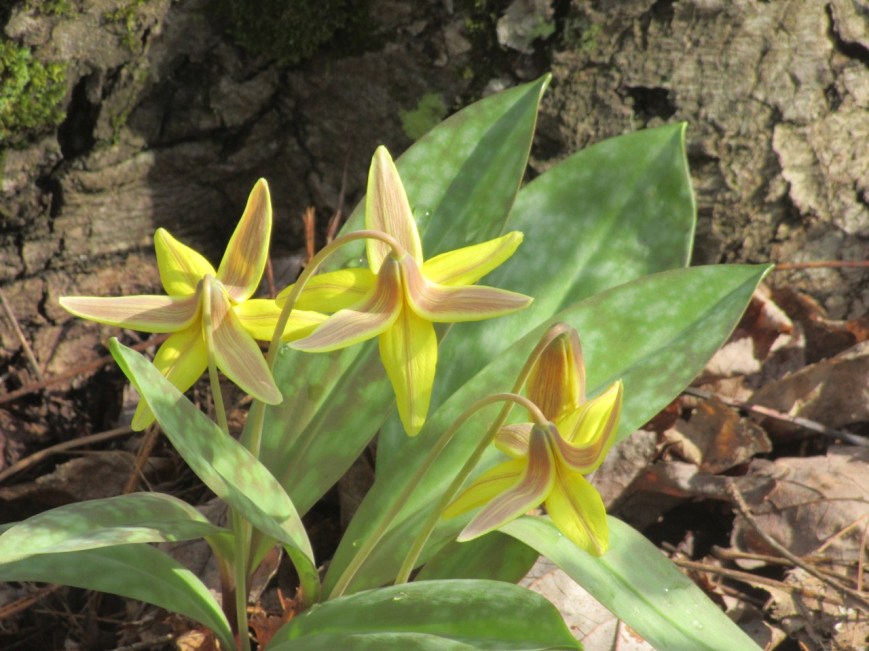
Trout Lilies

Trout Lilies

With all my working in the garden, I didn’t have a chance to walk by the brook for a few days.  When I came back, I found these little beauties.  The woods is absolutely carpeted with Trout Lilies.  I even thought about transplanting some for our yard, but read that they take several years to settle in and bloom.  So why not just enjoy them where they are?

There is so much beauty everywhere I walk–singing catbirds and cardinals, flowering cherries and magnolias, even just the leaves opening up on the trees are so magnificent.  The ferns are stretching out, and swamp cabbage is green along the brook.  Violets, dandelions and wild strawberries are flowering in the lawn.  Meanwhile life is busy, but I have to steal some moments to stop and enjoy it all.

Pruning

Cherry Tree prunedFriday and Saturday I pruned and trained our young fruit trees.  I did a lot of research beforehand, because it seemed so sad to actually cut them at all.  But the Holistic Orchard book, and most other resources suggest that pruning helps them to grow into a shape that gives them enough support and sunlight for fruit.
Of course, after the research, I realized it might have been better to prune the cherries more drastically last summer, when we first planted them.  But all we have is now.  Here is a photo of the Black Tartarian Cherry with its central leader cut at the top–to promote another tier of scaffolding (outward facing) branches.  The small bud near the top should grow into another central leader.   If I didn’t cut the top, the next outward facing branches would have grown too high up on the leader.

Next, I cut the ends of the first tier of scaffold branches, because they were too long and leggy and uneven.  On this cherry, they are also rather low to the ground, but the only way to remedy that would be to cut them all off, and I couldn’t do that.  I tied them back to encourage them to grow at a better angle to the central leader.  I did this for both cherry trees.  (We had also done this last summer, and took off the ties for the winter)

I also pruned our new young apple tree by making a heading cut on its central leader to promote scaffold branch growth.  For the peach, I did a more drastic cut on the central leader, to create a “vase” shape, where there is no central leader, but four or five main branches, which is the form most recommended for peaches.  Some sources recommend that for cherries too, but we had started with a central leader form last year.  After I was done with all this cutting, I said a prayer to the trees–I am so new at this, that I barely know what I am doing–so please forgive me for that, and grow and thrive anyway!

Funny to think that plants can thrive by being cut back so drastically.  Is there a message in that for humans too?  That the most difficult experiences of our life can shape us for greater beauty and fruitfulness to come?

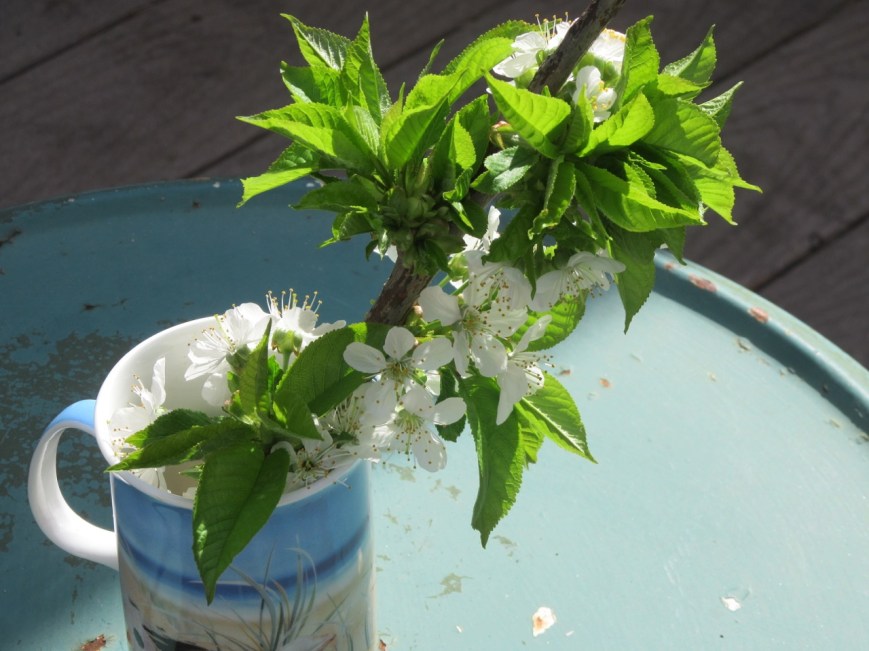
I took a cut branch with cherry blossoms from the Lapins Cherry, and put it in a cup of water on our deck.  Maybe the bees will still want to visit them.  For now, it is a sign of the years to come, when we can let the flowers bloom and hope for fruit.Cherry Blossoms

Medicine from the Yard

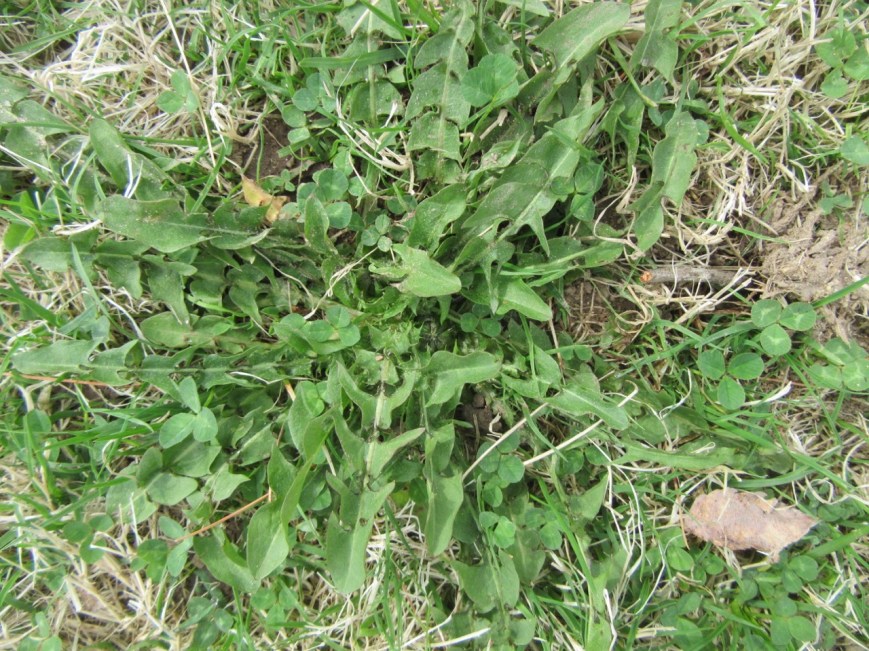
Dandelion Leaves

[Dandelion leaves]

Today and the past two days, I’ve been eating these lovely gifts from our yard–dandelion leaves.  They are best to eat before the bright yellow flowers appear, so you have to search for them by their pointy leaves arranged in a starburst pattern.  I asked the plant for permission to pick them, so that they might become a good medicine for me, and then picked some of the leaves from several plants.

Dandelion leaves are a blood purifier, great spring detoxing for the liver, have a lot of vitamins and minerals, and are full of anti-oxidants. (But be sure you pick them from a place with no chemicals or road run-off.)  I am just beginning to try eating them, so I rinsed them off and chopped them up, and mixed them into some kale I was stir-frying for breakfast, after the kale was already pretty much cooked.  They have a really mild flavor, and I enjoyed them.  You can also eat them raw or in salads.

So often, we just ignore the so-called “weeds” in our yard, or worse yet, try to eradicate them.  What if we saw them as gifts sent to us from the earth, to help our bodies with what they need?  This is what I learned from herbalists–the plants appear when we need them.  So, to ignore them or not use them would be rude, wouldn’t it?

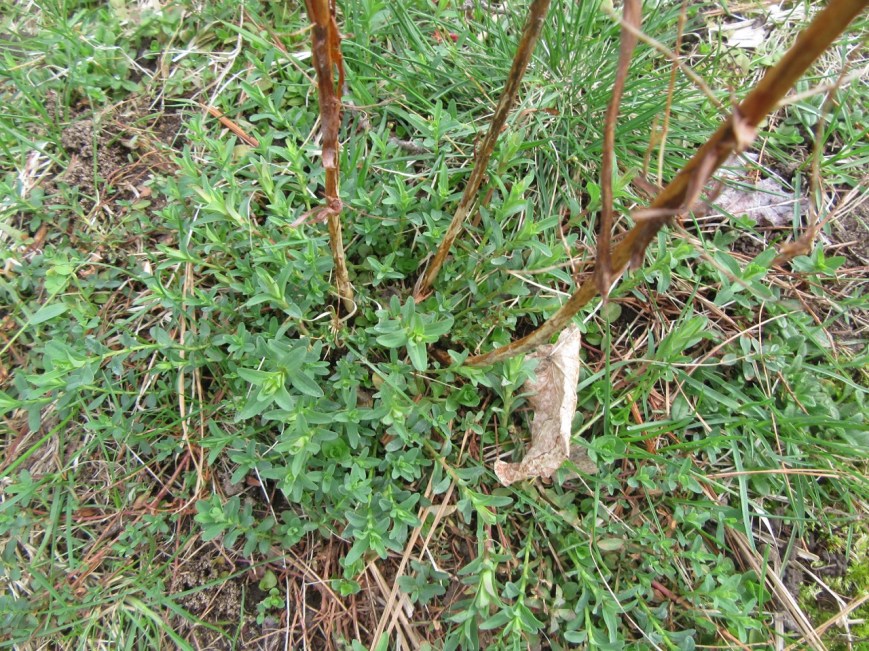
I first began to understand this when the St. John’s Wort started appearing in our yard last summer. St. John’s Wort has traditionally been understood as useful for depression and wound healing. Last summer, at the Healing the Wounds of Turtle Island ceremonies, the spiritual wound that revealed itself to me was the Great Forgetting:  first there was a great disconnection of my ancestors from their relationship with all of creation, and then there was a great forgetting so that the people would be unaware that they were wounded and disconnected, and thus never even seek to understand that they had once been connected. I heard in my mind, “St. John’s Wort can help when you remember the wound of disconnection from the earth, and when you open to the pain underneath the great forgetting.”

And the St. John’s Wort is returning to the yard this spring as well.  The flowers are best picked just after the Summer Solstice (feast of St. John the Baptist, which is where they got that name), but now the plants are starting to put forth new stems and leaves around the old stalks we picked the tops of last year.  I think picking them has helped them to grow and expand.

I like learning about the plants in this way, one by one, as they make themselves known to me here in this land I call home.

St. John's Wort

[St. John’s Wort]

May Day in Maine

Daffodils in orchard

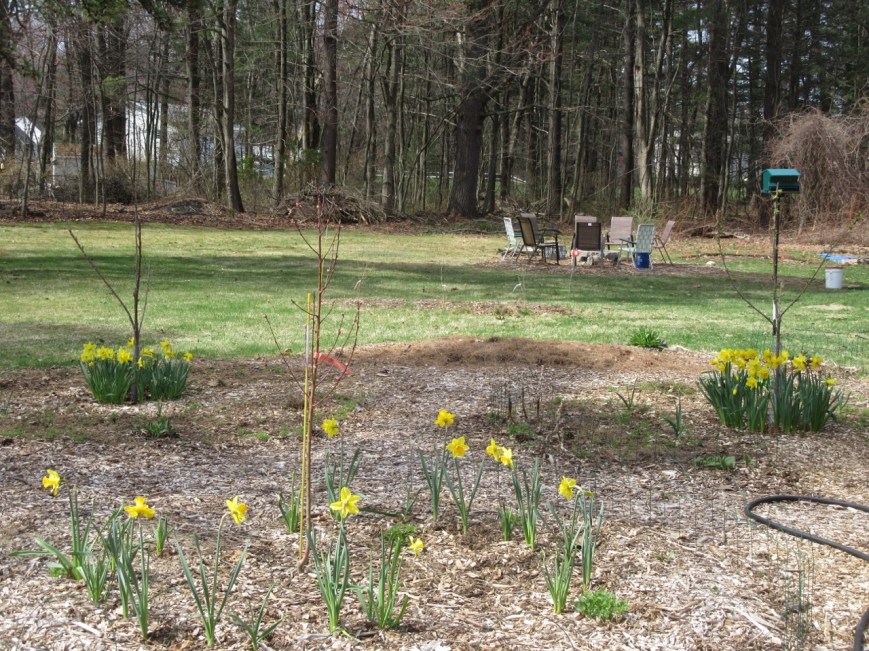
I arrived back home in Maine Monday night, and found Spring bursting forth with flowers, including all these daffodils around the fruit trees in our orchard.  I planted the bulbs last fall because the Holistic Orchard book suggested that they could be protective of the young fruit trees.  But they also create so much beauty as the tiny trees are waking up, and look so spindly and fragile.  But guess what?  If you look closely, you can see that the new peach tree has tiny pink flowers budding out too.

I think we’ve come to that week when everything seems to wake up all at once.  In years past, this has occurred in mid-April, but this year it is aligning with May Day.  As I took a walk around the block, the forsythias were bright yellow, the grass in people’s yards was green and exuberant, and the trees were budding out. I walked along the brook and the trout lily’s spotted leaves were poking up all along the path. Back in the yard, I noticed tiny asparagus stalks emerging from the trenches where I had planted the crowns!

Ostrich Fern Fiddleheads – Version 2

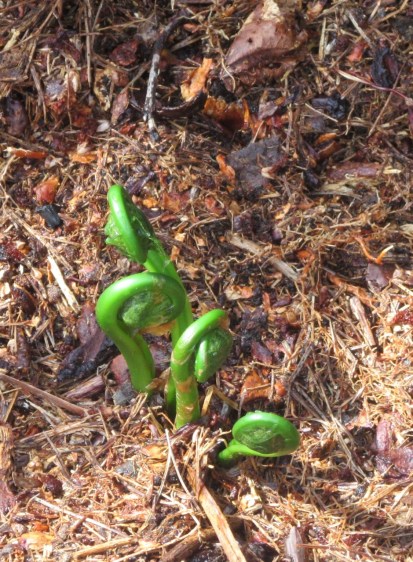
Back in March, I had purchased an Ostrich Fern root at the Maine Garden Show, and kept it in the garage while it was frosty outside.  This morning I noticed that even the fern was already growing bright green, curled-up fiddleheads there in the dark, in its plastic bag, so I planted it next to the white pine tree.

Today the temperature is rising to 80 degrees, but hopefully it will even out again to the 50s and 60s that are our average for Maine in May.  I love this time of year!

May our hearts wake up, too, rising from the weariness of the long winter, into the joy and exuberance of this season of growth and life.

Curanderismo

Open My Eyes left

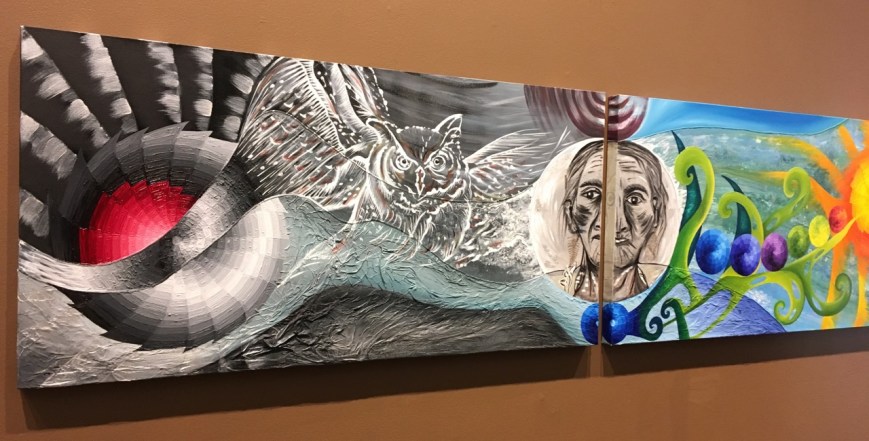
[Open My Eyes by Catalina Salinas]

If there is a thread running through these days in New Mexico, perhaps it would be the book, Bless Me, Ultima, by Rudolfo Anaya.  My friend Virginia Marie had told me before my trip about an event we could attend related to the book, so I got a digital copy and read it on the plane on my way here.  It is about a young boy growing up in rural new Mexico around the time of World War Two, and his relationship with the curandera Ultima who came to live with his family when he was seven.  A curandera is a traditional healer in the Mexican (and New Mexican) tradition.

The National Hispanic Cultural Center, has a special exhibit on visual interpretations of the book.  The event we attended included a talk by Toñita Gonzales, curandera and educator, and Dr. Eliseo Torres, author and scholar of Curanderismo at the University of New Mexico.  Virginia Marie is herself a curandera, as well as an Episcopal priest.  The talk began with a ritual to honor the four directions and the Creator and the Mother Earth.

Curanderismo includes the use of herbs for healing, and many other modalities.  It works in conjunction with western medicine, though for many years was viewed with suspicion, as most traditional healing methods have been viewed. It includes making a relationship with plants, treating them with honor and respect for their power to heal us. Ultima would always say a prayer to the plants before she dug them up for use in healing.  I think about the plants I have been getting to know back in Maine.

Back at Virginia Marie’s home, we also watched the movie that was made from the book.  Today, she will do a healing session with me, though in reality, this whole time has been a healing ceremony.

Open My Eyes right

[Open My Eyes by Catalina Salinas]

Hawk Talk

Hawk – Version 2

I was sitting outside in a little park writing in my journal, and a young hawk started vocalizing at me–almost like a bark or squawk.  She flew across the little grassy area, and was sitting in the tree when I took her picture.  She came back to the tree above me, and then flew off with another bird.

Meanwhile I was writing in my journal and working on a part of myself that I’ve been troubled by.  I was trying to sort out how to stop being critical, or thinking I know better than someone else.  Rather than try to get rid of a part, a more helpful practice can be to befriend the parts that we don’t like.  So I decided to name that part Athena Advice-giver.  Since the goddess Athena was born from the head of her father.  And I know my critical self was born from the critical side of my father, and from the critical side of his mother.  I asked Athena what she needed.  I wrote a lot.

And then the hawk came back again squawking at me, and flying around the park.  Getting my attention.  She really did seem to be talking to me, rather than occupied with something else.  Maybe she was just annoyed that I was sitting there.  Or maybe she just enjoyed my being there.  I got up from my writing and took pictures of her with my phone, and a video so I could remember her calls.

And writing again, another voice of wisdom came to help Athena evolve, to honor her essence, and bring it to a deeper maturity.  It said:

If you keep thinking you have the best way, you don’t get to learn the wisdom in other ways.  If you stay open to all wisdom, your own will grow–remember that. The wisdom of the hawk, the wisdom of the white pine, the wisdom of your partner, the wisdom of the groundhog, the wisdom of the drum, the wisdom of the desert.  Remember your curiosity.  Curiosity can be the antidote to criticism.  

Let yourself be curious and honor the wisdom of all beings.  They are your teachers.  Each being is wise.  And you are not the only one to deal with these challenges.

When I walked back to the apartment, my friend Virginia Marie told me that hawks represent transformation.  They often appear when we are in ceremonies of transformation.  My writing is a form of ceremony, and this time in New Mexico, a ceremony.  So I give thanks!

Healing Waters

Healing Mineral Waters Jemez Hot Spring

I am on retreat with my friend in Albuquerque, and we started off by visiting the Jemez Hot Springs, and soaked for an hour in their healing mineral waters.  All of our tensions floated away, and our bodies and souls felt renewed and relaxed. I loved that we were under the watchful arms of an ancient Egyptian river Goddess.

My intention for this time of retreat is to re-emerge myself in Spirit after a long hard winter, to prepare myself for the transition ahead as I retire this summer from my work as a parish minister, and venture into the next phase of my journey.

Times of big changes are liminal times, sacred times, but perhaps also times of anxiety and danger.  I want to stay true to the leadings of my body and spirit that have brought me to this crossroads.  One of those leadings came from the weariness of my body, its chronic illness and auto-immune flare-ups that left me bedraggled and exhausted. I know it is time to stop pushing it so hard.  How fitting for my first day here to bring my body to these healing springs.

I am also already absorbing so much nurture from deep conversations with a sister in spirit who understands the call of ministry and justice, and who understands the lessons of the body, the lessons we learn from limitation and illness.  I am nurtured by this sister traveler into the country of elderhood.  River Goddess


Emergence

Daffodils OpeningI love this week of the year in Maine!  The daffodils just opened today around one of the cherry trees.  Everything is late this year, the weather has been colder than usual.  But they are also just in time, because I am going to New Mexico tomorrow, and I was worried I would miss their grand openings.

Rhubarb opening

[Rhubarb]

I have also been watching the emergence of the perennials we planted last year.

Who knew that rhubarb looked so weird as it comes out?  Like a translucent reddish egg splitting open with wrinkled up green brains inside.

Sea Kale emerging

[Sea Kale]


And the sea kale is purple and wrinkly too.  It will get much bigger as it grows!

The turkish rocket looks healthy and multiple.  This will be the first year we can really taste these perennial vegetables–I hope we like them!  I’ve also now planted some lettuce and carrots, and the snap peas are just breaking the surface of the soil.  Margy is going to water them while I am away for these next few days.

turkish rocket

[Turkish Rocket]