I had a slow start today. I haven’t talked much lately about living with chronic illness, but for some reason I’ve been feeling much better energy than usual this spring. Still, I have a method for energy use: First of all, I rest when I need to. But what seems to work with garden projects is that I exert myself for a short while–say 10 minutes, or one wheelbarrow load. And then I sit and rest for 10 minutes. I don’t time myself, that is just a guess. I stop when I need to and rest until I can start again. While resting, I drink some iced licorice-root tea–that is a big help. I make a big batch of the tea (boiling licorice root for 15 minutes), and cool it to keep in jars in the fridge. Then I put together a big plastic glass (with a cover to take outside) adding ice and some lemon juice. Licorice root is said to be good for adrenal glands, so maybe this is why it has been so good for my energy.
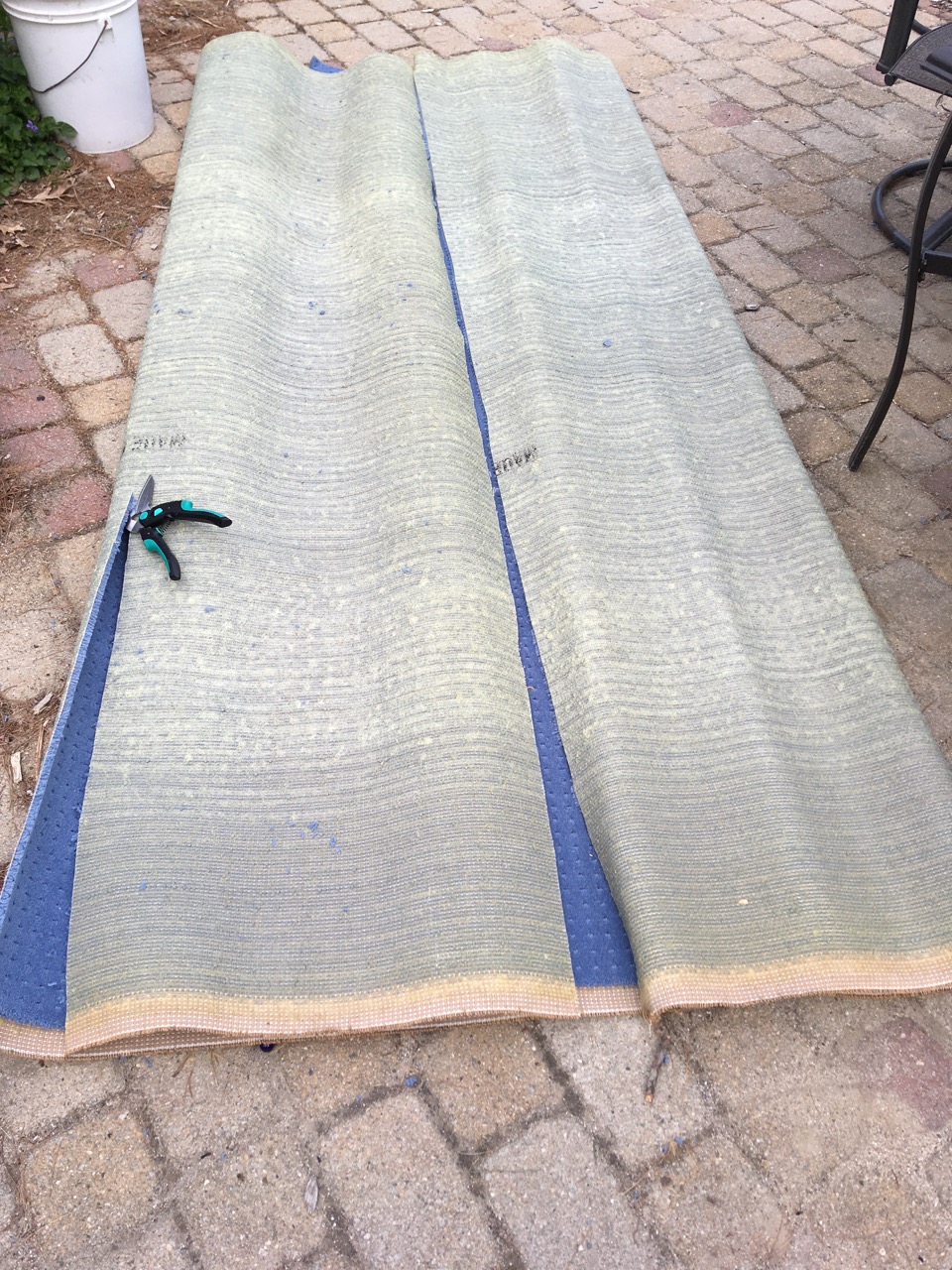
But for example, this afternoon about 3 p.m., after my slow start, I was able to make my way outside. I started on the next step for the pond–cutting the old carpet (that I collected for free) into strips about 2 feet wide. I started with the biggest carpet piece I had received. Margy bought me a really good pair of carpet cutting scissors. Oh my gosh–they are so sharp and nice and easy to use. So I cut one 8 foot (?) strip, and then I rested. Then I cut another one. It went like that. After I had finished cutting that carpet piece into about 8 strips, I decided to see how it might lay on the pond surface.
But then I had another thought while experimenting. Since the pond is no longer going to be 3 feet deep, but rather about 2 1/2 feet, and since I have a pond liner that is 20 by 20, why not make it a bit wider at the top. (Since the equation for the pond liner size takes into account depth and width and length.) So instead of 11 by 11 1/2, just add a bit more on the half that has a one foot planting shelf, let the pond be closer to 12 by 12, and the planting shelf be a bit wider too. So I started digging again around the top edge. And then I remembered the advice to make a sloping “beach” edge for small critters to be able to get in. So I did some of that. Again, bit by bit.
While doing this further digging, I again saw more bright orange bittersweet roots. This is the biggest reason why we are using carpet strips as an underlayment. Some folks like sand better, but we need something that can stop the roots from puncturing the pond liner.
So the next photo is what it looked like when I called it a day. I was lying in the hammock a bit, resting, and then when I got up I could barely move. That is the other part of this process. I get really exhausted and sore all over. So I came in and took a hot shower, and then took two aspirin, which lately always seems to help. I’ll be down for the evening, but tomorrow, probably ready to start again. Unless I am not. I am sharing all these details to say that I am so grateful I am able to do this outside work, in this rhythm of work and rest. And also, maybe it might be a helpful suggestion for others who don’t have stamina for whatever reason. Work and rest, work and rest, in little segments. It has been a good day.





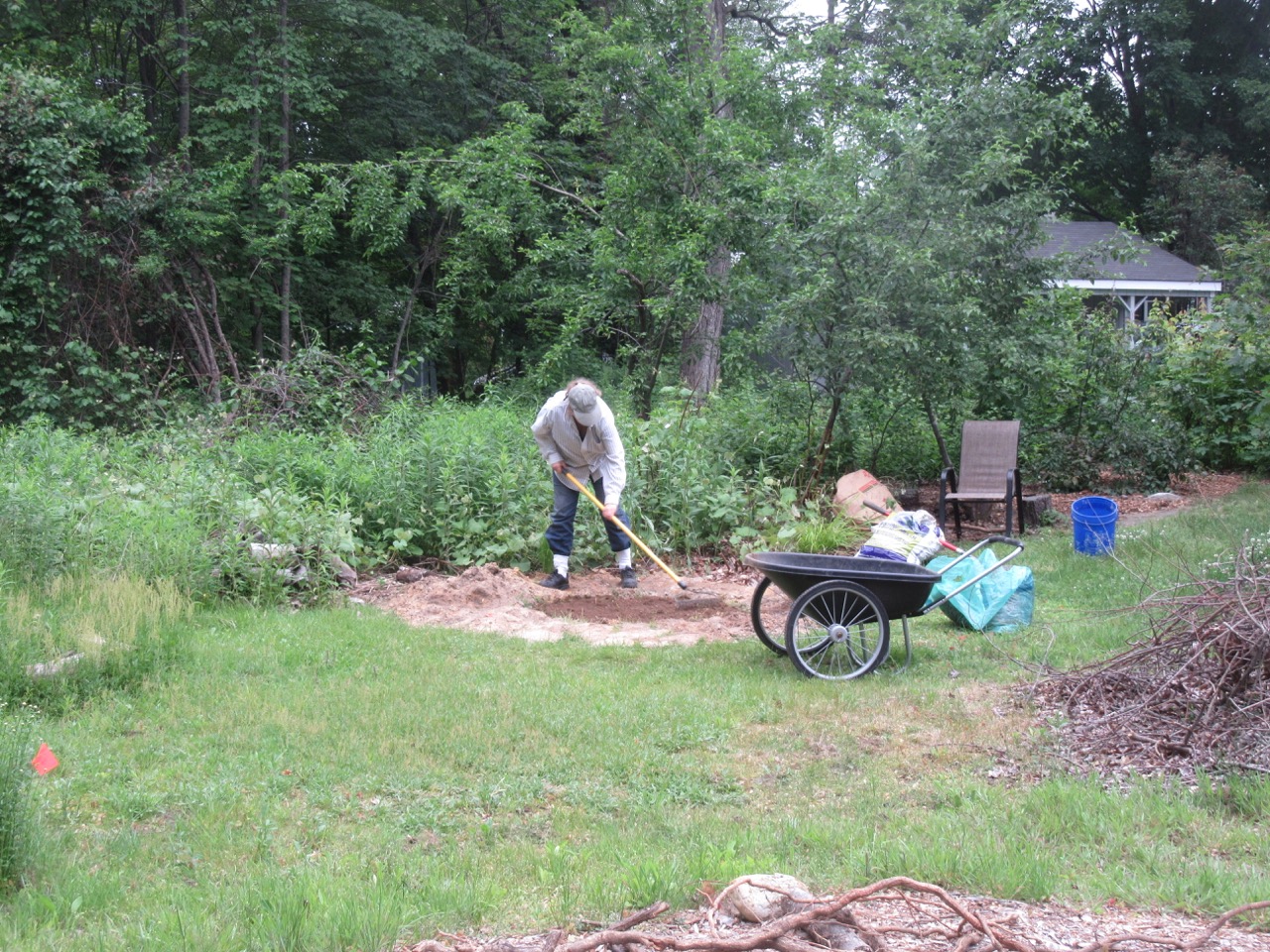


 The last few days I have been working on a garden bed for two future high bush blueberry plants. This was the toughest project so far, in terms of physical stamina. I was following the guideline of Michael Phillips in the Holistic Orchard. His first step is to dig a bed one foot deep and 3-4 feet in diameter per plant, (so for me that meant about 7-8 feet long and 3-4 feet wide).
 Once I had dug the hole, I came upon bittersweet roots, so then spent some time strategizing about what to do for that. I eventually decided to clip them off where they emerged, and then line the sides of the hole with cardboard. Since I was also making paths around the bed, I bent the cardboard so that it covered the path as well.
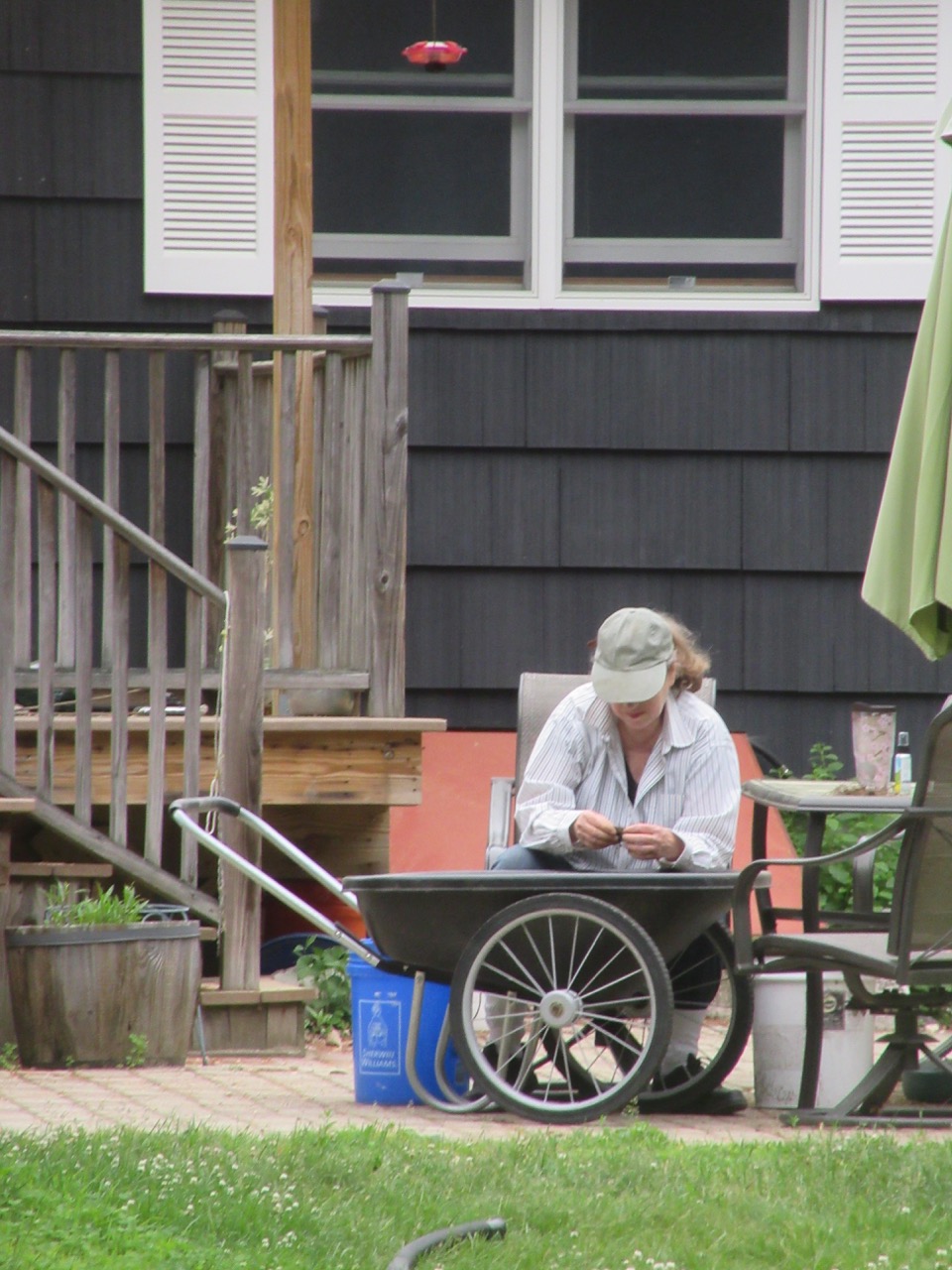
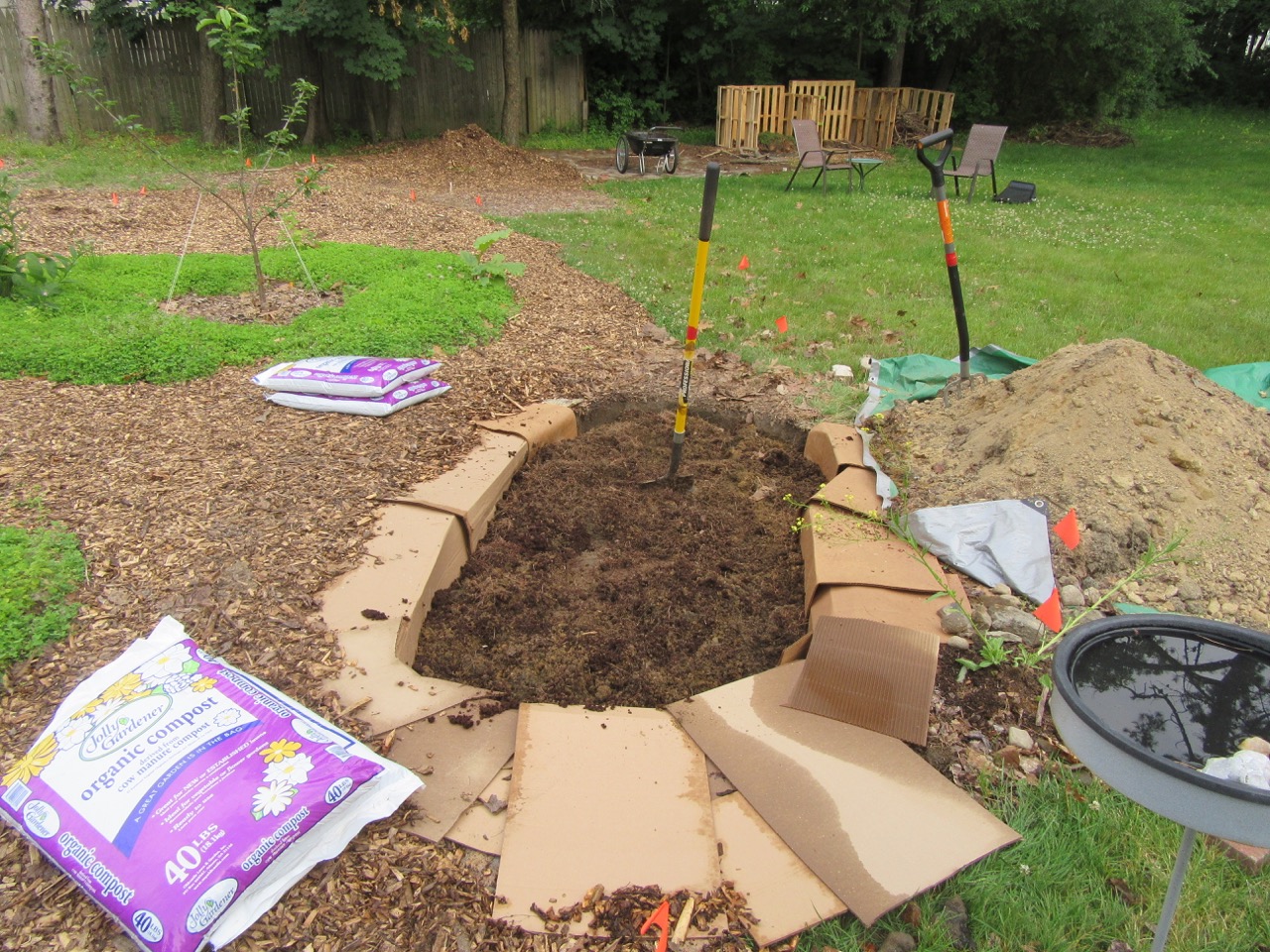 And it is a lot of work to dig out a hole, then fill it with other stuff, and then “stir” it around, which really means turn the soil over and over. I am glad I only have to do it once. So I would do what digging I could, and then stop and rest for most of the day, and return to it in the evening if I could. After the peat moss, soil, & compost mix was in, I added 2 cups elemental sulfur, 4 cups green sand, and 2 cups rock phosphate, all organic nutrients. This whole mix is meant to create the type of soil that blueberries love, with an acid leaning ph, and the nutrients they need. (You may notice that I purchased more composted manure, because we used up our big pile.)

 Finding Our Way Home