The Lottery

fallen-needles.jpgI had almost forgotten about the incredible doom of the draft lottery of 1969 and the years following.  But recently, I happened upon two fictional accounts of lives being undone by this lottery, and it all came back to me.  One came in the television drama This Is Us, in an episode about the back story of Jack’s time in Vietnam. (Spoiler alert!) Jack and his younger brother Nicky are at a bar on December 1, 1969, waiting to see what birthdays will be chosen for the draft call-ups. Nicky is portrayed as a gentle, glasses-wearing kid, not tough, not cut out to fight. Jack is his protector. Nicky’s birthday, October 18th, is chosen as number 5, which means he is sure to be inducted. Their dad tells him only, “Make me proud.”  Jack and Nicky consider options, maybe Canada, but Nicky succumbs to the pressure and joins up.  We learn that Jack himself had had a deferment because of a rapid heartbeat condition.  But when Nicky writes from Vietnam that he has gotten himself into trouble, Jack finds a way to enlist, so he can watch over his brother.

I had almost forgotten about the lottery.  The feeling of foreboding, its random terrors.  My own age peers were affected by the lottery of February 2, 1972.  We were freshman in college, then, and my male friends would have received college deferments, but if they dropped out, or when they graduated, they would once again be vulnerable to being called up.  My friend Tom’s birthday was September 16th. He was sorting out what options he might have as a conscientious objector to the war.  When his number was above 200, we all breathed a sigh of relief.

Before watching that episode of This Is Us, I had been reading the novel, The Rules of Magic, by Alice Hoffman.  She introduces us to a family of young witches: two sisters, Franny and Jet, and their younger brother, Vincent.  Their history included an ancestor tried for witchcraft back in the 1600s in Massachusetts, and continuing suspicion towards their magical family.  Vincent is an artist, a singer, and a young playboy, though he eventually comes out as gay and finds true love with a man.  He has eerily known for years that he faced doom: it comes in the form of the number 1 pick in the draft lottery of 1969. His birthday is September 14th.  (The actual number 1)  The family is devastated and knows he cannot serve in the military–a witch must “harm none” lest it come back three-fold.  They try to figure out a way for him to escape, but ultimately it means that he is forever cut off from his family.

Hoffman compares the lottery to the witch hunts of earlier times, and writes the most haunting description of its effects.  Her words stirred that memory in me of our fear and our relief, of the randomness of horror cast upon the lives of young men and those who loved them. How we were divided into the lucky and unlucky. How we almost took it for granted.

It came on the wind, the way wicked things must, for they are most often weighted down with spite and haven’t the strength to lift themselves.  On the first day of December 1969, the lottery was held.  Men between the ages of eighteen and twenty-six would be drafted to fight in Vietnam according to their birthdates. Lives were interrupted and fortunes were exchanged. A cold drizzle hung down and flurries of snow fell in swirls. There were no stones thrown or drownings, no pillories or burnings. Those chosen were computerized, their fates picked at random.

Life went on in spite of the lottery: traffic headed down Broadway, men and women showed up for work, children went to play. The world breathed and sighed and people fell in love and got married and fell out of love and never spoke to one another again. Still the numbers drawn had the weight of ruin and sorrow; they turned young men old in an instant. A breath in and a man was chosen to walk on a path he’d never expected to take. A breath out and he must make the decision of a lifetime.  Some would leave the country, some went to jail, some were ready to take up arms and die for the country they loved despite the heartbreak of leaving families and friends.  All were torn apart.  It was said that fate could not be altered, except by one thing, and that was war.

After Vincent watches the lottery, he gets drunk, and is brought home by two veterans, who “pitied him the war of his time. Theirs had been terrible, but it had also been just and worth fighting.”  From Vietnam onward, I believe that none of the wars fought by our country have been just or worth fighting.  In each war, so many were wounded, so many broken in body or spirit.  And always, some resisted.  So strange to recall these old tragedies that linger beneath the surface of so many new tragedies.  And as always, some resist.

Why I No Longer Support Leonard Peltier

Edit: December 2024.  I have appreciated folks who commented on this post, sharing further information and concerns (see the comments).  I have been surprised by how many people are still reading this post even though it has been six years since it was published–(and there have been over 6000 views since it was published!) I want to say again today that my knowledge is limited, and I posted these personal thoughts out of concern for Annie Mae Aquash’s family. I am glad that some readers learned more about her story. But I am also concerned that my thoughts might have had more influence than is warranted regarding Leonard Peltier. As I hear the recent calls by so many for President Biden to pardon Peltier before he leaves office, I can’t see the point of resisting that effort. After almost 50 years in prison, isn’t it time to let him go home? 

Original post: For many years, I supported the campaign to free American Indian activist Leonard Peltier, who had been convicted, many said wrongly, of the death of two federal agents in a shoot out on the Pine Ridge Reservation.  Even Amnesty International signed on to his case.  But after moving to Maine, I learned more about the murder of Annie Mae Pictou Aquash, and I began to have reservations.  I stopped my support, but didn’t really know how to speak about it.

Yesterday, via my friend Sherri Mitchell’s Facebook feed, I started to listen to a live feed of the National Inquiry into Murdered and Missing Indigenous Women and Girls that was taking place in Montreal. Denise Pictou Maloney was testifying about the death of her mother Annie Mae.  I listened for an hour and a half, and then after she had completed, I went back to hear what I had missed at the beginning of the tape.

Anna_Mae_Pictou-AquashAnnie Mae was a leader in the American Indian Movement, originally from the Mi’kmaq First Nation at Indian Brook Reserve in Shubenacadie, Nova Scotia.  I first learned about Annie Mae in the song by Buffy St. Marie, “Bury My Heart at Wounded Knee”, in which she sang,

My girlfriend Annie Mae talked about uranium
Her head was filled with bullets and her body dumped
The FBI cut off her hands and told us she’d died of exposure

The implication, the narrative, the story so many of us believed for many years, was that she was killed by the FBI.  But in fact, the truth later came out that she was killed by other AIM members.  In 2004 and 2010,  Arlo Looking Cloud and John Graham were convicted of her kidnapping and murder.  They also implicated AIM leadership in her death, though no one was ever charged.  You can find out a lot more if you listen to the tape of Denise’s testimony, or even if you look up Annie Mae on Wikipedia.

Hearing the pain in Denise’s voice moved me to want to speak publicly this time.  It feels risky to do so, because, as a white person who tries to be an ally, a co-conspirator, with Indigenous people, I know that I will always know too little about all of this.  I do know that the FBI tried to sow dissension in the ranks of activist movements, especially those of Indigenous people and people of color.  This included planting informants within the movements, and also casting suspicion on dedicated activists to cause others to suspect that they might be informants.  This is one theory about the motive for killing Annie Mae.  Another theory claims she was challenging AIM leaders on their behavior, or that she had heard Leonard brag about killing the agents.  I don’t know the answers to that.

But I want to speak today, despite not knowing all the answers, because I have in the past spoken in support of Leonard Peltier.  Denise talked about how painful it has been for their family, every time there is more public support for Leonard.  So I want to interrupt my own participation in that process, (which most lately has been through my silence), and let my friends and colleagues know that I can no longer support Leonard Peltier’s campaign for release from prison.  And I also want to acknowledge how difficult a journey we make when we intend to be allies or co-conspirators.  We often make mistakes and get it wrong.  But that does not make it less worthwhile to try, to show up for what is right.

What I carry away with me today is sadness and anger.  Sadness and anger for the fall of heroes–the leaders we wanted to be better than they were, because the cause they fought for was so important.  Sadness and anger for the children and family and friends of Annie Mae, who have waited so long for the world to know the real story, and often feel as if their voices are not welcome because the truth interrupts the stories people want to believe.  Sadness and anger that in my ignorance as an outsider, I was drawn in to the narrative, and thus contributed to their sorrow.  Sadness and anger at the insidious complexity of colonization and oppression, and the brokenness within all of us left in its wake.

River of Rock

river of rock

Yesterday, with the ice and snow thawing, I ventured all the way down the path by the brook and discovered that the way was blocked by this new river of rock. There used to be a small wooden bridge over a small drainage ditch that led down to the brook, but now there was this huge thing.  And an orange mesh barrier blocking the way on both sides.

Today I went back and discovered that someone (a dirt bike?) had pushed the mesh barrier down, so I stepped over the mesh too.  I walked across the rocks consciously imagining that the path will be restored with a new little bridge.  Don’t our feet have some sort of magic to trace the energy of our intentions, and create or preserve the trail we want to walk on?  As poet Antonio Machado wrote, “Traveler, there is no path. The path is made by walking.”

So perhaps all of us who walk or ride this small path are preserving it by our collective energy, by our love and attention, and by moving through barriers. Perhaps there is a lesson in this.  Thank you kindred travelers.

mesh down


Healing the Wounds of Turtle Island

Margy and I are packing up this morning to drive north for a special ceremony.  It has been difficult to pull everything together.  This packing, the 2-3 hour drive, finding the strength it requires to travel–all of this is really a part of the ceremony.  We bring our complete selves, with our own wounds and brokenness, our own love for the earth.  We ask that our participation may be a blessing.  Send us your blessings too.  It is quite an amazing gathering and hundreds of people from around the world will be together from July 14-17. Here is the call and description from the event page posted by Sherri Mitchell:

Prophecy of the Eastern Gate

Our ancestors tell us that the Eastern Gate is where we will gather to begin the healing of this land. It is here in the East where first contact was made between the Native peoples and the newcomers. It is here that the first blood was spilled between our people, and our history of violence began. So, it is here on this same land that the healing must begin.

The Wabanaki, the people of the first light, are the keepers of the Eastern Door. We are the first peoples to greet Kihsus, the Sun, each morning, and Nipawset, the Moon, each evening. Now, we open our hearts and our homes to greet all of you, so that together we may begin to heal the wounds of Turtle Island and set a new path forward for all life.

This ceremony will be a coming together of people from all over the world, to acknowledge the common wound that we all carry from our shared history of violence. No matter where we come from, we all carry the wounds of historical trauma within us. Whether we were the victims, the perpetrators, or the witness to that violence, that wound is imprinted on our spirits. Now, the time has come for us to acknowledge that wound, together, so that we can heal it and begin working together to heal Mother Earth.

Structure of Ceremony
The first day will be for healing the wounds carried within the hearts and minds of the people. The second day will be for healing the wounds of Mother Earth. And, the third day will be for healing the energetic and spiritual imprint of that wound that lays over the Earth.

The ceremonies will be conducted by spiritual elders from Indigenous communities around the world, and by spiritual leaders from other traditions. We will be gathering on healing ground, along the Penawahpskek (Penobscot) River, at Nibezun in Passadumkeag, Maine.

People from every corner of the world, and from all walks of life are welcome. We ask that you come with a good heart, and good mind, and carry the intention of healing with you.

My Dad and the Land

Johnsons 1936.jpg

[1936, his brother, sister, & my dad in back.]

My dad was born in 1930 in Gillette Wyoming, where his parents were homesteading.  Some stories I remember from his childhood there.  My grandmother made cinnamon rolls. They had a fire that burned down their house.  His mother grabbed the laundry, and all the family got out safely, but they lost their other possessions.  One time, maybe 3 years old, my dad went into town, with his dad perhaps, and when he came home he proudly announced “I buyed me this!” He had spent a coin to purchase some candy or some small toy.

The family left their homestead in 1938, when my dad was eight years old, and they ended up in Detroit Michigan.  For the rest of his life, in many ways, he was trying to get back to Wyoming.  He went there at 16 to work on the ranch of a family friend.  Back in Detroit, he met my mom at a riding stable, and we lived in Michigan when I was young.  We moved to Texas when I was 7, but after six months returned to Michigan.  When I was 12 we moved to Sheridan, Wyoming, and my dad worked on a ranch in Montana. There were six children then. I was the oldest, and my sister Mary was the baby.  We went to the Catholic grade school in Sheridan.  We stayed there for one school year.

We could walk to school–I think it may have been about 8 blocks.  One time the weather reported it was 17 below zero.  My mom called another mother to ask whether she should send us to school.  Just bundle them up! she said.  I was in seventh grade that year, and was amazed that the popular kids were also those who got good grades.  I was in a drama club and a science club.  But it took a while to make friends.  By the end of that year, I had gotten close to a girl in my class whose name was Patricia Ann Rhodes.  The drama club put on Thornton Wilder’s Our Town.  I shared the role of Mrs. Gibbs with another student.

My dad stayed up in Montana during the week.  Actually, I don’t remember the exact schedule of him coming home.  He did go back and forth.  That year we spent Christmas week at a one-room cabin in Montana, which was a lot of fun.  Shortly after that, he stopped working at the ranch, and went back to Michigan to work again in drafting.  I didn’t know the full story until years later.  I had always thought he left the ranch because you couldn’t support of family with six children on a cowboy salary.  But really what happened was that he hurt his back in a fall from a horse.  Someone unexpectedly tossed him a bag of feed, and the horse startled and jumped away.  That was how he fell.  It was very physical work, and he was in too much pain to continue.

He told me later how devastating that fall had been for him.  He went back to his old job–but felt a deep sense of failure.  The year before, this company had held a going away party for him, and gave him a gift, a rifle I think, with many good wishes on this new adventure he was looking forward to.  So coming back was to admit the defeat of his dream.  Back in Michigan, he found a house for us to live in, and the family moved back to Michigan after the school year ended.  I cried when we had to go back.

I am thinking about how much he loved the open range, and longed for the land in Wyoming.  He found God in that land.  He said once that “people called it a ‘God-forsaken land’ yet even in that naming they were reminded of God.”  His longing for this faraway land was a part of my growing up years, one root of my own sense of disconnection and longing for the land.

I have been thinking a lot about my dad these last few weeks because he had a fall at home in West Virginia a few weeks ago and hurt his back.  He is now in a nursing home, theoretically to get some rehab and pain management, but he is feeling very discouraged, and not really participating in therapy.  He had a stroke in September of 2014, and recovered well at first, but it has been a hard two years. I am thinking about how much I love him, even though my own journey took me so far away from his world. Cowboy, mystic, dreamer… I send you blessings on this difficult chapter.  And gratitude to my sister Julie who has been caring for him and my mom close up these last eleven years.

The Book

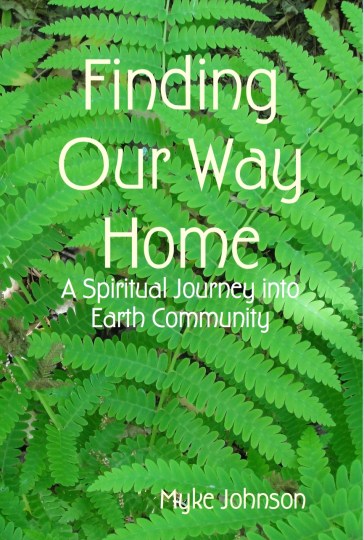
Now available!  The book, Finding Our Way Home: A Spiritual Journey into Earth Communityis being published by my own imprint, Small Bird Press, and available through lulu.com via this link.title-page 

What others are saying:

“Myke Johnson’s beautiful stories from her own journey illuminate the way to reconnecting with ourselves, each other and the entire Earth community. The practices that punctuate the end of each chapter help embody and guide the path of reconnection. A book to savor, it is also a compelling reminder of the legacy of stolen land and genocide, and of the urgency to face the past as a necessary step toward healing and finding our way home.”  Anne Symens-Bucher, Executive Assistant to Joanna Macy and facilitator of the Work That Reconnects

“Myke Johnson’s writings are inspiring, transformative and grounded in the mystic contemplative way of life.  Reading her reflections and meditations gives you a deep sense of connection not only to Mother Earth but to her own personal journey. This is a companion book for all that are seeking a simple but conscious choice of living in peace and harmony on our planet with all of creation.”  Rev. Virginia Marie Rincon, Episcopal priest and Curandera

From the back cover:

In this time of ecological crisis, all that is holy calls us into a more intimate partnership with the diverse and beautiful beings of this earth. In Finding Our Way Home, Myke Johnson reflects on her personal journey into such a partnership and offers a guide for others to begin this path. 

Learning from the Indigenous philosophy that everything is related, she found in her plant and animal neighbors generous teachers for a way back to connection: a chamomile flower, a small bird, a copper beech tree, a garden slug, a forest fern. Their lessons are interwoven with insights from environmental science, fractal geometry, childhood Catholic mysticism, the prophet Elijah, fairy tales, and permaculture design. Each chapter includes practices for further reflection and experience.

This eco-spiritual journey also wrestles with the long history of our society’s destruction of the natural world. Johnson investigates its roots in the original theft of the land from Indigenous peoples and in other violent oppressions between human beings. Exploring the spiritual dimensions of our brokenness, she offers tools to create healing. Here is a map into a new relationship with earth, with each other, and with the Spirit within and between all. Lyrically expressed, Finding Our Way Home is a ceremony to remember our essential unity with all of life. 

You can now order the book for $17.99 (plus shipping) via environmentally-friendly Print-on-Demand at this link:  Finding Our Way Home 

Version 2

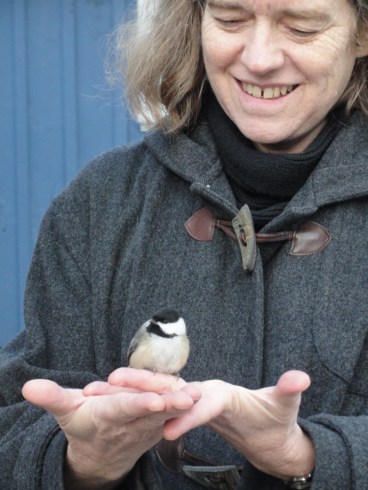
Photo by Margy Dowzer

Myke Johnson is a Unitarian Universalist minister and earth activist, serving a congregation in Portland, Maine, while practicing and teaching ecological spirituality. She holds a Master of Divinity from Chicago Theological Seminary and a Doctor of Ministry from Episcopal Divinity School.

More recommendations:

“I work with Unitarian Universalist congregational, environmental leaders across the United States. I am keenly aware not only of my need, but what so many seem to experience as a lack, a daily rift between functioning well on Earth, and Living with All Earth in ways that sustain our core. The messages and ceremonies of Finding Our Way Home are as essential, I think, as sleeping. But like sleeping, we try to do without as much as our hearts, bodies and souls need to meet demands in these times. This book is welcome medicine for the beautiful, difficult work and love of our lives.”  Rev. Karen Brammer, UUA Green Sanctuary Program

“As a student of Naiyantaqt, I have, over the long journey of my life, come to appreciate the rhythm of the Great Mystery; the wondrous Consciousness, the empowered understanding and meaning of Manitou, that exists everywhere and in all living and immobile matter. Such connections are profound, relevant, and mark the passage to the future awaiting the enlightened. I am aligned to such kinships and Myke Johnson is a long-time kinship, a seeker of the Divine, a companion in the awe of the Great Mysterious. She boldly embraces the Divine and her quest to connect with the All-Encompassing Mystery. Her book is the re-telling, the sharing of her wondrous spirit, life, and the path to her awareness. Her book will empower true seekers on this Path of Life, a path she confirms by our friendship and mutual journey together.”  gkisedtanamoogk, Maine Wabanaki-State Child Welfare Truth & Reconciliation Commissioner and author of Anoqcou: Ceremony Is Life Itself

“During times of chaos, whether private or public, the human psyche/spirit seeks inner and outer grounding as its home base. Using her own life as a prism of refracted insights, Myke Johnson has created a tool-kit for the rest of us to use in our personal and/or political struggle to survive, and perhaps even thrive. As she shows as well as tells us how to concentrate and tap into our deepest energy and then send it out into the universe in order to affect change, she does exactly that with this book, her own special gift to the world.”  Gail Collins-Ranadive, author of Nature’s Calling, The Grace of Place

“In Finding Our Way Home, Myke Johnson names the many disconnections that modern people constantly experience as the core spiritual issue of our time.  And then through wisely chosen stories from her own experience, she shows us how we might reconnect the inner pieces of ourselves, our relationships in genuine community, and our relationships with the earth into a more integrated whole. She helps us remember our deep belonging with all that is. And that as we engage this process, we are finding our way home.”  Rev. Deborah Cayer, lead minister, Eno River Unitarian Universalist Fellowship, Durham, North Carolina

Summer Lessons to Remember

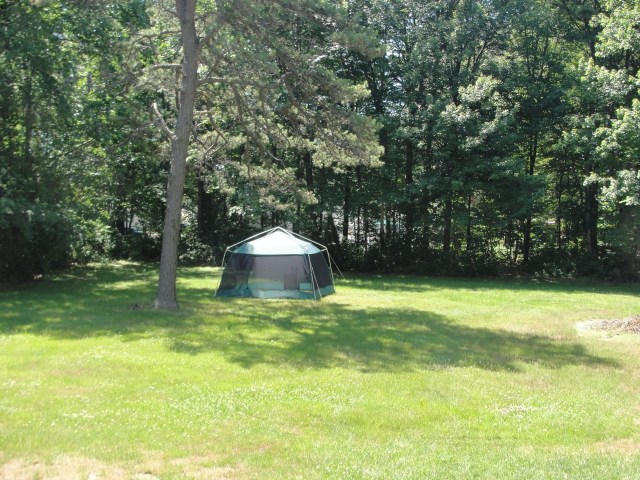
Screen TentMaybe this land on which we newly live can become a sacred center of learning earth spirituality, with a fire circle, a water pond, bird songs in the air.

Your journey on this small piece of land is valuable, not for some other purpose, but for this purpose–to restore your broken off heart to the land.

You have all the time you need.

This spiritual work is your work–writing about it, yes, teaching it, yes, but doing it, most important of all. Even if you do nothing else in your life, do this work.

Each step of the journey is holy. Remember the deer who appeared in the yard. Come outside. Dawn is the best time. “Vacation” really means “spiritual restoration” time.

Your calling now is to do the spiritual journey into Earth Community. That partially corresponds to your ministry at your congregation, and partially lies outside of that. (All congregations must go through transitions in this time.)  

Teach a class this year on the Spiritual Journey Into Earth Community, based on the latest version of the book (Finding Our Way Home: A Spiritual Journey Into Earth Community).

Begin to explore self-publishing the book.

For health–rest, dance, walk, water, herbs, be outside.

Come outside, come outside, come outside.

There is no rush at all, just love, follow your deep passions.

The spirits are with you. Brokenness hurts–turn to the cardinals, the sun, weeping, diving into water.

Enjoy the beauty of each day. It is not all about goals and purpose and accomplishments–even green ones. See the beauty now. Feel the connections now. Be still.

Listen to your body.

You can find your joy and beauty when you sit outside in the morning and write–you know how to move into Presence. Write this down.

There is still more transformation that is possible. Your heart is in the universe and the universe is in your heart. I put my hand on your heart.

Think of how you get up each day in a world that is broken and anguished and live in a society that is divided and hurting. Think of how you feel the new sun and the songs of the birds.  You are learning to feel the land slowly, so the grief doesn’t overwhelm you, so you can find the source of strength, the many ancestors.

Keep dancing.

Today is a day, not a preparation for something else–a beautiful, painful, blessing-laden day. Let your heart’s pain be awash in this day.  

You are not an orphan. You are in the land where ancestor relatives were buried, the dawn places. Don’t panic. Don’t try to take the pain to someone else. Everyone is broken. Remember gratitude. Remember to honor the pain. Remember to see with new eyes.

Remember the magic. Breathe. Remember that a day may bring a beautiful surprise. Follow the Spirits’ lead. Flow with the River of Life.

Walking

Intertwined rootsI am feeling an paradox today.  I began this search for greener housing out of a desire to live more in harmony with all beings of earth.  It grew out of a deepening experience of our interconnection in an earth community.  Yet, the disruption and labor of moving from one place to another has chipped away at that felt sense of connection and I have been out of balance and spiritually exhausted.

What helps me to start finding my way back into balance are the walks I take most mornings near our new home.  I go out our back door, and then wander in our neighborhood, some days over to the Hall Trail near Capisic Brook, other days over to the trails at Evergreen Cemetery.  I’ve found a huge old grandmother tree a few blocks away, the oldest one I’ve seen so far.  Given the season and lack of leaves, I don’t even know what species it is, though I am wondering about Maple, since there are maple seeds on the ground nearby.

Old Grandmother Tree

Along my walks, the cardinals have been singing their most beautiful dawn songs, naming their territories and wooing their loves.  I am a tree person and a cardinal person and so I stop to put my hands on this tree, and I stop to listen to the cardinal songs, and try to catch a glimpse of them, usually bright and beautiful near the top branches.  There are cardinals in our own yard too.  So day by day, I hope to restore my strength, to reweave the threads that are torn and frayed from the move.

Cardinal at our new home


Contradictions

Maple on BirchwoodIn our search for greener housing, we’ve come upon a paradoxical sad choice. There is a large tree next to our new house, whose branches stretch dangerously over the roof.  If the branches get covered in too much snow, they might break and fall on the roof.  Also, they will block morning sun to our future solar array which is so important for our ability to stop using fossil fuels.

It turns out that this tree–we believe it is a maple–is on Portland Water District land.   At first we thought we could just prune the branches that were over the roof, but this would be quite a severe pruning.  I did some research online and learned that mature trees do not handle severe pruning well: pruning it as needed would likely cause the tree to deteriorate and eventually die. I never knew that before. The PWD doesn’t like the idea of pruning because it would cost as much as cutting it down, and then they’d have to come back later and deal with it at some point in the future.  I had a chat with the PWD right-of-way person today, and we’ve decided reluctantly to let them cut the tree down.

I am someone who listens to trees, and earlier, when I asked the tree about what to do, the tree expressed a willingness to sacrifice itself for the purpose of our moving into greater harmony with the earth.  It seemed so easy and gentle about it all.  But I feel so sad about it all. I love old trees. I love that this tree has multiple trunks and I can squeeze in the middle of them–though I also learned that multiple trunks are not as healthy for a tree.

I am not asking for advice here–just expressing the contradictory feelings that come up for me as we try to navigate our way forward into greener living. We plan to plant many trees on this land–most likely fruit trees and nut trees.  So we will give back when the season arrives.  We may be able to keep the mulch that is created by the process, to use in future gardens. But today, I just want to honor this grandmother tree, and her kindness and serenity and openness to the sincere and contradictory journeys of human travelers.

How to Face the Mess We’re In Without Going Crazy

Redwood Sky DSC06718I was away for eleven days at an intensive retreat in northern California on The Work That Reconnects with Joanna Macy. I have loved Joanna’s work for over thirty years, from when she was leading workshops on Despair and Empowerment in a Nuclear Age.  If you haven’t yet encountered her work, a great book to begin is Active Hope:  How to Face the Mess We’re in without Going Crazy, co-authored with Chris Johnstone.

Here is the description of the book from the publisher’s page:

The challenges we face can be difficult even to think about. Climate change, the depletion of oil, economic upheaval, and mass extinction together create a planetary emergency of overwhelming proportions. Active Hope shows us how to strengthen our capacity to face this crisis so that we can respond with unexpected resilience and creative power. Drawing on decades of teaching an empowerment approach known as the Work That Reconnects, the authors guide us through a transformational process informed by mythic journeys, modern psychology, spirituality, and holistic science. This process equips us with tools to face the mess we’re in and play our role in the collective transition, or Great Turning, to a life-sustaining society.

A true gift I have experienced in Joanna’s work is a way to experience my own grief for the world, not as a debilitating or paralyzing weight, but as a doorway into experiencing my deep interconnection with all beings.  We begin in gratitude, and the spiral of the work takes us through grief and interconnection, and we go forth with new strength for changing our lives and our world. I came away from the intensive feeling more alive and whole, and with new ideas for bringing people together around this work. Reading a book or a blog can be a solitary experience, but gathering with others to discuss a book, or doing practices together that make the ideas come alive, can be profoundly healing.  I am dreaming of how I might bring this work to Maine.