A Moment of Healing on a Broken Land

In November of 2006, eight people from my congregation gathered in Orono, Maine with about seventy other people for a celebration of the Giving Winds Capital Campaign. The invitation had mentioned hors d’oeuvres, but it was more truly a feast. We had corn chowder and salmon patties, bacon-wrapped scallops and stuffed mushrooms, veggies and corn fritters, and blueberry cake and fry bread. We listened to drumming by two young girls’ drumming groups, and heard the thanks of several of the leaders of the Penobscot, Passamaquoddy, and Maliseet tribes. We left with gifts of sweetgrass and traditionally made herbal insect repellent, and beadwork pins.drumming

We heard the story of how the Giving Winds campaign came about. It began in brokenness. The Maine Council of Churches had decided a few years before to oppose a referendum that would have allowed the tribes to pursue casino gambling as a means to economic development. Representatives of the tribes had come to a council meeting to urge them to reconsider, and to speak about the difficult financial issues faced by their communities. But many members of the council had ethical principles against gambling, and they voted to go ahead with their opposition.

It was another painful moment in Indian relations with the non-Indian community here in Maine. But Tom Ewell, then director of the Council of Churches, did not want it to end there. He did some research and discovered the Four Directions Development Corporation that was just getting started. It was seeking to provide home loans and small business loans to Wabanaki people from the four tribes in Maine. Indian people had difficulty gaining credit, because if their homes were on Indian land, they could not be used as collateral for traditional mortgages or home improvement loans from a bank. Four Directions hoped to fill this gap, and to provide financial education and support for start-up businesses.

And so the Maine Council of Churches partnered with Four Directions to create the Giving Winds Capital Campaign. Congregations and individuals across Maine donated money and made low- or no-interest loans that were matched by the Federal Government. The campaign worked to build trust and connection between Indian and non-Indian people in Maine. When we ate with each other at the celebration in Orono, it was a moment of healing on a broken land.

I wanted to share this story because all too often, people feel it must be impossible to heal from five hundred years on a broken land. But I don’t believe it is impossible. Difficult yes, but there are simple steps we can take that move us in the direction toward wholeness. If we can learn to share the pain and share the struggles of Indian peoples, then we also will find ourselves sharing in the celebrations. Sweetgrass

The Theft of the Land and the Stories that Obscure It

As I wrote in my last post, European peoples are new to the land we call North America. Our history includes the theft of this land from its original people. We have tried to obscure that history through many stories, perhaps most notably our Thanksgiving myths, the stories of the Pilgrims and the Indians.Turkey DSC09718_2

The story tells us when the Pilgrims landed at Plymouth, they were welcomed by the Indian Samoset. He introduced them to Massasoit, chief of the local Indians, the Wampanoag, and to Squanto, who helped the Pilgrims to plant corn, to hunt and fish in their new home, and to survive the first hard year. In the fall, Indians and Pilgrims together celebrated a Thanksgiving for the harvest.

The story of this celebration hides other stories. It hides the plague that wiped out the village of Patuxet, and 90% of the people living on the Northeast Coast. Squanto, whose name was actually Tisquantum, was a survivor because he had been earlier carried off as a slave to England. Did you ever wonder why he could speak English to the Pilgrims? The story hides his capture as a slave, his years in Europe and his attempts to come home, only to find his people gone. But most of all, this story hides the next four hundred years, which were filled with betrayal and enmity and war.

The Pilgrims did not share the Indigenous belief in the sacredness of all beings and places. They saw their own society and ways as superior, as a progress which must be forced on other so-called “inferior” beings. This is the spirit of colonization, from which we haven’t yet recovered. From the Indian side, the colonization of North America has been a long saga of unbearable loss and grief. What irony, then, to watch as non-Indians each year have a holiday celebrating the bond between the Pilgrims and the Indians. Many Native peoples think of Thanksgiving as a Day of Mourning.

Now, the first reaction European Americans sometimes feel when we hear about this loss and grief is defensiveness. After all, we think, it wasn’t me who stole Indian land, or caused disease among the people, or killed anyone. Perhaps the second reaction that comes is a feeling of guilt, because of what our ancestors have done. But neither defensiveness nor guilt is really very helpful. We must go deeper than that. How do we acknowledge and heal the brokenness? How do we restore wholeness to this broken land and all of its people? 

Reconnecting To a Broken Land

Broken Tree DSC01792For several years, I was active in the struggle of the Cree, Inuit and Innu people against hydroelectric development in Northern Quebec. The traditional way of life for each was one of hunting and fishing and gathering. In my imagination, I had envisioned small bands of people roaming over vast wilderness areas at random, looking for game. What I learned was different.

Each small family band had very specific territory—certain rivers and waterways, certain areas whose terrain was utterly familiar to them, whose beavers were counted by them, where traplines had been set out for generations. When the LaGrande project was built in 1970, those beloved lands were flooded, and lost to them, with their ancestors’ graves, the memories and stories of love and new life and home. I learned that even the migrating birds return to the very sedges from which they had departed the previous season. They, like the Cree, had lost their homes.

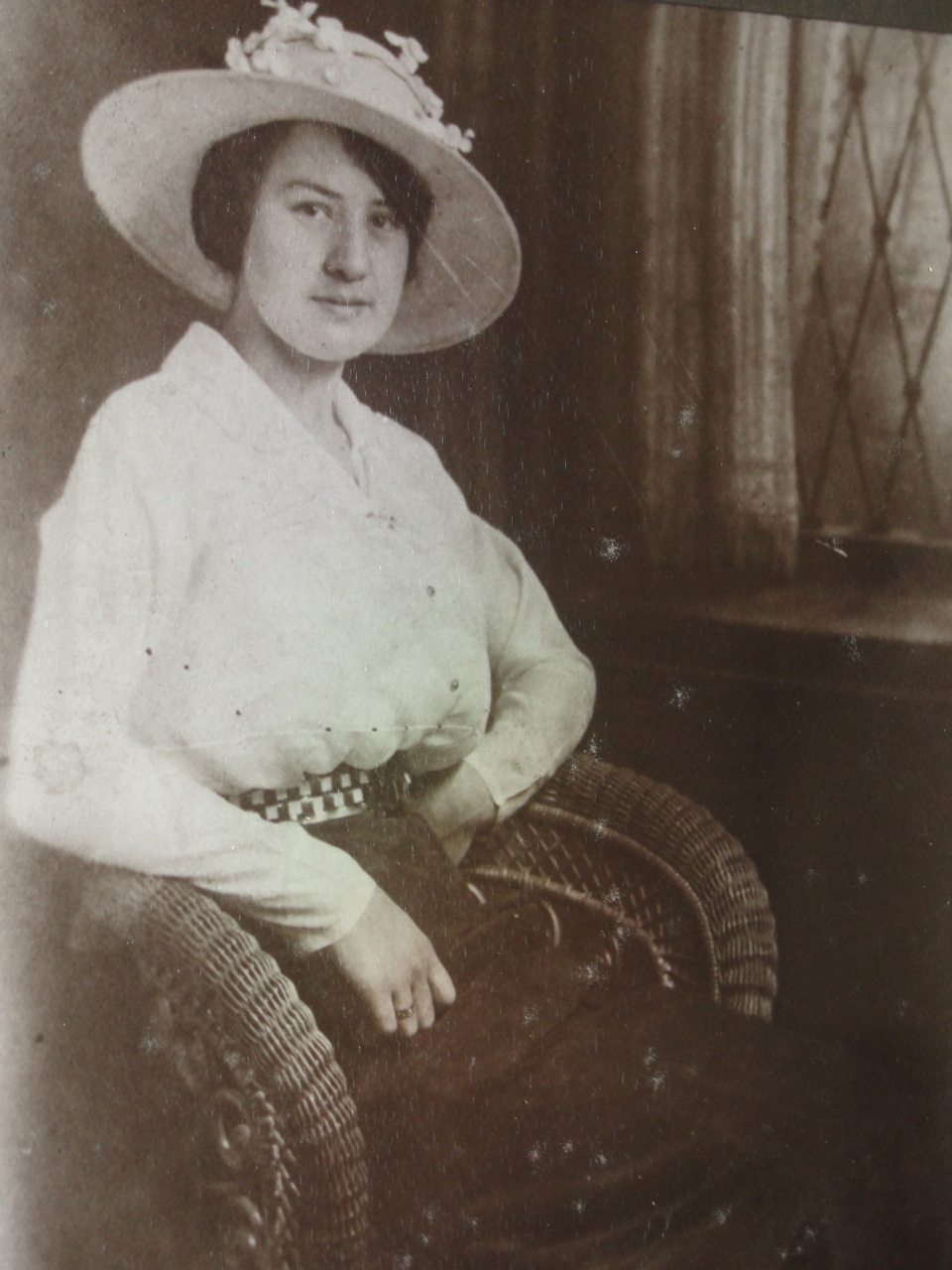
Because I am writing in a broken land, there are things I should clarify. I am a white woman, and I am also related, by matrilineal ancestry, to the Innu people who are indigenous to land now called Quebec and Labrador. My great great great grandmother was an Innu woman. She married a Scottish trapper who worked for the Hudson Bay Company in Quebec. His name was Peter Macleod, and he called her Marie de Terre Rompue, which translates, Marie of Broken Land.

Yvonne DSC01872

Grandmother Yvonne arriving in Detroit

Having these Indian ancestors doesn’t make me an Indian in today’s world. My ancestors were assimilated into the white community, first in Quebec, and then in the United States when my grandmother Yvonne came to live in Detroit. Actually, assimilation itself was part of the long campaign against Indian people. 

But this story created a broken place in my heart, a need to explore and understand the history and to find healing for the present. It helped to spark in me a deep feeling for Indigenous peoples. As a young adult I was drawn into activism in solidarity with American Indian struggles, and that has remained an important influence throughout my life. When I was able to travel to Nitasinnan, the land of the Innu, I felt some sense of place, a sense of the ghosts of my ancestors in the land.

But Indian ancestry is not necessary for the work of reconnecting to the land. Indian people have a belief that every person and being on this earth are related to each other. All of us can be part of the work of rebuilding our relationships where they have become torn and frayed. 

If we wake up to the earth, we must listen to all her stories

All places and all beings of the earth are sacred. It is dangerous to designate some places sacred when all are sacred. Such compromises imply that there is a hierarchy of value, with some places and some living beings not as important as others. No part of the earth is expendable; the earth is a whole that cannot be fragmented…
Leslie Marmon Silko

Winter Path DSC01793When I was in theological school, we spoke of the sacred texts in which people find revelation of divinity. To be open to the sacredness of earth, is to let the earth be our text: let the earth be the revelation for the presence of divinity. The earth can be teacher, the earth can be sacrament, the earth can be worship, the earth can be Goddess.

But if we wake up to the earth, we must listen to all her stories. If we live in the Americas, we must pay attention to a story of brokenness in each place because of the theft of the land from the Indigenous peoples who belong here. If we are seeking to restore our connection to the land, we must reckon with that brokenness. All of us are a part of the brokenness.

Lakota writer Luther Standing Bear said, “Men must be born and reborn to belong. Their bodies must be formed of the dust of their forefathers’ bones.” To be indigenous is to belong to a particular place, through that interweaving of dust and food and knowledge which accumulates over centuries. When I lived in Jamaica Plain, I used to walk in Forest Hills Cemetery. None of my ancestors were buried there. No familiar ghosts recognized me or called my name. I was not indigenous to that place, nor to any of the places I have lived.

I learned more about what it might mean to be indigenous to a place through the marvelous novel, Solar Storms, by Chickasaw writer Linda Hogan. Her main character, Angel, is a young woman who had been separated from the Native community of her birth, and raised in foster care after being abused by her mentally ill mother. When Angel returns with her relatives to their ancestral lands, something happens for her.

A part of me remembered this world… it seemed to embody us. We were shaped out of this land by the hands of gods. Or maybe it was that we embodied the land. And in some way I could not yet comprehend, it also embodied my mother, both of them stripped and torn…. My heart and the beat of the land, the land I should have come from, were becoming the same thing.

In the novel, Angel’s family has returned to their homeland in the north of Canada because it is being threatened with hydro-electric development. This is no pristine wilderness or unspoiled scenery to which she is responding. The land is under assault, and they feel a responsibility to fight for its protection. She speaks of how the bonds between the land and the people had been broken by the developments of many years. The elder Tulik tells Angel, “Here a person is only strong when they feel the land. Until then a person is not a human being.”

Another member of her family was a woman named Bush who was Chickasaw from Oklahoma and had become part of the family through marriage. She had also come to help in the struggle. Angel talks about how it was different for Bush. The land in the far north loved Bush, “but it did not tell her the things it told the rest of us. It kept secrets from her.” Here was another Native American, yet she was not indigenous to that particular land. Through this story I began to better understand how loving the earth was not just about loving the planet, but about loving a particular river, a particular valley or hill or peninsula.

Quote from Leslie Marmon Silko is from Yellow Woman and a Beauty of the Spirit.
Luther Standing Bear was quoted by Vine Deloria quote in God Is Red.

To Be Whole We Must Experience the Broken

Sun in branches DSC01449If I believe that all people, and all beings are connected, then in order to be whole, I must open my heart to that larger whole, to the connections between all people and all beings. However, when I open to the whole, I experience more profoundly its brokenness, the ways we hurt each other and our earth, the ways we are not in harmony. It is tempting to retreat, to draw a circle around myself to try to achieve some sort of individual harmony and balance—but that would cut me off, into the brokenness of separation.

I realize in this tension that there can be no individual salvation. If we want to heal ourselves, we must be healers of our world. If we want to heal our world, we must be connected to all the broken people. We must embrace the broken to heal the broken. Relationship is at the heart of everything. So, to be whole is to experience the broken. To be whole is to be broken.

It might be too much to bear. How do we find joy in the midst of it? Always, I remember the sun. The sun shining on each being, the sun the source of all life on earth. When I feel the sun warming my face, I realize that I am connected to the sun. Each moment of connection can be a source of joy. Each moment of connection rings true to our deepest purpose. To be connected to Mystery, to each other, to the earth, awakens joy.

And the truth is, even our brokenness, our limitations, can become doorways into connection. We are all incomplete without each other. We each have just one small piece of the puzzle. Alone, all we see are jagged edges and random colors… and maybe all together we see just a jumbled pile of jagged pieces—but sometimes we catch a glimpse of the puzzle box cover—what we might become all together. That glimpse can fill us with joy. And sometimes, we find another piece that fits together with our own jagged edge. We have to find our joy in each moment of connection.

Our jagged edges teach us that we need each other. When I reach the limits of my knowledge or ability, it is a gift to reach out to another person, whose knowledge and ability might balance my own. All returning soldiers from the battlefield need the tenderness of others to find self-forgiveness. One day, when I was weary and sad about my recurring impulse to tell my partner what to do, my partner said, “I know you can be controlling sometime, but I love you just the way you are.”

We must embrace the jagged edges, embrace the broken pieces. Forgive and be forgiven. Ask for help. This is the path to wholeness. The sun shines down on all of us, each day, whether cloudy or clear, making no distinction between the good and the bad. May we return to the great circle of life, may we hold each other and all beings tenderly, for we are one.

The Sun Shines on All

Reconciliation and forgiveness require us to seek out those whom we have hurt, or who have hurt us, to make things whole again. We must mend the threads of connection between ourselves and other people, between ourselves and the earth, between ourselves and the Mystery of life.

This is not easy work. It is not just big societal evils that we face. We also face the everyday betrayals and regrets. Self-forgiveness may be the hardest of all. We face the perennial faults that are unique to us, yet common to so many. We mean to be kind, but find ourselves cranky and rude instead. We mean to be supportive to a friend or family member, but feel judgmental instead. We mean to be honest, but tell little lies to avoid upsetting someone. We mean to be generous, but feel greedy about our pleasures.

Can I forgive myself the belief that I am right when I argue with my neighbor? Can you forgive yourself the angry words shouted at your child as you are trying to get out of the house to make it to school or work on time? Can we forgive ourselves the end of a relationship with a partner or spouse? Can I forgive myself for needing help when I don’t know how to face a situation on my own?

Sun and Snow DSC06016What helps me to forgive is to remember the sun. The sun shines down on all of us, each day, making no distinction between the good and the bad, making no distinction between when I am in tune with all my values, or when I fail. Its light is constant, never changing because of virtue or vice, but merely following the rhythm of the seasons and lighting up the blue sky or the gray clouds. Its light keeps shining, giving life to all creatures. When I remember that I am accepted as part of the circle of life, it seems easier to open my heart to forgive myself.

And if I am a part of the circle of life, so is everyone else. If I believe that all people, and all beings are connected, then in order to be whole, I must open my heart to that larger whole, to the connections between all people and all beings. This is the heart of spiritual practice—to open our hearts to the larger whole of which we are a part.

How can we heal when we fail our ideals?

Gnarled Apple Tree DSC01742During the time when I was struggling with our failure to truly live our ideals, I read the novel, March, by Geraldine Brooks. The story is centered on the absent father figure, Mr. March, in Louisa May Alcott’s Little Women, and draws on the actual life story of her father, Bronson Alcott. Mr. March has gone off to be a chaplain for the Union Army during the Civil War. He is passionately opposed to slavery. The whole family has been involved in the underground railroad, and Mr. March had lost most of his fortune supporting the work of abolitionists. So it seems unconscionable not also to support the military effort to free the slaves. He is following his highest ideals.

But Mr. March’s actual experience as a chaplain in the war proves profoundly disillusioning. The Union soldiers, his heroes, are often cruel to each other and to the former slaves who seek refuge. Many battles are ill-planned and disastrous, with horrific loss of life and injury and disease. Finding himself in a deadly situation, he lacks the courage to give up his own life to save the life of one of the slaves he has been teaching to read. When he tries to follow the abductors and help to save the other captured slaves, the mission ultimately fails, despite his efforts. Eventually, he succumbs to fever and is sent to a Union hospital, a broken and despairing man.

How do any of us heal from the despair that evil or failure can bring to our hearts? Sometimes we try to isolate ourselves from what is broken—to separate the good from the bad. For our ecological values, this might mean we decide to build our own zero-carbon home off the grid, grow all our own food, and stop participating in the larger society. In some religious traditions, it takes the form of identifying sinners and banishing them from the community of the holy. For others, it may be more subtle: we may be tempted to connect only with people with whom we agree, who share our values and ideals, and stop relating to those who seem to us, “unenlightened.” We imagine ourselves on the right side of a very great conflict.

But it is not so simple as that. Mr. March found that the people on the “right” side of the civil war were also broken, that he himself failed to live up to his own high ideals. How can we heal from the wounds of self-betrayal?

Near the end of the Civil War, after securing the freedom of the slaves, Abraham Lincoln reached out to the whole nation, north and south, to try to bring people back together into one community. His second inaugural address closed with these words for healing:

With malice toward none; with charity for all;
with firmness in the right, as God gives us to see the right,
let us strive on to finish the work we are in;
to bind up the nation’s wounds;
to care for him who shall have borne the battle,
and for his widow and his orphan…
to do all which may achieve and cherish a just and lasting peace
among ourselves and with all nations.

Our brokenness tears us apart, but our healing must bring all of us together. Mr. March slowly finds his healing through the love of the people who care for him, just as he is. Marmee comes to him at the military hospital, and eventually he returns to his family, chastened, fragile, not whole yet, but able to be united to those familiar little women, his daughters.

Did the nation take to heart Lincoln’s words? A short time later, he was assassinated. Perhaps we are still living with the brokenness in our nation that erupted in the civil war. The divides between black and white, between south and north, between liberal and conservative, between rich and poor, still undermine our capacity to live up to our country’s ideals. I don’t have an answer to fix it.

But I believe that all people and all beings are connected, that the earth is a whole. That belief shapes how I can imagine a way forward. The way forward is always rooted in forgiveness. Forgiveness for the failures we see all around us, the ways that others betray the ideals we hold dear, and hurt and wound each other. And forgiveness for our selves, when we too are unable to live up to our values and ideals, which happens almost every day. Only when we can forgive, can we return to the dreams we hold, can we find wholeness, and receive a new start.

Forgiving the Broken

Apple Tree Fall DSC01738Life will break you. Nobody can protect you from that, and living alone won’t either, for solitude will also break you with its yearning. You have to love. You have to feel. It is the reason you are here on earth. You are here to risk your heart. You are here to be swallowed up. And when it happens that you are broken, or betrayed, or left, or hurt, or death brushes near, let yourself sit by an apple tree and listen to the apples falling all around you in heaps, wasting their sweetness. Tell yourself that you tasted as many as you could.
                                                                                           Louise Erdrich

One day, caught in the gap between my ideals for living in harmony with the earth and what I am actually able to do, I went outside to share my sorrow with the trees and the green earth. I want human society to be better than it is—I want there to be a path forward that is not so lonely and hard, so expensive and out of reach. I was in a painful, broken place. I sat down on a blanket on the ground, and looked to the four sacred elements of the earth for help; the earth, the air, the fire, the water. They were kinder than I expected.

The Earth said, “Forgive the people of your society. Don’t hate your own kind. They didn’t know the oil would run out. They were creating what seemed to be good with all this abundance. It’s not evil to use oil. It is evil to fight wars and oppress workers and sully the waters in your attempts to keep it and secure it.”

The Air reminded me that the songs of birds can dispel sadness, and awaken joy and beauty.

The Fire surrounded me with the warmth of love, and said these energy issues can only be resolved through your connection to the sun. All of our energy comes from the sun.

The Water said, “Weep when you are sad. Don’t always try to fix it.” And so I eventually came to a place of peace.

One of my ecological dreams is a “net-zero carbon” home that generates more energy than it needs. I’ve heard about these homes and the architects that are designing them. That would be ideal. But in order to be alive in this world, I need to forgive the messiness of what is, as it is now. I need to accept that human beings as a species do not live in harmony with the earth right now. We are broken off.

I am able to accept our brokenness when I feel the Sun shining down on us despite it all. When I feel the water claiming us as her own, the flowers blooming, the food growing, the birds singing. The beauty of this earth teaches me that there is something very good even in the midst of our brokenness. The next day, the newspaper had a story about green homes in New England. If I can expand my perspective, I can be joyful that some people are creating zero-carbon homes, that something is awakening among human beings that will lead to greater wholeness with the earth. I feel hopeful when I learn that the United Kingdom has a goal of all new constructed homes being zero-carbon homes by 2016.Apple DSC01750

Louise Erdrich quote from The Painted Drum, p. 274.

Trying to Find an Ecological Water Heater

When we awaken to a vision of living in harmony with the earth and other beings, we enter an in-between place, a place of increasing awareness of the brokenness of our world today. Our social and economic system was built upon exploitation of the earth for resources, and the options we have as individuals are limited because of that.

During one spring, Margy and I noticed that our hot water wouldn’t get hot anymore. We put up with lukewarm showers while we were trying to sort out what to do. We are always trying to make our home more easy on the environment, so we took time to research a lot of options.

Our hot water came from a coil in our boiler, and we were told that it would be quite expensive to clean out the coil, using lots of nasty chemicals. Did we need a new boiler? At that time, a very state-of-the art efficient new boiler would cost $11,000 to install. A boiler that used wood pellets instead of oil—even better—would cost $22,000, including an automatic pellet feeder. Well, we didn’t have enough money for either of those options, and our current boiler had some years left in it. Solar hot water is also expensive, and we don’t have a south facing roof, and we have a lot of trees. One company recommended heat exchange water heaters—they were about $3000 to install.

Water Heater DSC01555I also researched more traditional hot water heaters—we don’t have natural gas where we live, so that wasn’t an option. I lined up all the brands and all their energy efficiency. But I found that the ones that were the most energy efficient cost a whole more, for the tiniest fraction of greater efficiency. I did a whole lot of work on it, but eventually, we chose a standard electric hot water heater installed for about $1000. The good news is that we can shut off our boiler during the summer months, since it won’t be needed to heat water. And we have hot showers again. The bad news is that our electric bill will go up about $50 a month. So all in all, we might be using more energy than before.

I share this story because I felt so sad after our experience, so disappointed and angry that there weren’t good ecological solutions. Despite our values and idealism about how we want to live on the earth, despite how much time we put into research, it wasn’t possible to find workable and affordable choices. The options we have as families depend on what our society chooses do with its resources.

Waking Up to Joy

I realize not everyone is attuned to rise at dawn. We each have our own circadian rhythms. Scientists have found that individual rhythms have a genetic basis and are incredibly difficult to change. Some people naturally rise early, they call them the larks, while others are tuned to a later cycle, they call them the owls.

So I am not suggesting that everyone should start rising at dawn. I am still not even sure if I can shape my life in that way. But what I notice is that whenever I take some small step toward attuning myself with the larger earth, I feel blessed by it—I feel more beauty and joy.

And yet, for each small step, I also feel challenged—aware of how broken off I am. Aware of how broken off we are as a people from this earth that is our whole life. I have to believe that awakening to this beauty and brokenness is the essence of the spiritual journey. We cannot have one without the other. My greatest hopes trigger my greatest fears. My greatest fears call forth my greatest hopes. I believe that when we enter that place between our greatest fears and our greatest hopes—when we encounter our own vulnerability, and call out for help, something can rise in us like the dawn… and this is the place where God lives.

I am still on this journey. When the days are shorter, the dawn comes later. But then it is too cold to go sit outside like I sat outside during the summer. So I am not sure how it will unfold. Sometimes I sit by the window and watch the sunrise from the comfy chair in my room, a tiny black cat curled up in my lap. But I remember the message of the cardinal singing at dawn: Come outside! May sadness be dispelled, may joy and beauty be awakened in us.Snowy Sunrise